Methods of Kansei engineering help the design process by surveying users’ latent Kansei, then reflecting it on product and service development and continuous elaborations of them (Nagamachi, 1991, 2012). Through our applications of Kansei engineering to product development, we have learned that there are several common difficulties. 1. Evaluation samples’ lack of variety: products in the market have limitations in design. 2. Everyone is encouraged to participate in the design process with Kansei engineering: non-designers participation greatly contributes to successful products. 3. Designers are few and too busy: designers’ efforts should be reduced and make time to think more innovatively. In this study, to ease these problems, we have applied AI image generators, a recent development of artificial intelligence, to the Kansei engineering design process.Milkcarton Kansei studies result (Ishihara et al., 1996) is the starting point of this study. First, we examine StableDiffusion (Rombach et al. 2021), an image generation artificial intelligence system. StableDiffusion (SD) seems to lack milkcarton’s shape knowledge. Then we made incremental learning of its shape with the “Hypernetworks” framework. A common method to make innovative ideas is borrowing ideas from neighboring areas. Milkcarton in red is quite a few. On the other hand, our Beer can Kansei study (Ishihara, 1998) shows that Red color has strong relation between Kansei of Premium, Gorgeous, Affected, and Showy. Then, we try to apply a red color. The AI-generated “Red flower milkcarton” is nicely designed. Our 1996 study showed that blue has the preferred color for milkcarton. Blue abstract shapes are too often used for it; then people have Kansei as “simple”, “proper” and “monotonous”. In this attempt, we seek a “modern” and “refined” touch to blue and abstract design. The AI-generated design successfully incorporated modern touch to blue-based design. Also, we have tried more novel ideas of “Colorful painting modern milkcarton”. Milkcartons have different colors and have been implicitly or explicitly intended for “Juvenile” and “Tender” Kansei. This trial also adds modern touch, and novel designs are obtained. Finally, “Jackson Pollock painting milkcarton” was examined. The result reflects his abstract painting in the 1940s, before his invention of “drop painting”.In its long-year quest for Kansei engineering, KE methodology shows its stimulating role of innovative and problem-solving design. This study challenged the use of cutting-edge AI technology to boost more innovative designs. Along with AI technology extends, further methods for boosting innovative creation interacting with humans.
Common problems for implementing Kansei engineering to design process in companies.
Kansei engineering methodologies underpin the design process by scrutinizing the latent Kansei of existing and potential users, thereby infusing these insights into the development and continual refinement of products and services (Nagamachi, 1991, 2011). Through the implementation of Kansei Engineering in product development, a number of prevalent impediments have emerged.
A notable constraint is the dearth of diversity within evaluation samples. Upon orchestrating a Kansei evaluation experiment, the conspicuous lack of product diversity on the market becomes apparent. This hindrance is attributable to economic variables, the spectrum of product prices, and
the inherent costs of materials and production. Consequently, innovation necessitates a departure from these real-world restrictions, and this departure is only rendered feasible by the wisdom and knowledge gleaned from various experts in design, production, materials, and procurement. Accordingly, 2D computer graphics techniques and 3D Computer Graphics (CG) have been systematically deployed to construct ‘virtual products’ for Kansei evaluation (Jindo et al., 1995, Matsubara et al., 2010). Virtual reality has also been introduced at an early stage (Nomura et al., 1998). Despite the significant strides made in CG techniques over the past two decades, object modeling and surface processing (including texturing and setting physical properties) continue to pose challenges for non-experts.
The ethos of Kansei engineering propounds the inclusive participation in the design process. Ishihara (2005) has empirically evidenced the catalytic effect of the Kansei Engineering system throughout the design process in international online design sessions spanning Sweden and Japan. Notably, Kansei engineering spurred the amplification of human creativity within the design and decision-making process.
Ishihara et al. (2010) presented a case study of rapid electric shaver design, deploying Kansei engineering and ergonomics at SANYO Electronics. Inc. In this instance, a diverse team, including the ergonomist, product manager, mechanical and electronic engineers, and the production planner, shared the latest findings from the Kansei ergonomic study. From the inception of an innovative design idea to its market introduction, less than six months elapsed. This brisk, agile, and novel design process necessitates the broad sharing of the most recent findings across almost all corporate departments. As such, it is imperative to articulate the product idea and the resultant analysis in near-comprehensive graphics.
Despite these advancements, there remains a shortage of designers, who are often overextended. In successful Kansei engineering applications, designers play a critical role from the nascent to the final stages of the design process. For example, significant effort is demanded in designing virtual products for Kansei evaluation experiments. However, this effort should be minimized to allocate more time for innovative ideation.
To attenuate these challenges, this study has integrated AI image generators, an emergent innovation in artificial intelligence, into the Kansei engineering design process. These tools could potentially facilitate the creation of evaluation samples and inspire design ideas among diverse stakeholders involved in product development.
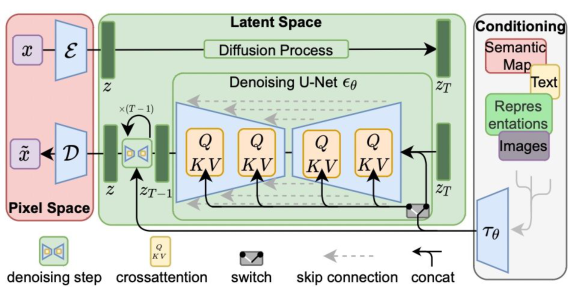
Latent Diffusion Model The image synthesis and generation AI system used in this research is called StableDiffusion, formally known as the Latent Diffusion Model (LDM) (Rombach et al. 2021). The structure is shown in Figure 1. The explanation of LDM in the following lines refers to Tokunaga (2022) and Shirai (2022). LDM operates with a combination of three distinct building blocks:
AI Image Generation Boosts Kansei Engineering Design Process 25
Figure 1: Structure of stable diffusion (referring from Rombach et al. 2021).
Stable Diffusion is a diffusion model trained on the latent space of a VAE for efficient high-resolution image generation. The text encoder is trained using CLIP coding (Radford, 2021), with text conditioning performed by cross-attention in U-Net.
The Stable Diffusion learning process takes an image and text pair as input. The image is embedded by the VAE encoder, and the text by the text encoder. Once embedded in the latent space, the image undergoes the diffusion and inverse diffusion processes of the diffusion model (Sohl- Dickstein et al., 2015). In the diffusion process, small amounts of Gaussian noise are continually added until the latent representation of the image becomes noise. The inverse diffusion process is the reverse; it gradually removes Gaussian noise from the noise. This removal process is trained on the U-net, with the final output of the U-net passed through the VAE decoder D to recover the image.
During generation, the only input is the text prompt. This text is fed into the U-Net during the inverse diffusion process, where the U-Net gradually removes noise from random Gaussian noise. As the U-Net is conditioned by the input text, the latent representation of the image will follow the text. The final output of the U-Net is passed through the VAE decoder to produce an image that aligns with the text. A trained Stable Diffusion model is available on Hugging Face and can be easily used with the U-Net implementation, “Diffusers.”
A 64x64 Gaussian noise seed (Latent Seed) is provided to guide the noise reduction and resolution process so that user-provided prompts become latent variables in the text embedding (77x768 dimensions) generated by CLIP. CLIP (Radford, 2021) correlates the learning between embedded 768-dimensional vectors of words (sentence) and 77-dimensional vectors of the flattened 2D image vectors. An image is generated from the noise and super-resolved to a 512x512 image while aligning it to the vector.
StableDiffusion consists of an 860 MB Unet and a 123 MB TextEncoder.
Milk Carton Kansei Engineering Study One of the authors conducted a Kansei engineering study on milk cartons (Ishihara et al., 1996). For the Kansei evaluation, seventy-one milk cartons were used. A 5-point semantic differential scale questionnaire was composed using sixty-nine Kansei words.
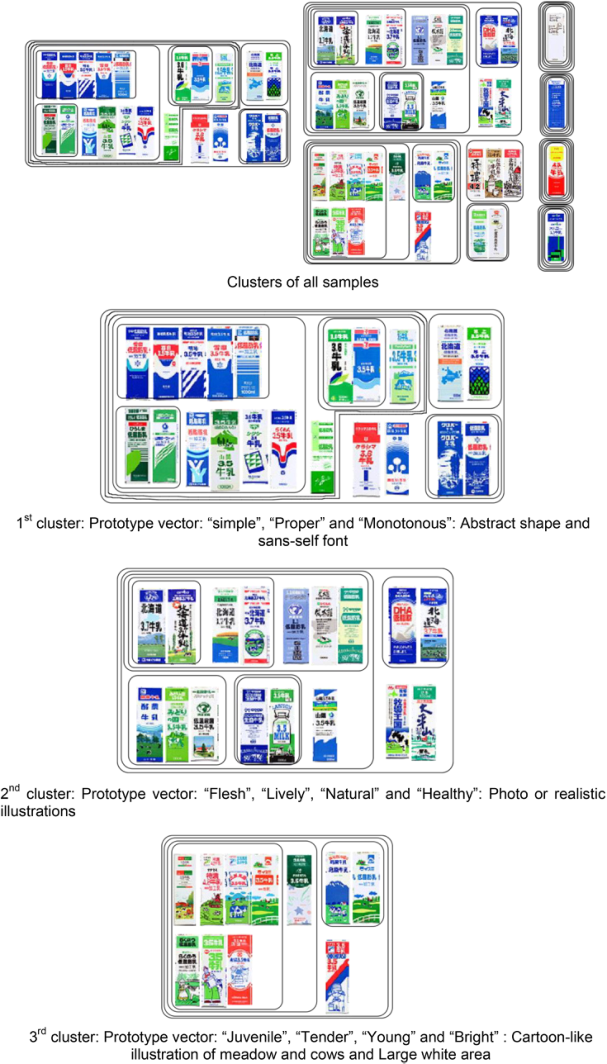
The Kansei evaluation data were analyzed with our self-organizing hierarchical clustering neural network, arboART (Ishihara, 1995). Figure 2 displays the clustering results. The nested enclosures illustrate the relationships between the inclusions of the clusters. These enclosures are
Figure 2: Milk carton Kansei analysis with arboART (Ishihara, 1996).
AI Image Generation Boosts Kansei Engineering Design Process 27
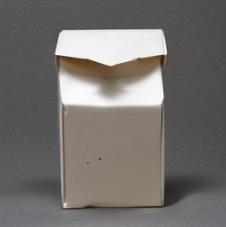
Figure 3: StableDiffusion 1.4 generated best pictures from “milkcarton” prompt.
intended to resemble contour lines on a map. Boxes encased by five lines form the first layer of arboART and exhibit very similar values. Clusters surrounded by fewer enclosures are grouped under a larger distance criterion. In Figure 3, there are three large clusters, two small clusters, and four independent samples are depicted on the right.
Figure 3 shows the clusters and the larger prototype values of the three main clusters. These results are utilized as cues to initiate the transfer of knowledge in the trained StableDiffusion.
METHODS
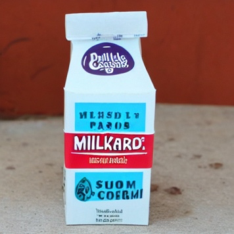
Initially, we tested StableDiffusion 1.4 and 2.0 using “milk carton” or “milkcarton” as the prompt. Figure 3 displays the best out of the 12 images generated by SD 1.4. While SD1.4 managed to capture some of the milk carton’s features, such as the box and roof structure, it didn’t accurately represent the milk carton’s shape. Notably, the top roof structure differed from the actual carton. Figure 4 displays the best of the 5 images generated by SD 2.0. SD 2.0 seemed to struggle with the milk carton’s shape, confusing it with other types of packaging like flour packets. The second image, despite featuring a red animal on the package, does not depict a cow but appears to be an Asian serow instead.
Based on these observations, we concluded that both versions of SD lacked accurate knowledge of the milk carton’s shape. Given that SD 2.0 seemed to
Figure 4: StableDiffusion 2.0 generated best pictures from “milkcarton” prompt.
confuse the milk carton with other packages, we decided to train SD 1.4 to recognize the exact shape of a milk carton.
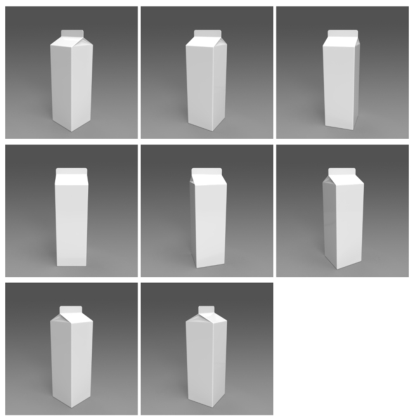
Fine-Tuning With Hypernetworks The practice of fine-tuning through additive learning was explored in this study, where images of a white milk carton were captured from eight distinct orientations, each involving a rotation of 15 degrees. The creation of the pre-built model and its renderings were facilitated through Adobe Dimension version 3.4.6, as illustrated in Figure 5. Given the multi-angled presentation of the image to SD 1.4, there appears to be an establishment of implicit associations between the image and the sides.
The execution of the fine-tuning process on SD 1.4 was accomplished using stable-diffusion-webui, a tool authored by AUTOMATIC1111. The computations were performed on the Windows variant of this software, harnessing the computational power of an NVIDIA GTX 3060 GPU, which boasts 12GB of video memory. The system integrated the use of “Hypernetworks”, a fine-tuning framework proposed by NovelAI (NovelAI, 2022). The process of hypernetwork learning spanned across 4,000 iterations, where the shape learned demonstrated instability at the 500 and 1,000 cycle marks. Post 2,000 iterations, the learned shape exhibited a stable pattern.
In contrast to traditional fine-tuning methodologies that frequently involve appending additional layers at the terminal end of a deep neural network, NovelAI (2022) posits that such a layer addition approach necessitates
Figure 5: White milkcarton images rendered from 8 directions, used for fine tuning of StableDiffusion 1.4.
AI Image Generation Boosts Kansei Engineering Design Process 29
substantial computational resources. As a solution, they introduce the hypernetwork, a pioneering fine-tuning framework.
The hypernetwork strategy involves the incorporation of a singular compact layer into the internal layers of Key and Value vectors of the cross- attentional U-net within StableDiffusion. The remainder of the U-network components were left unaltered. This modification significantly mitigated the occurrence of overfitting, thereby promoting enhanced generalization at the culmination of the training phase.
RESULTS
It has been previously observed that design variations in available market products are somewhat restricted. Specifically, regarding the milk carton Kansei study it was noted that only two variants utilized a red color scheme (Ishihara et al., 1996). A commonly employed strategy for generating innovative ideas involves borrowing elements from related areas, in addition to adhering to traditional design conventions.
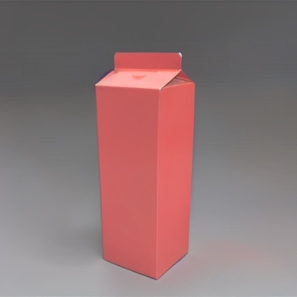
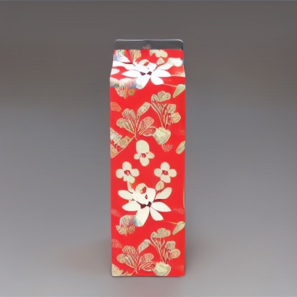
In a prior Beer Can Kansei study (Ishihara, 1998), we discerned a potent association of the color red with the following attributes: Premium, Gorgeous, Affected, and Showy. Given this observation, we endeavored to implement a non-conventional red hue to the milk carton design. As exemplified in Figure 6, this novel red color was effectively applied to the 3D model. In an innovative maneuver, floral prints, infrequently seen on milk cartons yet common on candy packages, were incorporated. Figure 7 showcases the resultant image of the “red flower milk carton,” striking a balance between elegance and tradition.
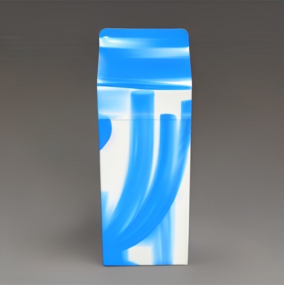
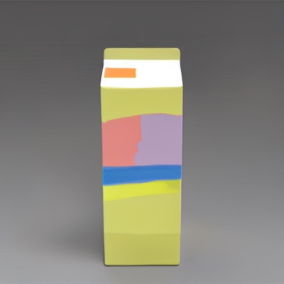
In previous studies, we found blue to be a favored color for milk cartons. Blue abstract shapes were recurrent, thereby leading to a Kansei perception of “simplicity,” “propriety,” and “monotony.” In an effort to modernize this perception, we aimed to add a “refined” touch to this recurring blue and abstract design, as revealed in Figure 8.
Figure 6: Generated from the prompt “red milkcarton”, from the StableDiffusion learned milkcarton shape.Figure 7: Generated from the prompt “red flower milkcarton”, from learned StableDiffusion.Figure 8: Generated from the prompt “blue abstract painting modern milkcarton”, from learned StableDiffusion.
Figure 9 unveils an even more inventive concept, conceived from the prompt “colorful painting modern milk carton.” The design of milk cartons with multiple colors was originally geared towards evoking a “Juvenile” and “Tender”Kansei. Our intention, however, was to infuse a touch of modernity.
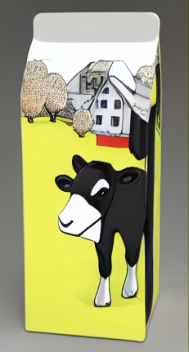
Figure 10 shows the generated cartons corresponding to the third cluster of milk carton Kansei study (as shown in Fig. 2). Illustration or “Cartoon-like illustrations” of meadows and cows are used for the prompt.
Generated illustrations have another attractiveness than Japanese ones. The third illustration is an innovative abstraction of drawings.
AI Image Generation Boosts Kansei Engineering Design Process 31
Figure 9: Generated from the prompt “colorful painting modern milkcarton”, from learned StableDiffusion.Figure 10: Generated from the prompt “Cartoon-like illustration of meadow and cows on milkcarton”, from learned StableDiffusion.
CONCLUSION
The KE methodology, through its dedicated pursuit of Kansei engineering, underscores its invigorating influence on innovative and problem-solving designs. This study highlights the potential of leveraging advanced AI technology in promoting more inventive design solutions. As AI technology
incessantly advances, an increasing array of methods to encourage innovative design and facilitate human interaction will invariably arise.
ACKNOWLEDGMENT
The authors would like to thank Mr. “Milly” (https://github.com/Milly/) for technical assistance with stable-diffusion-webui and fine-tuning.
This work was supported by JSPS KAKENHI Grant Number JP 20K20500.
REFERENCES
Ishihara, S., Ishihara, K. & Nagamachi, M. (1996) Neural networks approach for Kansei analysis on milk carton design, Human Factors in Organizational Design and Management-V, 7–12, North-Holland. Ishihara, S., Ishihara, K. & Nagamachi, M. (1998) Hierarchical Kansei analysis of
beer can using neural networks, Human Factors in Organizational Design and Management-VI, 421–426, North-Holland. Ishihara, S., Ishihara, K., Nagamachi, M & Matsubara, Y. (1995) arboART: ART based hierarchical clustering and its application to questionnaire data analysis, 1995 IEEE international conference on neural networks proceedings, 532–537. Ishihara, S., Ishihara, K., Nakagawa, R., Nagamachi, M., Sako, H., Fujiwara, Y.
and Naito, M. (2010), Development of a washer-dryer with Kansei Ergonomics, Engineering Letters, Vol. 18, No. 3, pp. 243–249. Ishihara, S., Tsuchiya, T., Nagamachi, M., Nishino, T. and Ishihara, K. (2005) Catalytic effect of Kansei engineering system at collaborative design process, Human Factors in Organizational Design and Management-VIII, North-Holland, 401–406. Jindo, T., Hirasago, K. Nagamachi, M. (1995) Development of a design support
system for office chairs using 3-D graphics, Int. J. Industrial Ergonomics, 15(49–62). Matsubara, T., Matsubara, Y., Ishihara, S. and Inokuchi, S. (2010), Virtual prototyping with real-time rendering for Kansei engineering of leather grain patterns on car dashboard panels, Journal of Japanese Kansei Engineering Society, 9(2), pp. 119–128 Nagamachi, M. (1991) An image technology expert system and its application
to design consultation, International Journal of Human-Computer Interaction, Vol. 3, No. 3, pp. 267–279. Nagamachi, M. (2011) Kansei/Affective engineering and history of Kansei/Affective engineering in the world, Nagamachi ed., Kansei/Affective Engineering, CRC press. Nomura, J., Imamura, K., Enomoto, N. and Nagamachi, M (1998), “Virtual space
decision support system using Kansei engineering”, T. L. Kunii and A. Luchiani, Eds., Cyberworlds, Springer, Tokyo, Japan, pp. 273–288. NovelAI (2022) NovelAI Improvements on Stable Diffusion, NovelAI Blog, https:// blog.novelai.net/novelai-improvements-on-stable-diffusion-e10d38db82ac. Radford, A. et al. (2021) Learning Transferable Visual Models from Natural
Language Supervision, arXiv, https://doi.org/10.48550/arXiv.2103.00020. Rombach, R. et al. (2021) High-Resolution Image Synthesis with Latent Diffusion Models, CVPR 2022, https://doi.org/10.48550/arXiv.2112.10752. Shirai, A. (2022) Collaboration with AI makes you as a genius painter - Technical
reading Stable Diffusion, Impress publishing (in Japanese).
AI Image Generation Boosts Kansei Engineering Design Process 33
Sohl-Dickstein, J., Weiss, E. A., Maheswaranathan, N. & Ganguli. S. (2015) Deep unsupervised learning using nonequilibrium thermodynamics. Proc. of the 32nd Int. Conf. on Machine Learning, Lille, France, 2015. JMLR: W&CP volume 37, abs/1503.03585. Tokunaga, M. (2022) An in-depth look at Stable Diffusion, the image-generating
AI that shocked the world, https://qiita.com/omiita/items/ecf8d60466c50ae8295b (in Japanese).
LISTED IN THE AHFE DIGITAL BOOKSTORE CATALOGUE
Explore the complete digital volume
Kansei Engineering
Read this individual research paper free through the original publisher, or explore the full digital proceedings book.
ISBN 978-1-958651-77-3
Explore this ISBN in the AHFE Bookstore ↗Listed in the July 2026 bookstore catalogue; search by ISBN to confirm current availability · Digital book purchase optional