Mingzhu Li, Ming Zhong (2023). Artificial Empathy: Exploring the Intersection of Digital Art and Emotional Responses to the COVID-19 Pandemic. In: Artificial Intelligence and Social Computing. AHFE Open Access, vol. 72, pp. 42–47. https://doi.org/10.54941/ahfe1003272
The COVID-19 pandemic has caused widespread emotional and psychological impacts globally, leading to feelings of isolation, separation, and disconnection among individuals. In response to this, the present study seeks to explore and document the emotional experience of the COVID-19 pandemic through the creation of an art project titled "All those days in isolation". Using mixed media and collage techniques, the study seeks to create a visual representation of the collective experiences and emotions of a community during the pandemic. This project was inspired by the feelings of isolation and separation that many people have experienced and sought to explore and express these emotions through art. Through a comprehensive review of existing literature and qualitative research, including semi-structured interviews with a group of participants who have experienced the pandemic, this thesis will examine how digital art has been used to record and express emotions.The study found that the COVID-19 pandemic has had a significant impact on mental health and well-being, with high levels of anxiety, stress, and depression reported among individuals who have been directly or indirectly affected by the virus. Additionally, the pandemic has been associated with feelings of loneliness and social isolation, as well as with an increased risk of domestic violence and other forms of abuse.The art project was successful in exploring and expressing the complex emotions of the COVID-19 pandemic, offering a nuanced and well-rounded perspective on the emotional impact of the pandemic on individuals. The study highlights the importance of art in documenting and preserving collective experiences and emotions, as well as its potential to serve as a reflection of society and a tool for coping with stress and traumatic events. Overall, the art project demonstrates the power of art in exploring and expressing complex emotions and providing a space for people to connect with and understand the experiences of others.
The COVID-19 pandemic has had a profound impact on individuals and society at large, prompting widespread feelings of isolation, loneliness, and disconnection. The experience of social distancing and quarantine measures has given rise to a range of emotional and psychological responses, from anxiety and uncertainty to resilience and adaptability.
Exploring the Intersection of Digital Art and Emotional Responses 43
Against this backdrop, “All those days in isolation” emerges as a project that seeks to capture the complex and multifaceted nature of the pandemic experience through art. The project’s title itself speaks to the centrality of the theme of isolation and separation, and its use of mixed media and collage techniques invites viewers to engage with a rich and layered exploration of these themes.
Drawing inspiration from the shared experiences of the pandemic, “All those days in isolation” represents a poignant and thought-provoking contri- bution to the cultural landscape. Through its exploration of loss, longing, and resilience, the project invites viewers to engage with the emotional and psych- ological impact of the pandemic in a way that is both accessible and deeply moving. As such, it stands as a testament to the power of art to capture the essence of the human experience, even in the most challenging and uncertain of times.
TITLE The title “All those days in isolation” is highly evocative of the central theme of the project, which centers around the experience of isolation and sepa- ration during the COVID- 19 pandemic. The use of the term “isolation” in the title effectively captures the emotional and psychological impact of the pandemic, as well as the feelings of loneliness and disconnection that were widespread among individuals due to the measures implemented to control the spread of the virus.
INSPIRATION My art project is motivated by the emotionally charged experience of the COVID- 19 pandemic and is inspired by the feelings of isolation and
Figure 1: Continued
44 Li
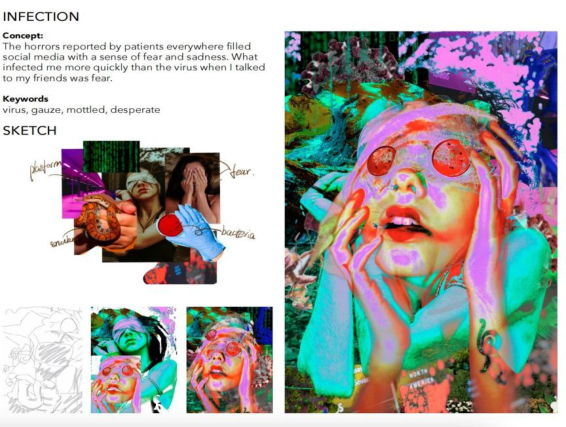
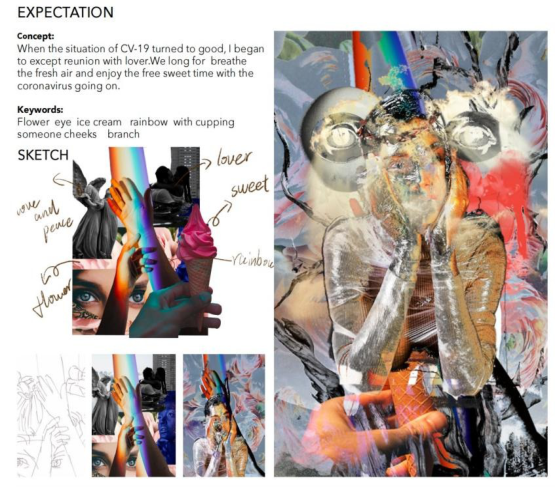
Figure 1: Three different emotional periods drawn by the author (mingzhuli 2023).
separation that many people have experienced during this time. I found myself drawn to the emotions and experiences of this time, and I began to explore and express these feelings through my art. Using mixed media and collage techniques, I created a series of works that captured the sense of loss and longing that many of us felt during the pandemic.
Exploring the Intersection of Digital Art and Emotional Responses 45
KEY THEMES AND ELEMENTS The key themes of this art project are isolation, separation, and the emoti- onal and psychological impacts of the COVID- 19 pandemic. The project is inspired by the feelings of isolation and separation that many people experi- enced during the pandemic and seeks to explore and express these emotions through the use of mixed media and collage techniques. The three stages of emotional change throughout the COVID- 19 pandemic are depicted in this artwork:
AIMS Documenting and preserving the collective experiences and emotions of the COVID- 19 pandemic: This goal may be achieved through the use of mixed media and collage techniques to create a record of a community’s experiences and emotions during the pandemic, using found objects and other materi- als to represent emotions such as isolation and separation, and using color, composition, and subject matter to evoke emotion in the viewer.
Documenting and preserving the collective experiences and emotions of the COVID-19 pandemic through the use of mixed media and collage techni- ques is a valuable method for capturing the multifaceted and complex impact of the pandemic on individuals and communities. By combining different materials and found objects, artists and community members can create a visual representation of the emotional landscape of the pandemic, highligh- ting the wide range of experiences and feelings that have emerged during this time.
One of the strengths of using mixed media and collage techniques is the ability to represent emotions such as isolation and separation in a tangible and visceral way. By incorporating discarded face masks, empty toilet paper rolls, and other objects that have become symbolic of the pandemic, artists can create a powerful representation of the emotions that many people have experienced. This approach can also help to convey a sense of shared experi- ence and solidarity, as viewers may recognize the familiar objects and feel a sense of connection with the artwork.
Color, composition, and subject matter are also critical elements in crea- ting a representation of the pandemic that effectively conveys its emotional impact. Bold and vivid colors can be used to evoke a range of emotions, from fear and anger to hope and resilience. Similarly, the composition of the artw- ork can be used to reflect the chaos and disorientation that many people have experienced during the pandemic, while also conveying a sense of order and structure.
IMPORTANCE I believe it is important to record the emotional feelings of people during the COVID- 19 period because art has the power to serve as a reflection of society and to document the collective experiences and emotions of a community (e.g. Plate, & Smelik, 2009). By capturing the emotions of people during this unprecedented time, I can create a record of this moment in history and
46 Li
provide a way for people to connect with and understand the experiences of others. Furthermore, By exploring and expressing the emotional toll of the pandemic through my art, I can provide a space for people to process and cope with their own emotions and offer a sense of comfort and solidarity to those who may be feeling similarly. Research has shown that art-making can have a positive impact on mental health and well-being, and can be a useful tool for coping with stress and traumatic events ( e.g. Dalebroux & Winne, 2008).
ACADEMIC RESEARCH I draw upon a range of sources to inform and contextualize my work. This includes both primary sources, such as my own experiences and observations, and secondary sources, such as academic research or critical analysis.
In the case of my art related to the COVID-19 pandemic, I used my own emotional experiences and those of my friends, which I gathered through interviews and observations, as a starting point for my artistic expression. In addition, I have drawn inspiration from the styles and techniques of other artists, such as Jackson Pollock and his drip method of action painting (Pol- lock, n.d.). While my art is not identical to Pollock’s, there is a similarity in our use of abstraction as a means of expressing emotion and stimulating the viewer’s imagination. And secondary sources, such as scholarly articles or history, provide background information for my artwork. There is evidence to suggest that the COVID-19 pandemic has been a traumatic experience for many people. Research has found that the pandemic has had negative impacts on mental health, with high levels of anxiety, stress, and depression reported among individuals who have been directly or indirectly affected by the virus (e.g. Stainback et al., 2020). The pandemic has also been associated with fee- lings of loneliness and social isolation, as well as with an increased risk of domestic violence and other forms of abuse (Pretorius & Padmanabhanunni, 2021). This evidence shows that my feelings are group rather than individual to me. There are many different research methods in my art research, such as sampling, experimentation, and theoretical positioning/analysis. For exam- ple, I am interested in exploring the emotional experiences of a group of indi- viduals during the COVID-19 pandemic, I use a sampling method to select a representative group of participants and gather data through interviews or surveys. Alternatively, I am interested in examining the effects of different art-making techniques on mood, I use an experimental design to manipulate the independent variable (e.g., type of art-making technique) and measure the dependent variable (e.g., mood). Theoretical positioning/analysis, on the other hand, theoretical positioning/analysis involves examining and interpre- ting data through a particular theoretical framework or concept lens. This approach can be useful for understanding the meaning and significance of artworks within a larger historical context.
By incorporating both first-hand and second-hand sources, I can offer a more nuanced and well-rounded perspective on the emotional impact of the pandemic on individuals.
Exploring the Intersection of Digital Art and Emotional Responses 47
CONCLUSION
In conclusion, this art project has been a success in that it has allowed me to explore and express the complex emotions of the COVID-19 pandemic. By using mixed media and collage techniques, I was able to capture the sense of fear, anxiety, isolation, and longing that many people experienced during this difficult time. Through my art, I hoped to provide understanding and conne- ction for others and to offer comfort and solidarity. My research has shown that art can document and preserve collective experiences and emotions, pro- vide understanding and connection, and be used as a coping mechanism. This project has been a rewarding experience.
ACKNOWLEDGMENT
I would like to express my sincere gratitude to my supervisor at the Univer- sity of Southampton for their unwavering support and guidance throughout my research journey. Their expertise, patience, and commitment have been invaluable in shaping the direction and quality of my thesis.
I would also like to thank my teacher at Hunan University for their insi- ghtful academic advice, which has helped me to expand my knowledge and understanding of my research topic. Their encouragement and guidance have been a great source of inspiration for me.
I am truly grateful for the academic help and advice I have received from both my supervisor at the University of Southampton and my teacher at Hunan University. Without their support, this thesis would not have been possible.
REFERENCES
Baldwin, J. (1966). Unnameable objects, unspeakable crimes. The White Problem in America, John Pub. Co. Inc., Chicago, 170–180. Byrne L. (2020). Seeing and Being Seen: The Impact of Art Making on the Experience
of Isolation and Fear in Patient Care. Journal of patient experience, 7(6), 839–841. https://doi.org/10.1177/2374373520957172 Cornell, J. (1930). Art of This Century Gallery. Retrieved from https://www.royala cademy.org.uk/exhibition/joseph-cornell Daebroux, A., Goldstein, T. R., & Winner, E. (2008). Short-term mood repair
through art-making: Positive emotion is more effective than venting. Motivation and Emotion, 32(4), 288–295. Pollock, J. (n.d.). Action painting. [Online]. Available: https://www.khanacademy.or g/humanities/art-1010/post-war-american-art/abex/v/moma-painting-technique -pollock Pretorius, T. and Padmanabhanunni, A. (2021). A looming mental health pandemic
in the time of COVID-19? Role of fortitude in the interrelationship between lone- liness, anxiety, and life satisfaction among young adults. South African Journal of Psychology, 51(2), pp. 256–268. doi: 10.1177/0081246321991030. Rauschenberg, R. (1953). Monogram. Retrieved from https://www.guggenheim.org /exhibition/rauschenberg-memorial Liedeke Plate and Anneke Smelik (2009). Technologies of memory in the arts.
Houndmills, Basingstoke; New York: Palgrave Macmillan. Stainback, K., Hearne, B. N., & Trieu, M. M. (2020). COVID-19 and the 24/7 News Cycle: Does COVID-19 News Exposure Affect Mental Health? Socius. https://do i.org/10.1177/2378023120969339
LISTED IN THE AHFE DIGITAL BOOKSTORE CATALOGUE
Explore the complete digital volume
Artificial Intelligence and Social Computing
Read this individual research paper free through the original publisher, or explore the full digital proceedings book.
ISBN 978-1-958651-48-3
Explore this ISBN in the AHFE Bookstore ↗Listed in the July 2026 bookstore catalogue; search by ISBN to confirm current availability · Digital book purchase optional