Mingzhu Li, Ming Zhong (2023). Navigating the Digital Landscape: Trends and Challenges for Museums in the 21st Century. In: Human Factors in Communication of Design. AHFE Open Access, vol. 90, pp. 194–199. https://doi.org/10.54941/ahfe1003711
This paper examines the current and future state of museums in an ever-evolving digital landscape. With the rise of digital technology and changing cultural expectations, museums must adapt to remain relevant and appealing to their audiences. The report analyzes key trends, including the diversification of content, collaborative curation, changing demographics, and the impact of the Creators' Movement, specifically 3D printing technology. The report emphasizes the need for museums to be innovative, interactive, and socially and culturally relevant in order to maintain their significance in the 21st century.
Museums have had to adapt to a rapidly changing social and technological landscape in the last 20 years, and digital technology has played a crucial role in this transition (Giannini and Bowen, 2022). As museums continue to adapt, they must remain relevant and engaging to visitors. In this paper, we explore the challenges museums face in the digital landscape and the potential for 3D printing technology to enhance the user experience.
One of the key challenges museums face is the need to diversify their con- tent and adapt to changing cultural expectations. The traditional focus on Western art and history is no longer sufficient, and museums must cater to a wider range of cultures and perspectives. This requires museums to develop new partnerships, engage with diverse communities, and be more inclusive in their programming.
Collaborative curation is another trend that has emerged in recent years, with museums engaging with communities and stakeholders in the deve- lopment and presentation of exhibitions. This approach not only helps museums to better represent diverse perspectives but also creates more meaningful and relevant experiences for visitors.
The Creators’ Movement, with its emphasis on technology and innovation, has also had a significant impact on museums. 3D printing technology, in particular, has opened up new possibilities for museums, allowing them to create highly detailed replicas of artifacts and artworks for visitors to explore and interact with. This technology also offers opportunities for museums
Navigating the Digital Landscape: Trends and Challenges for Museums in the 21st Century 195
to expand their collections and preserve fragile or rare objects in a digital format.
In order to remain relevant and engaging in the digital age, museums must continue to be innovative, interactive, and socially and culturally relevant. This requires a willingness to embrace new technologies, engage with d\iverse communities, and experiment with new approaches to curation and program- ming. The potential of 3D printing technology to enhance the user experience and expand the possibilities for museums is an exciting development that will undoubtedly shape the future of museums in the digital age.
Diversification of Content As museums continue to adapt to the needs and expectations of their audi- ences, it is important to consider how to present their content in a way that appeals to different groups in society. With the widespread availability of digi- tal technology and unlimited access to information, museums must find ways to incorporate digital interfaces and immersive experiences into their exhibi- tions, while also providing a more traditional museum experience for those who prefer it. For example, the British Museum in London has introduced digital guides, mobile apps, and interactive exhibits to enhance the visitor experience, while still maintaining their traditional focus on object-based displays (Satsumoto and Piao, 2016).
The National Museum of African American History and Culture in Washington, D.C. is an example of a museum that has successfully diversified its content to appeal to different groups. The museum includes digital intera- ctive exhibits, immersive experiences, and a range of programming to appeal to different ages and backgrounds (Banks and Banks, 2016). This approach is important as society becomes increasingly diverse, and museums must cater to different visitor needs and preferences.
The changing demographics of society also present a challenge for museums, as the population is ageing at the same time as the population of millennials is growing. Museums must cater to the needs and preferences of both groups, which can be achieved through the use of different presenta- tion styles and technologies. For example, the Cleveland Museum of Art has incorporated augmented reality and virtual reality into their exhibitions to appeal to younger audiences, while also offering traditional guided tours for older visitors (Dafoe, 2019).
In summary, museums must find a balance between traditional and digital presentation styles to appeal to different groups in society. By diversif- ying their content and using a range of presentation techniques, museums can engage visitors of all ages and backgrounds, ensuring their continued relevance and appeal in the 21st century.
Collaborative Curation Visitors increasingly seek personalized and interactive experiences, museums are adopting new approaches to curation that involve the public in the creation of exhibits. For example, the Museum of Contemporary Art in
196 Li
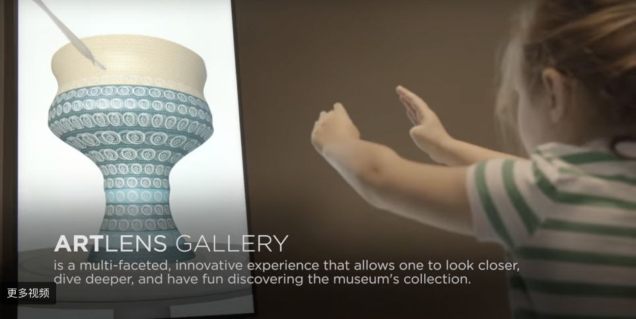
Figure 1: Exploration of 3D artworks using photogrammetry, allowing you to zoom and manipulate gesture-based 3D projected models to see all angles of an artwork. (ehirsch, 2017).
Los Angeles has launched a project called “We Rise” that invited commu- nity members to share their stories and collaborate with artists to create murals and installations that address mental health issues (knight, 2019). The National Museum of Natural History in Washington, D.C. has also adopted a collaborative approach by inviting the public to participate in a digitiza- tion project that aims to make the museum’s collections more accessible and engaging (Magazine, 2020).
This approach has led to a more engaging and interactive museum experi- ence, allowing visitors to contribute their own perspectives and experiences to exhibits. By involving visitors in the creation and curation of exhibits, museums are able to create a more meaningful and personalized experience for visitors. Changing Cultural Expectations: The British Museum in London is an example of a museum that has had to adapt to changing cultural expectations. The museum has faced criticism over its collection of artefacts from other cultures and has taken steps to address these issues, including adding more context to exhibits and providing additional information on how objects were obtained (Hicks, 2021). This is important as museums must constantly re-think their focus and relevance to changing cultural expectations.
The Creators’ Movement The Smithsonian Institution in the US has been at the forefront of using 3D printing technology to enhance the museum experience. The institution has used 3D printing to create replicas of objects in its collections, allowing visi- tors to touch and interact with these objects in a way that was previously impossible (Wilson et al., 2017). The institution has also used 3D printing to create models of archaeological sites, providing a new way to understand and engage with these sites.
The Creators’ Movement, with its emphasis on technology and innova- tion, has disrupted traditional approaches to curation and presentation in
Navigating the Digital Landscape: Trends and Challenges for Museums in the 21st Century 197
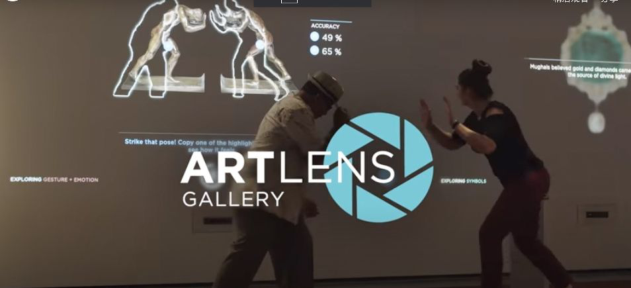
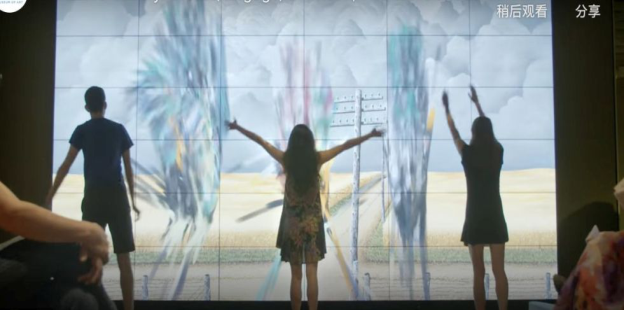
Figure 2: Artworks, including 3D objects, in the space are scannable using the “Scan” feature in the ArtLens App, allowing you to access even more interpretive content. (ehirsch, 2017).Figure 3: Body language: visitors guess the different emotions expressed by figures in an artwork by mirroring the poses of each figure. By matching gesture with emotion, visitors realize the narrative of an artwork through the interaction between the figures. (ehirsch, 2017).
museums. By leveraging emerging technologies such as 3D printing, augmen- ted reality, and virtual reality, museums can offer new ways for visitors to engage with exhibits and artifacts. These technologies offer museums the opportunity to create more immersive and interactive experiences that cater to a diverse range of interests and learning styles.
The Smithsonian Institution in the US has been at the forefront of using 3D printing technology to enhance the museum experience. The institution has used 3D printing to create replicas of objects in its collections, allowing visi- tors to engage with these objects in a tactile and interactive way. The museum has also used 3D printing to create models of archaeological sites, which provide visitors with a new way to understand and engage with these sites.
In addition to 3D printing, virtual and augmented reality technologies offer museums new opportunities to create immersive and interactive experiences.
198 Li
The American Museum of Natural History in New York, for example, has used virtual reality to create a vivid and realistic exploration of animal habi- tats. This approach not only engages visitors in a more meaningful way but also allows for new educational and conservation opportunities.
The Museum of the Future in Dubai provides another example of how the Creators’ Movement has influenced museums. This museum focuses on using technology and innovation to address pressing global challenges, such as climate change and sustainable development. By incorporating interactive technologies such as augmented reality, the museum creates personalized and dynamic experiences for visitors that inspire them to take action towards a better future.
Overall, the Creators’ Movement has opened up new possibilities for museums to engage with their audiences and stay relevant in a rapidly chan- ging digital landscape. By embracing emerging technologies, museums can create more dynamic and interactive experiences that cater to a diverse range of interests and learning styles.
CONCLUSION
Museums face significant challenges in navigating the digital landscape, and must constantly adapt to remain relevant and engaging to visitors. The poten- tial of 3D printing technology to enhance the user experience and engagement with museum collections is significant. However, museums must also diver- sify their content, collaborate with visitors and adapt to changing cultural expectations. By doing so, museums can remain relevant and engaging in the 21st century.
ACKNOWLEDGMENT
I would like to take a moment to express my deepest gratitude to my thesis advisor, whose unwavering support and guidance helped me navigate the twists and turns of this research journey. Their tireless efforts and expert insights were instrumental in shaping the direction and scope of this study.
I also want to thank my family and friends, whose love, encouragement, and unwavering belief in me kept me motivated throughout the ups and downs of this process. Your faith in me means more than words can express.
Finally, I am forever grateful to the participants who generously shared their time and perspectives, trusting me with their stories and experiences. Your willingness to be vulnerable and open allowed me to gain a deeper understanding of the topic and its impact.
This thesis would not have been possible without the support and encou- ragement of these amazing individuals. I am truly blessed and humbled by their presence in my life.
REFERENCES
Banks, J. A. and Banks, C. (2016). Multicultural education : issues and perspectives.
Hoboken, New Jersey: Wiley.
Navigating the Digital Landscape: Trends and Challenges for Museums in the 21st Century 199
Dafoe, T. (2019). The Cleveland Museum Studied How to Best Engage Visitors in the Age of Netflix. Here’s What They Found. [online] Artnet News. Availa- ble at: https://news.artnet.com/art-world/cleveland-museum-art-studied-digital-e ngagement-visitors-results-encouragin-1567123. ehirsch (2017). ArtLens Exhibition. [online] Cleveland Museum of Art. Available at:
https://www.clevelandart.org/artlens-gallery/artlens-exhibition. Giannini, T. and Bowen, J. P. (2022). Museums and Digital Culture: From Reality to Digitality in the Age of COVID-19. Heritage, 5(1), pp. 192–214. doi: https://doi.org/10.3390/heritage5010011. Hicks, D. (2021). Decolonising museums isn’t part of a ‘culture war’. It’s about keeping them relevant. The Guardian. [Online] 7 May. Available at: https://www.theguardian.com/commentisfree/2021/may/07/decolonising-mus eums-isnt-part-of-a-culture-war-its-about-keeping-them-relevant [Accessed 24 Feb. 2023]. knight, C. (2019). Critic’s Notebook: MOCA on the rebound? Three strong shows
and free entry are welcome signs of change. [Online] Los Angeles Times. Availa- ble at: https://www.latimes.com/entertainment/arts/la-et-cm-moca-40th-annivers ary-20190612-story.html [Accessed 24 Feb. 2023]. Magazine, S. (2020). Digitization Allows Public Access to Smithsonian’s Hidden Collections. [Online] www.smithsonianmag.com. Available at: https://www.smithsonianmag.com/blogs/national-museum-of-natural-histor y/2020/02/26/digitization-allows-public-access-smithsonians-hidden-collections/ [Accessed 24 Feb. 2023]. Satsumoto, Y. and Piao, S. (2016). Effects of Shoe Fit and Moisture Permeability of a Leather Shoe on Shoe Microclimate and Air Exchange. Journal of Ergonomics, 6(4). doi: https://doi.org/10.4172/2165-7556.1000171. Wilson, P. F., Stott, J., Warnett, J. M., Attridge, A., Smith, M. P. and Williams, M. A.
(2017). Evaluation of Touchable 3D-Printed Replicas in Museums. Curator: The Museum Journal, 60(4), pp. 445–465. doi: https://doi.org/10.1111/cura.12244.
LISTED IN THE AHFE DIGITAL BOOKSTORE CATALOGUE
Explore the complete digital volume
Human Factors in Communication of Design
Read this individual research paper free through the original publisher, or explore the full digital proceedings book.
ISBN 978-1-958651-66-7
Explore this ISBN in the AHFE Bookstore ↗Listed in the July 2026 bookstore catalogue; search by ISBN to confirm current availability · Digital book purchase optional