Dingwen Zhang (2023). The influence of interface beauty factors on the cognitive performance of news web interface visual information. In: Intelligent Human Systems Integration (IHSI 2023): Integrating People and Intelligent Systems. AHFE Open Access, vol. 69, pp. 848–855. https://doi.org/10.54941/ahfe1002909
At present, there are many researches on the cognitive performance of digital interface information at home and abroad, but there are relatively few researches on the influence of interface beauty factors on the performance in the news web interface environment. This study selects three factors of interface beauty factors, namely balance factor, symmetry factor and density factor, as the variables of this study, to explore the influence of interface beauty factors on the cognitive performance of news web interface visual information. The research is divided into two parts: interface beauty factor calculation and interface visual information cognitive performance experiment. The results show that there is no obvious linear relationship between the three factors and visual information cognitive performance, but the model formulas of interface balance, interface symmetry, interface density and average reaction time can be obtained by quadratic curve fitting. The results are of great significance to guide designers to design and evaluate the news web page interface in a quantitative way from the perspective of improving information cognitive performance.
Thanks to the development of computer technology, digital interface has become an indispensable part of people’s daily life. Digital interface not only plays an important role in human-computer interaction, but also car- ries the massive information content of the Internet world, which is one of the important ways for people to obtain information. With the rapid deve- lopment of digitization, people’s daily habit of watching news is gradually changing from paper to interface. For the news web interface, the cognitive efficiency of visual information directly determines whether the user can get news information in time, which directly affects the user’s online news rea- ding experience. At the same time, the aesthetic feeling of news web interface design also directly affects the user’s visual perception and emotional expe- rience. For designers, the pursuit of interface beauty should also take into account the user’s cognitive performance of visual information for the inter- face, and it is difficult for most designers to find the relative balance between the two. Therefore, it is of great significance to explore the influence of inter- face beauty factors on the visual information cognitive performance of news
The Influence of Interface Beauty Factors on the Cognitive Performance 849
web interface, so as to guide designers to better design news web interface from the perspective of improving user experience.
CALCULATION METHOD OF DIGITAL INTERFACE BEAUTY FACTOR Ngo, Teo and Byrne have proposed 13 indicators for calculating interface beauty, namely, balance degree, central coordination degree, symmetry, sense of order, cohesion degree, unity degree, beauty of proportion, simplicity, den- sity, regularity degree, economy, sense of rhythm and uniformity (2003). Bauerly and Liu have also mentioned that it is necessary to explore the influence of balance factor on interface beauty, because balance can unify interface elements into a whole, so as to make the interface more com- plete and meaningful (2006). Secondly, it can also be found that there is a strong positive correlation between interface symmetry and interface beauty (Bauerly and Liu, 2006). In addition, interface density is a very easy concept for users, and it is also one of the factors that need to be considered in interface design. Based on the above reasons, this study sele- cts the balance factor, symmetry factor and density factor as the variables to explore the influence of interface beauty factor on the cognitive perfor- mance of news web interface visual information. The calculation method of the three is based on the calculation model proposed by Ngo, Teo and Byrne (2003).
Balance can be defined as the distribution of the visual weight of the ele- ments in the picture. In this model, the total weighted difference of each com- ponent on both sides of the horizontal axis and the vertical axis is calculated to get the balance degree of the interface (Ngo, Teo and Byrne, 2003).
Symmetry refers to the degree of symmetry of interface elements in vertical, horizontal and diagonal directions (Ngo, Teo and Byrne, 2003). Specifically, the vertical symmetry and the horizontal symmetry refer to the balanced arrangement of the equivalent elements on the vertical axis and the horizon- tal symmetry on the horizontal axis respectively. Radial symmetry consists of two or more equivalent elements of axial balance, which intersect at the central point.
Density refers to the extent to which the interface is covered by ele- ments, which is achieved by limiting the interface density level to an optimal percentage (Ngo, Teo and Byrne, 2003).
PERFORMANCE EVALUATION METHOD OF DIGITAL INTERFACE VISUAL INFORMATION COGNITION Reaction time generally represents the time required for users to complete the target task, which can represent the information cognitive efficiency of users to a certain extent (Li, 2017; Yao, 2020; Chen, 2019; Shu, 2018). The shorter the reaction time, the higher the information cognitive performance of users, and vice versa. In this study, reaction time was measured to represent the cognitive performance of visual information.
850 Zhang
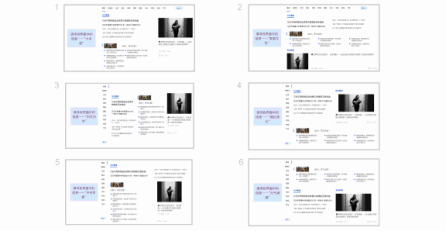
Figure 1: Experimental Pictures from 1 to 6.
THE EXPERIMENT The purpose of this experiment is to explore the influence mechanism of balance factor, symmetry factor and density factor on the visual information cognitive performance of news web interface. A total of 8 subjects (aged from 22 to 24) were recruited from the graduate students in Suzhou campus of Southeast University, including 5 males and 3 females.
Experimental Materials The experimental materials include six experimental pictures, as shown in Figure 1. Each picture includes two parts: the right side of the picture shows the news web interface, and the left side shows the target information that the subjects need to search and locate on the news web interface. Among them, six news web pages have the same information content and different interface typesetting. Six different target information are located in the same information level of the news web interface, so as to maximize the cognitive efficiency of these target information.
Experimental Process Six experimental pictures appeared randomly on the computer screen. The task of the subjects is to identify the target information in the random experi- mental pictures, and search and point out the target information in the right news web interface. When the subjects point out the target information, the testers immediately click the space bar, and then, at an interval of 1 second, the computer automatically jumps to the next picture to make the subject continue the next test. In this process, the computer program automatically records the time interval from the appearance of each experimental picture to the time when the tester clicks the space bar, so as to indicate the reaction time from the clear target information to the completion of information sea- rch and positioning. Finally, after the subjects finished searching and locating the target information of all the pictures, the experiment ended.
INTERFACE BEAUTY FACTOR CALCULATION RESULTS According to the interface beauty factor calculation model proposed by Ngo, Teo and Byrne, we can get the balance, symmetry and interface density of six news web pages in the formal experiment (2003).
The Influence of Interface Beauty Factors on the Cognitive Performance 851
Table 1. Calculation results of interface beauty factor.
It can be seen from table 1 that the six news web pages have different degrees of balance, symmetry and interface density. The range of balance is 0.7397 to 0.9287, the range of symmetry is 0.7813 to 0.9194, and the range of density is 0.3173 to 0.8030.
INTERFACE VISUAL INFORMATION COGNITIVE PERFORMANCE EVALUATION RESULTS The computer program automatically recorded the time interval from the appearance of each experimental picture to the time when the testers click the space bar to get the reaction time of 8 subjects to complete the visual information search of each news web interface. Then, the 3 σ principle is used to test the reaction time of 8 subjects for the same news web interface, so as to eliminate the data with large error and ensure the reliability of the experimental results. Finally, the average reaction time of all subjects for the same news web interface can be obtained by counting the experimental data after eliminating errors, which can represent the visual information cognitive performance of the subjects in this interface.
It can be seen from table 2 that the average reaction time of subjects to complete the experimental task ranges from 6.0257 to 12.5545. In addi- tion, the average reaction time of news web interface 6 is the shortest, which can be considered as the highest visual information cognitive per- formance, while the average reaction time of news web interface 5 is the longest, which can be considered as the lowest visual information cognitive performance.
852 Zhang
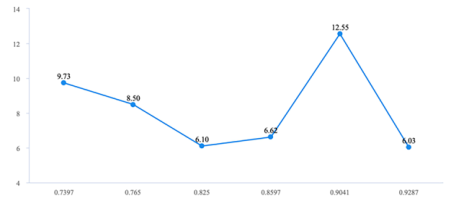
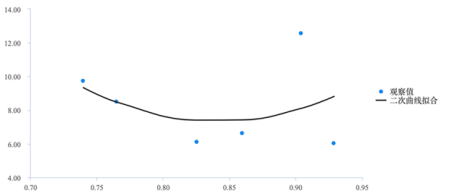
Figure 2: Line chart of balance and visual information cognitive performance.Figure 3: Quadratic curve fitting of balance and visual information cognitive performance.
THE RELATIONSHIP BETWEEN INTERFACE BEAUTY AND VISUAL INFORMATION COGNITIVE PERFORMANCE The balance data, symmetry data, density data and their corresponding ave- rage reaction time data of six news web interfaces in the formal experiment were imported into SPSS software at the same time. The relationship betw- een balance, symmetry, density and visual information cognitive performance can be obtained by drawing line chart, linear regression analysis and curve regression analysis.
The Relationship Between Balance Factor and Visual Information Cognitive Performance It can be seen from Figure 2 that there is a nonlinear relationship between balance and visual information cognitive performance. When the degree of balance changes between 0.7397 and 0.825, the average reaction time beco- mes shorter, which means that the visual information cognitive performance will gradually improve; when the degree of balance changes between 0.825 and 0.9041, the average reaction time becomes longer, which means that the visual information cognitive performance gradually decreases, and reaches the lowest when the degree of balance is 0.9041; when the degree of balance is 0.9287, the average reaction time becomes longer The sharp decline means that the cognitive performance of visual information suddenly improves.
Through quadratic curve fitting, as shown in Figure 3, we can get the prediction model formula between balance degree B and average reaction time T: T = 142.672 −321.647 ∗B + 191.133 ∗B∧2 (1)
The Influence of Interface Beauty Factors on the Cognitive Performance 853
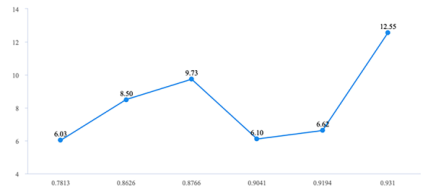
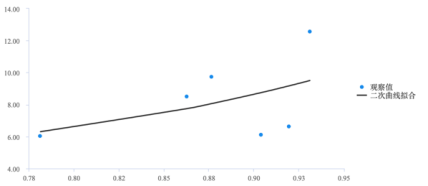
Figure 4: Line chart of symmetry and visual information cognitive performance.Figure 5: Quadratic curve fitting of symmetry and visual information cognitive perfor- mance.
The Relationship Between Symmetry Factor and Visual Information Cognitive Performance It can be seen from Figure 4 that the relationship between symmetry and visual information cognitive performance is nonlinear. When the symmetry changes from 0.7813 to 0.8766, the average reaction time becomes lon- ger, which means that the performance of visual information cognition will gradually decrease; when the symmetry changes from 0.9041, the average reaction time sharply decreases, which means that the performance of visual information cognition will suddenly improve; when the symmetry changes from 0.9041 to 0.931, the average reaction time becomes longer, which means that the performance of visual information cognition will be impro- ved The performance gradually decreased, and reached the lowest when the symmetry was 0.931.
The prediction model formula between symmetry S and average reaction time T can be obtained by quadratic curve fitting, as shown in Figure 5: T = 28.212 −69.501 ∗S + 53.064 ∗S∧2 (2)
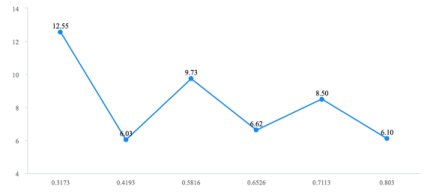
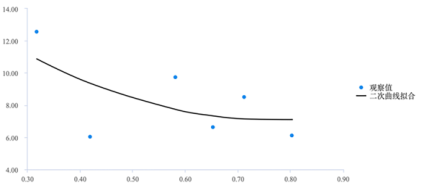
The Relationship Between Density Factor and Visual Information Cognitive Performance It can be seen from Figure 6 that the relationship between density and visual information cognitive performance is non-linear, and to a certain extent, it presents a M-shaped broken line relationship, that is, the visual information cognitive performance changes in a M-shaped jump with the interface density. When the interface density is 0.3173, the reaction time is the longest, which means the cognitive performance of visual information is the lowest.
854 Zhang
Figure 6: Line chart of density and visual information cognitive performance.Figure 7: Quadratic curve fitting of density and visual information cognitive performance.
The prediction model formula between the interface density D and the average reaction time T can be obtained by quadratic curve fitting, as shown in Figure 7: T = 18.090 −28.658 ∗D + 18.646 ∗D∧2 (3)
CONCLUSION
By quantifying the balance factor, symmetry factor and density factor in the interface beauty factor, and measuring the response time index of user beh- avior dimension to represent the information cognitive efficiency, this study explored the influence of interface beauty factor on the visual information cognitive performance of news web interface. The experimental results show that there is no significant correlation between the three factors and visual information cognitive performance, but the model formulas of interface bala- nce, interface symmetry, interface density and average reaction time can be obtained by quadratic curve fitting (1) T= 142.672 −321.647 * B + 191.133 * B∧22 (2) T= 28.212 −69.501 * S + 53.064 * S∧2 (3) T= 18.090 −28.658 * D + 18.646 * D∧2 The results are of great significance to guide designers to design and evalu- ate the news web page interface in a quantitative way from the perspective of improving information cognitive performance. However, there are still many shortcomings in this study. For example, although the target information to be searched is at the same level in the information architecture, the semantic characteristics of text information and the importance of its position in a sentence can affect the efficiency of information search and the reliability of
The Influence of Interface Beauty Factors on the Cognitive Performance 855
the experimental results. In addition, because there are many factors affecting the beauty of the interface, it is difficult to change only one of the factors in the same news web interface, while keeping the other factors unchanged, so the variable control of this study needs to be further improved.
In the future research, we will be more careful to set experimental tasks and better control variables, so that the experimental results can more effectively guide the designer’s future design and evaluation work.
ACKNOWLEDGMENT
Thanks to my tutor for his help, so that I can successfully complete this research. His rigorous attitude to science and persistent pursuit of goals will always inspire me to move forward. Thanks to my family for their support and encouragement, so that I can make continuous progress.
REFERENCES
Bauerly, M. and Liu, Y. (2006) “Computational modeling and experimental investigation of effects of compositional elements on interface and design aesthetics”, International Journal of Human-Computer Studies, 64(8), pp. 670–682. Chen, Z. (2019). Research on the influence of visual complexity and task difficulty
of mobile interface on users’ cognition. Master’s Degree. Zhejiang University. Li, L.M. (2017). Experimental analysis and evaluation method of brain physiology for cognitive performance of digital interface visual information. Master’s Degree. Southeast University. Ngo, D.C.L., Teo, L.S. and Byrne, J.G. (2003) “Modelling interface aesthetics”,
Information Sciences, 152, pp. 25–46. Shu, Y.F. (2018). Research on the efficiency of smart phone icon recognition based on design factors. Master’s Degree. Southwest Jiaotong University. Yao, Y.L. (2020). The influence of icon presentation and complexity on icon search
performance. Master’s Degree. Sun Yat sen University.
LISTED IN THE AHFE DIGITAL BOOKSTORE CATALOGUE
Explore the complete digital volume
Intelligent Human Systems Integration (IHSI 2023): Integrating People and Intelligent Systems
Read this individual research paper free through the original publisher, or explore the full digital proceedings book.
ISBN 978-1-958651-45-2
Explore this ISBN in the AHFE Bookstore ↗Listed in the July 2026 bookstore catalogue; search by ISBN to confirm current availability · Digital book purchase optional