Roro Cahya Antika Putri, Fajar Junaedi (2022). Analysis of the Objectivity of Mass Media during the COVID-19 Pandemic in Indonesia. In: Human Interaction & Emerging Technologies (IHIET 2022): Artificial Intelligence & Future Applications. AHFE Open Access, vol. 68, pp. 789–795. https://doi.org/10.54941/ahfe1002807
During COVID-19, this study examines the accuracy of online news reporting by Beritasatu.com on reports of corruption in Indonesian social security funds. The substance of news items provided by Beritasatu.com was analyzed using a quantitative technique. The Westerstahl theory is used in the research data analysis phase. According to the objectivity matrix evaluation results, the element of actuality in the Beritasatu.com media in presenting facts and completeness of information, including 5W + 1H, is reasonably high. Furthermore, the news portal has the relevancy of the sources and the title determination based on the news issue. Beritasatu.com's balanced results in presenting two perspectives are relatively poor in impartiality, which is determined using markers of balance and neutrality. In contrast, news that quotes from one source dominates all news. As a result, Beritasatu.com lacks news verification discipline. Overall, the findings of the data study suggest that Beritasatu.com maintains its impartiality in reporting.
In March 2020, the Covid-19 pandemic in Indonesia greatly affected the news broadcasting process, which forced audiences to work from home. This situ- ation affects the media in formulating strategies and content in broadcasting news (Geni, Briandana and Umarella, 2021). Many types of news publi- shed about Covid-19, ranging from information on health to economics and politics, have been published every day, especially in the era of globaliza- tion where information can be accessed instantly (Pristianita et al., 2021). The Covid-19 pandemic has made the mass media play an essential role as a source of information (Adiprasetio and Larasati, 2020). The media plays an essential role in disseminating accurate and responsible information in all situations (Widyastuti, 2021). Mass media is currently used by audiences in everyday life to get information about current and past events. The media has an essential role because it must disseminate information to the public quickly and simultaneously (Littlejohn and Foss, 2009).
Digital technology is currently the standard for mass media because it can be accessed anywhere via mobile phones; even newspapers are now online
so that their reach is wider (Shirley, 2010). The frequency of news published in the media is an indicator of the level of the problem being circulated. This makes the media have to choose the most exciting issues to disseminate to the public (Gandasari and Dwidienawati, 2020). Media in Indonesia continues to grow, but the emergence of new media is not directly proportional to the existing quality. The issue of media accuracy is one of the main points of the lack of quality media in Indonesia (Rakhmadani, 2020).
Beritasatu.com is an online news portal site that belongs to a large com- pany in Indonesia, namely the Lippo Group, with the motto “The Chanel for Decision Makers” (Sapulette, Setyanto and Winduwati, 2019). As an online media, Beritasatu.com has advantages in speed, accuracy, completeness, sele- ction of the correct issues, and presentation that pays attention to positive law and also the principle of propriety (Yusman, 2017). The existence of an element of speed competition in presenting news on online media will affect the low accuracy and verification of data on the news. Problems like that are a severe concern for online media during the incessant flow of information that demands that information be presented in real-time (Haryatmoko, 2007).
Previous research that discusses the news of corruption in the media is researched by Hafied Cangara and Nasakros Arya with the title “Corruption News in Two Local Newspapers in Indonesia”. In his research, he said that the media reporting on corruption still has limitations in resource capacity, especially in mastering investigative journalistic methods (Cangara and Arya, 2021). This study uses a quantitative approach using content analysis. Quantita- tive content analysis is an analysis that is used to measure specific aspects of content which is carried out quantitatively. Through content analysis, rese- archers can study the description of the content, its characteristics, and the development of a content (Eriyanto, 2011). This study aims to determine the objectivity of media coverage in Indonesia during the Covid-19 pandemic, specifically examining objectivity in the news of corruption cases of social assistance funds on Beritasatu.com online media.
News Objectivity In a news story, news that is true, accurate, and disciplined in verifying or covering both sides has become the main principle in presenting news (Rakh- madani, 2020). McQuail (2010) stated that objectivity is generally closely related to news and information. Objectivity is one of the requirements in writing a story as stated in the Journalistic Code of Ethics of the Indonesian Press Council, article 1, which reads “Indonesian journalists are independent, produce news that is accurate, balanced, and does not have bad intentions” (Benjamin Josiah, 2021). Objectivity plays an essential role for the public to judge whether the news presented in the media can be trusted or not (Han- diyani and Hermawan, 2017). Conceptually, objectivity must be maintained, but in practice, many efforts to maintain objectivity in the media have not been carried out correctly.
The concept of media objectivity proposed by Westerstahl is divided into two aspects, namely, the aspect of factuality and impartiality. The factual
Analysis of the Objectivity of Mass Media during the COVID-19 Pandemic in Indonesia 791
aspect has three main elements, namely truth, informative, and relevance, while the impartiality aspect has two elements, namely balance and neutrality (Rakhmadani, 2020). The factual aspect refers to news reporting in the form of events or statements that can be checked for the truth to the sources in the news (Sukmono, Loilatu and Fadila, 2021). This aspect involves explaining the facts consisting of 5W + 1H elements, news accuracy, and not trying to distort the existing information.
The aspect of impartiality is an attitude of impartiality. Impartiality is also an essential point in reporting because it is possible to identify existing trends, such as the tendency to contain conflicts or disputes (Rakhmadani, 2020). The impartiality aspect contains elements of balance and neutrality. This ele- ment can be achieved when a news item contains more than one piece of information, which means the newsmaker has carried out verification disci- pline. Neutrality in the news can be created when there is no vested interest, but if there is a vested interest, then the principle of covering both sides becomes a balance in the news to be more objective.
METHOD
This study uses a quantitative approach using content analysis. Quantitative content analysis is an analysis that is used to measure specific aspects of con- tent which is carried out quantitatively. Through content analysis, researchers can study the description of the content, characteristics, and development of a content (Eriyanto, 2011). The procedure for selecting news is through the hashtag #korupsibansos on the Beritasatu.com online media portal. The population in this study is all news about corruption in social assistance in Indonesia on Beritasatu.com. There are 22 news stories about social assista- nce corruption cases selected by researchers from July 2021 to November 2021. In this study, the researcher analyzed the content that would be used as a recording unit. There are five recording units: physical, syntactical, refe- rential, proportional, and thematic units (Eriyanto, 2011). In this study, researchers only used one recording unit, namely the thematic unit. The the- matic unit analyzes the theme of conversation, which is the topic of a text. In this unit, it means to see the whole of the meaning in the text. This study uses an advanced validity test by asking the expert to evaluate the measuring instrument. This reliability test aims to measure how measuring instruments can produce the same conclusions and do not lead to subjective interpreta- tions. So that the results of this study remain objective, the authors use the reliability test of the intercoder reliability method with the Holsty formula.
Reliability between coders = 2M/(N1+N2) Notes: M: The exact amount of coding (approved by both coders) N1: Number of coding made by coder 1 N2: Number of coding made by coder 2.
RESULT AND DISCUSSION
Based on the research results that have been carried out, there is 22 news about corruption cases in social assistance on the online media
792 Putri and Junaedi
Beritasatu.com from July 2021 to November 2021. Furthermore, this study discusses two dimensions of corruption case news: the factuality dimension and the impartiality dimension.
Dimension of Factuality The dimension of factuality is measured using two elements, namely releva- nce and truth. Truth consists of three indicators: accuracy, completeness of news containing elements of 5W + 1H, and factuality (Rakhmadani, 2020). The findings of this study indicate that the three indicators are very significant in Beritasatu.com.
Table 1. The dimensions of the factuality of Beritasatu.com (source: Researcher’s Analysis, 2022).
Table available in the original PDF paper.
Dimension of Factuality Yes No Relevance 97,6% 2,3% Title Match 94,4% 5,6% Newsletter 91,4% 8,6%
Based on Table 1, the accuracy of the news presented in terms of the rele- vance of the sources quoted is high, with a percentage of 97.6% or as many as 21 news stories. The relevance that matches the content, source, and the title of the news is relatively high, with a percentage of 94.4% or as many as 17 news stories. Although Beritasatu.com presents news in online media, news about social assistance corruption cases in Indonesia has a relatively high 5W + 1H element, complete with 91.4% or as many as 16 news stories.
The element of completeness of good news on Beritasatu.com shows that journalists present news in Indonesian online media about corruption with high standards of journalism quality. The findings of this study show the seriousness of online media in Indonesia in fighting corruption. Efforts to combat corruption in Indonesia have become a significant issue carried out by the government. In fighting corruption, the media must synergize effectively to ensure that corruption cases are appropriately investigated and thoroughly until reported to the authorities (Pillai, 2011).
The seriousness of Beritasatu.com in reporting corruption cases shows the support of the mass media in Indonesia for the government’s efforts to sup- press the rate of corruption. As we know, Indonesia is a developing country entangled in the problem of corruption. Even more concerning is that cor- ruption cases are still ongoing during the Covid-19 pandemic. The social assistance corruption case was the most significant during the Covid-19 pan- demic. This case involves the Minister of Social Affairs of the Republic of Indonesia as the leading actor.
The involvement of the Minister of Social Affairs has made this case of high news value. Beritasatu.com seriously takes the case of corruption in social assistance during the Covid-19 pandemic as the leading news.
Analysis of the Objectivity of Mass Media during the COVID-19 Pandemic in Indonesia 793
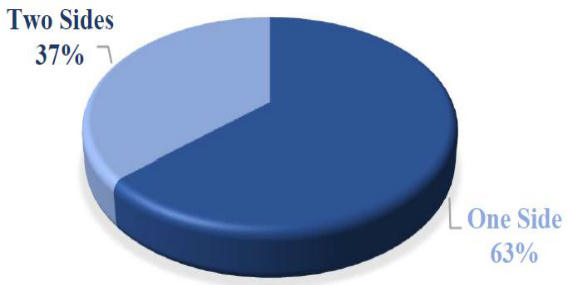
Dimensions of Impartiality The impartiality dimension has two elements, namely balance, and neutrality. In this case, balance is measured using balanced proportionality, applying the principle of covering both sides of the news. In addition, the sources quoted are also directly related to the content of the news (Rakhmadani, 2020). The results of the research that have been researched show that there are 22 news stories containing cases of corruption in social assistance. Of these 22 news stories, it was found that 40% or three news stories contain elements that cover both sides, while the other 69% or 12 news stories only show one side by citing only one source.
Figure 1: Balance of News Content on Beritasatu.com (source: Researcher’s Analysis, 2022).
Based on Figure 1, the informants who became the source of the news came from judges, prosecutors from the Corruption Eradication Commission, staff from the Ministry of Social Affairs, and influencers. The selection of sources from influencers shows the phenomenon of digital journalism identical to the digital ecosystem. Influencers are part of this digital ecosystem.
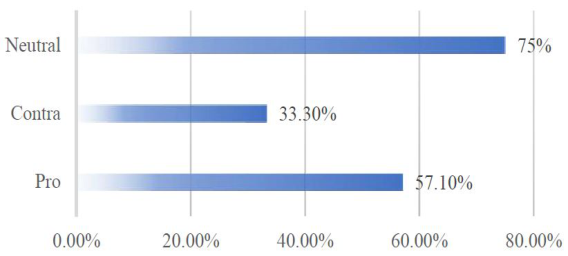
Figure 2: News Characters of Beritasatu.com (source: Researcher’s Analysis, 2022).
See Figure 2, the second dimension of impartiality is the element of neu- trality. Neutrality in this study was measured using three indicators, namely neutral, pro, and contra. Even though the online media Beritasatu.com only
794 Putri and Junaedi
displays one side, the news presented in the case of corruption in social assi- stance remains neutral. Beritasatu.com does not highlight contra or pro news to the figures being reported on.
CONCLUSION
Based on the analysis, this research concludes that Beritasatu.com has a rela- tively high level of objectivity. Aspects of factuality and impartiality are the main points in the objectivity of reporting on social assistance corruption in Indonesia. Reports on social assistance corruption on Beritasatu.com have a high level of factuality, which can be seen from the sources’ relevance with a high percentage of 97.6%. In addition, the news on Beritasatu.com also has compatibility between the content, source, and the title of the news it carries, which is relatively high with a percentage of 94.4%. Meanwhile, in the aspect of impartiality measured using a balance indicator, Beritasatu.com displays two pretty low sides, which is dominated by news that only quotes from one source. Nevertheless, Beritasatu.com still maintains its neutrality in reporting cases of corruption in social assistance by not cornering figures.
REFERENCES
Adiprasetio, J. and Larasati, A. W. (2020) ‘Pandemic Crisis in Online Media : Quantitative Framing Analysis on detik . com ’ s Coverage of Covid-19’, pp. 153–170. doi: 10.22146/jsp. Benyamin Yosia (2021) ‘Objektivitas Pemberitaan Covid-19 Pada Media Daring
Okezone.Com’, Jurnal Komunikasi dan Kajian Media, 5 No.1(3), p. 5. doi: http://dx.doi.org/10.31002/jkkm.v5i1.3409. Cangara, H. and Arya, N. (2021) ‘Corruption News in Two Local Newspapers in Indonesia’, Academia.Edu, 26(1), pp. 4–12. doi: 10.9790/0837-2601060412. Eriyanto (2011) Analisis Isi : Pengantar Metodologi untuk Penelitian ilmu Komuni-
kasi dan Ilmu-Ilmu Sosial Lainnya. Pertama. Jakarta: Prenadamedia Group. Gandasari, D. and Dwidienawati, D. (2020) ‘Content analysis of social and economic issues in Indonesia during the COVID-19 pandemic’, Heliyon, 6(11), p. e05599. doi: https://doi.org/10.1016/j.heliyon.2020.e05599. Geni, G. L., Briandana, R. and Umarella, F. H. (2021) ‘The strategies of television
broadcast during the covid-19 pandemic: A case study on indonesian television’, Jurnal Komunikasi: Malaysian Journal of Communication, 37(2), pp. 243–256. doi: 10.17576/JKMJC-2021-3702-15. Handiyani, P. and Hermawan, A. (2017) ‘Kredibilitas Portal Berita Online Dalam Pemberitaan Peristiwa Bom Sarinah Tahun 2016 (Analisis Isi Portal Berita Detik.com dan Kompas.com Periode 14 Januari- 14 Februari 2016)’, Jurnal Komunikasi, 12(1), pp. 51–68. doi: 10.20885/komunikasi.vol12.iss1.art4. Haryatmoko (2007) Etika Komunikasi. Jakarta: Raja Grafindo Press. Littlejohn, S. W. and Foss, K. A. (2009) ‘Teori komunikasi’, Jakarta: Salemba
Humanika. Pillai, S. G. (2011) ‘Media and corruption’, Economic and Political Weekly, 46(13), p. 5. doi: 10.4324/9781003178637-9. Pristianita, S. et al. (2021) ‘Comparative analysis of online news content objecti-
vity on COVID-19 between detik.com and kompas.com’, Informatologia, 53(3), pp. 127–139. doi: 10.32914/I.53. 3–4.1.
Analysis of the Objectivity of Mass Media during the COVID-19 Pandemic in Indonesia 795
Rakhmadani, R. (2020) ‘Objektivitas Media di Tengah Pandemi Covid-19: Analisis Isi Berita tentang Penerapan New Normal di Indonesia pada Media Tirto.id’, Jurnal Audiens, 1(2). doi: 10.18196/ja.12030. Sapulette, B. C., Setyanto, Y. and Winduwati, S. (2019) ‘Analisis Framing Pemberitaan Portal Berita Media Online Mediaindonesia.com dan Berita- satu.com dalam Debat Pilpres Putaran Pertama’, Koneksi, 3(1), p. 126. doi: 10.24912/kn.v3i1.6155. Shirley, B. (2010) ‘Media/Impact: Pengantar Media Massa’, Jakarta: Salemba
Humanika. Sukmono, F. G., Loilatu, M. J. and Fadila, Q. Y. (2021) ‘Pemberitaan Sriwijaya Air 182 dalam perspektif jurnalisme optimis dan air mata’, Jurnal Kajian Komunikasi, 9(1), p. 53. doi: 10.24198/jkk.v9i1.32387. Widyastuti, D. A. R. (2021) ‘Using New Media and Social Media in Disaster
Communication’, Komunikator, 13(2), pp. 100–111. doi: 10.18196/jkm.12074. Yusman, R. (2017) ‘Kontruksi Media Online tentang Pemberitaan Perizinan Meikarta di www.beritasatu.com dan www.kompas.com Edisi September 2017’, (September), pp. 15–30.
Read this individual research paper free through the original publisher, or explore the full digital proceedings book.
ISBN 978-1-958651-44-5
Explore this ISBN in the AHFE Bookstore ↗Listed in the July 2026 bookstore catalogue; search by ISBN to confirm current availability · Digital book purchase optional