Amic Ho (2022). Application of Scaffolds in the Computer-Supported Intentional Learning Environment. In: Training, Education, and Learning Sciences. AHFE Open Access, vol. 59, pp. 254–259. https://doi.org/10.54941/ahfe1002408
Class debates have grown in popularity during the last decade. Educational scholars found that dialogic debates are more instructive than oppositional debates. The movements are made during a disagreement when two parties try to reason together. It compares new ideas to old ones and looks at a topic or issue from several aspects. Education needs dialogic as it allows students to reconstruct personal knowledge and advances scientific understanding. Previously referred to as knowledge building and then now referred to as knowledge creation since its similarities to the literature on innovation and knowledge generation. Knowledge building forum would encourage discourse rather than argumentation, according to the literature on this approach, encompasses a more extensive range of methods than the language-driven ones generally linked with argumentation. Students conducted a class discussion and writing through a knowledge building approach in this study. Their dialogue took place in an online learning environment called a Knowledge Building Forum. The ultimate objective of the research study is to investigate how would teacher include scaffolds into their knowledge building forum note writing and how would they incorporate them into their teaching.
This last decade has seen a rise in the application of argumentation in the classroom. While oppositional arguments, in which one side strives to convi- nce the other, are arguably more recognisable, dialogic arguments are more educationally engaging. An argument, according to theories of education, is an activity during a discussion in which two sides seek solutions. Dialo- gic argumentation is weighing new knowledge and experiences against one’s pre-existing ideas and examining a topic or subject from different angles. The educational literature emphasises dialogic argumentation for two key reasons. To begin, argumentation may assist students in learning by allowing them to build up their understanding via dialogic argumentation. Second, the debate is a critical step for the advancement of scientific knowledge. In lear- ning science, argumentation is often neither adversarial nor confrontational,
Application of Scaffolds in the Computer-Supported Intentional Learning Environment 255
but instead of a sort of constructive conversation in which different sides cooperated cooperatively to settle a problem. All attended students intend to reach a consensus through the conclusion of the discussion. Engaging in argu- ments may help students recognise that scientific statements are often challen- ged and that once-accepted information may become contentious again. As a consequence, many teachers encourage students to engage in discourse about scientific conflicts and socioscientific challenges. When students participate in the discussion, it is critical to foster interactions in which students are eager to express their thinking, listen to the opinions of other teachers and students, and collaborate to make meaning of disparate thinking. The substantial body of research on classroom discourse demonstrates that such a technique is difficult in creative studies environments. The structure of the teacher initi- ation, the student responses, and the teacher evaluation was a constraint on student-to-student communication and students’ investigation area.
Previous scholars reply in class discussions limited other students’ chances to engage. Significant effort has been made in the general studies classrooms to solve these issues. Encouraging students in discourse is rarer in creative studies learning, which is influenced by students’ personal values. Also, since lacking confidence, students abstain from interfering with the authority of their teachers, deeply conducting reflection by themselves, and being disho- noured by sharing information and thinking those they recognised need to improve. Even local high schools are very competitive since students must require practice problem-solving abilities with good academic programmes. Much more study is required to determine the way to establish dialogic argu- mentative learning settings. Some typical factors for encouraging discussion included teacher initiation, student responses, and teacher evaluation, which were discovered (Mehan, 1979). They constrained student-to-student conver- sation. However, few students in secondary school were encouraged to hear and voice out comments in group discussions before growing interest was put in the application of discussion in scientific teaching during the past decade (Berland & Reiser, 2009). While oppositional arguments, in which one side strives to convince the other, are arguably more recognisable, dialogic argu- ments are more educationally engaging. An argument, based on learning theory, dialogue is an activity that allows two parties to attempt reasoning cooperatively (Andriessen, 2006). Dialogic argumentation is weighing new knowledge and experiences against one’s pre-existing ideas and examining a topic or subject from different angles. The literature on scientific education cites two reasons for emphasising argumentation. The research team oppo- sed that argumentation first may assist students in learning scientific subjects by allowing them to reconstruct their understanding via a dialogic argumen- tation (Driver, Newton & Osborne, 2000). Second, dialogic argumentation is a critical step for the advancement of scientific knowledge.
THE APPLICATION OF DISCUSSION IN EDUCATION There has been a growing discussion conducted about the application of argu- mentation in scientific teaching and learning during the past decade (Berland & Reiser, 2009; Osborne, Erduran, & Simon, 2004). While oppositional
256 Ho
arguments, in which one side strives to convince the other, are argua- bly more recognisable, dialogic arguments are more educationally engaging (Andriessen, 2003). Dialogic argumentation is weighing new knowledge and experiences against one’s pre-existing ideas and examining a topic or sub- ject from different angles. The literature on scientific education cites two secondary reasons for emphasising (dialogic) argumentation. To begin, argu- mentation may assist students in learning scientific subjects by allowing them to build up their personal knowledge via dialogic argumentation activities. Second, the debate is a critical step for the advancement of scientific know- ledge. Scardamalia (2003) examined these issues in the context of a teacher’s effort to apply a dialogic argumentation-centred pedagogical method. Pre- viously referred to as ‘deliberate learning’ and ‘knowledge building’, this technique is now referred to as ‘knowledge creation’ because of its strong similarities to the previous studies of knowledge creation. In accordance with the previous studies on this approach, researchers mostly adopted the word ‘discourse’ instead of ‘argumentation’ to respond to the discussion, composing, and behaviour that has meaning among a community; discourse encompasses a various range of practices than the language-driven learning activities typically. Scardamalia’s research pointed out the critical nature of debate in an internet inquiry setting (Gallas, 1995; Scardamalia, 2003), restricting other students’ opportunities to participate. Scardamalia and the research team examined ways to optimise the learning processes (Scardama- lia, Bereiter & Lamon, 1994). They looked at ways to use computers to help people build public knowledge. They discovered that pupils could conceive evolution and explain it coherently. They agreed that self-motivated lear- ning would enhance students’ learning processes among the community of learners. So they studied various reading test methodologies and devised a fra- mework to standardise information gathering. Participants’ learning process revealed that information from the learning community, interpreted by stu- dents’ language and vocabulary, was strongly dependent on students’ grasp of the issue and reflection on their conversation topics. They outlined how students may better organise their discussion topics. Scardamalia and the research team (Scardamalia, Bereiter & Lamon, 1994) noted that students’ capacity to organise information influenced their approach to knowledge creation. They looked at how upper primary pupils (both high and poor conceptual growth) investigated scientific topics online and in other ways. They advocated online learning instead of standardised testing to assess stu- dents’ progress. They also contrasted the pupils’ aptitude to learn and their study results.
THE LEARNING THEORIES IN THE KNOWLEDGE FORUM The Knowledge Forum gives instructions for students to collaborate on the construction of ideas. It enables students to structure their conversations in the knowledge base. The term ‘Knowledge Forum’ refers to a collection of adaptable scaffolds. To a considerable degree, the Knowledge Forum serves as a useful guide for directing students’ attention to the full conversation and knowledge production process. It aids in the presentation of statistical
Application of Scaffolds in the Computer-Supported Intentional Learning Environment 257
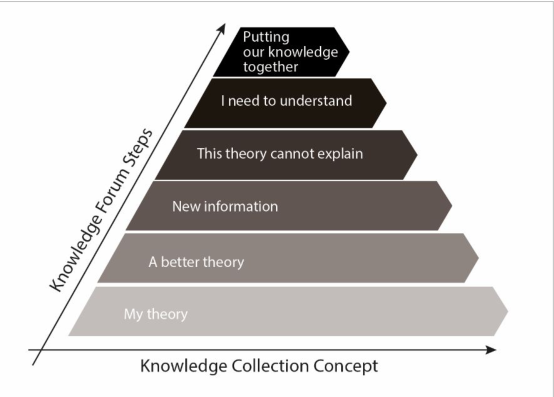
Figure 1: A figure to illustrate the knowledge construction area after combining knowledge collection and knowledge forum.
analysis and qualitative characteristics such as questioning levels, explanation levels, social networks within investigation threads, and so on. It is a useful instrument for organising an in-depth exploration of information. Utilising Knowledge Forum notes to assist students in comprehending and analysing knowledge material. However, Knowledge Forum does not actively promote the examination of enormous resources. That is, it engages in little knowledge generation. As a result, the learning material is restricted. While this may be appropriate in certain core disciplines, it is inadequate for creative topics that need students to think in many ways. In my classroom, I would use a Knowledge Forum in conjunction with Knowledge Collection, which encou- rages students to gather and comprehend diverse materials before entering the Knowledge Forum as the analytical step for organising their knowledge. According to Shin, Kim, Lee, and Bian (2012) divergent thinking perceiving things in new ways and merging previously unrelated processes, goods, or resources to create something new and better all need creativity. Thus, the most significant diversity variable would be the students with diversity, since it offers the different viewpoints, ideas, and cognitive styles essential for cre- ative processes. The collection of knowledge evolved from the collecting. It is a passionate activity that entails the appraisal, selection, and acquisition of a group of things depending on the collector’s criteria. It might elicit stu- dents’ own knowledge and experience about the subject. It acts as an internal repository of information and inspiration from which students may draw when necessary. Collections help students discover the strategy that leads to creativity by storing information, memories, and meanings in items.
THE PROCESS OF COMBINING KNOWLEDGE COLLECTION AND KNOWLEDGE FORUM Students were invited to bring in their collections to share with others. Teach- ers also shared their own collections with the class/this experience provided
258 Ho
students with an opportunity to explore material evidence (not only verbal information) directly through the sense etc. to understand their evolution, the objective behind collecting objects and realising through peer perspe- ctives the important contribution that collections make to the collectors’ work. Through the collections, students would discover the evolution of the collected object in time, as seen through their form, the material used, changing proportions, production technology etc. This widens the perspe- ctive of the students about the topic. Then the knowledge forum would be taken. The teacher starts to ask questions for constructing knowledge. The leading questions are labelled as ‘My Theory’, ‘I Need to Understand’, ‘New Information’, etc. This is for leading students to investigate the topic in-depth.
CONCLUSION
The use of argumentation in teaching has grown in popularity during the last decade. While opposing arguments are more easily recognised, dialo- gic arguments are more educationally engaging. Arguments in conversation theory are ‘motions produced during a debate when two sides endeavour to reason together.’ Dialogic argumentation involves comparing new infor- mation and experiences to old notions and looking at a topic or issue from several aspects. The educational literature emphasises dialogic arguments for two reasons. Begin by letting students create and rebuild their perso- nal understanding through a dialogic argumentation process. Second, the discussion advances scientific understanding. Arguments would assist stu- dents to rethink the scientific claims frequently and criticise the previously accepted fact. As a result, many professors urge students to discuss scienti- fic and social issues. To engage students in debate, teachers must create an environment where they feel comfortable expressing their views, listening to others, collaborating and fostering discussion. Studies of the agreement show that such a method is problematic in some scaffolding settings. The instructor begins, the student answers, and the teacher analyses hampe- red student-to-student dialogue. Previous scholars reply in class discussions limited other students’ opportunities to engage. Western schools have wor- ked hard to address these concerns. Students avoid opposing the teacher’s authority, reflecting themselves, and dishonour by presenting ideas for impro- vement in classrooms, where students are not confident enough to criticise authority. It is tough to get into strong academic local high schools. There is much to learn about creating dialogic argumentative learning environ- ments. Since this technique is closely aligned with the literature on knowledge generation and innovation, this approach was formerly referred to as ‘deli- berate learning’. Discourse covers a larger variety of behaviours than the language-intensive ones often associated with arguing. Some classes feature student poster presentations. An online inquiry environment called Know- ledge Forum was used for some of the study discourse. Finally, we want to know how teachers use scaffolds in their Knowledge Forum notes writing and teaching.
Application of Scaffolds in the Computer-Supported Intentional Learning Environment 259
REFERENCES
Andriessen, K. (2006). Do we need to be cautious in evaluating suicide statistics?, The European Journal of Public Health Volume 16 No. 4, pp. 445–445. Bell, M. A., & Wolfe, C. D. (2004). Emotion and cognition: An intricately bound
developmental process. Child development Volume 75 No. 2, pp. 366–370. Berland, L. K., & Reiser, B. J. (2009). Making sense of argumentation and explanation. Science education, Volume 93 No. 1, pp. 26–55. Chin, Christine (2006). Classroom interaction in science: Teacher questioning
and feedback to students’ responses, International journal of science education Volume 28 No. 11, pp. 1315–1346. Driver, R., Newton, P., & Osborne, J. (2000). Establishing the norms of scientific argumentation in classrooms, Science education Volume 84 No. 3, pp. 287–312. Gallas, K. (1995). Talking their way into science: Hearing children’s questions and
theories, responding with curricula. Teachers College Press. Kuhn, T. S. (1970). Criticism and the growth of knowledge: Volume 4: Proceedings of the International Colloquium in the Philosophy of Science, London, 1965. Volume 4. Cambridge University Press. Mehan, H. (1979). What time is it, Denise? Asking known information questions in
classroom discourse. Theory into practice 18.4, pp. 285–294. Osborne, J., Erduran, S., & Simon, S. (2004). Enhancing the quality of argumentation in school science. Journal of research in science teaching Volume 41 No. 10, pp. 994–1020. Scardamalia, M., & Bereiter, C. (2003). Knowledge building environments: Exten-
ding the limits of the possible in education and knowledge work. Encyclopedia of distributed learning, 269–272. Scardamalia, M., Bereiter, C., & Lamon, M. (1994). The csile project: Trying to bring the classroom into World 3. In K. McGilley (Ed.), Classroom lessons: Integrating cognitive theory and classroom practice (pp. 201–228). Cambridge: Cambridge University Press. Shin, S., Kim, T., Lee., J., & Bian., L. (2012) Cognitive diversity and creative self-
efficacy: A cross-level interaction on creativity. Paper presented at the annual meeting of the Academy of Management, Montreal, Quebec, Canada.
LISTED IN THE AHFE DIGITAL BOOKSTORE CATALOGUE
Explore the complete digital volume
Training, Education, and Learning Sciences
Read this individual research paper free through the original publisher, or explore the full digital proceedings book.
ISBN 978-1-958651-35-3
Explore this ISBN in the AHFE Bookstore ↗Listed in the July 2026 bookstore catalogue; search by ISBN to confirm current availability · Digital book purchase optional