Cesar Guevara, Ruth Narciza Zambrano Pintado, Hugo Luis Moncayo Cueva (2022). Learning Strategies and Satisfaction of University Services from the Student Perspective. In: Training, Education, and Learning Sciences. AHFE Open Access, vol. 59, pp. 140–150. https://doi.org/10.54941/ahfe1002394
Higher education in Ecuador and in the world faces contemporary challenges that require concentrating efforts to achieve increasingly superior results of the teaching-learning process, especially in this evolution and the transfer of face-to-face classrooms to virtual ones on the one hand and on the other. , also correlate the effect that institutional services have on it. It sounds a bit strange to say this, but there are students who associate the level and quality of teaching-learning also with the way they receive services from the University or Technological Institute. That is why the objective of the study was to evaluate learning strategies and satisfaction in relation to university services from the student perspective in students of the State University of Bolívar. A basic, non-experimental, descriptive and cross-sectional research was developed with a cluster sampling strategy that included a sample of 199 students from the Faculty of Human Sciences of the State University of Bolívar, the inclusion criteria were: first those who were legally enrolled, second those who have received at least two semesters of classes (so that they can evaluate institutional services), third who are of legal age (greater than or equal to 18 years) and finally, fourth who voluntarily decide to participate in the research. As instruments, the CEVEAPEU questionnaire and a student satisfaction questionnaire in relation to university services were applied, both instruments were duly chosen from other investigations that carried out the reliability and validity processes for their application. It was possible to confront the theory of educational strategies, its attributions and conceptions of multiple intelligences in students, as modifiable in the level of student satisfaction with all university services, it was shown a high level and in relation to the importance only the educational environment reached a medium level in two races. Despite obtaining high levels of evaluation of the learning scales and subscales, there is a differentiated behavior of the evaluation of AE between the different careers investigated. Finally, as a conclusion, Ecuadorian HEIs must work on modernization plans for administrative management that are born based on the administrative processes that are carried out in the different departments, where quality regulations can help improve the management system. The study of these processes within a general quality framework is supported by three fundamental pillars: 1) appropriate tools for the process in question, 2) well-established methodologies, and 3) the necessary training of all the people involved in this case. the administrative staff, teachers and students, this is an essential aspect in the improvement processes in the faculty. In addition to this, efforts must also be focused on improving the use of computer strategies through dynamic virtual classes and specialized tools related to technology. In addition to implementing places and / or playful courses that allow better student well-being.
Higher education faces contemporary challenges that demand concentra- ted efforts to achieve increasingly superior learning outcomes (Khan, 2021). These are determined, among other factors, by the quality and fulfillment of learning strategies (LSS) and by the adequate functioning of university servi- ces that constitute a fundamental element in complementing the quality of higher education (Fierro-Saltos, 2019).
The LSS has been conceptualized as a multidimensional and sometimes confusing construct that constitutes a flexible guide to achieve the objectives proposed for the learning process (Rojo & Bonilla, 2020). The purpose of the authors, is to consolidate learning and to solver specifics academics problems. They are considered as formulas used by certain groups, whose objective is to make the learning process effective.
The LSS are forms of learning the cognitive processes, directly related to cognitive abilities through techniques and methods of study of each person. Linked to genetic predispositions that exert their function on the capacity, which is developed through practice (Shi, 2017). At the same time, promotes
Learning Strategies and Satisfaction of University Services 141
effective learning, allowing sequences, order and work with accuracy (Lalaleo et al., 2021). This gives way to cooperative, participative and socializing work, thus avoiding mechanical learning through memorization of the avai- lable material (Varela-Aldás, 2019). On this basis, the learner ceases to be a receiver and becomes an active actor in his own learning (Bonilla et al., 2020). The State University of Bolivar (UEB) seeks the continuous improvement of its learning processes, for this it pays special attention to all factors, causes or conditioning factors that may affect, the quality of the teaching-learning process (HIE). These actions are part of a system of monitoring the quality of higher education, that not frequent in the field of HIE in Ecuador; there- fore, their implementation is importance to improve the quality educational Ecuadorian.
Considering the challenges facing higher education oriented towards a con- tinuous quality improvement; exerted by the proper implementation of LLS and other university services and the imprint of this type of studies in Ecua- dor; it was decided to conduct this research with the aim of evaluating the LLS and satisfaction in relation to university services from the student perspective in students of UEB, during the period January March 2021.
METHODS
Basic, non-experimental, descriptive, cross-sectional research was conducted and approach was mixed. The study was constituted by 409 students belon- ging to the careers of Science Pedagogy, Basic Education, Initial Education and Informatics Pedagogy of the UEB. Students from first to seventh seme- ster were included in the research who expressed desire to participate in the study by signing a consent form.
To calculate the sample size, the sample calculation formula for known populations was used, which fixed the number of 199 students. The stratified sampling method was used to form the sample, which determined the follo- wing composition according to careers: computer pedagogy (29 students), basic education (93 students), initial education (58 students) and science pedagogy (19 students). During the development of the study two variables were determined: the first one was called LSS and the second one was called student satisfaction and included the sub-variables service importance and satisfaction with the service.
Interview was used as a research technique and two questionnaires were used as instruments. The first was the CEVEAPEU questionnaire to evaluate LSS and another questionnaire to determine student satisfaction with univer- sity services. The CEVEAPEU questionnaire is an instrument previously vali- dated and translated into Spanish that consists of a total of 88 questions stru- ctured in 2 scales, with several subscales and specific strategies to be evaluated (Table 1). The questions are Likert-type, with answers ranging from strongly disagree (1 point) to strongly agree (5 points), the higher the score, the more positive the implementation of the evaluated LSS (Gargallo et al., 2009).
The second instrument was aimed at identifying student satisfaction It is also a questionnaire validated and translated into Spanish that has a total
Table 1. Scales, subscales and educational strategies of the CEVEAPEU questionnaire.
Table available in the original PDF paper.
Scale Subscale Learning Strategies
Motivational strategies Affective, supportive and control strategies (self-management)
Intrinsic motivation Extrinsic motivation Task value Persistence in the task Self-efficacy and expectations Conception of intelligence as modifiable Affective components Physical and mental state Metacognitive strategies
Context control
Knowledge Planning Evaluation, control and self-regulation Control, social interaction and resource management Social interaction and peer learning skills
Strategies related to information processing
Search and selection of information
Knowledge of sources and information search Information selection Organization Personalization and creativity thinking Storage, repetition, memorization Resource recovery and management Use of information Note: scales, subscales and educational strategies that are part of the CEVEAPEU.
of 53 questions that identify the opinion of students about the importance and satisfaction of 10 services. The questions are Likert-type (Zambrano et al., 2019). The information collected was processed with the help of the SPSS statistical package in its version 26.0 for Windows. Measures of central tendency and dispersion were identified for quantitative variables and abso- lute frequencies and percentages for qualitative variables. Confidence level was determined at 95%, margin of error at 5% and statistical significance at a p ≤0.05.
The ethical elements used were in accordance with the rules and procedures stipulated in the declaration of Helsinki II for conducting research on human beings. The participation of the students was voluntary with a consent form. No personal information collected, only alphanumeric codes were used, upon the completion.
METHODS
The general analysis of the scales and subscales in the 4 university careers showed high levels; however, there were differences in relation to the LSS. The analysis of the evaluation carried out by the students in relation to the LSS’s shows a high level of evaluation in most of the AE’s evaluated (Table 2). It is observed that the students of the initial education course only referred to a medium level in the strategies, attributions, and conception of intelligence as modifiable; being the course in which the best evaluation was obtained in a general way in the total of LSS.
Learning Strategies and Satisfaction of University Services 143
Table 2. Distribution of students according to LSS assessment results.
Table available in the original PDF paper.
Learning Strategies Level reached according to careers
Science pedagogy
Basic Education
Initial Education
Computer pedagogy
High Middle High High
Intrinsic motivation High High High High Extrinsic motivation Middle Middle High High Task value High High High High Persistence in the task High High High High Attributions Middle Middle Middle Middle Self-efficacy High High High High Physical and mental state High High High High Anxiety High Middle High High Knowledge High Middle High High Planning High High High High Evaluation, control and self-regulation
High High High High
Context control High High High High Information selection High High High High Acquisition of information High High High High Elaboration High High High High Organization High High High High Personalization and creativity, critical thinking Storage, replay and memory Middle Middle High Middle Use of the information. High High High High
Note: results obtained in the different careers after the evaluation of the LSs.
The students of the computer pedagogy also evaluated the strategies of attributions of intelligence as modifiable with a medium level, to which they also added the LSS storage, repetition, and memory. Students of science education evaluated several as medium levels, such as extrinsic motivation, external attributions, conception of intelligence as modifiable and storage, repetition, and memory (Table 2).
The greatest number of LSS’s indicated with a medium level was in charge of the students of the basic education career whose indicated a total of nine with a medium level of performance. This indicated with a medium level were motivation; attributions; intelligence as modifiable; anxiety; knowledge; evaluation, control and self-regulation; social interaction skills and lear- ning with peers; repetition and memory; and the LSS retrieval and resource management (Table 2).
When analyzing the LSS, it was observed that in the 4 careers, the stu- dents coincided in indicating the attributions of intelligence as modifiable as medium level. The LSS related to storage, repetition and memory was eva- luated by the students of 3 of the 4 careers as medium level; while extrinsic motivation was cataloged by students of 2 careers as medium level (Table 2).
Table 3 shows the importance of university services in the development of the educational teaching process. Both students of Science and Basic Educa- tion cataloged as of importance; in the case of the students of initial education
and computer pedagogy, considered the level of importance of the educa- tional environment to be medium and the other services to be high. The individual analysis in each career shows that science pedagogy students con- sidered as the most important services those related to services society with an identical 89.21% and computer services, resources for research, academic organization, and educational 84.21%. For these students, the service with the lowest percentage whose considered it with a high level of importance was the teaching quality 73.68%.
Basic education students considered all the university investigated with a high level. The services that received the highest frequency and percent of opinions related to a high level of teaching quality (88.17%) and resources for research and student welfare which received an identical 86.02%. The service with the lowest percentage of high importance level opinions was academic organization with 75.27% (Table 3).
In the case of early childhood education students, 62.07% of students felt that this service had a medium level. Among the services that were considered to have a high level were teaching quality (77.59%), student welfare (74.14%) and resources for research (72.41%). The students of the computer pedagogy course considered the educational environment with a medium level of importance and the rest with a high level of importance. 79.31% of the students considered that the computer services have a high level of importance, while 75.86% considered the teaching quality services and administrative infrastructure respectively (Table 3).
Table 4 shows the analysis of the students’ opinion related to satisfa- ction with university services. A high level of satisfaction was observed in each career. The individualized analysis showed that the students of the sci- ence pedagogy career identified as the university services with the highest percentages of satisfaction those corresponding to educational infrastructure and resources for research with an identical 84.21% and those concer- ning administrative quality, teaching quality and linkage with society, all with a percentage of 78.95%. The students of the basic education career identified services (74.19%), the educational environment (73.12%) and administrative quality (72.04%) as the services with the highest percentages of satisfaction (Table 4).
The university students enrolled in early childhood education identified research resources (67.24%), student welfare (67.24%), and teaching qua- lity (65.52%) as the services with the highest percentages. In this career the lowest results were obtained in terms of the percentage of high-level satisfa- ction with university services. Finally, the analysis of the satisfaction of the university students of the computer pedagogy course related to the university services identified that the teaching quality (72.41%) and computer services (72.41%) (Table 4).
DISCUSSION
In Ecuador, where there are more than 50 public and private universities, there is a national program directed by the Secretary of Higher Educa- tion, Science, Technology and Innovation (SENESCYT) that is in charge
Learning Strategies and Satisfaction of University Services 145
Equation reproduced from the original PDF.
level High level
level High level Medium
level High level Medium
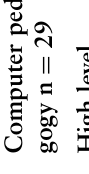
Science pedagogy n = 19 Basic Education n = 93 Initial Education n = 58 Computer peda- Medium
level High level Medium
Table 3. Distribution of students according to university degree and evaluation in relation to the importance of university services.
Table available in the original PDF paper.
University Services University careers (% Frequency)
Note: results obtained in the different degree courses after the evaluation of satisfaction.
Learning Strategies and Satisfaction of University Services 147
of analyzing and evaluating different services provided by the universities; however, there are certain elements, conditions, services and situations that constitute stabilizing elements of the teaching-learning process; under this context, within them the analysis of the mastery of the different university LSS and services not included in the supervision carried out by SENESCYT stands out (Gálvez & Milla, 2018).
The evaluation of LSS can be carried out from various points of view. Teachers can evaluate academic performance in relation to certain strategies applied, as well as suggest, based on their experiences, the strategies they consider most suitable in relation to the educational content taught without a doubt, the most objective analysis is that carried out by the students, who are the ones who implement, use, and apply each of the AE’s (Maya et al., 2021).
From this evaluation of the environments of orientation, application and implementation of LSS, the role of each actor is identified. In this way, teach- ers can be defined as orientation, administrators as evaluators of decisions, and students as implementers of the LSS; the latter having the guiding role in the knowledge of the effectiveness of the mastery of each one of them (Wang & Han, 2020).
Despite having identified the scales and subscales of the LSS as having a high level, there were some differences in relation to the opinion of the stu- dents with the evaluation of the LSS. Of course, there were some differences in each of the analyzed careers; however, the most comprehensive analysis should be carried out in a general way and in this sense, it stands out how there was unanimity in pointing out the external ones and the conception of intelligence as modifiable as medium level in terms of the evaluation of mastery and application.
Attributions, from the point of view of LSS, are conceptualized as a stra- tegy whose cognitive function of learning is based on internal or external attributions, referring to the influence of internal or external elements that can influence the educational teaching process. The mastery of this LSS makes it possible for the student to improve his or her capacity for resolution and attitude when faced with complicated situations that demand extra learning (Morales et al., 2018).
On the other hand, the concept of intelligence as modifiable is defined as the student’s ability to modify his or her cognitive capacity. This concept is based on the ideas developed by Reuven Feuerstein who proposed that human beings are modifiable and capable of breaking with internal and external genetic habits if there are favorable conditions for change, attitude of change in students and the figure of a mediator in the change that in this case could be the teacher of the course (Morales et al., 2018). It is considered that LSS favors the development of thinking processes and strategies that are not only implicit in school activities but also in social and family life situations.
Another LSS noted in more than one career as having medium level was related to storage, repetition, and memory. This strategy refers textually to the way of storing the learning content and its subsequent ability to per- form simple reproduction or the more complex process known as learning. An important element to consolidate this LSS is the use of resources that can be auditory, graphic or others that make it possible for the student to
optimize the capacity of storage and later reproduction of the stored content (Sarabi-Asiabar et al., 2015).
Finally, extrinsic motivation stands out as an AE noted in 2 careers. In this sense, it is important to highlight that having a source of extrinsic motivation can be considered as an additional motivational plus for learning (Adamma et al., 2018). Motivation based on social, environmental, or contextual pro- blems of the student is a good option to consolidate knowledge and optimize the way of learning. The development of project-based learning is an action that implements this LSS and that could be used more frequently within the educational teaching process. Another element considered within the rese- arch was the identification of the student’s perspective in relation to the importance of certain university services within their training process and the students’ level of satisfaction with these services. The university services have been pointed out as areas of support to implement an adequate learning process (Rapanta et al., 2020).
In the context of higher education in Ecuador, it was not possible to find reports that would allow a comparison of the elements analyzed; howe- ver, university services play a fundamental role in the consolidation of the teaching-education process. Each service addresses, from different angles, functions, and aspects necessary for teachers, students, and administrative staff.
CONCLUSION
When investigating in the State University of Bolivar under a sample of 199 people belonging to the careers of computer pedagogy, basic education, ini- tial education and science pedagogy, it was known that there is a high level of importance and satisfaction of the university services. However, there were average scores with respect to the satisfaction that have to do with the admini- stration of the institution (student welfare, administrative quality, computer services). When considering the LSS almost in its totality, high scores were obtained, however, there were aspects that had a medium score that are related to the LSS.
The study of these processes within a general framework of quality is sup- ported by three fundamental pillars: 1) appropriate tools for the process in question, 2) well-established methodologies, and 3) the necessary trai- ning of all the people involved in this case the administrative staff, teachers and students, this is an essential aspect in the improvement processes in the faculty.
Finally, despite obtaining high levels of evaluation of the scales and sub- scales of learning, there is a differentiated behavior of the evaluation of the LSS among the different careers investigated.
REFERENCES
Adamma, O., Ekwutosim, O., & Unamba, E. (2018). Influence of Extrinsic and Intrinsic Motivation on Pupils Academic Performance in Mathematics. SJME (Supremum Journal of Mathematics Education), 2(2), 52–59. https://doi.org/10. 35706/sjme.v2i2.1322
Learning Strategies and Satisfaction of University Services 149
Bonilla, D., Noboa, G., Ruíz, K. & Cabrera, J. (2020). Academia, gobierno y empresas una perspectiva desde la vinculacion con la colectividad. Revista de Inve- stigación Enlace Universitario, 19(2), 60–71. http://scielo.sld.cu/pdf/rc/v14n62/rc 066218.pdf Fierro-Saltos, W., Sanz, C., Zangara, A., Guevara, C., Arias-Flores, H., Castillo-
Salazar, D., ... & Yandún-Velasteguí, M. (2019, September). Autonomous learning mediated by digital technology processes in higher education: A systematic review. In International Conference on Human Systems Engineering and Design: Future Trends and Applications (pp. 65-71). Springer, Cham. Gálvez, E. & Milla, R. (2018). Teaching performance evaluation model: preparation for student learning within the framework for teacher good performance. Pro- pósitos y Representaciones, 6(2), 431–452. http://www.scielo.org.pe/pyr/v6n2/en _a09v6n2.pdf Gargallo, B., Suárez, J., & Pérez, C. (2009). El cuestionario CEVEAPEU. Un
instrumento para la evaluación de las estrategias de aprendizaje de los estudi- antes universitarios. Revista Electrónica de Investigación y Evaluación Educativa, 15(2), 1–31. http://www.uv.es/RELI EVE/v15n2/RELIEVEv15n2_5.htm Khan, M. (2021). COVID-19’s impact on higher education: A rapid review of early reactive literature. Education Sciences, 11(8). https://doi.org/10.3390/educ sci11080421 Lalaleo, F., Bonilla, D. & Robles, R. (2021). Tecnologías de la Información y Comu-
nicación exclusivo para el comportamiento del consumidor desde una perspectiva teórica. Revista de Ciencias de La Administración y Economía, 11(21), 147–164. https://doi.org/10.17163/ ret.n21.2021.09 Maya, J., Luesia, J. & Pérez, J. (2021). The relationship between learning styles and academic performance: consistency among multiple assessment methods in psychology and education students. Sustainability, 13(6). https://doi.org/10.3390/ su1306341 Morales, S., Cabrera, M., & Rodríguez, G. (2018). Estrategias de aprendizaje
informal de habilidades transmedia en adolescentes de Uruguay. Comunicacion y Sociedad (Mexico), 33, 65–88. https://doi.org/10.32870/cys.v0i33.7007 Rapanta, C., Botturi, L., Goodyear, P., Guàrdia, L., & Koole, M. (2020). Online University Teaching During and After the Covid-19 Crisis: Refocusing Teacher Presence and Learning Activity. Postdigital Science and Education, 2(3), 923–945. https://doi.org/10.1007/s42438-020-00155-y Rojo, M. & Bonilla, D. (2020). COVID-19: La necesidad de un cambio de paradigma
económico y social. CienciAmérica, 9(2), 77. https://doi.org/10.33210/ca.v9i2. 288 Sarabi-Asiabar, A., Jafari, M., Sadeghifar, J., Tofighi, S., Zaboli, R., Peyman, H., Salimi, M., & Shams, L. (2015). The relationship between learning style prefe- rences and gender, educational major and status in first year medical students: A survey study from Iran. Iranian Red Crescent Medical Journal, 17(1), 1–6. https://doi.org/10.5812/ircmj.18250 Shi, H. (2017). Learning strategies and classification in education. Institute for Lear-
ning Styles Journal, 1, 24–36. http://www.auburn.edu/academic/cla/ilsrj/journalv olumes/fall2017.pdf Varela-Aldás, J., Miranda-Quintana, O., Guevara, C., Castillo, F., & Palacios- Navarro, G. (2019, October). Educational robot using lego mindstorms and mobile device. In International Conference on Computer Science, Electronics and Industrial Engineering (CSEI) (pp. 71–82). Springer, Cham.
Wang, G., & Han, L. (2020). On the Strategies to Cultivate College Students’ Autonomous English Learning Ability in the New Era. English Language Teaching, 13(11), 94. https://doi.org/10.5539/elt.v13n11p94 Zambrano, J., Loachamín, M., Pilco, M. & Pilco, W. (2019). Cuestionario para
medir la importancia y satisfacción de los servicios universitarios desde la per- spectiva estudiantil. Revista Ciencia UNEMI, 12(30), 35–45. https://doi.org/10. 29076/252877372iss30
LISTED IN THE AHFE DIGITAL BOOKSTORE CATALOGUE
Explore the complete digital volume
Training, Education, and Learning Sciences
Read this individual research paper free through the original publisher, or explore the full digital proceedings book.
ISBN 978-1-958651-35-3
Explore this ISBN in the AHFE Bookstore ↗Listed in the July 2026 bookstore catalogue; search by ISBN to confirm current availability · Digital book purchase optional