Heikki Ruohomaa, Vesa Salminen (2022). 5G Cottage Network as Platform in Renewing Innovations. In: Human Factors, Business Management and Society. AHFE Open Access, vol. 56, pp. 48–54. https://doi.org/10.54941/ahfe1002251
With telecommunications connections, data transfer capacity will increase and enable new services and products in growing markets, just as has happened with the development of 1G, 2G, 3G and 4G. New ITC-based technologies, combined with high-speed telecommunications networks, enable new products and services, supply chains and new business models. The exploitation and potential of 5G cannot be seen only as a technology and enabler of new ICT-based technologies but should be approached from the perspective in which new technologies bring new ways of communicating and create a new culture of communication.The goal of this article has been to introduce rapid implementation, development and innovation of the capabilities provided by 5G.The 5G Cottage Network and operating environment has created the basis for this new operating culture, commonly agreed standards and operating methods. The goal of this research has been to indicate and justify that the rapid utilization of telecommunications connections and new ICT-based technologies will enable efficient implementations on a large scale, regardless of technology, country or culture.
The World Economic Forum report (2018) has termed this period of accele- rating innovation in science and technology – the transformative change in data and technology capabilities combined with a merging of digital, phy- sical and biological realms and its consequences on society as the Fourth Industrial Revolution. It is not only transforming social networks, scientific research and whole industries; it is also radically reshaping biological and material science innovations. Harnessing these opportunities and proactively managing the risks manifest by the rapid evolution of new science and techno- logies will inevitably require more creativity and agility in current governance frameworks and financing arrangements.
5G technology support new ICT-based technologies, thus, utilizing 5G offers new opportunities for training, training content, and delivery. In order for us to take advantage of a new communication possibility and a new way of teaching (holograms, XR spaces and avatars).
For the introduction of new technologies and the creation of new business models to take place quickly, it is important to also create a new organization culture. It is problematic to create a new culture by changing the old culture,
5G Cottage Network as Platform in Renewing Innovations 49
but it is more efficient to create a new culture for which a new Cultural content and brand is created.
The 5G Cottage network is a brand that leaves without the ballast of pre- vious history. It will build its own brand and network, thus systematically applying the new agreed technology.
The new 5G Cottage culture will be built so that universities will build a 5G cottage environment and thus the members of the 5G Cottage network will create a common operating culture by utilizing the 5G Cottage operating environment, making new pilots, development projects and start-ups.
As the 5G Cottage network is not based on regional or national activities but has been built as an international community from the beginning, the 5G Cottage culture is not a culture related to nationality, language or profession.
Now, new culture and development experiments are being created within the university network, but in the future, it will expand into a supra-regional area, independent of the country, culture, and industry. The operating cultures of different industries shape and merge to develop a common approach.
THEORETICAL FRAMEWORK The 90% of the data, in the world has been created in the last two years alone, daily basis 2.5 quintillion bytes of data is collected. It is predicted that the 60 % of the world’s data is collected via applications relying on artificial intelligence, and machine-to-machine technologies, automation and the increase of data collection from smart devices.
It can be seen that “the average rate per capita of data-driven interactions per day is expected to increase 20-fold in the next 10 years as our homes, workplaces, appliances, vehicles, wearables and also implants become data enabled” (Reinsel, D., 2018). The conclusion of the increase is that data is progressively a critical influencer for all aspects of our lives. Smart devices and IoT are already promoting the amount of “life critical” data.
The ICD Research has given some estimation by year 2025 that the ave- rage person will interact nearly 5000 times a day with a connected device. Data will also be available everywhere immediately as real time data. Over 25 percent of data created in the globally is in real time. The 95 % of this is real-time data, which came from IoT Therefore, it is essential to ensure that businesses and business environments are aware of where and how data gro- wth is happening and are ready to manage data effectively and ensure that benefits have achieved.
In addition to the societal impact, poorly managed increasing amount of data could result losing revenue in existing business by having operational inefficiencies and bad customer experience. By 2025 over 20% of the data collected globally could be useful for analytics. (Reinsel et al., 2018).
5G Technology The key features of 5G are high capacity, low latency, and the ability to con- nect a massive number of IoT sensors to the network. In addition, compared
50 Ruohomaa and Salminen
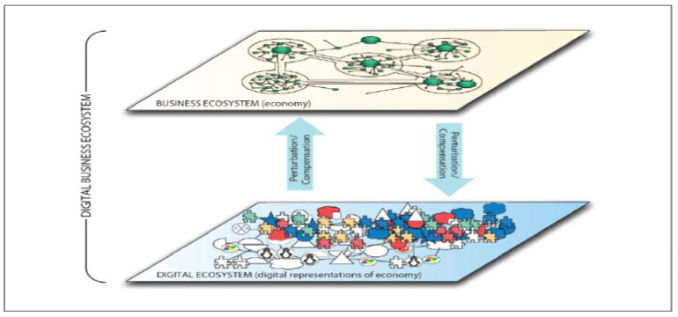
Figure 1: Digital business ecosystems (DBE Book, 2007).
with the previous network generations, the 5G network makes it possible to implement tailored web services for different needs.
It is becoming clear that 5G will cost much more to deploy than previous mobile technologies (perhaps three times as much), as it is more complex and requires a denser coverage of base stations to provide the expected capacity. The European Commission has estimated that it will cost €500 billion to meet its 2025 connectivity targets, which includes 5G coverage in all urban areas Blackman, C., Forge, S. (2019).
The capacity of 5G network serves exponentially accelerating growth of data. Low latency, in turn, is important in many different sectors. An exam- ple is AI applications, which must be able to react to different situations in real time, for example in industrial processes. Latency is also of high importance in the remote control of self-directed vehicles and other machines and equipment. 5G is therefore not only a network faster than the previ- ous generations but a technology that makes it possible to put many digital innovations into practical use.
Now things are changing when industries in the “physical economy” have begun their digital transformation. It is possible to recognize the opportunity for much bigger productivity boom. Now the Internet of Things (IoT), edge computing, deep analytics based on artificial intelligence/machine learning (AI/ML), augmented reality (AR), robotics, remote control and digital twin technologies are mature enough and can reach a critical mass of adoption, the opportunities to energize traditional industries are countless.
By analogy with the development and impact of previous mobile genera- tions, it can be assumed that 5G will cause similar effects, both to society in business as well as to human behavior and communication.
Ecosystems
Figure 1 illustrates a Digital Business Ecosystem structure where the business ecosystem and digital ecosystem are coupled to form a viable dynamic inno- vation ecosystem. The digital ecosystem influences enterprises, their social and business networks, and the business ecosystem affects the organisms of
5G Cottage Network as Platform in Renewing Innovations 51
the digital ecosystem. (Innovation Ecosystems Initiative, http://www.digital- ecosystems.org.).
New ICT-related technologies make Industry 4.0 development possible and give opportunities to re-engineer value chains and create new business models. The growth of connections brings the new possibilities and soluti- ons for the business. Exponential growth of data brings also new challenges and indicates the birth of a new kind of business models. This “smartness” requires greater connection and collaborations. This is where the ‘explosion’ of platforms and ecosystems is occurring (Ruohomaa, et al., 2018).
RESEARCH QUESTIONS AND APPROACH The goal is that the rapid utilization of new generation of telecommunications connections and new ICT-based technologies will enable efficient implemen- tations on a large scale, regardless of technology, country or culture. To this end, the development of a new operating culture is believed to create a critical competitive advantage.
The main research questions are a) How new information and telecommunication solutions (architecture) influence on quick implementation in business development? b) How new generation technology potential innovations opportunities will be benefited most efficiently (5G Cottage Network)?
This article introduces a concept model for utilizing new ICT-based techno- logy environment in co-operative business towards the new service economy on the basis of digital symbiosis.
This research has been qualitative, conceptual, and analytic based on applied research. 5G Cottage Network- environment was built as proof-of- concept on technology integration and as research environment.
THE DEVELOPMENT OF COMMUNICATION AND ITS IMPACT With telecommunications connections, data transfer capacity will incre- ase and enable new services and products in growing markets, just as has happened with the development of 1G 2G 3G and 4G.
New ITC-based technologies, combined with high-speed telecommunica- tions networks, enable new products and services, supply chains and new business models.
The exploitation and potential of 5G cannot be seen only as a technology and enabler of new ICT-based technologies but should be approached from the perspective where new technologies enable new ways of communicating and also create a new culture of communication and behavior.
As an example of 1G freed man from time and place, 2G brought text messaging, 3G brought image and 4G brought Facebook and some plat- forms, videos. 5G brings a new way to communicate and a new culture of communication.
It brings a new opportunity to take advantage of VR/AR/XR technolo- gies. Utilizing 5G offers new opportunities for training, creation of training
52 Ruohomaa and Salminen
content, implementation, and delivery. 5G gives advantage of using new com- munication opportunities and new ways of teaching (holograms, XR spaces, and avatars).
5G technology itself adds new features (telecommunication bandwidth, latency, IoT points), but 5G enables new technologies that take advantage of new technology, and at the same time 5G technology introduces new and tested technologies that increase the amount of data but transform the evo- lving digital ecosystem and as a result, enable new innovations, business models and transform the business ecosystem.
The development of new technology (and new business models) takes place linearly at the beginning and after the “tipping point” turns into exponential growth. As the entry of new technologies into the market is rapid and the amount of data increases exponentially, and the uncertainties in the operating environment are high, innovation is a rather complex operating environment. For this reason, development work must take place in “real-life” environ- ments, utilizing rapid piloting, so that all ecosystems are renewed at the same time (digital, innovation, business ecosystem).
5G COTTAGE NETWORK ENVIRONMENT The physical backbone of the 5G Cottage Network is created by the commu- nication hubs in different universities and organizations, the Cottages, which are connected to each other by 5G data transfer connections, and the nodes are equipped with the latest communication technology utilizing 5G tech- nology. The technology placed in the cottages/nodes is compatible with the technology of other cottages. 5G cottages are physically located in spaces where human flows naturally meet.
The creation of a new operating culture is becoming a prerequisite for the rapid introduction of new technologies and the creation of new business models. Building a new culture is based on different experiences and back- grounds of a members of the work group. In this way, new members embrace a new culture and continue to develop culture and practices to ensure the competitiveness of the organization.
As the 5G Cottage Network is not based on regional or national activities but has from the very beginning been built as an international community, the 5G-Cottage culture is not a culture related to nationality, language, or profession.
At this moment new culture, development and experiments are being created within the university network. In the future it will expand into a supra-regional one, independent of the country, culture and industry sector. The operating cultures of different industries shape and merge to develop a common approach.
The 5G Cottage Network is a brand that starts without the ballast of pre- vious history. It will build its own brand and network, thus systematically applying the new agreed technology. The 5G Cottage concept provide 5G communication with its features, latest new technology and this way cre- ate continuously developing digital ecosystem, which is fundament for new innovation and new business model and new business ecosystems.
5G Cottage Network as Platform in Renewing Innovations 53
The new 5G Cottage-culture will be built so that universities will buy or build a 5G Cottage-environment. This is how the members of the 5G Cottage network will form a common operating culture by utilizing the 5G Cot- tage as operating environment, making new pilots, development projects and creating start-ups.
5G Cottage Network can be confided to be a new kind of learning and innovation environment where you can quickly learn about 5G and other new technology and apply it immediately. The cottage helps to create and create interactions between different actors to learn and develop something new, promoting sustainable development. It is a new tool / concept to bring fast-paced information and collaboration to universities and companies. It develops knowledge and expertise in new technologies such as 5G, AI, VR / AR and Blockchain and helps companies and other organizations adopt it quickly and flexibly (HAMK Tiedote Oct., 2021).
The cottage concept is based on a number of technology-leading professio- nals, top companies and universities. The world’s first 5G Cottage campuses are Nokia Networks Corp., Garage, Espoo; Aalto University, Design Factory, Espoo; Häme University of Applied Sciences, Hämeenlinna; Southeast Fin- land University of Applied Sciences, Kouvola and Mikkeli and Metropolia University of Applied Sciences, Vantaa. The cottage network is currently expanding nationally and internationally.
5G Cottage Network’s the primary task has been; to connect players on different campuses with 5G connections, harmonize technology between campuses, enables flexible and up - to - date communication, create a new operating culture for the 5G cottage network. This is way how has built fun- dament for an innovation ecosystem, the emergence of innovation; and for up-to-date communication and learning. However, new innovations arise at the interfaces of different actors, not so much (in closed R&D -environments). In general, it can be said that the full use of 5G features requires advanced innovation and implementation skills.
In the first phase, the 5G Cottage network has been built on university campuses and as enablers of data transfer between campuses, enabling the experimentation of new ideas and the utilization of new technologies, buil- ding new knowhow. As the speed of data transfer increases, new technologies can be as well better utilized.
DISCUSSION AND CONCLUSIONS The faster telecommunication technology (5G) with new features boost the utilization of new ICT based technology and increase the amount and use of data. From the point of view of utilizing 5G technology, it is essential that 5G’s potential new operating models, value chains and products can be implemented quickly in all sectors of life. The uptake of the new technologies enabled by 5G will largely depend on how quickly the new functions enabled by the new technology can be implemented and new busines models and ecosystems created.
During this research it has been developed a concept of new operating cul- ture which is believed to create a critical competitive advantage. During the
54 Ruohomaa and Salminen
implementation of the research, a communication network between different actors has been created in different universities. This creates a basis for cre- ating a common communication culture. Efficient use of 5G enables a new kind of operating culture and operating model.
Future competition is not determined by the amount of data acquired or the ability to analyze the data collected, but by the ability to turn it into profitable business models. These are realized at the interfaces of different business sectors so that the virtual and real worlds mix.
5G Cottage-concept gives framework for innovation/education environ- ment and for quick implementation of new product & services, value chains and business models. The key issue in 5G Cottage-concept that it provides the possibility change communication culture so that the will be simul- taneously change in digital ecosystem, innovation ecosystem and business ecosystem, which provide the quick implementation and scaling of new business/products/services in complex and fast changing environment.
REFERENCES
Blackman, C., Forge, S. (2019) 5G Deployment: State of Play in Europe, USA and Asia, Study for the Committee on Industry, Research and Energy, Policy Depar- tment for Economic, Scientific and Quality of Life Policies, European Parliament, Luxembourg, 2019. 1. HAMK tiedote (Oct 2021) https://www.hamk.fi/2021/hamk-osaksi-laajenevaa-5g-
mokki-verkostoa-lanseeraustilaisuus-14-10/ Innovation Ecosystems Initiative, http://www.digital-ecosystems.org. Reinsel, D., Gantz, J., and Rydning, J. (2018), The Digitization of the World from Edge to Core, An IDC White Paper – #US44413318, November Sea- gate 2018. https://www.seagate.com/files/www-content/our-story/trends/files/idc -seagate-dataage-whitepaper.pdf Ruohomaa, H., Kantola, J., Salminen, V. (2018) Value Network Development in
Industry 4.0 Environment, Book Chapter. Advances in Human Factors, Business Management and Leadership, Springer International Publishing AG. Ruohomaa, H. (2020) Ecosystem-based development in the transition of fourth industrial revolution. http://urn.fi/URN:ISBN:978-952-476-931-0 World Economic Forum report (2018), Fourth Industrial Revolution for the Earth
Series (2018): Harnessing the Fourth Industrial Revolution for Life on Land- Tow- ards an Inclusive Bio-Economy. World Economic Forum, January 2018, Geneva, Switzerland.
LISTED IN THE AHFE DIGITAL BOOKSTORE CATALOGUE
Explore the complete digital volume
Human Factors, Business Management and Society
Read this individual research paper free through the original publisher, or explore the full digital proceedings book.
ISBN 978-1-958651-32-2
Explore this ISBN in the AHFE Bookstore ↗Listed in the July 2026 bookstore catalogue; search by ISBN to confirm current availability · Digital book purchase optional