Miao Liu, Hongzhao Qi (2022). Product Design for Children's Life Education from the Perspective of Social Control Theory. In: Usability and User Experience. AHFE Open Access, vol. 39, pp. 434–440. https://doi.org/10.54941/ahfe1001739
Childhood is the beginning of life, and education during this period is crucial to a person's growth. Life education is an important part of the basic education system, and life education for children is conducive to establishing the correct values of life from an early age, learning to respect and care for their own lives and the lives of others. Life education has always been the weakness of the Chinese education system, and the lack of awareness of life education among children from an early age has led to many tragedies. Life education in China is still in the exploratory stage, and the research and development of life education products for children is still insufficient, so it is of great social value to study how to design better life education products.This paper studies the product design of children's life education from the perspective of the Social Control Theory, which is a long-established criminological theory that studies how to comply with social rules and prevent impermissible behavior. The Social Bond Theory in Social Control Theory holds that the four key elements of "attachment", "commitment", "involvement" and "belief", also known as social bonds, help people reduce their criminal tendencies. Social Control Theory has been widely used in the study of juvenile delinquency, but few researchers currently apply it to the field of children’s life education, so it is a novel perspective and method to apply Social Control Theory to children's life education design research. It brings forward social control from crime prevention to promoting children's education, this is relevant and reasonable.This paper first uses the interdisciplinary research method, integrates the multidisciplinary knowledge of sociology and psychology to study and summarize the Social Control Theory, and combines Piaget's cognitive development theory and other educational theories to study children's life education, summarizes the connection between social control and children's life education, and constructs the basic framework of life education system from the perspective of social control. In this paper, we used python crawler to collect data about children's life education products and summarize the current situation of children's life education product design. The questionnaire method was used to obtain the data of approval degree of parents of kindergarten children for children's life education and in the investigation of the attributes of children's life education products they value. Design suggestions for children's life education products are provided from the perspective of the four aspects of the social bond of social control theory: attachment, commitment, involvement and belief.This paper summarizes the connection between Social Control Theory and children's life education. From the perspective of social control, the continued development of life education deficiency is deviance and crime, and the purpose of children's life education is firstly to guide children to learn to comply with norms and to create values, and secondly to develop self-control from an early age and learn to cope with emotional changes. Social Control Theory provides a new perspective for the design of children's life education products, that is, from the four social bonds of "attachment", "commitment", "involvement" and "belief", make children cultivate good cultural values and positive personality, enhance their social participation and self-efficacy. Social Control Theory can help society, families and schools provide better life education for children, and help children learn about life more effectively, establish correct life values and have a better life.
Since the end of 2019, COVID-19 has taken a huge toll on the world, during the class resumption period, a series of student suicides occurred across the country (Jiang 2020), and these tragedies exposed the mental health problem of students, the lack of life education was an important cause. Life education is an educational activity that should be carried out from an early age, but the avoidance of this topic by parents and teachers leads to the lack of kno- wledge of life among children (Xu & Zhang 2016). At present, life education products are mainly limited to the form of picture books, and it is necessary to conduct further research on life education products. This paper provides design suggestions for children’s life education products through the study of social control theory and users.
SOCIAL CONTROL THEORY AND CHILDREN’S LIFE EDUCATION Overview of Social Control Theory
Product Design for Children’s Life Education from the Perspective 435
deviance, where conformity means behaving in accordance with certain rules, while deviance refers to people’s behavior that violates the code of conduct or moral standards in a certain social context (Witt 2014). In a broad sense, social control is the process by which a social organization system uses social rules to guide and restrain the behavior and values of social members, in a narrow sense it refers to the process of social punishment and re-education of deviants (Zheng 2003). Since its introduction, social control theory has undergone a series of developments, of which criminologist Travis Hirsch’s social control theory is particularly important.
Social bond is the central concept in Hirschi’s social control theory, he argues that everyone has a potential propensity to commit crimes and that what affects the probability is the strength of the social bond (Hirschi 1969). Social bond is the relationship that individuals establish with society in the process of socialization, a variety of factors influence this relationship, inclu- ding the relation with natural persons such as parents, friends, and teachers, as well as with social institutions such as the community and school, there are four aspects of social bond: attachment, commitment, involvement and belief.
Attachment refers to an emotional connection that an individual has to another or a group. This emotional connection will make the individual con- sider the feelings of others before deciding to engage in a certain behavior, so they control themselves by considering attachment before deviance. Attach- ment can be divided into three main types: attachment to parents, school and peers.
Commitment stands for the effort that individuals contribute to social acti- vities. The more effort one puts, the higher the cost of deviance will be. With consideration of these costs, individuals may abide by rules and pursue long-term goals. Education is an important social activity in which children and adolescents are involved, high educational and professional aspirations require more time and effort, thus avoiding deviance.
Involvement means investing time and energy in social activities. For chil- dren and adolescents, social activities include two main aspects: daily life and recreation, besides various activities organized by schools. Regularly engaging in beneficial activities enriches life and restrain the occurrence of deviance.
Belief is the identification with a moral concept and value system that is held by the common. Hirsch thought that there is a value system or moral concepts developed over time in society or groups, which are agreed with and believed by the majority, and that society controls individuals’ behaviors from deviating through the belief. These four aspects are interrelated and influence each other.
Social control can not only prevent deviance. Meanwhile, it can also help children maintain good interpersonal relationships, establish ambitious aspi- rations, cultivate good moral values, and achieve healthy physical and mental development.
436 Liu and Qi
The Relationship Between Social Control Theory and Life Education Life education originated in the United States, where it initially focused on death education, aiming to provide children with a correct view of death (Li 2014), recognizing death and valuing life (Eddy, et al. 1980). Life educa- tion has been developing rapidly around the world, Germany has integrated life education into kindness education, advocating against violence, compas- sion for the weak, tolerance for others, love for animals, and protection of the environment (Wang 2015). Citizenship education in Britain serves to prepare children to learn to respect their own lives and the lives of others, the natural environment, fairness and democracy, and to integrate into a good commu- nity environment (Starkey 2000). Life education was formally introduced in Taiwan in the 1990s to address social problems such as youth suicide, school dropout, child abuse, and drug abuse (Liu 2007).
From the development of life education in various regions, we can find that life education has long developed from simple death education to a broader level, including life security education, sex education and social- emotional education. In addition to helping children understand death and avoid hurting themselves, life education also expands the contents about understanding the meaning of life, living in harmony with nature, moral and value cultivation, and promoting positive interpersonal relationships, which has similarities with the function of social control theory. Also, lack of life education will lead to the loss of the sense and purpose of life, which may eventually lead to violations of social rules, in other words, deviance or crime, which is also accord with the social control theory’s description of the conse- quences of the lack of social control, from this perspective, life education and social control theory are consistent in purpose. In addition, social control can achieve control by strengthening social ties consisting of four aspects: attach- ment, devotion, involvement, and belief to avoid deviance, while through life education, the internalizing effect of education can make students respect life and develop good values, to avoid deviance, and they are also consistent in their tasks, so it is reasonable to apply social control theory to life education.
THE PRESENT SITUATION OF CHILDREN’S LIFE EDUCATION PRODUCTS The variety of educational products can be broadly classified into four cate- gories, traditional toys such as blocks and Muppets, electronic devices such as point reading machines, books represented by picture books, and software (Zhao, et al. 2015). Currently, picture books and a few educational toys are the most products for children’s life education in the market.
Picture Book Crawler program (python version 3.9) was used to study the status quo of children’s life education picture books and the consumer preferences of types of picture books users are interested in, Based on 199 answers on life edu- cation picture book recommendations collected from the children’s book section of Zhihu, the largest online Q&A community in China with lots of children’s education knowledge experts active. 201 picture books were
Product Design for Children’s Life Education from the Perspective 437
Table 1. Classification of children’s life education picture book.
Table available in the original PDF paper.
Classification Example Frequency Death Parent death The Scar 26 Grandparent death Grandpa Becomes a Ghost 38 Friend death Happy Birthday to You 11 Pet death Here in the Garden 5 Description of death Ente, Tod und Tulpe 18 Plant Strawberry 29 Animal Immortal Jellyfish 23 Sex and Safety Willy Went 13 Life Growth The Story of Life 25 Friendship and Love What is Love? 13
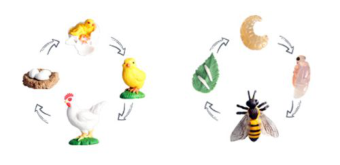
Figure 1: Growth cycle model for chickens and bees.
obtained after extracting titles of picture books, removing duplicates, and withdrawing picture books that do not fit the theme of life education were screened out by viewing the content.
Picture books were divided into six categories (Table 1), Death-themed life education picture books are the most frequent, and they can be subdivided into the death of parents, grandparents, friends, pets, and descriptions of the concept of death, these picture books help children recognize the concept of death so that they will value their lives more, and this theme, along with the themes of friendship and love, serve to strengthen the emotional conne- ction between individuals and groups, which, from the perspective of social control theory, is the deepening of attachment. Plant and animal-themed picture books arouse children’s interest in the outside world, allowing them to receive nature education to deepen commitment. The theme of sex and safety accounted for a small proportion, children’s sex education has always been a sensitive topic, while it also has prominent socio-cultural attributes (Ma & Zhang 2019), still, there were only two picture books on this theme are the original domestic picture books, indicating that there is still a large space for the development of domestic picture books on sex and safety.
Education Toy Children’s life education toys are mainly animal and plant figures, such as toys corresponding to the different growth periods of animals and insects (Figure 1), teaching children knowledge about the growth of life through the changes in appearance in different periods.
438 Liu and Qi
Table 2. Summary of research of parents.
Table available in the original PDF paper.
Question Strongly disagree Strongly Score agree
1 2 3 4 5
0 0 2 10 30 4.67
1. Children should receive life education from an early age
0 0 2 12 28 4.62
2. Children’s life education can help children establish the right values of life
0 0 7 11 24 4.4
3. Willing to teach their children about life education and buy life education products
Table 3. Parents’ preferred types of life education products.
Table available in the original PDF paper.
Type Response Penetration (n = 42) n Response rate Picture book 34 31.19% 80.95% Intelligent product 19 17.43% 45.24% Electronic educational games 15 13.76% 35.71% Boardgame 5 4.59% 11.90% Toy 16 14.68% 38.10% Education video 19 17.43% 45.24% Other 1 0.92% 2.38% 109 100% 259.52%
Equation reproduced from the original PDF.
USER NEEDS FOR CHILDREN’S LIFE EDUCATION PRODUCTS Parents play a decision-making role in the purchase of children’s educational products, so their opinions are essential to the design decisions of children’s life education products. The questionnaire method was used to study the parents’ preference. A total of 42 questionnaires were collected, of which 42 were valid. The age distribution of the respondents was between 26 and 50 years old, 28 were female and 14 were male, of whom 27 were one-child and 15 were two-child families, The following Likert scale questions (Table 2) were designed to obtain parents’ cognition of life education and acceptance of life education products.
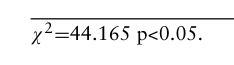
A reliability test was conducted, and the Cronbach α=0.766, all three que- stions scored more than 4 pts, indicating that the respondents have a high acceptance of children’s life education products and are willing to invest in children’s life education products.
The next section of the questionnaire used multiple-choice to investigate the types and forms of children’s life education products preferred by parents, and the results were compared in terms of response rates and penetration rates (Table 3), the highest type is the picture book, which is also in line with the current market situation, in addition, parents also have a high propensity for intelligent product and education video, These two types of products have
Product Design for Children’s Life Education from the Perspective 439
Table 4. Elements for children life education product.
good intelligence and interactivity, and the correct use of such products can effectively enhance involvement.
Maximum Difference Scaling (MaxDiff) is an effective way to compare product characteristics, three children’s product designers were invited to a group meeting and after discussion nine elements about children’s life educa- tion products were got. Then a MaxDiff with four items and eight tasks was performed (Table 4). Respondents are more concerned about the educability and safety, and the educability of children’s life education products is mainly reflected in effectively teaching life education knowledge. Secondly, interacti- vity and fun were also concerned by the respondents, while brand and price were the lowest elements, indicating that parents of children are willing to invest in children’s life education and pay more attention to the quality of the product itself.
CONCLUSION
This paper proposed that they have consistency in purpose and task after studying the connection between social control theory and children’s life edu- cation, the following design suggestions of children’s life education products were finally summarized from the four aspects of the social bond in social control theory: Attachment: Enhancing emotional connection and deepening story conno- tation. Picture books remain the mainstream of the children’s life education market, meaningful content can enhance children’s cognition of themselves and others, thus increasing their attachment to their families, In addition, enriching use scenarios of the products can also achieve the purpose of enh- ancing the attachment, for example, develop products such as role-playing toys with life education themes which need to be used by multiple players, and use them in school or community, so that the attachment to school or community can be increased.
Commitment: Enhance the educability of products and cultivate children’s positive and healthy personalities. Receiving education is an important social activity for children, it is also the process for children to construct the sense of the meaning of life and cultivate a healthy personality. The educability
440 Liu and Qi
of life education products is reflected in helping children to have better life education, including the establishment of the concept of life, the cultivation of safety awareness, the correct knowledge of sex education and the learning of social emotions.
Involvement: Enriching product types and diversifying educational tools. The current type of children’s life education products is relatively homoge- neous. New forms of educational products such as intelligent products and educational electronic games have good interactivity, which can enhance chil- dren’s interest, and the design of regular product use cycles can help children develop good habits, thus achieving the purpose of enhancing involvement.
Belief: Promote good cultural values and maintain social morality. The design of life education products needs to promote the good values, especi- ally sex education, which has strong socio-cultural attributes and needs to convey educational contents that are in line with national conditions and social morality.
Good life education can help children establish a correct concept of life, develop good habits, cultivate a positive personality, strengthen social control, and enable them to grow up in a healthy environment.
REFERENCES
Eddy, J., Pierre, R.S., Alles, W. and Shute, R. (1980). Conceptual areas of death education. Health Education, 11(1), pp. 14–15 Hirschi, T. (1969). Causes of delinquency. Berkeley, CA: University of California
Press Jiang, S.L. (2020). The trouble of discourse and right to know--analysis of new media coverage based on youth suicide cases. CPN Research, 12, pp. 74–76+81 Li, X. and Huang, H.X., (2014). The practice of life education in Britain, America
and Japan and its enlightenment. Education Exploration, 07, pp. 146–148 Liu, N.H., (2007). On current situation and development of life education in Taiwan.
Early Childhood Education, 12, pp. 46–48 Ma, R.J. and Zhang, C., (2019). Thoughts and wisdom about life—children’s sex education picture book study. Publishing Journal, 27(05), pp. 45–51 Starkey, H. (2000). Citizenship education in France and Britain: evolving theories
and practices. Curriculum Journal, 11(1), pp. 39–54. Wang, D.J., (2015). Life education in primary school and middle school in Germany.
Journal of The Chinese Society of Education, 08, pp. 49–52 Witt, J., (2014). SOC. 3rd ed. Beijing: Posts & Telecom Press Xu, G.Y. and Zhang, J.Y., (2016). Death education—an indispensable part of life education in kindergarten. Education Teaching Forum, 43, pp. 86–87 Zhao, M.J., Liang, Y.J. and Shen, L.L., (2015). On the research and development of
children’s education products. Art and Literature for the Masses, 03, p. 133 Zheng, H.S., (2003). New introduction to sociology. 3rd ed. Beijing: China Renmin University Press
LISTED IN THE AHFE DIGITAL BOOKSTORE CATALOGUE
Explore the complete digital volume
Usability and User Experience
Read this individual research paper free through the original publisher, or explore the full digital proceedings book.
ISBN 978-1-958651-15-5
Explore this ISBN in the AHFE Bookstore ↗Listed in the July 2026 bookstore catalogue; search by ISBN to confirm current availability · Digital book purchase optional