Alisher Saduakas, Ulugbek Ismatullaev, Kwanmyung Kim (2022). Addressing the Gaps in Elderly Falling Prevention from the Perspective of a Human-Centered Design. In: Human Factors in Aging and Special Needs. AHFE Open Access, vol. 38, pp. 150–156. https://doi.org/10.54941/ahfe1001675
People that were born during the “baby boom” are currently entering retirement age, which may bring about various issues. Elderly people may live longer than previous senior generations and experience more health issues that increase pressures on healthcare facilities. As this population grows, studying the issues that affect the elderly along with relevant solutions is vital. One such issue is falls, which cause various health-deteriorating consequences and even death in millions of seniors annually worldwide. Although numerous studies have been conducted on fall risk factors, there is still a gap in the study of interventions to address these factors. Here, a systematic literature review of all possible risk factors for falls and solutions addressing them was conducted. During the review process, certain gaps in interventions addressing the risk factors of falls were found. Hence, this study aimed to shed light on such gaps and provide insights on solutions from a human-centered design perspective.
Falls in geriatric communities are prominent, and devastating events are anticipated to become more prevalent both nationally and globally as the population ages. Annually, 36 million and 32,000 falls and fatalities, respe- ctively, are reported, with falls becoming the leading cause of morbidity and disability among the elderly (“Center for Disease Control and Preven- tion,” 2020). Even one fall can have prolonged adverse effects on physical and psychological images, which may result in an increased predisposition to recurrent falls and delayed functional recovery (Graafmans et al., 2022).
Due to their significant impact on the day-to-day lives of older adults and the higher likelihood of occurrence, a plethora of studies have been con- ducted to characterize the various factors that cause falls. There are many findings pertaining to the possibility of fall prevention, estimated at 40% (Zaninotto et al., 2020).
The purpose of this study was to evaluate geriatric fall variables as well as associated interventions. We hoped to identify gaps in the literature and propose potential directions for advancements. Furthermore, we hoped that
Addressing the Gaps in Elderly Falling Prevention from the Perspective 151
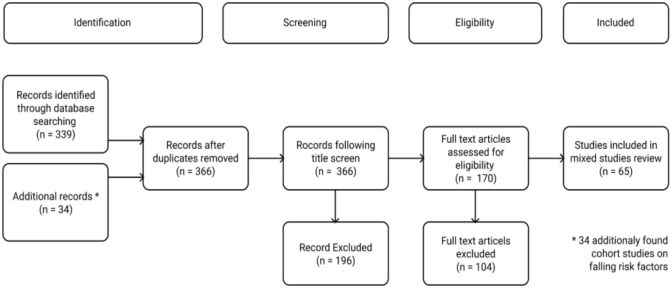
Figure 1: Search strategy and inclusion flow.
a consistent examination and systematic review of studies on falls would aid in identifying gaps in the field of geriatrics overall.
METHODS
In this study, we searched for appropriate publications the Web of Scie- nce database, as it provided a wide range of publishing journals and had convenient advanced search tool features compared with other databases. Papers were selected according to the PRISMA model (Liberati et al., 2009) (Figure 1).
The set of keywords implemented in the database advanced search were as follows: “falls” OR “falling” OR “fall” AND “elderly” OR “older adults” OR “elders” OR “elder” OR “old age” OR “seniors” OR “aging” OR “aged” AND “factors” OR “causes” OR “prevention” OR “preventive measures” OR “interventions” NOT “systematic review” OR “review” OR “meta-analysis”.
The exclusion criteria were as follows: studies related to age groups other than older adults (i.e., children, teenagers, or young and middle-aged adults); protocols for future studies; and conference, systematic review, or meta-analysis-based papers.
Of the 366 studies found, 65 were included in the review. The details of the study inclusion flow are presented in Figure 1.
RESULTS & DISCUSSION Risk factors associated with falling among older adults
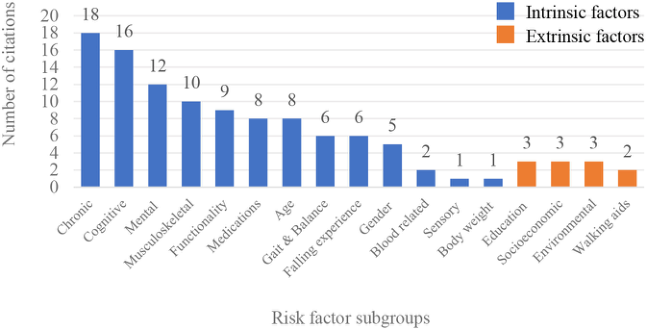
A review of the literature revealed numerous risk factors associated with falls in the elderly, which could be categorized into two main groups: intrinsic and extrinsic factors. In this study, the identified factors were further categorized into subgroups, as shown in Figure 2, which also shows the number of citati- ons for each subgroup. Thirteen intrinsic and four extrinsic subgroups were noted, respectively. For convenience, chronic diseases that impact human cognition, such as stroke, Parkinson’s disease, and Alzheimer’s disease, were separated from general chronic conditions and categorized into cognitive
Figure 2: Subgroups of risk factors associated with falling.
(chronic) factors. Similarly, chronic mental illnesses and related conditions were identified as mental risk factors.
The issue of falls was found to be an essentially complex phenomenon, caused, and influenced by various factors and their combinations. Addi- tionally, certain conditions may trigger other health-deteriorating factors, thus complicating the health status of a person. For instance, chronic factors, such as arthritis, can negatively influence a person’s walking pat- tern (Dokuzlar et al., 2020) and cause postural instability (Ku et al., 2013) due to joint pain and stiffness. In such cases, gait and balance impairments could be caused by chronic impairment.
Similarly, individuals with cognitive impairments have a risk of falling due to the direct link between cognition and physical functionality, as cognition plays an important role in the regulation of balance (Woo et al., 2017), gait (Amboni et al., 2013), and attention (Mirelman et al., 2012).
Moreover, experiencing a fall can influence mental health. Recurrent fallers are prone to depression (Agudelo-Botero et al., 2018). Consequen- tly, depression-impaired concentration can result in poor balance and gait (Alex et al., 2020). Once a senior experiences a fall, it may be natural to develop certain safety concerns or a fear of falling, which may lead to resi- stance to physical activities and a general reduction of daily living activities (Mendes da Costa et al., 2012). This reduction, in turn, may result in deteri- orating general health and lead to various conditions (Nguyen et al., 2015).
The elderly may take antidepressants as a treatment for depression, which also plays a role as a fall risk factor (Damián et al., 2013). Further- more, medication may be the only intervention for some comorbidities, and falls have been found to be associated with certain diseases and health conditions, although most cases are due to the combination in an indivi- dual (Paliwal et al., 2017). Nevertheless, consuming one or more drugs as treatment may lead to more falls (Zaninotto et al., 2020).
Another commonality found in the reviewed literature is that the fall risk is high in the oldest populations (Kim et al., 2020). In contrast, some reports also showed that the general deterioration of health over the years was a risk
Addressing the Gaps in Elderly Falling Prevention from the Perspective 153
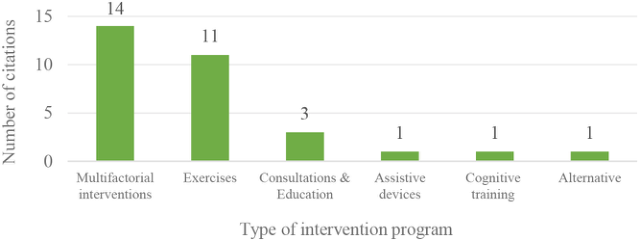
Figure 3: Categories of interventions associated with falling.
factor, as opposed to age (Grundstrom et al., 2012). Additionally, women were found to have a higher fall risk than men (Towne et al., 2017).
Among the extrinsic factors, poorly educated, single, unemployed, female seniors who have low relationship satisfaction were more prone to falls (Kim et al., 2020). Another extrinsic factor that influenced fall rates was the environment, particularly the home environment, in which activities of daily living, such as dressing, cooking, toileting, and indoor mobility, typi- cally occur. In particular, bedrooms and bathrooms were the most dangerous areas in the home (Zhang et al., 2019).
Observing and addressing the gaps in interventions programs In total, 31 studies on the assessment of interventions for mitigating falls were found (Figure 3).
Multifactorial intervention programs were noted in the reviewed literature (14/31), which typically consisted of fall risk assessments, risk factor identifi- cation, assessments of the home environment, medication reviews, nutritional assessments, education on safety, walking aid assessment and recommenda- tions, and the prescription and tracking of exercise. With regard to chronic factors, regular health assessments could help detect morbidities in the early stages of treatment and educate elderly people about their conditions, which in turn could reduce future fall risk (Paliwal et al., 2017).
Additionally, both non-injurious and injurious falls could be reduced with the help of appropriate exercises, including strength and balance training (Gillespie et al., 2012). The abundance of experimental studies on exe- rcise intervention programs confirms this finding. Indeed, every study in both the “Multifactorial interventions” and “Exercises” groups - 80% of the intervention literature reviewed—consisted of studies on exercise methods.
Older adults with frailty, physical inactivity, and muscle mass reduction (sarcopenia) are also more predisposed to falls compared with older adults who are physically active and have greater muscle mass and bone mineral density (Lee et al., 2014;). Thus, with the pressures of multiple comorbidities and related polypharmacy in mind, maintaining muscle strength to reduce the level of frailty and the risk of fractures is important. In addition, exercise can increase muscle mass and insulin levels, which is crucial in diabetes mellitus (Lee et al., 2014).
In reviewing the intervention programs, several issues were found that could be addressed from a human-centered design perspective. For exam- ple, to achieve better adherence and engagement in muscle training, training programs could be integrated into daily routines (Clemson et al., 2012). In the future, age-friendly smart home systems may support and challenge individuals with quick, real-time daily tasks.
Another study found that confirmation and approval may play crucial roles in adherence. Evaluating personal performance, obtaining constant feedback, and having a feeling of achievement was important (Sandlund et al., 2018), which could also be achieved through primary supervision and sup- port in nurse-led home visit programs (de Vries et al., 2010). However, with the expected dramatic increase in the elderly population, predicting the possi- bility of face-to-face visits by a professional for every senior may be difficult in the future. Thus, Internet communication, and more specifically, smart exercise programs that connect the elderly with coaches or physicians in real time, may be one possible solution.
In addition to issues with adherence and motivation, the individuality and customizability of each exercise program are important to consider. Some seniors may prefer exercising, while other may not have sufficient physical capabilities to perform certain tasks (Sandlund et al., 2018). Therefore, the adaptability of future programs to the personal needs of the user should be considered.
CONCLUSION
This review allowed us to explore all possible risk factors associated with falls as well as their related intervention programs. Additionally, ideas on the improvement of exercise programs were introduced. Future studies human- centered exercise programs may be conducted, including a thorough user study to better understand gaps and find proper solutions for them. Con- sidering the scale of the issue and its urgency in contemporary society, we hope that this systematic review and future studies will greatly contribute to human factors, design, and geriatric sciences.
ACKNOWLEDGMENT
This work was supported by the Technology Innovation Program (20015056, Commercialization design and development of Intelligent Product-Service System for personalized full silver life cycle care) funded By the Ministry of Trade, Industry & Energy (MOTIE, Korea).
REFERENCES
Agudelo-Botero, M., Giraldo-Rodriguez, L., Murillo-Gonzalez, J. C., Mino-Leon, D.
& Cruz-Arenas, E. 2018. Factors associated with occasional and recurrent falls in Mexican communityd-welling older people. Plos One, 13, 12. Alex, D., Khor, H. M., Chin, A. V., Hairi, N. N., Cumming, R. G., Othman, S., Khoo, S., Kamaruzzaman, S. B. & Tan, M. P. 2020. Factors Associated With Falls Among Urban-Dwellers Aged 55 Years and Over in the Malaysian Elders Longitudinal Research (MELoR) Study. Frontiers in Public Health, 8, 8.
Addressing the Gaps in Elderly Falling Prevention from the Perspective 155
Amboni, M., Barone, P., and Hausdorff, J.M., 2013. Cognitive contributions to gait and falls: Evidence and implications. Movement Disorders, 28 (11), 1520–1533. Centers for Disease Control and Prevention. (December 16, 2020). Keep on your
feet-preventing older Adult Falls. Centers for Disease Control and Prevention. Retrieved October 3, 2021, from https://www.cdc.gov/injury/features/older-adul t-falls/index.html. Clemson, L., Fiatarone Singh, M.A., Bundy, A., Cumming, R.G., Manollaras, K., O’Loughlin, P., and Black, D., 2012. Integration of balance and strength trai- ning into daily life activity to reduce rate of falls in older people (the LiFE study): randomised parallel trial. BMJ, 345 (aug07 1), e4547–e4547. Damian, J., Pastor-Barriuso, R., Valderrama-Gama, E. & De Pedro-Cuesta, J.
2013. Factors associated with falls among older adults living in institutions. Bmc Geriatrics, 13, 9. de Vries, O. J., Peeters, G., Elders, P. J. M., Muller, M., Knol, D. L., Danner, S. A., Bouter, L. M. & Lips, P. 2010. Multifactorial Intervention to Reduce Falls in Older People at High Risk of Recurrent Falls A Randomized Controlled Trial. Archives of Internal Medicine, 170, 1110-1117. Dokuzlar, O., Okudur, S. K., Smith, L., Soysal, P., Yavuz, I., Aydin, A. E. & Isik,
A. T. 2020. Assessment of factors that increase risk of falling in older women by four different clinical methods. Aging Clinical and Experimental Research, 32, 483–490. Gillespie, L.D., Robertson, M.C., Gillespie, W.J., Sherrington, C., Gates, S., Clemson, L. and Lamb, S.E., 2012. Interventions for preventing falls in older people living in the community. Cochrane database of systematic reviews, (9). Graafmans, W.C. et al., 2022. Falls in the elderly: A prospective study of risk factors
and risk profiles. American Journal of Epidemiology, 143(11), pp.1129–1136. Grundstrom, A. C., Guse, C. E. & Layde, P. M. 2012. Risk factors for falls and fallrelated injuries in adults 85 years of age and older. Archives of Gerontology and Geriatrics, 54, 421-428. Kim, T., Choi, S. D. & Xiong, S. P. 2020. Epidemiology of fall and its socioeconomic
risk factors in community-dwelling Korean elderly. Plos One, 15, 14. Ku, Y. C., Liu, M. E., Tsai, Y. F., Liu, W. C., Lin, S. L. & Tsai, S. J. 2013. Associated Factors for Falls, Recurrent Falls, and Injurious Falls in Aged Men Living in Tai- wan Veterans Homes. International Journal of Gerontology, 7, 80–84. Woo et al., 2017 Lee, K. M., Chung, C. Y., Kwon, S. S., Lee, S. Y., Kim, T. G., Choi, Y. & Park, M. S.
2014. Factors Associated With Bone Mineral Density and Risk of Fall in Korean Adults With Type 2 Diabetes Mellitus Aged 50 Years and Older. Journal of Clinical Endocrinology & Metabolism, 99, 4206-4213. Liberati, A., Altman, D.G., Tetzlaff, J., Mulrow, C., Gøtzsche, P.C., Ioannidis, J.P.A., Clarke, M., Devereaux, P.J., Kleijnen, J., and Moher, D., 2009. The PRISMA statement for reporting systematic reviews and meta-analyses of studies that eva- luate health care interventions: explanation and elaboration. Journal of Clinical Epidemiology, 62 (10), e1–e34. Mendes Da Costa, E., Pepersack, T., Godin, I., Bantuelle, M., Petit, B., and
Levêque, A., 2012. Fear of falling and associated activity restriction in older peo- ple. results of a cross-sectional study conducted in a Belgian town. Archives of Public Health, 70 (1), 1. Mirelman, A., Herman, T., Brozgol, M., Dorfman, M., Sprecher, E., Schweiger, A., Giladi, N., and Hausdorff, J.M., 2012. Executive Function and Falls in Older Adults: New Findings from a Five-Year Prospective Study Link Fall Risk to Cognition. PLOS ONE, 7 (6), e40297.
Physical activity restriction in age-related eye disease: a cross-sectional study exploring fear of falling as a potential mediator. BMC Geriatrics, 15 (1). Paliwal, Y., Slattum, P. W. & Ratliff, S. M. 2017. Chronic Health Conditions as a Risk Factor for Falls among the Community-Dwelling US Older Adults: A Zero- Inflated Regression Modeling Approach. Biomed Research International, 2017, 9. Sandlund, M., Pohl, P., Ahlgren, C., Skelton, D.A., Melander-Wikman, A., Bergvall-
Kåreborn, B., and Lundin-Olsson, L., 2018. Gender Perspective on Older Peo- ple’s Exercise Preferences and Motivators in the Context of Falls Prevention: A Qualitative Study. BioMed Research International, 2018, 1–11. Towne Jr, S.D., Cho, J., Smith, M.L. and Ory, M.G., 2017. Factors associated with injurious falls in residential care facilities. Journal of aging and health, 29(4), pp. 669–687. Woo, M. T., Davids, K., Liukkonen, J., Chow, J. Y. & Jaakkola, T. 2017. Falls, Cogni-
tive Function, and Balance Profiles of Singapore Community-Dwelling Elderly Individuals: Key Risk Factors. Geriatric Orthopaedic Surgery & Rehabilitation, 8, 256-262. Zaninotto, P. et al., 2020. Polypharmacy is a risk factor for hospital admission due to a fall: Evidence from the English Longitudinal Study of Ageing. BMC Public Health, 20(1). Zhang, L. W., Zeng, Y. B., Weng, C. Z. H., Yan, J. J. & Fang, Y. 2019. Epidemiological
characteristics and factors influencing falls among elderly adults in long-term care facilities in Xiamen, China. Medicine, 98, 7.
LISTED IN THE AHFE DIGITAL BOOKSTORE CATALOGUE
Explore the complete digital volume
Human Factors in Aging and Special Needs
Read this individual research paper free through the original publisher, or explore the full digital proceedings book.
ISBN 978-1-958651-14-8
Explore this ISBN in the AHFE Bookstore ↗Listed in the July 2026 bookstore catalogue; search by ISBN to confirm current availability · Digital book purchase optional