Yochan Kim, Jaewhan Kim, Jinkyun Park (2022). Procedure Progression Similarity, an Aspect of Dependence between Human Failure Events. In: Human Error, Reliability, Resilience, and Performance. AHFE Open Access, vol. 33, pp. 67–74. https://doi.org/10.54941/ahfe1001569
To characterize the probabilistic nature of human errors, many kinds of human reliability analysis (HRA) techniques have been developed and applied. HRA practitioners assess the dependencies between human failure events based on some contextual factors because of the belief that the failure of a previous action can influence the reliability of a subsequent action. Among the factors determining such dependency, there is an issue regarding the similarity between the procedure progressions of different events. In many abnormal or emergency situations, the operators respond to the plant situations using procedures consisting of several sequential steps. Because the operators work by following the procedural sequences, how reliably they transfer to the relevant procedures is significant to the human reliabilities. In terms of dependency, it can be seen that two events have a common factor producing human failures if they are performed with similar procedural sequences. Therefore, the similarity between procedure progressions should be counted in the dependency assessment of any HRA technique. This paper asserts the importance of such procedure progression similarity in dependency analyses and proposes two ways to estimate the joint error probability that comes from the similarity. The first approach decomposes the human error probabilities and identifies the probabilities commonly involved in both events based on the EMBRACE method. The second approach quantifies the similarity using a sequence alignment technique and estimates the dependency level based on similarity scores for traditional HRA methods. With some application studies, we discuss potential improvements of current dependency analysis and future works.
Human reliability analysis (HRA) is a tool for analyzing the occurre- nce of human errors from a probabilistic viewpoint and deriving the direction of system improvement. Along with probabilistic safety asses- sment, HRA has been used to evaluate the risks of complex systems. Such HRA methods include ASEP (Swain, 1987), CBDTM (Spurgin, 1990), CESA-Q (Podofillini et al., 2013), EMBRACE (Kim et al., 2019), HCR/ORE (Spurgin, 1990), HuRECA (Kim et al., 2011), IDHEAS (Xing et al., 2017), Phoenix (Ekanem et al., 2016), SPAR-H (Gertman et al., 2005), and THERP (Swain and Guttmann, 1983).
Dependency between human failure events is assessed during HRA acti- vities by considering that the failure of a previous action can influence the reliability of a sub-sequent action. Paglioni and Groth (2022) addressed that there is a dependency between HRA variables such as cognitive tasks and per- formance shaping factors (PSFs) when the variables between two events have a direct or indirect causality. Even though theoretical and empirical evidence of such dependency is scarce (Mortenson and Boring, 2021), this dependency has been evaluated as important for involving uncertain causalities residing in multiple actions, therefore making it influential on the risk of large-scale systems.
Some HRA methods evaluate whether two human events are related to the same procedure to determine the dependency level. However, because the procedure flows followed by the operators are essential to the completion of a given event, it is also necessary to evaluate the similarity of the procedure flows when assessing the dependency. This paper therefore suggests the need for evaluations of procedure progressions and proposes related evaluation methods.
In this paper, the factors affecting the dependency between two human fai- lure events (HFEs) in HRA methods are compared, and the dependency issue regarding the similarity of the procedure progressions is explained. In addi- tion, two methods to evaluate the similarity between procedure progressions are presented, and future research topics are discussed.
DEPENDENCY FACTORS CONSIDERED IN HRA METHODS The THERP method provides a basic framework for dependency assessment (Swain and Guttmann, 1983]. Basically, dependency assessment consists of (1) a process of determining the dependency level of multiple events as one of several discrete levels (i.e., zero, low, medium, high, and complete) and (2) a process of calculating the conditional probability of subsequent events accor- ding to the dependency level. Methods other than THERP have variations on the process of determining the dependency level, while their calculation formulas for the conditional probability are mostly similar.
Table 1 summarizes the factors used for evaluating dependency levels in several HRA methods (i.e., Depend-HRA ( ˇCepin, 2008), EPRI HRA (CBDTM+HCR/ORE+ THERP) (EPRI, 2016), HuRECA (Kim et al., 2011), Surry HRA (Shen, 2005), SPAR-H (Gertman et al., 2005), THERP (Swain and Guttmann, 1983)). It can be seen that EPRI HRA, HuRECA, and Surry HRA explicitly evaluate the sameness of procedures (not procedure flow) during the determination of the dependency level of the post-initiating event. The EPRI HRA calculator and Surry HRA method assess whether the procedures and their steps in two different HFEs are the same. HuRECA determines the dependency level based on whether the decision rules in the procedures for two HFEs are identical.
The conditional probabilities of the subsequent event are derived accor- ding to each dependency level. The formulas for calculating the conditional probabilities are shown in Table 2. In some cases, approximated values are used.
Procedure Progression Similarity, an Aspect of Dependence between Human Failure Events 69
Table 1. PSFs in dependency assessments of post-initiating events (intervening success and minimum HEP are not included) (Kim et al., 2013).
Common Cue; Common Procedure Stress — Stress Stress Stress Level Increased Stress Others — Complex Manpower — —
Table 2. Conditional probabilities corresponding to dependency level (Swain and Guttmann, 1983).
Table available in the original PDF paper.
Dependency level Equation Approximate value for small HEP Zero HEP HEP Low (1 + 19 · HEP)/20 0.05 Medium (1 + 6 · HEP)/7 0.14 High (1 + HEP)/2 0.5 Complete 1.0 1.0
PROCEDURE PROGRESSION SIMILARITY Appropriate procedure progression is one of the meaningful factors affecting human reliability. During many abnormal or emergency situations, the ope- rators are required to respond to the plant situation by following the contents of procedures, which consist of several sequential steps. Because the opera- tors work by following the procedural sequences, how reliably they transfer to or enter the relevant procedure is significant to the reliabilities of any acti- ons. Notably, the international HRA empirical study showed that crews in difficult scenarios frequently failed to enter the appropriate procedure for the given plant situation (Forester et al., 2014). Although many HRA methods that classify human errors dichotomously (e.g., diagnosis/cognitive error and
execution/physical error) often evaluate cognitive human error probabilities (HEPs) based on the contexts at the decisive step of an individual event, it should be assumed that the cognitive HEPs embrace the failure probabilities during the procedure transfer to the decisive step.
Since reliability in procedure transfer activities is important, it can be seen that two human events have a common factor producing human failures if they are performed with similar procedural sequences. For example, sup- pose that the tasks of events A and B are described in the fifth and eighth steps in procedure X, respectively, and procedure X can be opened only after sequentially completing procedures Y and Z. The reliability of the cognitive activities to enter procedure X via procedures Y and Z is thus significant to the reliability of the two events. In addition, if the cognitive activities in the procedure transfers are commonly required for events A and B, it is possible to say that the two events are closely dependent in terms of procedure pro- gression similarity. In other words, if event A fails during the transfer from procedure Z to procedure X, it is reasonable to say that event B is also not successful.
PRACTICAL ASSESSMENT TECHNIQUE FOR PROCEDURE PROGRESSION SIMILARITY Despite the importance of procedure progression similarity, quantitative assessments of this similarity have often been overlooked in the evaluation of dependency levels because of the lack of research into quantitative calcu- lation. This paper hence presents two methods to assess the joint HEP of two HFEs considering procedure progression similarity as examples. In these example methods, it was assumed that the procedure progression only inclu- des steps describing significant manipulations for the HFEs or significant transfers to important procedures.
Reliability Calculation of Common Procedure Progression Some HRA methods such as EMBRACE, IDHEAS, and Phoenix explicitly quantify the failure probabilities of cognitive tasks during procedure tran- sfers for accomplishing the goals of a given HFE. Therefore, if the failure probability related to the same procedure transfer can be distinguished from among the failure probability values identified by these methods, informa- tion on the dependency by similar procedure progressions can be obtained. For example, Table 3 compares the failure probabilities of an HFE that ali- gns a safety injection line to a hot leg and the probabilities of an HFE that attempts long-term cooling using the shutdown cooling system during a loss of coolant accident (LOCA) situation. In the case of the EMBRACE method, each event can be decomposed and quantified into detailed failure probabili- ties with associations to the important procedure steps (all probabilities are arbitrarily set here for understanding). If the HEPs of the two events contain failure probabilities for the same procedure transfer, the failure probabilities for the common part can be separately counted in the dependency analysis. In other words, assuming that the common transfer behaviors have a complete
Procedure Progression Similarity, an Aspect of Dependence between Human Failure Events 71
Table 3. Failure probabilities of the two example HFEs analyzed by EMBRACE.
Failure Probability 1.1E-03 1.0E-04 1.0E-05 1.0E-03
1.1E-03 Diagnostic procedure (7th step)
1.0E-04 1.0E-05 1.0E-03
Diagnostic procedure (7th step)
Entering the task Information gathering Procedure transfer
Entering the task Information gathering Procedure transfer
1.0E-02
2.2E-03 LOCA procedure (40th step)
LOCA procedure (30th step)
1.0E-04 1.0E-04 1.0E-04 1.0E-02
1.0E-04 1.0E-04 1.0E-03 1.0E-03
Entering the task Information gathering Information gathering Dynamic manipula- tion
Entering the task Information gathering Simple manipula- tion Simple manipula- tion Total HEP = 3.3E-03 Total HEP = 1.1E-02
dependency and the other behaviors are independent, the total probability of two events can be expressed by the following equation:
HEP(A ∩B) = Pct,AandB + Put,A ∗Put,B. (1) Here, HEP(A∩B) indicates the joint HEP of events A and B, Pct,AandB is the failure probability of common tasks, and Put,A and Put,B indicate the failure probability of uncommon tasks for events A and B, respectively.
For example, the values of the gray cells in Table 3 are the failure probabi- lities of the common tasks in the two events, and the values of the white cells are the failure probabilities of the uncommon tasks in the two events. If we compute the joint HEP of the two events in terms of procedural progression similarity based on Equation (1), we arrive at the prediction 1.1E-03+2.2E- 03*1.0E-02=1.13E-03. This approach has a thread of connection with the process in Appendix B of the EPRI dependency analysis manual (EPRI, 2016).
Similarity Calculation of Total Procedure Progression Since most HRA methods do not explicitly represent the probability of task failure related to procedure transfers, it is difficult to apply the previously proposed method. In this case, the similarity of procedure progression can be assessed as one of the PSFs that determine the dependency level. If a proce- dure progression consisting of important steps for performing HFEs can be viewed as a sequence, the similarity between two sequences can be measured for estimating the procedure progression similarity. For example, Smith and Waterman (1981) developed an algorithm to assign a similarity score for two sequences using Equation (2).
Table 4. Sequence similarity score of the two example HFEs.
Table available in the original PDF paper.
Order Safety injection alignment Long-term cooling event Similarity value
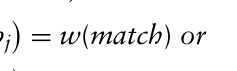
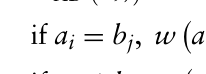
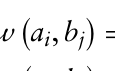
Equation reproduced from the original PDF.Equation reproduced from the original PDF.Equation reproduced from the original PDF.Equation reproduced from the original PDF.
i −1, j −1
+ w
ai, bj
0 HAB
Equations and mathematical formulas are available in the original paper PDF.
,
i, j
= max
HAB
i −1, j
Match/Mismatch HAB i, j −1 + w Insertion "_", bj
+ w (ai, "_") Deletion HAB
Equations and mathematical formulas are available in the original paper PDF.
Here, ai and bj are the i th step in procedure progression A and the j th step in procedure progression B, respectively, m and n are the length of each progression, w(ai, bj) is the similarity value between ai and bi, and HAB(i,j) is the maximum of the similarity scores. “_” indicates a gap inserted between two sequences.
To calculate a similarity score, the similarity value between the steps ali- gned at the same position should be defined in advance. In this study, we arbitrarily assumed that w(ai, bj) is 2 when ai and bj are identical, while w(ai, bj) is 0 when ai and bj are not identical or any gap is inserted at the position.
Table 4 matches the important steps of the HFEs in Table 3, namely the safety injection alignment and the long-term cooling event. Since the first important steps of both HFEs are same, the similarity value for the first row is 2. However, since the second important steps are different, the similarity value is 0. There is no need to insert gaps in the procedure progressions for either HFE.
The relative similarity ratio can be calculated by Equation (3).
SRAB = HAB(m, n) (HAA (m, m) + HBB(n, n)) /2 (3) Here, SRAB is the relative similarity ratio of procedure progressions A and B, and HAB(m,n) is the maximized similarity score of procedure progressions A and B.
With this formula, the relative similarity ratio of the two HFEs in Table 4 is 0.5 (2/((4+4)/2)). This similarity ratio can be employed to measure an aspect of the dependency level. The higher the score, the higher the likelihood of
Procedure Progression Similarity, an Aspect of Dependence between Human Failure Events 73
having a high dependency. If the 0.5 relative similarity ratio corresponds to the high dependency listed in Table 2, for example, the joint HEP will be 1.7E-03 (3.3E-03*0.5).
CONCLUSIONS AND FUTURE WORK This study argues that it is necessary to consider the similarity between pro- cedure progressions in the process of determining the dependency level and proposes two methods to quantitatively calculate the joint HEP considering the similarity. Rather than simply evaluating whether the final procedure steps of two HFEs are the same or whether the procedures themselves are the same, considering the procedure progression similarity in dependency analy- sis is beneficial for obtaining realistic HRA results in the following sense. Suppose for example that events A and B and events C and D exist in the same scenario. The main tasks of events A and B are given at different steps in procedure X, and the main tasks of events C and D are described at dif- ferent steps in procedure Y. If we assess the ‘common cognitive’ of the two sets of HFEs based on EPRI’s dependency rule, since both event A*event B and event C*event D are shown in different procedure steps, it will be judged that both combinations have ‘different cognitive’ (or no common cognitive). However, if the procedural flow for opening procedure X (event A*event B) is complex while the flow for opening procedure Y (event C*event D) is sim- ple, the procedure progression similarity is high for event A*event B and low for event C*event D. Accordingly, when the dependency levels are evaluated based on this similarity, the two combinations are expected to have different levels.
As future research, how the procedure progression similarity affects the determination of dependency level and how the joint HEP of dependent HFEs is estimated will be studied. First, to determine the dependency level, exami- ning how to link the procedure progression similarity with other dependency PSFs is required. For example, when the interval between two HFEs is suf- ficiently long or when the time available for two HFEs is sufficient, it is necessary to discuss how to conclude the dependency level of the HFEs having similar procedure progressions. Second, how to quantify joint HEPs of depen- dent events based on the dependency levels or factors should be considered. Currently, most HRA methods calculate the conditional probability of the subsequent HFE according to a discrete level using a rule such as in Table 2. However, the method of calculating the HEPs of two dependent HFEs may vary according to the calculation techniques, such as the above-proposed methods. We plan to develop a practical method that realistically estimates joint HEPs based on significant dependency PSFs in the future.
ACKNOWLEDGMENT
This work was supported by the Nuclear Safety Research Program through the Korea Foundation Of Nuclear Safety (KoFONS) using the financial resou- rces granted by the Nuclear Safety and Security Commission (NSSC) of the Republic of Korea. (No. 2106054).
REFERENCES
ˇCepin, M. (2008) DEPEND-HRA—A method for consideration of dependency in human reliability analysis. Reliab. Eng. Syst. Saf. 93(10), 1452-1460. Ekanem N.J., Mosleh A., Shen S.H. (2016) Phoenix - A model-based Human Reli-
ability Analysis methodology: Qualitative Analysis Procedure. Reliab. Eng. Syst. Saf. 145, 301–315. EPRI (2016) A Process for HRA Dependency Analysis and Considerations on Use of Minimum Values for Joint Human Error Probabilities, EPRI Technical Update report, 3002003150. Forester, J., Dang, V. N., Bye, A., Lois, E., Massaiu, S., Broberg, H., ... & Nelson,
P. F. (2014) The international HRA empirical study: lessons learned from compa- ring HRA methods predictions to HAMMLAB simulator data. Office of Nuclear Regulatory Research, United States Nuclear Regulatory Commission. Gertman D., Blackman H., Marble J., Byers J., Smith C. (2005) The SPAR-H human reliability analysis method, NUREG/CR-6883. U.S. NRC, Washington, D.C., USA. Kim J., Lee S.J., Jang, S.C. (2011) HuRECA: The human reliability analysis method
for computer-based advanced control rooms, KAERI/TR-4385, Korea. Kim Y., Kim J., Park J., Choi S.Y., Kim S., Jung W., Kim H.E., Shin S.K. (2019) An HRA Method for Digital Main Control Rooms — Part I: Estimating the Failure Probability of Timely Per-formance, KAERI/TR-7607/2019, Korea. Kim, D.S., Kim, J., Park, J.H., Jang, S.J. (2013) Improvement of Dependency Analysis
between Human Failure Events for Probabilistic Safety Assessment. KAERI/TR- 5292, Korea. Mortenson, T., & Boring, R. (2021) Is Dependency in Human Reliability Analysis a Real Phenomenon? Refining the Dependency Concept Through Research. In International Confer-ence on Applied Human Factors and Ergono- mics (pp. 55–61). Springer, Cham. Paglioni, V.P., & Groth, K.M. (2022) Dependency definitions for quantitative human reliabil-ity analysis. Reliab. Eng. Syst. Saf. , 108274. Podofillini L., Dang V.N., Nusbaumer O., & Dres D. (2013) A pilot study for errors
of commission for a boiling water reactor using the CESA method. Reliab. Eng. Syst. Saf. 109, 86–98. Shen, S. (2005) HRA methodology applied in Surry power station. PSA05 Proceedings, 615–8. Smith, T.F., Waterman, M.S. (1981) Identification of Common Molecular Subseque-
nces. J. Mol. Biol. 147, 195--197 Spurgin A. J. (1990) Operator reliability experiments using power plant simulators.
NP-6937, Vol. 1; Electric Power Research Institute (EPRI); Palo Alto, CA. Swain A.D., Guttmann H.E. (1983) Handbook of human reliability analysis with emphasis on nucle-ar power plant applications. NUREG/CR-1278; US Nuclear Regulatory Commission; Wash-ington DC. Swain, A.D. (1987) Accident sequence evaluation program: Human reliability analy-
sis procedure (No. NUREG/CR-4772; SAND-86-1996). Sandia National Labs., Albuquerque, NM (USA); Nuclear Regulatory Commission, Washington, DC (USA). Xing J., Parry G., Presley M., Forester J., Hendrickson S., Dang V. (2017) An Integrated Human Event Analysis System (IDHEAS) for Nuclear Power Plant Internal Events At-Power Appli-cation, US NRC, NUREG-2199, Vol. 1.
LISTED IN THE AHFE DIGITAL BOOKSTORE CATALOGUE
Explore the complete digital volume
Human Error, Reliability, Resilience, and Performance
Read this individual research paper free through the original publisher, or explore the full digital proceedings book.
ISBN 978-1-958651-09-4
Explore this ISBN in the AHFE Bookstore ↗Listed in the July 2026 bookstore catalogue; search by ISBN to confirm current availability · Digital book purchase optional