Younhee Choi, Jonghyun Kim (2022). Faulty Signal Restoration Algorithm in the Emergency Situation Using Deep Learning Methods. In: Artificial Intelligence and Social Computing. AHFE Open Access, vol. 28, pp. 119–125. https://doi.org/10.54941/ahfe1001454
To operate nuclear power plants (NPPs) safely and efficiently, signals from sensors must be valid and accurate. Signals deliver the current situation and status of the system to the operator or systems that use them as inputs. Therefore, faulty signals may degrade the performance of both control systems and operators in the emergency situation, as learned from past accidents at NPPs. Moreover, With the increasing interest in autonomous and automatic controls, the integrity and reliability of input signals becomes important for the successful control. This study proposes an algorithm for the faulty signal restoration under emergency situations using deep convolutional generative adversarial networks (DCGAN) that generates a new data from random noise using two networks (i.e., generator and discriminator). To restore faulty signals, the algorithm receives a faulty signal as an input and generates a normal signal using a pre-trained normal signal distribution. This study also suggests optimization steps to improve the performance of the algorithm. The optimization consists of three steps; 1) selection of optimal inputs, 2) determine of the hyper-parameters for DCGAN. Then, the data for implementation and optimization are collected by using a Compact Nuclear Simulator (CNS) developed by the Korea Atomic Energy Research Institute (KAERI). To reflect the characteristics of actual signals in NPPs, Gaussian noise with a 5% standard deviation is also added to the data.
Safe and efficient operation of nuclear power plants (NPPs) relies on valid and correct signals from sensors. Signals deliver the current situation and status of the system to the operator as well as systems. Therefore, faulty signals may degrade the performance of operators and control systems. This may lead to undesirable situations that compromise the safety of NPPs (Basher et al., 2003). In particular, the misjudgment of an operator that results from faulty signals could be the main contributor to a severe acci- dent in an emergency situation, as learned from the Three Mile Island and Fukushima Daiichi NPP accidents (Le Bot, 2004; ANS special committee
on Fukushima, 2012). Furthermore, interest in autonomous or automa- tic controls has recently been increasing. For these controls, the reliability of the signals from sensors becomes even more critical for successful ope- ration because the signals from sensors are used as inputs to the control systems.
For this reason, many researchers have been proposing techniques for signal validation and restoration (Lin et al., 2019; Shaheryar et al., 2016; Li et al., 2018; Kim et al., 2020; Lin et al., 2021; Yang et al., 2022). Those approaches can be categorized into model-based and data-driven approaches. Model-based approaches are based on the understanding of physical mech- anisms of the system and the accurate models (Lin et al., 2019). In contrast, data-driven approaches use empirical operational data without references to accurate model representations (Shaheryar et al., 2016; Li et al., 2018; Kim et al., 2020; Lin et al., 2021; Yang et al., 2022; Li et al., 2018). The- refore, data-driven approaches seem to be more suitable for complex and non-linear systems such as NPPs.
This paper aims to suggest an algorithm for faulty signal restoration using in the emergency situation using deep convolutional generative adversarial networks (DCGAN), which is a kind of deep learning methods. First, this paper reviews previous researches for the signal restoration. Then, an algo- rithm for faulty signal restoration is suggested by applying DCGAN. The optimization method of algorithm is suggested for selecting inputs and deter- mining of hyper-parameters of the networks. Lastly, the suggested algorithm is implemented using the Compact Nuclear Simulator (CNS) via a simulation of a Westinghouse-type NPP.
REVIEW OF DATA-DRIVEN APPROACHES FOR SIGNALS RESTORATION AND DCGAN This section discusses the approaches previously suggested for restoring signals using data-driven methods. Thereafter, DCGAN is also briefly intro- duced.
Data-driven approaches are uncomplicated because they are based only on a large amount of historical data, and they do not require a detai- led model. Well-known data-driven methods for the signal restoration are Denoised Auto-Associative Sensor Model (DAASM), Iterative Principal Component Analysis (PCA), Generative Adversarial Network (GAN), and 1D-Convolutional Neural Network (CNN). Using data-driven approaches, many studies have proposed signal resto- ration algorithms (Shaheryar et al., 2016; Li et al., 2018; Kim et al., 2020; Lin et al., 2021; Yang et al., 2022) as listed in Table 1. Table 1 summari- zes these methods based on their techniques, failure modes, and situations. To restore drift failures in a normal situation, DAASM and PCA were used by Shaheryar et al., (Shaheryar et al., 2016) and Li et al., (Li et al., 2018), respectively. GAN was used to restore missing signals in an emerge- ncy situation (Kim et al., 2020). 1D-CNNs were utilized by several studies (Lin et al., 2021; Yang et al., 2022). Lin et al., used 1D-CNN to recon- struct bias and drift signals in an emergency situation. Yang et al., used
Faulty Signal Restoration Algorithm in the Emergency Situation 121
Table 1. Previous studies for signal restoration using data-driven approaches.
Table available in the original PDF paper.
Author Technique Failure mode Situation Shaheryar et al., 2016 DAASM Drift Normal Li et al., 2018 Iterative PCA Drift Normal Kim et al., 2020 GAN Signal missing Emergency Lin et al., 2021 1D-CNN Bias, drift Emergency Yang et al., 2022 1D-CNN Signal missing During the shutdown
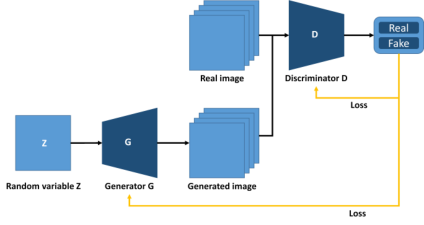
Figure 1: The architecture of DCGAN.
also 1D-CNN for missing signals reconstruction during the shutdown of NPPs.
However, those studies were focused on the signal restoration in normal situations. In emergency situations, it is more difficult to detect and restore signals many parameters change rapidly. In particular, stuck failures may prevent operators from fully understanding the current situation if they incor- rectly consider a faulty signal to be a normal one. This may lead to the wrong operation by operators and systems.
This paper suggests a faulty signals restoration algorithm for stuck failures under an emergency situation in NPPs using DCGAN, which has not yet been investigated (see Table 1). The algorithm utilizes DCGAN to restore failure signals to normal signals in real-time.
DCGAN DCGAN suggested by Radford et al. is an improved version of GAN, one of the representative networks for generating data (Radford et al., 2015). The architecture of DCGAN is shown in Fig. 1.
The DCGAN consists of a generator and discriminator. The generator is made of a generally wider overall pattern, with the later layers having more nodes than the previous layers. Conversely, the discriminator has a narro- wer shape with fewer nodes in subsequent layers than in previous layers. The generator consists of CNN layers, where each CNN layer genets a fake image after performing calculations that change the dimension of the data to learn the characteristics of the data (Lawrence et al., 1997). The generator aims to generate a fake image that is elaborated enough to deceive the discrimi- nator, and the discriminator is trained with the goal of discriminating the
122 Choi and Kim
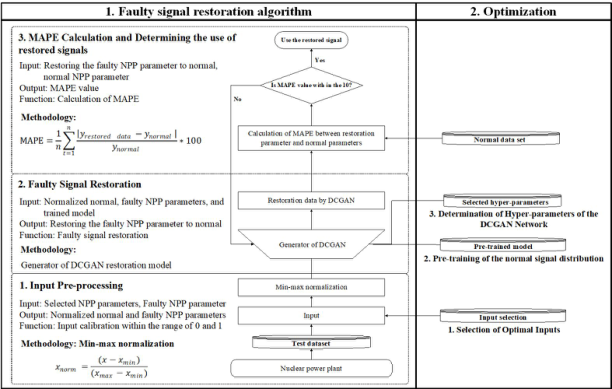
Figure 2: The overview of the suggested algorithm for the faulty signal restoration.
image generated by the generator. The discriminator receives the fake image generated by the generator or a real image as an input and then determines whether the input image is a real image (i.e., the discriminator result is 1) or a fake image (i.e., the discriminator result is 0). Then, the result of the discriminator is calculated, and the result is delivered to the generator and the discriminator, respectively, to improve the performance of each network. Therefore, this enables DCGAN to be used not only as a model for new data generation but also as a model that can generate the faulty data to the normal data.
DEVELOPMENT OF FAULTY SIGNAL RESTORATION ALGORITHM This study suggests a faulty signal restoration algorithm that can restore stuck signals to normal signals under the emergency situation by using DCGAN. Fig. 2. shows the overview of the suggested algorithm. The loss of coolant accident (LOCA), one of the most well know events in NPPs, was conside- red as an emergency situation using the compact nuclear simulator (CNS). Moreover, the optimization is proposed to improve the performance of the faulty signal restoration algorithm.
Faulty Signal Restoration Algorithm The faulty signal restoration algorithm performs the input pre-processing, faulty signal restoration and determination of the use of restored signals. These steps are described in the following subsections.
The first step is the input pre-processing step. The input pre-processing includes the min-max normalization. The signals in NPPs have a diverse range of values or states (e.g., open or closed or 50% in valves, pressurizer (PZR) pressure 158kg/cm2 and steam generator (SG) level 50%). Generally, varia- bles with higher values have a larger impact on the network results (Kim et al.,
Faulty Signal Restoration Algorithm in the Emergency Situation 123
2021). However, the higher values may also cause local minima. To prevent this, this study used min-max normalization using the signals (between 0 to 1) from the NPP as: Xnorm = (xt −xmin) (xmax −xmin), (1)
where xt is the current value or state of the signal, and xmax, xmin are the maximum and minimum values of the collected data from NPP signals, respectively.
In the second step for the faulty signal restoration, the faulty signals are converted to normal signals. To do this, the DCGAN is first trained with the normal signal distributions in the optimization as illustrated in Fig. 2. This pre-trained DCGAN model then uses the hyper-parameters determined by the optimization. Consequently, when the faulty signal is given, the trained generator of DCGAN restore them to a normal signal.
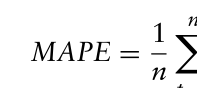
The accuracy of restored faulty signals is then tested by using the mean absolute percentage error (MAPE). The MAPE has been widely used for error calculation to estimate predictive errors as:
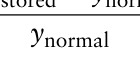
yrestored −ynormal
n X
Equation reproduced from the original PDF.
∗100, (2)
n
Equation reproduced from the original PDF.
where n is the number of observations, ypredict is the signal restored by the generator of DCGAN for time point t, and ynormal is the normalized normal signal. In addition, Lewis suggested that the MAPE less than 10 is interpreted as a highly accurate prediction (Lewis; 1982). In this algorithm, if the MAPE of generated signal is less than 10, the signal is accepted. If it is larger, the signal is fed into the process for the regeneration.
Optimization To improve the performance of the algorithm, this study suggested the opti- mizations for the following: 1) selecting the inputs of the DCGAN network and 2) determining the hyper-parameters of the DCGAN network. For these optimizations, CNS was used to simulate emergency situations. CNS was developed by the Korea Atomic Energy Research Institute (KAERI) with the reference plant being a Westinghouse 3-loop 900-MW pressurized water reactor (PWR) (KAERI; 1990).
Total twenty-six (26) signals (i.e., plant variables in the simulator) were chosen for the optimization of the suggested algorithm. Those 26 plant variables were collected for the LOCA scenarios that are a representative emergency situation in NPPs.
First step of the optimization is selecting the inputs of DCGAN. This step is to select the optimal inputs for faulty signal restoration algorithm. Using the Pearson correlation method, the parameters that have high-correlation betw- een CNS parameters and target signals are selected as the optimal inputs. A Pearson correlation analysis (Xu and Deng; 2017) was employed by applying
124 Choi and Kim
the correlation coefficient given in: Xi−X Yi−Y P ( )
Equation reproduced from the original PDF.
where N is the number of observations, Xi and Yi is the value for the i-th observation. The s is standard deviation. Pearson’s coefficient r has a value between −1 and 1. The greater the absolute value of r, the higher correlation. When r equals 1, this indicates that the two variables have a completely posi- tive correlation. When it equals −1, this indicates that they have a completely negative correlation. A coefficient of 0 shows means that there is no linear correlation between X and Y. In this paper, the correlation coefficients betw- een the 26 target variables and the 2,200 available variables were calculated. The plant variables that have higher correlation coefficients than a certain criterion is selected as the inputs.
In the second step for optimization, the hyper-parameters of pre-trained model to be used for the faulty signal restoration algorithm are determined. The hyper-parameters are optimized with the trial and error until the discri- minator does not distinguish the real and fake signals and the MAPE is less than 10.
CONCLUSION
This study proposed a faulty signal restoration algorithm that can be used for NPPs in the emergency situation by using DCGAN. The development of algorithm mainly consists of the faulty signal restoration and the optimiza- tion. The faulty signal restoration algorithm restores the faulty signal to a normal signal, and then determines the use of the restored signals. The opti- mization is also carried out to improve the faulty signal restoration algorithm. This suggested algorithm will be tested and validated using the stuck failure signals for the emergency situation.
ACKNOWLEDGMENT
This work was supported by the National Research Foundation of Korea (NRF) grant funded by the Korean Government (Ministry of Science and ICT) (No. 2018M2B2B1065651 and NRF-2016R1A5A1013919).
REFERENCES
Basher, H., J. S. Neal, and L. L. C. UT-Battelle. (2003) Autonomous Control of Nuclear Power Plants. United States. Department of Energy. Choi, Y., Yoon, G., & Kim, J. (2021). Unsupervised learning algorithm for signal
validation in emergency situations at nuclear power plants. Nuclear Engineering and Technology. KAERI, (1990). Advanced compact nuclear simulator textbook, KAERI, Nucl.
Training Center Korea At. Energy Res. Inst., Daejeon, South Korea, Tech. Rep. Kim, H., Arigi, A. M., & Kim, J. (2021). Development of a diagnostic algorithm for abnormal situations using long short-term memory and variational autoencoder. Annals of Nuclear Energy, 153, 108077.
Faulty Signal Restoration Algorithm in the Emergency Situation 125
Kim, S. G., Chae, Y. H., and Seong, P. H. (2020) Development of a generativeadversarial-network-based signal reconstruction method for nuclear power plants. Annals of Nuclear Energy, 142, 107410. Lawrence, S., Giles, C. L., Tsoi, A. C., & Back, A. D. (1997). Face recognition: A
convolutional neural-network approach. IEEE transactions on neural networks, 8(1), 98–113. Le Bot, P. (2004) Human reliability data, human error and accident models— illustration through the Three Mile Island accident analysis. Reliability Engine- ering & system safety 83.2: 153-167. Lewis, C. D. (1982). Industrial and business forecasting methods: A practical guide
to exponential smoothing and curve fitting. Butterworth-Heinemann. Li, W., Peng, M., Liu, Y., Jiang, N., Wang, H., and Duan, Z. (2018) Fault detection, identification and reconstruction of sensors in nuclear power plant with optimized PCA method. Annals of Nuclear Energy, 113, 105–117. Lin, T. H., Wang, T. C., and Wu, S. C. (2021) Deep learning schemes for event iden-
tification and signal reconstruction in nuclear power plants with sensor faults. Annals of Nuclear Energy, 154, 108113. Lin, T. H., Wu, S. C. (2019) Sensor fault detection, isolation and reconstruction in nuclear power plants. Annals of Nuclear Energy, 126, 398–409. Liu, H., Huang, M., Janghorban, I., Ghorbannezhad, P., & Yoo, C. (2011, October).
Faulty sensor detection, identification and reconstruction of indoor air quality measurements in a subway station. In 2011 11th International Conference on Control, Automation and Systems (pp. 323-328). IEEE. Radford, A., Metz, L., & Chintala, S. (2015). Unsupervised representation learning with deep convolutional generative adversarial networks. arXiv preprint arXiv:1511.06434. Shaheryar, A., Yin, X. C., Hao, H. W., Ali, H., & Iqbal, K. (2016) A denoising
based autoassociative model for robust sensor monitoring in nuclear power plants. Science and Technology of Nuclear Installations. The American Nuclaer Society. (2012) Ans committee report. A Report by The American Nuclear Society Special Committee on Fukushima. Xu, H. and Deng, Y., (2017). Dependent evidence combination based on shearman
coefficient and pearson coefficient. IEEE Access, 6, pp. 11634–11640. Yang, Z., Xu, P., Zhang, B., Xu, C., Zhang, L., Xie, H., & Duan, Q. (2022) Nuclear power plant sensor signal reconstruction based on deep learning methods. Annals of Nuclear Energy, 167, 108765. Zúñiga, A.A., Baleia, A., Fernandes, J., and Branco, P. J.D.C. (2020). Classical failure
modes and effects analysis in the context of smart grid cyber-physical systems. Energies, 13(5), 1215.
LISTED IN THE AHFE DIGITAL BOOKSTORE CATALOGUE
Explore the complete digital volume
Artificial Intelligence and Social Computing
Read this individual research paper free through the original publisher, or explore the full digital proceedings book.
ISBN 978-1-958651-04-9
Explore this ISBN in the AHFE Bookstore ↗Listed in the July 2026 bookstore catalogue; search by ISBN to confirm current availability · Digital book purchase optional