Fabrizio Palmas (2022). Using Artificial Intelligence to Improve Human Performance: A Predictive Management Strategy. In: Artificial Intelligence and Social Computing. AHFE Open Access, vol. 28, pp. 9–15. https://doi.org/10.54941/ahfe1001441
In this paper, we introduce the novel concept of predictive management designed to support managers and their teams with achieving their long-term goals by adopting a new and sustainable AI and human-based approach that aims to identify a team's mood during short human-based control cycles. Predictive management helps managers, team leaders and employees to become more aware of the mood of a team and its members’ feelings by using AI, sentiment analysis and emotion detection. This allows managers to identify issues and solve them together with the team during short control cycles and thus maintain a productive workflow, instead of being overwhelmed by them and risking worsening the corporate performance.
With the increasing complexity of technology and everyday work, organi- zations, and therefore their executives and managers, are confronted with a number of new difficulties in their day-to-day tasks. For instance, the pro- ductivity of any given team in every company has its fluctuations, during which individuals have to cope with the everyday stress of life while still working productively and contributing to the performance of their team and thus the overall success of the company. Moreover, even the attitude of a single employee can influence the general mood of an entire team and conse- quently, if not addressed straight away, affect its performance. The pandemic caused by COVID-19 has impacted the workplaces and personal lives of the employees of nearly every company worldwide, reshuffling all aspects of their routine and forcing the majority to work from home (Kniffin et al., 2021). Furthermore, the management of every firm has to consider that the innume- rable changes in home and work life, such as limited social interactions and isolation, can have a devastating impact on remote employees’ performance and mental health. Although there have been some investigations into how remote work affects businesses, comparatively few of these focused on emplo- yees, in particular the social and psychological ramifications of personal interactions at the workplace being lost. Nevertheless, overall data suggests that people are generally experiencing severe stress with unknown long-term, post-pandemic consequences. As technology becomes more prevalent in the
workplace, managers must be cautious not to rely purely on technology and not to underestimate the importance of human interaction. However, in order to aid an employee in reaching their maximal potential, it is neces- sary to invest in technologies to be able to provide them with the appropriate tools to support them in their role. The digitalization of our work has rea- ched new levels in recent years, making artificial intelligence (AI) the latest frontier in our work lives (Gil et al., 2020). AI offers companies the ability to identify and forecast data and predict certain patterns, allowing, when applied to employees’ performance levels, for predictions about their perfor- mance before they begin to underperform by monitoring emotional states over time. Managers should be paying attention to their team’s mood at any given time and support them when facing the pandemic and post-pandemic challenges in the context of the now established remote work environment (Babapour et al., 2022).
The Challenges for Managers and Leaders The global economic system has changed dramatically in recent decades. Today, businesses operate in a more complex and interconnected world than ever before. This presents new challenges for managers as they strive to main- tain high levels of performance and competitiveness. Individual employees and entire teams are no longer limited to working within their own country or region and can now relocate more easily or work remotely for companies located anywhere in the world. This represents a challenge for companies that need to ensure their employees’ productivity and efficiency, regardless of their location. In addition, the global economic system is constantly chan- ging. Failing to adapt quickly to these changes can result in lost market share and decreased profits (Boone et al., 2019).
While facing the new challenges of the VUCA world, management and leadership are required to balance their own involvement in the change pro- cess with maintaining strong support for their team (Vesa et al., 2021). Furthermore, to stay competitive and survive in the market, organizati- ons must increase innovation, efficiency and productivity and undergo an unprecedented digital and social transformation driven by new technologies (Ionescu and Dumitru, 2015, Matt et al., 2015). However, many companies fail to consider the crucial role organizational culture plays when managing this transformation (Luecke, 2003). In this environment, employees are requi- red not only to stay highly engaged and adapt quickly to new and challenging situations, but also to handle the pressure to improve their performance, be more flexible and take on more self-responsibility (Maier, 2019).
To manage these transformations efficiently and effectively, organizati- ons must treat employees as people and not just as economic resources for financial success. To this end, managers and team leaders need to master emotional intelligence (a collection of traits and skills whose scope covers a comprehensive collection of varied abilities, typically referred to as soft skills or inter and intra-personal skills) to support and maintain a healthy relation- ship with their teams (Gupta, 2014). Individuals with emotional intelligence
Using Artificial Intelligence to Improve Human Performance 11
better understand emotions, possess emotional knowledge and can efficien- tly regulate their emotions for social and intellectual growth (Cherniss and Goleman, 2001). Companies and their employees are required to adapt even more and perform even better in the face of adverse circumstances, trauma, tragedies, threats, or sources of significant stress, such as family or workplace conflicts, health complications or financial stress; a trait which psychology defines as resilience (Vella and Pai, 2019). In today’s competitive economy, one of the most common causes for stress is work-related stress.
PERFORMANCE MANAGEMENT Performance management systems offer managers support for understanding how a team is performing. With the advent of new technology, it is possible to monitor the performance of employees in real-time, even if they work remo- tely. Performance management is a process that helps organizations achieve their strategic objectives by monitoring employees, aiding them in correctly aligning resources and providing early warnings for potential complications. It involves setting goals, measuring progress, and supporting organizations in taking corrective action when necessary. Its effectiveness can improve employee productivity and satisfaction while also helping to ensure that the organization’s resources are used efficiently (Carpi et al., 2017). Nevertheless, the quality of the performance tracking depends on the quantity and quality of the gathered data.
Often performance is measured through lagging indicators or with the omission of important metrics, which could hinder an adequate analysis of the overall company’s performance (de Waal and Counet, 2009). Organi- zations need to recognize that motivated and mentally healthy employees are more likely to make significant contributions and, consequently, to be valuable assets for companies. Therefore, employees’ sentiments can have an enormous impact on a company’s business performance and need to be integrated into managerial strategies.
The Importance of Emotions for a Team’s Success According to modern research on motivation, the most substantial influe- nce on an individual’s life comes from others. This indicates that humans are motivated by affection and successful interpersonal relationships (Bauer, 2008). Moreover, neuroscience shows that emotional stimulation activates the body’s biological messengers, and thus also the brain’s reward system and motivation centre. The physical body, the conscious mind and the emotions interact to influence our thinking and decision-making processes (Neuberger, 2002). The underlying basis of our emotions is formed by apprai- sals of events and the perception of oneself (Bagozzi et al., 1999), and it is widely believed that there are many distinguishing factors between emotions and moods, which include duration, intentionality, cause, consequence, and function (Beedie et al., 2005). Consequently, when it comes to a team’s perfor- mance, the emotions and sentiments of employees can have a strong positive or negative impact. In some cases, a team’s performance may hinge on a single individual’s emotional state (Zhou et al., 2020). Consequently, reading and
12 Palmas
managing emotions can influence the performance of a whole team. Unfortu- nately, emotions can be challenging to assess because they are often displayed subtly, and many humans find it difficult to read, understand and communi- cate their feelings (Ekman, 2004; Hao et al., 2014). These challenges faced by teams highlight the importance of emotional intelligence in business.
Leaders with a high degree of emotional intelligence can control their own emotions and understand and empathize with the people around them. The- refore, emotional intelligence appears to be the most significant predictor of success at work (Ingram and Cangemi, 2012) and positively impacts team performance (Naseer et al., 2011, Dunaway, 2013), communication, critical thinking skills, and the ability to identify and share one’s vision (Cherniss and Goleman, 2001).
AI FOR HUMAN PERFORMANCE The impact of artificial intelligence in business is becoming more and more apparent as this technology improves. The potential for AI in revolutioni- zing enterprises is enormous. It has already had a significant impact in many fields such as marketing, finance, healthcare, education, human resources, the military sector, game development and more (Ghosh and Singh, 2020).
At the workplace, AI has the capability to support human performance by detecting emotions from different sources such as video or audio data and by analyzing sentiments from text. Moreover, sentiment analysis and opinion mining can be attributed a crucial role in determining the behavioral tendency behind almost every human activity (Liu, 2012).
PREDICTIVE MANAGEMENT With a basic understanding of today’s business challenges and the potential of AI, we can now explain what a predictive management strategy is and how it could lead to improved human performance. Predictive management can be considered a new field of business that employs AI to predict future per- formance outcomes based on understanding the human side of a company, ergo its employees. This allows managers to make better decisions by taking on the role of facilitators in regular meetings while being supported by AI to gain more information and an overview of the team’s wellbeing. Furth- ermore, a team’s mood can be considered an essential hidden performance indicator to ensure the successful achievement of their goals and, consequ- ently, the company’s objectives. Moreover, detecting a team’s mood could further develop the team members’ emotional intelligence and thus help to improve a company’s work culture.
We can summarize the concept of predictive management as follows: Predictive management uses AI to monitor, analyze, and model acquired data to detect, understand, and predict a team’s wellbeing based on their emotions, sentiments, and moods. As a result, it enables managers and team leaders to identify and resolve challenges employees face before they esca- late into problems, facilitating the achievement of business goals and the successful implementation of corporate strategies.
Using Artificial Intelligence to Improve Human Performance 13
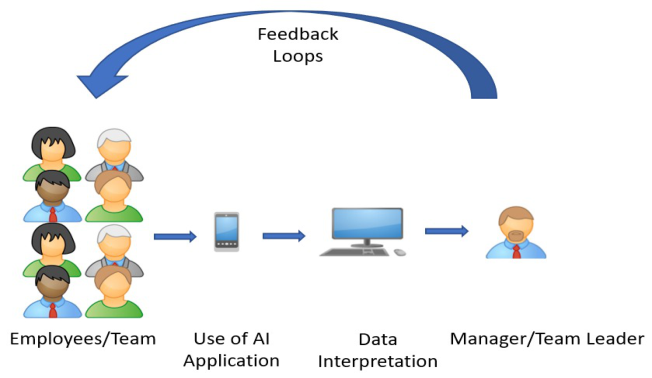
Figure 1: The core phases of predictive management in practice.
We can summarize the core phases when adopting predictive management in a company as follows (see Fig. 1): Use of an engaging application: The employees use an application (for example a mobile app) daily to record how they feel by talking freely about the highlights of their day. The topic does not have to be limited to work life and can be extended to broader fields to gather more information.
Data Gathering and Analysis: The application can detect, extract and reco- gnize emotions and sentiments from the previously recorded session in the form of video, audio and a transcript of the audio (speech to text). The data should be stored anonymously to respect the privacy of the individual employees and ethical guidelines.
Data interpretation: Managers or team leaders receive an overview of a team’s mood and may decide to address the topic in the performance meeting.
Performance Meetings with feedback loops: Regular meeting cycles should be kept short and be moderated by a manager or team leader. These meetings function as a status update and should integrate feedback loops that help identify and keep track of the overall mood of a team. These cycles are a core component of feedback loops that allow managers and team leadership to review their team’s performance and identify the roots of issues by esta- blishing transparent and open communication channels. These can then be resolved in an appropriate time frame, thus avoiding a significant negative impact on the team’s performance. The frequency of the performance mee- tings may change based on the phase or priority of a project. In addition, this approach promotes emotional intelligence on all levels of a company.
The following challenges need to be considered when implementing an AI-based predictive management solution:
Weight balancing of different emotions to determine the dominant one.
Data normalization between users for comparability.
Data compression to a single value per day and user, especially for longer recordings.
14 Palmas
Data interpolation for missing entries and across users while keeping critical drops visible.
Working offline and in accordance with GDPR.
Since employees are the most valuable asset of a company, adopting predi- ctive management can be seen as a strategical approach to achieving success and long-term goals in a sustainable way by positively influencing the sati- sfaction and wellbeing of employees within an organization, which, in turn, can lead to overall improved business performance.
CONCLUSION
Managing performance is imperative for businesses when considering orga- nizations as functional machines whose success and operability depend on the performance of individual employees. Utilizing AI could offer a sustai- nable advantage by tracking and understanding how employees feel, even when working remotely. By monitoring employee sentiment and engage- ment through AI, managers can intervene before critical issues arise. This allows for a more proactive approach to corporate strategy and ultimately benefits the company. Predictive management helps managers and employees become more aware of the mood within a team and its members’ feelings by employing AI, sentiment analysis and emotion detection.
REFERENCES
Babapour Chafi, M., Hultberg, A. and Bozic Yams, N. (2022). Post-Pandemic Office Work: Perceived Challenges and Opportunities for a Sustainable Work Environment. Sustainability, 14(1), 294. Bagozzi, R. P., Gopinath, M. and Nyer, P. U. (1999). The role of emotions in
marketing. Journal of the academy of marketing science, 27(2), 184–206. Bauer, J. (2008). Prinzip Menschlichkeit, warum wir von Natur aus kooperieren.
München: Heyne. Beedie, C., Terry, P. and Lane, A. (2005). Distinctions between emotion and mood. Cognition & Emotion, 19(6), 847–878. Boone, L. E., Kurtz, D. L. and Berston, S. (2019). Contemporary business. John Wiley
& Sons. Carpi, R., Douglas, J. and Gascon, F. (October 4, 2017). Performance management: Why keeping score is so important, and so hard. McKin- sey’s Website:https://www.mckinsey.com/business-functions/operations/our-insig hts/performance-management-why-keeping-score-is-so-important-and-so-hard. Cherniss, C., Goleman, D., (2001). The Emotionally Intelligent Workplace: How to Select For, Measure, and Improve Emotional Intelligence in Individuals, Groups, and Organizations. Jossey-Bass. DeChurch, L. A., Mesmer-Magnus, J. R. and Doty, D. (2013). Moving beyond rela-
tionship and task conflict: toward a process-state perspective. Journal of Applied Psychology, 98(4), 559. De Waal, A. A. and Counet, H. (2009). Lessons learned from performance management systems implementations. International journal of productivity and perfor- mance management. Dunaway, M. M. (2013). IS learning: The impact of gender and team emotional
intelligence. Journal of Information Systems Education, 24(3), 189-202.
Using Artificial Intelligence to Improve Human Performance 15
Ekman, P. (2004). Emotions revealed. Bmj, 328(Suppl S5). Ghosh, S. and Singh, A. (2020, May). The scope of Artificial Intelligence in mankind: A detailed review. In Journal of Physics: Conference Series (Vol. 1531, No. 1, p. 012045). IOP Publishing. Gil, D., Hobson, S., Mojsilovi´c, A., Puri, R. and Smith, J. R. (2020). AI for
management: An overview. the Future of Management in an AI World, 3–19. Gupta, Sachin. (February 14, 2014) Research Paper on Emotional Intelligence and Work Life Balance of Employees in the Information Technology Industry. Available at doi.org: http://dx.doi.org/10.2139/ssrn.2395216. Hao, Y., Budd, J., Jackson, M. M., Sati, M. and Soni, S. (2014). A visual feed-
back design based on a brain-computer interface to assist users regulate their emotional state. In CHI’14 Extended Abstracts on Human Factors in Computing Systems (pp. 2491–2496). Ingram, J. and Cangemi, J. (2012). Emotions, emotional intelligence and leadership: A brief, pragmatic perspective. Education, 132(4). Ionescu, A., and Dumitru, N. R. (2015). The role of innovation in creating the
company’s competitive advantage. Ecoforum Journal, 4(1), 14. Kniffin, K. M., Narayanan, J., Anseel, F., Antonakis, J., Ashford, S. P., Bakker, A. B., and Vugt, M. V. (2021). COVID-19 and the workplace: Implications, issues, and insights for future research and action. American Psychologist, 76(1), 63. Liu, B. (2012). Sentiment analysis and opinion mining. Synthesis lectures on human
language technologies, 5(1), 1–167. Luecke, R. (2003). Harvard business essentials: managing creativity and innovation.
Harvard Business Press. Matt, C., Hess, T., and Benlian, A. (2015). Digital transformation strategies. Business & information systems engineering, 57(5), 339–343. Maier, R. (2019). Self-Responsibility: Transformations. American Behavioral Scien-
tist, 63(1), 27–42. Naseer, Z., Chishti, S. U. H., Rahman, F. and Jumani, N. B. (2011). Impact of Emotional Intelligence on Team Performance in Higher Education Institutes. Inter- national Online Journal of Educational Sciences, 3(1). Neuberger O. (2002): Führen und führen lassen, Ansätze – Ergebnisse und Kritik der
Führungsforschung, Stuttgart, 6. Auflage, Lucius & Lucius. Vella, S. L. C. and Pai, N. B. (2019). A theoretical review of psychological resilience: Defining resilience and resilience research over the decades. Archives of Medicine and Health Sciences, 7(2), 233. Vesa, L., Bolos,, M. I., and Sab˘au-Popa, C. D. (2021). Inventory Decision in VUCA
World using Economic Logic Quantity. Annals of the University of Oradea, Economic Science Series, 30(1). Zhou, W., Zhu, Z. and Vredenburgh, D. (2020). Emotional intelligence, psychological safety, and team decision making. Team Performance Management: An International Journal.
LISTED IN THE AHFE DIGITAL BOOKSTORE CATALOGUE
Explore the complete digital volume
Artificial Intelligence and Social Computing
Read this individual research paper free through the original publisher, or explore the full digital proceedings book.
ISBN 978-1-958651-04-9
Explore this ISBN in the AHFE Bookstore ↗Listed in the July 2026 bookstore catalogue; search by ISBN to confirm current availability · Digital book purchase optional