Maria De Fátima Faria Costa, Ermanno Aparo, Liliana Soares (2022). Worth by Northwest: A Design Strategy for Territorial Sustainability. In: Human Dynamics and Design for the Development of Contemporary Societies. AHFE Open Access, vol. 25, pp. 482–489. https://doi.org/10.54941/ahfe1001424
1 CIAUD, Research Centre for Architecture, Urbanism and Design, Lisbon School of Architecture, Universidade de Lisboa, Portugal ↗
2 Instituto Politécnico de Viana do Castelo, Portugal & CIAUD, Research Centre for Architecture, Urbanism and Design, Lisbon School of Architecture, Universidade de Lisboa, Portugal ↗
The paper aims to prove that a local design-oriented network strategy can be crucial in achieving territorial sustainability.The analysis of a place can be understood as an occasion to define a multicellular system so that, each one of the monocellular organisms - the companies - cooperate together and define the evolution of the system. As happens in a multicellular biological organism, in a network of companies, several cells - with different types and degrees of specialization - can create an interdependence that increases the possibility of survival.The case of Italian productive districts establishes the contribution of design to the competitiveness of companies, involving them in the organization of territorial interfaces capable of producing innovation (Bettiol, Chiaversio, Micelli, 2009). The development of a territorial business system can be an opportunity to stimulate local development, representing an opportunity to favor and encourage investments. Likewise, this is an chance to develop ways to share resources, processes, knowledge and innovation. Since the Renaissance, the Italian productive system has been articulated in networks (Aparo, 2020), sharing excellence and approaching complex projects that are solved, almost always producing innovation. The concept of network system expressed by design has been supported by authors such as Ampelio Bucci (2003), Antonio Ricciardi (2004) or Venanzio Arquilla, Giuliano Simonelli, Arianna Vignati (2005). It is an action established in several areas of the product and/or service and a decisive network system for the success of Italian Design in the world.The work developed by Design in the development of a system of territorial networks becomes essential by taking on several tasks. Maria Antonieta Sbordone (2016) analyzes them as a social function, a heterogeneous function, a business function and, finally, a connective function.The North of Portugal is mainly characterized by a panorama of small and medium-sized companies which - according to data provided by the National Institute of Statistics - in the last study carried out in 2008 on the structures of Portuguese companies, reveals that 113,747 companies were located in the North, influencing by 69.5% in the turnover of the North Region.The authors intend to demonstrate that in the North of Portugal, a business network strategy of a local character guided by Design, can be seen as a significant opportunity to define the evolution of the local economy. An action that motivates the creation of business systems to determine mutual collaboration and the development of innovation projects. Taking the Italian system as an example, the aim is to implement a business network system that, starting from localized excellence, can enhance the productive capacity of each company, improve the offer, make processes profitable and, finally, determine survival or even success. Therefore, the results of project developed in an academic context within the scope of Research and Development explain how a project built with networks can stimulate innovation and activate collaboration processes, reaching levels of excellence, making resources profitable and exalting the peculiarities of each productive organism in order to create sustainability.
The analysis of a place can be understood as an occasion to define a multicel- lular system so that, each one of the monocellular organisms - the companies - cooperate together and define the evolution of the system. As happens in a multicellular biological organism, in a network of companies, seve- ral cells - with different types and degrees of specialization - can create an interdependence that increases the possibility of survival.
The case of Italian productive districts establishes the contribution of design to the competitiveness of companies, involving them in the orga- nization of territorial interfaces capable of producing innovation (Bettol, Chiaversio, Micelli, 2009). The development of a territorial business system can be an chance to stimulate local development, representing an opportunity to favor and encourage investments. Likewise, this is an chance to deve- lop ways to share resources, processes, knowledge and innovation. Since the Renaissance, the Italian productive system has been articulated in networks (Aparo, 2020), sharing excellence and approaching complex projects that are solved, almost always producing innovation. The concept of network
The Worth by Northwest: A Design Strategy for Territorial Sustainability 483
system expressed by design has been supported by authors such as Ampe- lio Bucci (2003), Antonio Ricciardi (2004) or Venanzio Arquilla, Giuliano Simonelli, Arianna Vignati (2005). It is an action established in several areas of the product and/or service and a decisive network system for the success of Italian Design in the world. In fact, the work developed by Design in the development of a system of territorial networks becomes essential by taking on several tasks. Maria Antonietta Sbordone (2016) analyzes them as a social function, a heterogeneous function, a business function and, finally, a connective function.
In Portugal, the North is mainly characterized by a panorama of small and medium-sized companies. According to data provided by the National Institute of Statistics, in the last study carried out in 2008 on the structures of Portuguese companies, it is revealed that 113,747 companies were located in the North, influencing by 69.5% in the turnover of the North Region.
Taking the Italian system as an example, the authors wonder to know if a business network strategy in the North of Portugal conducted by Design, can be seen as a significant opportunity to define the evolution of the local economy. Then, the subsequent research question was considered: To what extend can network strategy of a place create business systems and determine mutual collaboration and innovation?
METHODS
This study is based on a mixed methodology, with non-interventionist and interventionist stages. The non-interventionist stage included the identifica- tion of micro, small and medium-sized companies in the North of Portugal, and the elaboration of an analysis sheet and the construction of case studies. The analysis form was used in the later phase for analyzing the companies. The case studies were built to support the theme. In the interventionist phase of the research, a more active investigation was carried out, which included fieldwork. In this way, the fieldwork was based on visiting the premises of the identified companies, carrying out observation and identification work as a way of getting to know the company and compiling the analysis sheet.
BACKGROUND
To argue that a territorial system of business networks can be a strategy to achieve sustainability, three case studies were selected and developed in dif- ferent scopes. Both the RaiOOO project developed with a group of master’s students in design, or the META project developed by a student based on her master’s thesis, and the Almada Trumpet project developed as part of a post- doctorate in design. The choice of these projects is limited to one element in common between all the projects, namely, the fact that all projects are absent from the principle of a territorial system of business networks. This factor is related to innovation, that is, partner companies accept the challenge of carrying out a project within the scope in which they normally operate.
In fact, “Often strong innovation in one sector can be provided by tran- sferring ideas and solutions from another field where the same ideas and
Table 1. Basic topics and affinity between the case studies (Costa, Aparo, Soares, 2022).
Table available in the original PDF paper.
Author Case Study Basic Topics and affinity between the case studies Ermanno Aparo Manuel Ribeiro RaiOOO (2014)
The creation of a territorial network system
New product development
Academic and industry join venture
Craft-design alliance
Ermanno Aparo Almada Trumpet (2018) Fátima Costa Meta (2021)
Research projects
Sustainable product
solutions are no longer innovative, but have been fully acquired for a long time.” (Chiapponi, 1999). Therefore, it was created new partnerships betw- een companies that have never worked together, stimulating new business, sustainability and innovation.
RAIOOO CASE STUDY (2014) RaiOOO is a design project developed in 2014, within the academic scope, involving 18 students from the Master’s Course in Integrated Design at the Polytechnic Institute of Viana do Castelo (IPVC). This project was coordina- ted by professors Ermanno Aparo and Manuel Ribeiro and aimed to prove the creative process that relates the academic world to the productive context “(…) can be the key factor to create sustainability.” (Soares, Aparo, Ribeiro, 2017). The RaiOOO project consists of a prototype of a tricycle with electric monitoring - with an electric motor connected to sensors on the pedals - and is “(…) a sustainable solution that reflects the cycling world and present society.” (Soares, Aparo, Rivas, Curralo, 2017).
The process was based on a mixed cross methodology, including biblio- graphic research, study visits, experiences and connection with companies. In productive terms, the RaiOOO project allowed students to establish links and partnerships with different productive entities, thus fostering connections between industry and crafts. In total, Portuguese companies such as Corti- ceira Amorim, the Jacome brothers, Rodi, QBrothers, the Spanish company Ruedas Eletricas, the Brazilian company Dreambike and the artisan Joaquim Silva de Ponte de Lima were involved. This creative process also had the institutional support of Rui Sousa, a professional cyclist. This entire imple- mentation/design phase of the project lasted six months, with joint work between all involved, operating both in the school and in the companies.
For the construction, although unusual materials in bicycle context were used in this project, these materials are quite common when speaking of Portuguese culture, namely, cork, wood and leather. In addition to these mate- rials, others solutions more typical of the traditional bicycle were used, such as aluminum, ecological plastic and mechanical components. This selection transports us to a transcultural and sustainable product.
The Worth by Northwest: A Design Strategy for Territorial Sustainability 485
Figure 1: RaiOOO case study. Source: Joana Ferreira.
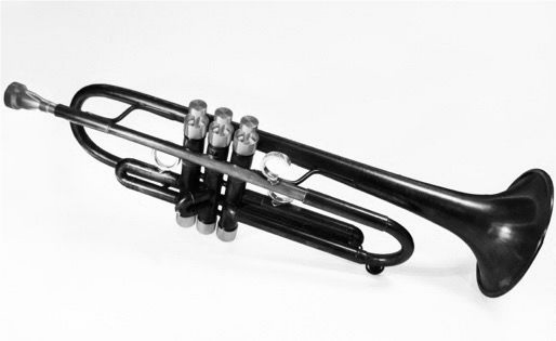
ALMADA TRUMPET CASE STUDY (2018) The Almada Trumpet project was developed in 2018 as part of a study pro- ject of professor and researcher, Ermanno Aparo, and consists of a musical instrument in the wind field, namely, a trumpet. The realization of this project came about, on the one hand, to curb the lack of production of wind instru- ments in Portugal. On the other hand, due to the “existence in the territory of actors of different types and natures with great potential to produce pro- cesses that fit into the construction of a wind instrument of the brass family” (Aparo, Soares, Moreira Da Silva, 2017).
Almada Trumpet is a project that links two areas that can be understood as areas of the history of human culture – design and music. Since it combines different areas of knowledge and manufacturing, through the creation of a territorial network system that is characterized by the presence of partners from different areas. Thus, the project had the participation of around 12 companies and 3 educational institutions, with emphasis on the ARTEAM school (Viana do Castelo), the artisan and tinsmith Francisco Liquito and the Furnor company (Vila Nova de Famalicão). This study aims to demonstrate that the synergy from different areas of knowledge constitutes an opportunity for innovation (Aparo, 2020).
In terms of materials, there was an analysis and selection for each com- ponent/part that constitutes the trumpet. Namely, copper for the bell, consi- dering that, in constructive terms, this material can present some problems, however, “trumpets with copper bells also have excellent projection and good flexibility.” (Aparo, 2020). For the rings, and as a way to provide the instru- ment with a strong Portuguese image, the filigree technique in silver was used. And yet, the application of stone leaf discs on top of the buttons. In 2019, Almada Trumpet was the first Portuguese project to be awarded with the
Figure 2: Almada Trumpet case study. Source: Ermanno Aparo.
international award “A’ Design Award” (silver prize) in the category of musi- cal instruments. Bearing in mind that, in the area of Design, this is considered one of the 5 most notable awards.
META CASE STUDY (2021) The Meta project was developed in the academic sphere to obtain a master’s degree from the Master’s course in Integrated Design at the Polytechnic Insti- tute of Viana do Castelo. This project consists of a handbag that was designed and conceived using a territorial network system, carried out “(…) through the transition from the cultural context of the Portuguese furniture industry to the scope of fashion accessories.” (Costa, 2021).
In methodological terms, the project was based on a mixed methodology, with interventionist and non-interventionist phases, which went through research, fieldwork, project hypotheses and finally, the project phase. At the constructive level, the first phase of the project was the selection of materi- als to be used and implemented in the project. Thus, the materials used in its realization were leftovers/waste of synthetic skins, fabric, cardboard and mahogany wood from companies in the furniture sector in Northern Portu- gal. This choice is due to the advantages found, both for the project and for the furniture sector in the North of Portugal, of benefiting from the use of surplus material produced by these companies and which for their produ- ctions are no longer of any use. Meta intends to “(…) demonstrate that the synergy between companies and artisans located in the same region as the educational institution can foster the creation of a network of contacts and contribute to sustainability (…)” (Costa, 2021). Therefore, from companies to artisans’ workshops, the project had partners for the two distinct phases, namely, the first phase of collecting the material and the second, the mate- rialization phase of the project. Thus, the network created was constituted by the companies CADEINOR (Fafe) and SANTOS - upholstery and interi- ors (Vila do Conde) in terms of material and by the company PALARDO -
The Worth by Northwest: A Design Strategy for Territorial Sustainability 487
Figure 3: Meta case study. Source: Fátima Costa.
Manufacturer of bags and backpacks (Vila do Conde), the dressmaker and seamstress Inês Costa (Vila do Conde) and the artisan José Barroso (Vila do Conde) regarding the materialization of the project.
THE RESEARCH As this is an ongoing research project, at the beginning the aim of the present research was to implement a business network system that, starting from localized excellence, could enhanced the productive capacity of each com- pany, improving offer, making processes profitable and, finally, determining survival or even success. Therefore, the results of project developed in an aca- demic context within the scope of research and development explain how a project built with networks can stimulate innovation and activate collabo- ration processes, reaching levels of excellence, making resources profitable and exalting the peculiarities of each productive organism in order to cre- ate sustainability. This study was based on a mixed technique. On the one hand, case studies were built according to the theme in question, this being a moment of research, using references, directly related to the field of inte- rvention, that is, production through a network of companies. On the other hand, through fieldwork it was possible to detect important elements such as, for example, the productive sector, the number of people, the know- how about techniques and technologies, the physical space or the existing partnerships.
In a second phase, the research team is carrying out visits to several com- panies of the region, from different areas and, simultaneously, previously developed analysis sheets are being filled out. The analysis sheet included questions such as:
1) company data (name, address and owner) and scope of activity, 2) business volume and type of production, 3) the market and the number of employees, 4) the types of products,
5) materials, main production processes, machinery and tools, 6) departments existing in the company, 7) marketing and/or distribution is carried out directly; 8) the company’s communication (website, social networks, etc.).
CONCLUSION
This study demonstrates that, in the North of Portugal, the implementation of a territorial business network system strategy to introduce new product development can be an opportunity to achieve territorial sustainability. In addition, this strategy also contributes to local development, through the sharing of resources, processes, knowledge and innovation.
With the selected case studies, it was possible to prove the viability of the subject under study, specifically, the construction of a business network system to obtain territorial sustainability.
For companies, this study is advantageous due to the synergy created betw- een companies that promote their success and, sometimes, their survival. Bearing in mind that the exchange of knowledge and mutual collaboration in innovative projects adds value to both parties.
For Academia, the research proves that it is important to ensure that students, as future professionals, understand that complex systems such as company networks, through design, can be the ideal platforms to imple- ment innovation in the territory, enabling the survival or even the success of products and companies.
REFERENCES
Aparo, E. (2020) O projeto Almada Trumpet: uma estratégia de design para a criação de um instrumento musical. Mauritius: Novas Edições Acadêmicas; Aparo, E.; Soares, L.; Moreira Da Silva, F. (2017). “Either/or: reflecting design thesis
orientation”. In Berg et al (Eds). Building Community: Design Education for a Sustainable Future. Section: Design Education for the General Public. Glasgow: The Design Society. 2017. (pp. 674–679). ISBN: 978-1-904670-84-1. Arquilla, V.; Simonelli, G.; Vignati, A. (2005) Design, imprese, distretti. Un approccio all’innovazione. Milano: Polidesign; Bettol M.; Chiarvesio, M.; Micelli, S. (2009) “Innovazione, performance, e design
nelle imprese leader dei distretti industriali italiani” in Baglieri, E.; Lojacono, G. (coord) Vincere con le idee – Innovazione Design Performance. Milano: Egea, 119–140; Bucci, A. (2003) L’impresa guidata dalle idee: Leezioni di management creativo dalla moda e dal design. Milano: Arcipelago; Chiapponi, M. (1999) Cultura sociale del prodotto. Milano: Campi del Sapere-
Feltrinelli; Costa, F. (2021) A cultura do Mobiliário Português no Design de Acessórios de Moda. (Tese de Mestrado, Instituto Politécnico de Viana do Castelo). Repositório Científico IPVC http://repositorio.ipvc.pt/handle/20.500.11960/2599; Ricciardi, A. (2004) Le reti di imprese. Viaggi competitivi e pianificazione strategica.
Milano: Franco Angeli; Sbordone, M. L. (2016) “Design Networking. Local Systems of collaborative economies”in PAD #13 – Design for territories. Siracusa: Lettera Ventidue, 51–75;
The Worth by Northwest: A Design Strategy for Territorial Sustainability 489
Soares, L. Aparo, E. Ribeiro, M. (2017) The concept of scenarios supported by semiotic capability to design a bicycle between tradition and innovation. In Bankov et al (Eds). New Semiotics: Between Tradition and Innovation. (pp. 1005–1012). ISSN 2414-6862. ISBN 978-954-535-943-9. Sofia: IASS Publications & NBU Publi- shing House, 2017. http://www.iass-ais.org/proceedings2014/view_lesson.php?id =339-. Soares, L. Aparo, E. & Rivas, M. Curralo, A. (2017) Design Education. Bridging
Academy and Local Context. Convergências - Revista de Investigação e Ensino das Artes, VOL X (19).
LISTED IN THE AHFE DIGITAL BOOKSTORE CATALOGUE
Explore the complete digital volume
Human Dynamics and Design for the Development of Contemporary Societies
Read this individual research paper free through the original publisher, or explore the full digital proceedings book.
ISBN 978-1-958651-01-8
Explore this ISBN in the AHFE Bookstore ↗Listed in the July 2026 bookstore catalogue; search by ISBN to confirm current availability · Digital book purchase optional