Ermanno Aparo, Liliana Soares, Evandra Gonçalves (2023). The will-to-power to design a violin. In: Human Dynamics and Design for the Development of Contemporary Societies. AHFE Open Access, vol. 81, pp. 129–138. https://doi.org/10.54941/ahfe1003541
ESMAE, Escola Superior de Artes e Espetáculo do Porto (Instituto Politécnico do, Porto), Rua da Alegria 503, 4000–045 Porto and ARTEAM, Escola Profissional Artística do Alto Minho, Travessa do Salgueiro 14-16, 4900–323 Viana do Castelo, Portugal ↗
This paper intends to highlight the competence of Design to determine productive and creative connections for the creation of a complex instrument such as the violin as an interpreter and precursor of innovation in the processes of sustainability of society.Over time, but particularly from the 17th century onwards, violin production was characterized by a profound relationship between knowledge of materials and experimentation with techniques that, in some cases, have remained practically identical until the days of today. For some researchers (Bonaventura, 1933; Hutchins, 1981; Bonfils et Fabretti, 2019) it seems quite curious to be able to understand how, in the 18th century, some luthiers were able to produce instruments whose sound qualities are still highly appreciated today, considering the little knowledge in the scopes of chemistry, physics and acoustics. The relationship between the construction and the artefact of this instrument has always been characterized by a connection between the mystique and the culture of the place propitiated for the religious cult that characterized the cultural contest and the capacity to benefit from the resources available in the place and that involves the history of some violinists in the construction of the instrument itself. In this sense, in the history of the construction of this instrument, there are religious references such as the Agnus Dei related to the ancient strings in lamb guts or even the Regis Purpura of the varnish that recalls the color of the blood of Christ (Borer, 2006). In this construction process, there is also a coherent use of the material available in the area, such as, for example, red spruce or maple wood. The presence of this material in large quantities in the alpine areas where firewood itself transited (Blom, 2021), argues its use in the violin. Today, the lack and high cost of some resources make a new interpretation of the relationship between design and production necessary, namely, establishing new connections between materials, processes, and the contemplation of the artifact in its production, as well as in its appreciation. The productive analysis carried out today must considerer a new assessment of the relationship between the various forces that constitute the production of the artifact, determining a connection that can improve the result, but always having the classical reference as a starting point.In this sense and referring to the concept of “will-to-power” (Nietzsche, 2008), to design a musical instrument such as a violin becomes liberating from the theological thought of the time. A possibility that allows the individual to base courage on himself and not on a divine reason, allowing courage to be the general condition of practical reason, synonymous with the space-time relationship and the unplanned.With this article, the authors intend to demonstrate that the use of sustainable materials, which make use of traditional lutherie methods, can determine a new mystique that accompanies environmental principles and helps human beings to get closer to nature and the values that intend it to preserve, defend but also venerate.
In the history of human culture, the violin is probably one of the most attra- ctive musical instruments due to its narrative aspect, which includes mysteries and legends. From its origins, it is known that it had an evolutionary path, perhaps based on the creation of classical and popular music instruments. According to some organologists and researchers, the violin does not seem to be a true invention, but an evolution of a process of progress of other musical instruments such as, for example, the rebec, the viella, the arm viola or the gamba viola (Baroncini, 1994; Donington, 2022; Winternitz, 2020).
In the European context of the 15th century, string instruments were only played using the “pizzicato”. According to Arnaldo Bonaventura (1933), the use of the bow was introduced by the Arabs in 711 AD., during the conquest
of Spain, bringing to the West this form of playing that is very common in the East, namely in India and China.
THE BASIS Friedrich Nietzsche’s thought mainly be highly praised after his death, both by German intellectuals and by the French generation from the 1960’s. His alienation and nihilist proposal consisted of the individual’s need to free him- self from the existence of God, rationalizing the will-to-power to become an individual. This interpretation became a possibility for human being to base courage on himself/herself and not on a divine reason, allowing the will-to- power to be the general condition of practical reason. As Nietzsche states about courage, “it also requires a preemptive force for reasons that today no one dares; courage to the forbidden; predestination to the labyrinth. (...) And the will to economize in the grand manner - to hold together his strength, his enthusiasm... Reference for self; love of self; absolute freedom of self...” (Nietzsche, 1895). Nietzsche’s proposition resulted from his reflection on the reality of the end of the 19th century. For this reason, courage was the true basis of Being and was a synonymous of space-time. According to Nietzsche “we are compelled to experience this illusion, totally caught up in it and con- stituted by it, as the truly non-existence, that is, as a continuing development in time, space. and causality, in other words, as empirical reality. But if we momentarily look away from our own “reality,” if we grasp our empirical existence and the world in general as an idea of the primordial oneness cre- ated in every moment, then we must now consider our dream as the illusion of an illusion, as well as an even higher fulfilment of the original hunger for illusion.” (Nietzsche, 1872). Nietzsche’s statement confirms the human representation as an appearance of change it represents of itself. Causality must be considered in the interpretation of the reality in which the individual interacts. Thus, external factors promote change and belong to Nietzsche’s definition of courage, in the sense that courage manifests itself as an image of itself. But, how is it possible to project a Being that is endlessly changeable? This research concerns the interpretation of Nietzsche’s thought regarding the design of a violin interpreted as a product that design the appearance of becoming. Therefore, the appearance is achieved through representation and the design of a violin is something that is on the threshold between what the violin was and what it will be, proposing solutions predisposed to change and, for this reason, responses that promote the connexion between what is the essence and what is the appearance of the violin at each stage of the design.
Thus, this research is based on holding the quality of the final relationship established by the various forces and not just by the elementary articulating parts as is the case of autonomous thinking. The stronger the relationship, the better the final quality of the whole. If forces are strong, the relationship is more intense and this will originate a final product that is more ambitious and powerful. With this new rationality in mind, the de reference to design a violin is thought and not the violin. It means a methodological action to reflect the rationality of our time, including time, space and circumstances.
The Will-to-Power to Design a Violin 131
THE PRODUCTION OF VIOLINS BETWEEN TECHNIQUES AND STORYTELLING From the analysis of the existing literature and focusing on the materials of the instruments that preceded the violin, there is a diversified use of materials, depending on the acoustic qualities, the place and the social origin of the cli- ent. Pier Luigi Polato (1985), for instance, reports that the Venetian luthiers of the 16th century used maple (acer campestre), maple (acer platanoides) or yew (taxus baccata) as raw material to build more economical instru- ments. On the other hand, the luthiers used sandalwood or ebony (diospyros ebenum) to create more expensive musical instruments. At that time, maple wood was widely used in the construction of musical instruments, in the sense that it was a common wood used also in the production of oars.
The greatest luthiers, such as those of the Cremona school in Italy, follo- wed the tradition in the construction of musical instruments, determining a widespread use of red spruce (picea abies or Norway spruce) for the harmo- nic plan, while the harmonic bar and the core, maple was used to create the bottom, sides and easel. To these woods are added other exotic ones, such as, ebony, which was used in the creation of the mirror, the standard, the pegs and, previously, in the construction of the arch, or the pernambuco (caesalpi- nia echinata). One of the most emblematic cases was Antonio Stradivari, who apparently used spruce from the Val di Fiemme (the dolomite valley of the Trentino Alto Adige region). In addition to the Stradivari, other great luthi- ers operated in Cremona, such as, the Amati, the Guarneri and the Guarneri del Gesù. The geographical position of Cremona, with the proximity of the river Po, favoured the river transport of selected wood. Studies reveal that red spruce, also called ‘resonance wood’, had a very regular distribution of fibbers and few defects such as resin sacs, knots, cracks or attacks by fungi or insects (Signorini et al. 2014). These qualities, supported by others such as lightness, the ease of working resistance and flexion, made this type of wood the most used in the construction of bowed instruments. In particular, Stradivari was recognized for knowing how to choose the tree according to its resonance and, when he found one suitable for his purposes, he exploited it to the fullest, even using the same red spruce trunk to produce 14 musical instruments (Mancuso, 2020).
RAW MATERIAL AND ENVIRONMENTAL ISSUES Red spruce is, without a doubt, the wood most appreciated by luthiers for the production of bowed instruments. These trees were located in some areas of the planet, probably due to sun exposure and particular environmental conditions, namely in the Romanian Carpathians (Dinulic˘a, et. Al, 2019), in eastern Germany, in the Adirondacks or in Alaska (Allen, 2012) in Swit- zerland around Obersaxen, Austria, Yugoslavia, the Czech Republic, Poland and southern Russia (Bernabei, Bontadi, 2011).
Recently, some European forests have been threatened by human and natu- ral conjunctures, highlighting the risk of extinction for some species that are normally used in the production of musical instruments. For example, in the last four years the forests of Northern Italy have been attacked by
“Vaia” - a storm that in an area between Alto Adige, Lombardy and Friuli Venezia Giulia - has destroyed 42,550 hectares of forest. This circumstance weakened the tree mass in very important areas for the location of tree spe- cies to produce arched instruments, such as, for example, the Val di Fiemme (Fornara, 2021).
Since 2013, the territory covering Valsugana and Val di Fiemme has been the target of attack by a small parasite, the Bostrico (ips thypographus), which has caused the destruction of around 53,000 trees, preferably the red spruce (Zomer, 2022). The action of this parasite puts the lymphatic system of the plant in crisis, excavating small galleries that can determine the death of the plant. According to some studies (AA. VV. 2022), behind the spread of this parasite could be a lack of forest maintenance. And, after the Vaia storm, the situation may have worsened, causing the rapid spread of Bostrico, which, in the Trento district, could cause the felling of up to 4,000,000 trees and the destruction of around 600,000 hectares of forest. Today, in addition to European tree species, the problems also extend to exotic species such as, for example, ebony - a protected species present in Africa (Madagascar, Came- roon, Congo, Guinea, Nigeria, Gabon), in Sri Lanka, Indonesia, Cuba and the Bahamas. In many countries, ebony is a protected species, being classified as at high risk of extinction (Deblauwe, 2021). In Cameroon and Madaga- scar, where the best woods for the construction of bowed instruments come from, protection and regeneration policies are implemented but are someti- mes insufficient. In African tropical forests, illegally collected ebony wood can reach between 30 and 90% (Jahanbanifard et al, 2020).
In the case of pernambuco (also known as pau brasil), it is a species declared endangered by the International Union for Conservation of Nature (IUCN). This endemic species of Brazil is considered a national tree whose exploitation began during the Portuguese colonial period in the 16th cen- tury. XVI (Rocha, 2011) and growing, being the preferred wood for jewelry and the construction of bows for stringed instruments. Since 1775, when the French luthier, François Tourte, used this species to build a violin bow, Pernambuco became a reference wood for this component of musical instruments (Rebouças, 2013).
THE EVOLUTION OF BOW INSTRUMENT CONSTRUCTION: BETWEEN MATERIALS SCIENCE, TRADITION AND INNOVATION The production of musical instruments, particularly the production of vio- lins, has always been the scene of confrontation between technique and ritual, exact sciences and alchemy, history and legends. In the construction of stringed instruments, the evolution of science has made it possible to control production processes and maintain constructive traditions, deter- mining forms of empirical analysis that are transmitted from generation to generation. The construction of stringed musical instruments such as violins has followed the tradition of more traditional checks. On the one hand, listening to the intonation of the board when tapping it with the knuckle of the index finger. On the other hand, following more innova- tive examinations, brought from the evolution of studies on the science and
The Will-to-Power to Design a Violin 133
engineering of materials, which allow the production of non-invasive studies on manufactured products.
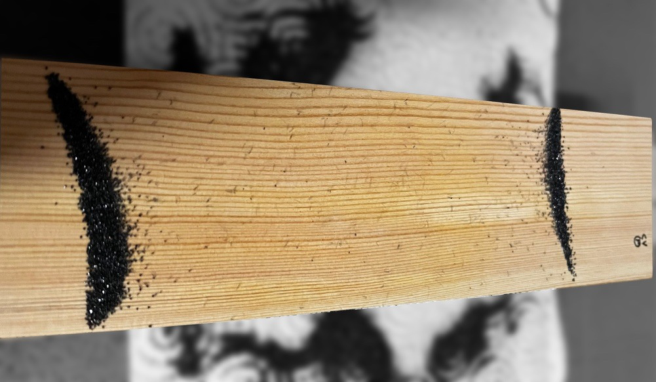
In the 1950s, researcher and luthier Carleen Maley Hutchins, followed the studies of Ernst Chladni (see Figure 1) and revolutionized acoustic studies, in particular, of harmonic planes. Charleen Hutchins explains that as early as 1830, the physicist Félix Savart, together with the luthier Jean Baptiste Vuillaume, used the technique developed by Chladni, to analyze some har- monic planes of Stradivari and Guarneri violins, managing to find reference vibration forms, achieving a better control over the quality of instruments (Hutchins, 1981). Carleen Hutchins’ studies made it possible to relate the physical and acoustic properties of wood to the shape of the instrument, for example, studying “(...) the shape, size and location of the “efes”, the hei- ght of the sides, etc. “(Donoso et al. 2008)”. The scientist came to prove her theories by publishing more than 100 articles and creating around 450 string instruments exploring, with the help of Professor Rederick Saunders and Swiss luthier Karl Berger, the theories of Ernst Chladni (Whitney, 2016). With this analysis, she proposed development models and studies that left many luthiers perplexed and that revolutionized the way of studying and designing a bowed instrument.
Over the years, Carleen Hutchins’ theories have been applied, along with technological developments and equipment for analysing and verifying acoustic and mechanical properties. These studies have made it possible to apply the results of analysis and verification processes to the development of innovative projects that, for example, foresee changing the material, accom- panying the need to find ways that promote the sustainability of production or just the desire to innovate.
Design, as a creative process, resorts to open processes, ensuring the integration of external factors and determining greater effectiveness of the
Figure 1: Chladni test performed on a maple table. (Photo: Ermanno Aparo, 2023).
project. Operating symbiotically with factors such as time, space and circum- stances (Nietzsche, 1882, Brown, 2009), design becomes responsible for an open reading of any relevant element in the functioning of the product, in this case, the musical instrument. Thus, in recent years, designers, planners and luthiers have been working on projects that envisage the replacement of wood with composites, obtained through the introduction of inorganic and organic fibbers. For this, they used as a basis the analysis carried out using traditio- nal techniques and scientific verification that, over time, has contributed to improving acoustic studies of string instruments. In 1970, Caarleen Hutch- ins, together with the Catgut Acoustical Society, presented a violin whose harmonic plane was made in graphite-epoxy. This violin is currently part of the National Music Museum in Vermillion, South Dakota (Hutchins, 2004).
The case of carbon fibber is relevant, as it appears in several projects, inclu- ding some on the market. One of them is ‘Mezzo-forte’, a German brand that sells carbon fibber string instruments. Other is ‘Luis and Clark’, a small com- pany founded by two musicians and luthiers who in Milton (Massachusetts) produced and sell carbon fibber string instruments. Another is the ‘Donner Rising-V’ developed by the Donner company, which in 2022 won the IF Design Award, but which is not yet commercialized (Donner, 2022). Like- wise, there are other experiments carried out in various parts of the world, on a smaller scale, namely, a violin in the United Kingdom (Dominy; Kil- lingback, 2009), a cello in Shanghai (Wu and Li, 2006), or even, a violin in Portugal (Rocha, 2014).
In recent years, Design has played a strategic role in the field of sustainabi- lity (Vezzoli, 2004), underlining the importance that the issue has in relation to factors such as eco-efficiency or environmental impact. These questions must be approached as a system of solutions articulated by the convergence of different actors and factors, namely, the efficiency of the material, its ori- gin and its life cycle. In this sense, the field of design has sought answers in organic materials with greater availability, with less impact on deforestation and with good mechanical and acoustic qualities.
The evolution of studies produced in the area of acoustics and sound allow a broader management of knowledge, improving the performance of instru- ments. Relevant seems to be the contribution of Sebastião Gonzalez, who makes it possible to understand the possibility of optimizing the acoustic performance of stringed and bowed instruments, either by articulating sha- pes according to the characteristics of the materials (Gonzales et al, 2022, Gonzales et al, 2021), or looking for solutions that know how to combine the properties of a given material with the most appropriate morphology. In the making of other stringed instruments, a broader survey allows identif- ying experiences produced with composites that use natural fibbers such as jute and hemp. Some of these materials will probably be able to accompany or replace woods that are at risk of extinction and allow a more sustainable production of instruments, helping builders to easily resort to native materi- als. A paradigmatic choice is the spider silk that designer Luca Alessandrini used to make a violin that combines the characteristics of the material with the shape, facilitating the propagation of sound (Sammicheli, 2017). To make this instrument, the designer collaborated with luthiers from Cremona (Italy),
The Will-to-Power to Design a Violin 135
articulating the project between material science and luthierie. The proper- ties of spider silk also allowed Shigeyoshi Osaki, a Japanese researcher at Japan’s Nara Medical University, to create violin strings that will soon go on the market (Palmer, 2012).
The search for natural materials and the principles of sustainability have guided the design towards the development of models that make reference to local materials. On the one hand, they accompany a sustainable choice. On the other hand, they direct studies towards development models focused on the territory and its resources. Thus, the creation of musical instruments proves to be “a complex platform for the deliberation and validation of pro- cesses that involve productive systems that carry culture and development of the territory” (Aparo et al, 2017). This happens, for example, with Tim Duerinck, luthier and researcher at the University of Ghent in the areas of Music, Theatre and Arts. Tim Duerinck has developed a series of violins and other bowed instruments made either with alternative woody species or with carbon fibber and flax fibber (Duerinck, 2023). Tim Duerink’s choice of flax fibber is due to the fact that flax production has been widespread in Belgium since the Middle Ages and the visual appearance of the instrument is very close to that of a traditional wooden violin. The research led the researcher to analyse six examples of violins: 2 made of braided carbon fibre, 1 with unidirectional carbon fibres, 1 in cabon-nomex, 1 in fir wood and 1 in uni- directional flax fibre. The violins are subjected to a modal analysis revealing few differences in behaviour in the frequencies most interested with the use of the instrument, providing in this sense a very close acoustic behavior up to 2200 Hz (Duerinck et al, 2018).
In addition to these examples aimed at types of instruments with a bow, in particular violins, in the construction of other stringed instruments we find natural fibers such as, for example, the guitars of the Australian brand Blackbird made in Ekoa fiber. It is a composite obtained by joining carbon fiber and flax fiber. Also worthy of note is the experience obtained with fibre, a fiber from a plant of the Asparagaceae family that is very similar to Agave.
CONCLUSION
In this article the authors intend to demonstrate that the concrete possibility of reducing the economic pressure on forests and the need to create produ- ctive alternatives with a low environmental footprint guides the discipline of design to seek alternative paths to traditional production. It is a choice to seek answers in the nature of the territory and in what it produces. Carefully refle- cting on the history of organology, it can be seen that some basic principles are followed which, objectively, led luthiers to look for the raw material in the operational scenario itself. In this sense, this study intends to demonstrate that the past, in which our culture and our present live, influence future deci- sions in the design of musical instruments. The past illuminates the future, but it is up to the agents of the present to demonstrate that they have the com- petence to relate space, time and circumstances, providing answers that know how to read the territory, passing through the productive capacities but also
through the materials that the territory presents, building new sustainability scenarios.
ACKNOWLEDGMENT
The authors would like to acknowledge the CIAUD, Research Centre for Architecture, Urbanism and Design, Lisbon School of Architecture, Univer- sidade de Lisboa, Rua Sá Nogueira, Polo Universitário do Alto da Ajuda, 1349–063 Lisboa, Portugal.
REFERENCES
AA. VV. 2022 - Stato di attuazione del Piano d’Azione per la gestione degli interventi di esbosco e ricostituzione dei boschi danneggiati dalla Tempesta Vaia – Report finale. Allen, A. S. (2012) “‘Fatto Di Fiemme’: Stradivari’s Violins and the Musical Trees of
the Paneveggio.” Harvard University, Ecomusicology Review, pp. 1–16. Aparo, E.; Moreira da Silva, F.; Soares, L. (2017) O design como método para a implementação de processos produtivos relacionados com a criação de instrumen- tos musicais em Portugal: A criação de uma campana de trompete. DATJournal v.2 n.1; Bernabei, M; Bontadi, J. (2011) “Determining the resonance wood provenance of
stringed instruments from the Cherubini Conservatory Collection in Florence, Italy”. Journal of Cultural Heritage, Volume 12, Issue 2, pp.196–204. Bonaventura, A. (1933) Storia del violino, dei violinisti e della musica per violino.
Milano: Hoepli. Baroncini, R. (1994) “Contributo Alla Storia Del Violino Nel Sedicesimo Secolo: I ≪sonadori Di Violini≫Della Scuola Grande Di San Rocco a Venezia.” Recercare, vol. 6, pp. 61–190. JSTOR, http://www.jstor.org/stable/41701191 Brown, Tim (2009). Changed by Design. New York: HarperColins Publishers. Deblauwe, Vincent. (2021). Life history, uses, trade and management of Diospyros
crassiflora Hiern, the ebony tree of the Central African forests: A state of know- ledge, Forest Ecology and Management, Volume 481, 118655. ISSN 0378-1127, https://doi.org/10.1016/j.foreco.2020.118655 Dominy, J., Killingback, P. (2009). The Development of a Carbon Fibre Violin. in 17th International Conference on Composite Materials. 2009. Edinburgh, SCO. Donington, R. (1967) The Galpin Society Journal, vol. 20, pp. 118–20. JSTOR, https:
//doi.org/10.2307/841515 Donner music (July 29, 2022) Here’s Why the IF Design Award Favors Carbon-Fiber Violin - and What It Means to You. Donnermusic Web- site: https://www.donnerdeal.com/blogs/news/heres-why-the-if-design-award-fa vors-carbon-fiber-violin-and-what-it-means-to-you Donoso, J. P., Tannús, A., Guimarães, A., Correa de Freitas, T. (2008). “A fisica do violino”. Revista Brasileira de Ensino de Física [online], v. 30, n. 2, pp. 2305.1– 2305.21. Duerinck, Tim (2023) A matter of personal taste. Timduerinck Website: https://timd
uerinck.be/music-instruments/ Duerinck T, Kersemans M, Skrodzka E, Leman M, Verberkmoes G, Paepegem WV. (2018) Experimental Modal Analysis of Violins Made from Composites. Proceedings; 2(8):535. Dinulic˘a, F.; Albu, C.-T.; Vasilescu, M. M.; Stanciu, M. D. Bark (2019) Features for
Folds, Dennis. Gardner, Douglas and Deal, Steve. (2008). Building Up to the Human Systems Integration Demonstration, INCOSE INSIGHT Volume 11 No. 2. Fornara, Piero. (October 29, 2021) La tempesta Vaia tre anni dopo: una generazione
perduta nel bosco: un bilancio a tre anni dalla tempesta che ha squassato Trentino e Bellunese. Il Sole 24 Ore Website: https://www.ilsole24ore.com/art/la-tempesta -vaia-tre-anni-dopo-generazione-perduta-bosco-AEvv07s Gonzalez, S.; Chacra, E.; Carreño, C.; Espinoza, C. (2022) Wooden mechanical metamaterials: Towards tunable wood plates, Materials & Design, Volume 221. Gonzalez, S.; Salvi, D.; Baeza, D.; Antonacci, F.; Sarti, A. (2021) A data-driven
approach to violin making. Sci Rep 11, 9455. https://doi.org/10.1038/s41598- 021-88931-z Hutchins, C. M. (2004) The Catgut acoustical society story. Catgut Acousr So. J 5: pp.16–30. Hutchins, C. M. (1981) L’acustica dei piani armonici di violino. Le Scienze, n.160,
pp.86–99; Jahanbanifard, M., Beckers, V., Koch, G., Beeckman, H., Gravendeel, B., Verbeek, F., Baas, P., Priester, C., & Lens, F. (2020). “Description and evolution of wood anatomical characters in the ebony wood genus Diospyros and its close relati- ves (Ebenaceae): a first step towards combatting illegal logging”. IAWA Journal, 41(4), 577–619. Mancuso, S. (2020) La pianta del mondo. Roma/Bari: Laterza. Nietzsche, F. (2008) The Anti-Christ. Radford: Wilder Publications. (1st edition
1895). Nietzsche, F. (2004) The Birth of Tragedy. Whitefish: Kessinger Publishing Co. (1st edition 1872) Nietzsche, F. (2001) The Gay Science. Cambridge: Cambridge University Press. (1st
edition 1882). Palmer, Jason (March 07, 2012) Spider silk spun into violin strings. BBC Website: https://www.bbc.com/news/science-environment-17232058 Polato, P. L. (1985) “Liutai Veneziani Nei Secoli XVI, XVII e XVIII: Ricerca Docu-
mentaria Nell’Archivio Di Stato Di Venezia.” Il Flauto Dolce, no. 12, pp. 6–15. JSTOR, http://www.jstor.org/stable/41700257 Rebouças, Márcia. (2013). CICLO ECONÔMICO DO PAU-BRASIL - CAESALPI- NIA ECHINATA LAM., 1785 S. D’Agostini1, S. Bacilieri2, H. Hojo3, N. Vitiello1, M. C. V. Bilynskyj1, A. Batista Filho4, M. M. Rebouças1. Páginas do Instituto Biológico. 9. Rocha, A. (2014) Design e desenvolvimento de um violino em compósito de carbono
(Design Master tese). Matosinhos: ESAD. http://hdl.handle.net/10400.26/5477 Rocha, Yuri T. (2011) Distribuição geográfica e época de florescimento do Pau-Brasil (Caesalpinia echinata LAM. – LEGUMINOSAE). Revista Do Departamento De Geografia, 20, 23–36. https://doi.org/10.7154/RDG.2010.0020.0002 Sammicheli, Marco (January 23, 2017) Violini innovativi. Abitare Web- site: https://www.abitare.it/it/design/design-emergente/2017/01/23/a-dubai-il-des ign-fa-innovazione-con-il-violino/ Signorini, G.; Di Giulio, G.; Fioravanti, M. (2014) Il Legno nei beni culturali: guida
alla determinazione delle specie legnose. Perugia: Aguaplano. Vezzoli, C. (2004) “Design e sostenibilitá” in Manzini, E.; Bertola, P. (cord) Design multiverso. Appunti di fenomenologia del design. Milano: PoliDesign, pp.99–114. Whitney, Quincy. (2016) American Luthier: Carleen Hutchins - the Art and Science
of the Violin. Lebanon: University Press of New England;
Winternitz, E. (2020) Gli strumenti musicali e il loro simbolismo nell’arte occidentale.
Milano: Jouvence. Wu, Ze Hong, Li, Jia Hui (2016). Carbon fiber material in musical instrument making. Materials & Design, 89, 660–664. Zomer, Chiara. (Agosto 20, 2022) Il bostrico uccide i nostri boschi: ≪Solo
in Val di Sole abbiamo perso forse 70 mila piante≫. L’Adige Web- site: https://www.ladige.it/montagna/2022/08/20/il-bostrico-uccide-i-nostri-bosc hi-solo-in-val-di-sole-abbiamo-perso-forse-70-mila-piante-1.3291746
LISTED IN THE AHFE DIGITAL BOOKSTORE CATALOGUE
Explore the complete digital volume
Human Dynamics and Design for the Development of Contemporary Societies
Read this individual research paper free through the original publisher, or explore the full digital proceedings book.
ISBN 978-1-958651-57-5
Explore this ISBN in the AHFE Bookstore ↗Listed in the July 2026 bookstore catalogue; search by ISBN to confirm current availability · Digital book purchase optional