Carla Paoliello (2022). Design in-between Knowledge, Cultures, Identities, and Territories. In: Human Dynamics and Design for the Development of Contemporary Societies. AHFE Open Access, vol. 25, pp. 112–119. https://doi.org/10.54941/ahfe1001378
The prefix and preposition between come from the Latin inter. It indicates the position in the middle of two things. It is a spatial and a temporal limit as inter-open, interweave, and interpose. It expresses exchange and reciproc-ity. The term in-between imbues all these meanings. It brings this open place and time where different ways of looking and living in our world mix together or complete each other in a universal perspective. We expose the interrelationships between design, knowledge, cultures, identities, and ter-ritories. We also elucidate the mixtures, miscegenation, and hybridizations between oneself and another or between a designer and an artisan. This pa-per evidences the contact zone that defines another place, which is no long-er mine or the others as told by Pratt's “between-places” [1] in an in-between-time of between-beings.
Is it possible to discuss design as a frontier? To explore its relationship with other ways of experiencing, thinking, and getting to know the world? To see it as a way to understand different knowledge, cultures, identities, and territories?
To answer these questions, our hypothesis, we conducted a theoretical study. We did an integrative literature review, deciding the eligibility crite- ria, determining its appropriate boundaries, choosing what data to extract from the selected papers and study cases, concluding and presenting their contribution to our investigation.
As said by Snyder (2019, p.333), some guidelines suggest different revi- ews types. They can be narrative, systematic or integrative reviews. The last one overviews the knowledge base, critically reviewing and potentially reconceptualizing it. It expands on the theoretical foundation of a specific topic as it develops.
We did not ignore the papers that pointed out the research in another way, but we bring here the ones that helped us evidence our assumptions, that clarified the theory development, and also the ones that brought dif- ferent questions to the initial ones. We also brought some particular cases of the interface between designers and craftsmen from a previous investi- gation (Paoliello, 2020). They are described here in order to understand a
Design in-between Knowledge, Cultures, Identities, and Territories 113
contextualized relationship. It is a dialectical method because it is not just a survey, but a reflection on this reality.
DESIGN IN-BETWEEN KNOWLEDGE The knowledge construction starts in the critique of our own knowledge. Its formation begins when we encounter a new experience. We do not drop what we already know; we only alter how we think when we open up and merge with another. At this point, we develop new skills that we incorporate into ourselves. If knowing was only about transmission, it would result in a mere reproduction. What happens is an appropriation and, above all, an expansion.
We live in an unfinished condition, we are always changing, and our iden- tity is procedural. As explained by Freire (2006, p. 47), we live in a dynamic search for the “constantly making and remaking of my knowledge”. We have the motivation to know more and to know together.
From Vygotsky’s studies (2003), we understand that this construction reflects our interpersonal relationships. It depends on each one experience in a community. Recognition, openness, and empathy with others are necessary. Others have a particular culture, live and experience different territories. At first, there is a spontaneous and intuitive shock. It is the result of the diverse encounter. We are aware of the other, what each one is and what each one brings. After accepting this, we open up ourselves. We seek mutual enrich- ment with respect, equity, tolerance, and solidarity. Those are the inherent characteristics of an in-between relation.
Design, by itself, already has these characteristics. It is an activity associa- ted with other study fields. It is potentially transdisciplinary and transversal. It uses contributions from other areas in its objects and forms of commu- nication. It applies other questions, brings new searches, and expands its reality. It is also transversal. “It rests on the intercommunication between areas of knowledge, effectively dealing with a common and transversal aim through integration and reintegration projects of the different dimensions” (Nojima et al, 2006).
Design is always looking out for dialogue. For it to prevail, it is necessary “the creation of conditions for people to speak with their own voice, say their own word and articulate their logos without pretensions or imposed deformations” (Brum, 2018, p. 37).
For Maaike Susanne Kleinsmann (2006, p. 30), the collaborative design consists of three building blocks: “knowledge creation and integration between actors from different disciplines and functions; communication between the actors about both the design content and the design process; the creation of shared understanding about both the design content and the design process”.
It is the process in which actors from different disciplines share their knowledge, based on the idea that diverse and often controversial points of view brought together can lead to new insights, new ideas, and new artifa- cts. The shared understanding can improve our human, social, and cultural
114 Paoliello
system as we have already debated in Paoliello (2020, 2016 e 2015) and Pao- liello & Machado (2016). The work of Yankatu also shows it. That is the name of the designer Maria Fernanda Paes de Barrosem’s studio. According to her, in the belief of the Kamayurá people, it means our third soul, our essence, and what gives people the dignity they have as human beings. Her objects, done in collaboration with artisans, translate the Brazilian essence. They reflect a region and its surrounding nature, an ancestral craft, as well as people’s stories and knowledge. She believes that “design is a way of valuing and perpetuating our ancestral knowledge and the nature around us”.
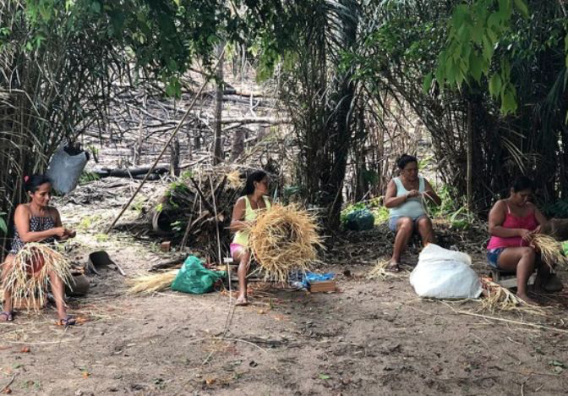
The final pieces are unique or made in limited editions, always numbered and accompanied by the certificate of authenticity that tells the story behind her encounters with others, as seen in the one with the artisan community of Urucureá, Pará state, north of Brazil (Figure 1).
It is a conscious movement to all involved (Ingold, 2013). It emphasizes collective and co-participatory processes that understand each subject based on their reality. It also defends the ’beings-in-situation’ that are submer- ged in spatiotemporal conditions that influence them and in which they also influence” as stated by Paulo Freire (1980, p. 33). It is an exercise in interculturality, a place for common knowledge, a manifesto about sharing experiences to create other knowledge, cultures, identities, and territories.
DESIGN IN-BETWEEN CULTURES AND IDENTITIES Culture is a term that appears three times in the definition of design by the World Design Organization (2002). We would not expect less since it is a factor of cultural development, and when understood as a relationship, it also manages to be intercultural.
Figure 1: Photo of the meeting between designer Maria Fernanda and Urucureá artisans. Available at https://www.yankatu.com.br/alma-raiz/
Design in-between Knowledge, Cultures, Identities, and Territories 115
Interculturality strengthens the construction of dynamic, open, and plural identities. It “potentiates the empowerment processes, mainly of inferior and subordinated subjects and actors, and the construction of self-esteem, as well as stimulates the construction of autonomy in a horizon of social emanci- pation” (Candau, 2012, p. 26). For this to happen, it is necessary to break with cultural color blindness and create new ways of situating ourselves in the world, valuing everyone’s life stories, promoting exchange and mutual recognition, transforming stagnant know-how in a process that Ingold (2018) called doing-undergoing. There is no privileged cultural place to judge other cultures. Our basis should be dialogue, openness, cooperation, reciprocity, and absolute respect for the differences between knowledge. Any barrier (cul- tural, language, organizational, or physical) should be overcome to achieve functional integration and develop a new culture.
But something is intriguing about the concept of a new culture, as stated by Aloísio Magalhães, It can even be said that, in the process of evolution of a culture, there is nothing really ‘new’. The ‘new’ is just a transformed form of the past, enriched in the continuity of the process, or revealed again, of a latent process. In fact, the elements are always the same: only vision can be enriched by new incidences of light on the different facets of the same crystal. (Souza, 2003, p. 11)
New or old, innovative or traditional, the importance lies in the willingness to respect another design culture with its inherent values. In the world of Gui Bonsiepe, it depends on otherness (2012, p. 38). Reflection is needed to guide design partnerships, especially the ones that try to develop the autonomy of the actors involved, emphasize their critical capacity, and value a diverse design culture.
There is no room for colonization, appropriation, or supremacy. The work is and must be done through acculturation, a mix of admiration with the humble contact with different ways of thinking and doing. This does not necessarily imply the abandonment, erosion, or replacement of the original design culture. There is only a place to its transformation by the assimilation of others’ cultural traits different from the initial one or its hybridization as named by Néstor Garcia Canclini (2006, p. XVIII).
The acculturation process takes place in a mutual way, where the two parties adopt each other’s cultural characteristics so that there will always be traces of another culture when there is diversity. Sometimes, when the designer works with others, he embraces the role of an interpreter, one who assumes the responsibility of translating one culture into another, of exchanging experiences and making others view a yet and unknown world.
When inserted in a local reality as in a artisans’ community, the designer is able to reveal the richness of this particular location and people, to disco- ver or better yet to uncover their particularities. He may be responsible for exposing the stories and narratives that accompany a particular process or product, presenting details about what is produced, about the people that produce it, as well as about the production process and indigenous materials used. The design can and will be touched by their cultural identities and a transformation will happen towards himself.
116 Paoliello
This could be seen in the work done by Sérgio Matos with many different artisan communities in the state of Amazonas, Brazil. The process imple- mented by him with the financial support of SEBRAE-AM has the following axes:
1. Diagnosis – phase of knowing the target audience, their skills, stories, dreams, and attitude towards the market; 2. Curation–innovation evaluation in handicrafts (produced items, replace- ment of a local raw material that is scarce with another more abundant; techniques change toward a more productive process); 3. Sustainability – presentation of the concept and sustainable practices (use of local and available resources); 4. Cultural rescue – recognition of stories and dreams (products must maintain faithful characteristics of the local culture); 5. Community capacity – the creation of work opportunities and implemen- tation of social entrepreneurship; 6. Market – actions to promote market access (trends, demands, price, and negotiation techniques).
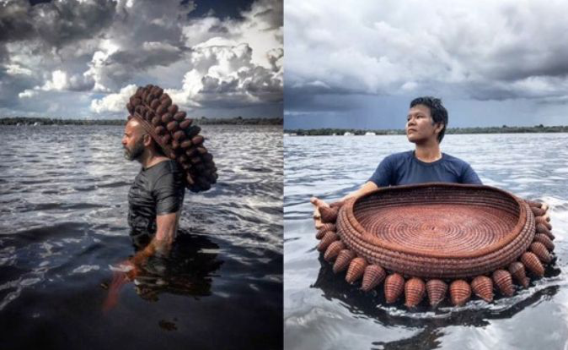
All this is to empower the artisans to be aware of their cultural treasu- res, to reveal their riches and particularities. They changed the way they see their territory. They recognized local techniques and materials (Figure 2) and proposed new business management. In one of the communities, the partici- pation was limited to eleven artisans. After the project, this number increased to sixty.
The designer found a way to also recognize their identity in the symbols used. We understand identity as a continuous process of redefining oneself and inventing history. In the study case, the designer redefines himself as he merges with the other creative process. There must again be openness, respect, and the willingness to collaborate. It is necessary that ‘being-in-situation’ condition to embrace diversity, codesign and alter ourselves.
Figure 2: Sérgio and Mara – designer and artisan with pieces created with the Núcleo de Arte Indígena de Barcelos. Available at http://sergiojmatos.blogspot.com/
Design in-between Knowledge, Cultures, Identities, and Territories 117
DESIGN IN-BETWEEN TERRITORIES Our being and the places we live, visit or see are connected. Territorial identity is perceived, interpreted, and imagined. It is a reflection of a sense of place. According to Heidegger (2001), “we are not in space, we are being spatial.”
Marandola & Dal Gallo also presented the concept of ‘being-place’ whose relationship presupposes a mutual and simultaneous development. The sub- ject constructs the space as he is being built by it (2010, p. 411). There is a process of territorial (and self) construction. The first step is to denominate. It is the creation and the assurance for cultural practices. The second one is space control when we use geo-symbols to understand and organize the space physically and socially. After that, the territorial system is structured. This last stage reinforces the identity establishing spatial and cultural links.
New territorial processes must promote new meanings to provide the appe- arance of other identities. Bauman (2001, p. 9) qualified this process as fluid. According to this author: “Fluids neither fix space nor bind time. They are constantly ready to change it.” We understand the territory, as explained by Haesbaert (1999), that is not only a mediator of power relations, but it com- poses each person of a social group. A space of processes (Massey, 2008), that is the result of people insertion and their interrelationships. We see the territory as an infinite possibility of encounters and disagreements.
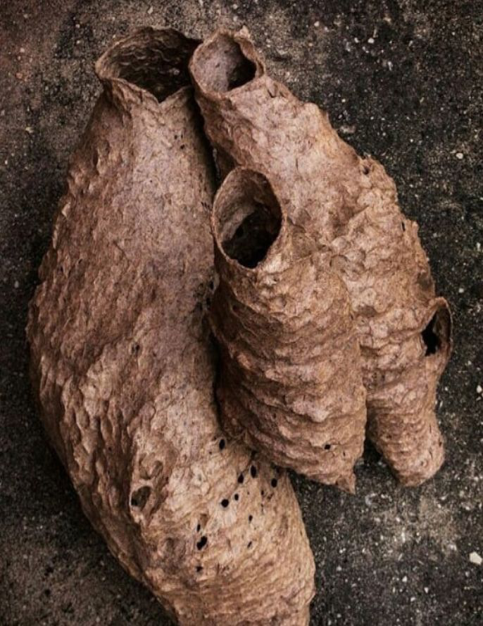
When design production connects to a specific territory, it presents its local elements. It reveals its indigenous materials, the prevalent techniques, and the symbols of the surrounding landscape. It reflects and rescues the region’s historical, technical, or economic memory. A process that reaffirms ways of life and reverberates cultures and identity dimensions. We can see this in the work of the designer Mazarelo Carneiro de Miranda with the artisan association Capitania das Fibras (Figure 3).
They are from Capitão Enéas, north of Minas Gerais, Brazil. This city has specific fauna and flora, with large pasture areas. They designed the obje- cts from the surrounding environment observation. The materials used were banana fiber and welded mesh.
Nice, an artisan, explained in an interview that the cocoons carry the history of Captain Enéias’ houses. “We realized that the welded meshes were left lying around in the backyards, unused. We started asking for them and saw that each yard had a story to tell”. The pieces imprint the local identity, territory, and people. As they explained in the text on the group’s Facebook page, “our culture is a heritage that must be shared and valued. During our life, we leave a little of ourselves in what we touch. Our mis- sion is to conserve, build and propagate our culture every day!” (available at https://www.facebook.com/capitaniadasfibras).
FINAL THOUGHT Can design be a frontier? Can it be a hybrid area of contacts where relations appear in a horizontal nonhierarchical state? Can it be this place of numerous possibilities of co-creation? A transitory process that has its results depen- dent upon the actors, cultures, territories evolved? We understand that it can and that it is. Design (as thinking, process, or methods) helps us understand
118 Paoliello
Figure 3: Cocoons collection made by banana fiber and galvanized welded mesh. Their forms are inspired at the termite mounds and wasp nests common in the area of Capitão Enéas. Available at www.facebook.com/capitaniadasfibras.
different knowledge, diverse cultures, identities, and territories. It is a way to explore and relate with other ways of experiencing, thinking, and getting to know the world.
There is no dissociation between the ones involved in a production process and the culture and place they belong. The choice of accessible materials, for the mastery of local techniques, towards sustainable production processes is fundamental. It is a way of doing that prioritizes the local socioeconomic con- text and takes into account its typical histories, memories, beliefs, traditions, and symbolism.
We defend the design that rescues the value of local and personal know- ledge and identities, that prioritize material and immaterial traditions and the intimate interface with the territory. The one that is born from the interface between man and other men and between man and the environment, appre- hended in everyday life. It is necessary to relearn how to look, to take some time to observe carefully to decode the beauty that hides in-between.
ACKNOWLEDGMENTS
FCT – Fundação para a Ciência e a Tecnologia has financed this investigation. Project ≪UIDB/04042/2020≫.
Design in-between Knowledge, Cultures, Identities, and Territories 119
REFERENCES
Bauman, Z. (2001) Modernidade líquida. Rio de Janeiro, Jorge Zahar Ed. Bonsiepe, G. (2012) Á Procura de Práticas Sábias – Design e Artesanato, Cultura e Sociedade. São Paulo, Editora Blucher. Brum, A. L. C. (2018) Caminhos para uma educação intercultural libertadora: a
ação saberes indígenas na escolar. Programa de Pós-Graduação em Educação, Universidade Federal do Rio Grande do Sul, Porto Alegre, Dissertação. Canclini, N. (2006) G. Culturas Híbridas: estratégias para entrar e sair da modernidade. São Paulo, Editora da Universidade de São Paulo. Candau, V. M. (2012) Didática: entre saberes, sujeitos e práticas. XVI Encontro
Nacional de Didática e Práticas de Ensino, ENDIPE - 23 a 26 de julho de 2012, FE/UNICAMP, Campinas. Freire, P. (1980) Conscientização: teoria e prática da libertação: uma introdução ao pensamento de Paulo Freire. São Paulo, Moraes. Freire, P. (2006) Extensão ou comunicação? 13. ed. Rio de Janeiro, Paz e Terra. Haesbaert, R. (1999) Identidades territoriais in Haesbaert, Z e Corrêa, R. Manife-
stações da cultura no espaço. RJ, EdUERJ. Heidegger, M. (2001) Ensaios e conferências. Petrópolis, Vozes, pp. 125–141. ICSID. (2002) Industrial Design definition. International Council of Societies of Industrial Design. Available at http://www.icsid.org. Ingold, T. (2013) Making: Anthropology, Archaeology, Art and Architecture.
Londres/Nova York, Routledge. Ingold, T. (2018) Anthropology and/as Education. London, Routledge. Kleinsmann, M. S. (2006) Understanding Collaborative Design. Roefschrift Technische Universiteit Delft, Thesis. Marandola Jr., E. & Dal Gallo, P.M. (2010) Ser migrante: implicações territoriais e
existenciais da migração. RJ: R. Bras. Est. Pop., vol. 27, no. 2, pp. 407–424. Massey, D. (2008) Pelo Espaço: uma nova política da espacialidade. Rio de Janeiro, Bertrand Brasil. Nojima, V. L. M. S.; De Leon, M. P.; Almeida Junior, L. N. de. (2006) A transversali-
dade como prática nas linhas e “entrelinhas”do design. In: 7° Congresso Brasileiro de Pesquisa e Desenvolvimento em Design, Curitiba. Paoliello, C. (2016) Relations between identity and landscape in Brazilian craftwork.
Making Futures Journal, vol. 4, pp. 1–15. Paoliello, C. (2020) Investigação de parâmetros de análise do design enquanto ferramenta de impacto social. Faculdade de Belas Artes, Universidade de Lisboa, Lisboa, Portugal, Tese. Paoliello, C.; & Machado, A. (2016) A search for Brazilian Craft Identity. In: 10th
International Conferences on Design History and Studies, Taipei. Paoliello, C.; Nobre, M. E. A. (2015) What difference does a designer make in Brazilian craftsmanship? In: 8th International Conference Senses and Sensibility 2015, Lisboa. Pratt, M. L. (1999) Os olhos do império: relatos de viagem e transculturação. Bauru,
SP, UDUSP. Snyder, H. (2019) Literature review as a research methodology: An ove- rview and guidelines. Journal of Business Research, 104, pp. 333–339. https://doi.org/10.1016/j.jbusres.2019.07.039 Souza Leite, J. (2003.). A herança do olhar: o design de Aloisio Magalhães. Rio de Janeiro, Artviva. Vygotsky, L. (2003) A formação social da mente. São Paulo, Martins Fontes.
LISTED IN THE AHFE DIGITAL BOOKSTORE CATALOGUE
Explore the complete digital volume
Human Dynamics and Design for the Development of Contemporary Societies
Read this individual research paper free through the original publisher, or explore the full digital proceedings book.
ISBN 978-1-958651-01-8
Explore this ISBN in the AHFE Bookstore ↗Listed in the July 2026 bookstore catalogue; search by ISBN to confirm current availability · Digital book purchase optional