Kazuhiko Shinohara (2020). Ergonomic Problems in Japan’s Medical Air Transportation Services. In: Advances in Social and Organizational Factors. AHFE Open Access, vol. 9. https://doi.org/10.54941/ahfe100349
Special considerations must be given in medical air transportation to medical professionals, medical equipment, and flight crews due to the conditions of the critically ill patients transported, the intra-aircraft environment, and the need to make emergency flights. However, few studies have investigated the ergonomic problems faced by the medical air transportation services provided in Japan. Therefore, here we investigated ergonomic problems, including those related to medical device use, faced by medical personnel and the aviation community in Japan. Results indicated that basic education and training on aerospace physiology, intra-aircraft use of medical equipment, flight operation systems, and crew resource management are currently insufficient in standard medical education. In fact, most medical devices used during flights are conventional devices with no ergonomic considerations made for vibration or low cabin pressure. In particular, problems relating to human-machine interfaces, power supplies, electromagnetic compatibility, and the ergonomic and technical compatibilities of electronic medical equipment used during the flights must be improved. Improvements are also needed in relation to safety during emergency flights such as those made at night or in bad weather, crew training, and air traffic control systems during large-scale disasters. Interdisciplinary collaboration is required to further investigate and resolve these problems.
The aviation industry has successfully applied human factors engineering to achieve a highly integrated human- machine system. Over the past decade, emergency medical service helicopters in Japan have been dispatched more than 60,000 times, and many critically ill patients with artificial hearts for severe heart failure have been transported to and from Japan on international flights. However, few ergonomic considerations have been given to various aspects of medical air transportation services, which often must be delivered on emergency flights and under less than ideal medical treatment conditions. Here we investigated the ergonomic problems, including those related to medical device use, encountered by medical personnel and the aviation community in Japan.
MATERIAL AND METHODS Medical air transportation services are classified according to their purpose: emergency medical transportation of patients to hospital due to illness or disaster, patient transfer between hospitals, medical personnel transfer from hospital to disaster site, organ harvesting, and humanitarian aid. We investigated the ergonomic problems encountered by medical personnel and the aviation community during the transportation by helicopter, personal medical transfer plane, and commercial airplanes.
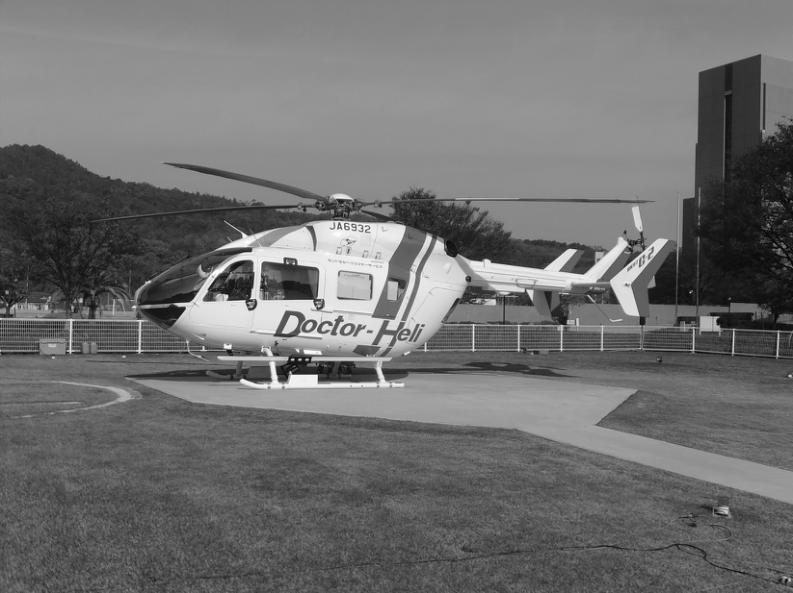
Figure 1. A helicopter for emergency medical transportation (Kawasaki Medical School Hospital)
RESULTS AND DISCUSSION
Problems encountered by medical personnel Medical personnel involved in providing medical air transportation services require specific knowledge of aerospace medicine and aircraft conditions such as hypoxia, low pressure, and humidity. For example, although the cabin of a commercial jetliner cruising at 30,000 feet is pressurized, cabin pressure is equivalent to that at an altitude of 8,000 feet. Such a condition can cause hypoxia and expansion of gases in the body, which can be harmful or even fatal to critically ill patients such as those with cardiopulmonary disease, pneumothorax, or intestinal obstruction. Most commercial aircraft have no humidifying system in the cabin, so cabin humidity decreases to less than 10% on long- haul international flights. Medical education on the aircraft conditions and physiological changes encountered during high-altitude flight is currently insufficient in both undergraduate and postgraduate medical schools in Japan, with the exception of a few military and aerospace institutes. Clinical education on changes that occur in circadian rhythm is also very limited among general physicians in Japan.
The medical air transportation service has been designed to treat critical patients in emergency situations, but medical practice within the aircraft is limited by various aspects of the intra-aircraft environment such as capacity, vibration, noise, and power supply. In addition, the use of electronic medical devices and medical gas is limited due to safety and technical reasons such as electromagnetic compatibility and aviation regulations. In-flight medical procedures such as endotracheal intubation, central venous catheterization, and minor surgery under turbulence together with problems of vibration and noise can make work difficult; yet no training system or support devices have been developed specifically for in-flight medical procedures in Japan. As the severity of a patient’s condition should not jeopardize flight safety, medical personnel need a certain basic knowledge of aviation systems so that they can communicate situation awareness and discuss flight plans and safety with the aircrew. In addition, basic aviation knowledge is also important for efficiently managing pre-flight to post-flight medical care. Therefore, basic aviation education and crew resource management should be provided to both aircrew and medical personnel to ensure safe and efficient medical air transportation services.
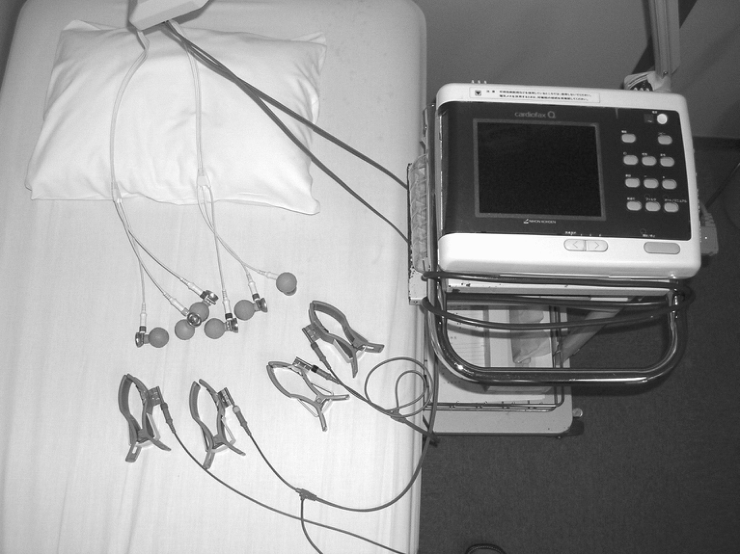
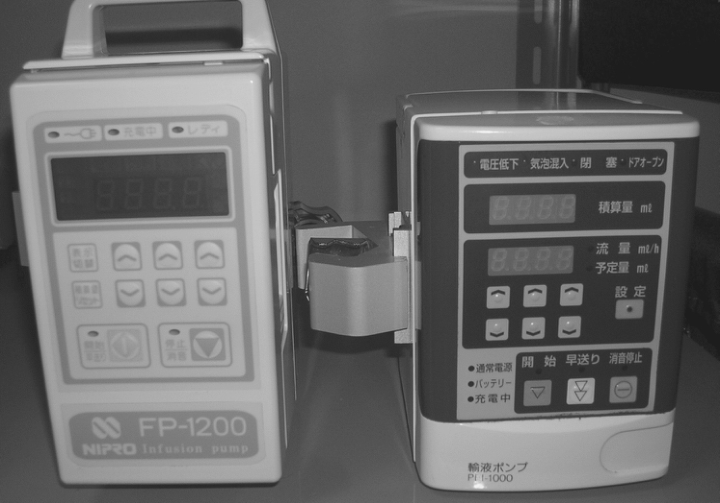
Problems affecting medical devices Changes in the intra-aircraft environment during flight also affect the operation of medical equipment. For example, changes in cabin pressure affect drip infusion speed, the respirator ventilation ratio, and the cuff pressure of a balloon catheter and medical anti-shock trousers. In fact, as most electronic medical devices are designed for use on the ground, their use under low pressure or vibration should be accounted for in the regulations and design process to improve their ergonomic issues. (see Figure 2, Figure 3) Optimal techniques for loading, stowing, and unloading of medical equipment to and from commercial aircraft should also be devised. Problems relating to the power supply and medical gas supply for electronic medical devices, as well as their electromagnetic compatibility with avionics and other medical devices, should be addressed for each type of device and aircraft. A simple problem such as the stowage of medical equipment during flights must be performed in line with the regulations for medical devices and aviation. Such problems are troublesome issues in medical air transportation services; therefore, technical and ergonomic improvements in line with the regulations for medical devices and aviation are required.
Figure 2. A typical electrocardiograph used in a emergency ward.
Problems encountered by the aviation community Heart attacks, traffic accidents, and industrial accidents often occur at night and at dawn. However, night flights of civilian helicopters for medical transfer are prohibited in Japan under the aviation law, even if the avionics comply with the Instrumental Flight Rules standards. Therefore, emergency patients are transported by military and/or government service helicopters such as those operated by the police and Fire and Disaster Management Agency. These restrictions are partially due to the lack of ground support facilities for general aviation. In emergency medical transportation, helicopters in particular are required to land and takeoff at different sites for every case, even at night and in bad weather; thus, a flight support system specific to emergency medical transport that includes night-vision goggles and a terrain warning system should be developed and fitted to aircraft. Moreover, an improved navigation infrastructure to support flight dispatch, automatic dependent surveillance broadcast, global positioning Social and Organizational Factors (2020) systems, satellite-based navigation systems, and air traffic control systems in large-scale disasters should be developed to ensure the safety of emergency medical transportation at night and in bad weather. Medical air transportation services are essentially provided as non-scheduled flight services operated by small- to medium-sized airlines, so sufficient education and regular training of flight crews are important. Moreover, training medical personnel in crew resource management will help to ensure flight safety while maintaining clinical urgency.
Figure 3. Typical Infusion pumps used in a hospital
CONCLUSIONS
The medical air transportation service is steadily growing and currently includes emergency transfer by helicopter and transoceanic transfer of patients with an artificial heart by commercial and chartered jets. However, ergonomic investigations of this system have only just started in the areas of medical education and medical devices, and in the aviation industry. Among the measures needed, ergonomic and interdisciplinary collaboration are important to ensure efficient medical workflow and cooperation with aircrew.
REFERENCES
Federal Aviation Administration (2010), “Helicopter Emergency Medical Service Safety” National Transportation Safety Board (2006), “Aviation Special Investigation Report, Special Investigation Report on Emergency Medical Services Operations”, NTSB/SIR-06/01 Shinohara, K. (2012), “Investigation on the problems for developments of aviation transportation medical service”, Transactions
of the Japanese Society for Medical and Biological Engineering, Vol50 (Suppl.) CDR.
LISTED IN THE AHFE DIGITAL BOOKSTORE CATALOGUE
Explore the complete digital volume
Advances in Social and Organizational Factors
Read this individual research paper free through the original publisher, or explore the full digital proceedings book.
ISBN 978-1-4951-2102-9
Explore this ISBN in the AHFE Bookstore ↗Listed in the July 2026 bookstore catalogue; search by ISBN to confirm current availability · Digital book purchase optional