Alejandro Emmanuel Perez Lopez, Gabriela Duran-Aguilar, Alberto Rossa-Sierra, Mariel Garcia-Hernandez, Fabiola Cortes-Chavez, Fernando Dávalos Hernández (2026). Empowering Nursing Mothers: A Bioinspired Wearable Breast Pump Fostering Emotional and Physiological Well-being. In: Human Interaction and Emerging Technologies (IHIET-FS 2026): Future Systems and Design Applications. AHFE Open Access, vol. 235, pp. 29–39. https://doi.org/10.54941/ahfe1007258
Breastfeeding provides irreplaceable nutritional, immunological, and psychological benefits to both mother and child. However, sociocultural barriers, unfavorable work conditions, and lack of supportive infrastructure often force women to rely on breast pumps—devices that, despite their prevalence, remain limited in mimicking the physiological and emotional dynamics of natural lactation. Prior research has largely focused on mechanical performance and milk volume, neglecting the maternal psychological experience. This study addresses that gap through the development of Nura, a smart, wearable breast pump designed with psychophysiological principles in mind.Using the Double Diamond methodology, the design process integrated user-centered design, market analysis, anthropometric data, and expert interviews. A functional prototype was developed through 3D printing, incorporating custom flanges, adaptive heating and massage elements, a mobile application for control and tracking, and a modular PCB architecture for improved ergonomics. User testing was conducted to assess anatomical fit, usability, and emotional perception of the device.Results show that Nura improves user comfort through an anatomically adapted flange, reduces emotional distress via sensory features (heat and vibration), and offers improved discretion and usability through a custom wearable bra. The application interface successfully enhanced user engagement and enabled personalized lactation profiles. Feedback revealed reduced stress, increased feelings of control, and better alignment between technological functionality and maternal identity.These findings suggest that lactation support technologies must evolve to consider not only mechanical efficiency but also the psychological dimensions of motherhood. Nura’s design advances understanding of how product experience influences maternal well-being, bonding, and breastfeeding sustainability—especially among mothers who rely on exclusive pumping. Moreover, it underscores the importance of empathy-driven engineering in women's health technologies.This research contributes to improving maternal health (SDG 3), promoting gender equality (SDG 5), and supporting decent work and workplace inclusivity (SDG 8) by facilitating breastfeeding continuity without compromising personal or professional life. As a replicable and scalable model, Nura offers a new standard for human-centered innovation in maternal care.
Breastfeeding represents not only the most appropriate form of nutrition for the newborn but also a profoundly meaningful psychological experience for both the mother and the infant. Multiple studies have demonstrated that this biological act fosters the early establishment of emotional bonding, supports healthy emotional development in infants, and enhances maternal well- being and empowerment (Kou-Guzmán & Vallejo-López, 2024), (Negrín Pérez, Mateo Crisóstomo, Garciliano Sánchez, & Chavarría Vázquez, 2025). During breastfeeding, the maternal release of hormones such as oxytocin and prolactin promotes neuroendocrine responses associated with attachment, calmness, and stress reduction. These effects strengthen the mother-infant bond and may help prevent affective disorders such as postpartum depression (Rosenbaum, 2022). Furthermore, breastfed infants have been shown to exhibit greater emotional stability, improved stress regulation, and a stronger foundation for secure attachment (Elad et al., 2014).
However, various social and structural factors hinder the sustained practice of breastfeeding, particularly in contexts marked by cultural stigmas, lack of maternity support policies, and un favourable labour conditions (Crossland, et al., 2016). In Mexico, for example, women face barriers related to age, employment, limited access to information, and poor implementation of breastfeeding-friendly spaces. These challenges negatively affect not only the duration but also the emotional experience of breastfeeding (Crossland, et al., 2016).
In response to such obstacles, many mothers turn to breast milk extraction technologies. These include manual and electric breast pumps. Manual pumps operate through a lever or piston that the user activates by hand to generate suction. While potentially effective, this method tends to be slower and more physically demanding (Eglash & Malloy, 2015). In contrast, electric pumps—whether for personal or hospital-grade use—utilize a motor that produces programmable suction and release cycles, partially mimicking the infant’s natural sucking pattern (Mitoulas et al., 2002), (Zhou et al., 2020). Some modern versions allow users to adjust suction strength and speed and include memory functions or sensors for a personalized experience. Double electric pumps can simultaneously extract milk from both breasts, reducing extraction time and improving efficiency (Arsyad et al., 2020). Although the use of breast pumps enables the continuation of breast milk feeding in the absence of direct nursing, it also introduces unique psychological implications. Literature reports that exclusively pumping mothers often experience feelings of grief, isolation, and lack of recognition from healthcare professionals (Rosenbaum, 2022), (Mitoulas & Davanzo, 2022)This highlights the need to validate alternative forms of breastfeeding and provide comprehensive emotional support.
Empowering Nursing Mothers 31 From the infant’s perspective, natural breastfeeding involves a complex biomechanical interaction among the tongue, jaw, and milk ejection reflex, which stimulates both the nervous system and sensory and motor development (Elad et al., 2014). Current evidence indicates that this interactive pattern is difficult to replicate with existing pumps, underscoring the importance of integrating the psychophysiological components of breastfeeding into the design of next-generation lactation support technologies. Therefore, understanding the psychological dimensions of breastfeeding is essential for developing interdisciplinary strategies that promote a positive, inclusive, and sustained experience—whether through direct nursing or exclusive pumping. Despite the broad acknowledgment of the physiological, immunological, and emotional benefits of breastfeeding, its practice continues to encounter significant obstacles in contemporary settings. Direct breastfeeding is strongly endorsed by international organizations such as the WHO and UNICEF as the ideal method of infant nutrition. However, numerous personal, social, occupational, and structural factors limit its consistent implementation in the daily lives of many women (Kou-Guzmán & Vallejo-López, 2024), (World Health Organization. 2009). These barriers include lack of time due to early return to work, absence of appropriate breastfeeding spaces, latch difficulties, pain, and societal stigmas regarding public breastfeeding (Negrín Pérez, Mateo Crisóstomo, Garciliano Sánchez, & Chavarría Vázquez, 2025). As a result, an increasing number of mothers rely on breast pumps as an alternative to feed their infants with expressed milk. While these technologies have evolved and enabled many women to sustain breastfeeding in challenging circumstances (Eglash & Malloy, 2015), their use introduces new physical and psychological challenges that remain underexplored in scientific literature (Crossland et al., 2016). In particular, mothers who practice exclusive pumping—feeding their infants solely with pumped milk and without direct breast contact—experience a form of lactation that diverges from traditional breastfeeding in both physiological dynamics and emotional impact.
These women frequently report feelings of guilt, frustration, isolation, and lack of recognition within both their family environments and healthcare settings (Rosenbaum, 2022), (Crossland et al., 2016). Moreover, the emotional bond between mother and infant, often mediated by physical closeness and sensory stimulation during breastfeeding, may be altered in contexts of indirect lactation (Elad et al., 2014). There is also a limited interdisciplinary understanding of the psychological efficacy of different pump types (manual, single electric, or double electric), their influence on maternal perception of breastfeeding success, and their impact on the quality of mother-infant bonding. Most studies have focused on milk volume, physical comfort, or technical performance, overlooking their emotional, subjective, and relational effects (Elad et al., 2014), (Mitoulas et al., 2002). Given this scenario, there is a pressing need to investigate how the use of breast pumps affects the psychological experience of lactation, the development of attachment, and maternal identity across diverse sociocultural contexts. Addressing this issue through an integrative perspective will not only enhance understanding of maternal needs but also support the development of emotional support strategies, user-centred design, and more inclusive public policies.
METHODOLOGY
Double Diamond methodology, developed in 2004 by the Design Council in the United Kingdom, structures the design process into divergent and convergent phases to facilitate the generation of innovative ideas and solutions. This model consists of four stages grouped into two main phases or “diamonds”: discover, define, develop, and deliver. The first two stages form the first diamond, encouraging broad exploration of the problem through divergent thinking. In comparison, the last two stages form the second diamond, focused on validating and delivering solutions, representing a convergent approach. In the discovery phase, the aim is to understand the problem from the user’s perspective by employing methods that capture their experiences, perceptions, and needs. In the subsequent definition phase, the gathered information is organized and synthesized to frame the problem, identifying patterns and key opportunities from a holistic perspective. The second diamond includes the develop and deliver stages, during which solutions are designed, iterated, and validated based on the identified challenges, actively integrating users in the evaluation and refinement process (Design Council, 2004) The Double Diamond model not only provides an effective methodological structure but also fosters a collaborative work culture that is human-centered and oriented toward positive change. For these reasons, methodology was selected to address the problem under study, as it enables in-depth contextual exploration, promotes user empathy, and supports the development of functional and usable solutions. Through an iterative and validated design process, the goal is not only to meet market demands but also to ensure a meaningful and compelling user experience.
DESIGN PROCESS Design Problem
The design problem was defined considering the following:
- Existing breast pumps are often inefficient at extracting milk and cause extreme discomfort for the user. - Inconsistent pumping intervals often result in the reduction of milk expression. - Societal and institutional barriers to the use of breast pumps including limited break times, lack of private spaces, and stigmas surrounding the use of breast pumps.
Inspiration The design of this project draws inspiration from existing products in both the breast pump and breast health markets. An analysis of several compact breast pumps, coupled with user testimonials, revealed that despite their portability, many still protrude significantly from the breast, limiting their discretion. To gain a deeper understanding of the internal mechanics
Empowering Nursing Mothers 33 and design principles of these devices, a commercially available pump (Meajax) was acquired and disassembled. This hands-on investigation provided valuable insight into the device’s functional components and highlighted areas for potential improvement. Additionally, research into breast health emphasized the importance of warming lactation massagers, which aid in clearing milk ducts, enhancing milk flow, and improving user comfort-critical factors in designing a more effective and humane pumping solution.
The design of this project is informed by a review of existing products in both the breast pump and breast health markets. An analysis of several compact breast pumps currently available revealed that, despite their portability, many still protrude significantly from the breast, limiting their discretion and suitability for extended or public use. To gain a deeper understanding of the internal mechanics and design principles of these devices, a commercially available pump (Meajax) was acquired and disassembled. This hands-on investigation provided valuable insight into the device’s functional components and highlighted areas for potential improvement. Additionally, research into breast health emphasized the importance of warming lactation massagers, which aid in clearing milk ducts, enhancing milk flow, and improving user comfort—critical factors in designing a more effective and supportive pumping solution.
Pump Design
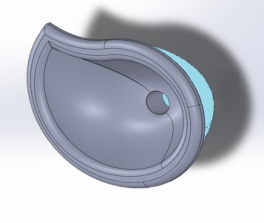
Figure 1 illustrates the design of Version 1.0 of the flange, the component of the breast pump that fits over the nipple and areola to create a seal and facilitate milk expression through suction. A raindrop shape was implemented for a smoother, more organic appearance that better conforms to the body. The overall dimensions of the flange – 25 mm in depth and 35 mm in radius – was determined using data on average breast sizes (Flores-Soto et al., 2022). The flange features a central hole at the bottom, with its size based on the user’s nipple size. An external cup (blue) was implemented to conceal the internal electronics while preserving a natural breast silhouette.
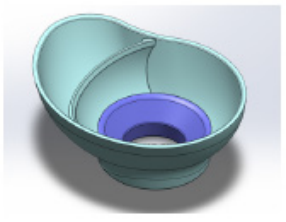
Figure 1: CAD model of original flange design.Figure 2: CAD model of improved flange design.
Figure 2 shows Version 2.0 of the flange. A dedicated nipple flange (purple) was implemented to better accommodate a range of nipple sizes, with dimensions informed by standardized data from existing breast pumps, promoting familiarity and ease of use. A divider was also introduced within the breast compartment to more closely conform to the natural shape of the breast, improving suction strength and fit. Additionally, the external cup was removed, as the surrounding bra structure naturally creates an organic outer form around the pump. This change reduces the device’s overall bulk, conserves space, and enhances discretion during wear.
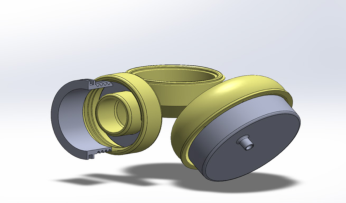
Figure 3: CAD model of the pump adaptor.
Figure 3 shows the adaptor system that connects the flange to the breast pump. A custom diaphragm adaptor (right) interfaces with the motor to generate the vacuum required for milk expression. A duckbill valve adaptor (left) is incorporated to attach a duckbill valve, ensuring one-way milk flow. Additionally, a bag adaptor (left) is included to connect a milk collection bag to the pump via a screw-thread mechanism.
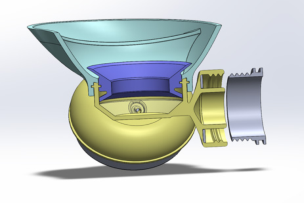
Figure 4: CAD model of the pump adaptor.
Empowering Nursing Mothers 35
Figure 4 illustrates the assembly of the breast pump components. A snap- fit mechanism is used to securely connect the parts, while still allowing for easy disassembly to facilitate cleaning and routine maintenance.
Figure 5: CAD model of the pump adaptor.
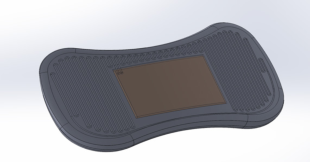
Figure 5 illustrates the heating and massage element designed to enhance breast comfort and health when pumping. Concave curves are implemented into the form to better conform to various breast shapes. A solid casing is embedded within the heating element to protect internal electronics, while maintaining flexibility in the surrounding structure to ensure anatomical adaptability. The element is laterally symmetric, allowing it to be used on either breast with equal comfort and effectiveness. Heating coils are threaded throughout the device to provide uniform heat distribution. The heating and massage element functions independently from the primary breast pump, allowing users to employ it as a standalone breast health device. When not in use, the element can be easily removed, reducing bulk and minimizing the discomfort associated with wearing an inactive device.
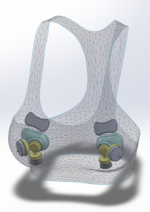
Bra Design The bra will resemble a sports bra, featuring a wide, supportive band and thick shoulder straps to securely hold both the breasts and the pumps in place, while ensuring user comfort. It consists of three main layers: an inner section that makes direct contact with the user for comfort and fit, a middle section that houses the components of the breast pump, and an outermost, padded layer designed to conceal the pump’s geometry, ensuring a smooth and discreet appearance under clothing. The middle section is divided into smaller compartments to enhance stability, organize the components, and allow for greater customizability based on different user needs or component configurations. To accommodate a range of body types and ensure a customizable fit, the bra will include hook-and-eye closures similar to those used in traditional bras, allowing users to adjust the band size. Additionally, the shoulder straps will feature strap sliders to personalize the fit further and enhance comfort during use.
Figure 6: Whole assembly view of the product, seen in the context of a bra.
Figure 6 illustrates the location of all the breast pump components in the bra. The heating element sits above the flange in a bra pocket, allowing users to easily remove the element and customize their experience, thereby reducing bulk and minimizing discomfort associated with wearing an inactive device.
The pump’s flange will sit in the internal section of the bra, making direct contact with the user’s breasts.
The milk collection bag attaches to the bag adaptor and is positioned beneath it in a dedicated compartment to facilitate easy removal and emptying. The bags are made of reusable silicone, chosen not only for its sustainability but also for its insulating properties, which help maintain the milk’s freshness for an extended period. Additionally, the bag features a wide opening to simplify cleaning.
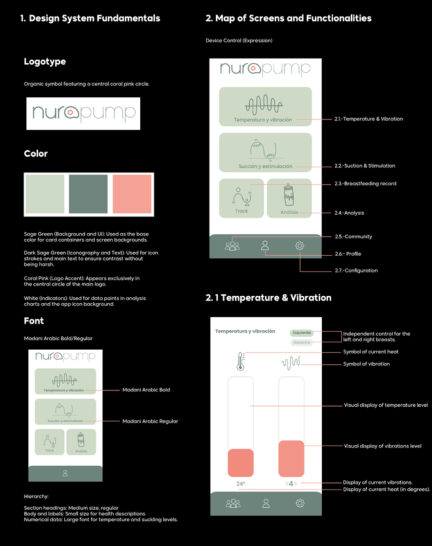
App Design and Integration The pump is controlled via a mobile application, providing users with an accessible and discrete way to adjust both the pump and the heating and vibrational element according to their preferences. In addition to manual adjustments, the app autonomously tracks key usage statistics—such as session duration, intensity settings, and frequency—providing users with valuable insight into their pumping patterns over time. This combination of control and tracking enhances personalization, comfort, and overall user experience.
Figure 7: Whole assembly view of the product, seen in the context of a bra.
Empowering Nursing Mothers 37
Figure 7 illustrates the app interface. The number of buttons in the app are intentionally kept to a minimum to maintain a simple and intuitive user experience, reducing potential stress or cognitive overload. A predominantly green colour scheme is used, as green is often associated with calmness and relaxation. The overall design employs a primarily monochromatic palette, complemented by selective accent colours to guide user attention without overwhelming the interface.
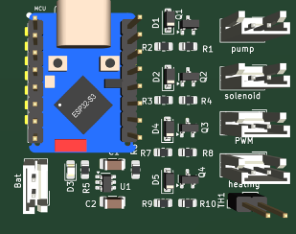
Electronics The electronic subsystem integrates multiple components to ensure precise control, safety, and user interactivity. Each module of the breast pump houses its own custom-designed printed circuit board (PCB). This distributed PCB architecture significantly reduces the number of wires that must be routed through the bra. This distributed layout ensures that each subsystem operates independently, enabling high degrees of customizability and scalability. Although each PCB is responsible for a specific subsystem, all boards are interconnected and synchronized via a Microcontroller Unit (MCU). The main PCB is illustrated in Fig. 8. The selected ESP32-S3 microcontroller also handles Bluetooth communication, enabling the entire system to connect wirelessly to a companion mobile application. The device is powered by an internal 110 mAh Li-Ion 3.7V rechargeable battery, and the PCB includes a charging port, allowing for convenient recharging between uses. Integrated power management circuitry based on Texas Instruments’ BQ21040 ensures safe charging and efficient energy distribution across all modules.
Temperature control is achieved through an embedded control loop that leverages a resistive heating wire. Each heating module includes a temperature sensor and an MCU, which continuously monitor sensor data and adjust the power to the heating wire to ensure temperatures remain within safe, predetermined thresholds. A miniature vibration motor operates via Pulse Width Modulation (PWM) signals, allowing for adjustable intensity and programmable vibration patterns. A diaphragm vacuum pump provides negative pressure for suction and is mechanically linked to the pump’s diaphragm adaptor. This pump operates via a solenoid valve, enabling precise modulation of suction cycles. This configuration supports user-customizable vacuum profiles through app-based control, enabling adaptive comfort and efficiency.
Figure 8: Proposed main PCB with ESP32-S3 as MCU.
User Testing User testing was conducted to assess both the shape and fit of the device in a real-world context. Feedback confirmed that the flange provides a comfortable seal and aligns well with the intended anatomical fit. Additionally, user feedback on the app interface was collected to ensure it aligns with the project goals and provides an intuitive user experience. This input will inform ongoing refinements aimed at improving usability and overall satisfaction.
CONCLUSION
This project successfully developed a bioinspired electronic breast milk extraction device that holistically addresses both the physiological and emotional needs of breastfeeding mothers. Through a user-centered design methodology, a system was created that incorporates more natural suction patterns, heating and massage elements, and an intuitive interface that allows for a personalized user experience. The design of the flange, the distributed electronic system, and the integration with a mobile application represent a significant innovation compared to conventional devices, prioritizing comfort, discretion, and efficiency. Among the main achievements of the project are the validation of the prototype through anatomical fit and user experience tests, as well as the potential to scale the design toward a commercial version adaptable to diverse cultural and usage contexts. Moreover, the interdisciplinary approach adopted in the development addresses not only the technical aspects of the device but also the psychological and social impact of breastfeeding for women. In this regard, the proposal contributes to the humanization of lactation technologies, promoting a more empathetic, effective, and dignified experience for mothers who choose to express breast milk.
PROSPECT FOR FUTURE DEVELOPMENT Despite the progress achieved in the design and validation of the prototype, there are key areas that could be optimized in future development stages:
1. Clinical validation and expanded usability studies: It is recommended to conduct tests with a broader and more diverse sample of users to evaluate the device’s performance in different physiological, cultural, and social contexts. These tests could include metrics such as milk volume extracted, perceived comfort, emotional impact, and duration of use. 2. Optimization of materials and manufacturing: While the selected materials meet functional and safety criteria, it is suggested to explore lighter, more durable, and more sustainable options that reduce weight and cost without compromising ergonomics or biocompatibility. 3. Improvement of energy autonomy: The current battery may limit the duration of pumping sessions. Incorporating higher-capacity batteries or fast-charging systems would enhance the device’s autonomy without significantly increasing its size or weight.
Empowering Nursing Mothers 39
4. Integration of artificial intelligence: The app could evolve to include algorithms that learn from each user’s behavior, suggesting optimal personalized pumping patterns or alerting users to irregularities in milk production.
REFERENCES
Arsyad, N. A., et al. (2020). Breast milk volume using portable double pump microcontroller Arduino Nano. Enfermería Clínica, 30(S2), 555–558. https://doi. org/10.1016/j.enfcli.2019.07.159 Crossland, N., et al. (2016). Breast pumps as an incentive for breastfeeding: A mixed
methods study of acceptability. Maternal & Child Nutrition, 12, 726–739. https:// doi.org/10.1111/mcn.12346 Design Council. (2004). The Double Diamond: A universally accepted depiction of the design process. https://www.designcouncil.org.uk/news-opinion/design- process-what-double-diamond Eglash, A., & Malloy, M. L. (2015). Breastmilk expression and breast pump
technology. Clinical Obstetrics and Gynecology, 58(4), 855–867. Elad, D., et al. (2014). Biomechanics of milk extraction during breast-feeding.
Proceedings of the National Academy of Sciences (PNAS), 111(14), 5230–5235. https://doi.org/10.1073/pnas.1319798111 Flores-Soto, D., et al. (2022). Anthropometric breast measurements: Analysis of the average breast in the Mexican female population. Journal of Biosciences and Medicines, 10(3), 124–135. https://doi.org/10.4236/jbm.2022.103013 Kou-Guzmán, J., & Vallejo-López, A. (2024). Healthy pregnancy and the importance
of breastfeeding. Journal of Science and Investigative, 8(1), 4143–4154. Mitoulas, L. R., & Davanzo, R. (2022). Breast pumps and mastitis in breastfeeding women: Clarifying the relationship. Frontiers in Pediatrics, 10, Artículo 856353. https://doi.org/10.3389/fped.2022.856353 Mitoulas, L. R., et al. (2002). Efficacy of breast milk expression using an electric
breast pump. Journal of Human Lactation, 18(4), 344–352. https://doi. org/10.1177/0890334402237907 Negrín Pérez, L., Mateo Crisóstomo, Y., Garciliano Sánchez, J. H., & Chavarría Vázquez, C. R. (2025). Desafíos de lactancia materna en México: Barreras sociales, culturales y de salud. Conecta Libertad, 9(1), 71–76. Rosenbaum, K. A. (2022). Exclusive breastmilk pumping: A concept analysis.
Nursing Forum, 57(4), 946–953. https://doi.org/10.1111/nuf.12766 World Health Organization. (2009). Infant and young child feeding: Model chapter for textbooks for medical students and allied health professionals. WHO. Zhou, Y., et al. (2020). Effects of three methods of breast milk expression on
breastfeeding initiation and proportion of exclusive breastfeeding [Preprint]. Lancet Child Adolesc. Health. https://ssrn.com/abstract=3576847
LISTED IN THE AHFE DIGITAL BOOKSTORE CATALOGUE
Explore the complete digital volume
Human Interaction and Emerging Technologies (IHIET-FS 2026): Future Systems and Design Applications
Read this individual research paper free through the original publisher, or explore the full digital proceedings book.
ISBN 979-8-950676-11-6
Explore this ISBN in the AHFE Bookstore ↗Listed in the July 2026 bookstore catalogue; search by ISBN to confirm current availability · Digital book purchase optional