Connor Irwin, Hannah Mendelson (2026). Integrating Physical Testing and Digital Workflow: A Hybrid Platform for Seating Prototyping and Design. In: Interdisciplinary Practice in Industrial Design. AHFE Open Access, vol. 222, pp. 188–195. https://doi.org/10.54941/ahfe1007758
This paper introduces a reconfigurable testing rig for seating ergonomics designed to streamline the product development process for industrial design education and small-scale manufacturing. These sectors currently face significant data scarcity because existing anthropometric datasets are often proprietary, cost-prohibitive, or limited to office-centric contexts. Without accessible and relevant data, designers often rely on subjective intuition. This can lead to an aesthetics-first fixation that compromises user well-being and requires resource-intensive iteration loops.Recognizing that poor ergonomic fit accelerates the disposal of upholstered goods, this research positions robust ergonomic assessment as an essential strategy for extending product service life. To address this gap, we present a modular physical testing rig. This tool facilitates testing across diverse typologies ranging from low-profile lounge to bar-height seating. The platform integrates into multiple stages of the iterative design workflow from early-stage form finding all the way to detailed assessment. Additionally, the system allows for synchronization with conventional digital tools like CAD software and serves as a testing base for emerging technologies such as 3D motion capture and pose estimation.
The current state of seating design is heavily constrained by the quality and accessibility of anthropometric datasets. Historically, these resources have been proprietary, cost-prohibitive, or narrowly focused on office-centric and military populations, resulting in a lack of representation for broader civilian demographics (Sydor and Hitka, 2023). Even recent and robust resources like the CAESAR database fail to account for non-Western populations (Mohammedkhan et al., 2025). Beyond simple static measurement, existing databases fail to predict comfort accurately, particularly for seating typologies involving high curvature or complex surface variations.
The consequences of this data scarcity extend beyond user discomfort to influence product longevity and environmental impact. Ergonomic mismatch likely accelerates the “psychological obsolescence” of durable goods. Mugge et al. (2008) concludes that failure to meet a user’s expectations for physical performance jeopardizes product attachment, leading to the disposal of
Integrating Physical Testing and Digital Workflow: A Hybrid Platform for Seating 189 technically functional items. By resolving performance issues, designers can foster product attachment (i.e. long term use) and extend replacement cycles. Given that 80.1% of the 12.1 million tons of residential bulky waste generated in the U.S. in 2018 was sent to landfills, improving ergonomic fit is a sustainability necessity (EPA, 2018).
Reliance on purely digital validation to bridge this gap faces significant methodological hurdles. Mohammedkhan et al. (2025) identify critical biases in deep learning pose estimation models due to training dataset homogeneity. These algorithmic biases produce sizing recommendations ill-suited for global populations. The empirical result of relying on such outdated or mismatched standards is evident. Gejdoš and Hitka (2022) found that anthropometric data for the Slovak population related to the design of beds and seating have changed, requiring a need for updates to standard datasets. They attribute these failures to secular trends, or changes in population anthropometry over time, that accumulate into significant design errors when benchmarks are not periodically re-validated.
A further gap exists in applying traditional data to diverse typologies such as lounge or bar seating. The direct application of task-centric data to leisure use-cases is biomechanically unfounded because physiological requirements shift fundamentally with posture. In their investigation on preferred seat parameters for highly autonomous vehicles, Shayegan et al. (2025) note significantly different seatback angle preferences for visually demanding leisure tasks such as laptop computer use compared to relaxing without a defined visual task. These critical considerations are absent in static tables, failing to account for the complexity of ingress, egress, postural adjustment needs, or nuanced scenarios.
Research consistently demonstrates that body dimensions shift significantly between static and dynamic states (Avadanai, 2020; Petrak et al., 2023). Dynamic anthropometry has emerged to address these shifts. Currently, the inability to accurately model these dynamics virtually forces designers into high-investment iteration cycles. The platform introduced here enables designers to exhaustively explore these anthropometric parameters with low investment in the physical world prior to tooling.
METHODOLOGY: PLATFORM ARCHITECTURE The design philosophy for the platform centers on versatility, robust construction, and adaptability. To ensure that other design teams can easily reproduce the rig, the system emphasizes the use of commercially available components. The current system design utilizes a reconfigurable frame constructed from standard 3-inch double-wide t-slotted aluminum extrusion and off-the-shelf brackets. Basic configuration requires only minimal custom parts fabricated from flat aluminum stock and plywood. The dimensions were calculated to maximize versatility while adhering to modular design principles. This ensures the rig is easily repairable and readily modifiable for corner case scenarios.
The rig incorporates sliding adjustments for seat pan and backrest height positioning based on the t-slot geometry in the aluminum track, providing full adjustability in both x and y axes. In order to fit individual project needs, the frame supports a broad range of configurations in distance, height, and angle. The base assembly features a 65-inch horizontal base. There is a 24-inch stabilizer foot mounted perpendicularly to the base using a flat plate bracket.
For the seat back support, a 40-inch vertical post connects to the base with corner brackets and t-slot fasteners, allowing x-axis adjustment. A 14-inch horizontal arm slides along this post for height adjustment and features a fully pivoting head to attach the seat back. The seat pan posts use identical pivoting heads for mounting and include a sliding joint for vertical positioning. The seat post sub-assembly consists of a fixed 10-inch post and interchangeable vertically sliding posts discussed below. To provide a simple physical understanding of the seat’s positioning, linear incremental measurements are placed along the frame.
At present, the base does not have defined attachment points for armrests. The current assumption is that a detailed prototype produced late in the design process can include its own means for supporting armrests if relevant for user testing scenarios.
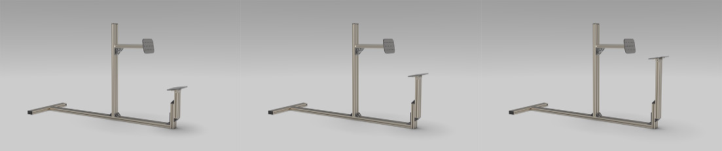
Hardware: Interchangeable Seat Pan Support Posts The system accommodates a wide spectrum of seating typologies. These range from low lounge configurations to high barstool heights. Anthropometric datasets and practical observation of commercial seating informed seat heights of 13–20 inches for lounge, 15–20 inches for standard seating, and 25–32 inches for bar seating. The rig utilizes three interchangeable seat pan posts with lengths of 10-inch, 15-inch, and 22-inches. These yield seat heights of 13–21.5 inches, 18–26.5 inches, and 25–33.5 inches, respectively, maximizing versatility. This physical modularity is designed to integrate seamlessly with digital workflows, specifically aiming to break down the cost and time inhibitions that prevent iterative testing in the design process.
Figure 1: CAD image of multiple seat posts to capture full range of seating typologies.
Integrating Physical Testing and Digital Workflow: A Hybrid Platform for Seating 191 Hardware: Seat Brackets and Adapters
To attach prototyped seat components to the rig, a custom adapter bracket is fabricated from 5/16-inch sheet aluminum. This plate features three rows of mounting holes in alternating sizes. These holes accommodate 5/16-inch machine screws for fastening to threaded parts or wood screws for fastening directly into wooden forms. The plate mounts to the articulating heads at the seating post ends. Multiple arrays of holes allow for greater positional adjustment beyond what the standard right-angle brackets provide.
These brackets and any number of custom mounting fixtures like arms for supporting suspended fabric can be produced via manual machining, laser cutting, or waterjet cutting depending on local capabilities.
PROPOSED WORKFLOW AND DESIGN PROCESS INTEGRATION The integration of the physical testing rig into the industrial design product development process is not only a late-stage validation step. Instead, it is a hybrid platform that facilitates fluid transitions between digital 3D modeling and physical evaluation. Research suggests that frequent switching between physical practices such as sketching and digital practice like CAD modeling improves design flexibility by supporting designers in evaluating different options (Shih and Sher, 2021). By providing a real-world reference and switching back from digital to physical media, the platform triggers productive re-exploration.
By isolating the critical seat pan and backrest surfaces, designers can refine user interaction, static body support, and ingress/egress dynamics without the prohibitive time and material investment typically required for full support structures.
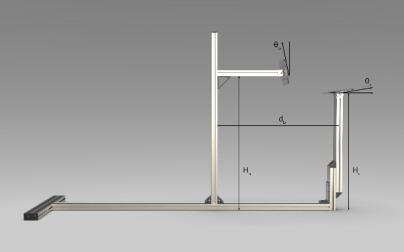
Figure 2: CAD image of base with primary variables labeled.
The Digital-Physical Bridge: Data Transfer Protocol To maintain synchronization between the physical rig and the digital environment, a parametric data transfer protocol is utilized. This ensures that the rig functions as a “live” peripheral to the designer’s CAD workspace.
192 Irwin and Mendelson The system defines the spatial relationship between the user and the furniture through five primary variables. By recording these coordinates from the rig’s linear and angular position, the designer can generate a highly accurate “ergonomic underlay” in CAD:
1. Seat Pan Height (Hs): Vertical distance from the floor to the seat pan pivot. 2. Seat Pan Angle (𝛳s): Pitch of the seat surface relative to the horizontal plane. 3. Backrest Horizontal Distance (db): The x-axis offset between the seat pivot and the backrest vertical post. 4. Backrest Height (Hb): Vertical position of the backrest support from the floor. 5. Backrest Angle (𝛳b): Pitch of the backrest relative to the vertical plane.
This low-friction manual input allows for the rapid creation of digital facsimiles, ensuring that aesthetic surfacing remains grounded in tested anthropometric dimensions. If a design team is using the same CAD software, it is likely feasible to have real-time updating of these critical dimensions directly into the software. To accommodate different CAD software preferences and avoid installing custom software on individual student machines, our near-term plan for streamlining the data transfer process is to create a minimal web-based application that presents all positional changes on the physical model in real-time.
DATA COLLECTION AND ITERATIVE TESTING PROTOCOL The depth and rigor of the data collection can be scaled to meet different skill levels, following a three-phase iterative framework.
Phase I: Initial Layout and Grounding During early-stage layout, designers use stock plywood surfaces to explore a broad variety of configurations. This phase is intended to ground unconstrained design sketch ideation by providing immediate, real-world feedback on basic scale and proportions. Designers are encouraged to explore multiple dimensions and angles to define their target spatial envelope aligning with their project goals before committing to a specific form.
Phase II: Comfort Development and Problem Solving Once a basic layout is established, the focus shifts to pressure distribution and tactile comfort.
Volumetric Sculpting: Designers use foam sheets and wedges of varying densities, temporarily attached to the plywood surfaces via hook-and- loop fasteners or elastic strapping.
15 Minute Dwell Trial: To account for “bottoming out” and long-term musculoskeletal fatigue, designers conduct a sustained 15-minute user trial.
Psychophysical Metrics: Following the trial, designers utilize the Body Part Discomfort (BPD) scale (Helander & Zhang, 1997; Corlett & Bishop, 1976). Literature indicates a measurable but not yet definitive relationship between objective biomechanical markers such as peak contact pressure of the seat pan and discomfort (Zemp et al., 2015).
Phase III: Detailed Concept Testing In the final development phase, the designer builds bespoke components such as custom-built seat pans, backrests, and accessory supports like armrests.
Population Testing: Trials are expanded to broader demographics for evaluation and to identify population-specific failures. This can be conducted at a basic level within the classroom context or in larger user studies.
Advanced Metrics: For graduate or professional contexts, evaluation can expand to include dynamic anthropometry and markerless computer vision frameworks like OpenPose (Cao et al., 2021). This can facilitate analysis of specific metrics within ingress/egress safety and postural health as well as project-specific areas-of-interest.
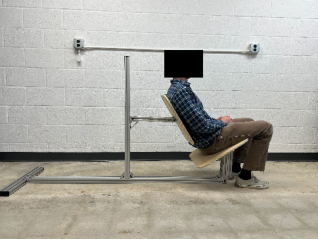
Figure 3: Photograph of current test rig in a lounge configuration.
DISCUSSION AND FUTURE WORK Preliminary performance evaluations indicate that the platform successfully achieves the intended range of configurations while maintaining structural stability under load. While the minimal t-slotted aluminum configuration is robust, it is also selected for modularity, allowing for the addition of supplemental supports as prototype complexity increases.
While the current manual data entry protocol provides a reasonably low- friction entry point for designers, future iterations will focus on automating the physical-to-digital feedback loop. The next phase of hardware development involves the integration of sensors to automate the recording of seat height and backrest angles.
194 Irwin and Mendelson This automation is a prerequisite for the development of real-time digital twins, where the CAD model updates dynamically as the designer adjusts the physical rig. Such a system will allow for an even more seamless transition between physical testing and digital form-finding.
Another primary objective for the platform’s evolution is the integration of interface pressure-sensing technologies. Fenety et al. (2000) established that interface pressure mats correlate strongly with gross trunk movements and can serve as an indicator of user discomfort. By integrating pressure sensing, the platform can move beyond the subjective Body Part Discomfort (BPD) scale to provide objective biomechanical markers.
This data is critical for both ergonomic and structural longevity. Pressure distribution also directly influences long-term material performance. By identifying peak contact pressures in the physical rig, designers can anticipate and mitigate material fatigue in the final product. Therefore, pressure data can help prevent multiple causes for potential product failure. This approach directly addresses the environmental imperative to reduce the million tons of residential waste produced annually by extending both the functional and psychological service life of furniture.
Finally, future research will explore machine learning assistance in a broad sense. The current rig represents the minimal setup for low friction iteration between the physical and digital spaces. This linkage will help us continue exploring new ways of designing thoughtfully as technology advances, focusing on producing ethical and human-centric outcomes. Leão et al. (2024) highlight potential synergy between ergonomics, design thinking, and AI. They conclude that while AI enhances precision, the thoughtful incorporation of ergonomic principles remains essential for human-centered outcomes.
CONCLUSION
This research presents a novel platform for accessible ergonomic testing. It serves as a bridge between theory and practice. The system establishes a foundation for data-driven seating design within the industrial design studio. This approach addresses challenges shared by smaller manufacturers and educational programs, namely lack of access to relevant anthropometric data. By improving prototyping efficiency, the platform allows design teams to prioritize human considerations and user well-being. This aids in the early identification of conflicts where aesthetic goals may otherwise detract from physiological comfort.
From an environmental perspective, the approach aligns with key sustainability strategies. It ensures designers can produce robust seating solutions intended for long lifecycles. While extended service life does not fully resolve material disassembly issues, it directly combats the overconsumption associated with premature disposal. The efficiency gained through this process unlocks time for focused innovation in other complex aspects. These areas include user behavior, product repairability and the separation of dissimilar materials at end of life. All of these factors represent critical sustainability issues related to upholstered furniture.
Integrating Physical Testing and Digital Workflow: A Hybrid Platform for Seating 195 Finally, this research advocates for the advancement of shareable, community-driven design frameworks. By democratizing access to versatile ergonomic validation tools, designers can better align product outcomes with both user health and environmental imperatives.
REFERENCES
Avadanei, Manuela L., Olaru, S., Dulgheriu, I., Ionesi, S. D., Loghin, E. C., & Ionescu, I. (2022). A New Approach to Dynamic Anthropometry for the Ergonomic Design of a Fashionable Personalised Garment. Sustainability, 14(13), 7602. Cao, Zhe, Hidalgo, G., Simon, T., Wei, S.-E., & Sheikh, Y. (2021). OpenPose: Realtime
Multi-Person 2D Pose Estimation Using Part Affinity Fields. IEEE Transactions on Pattern Analysis and Machine Intelligence, 43(1), pp. 172–186. Corlett, E. N., & Bishop, R. P. (1976). A Technique for Assessing Postural Discomfort.
Ergonomics, 19(2), 175–182. Fenety, P. Anne, Putnam, C., & Walker, J. M. (2000). In-chair movement: Validity, reliability and implications for measuring sitting discomfort. Applied Ergonomics, 31(4), pp. 383–393. Gejdoš, Miloš, & Hitka, M. (2022). The Impact of the Secular Trend of the Slovak
Population on the Production of Wooden Beds and Seating Furniture. Forests, 13(10), 1599. Helander, Martin G., & Zhang, L. (1997). Field studies of comfort and discomfort in sitting. Ergonomics, 40(9), pp. 895–915. Leão, Celina P., Silva, V., & Costa, S. (2024). Exploring the Intersection of Ergonomics,
Design Thinking, and AI/ML in Design Innovation. Applied System Innovation, 7(4), 65. Mohammedkhan, Hezha, Fleuren, H., Güven, Ç., & Postma, E. (2025). Inferring Body Measurements from 2D Images: A Comprehensive Review. Journal of Imaging, 11(6), 205. Mugge, Ruth, Schifferstein, H. N. J., & Schoormans, J. P. L. (2008). Product
Attachment and Satisfaction: The Effects of Pleasure and Memories. European Advances in Consumer Research, 8, pp. 325–331. Petrak, Slavenka, Rastovac, I., & Mahnić Naglić, M. (2023). Dynamic Anthropometry – Research on Body Dimensional Changes. Tekstilec, pp. 240–248. Shayegan, Shabahang, Wang, X., Beurier, G., & Denninger, L. (2025). Effect of non-
driving related task and seat back angle on preferred seat parameters in highly automated vehicles. Ergonomics, 0(0), pp. 1–15. Shih, Yi Teng, & Sher, W. (2021). Exploring the Role of CAD and its Application in Design Education. Computer-Aided Design & Applications, 18(6), 1410–1424. (149407867). Sydor, Maciej, & Hitka, M. (2023). Chair Size Design Based on User Height.
Biomimetics, 8(1), 57. US EPA (2025, October 3). Durable Goods: Product-Specific Data. https://www.
epa.gov/facts-and-figures-about-materials-waste-and-recycling/durable-goods- product-specific-data Zemp, Roland, Taylor, W. R., & Lorenzetti, S. (2015). Are pressure measurements effective in the assessment of office chair comfort/discomfort? A review. Applied Ergonomics, 48, pp. 273–282.
LISTED IN THE AHFE DIGITAL BOOKSTORE CATALOGUE
Explore the complete digital volume
Interdisciplinary Practice in Industrial Design
Read this individual research paper free through the original publisher, or explore the full digital proceedings book.
ISBN 978-1-964867-98-4
Explore this ISBN in the AHFE Bookstore ↗Listed in the July 2026 bookstore catalogue; search by ISBN to confirm current availability · Digital book purchase optional