Sang Eun Lee (2026). Designing for Equity: Extending the Equitable Design Toolkit (EDT) Beyond Digital Practice. In: Universal Design and Design for Inclusion. AHFE Open Access, vol. 209, pp. 140–149. https://doi.org/10.54941/ahfe1008028
Design education is increasingly tasked with preparing students to address social equity, accessibility, and the impact of technology alongside usability and visual clarity. This paper builds upon the Equitable Design Toolkit (EDT), first introduced in earlier research (Lee, 2025), and extends the framework to broader pedagogical contexts to demonstrate how inclusive design principles can move beyond screens and interfaces into lived environments and human-centered systems. The EDT supports design instructors in helping students create more equitable products by incorporating an intersectional and power-mapping framework known as the Wheel of Power and Privilege, which visualizes how social hierarchies shape access, representation, and lived experiences. The toolkit consists of three core components: Intersectional Identity Cards that illustrate overlapping identity dimensions such as race, gender, ability, and age; the Wheel of Power and Privilege, which maps social hierarchies that influence access; and Biased Design Cards, which highlight examples of exclusionary design. This study examines the classroom integration of the EDT as a pedagogical model, in which students used the toolkit to create research-informed intersectional personas and applied inclusive design thinking to assess both digital interfaces and physical environments, addressing issues such as navigation, signage, and interface affordances for diverse user groups. By integrating inclusive critique practices with the EDT, this study frames inclusivity as a core measure of design effectiveness and offers educators adaptable strategies for equity-centered learning across digital and physical contexts.
There is an increasing need for design education to prepare students to engage with complex social, ethical, and accessibility challenges in addition to traditional concerns of usability, effective communication, and visual clarity. As technologies, physical environments, and socio-technical systems become increasingly integrated into everyday life, the influence of design extends beyond just artifacts to shape how people navigate spaces, access services, and experience inclusion or exclusion. Design decisions affect not only how systems function, but also who is supported and who is marginalized. As prior work has noted, design is inherently political and carries social consequences that demand ethical responsibility from designers (Winner, 1980; Frascara, Received January 31, 2026; Revised March 30, 2026; Accepted April 13, 2026; Available online July 20, 2026
Designing for Equity: Extending the Equitable Design Toolkit (EDT) Beyond Digital Practice 141 1988). Within design education, these responsibilities have often been addressed through interaction design frameworks that foreground human- centered design, usability, and accessibility in digital contexts.
While these approaches have enhanced awareness of user needs within interface design for students, they can position inclusive and equitable design as a concern primarily tied to screens and digital systems. Prior research in design justice and ethical design demonstrates that inequalities are embedded across all levels of designed systems, including physical environments, institutional infrastructures, and cultural norms (Costanza-Chock, 2018; Dombrowski et al., 2016). Preparing students to recognize and address these systemic conditions requires pedagogical shifts that specifically engage students with power, privilege, and intersectionality as foundations of the design process.
The Equitable Design Toolkit (EDT) was initially developed to support this pedagogical need within UX and interactive design classrooms by embedding intersectional framework into early design stages. Grounded in Crenshaw’s theory of intersectionality (1989), the toolkit provides structured tools that help students examine how overlapping identities, such as race, gender, ability, age, language, and geographic location, shape their lived experiences and access to designed systems.
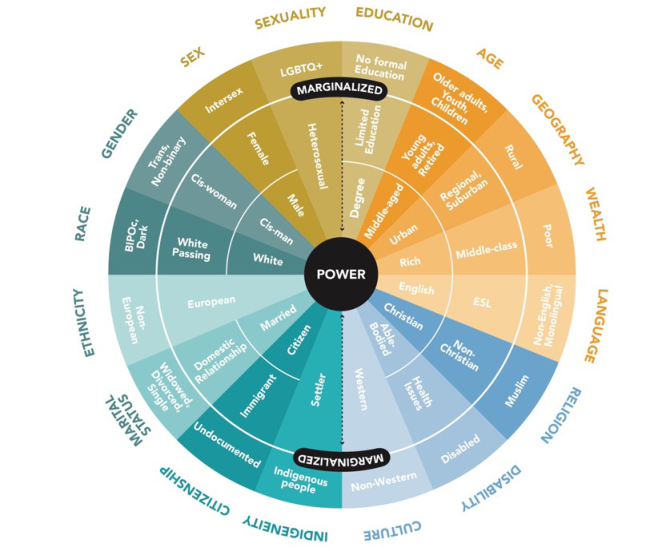
Through components such as the Wheel of Power and Privilege (see Figure 1), Intersectional Identity Cards, and Biased Design Cards, the EDT enables students to critically reflect on whose perspectives are centered in design processes and how bias and exclusion can affect their design decisions.
This paper extends the application of the Equitable Design Toolkit beyond digital interfaces to include physical, environmental, and everyday object contexts. This extension responds to a growing need in design education and human factors research to address systems that operate across both digital and non-digital spaces.
Everyday objects, wayfinding, service environments, and institutional spaces function as human-centered systems that influence behavior, accessibility, and participation. Applying inclusive design principles to these contexts requires students to transfer human-centered and technological thinking to physical experiences and lived environments.
The study examines the classroom integration of the Equitable Design Toolkit as a flexible pedagogical model for teaching inclusive design across multiple scales of design practice. In this design course, students were introduced to human-centered design principles and applied the EDT to analyze non-screen-based experiences. By developing intersectional personas and conducting critical assessments of existing systems chosen by students, students examined how environmental and technological conditions support or restrict diverse users. They then proposed redesigns that addressed accessibility, navigation, language, and affordances across physical touchpoints.
By extending the EDT beyond UX and digital spaces, this work positions inclusivity, equity, and accessibility as central measures of design effectiveness rather than discipline-specific objectives. This paper contributes to discourse on inclusive design education and human factors by demonstrating how intersectional, equity-centered frameworks can support students’ ethical decision-making across lived environments and human-centered systems.
Figure 1: Wheel of power and privilege for understanding intersectional identities and power structures.
PROJECT CONTEXT AND ASSIGNMENT DESIGN The Equitable Design Toolkit was implemented as the foundation for the final project in an undergraduate design course focused on design ethics, social responsibility, and inclusive design. The final project required students to critically analyze an existing product, designed service, experience, or built environment and propose an inclusive redesign based on equity and human- centered principles. Rather than focusing on aesthetics or form, the project was intentionally structured to foreground marginalized user experiences as the starting point for design inquiry.
Students were required to select a real-world system that demonstrated exclusionary or inequitable design practices. These systems encompassed interactive products, such as self-checkout machines and interfaces, as well as physical environments including campus buildings, theatres, museums, signage systems, and everyday consumer objects, such as remote controls and apparel. Moreover, the assignment emphasized that inclusive design extends beyond digital interfaces and must address embodied interaction, environmental access, and systemic barriers.
Central to the project was the creation of a detailed intersectional persona. Students were required to construct personas representing users with multiple marginalized identities, using the Wheel of Power and Privilege to identify intersecting dimensions such as disability, race, gender identity, age, language, and socioeconomic status. These personas functioned as analytical lenses through which students evaluated existing designs and guided redesign decisions.
Designing for Equity: Extending the Equitable Design Toolkit (EDT) Beyond Digital Practice 143 The final deliverables included a written analysis, visual documentation of the existing system, proposed redesigns, and a reflective explanation of how the redesign addressed the needs of the persona. Student work served as applied evidence of how the EDT could support inclusive design thinking across contexts rather than as isolated design solutions.
METHODOLOGY
This study adopted the Scholarship of Teaching and Learning (SoTL), a qualitative, practice-based pedagogical methodology grounded in design education and human-centered design research. The Equitable Design Toolkit was integrated into the course as an instructional framework rather than as a standalone workshop. The data sources consisted of written analyses, personas, visual redesign proposals, and reflective statements, which were produced as part of the final project.
The instructional approach aligns with reflective and action-oriented pedagogical models commonly used in design education. Rather than measuring technical proficiency, the evaluation focused on students’ ability to apply inclusive and intersectional thinking to real-world systems. The study examined how students transferred concepts introduced through the EDT to analyse and redesign products, systems, and environments.
Student work was analyzed for recurring patterns in how the toolkit influenced students’ approaches to analysis and evaluation, particularly in relation to:
Identification of exclusionary design decisions
Use of intersectional personas to guide analysis
Shifts from compliance-based accessibility to equity-centered redesign
Consideration of social, cultural, and environmental factors alongside usability This methodology positions student work as evidence of learning and conceptual transfer rather than as empirical validation of specific design outcomes.
DESIGN PROCESS AND TOOLKIT INTEGRATION The project followed a structured design process informed by human- centered design while embedding the Equitable Design Toolkit as a critical intervention in the early stages of analysis. Students began by identifying an existing design system and conducting background research to understand its historical, social, and functional context.
First, students were introduced to the EDT to examine how power, privilege, and marginalization interact within the chosen system, influencing one another. Using the Wheel of Power and Privilege, students mapped social hierarchies relevant to their selected context and identified which identities were centered or excluded. This exercise prompted students to move beyond generalized “users” and toward specific, research-informed personas.
144 Lee The intersectional personas created by students reflected layered identities such as disabled and nonbinary students navigating campus spaces, wheelchair users interacting with buildings on campus, or individuals with sensory, cognitive, or mobility impairments using everyday technologies.
Once personas were created, students analyzed the existing designs, evaluating barriers related to access, navigation, language, affordances, representation, and dignity of the marginalized user. Students were encouraged to identify both visible and invisible barriers, including social stigma, cognitive load, and emotional impact.
Redesign proposals were then developed as targeted interventions responding directly to the persona’s needs. These proposals included changes to physical layouts, interface elements, wayfinding systems, labeling practices, interaction mechanisms, and environmental features. Students were required to articulate how each design decision addressed equity rather than merely meeting minimum accessibility standards.
Throughout the process, the EDT functioned as a scaffold that supported reflection, discussion, and iterative thinking rather than prescribing a single solution.
OUTCOMES AND FINDINGS Analysis of student work revealed several consistent outcomes related to how the Equitable Design Toolkit supported inclusive and equity-centered design thinking across digital, physical, and hybrid contexts.
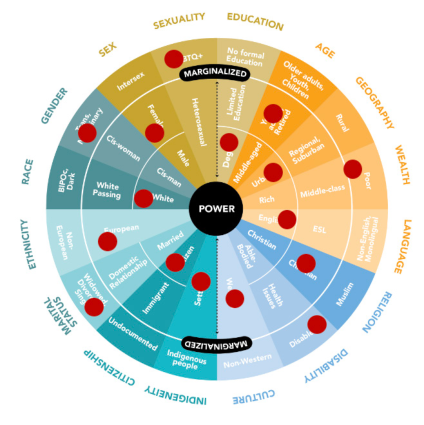
Shift From Generalized Users to Intersectional Personas Through this project, students shifted their focus from designing for a generalized or assumed user to grounding their analyses in detailed, intersectional personas developed using the Wheel of Power and Privilege. These personas consistently represented users with multiple marginalized identities rather than a single accessibility need (see Figure 2). For example, students created personas such as a nonbinary wheelchair user navigating a newly renovated student center, a racially marginalized student with mobility and identity-based accessibility concerns, or a low-vision freshman attempting to navigate campus signage systems. By anchoring their analysis in these personas, students were able to identify barriers that would have remained invisible through a single-axis accessibility lens.
Rather than treating the identities such as disability, race, gender or language as isolated variables, students demonstrated an understanding of how these factors intersect to shape lived experience. This shift was evident in how students framed design problems, moving from questions of compliance to questions of dignity, autonomy, and belonging.
Expansion of Inclusive Design Beyond Compliance A second key outcome was students’ tendency to move beyond minimum accessibility standards toward more equity-centered design decisions. While many of the projects referenced ADA guidelines or accessibility best practices,
Designing for Equity: Extending the Equitable Design Toolkit (EDT) Beyond Digital Practice 145 students did not treat compliance as the primary goal. Instead, they critically evaluated how technically accessible designs could still produce exclusionary experiences. For instance, in analyses of campus buildings, students noted that while elevators and accessible entrances existed, users with mobility disabilities were often limited to a single point of entry, resulting in longer travel routes, reduced independence, and heightened safety concerns during emergencies. Redesign proposals addressed these issues by suggesting additional accessible entrances, lighter door weights, improved signage, and clearer evacuation paths. These recommendations emerged directly from persona-driven analysis rather than checklist-based evaluation.
Figure 2: Intersectional persona using the wheel of power and privilege and identity mapping to link identities and spatial barriers (Student project: Inclusive redesign of crawford hall).
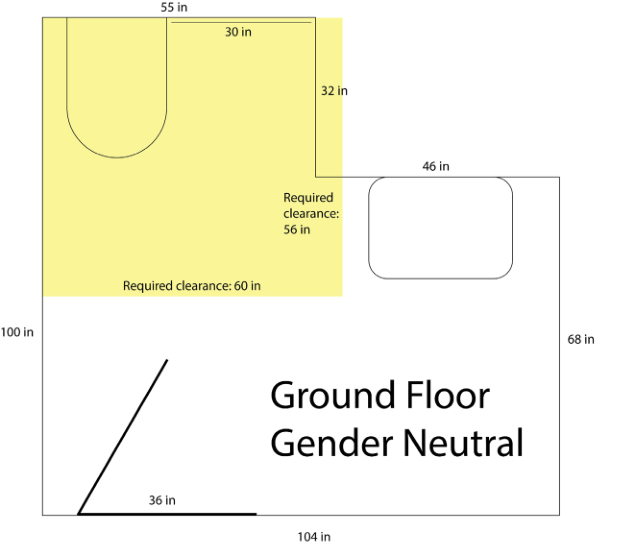
146 Lee Similarly, restroom analyses revealed how gender-neutral restrooms labelled as “accessible” could still restrict wheelchair manoeuvrability or require users to navigate narrow corridors. Students proposed redesigns that prioritized spatial equity, labelling clarity, and proximity, recognizing that inclusion involves more than the presence of designated facilities (see Figure 3).
Figure 3: Proposed inclusive redesign of a gender neutral restroom addressing mobility and gender inclusivity for a college student who uses a wheelchair (Student project: Inclusive redesign for johansen student center).
Transfer of UX and Human-Centered Principles to Physical Environments Student work demonstrated a strong transfer of inclusive and human- centered principles to non-digital systems. Concepts such as affordances, feedback, navigation, and user flow were applied to physical spaces and everyday objects beyond digital spaces.
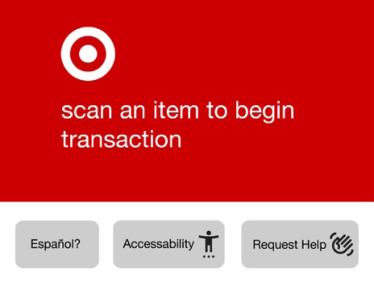
For example, a project analyzing self-checkout machines (see Figure 4) treated the system as a hybrid interaction, composed of physical hardware, screen-based interfaces, auditory feedback, and spatial layout. The student identified barriers for user personas, including people with visual impairments, wheelchair users, and individuals with limited motor control, such as inaccessible screen heights, a lack of tactile or audio feedback, and inadequate clearance. Redesign proposals incorporated multimodal feedback, adjustable heights, simplified interaction sequences, and alternative input methods, demonstrating how interface thinking can inform inclusive physical design.
Figure 4: Proposed redesign of self checkout machines at Target for older adults with limited vision and mobility (Student project: Inclusive redesign for grocery store self- checkout).
Wayfinding and signage projects applied a similar approach to campus navigation systems. The student evaluated the contrast, placement, height, and readability from the perspective of low-vision users and wheelchair users, proposing signage systems with higher contrast, larger type, lower placement, and clearer visual hierarchy. These solutions reflected an understanding of environmental interaction as a designed system rather than static objects.
Increased Attention to Social and Emotional Dimensions of Inclusion Beyond physical access, students consistently addressed the social and emotional impacts of design decisions. Several projects highlighted how exclusionary design contributes to stigma, isolation, or anxiety, even when basic accessibility is provided.
148 Lee In the student project focused on intercultural or community-centered space, students questioned design elements that undermined inclusion, such as decorative choices that flattened cultural representation or spaces that discouraged belonging of marginalized groups. Redesigns proposed participatory elements, clearer representation, and opportunities for students to shape their environments, reflecting a broader understanding of inclusion as relational and cultural.
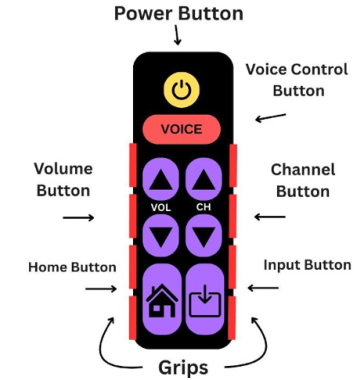
Similarly, projects focused on everyday objects demonstrated how difficulty using products independently can undermine confidence and autonomy. In analyses of consumer items such as remote controls and undergarments, students identified how assumptions about fine motor control, range of motion, or the use of these items make them challenging to use without assistance (see Figure 5).
Redesign proposals prioritized alternative interaction methods and simplified mechanisms, framing independence and agency as main goals of inclusive product design rather than ease of use alone.
Development of Critical Reflection and Ethical Awareness Finally, student reflections indicated increased comfort and confidence in engaging with bias, privilege, and marginalization in design practice. The Equitable Design Toolkit provided a shared structure and vocabulary that supported critical reflection without requiring students to rely solely on personal experience.
Students demonstrated an ability to articulate why certain design decisions mattered, as they could exclude specific identities. They were able to justify redesign proposals by connecting them to broader questions of equity, power, and responsibility, reinforcing inclusive design as a core component of design literacy.
Figure 5: Proposed remote control redesign for older adult users with limited mobility and motor skills (Student project: Inclusive redesign of an everyday object).
CONCLUSION
This study demonstrates how the Equitable Design Toolkit, initially designed to support students in developing inclusive and equitable interactions, focusing on digital designs in UX and interaction design projects, can also function as a flexible pedagogical tool that supports learning across digital, physical, and environmental contexts.
By adopting intersectionality and power analysis, students were able to assess real-world systems critically and propose redesigns grounded in empathy, ethics, and inclusive and human-centered principles.
Instead of positioning inclusivity as a specialized concern or a feature of digital interfaces, this work frames inclusive design as a foundational measure of design effectiveness. The student projects demonstrate how equity-centered thinking can inform decision-making across various scales, from consumer products to physical environments.
Extending the EDT beyond UX and digital design contributes to design education and human factors discourse by demonstrating how inclusive design principles can be taught as transferable competencies. Future work will explore how this framework can be adapted across disciplines and educational contexts to support further ethical, inclusive, and socially responsible design practice.
REFERENCES
Costanza-Chock, Sasha. 2018. “Design Justice, A.I., and Escape from the Matrix of Domination.” Journal of Design and Science. https://doi.org/10.21428/96c8d426. Crenshaw, Kimberlé. “Demarginalizing the Intersection of Race and Sex: A Black
Feminist Critique of Antidiscrimination Doctrine, Feminist Theory and Antiracist Politics.” University of Chicago Legal Forum 1989, no. 1 (1989): 139–167. https:// chicagounbound.uchicago.edu/uclf/vol1989/iss1/8. Dombrowski, Lynn, Ellie Harmon, and Sarah Fox. “Social Justice-Oriented Interaction Design: Outlining Key Design Strategies and Commitments.” In Proceedings of the 2016 ACM Conference on Designing Interactive Systems (DIS ’16), 656–671. New York: Association for Computing Machinery, 2016. https:// doi.org/10.1145/2901790.2901861. Frascara, Jorge. “Graphic Design: Fine Art or Social Science?” Design Issues 5, no. 1
(1988): 18–29. https://doi.org/10.2307/1511556. Lee, Sang E. “Empowering Inclusive UX Design Through the Equitable Design Toolkit.” In HCI International 2025 Posters, edited by S. Ntoa, C. Stephanidis, M. Antona, and G. Salvendy, 137–146. Cham, Switzerland: Springer Nature, 2025. https://doi.org/10.1007/978-3-031-94156-6_14. Winner, Langdon. “Do Artifacts Have Politics?” Daedalus 109, no. 1 (1980):
Read this individual research paper free through the original publisher, or explore the full digital proceedings book.
ISBN 978-1-964867-85-4
Explore this ISBN in the AHFE Bookstore ↗Listed in the July 2026 bookstore catalogue; search by ISBN to confirm current availability · Digital book purchase optional