Jülian Salazar, Antonio Capobianco, Flavien Lécuyer, Vivien Schmitt (2025). Inattentional Blindness in Assembly Tasks: Implications of Cognitive and Perceptual Load for Human-Centered Interface Design. In: Human Factors in Design, Engineering, and Computing. AHFE Open Access, vol. 199, pp. 346–356. https://doi.org/10.54941/ahfe1006847
The inability to perceive a visible but unexpected stimulus is a phenomenon studied in cognitive psychology under the name of inattentional blindness (IB). IB reflects the limited capacity of human attention, as a demanding task may leave few, if any, attentional resources available for an unexpected yet visible stimulus to capture attention. The main cognitive mechanism involved is selective attention, which allows individuals to prioritize information relevant to the task at hand while filtering out irrelevant elements. However, depending on the context, some information may be mistakenly considered as distracting, particularly when it is unexpected. According to load theory, the efficiency of selective attention depends on the level of cognitive and perceptual load during task execution. To date, IB has been primarily explained through the lens of perceptual load, with cognitive load often reduced to executive control tasks. Moreover, the interaction between these two types of load remains underexplored, as does the investigation of IB in applied contexts relevant to everyday activities. To address these gaps, the present study aims to identify the occurrence of IB during manual assembly tasks in industrial settings. A 2x2 within-subject experimental design (N=32) was implemented, independently manipulating perceptual and cognitive load. Participants performed simulated assembly tasks using LEGO components. The main dependent variable was the detection rate of an unexpected stimulus, which was briefly presented on the instruction screen. Results show a significantly higher overall rate of non-detection compared to the control condition. In addition, a high level of either cognitive or perceptual load significantly increased the rate of non-detection. A strong interaction effect between the two types of load was also observed. These findings highlight the importance of considering both cognitive and perceptual load in the design of human-machine interfaces (HMIs), especially when information is delivered dynamically. Inattentional blindness, as a cognitive bias, can affect any individual particularly in high-load environments such as assembly procedures. Modern HMIs increasingly rely on real-time adaptability and contextualized alerts. However, their effectiveness depends on the timely availability of attentional resources, which this study shows to be significantly modulated by task-induced load. Then, a visible but unexpected stimulus may go unnoticed under high load conditions. By demonstrating for the first time the occurrence of IB in an assembly task context, while simultaneously manipulating both types of load, this research reveals limitations of current HMIs and emphasizes the need to integrate this phenomenon into future interface design through a human-centered approach.
Inattentional blindness (IB) is defined as an individual’s failure to perceive a visible but unexpected stimulus due to attentional focus on a primary task (Mack & Rock, 1998). A classic illustration is the “gorilla” study (Simons & Chabris, 1999), in which many participants failed to notice an incongruent event while focused on a primary counting task. In cognitive psychology, IB is commonly explained by the mechanism of selective attention, which enables individuals to prioritize relevant information while suppressing distracting stimuli. This attentional filtering reflects the limited nature of attentional resources, which prevents individuals from processing all the information present in the environment (Simon, 1955).
Inattentional Blindness in Assembly Tasks: Implications of Cognitive and Perceptual 347
According to load theory (Lavie, 1995, 2005), the efficiency of selective attention depends on the level of perceptual load (PL) and cognitive load (CL) inherent to a task. On one hand, perceptual load refers to the complexity and number of stimuli that must be processed at sensory level. When PL is high, most of the available perceptual resources are consumed, leaving few— if any—resources to process additional information considered irrelevant to the task such as an unexpected stimulus. Conversely, when PL is low, more resources remain available, increasing the likelihood that an unexpected stimulus will capture attention. On the other hand, CL refers to the amount of information temporarily maintained and manipulated in working memory (WM; Baddeley, 1992, 2000). According to studies by de Fockert et al. (2001, 2004) and Lavie et al. (2004), a high level of CL impairs the ability to maintain attentional priorities, thereby facilitating interference from information perceived as irrelevant. This has led to hypothesize that under high CL, unexpected stimuli may paradoxically be more likely to capture attention, due to a weakening of top-down control. Conversely, a low CL supports preserve task priorities and effectively suppress distractions.
Building on this framework, Lavie et al. (2004) proposed that perceptual load determines the stage at which attentional selection occurs. When PL is high, early selection prevents irrelevant stimuli from reaching awareness. When PL is low, selection occurs later, allowing both relevant and irrelevant stimuli to be processed. In such cases, the effectiveness of post- perceptual selection depends on top-down control mechanisms, which can be compromised under high CL.
Although load theory has significantly contributed to explaining the occurrence of IB, several limitations remain in the current literature. First, most studies focus on perceptual load as the primary explanatory factor, minimizing the role of cognitive load (see systematic review by Matias et al., 2022). Second, when cognitive load is manipulated, it is typically done through verbal tasks involving executive control processes, such as remembering the order of digit sequences (see Lavie & de Fockert, 2005). However, according to Baddeley’s model (1992), WM also includes a visual component responsible for the temporary storage of visual and spatial information (i.e., the visuo-spatial sketchpad). Studies have shown that engaging this component may have similar effects on IB as those induced by high perceptual load (Konstantinou & Lavie, 2013; Todd et al., 2005). As such, there is no consensus regarding the effects of cognitive load, and more specifically, different types of WM on IB. Third, interaction effects between cognitive and perceptual load remain underexplored. Yet, research by Caparos and Linnell (2010, 2011) suggests that combining both types of load can modulate the occurrence of IB. They found that increasing PL focused spatial attention, thereby reducing distraction, only when cognitive load was low. This pattern suggests that under high PL, available cognitive resources play a key role in sustaining attentional focus beyond the perceptual stage. Conversely, when CL was high, these resources were already occupied by the primary task, preventing effective post-perceptual filtering and leading to a defocusing of attention when PL was high. Finally, although many studies have contributed to a better understanding of how cognitive and perceptual
load affect conscious perception, few have been conducted in ecological contexts like real-life situations relevant to everyday activities. Yet, the stakes of failing to notice a visible but unexpected event are high, particularly in domains such as driving, medicine, or aviation (Murphy & Greene, 2016; Dixon et al., 2014; White & O’Hare, 2022). These findings raise the question of how IB may manifest in other critical environments, such as industrial settings, where human-machine interfaces (HMIs) play a central role in the management of visual information.
HMIs can be defined as information supports that reduce the informational complexity between humans and machines (Gong, 2009). Traditionally, these interfaces were static, requiring users to manually interact in order to access information. However, modern HMIs are increasingly becoming dynamic and context-aware. By leveraging contextual data from both the environment and the user, these interfaces are now capable of autonomously and in real time presenting relevant information without requiring explicit interaction from the user (Carrera-Rivera et al., 2023). This new category of contextualized interfaces has emerged largely in response to the growing complexity of digital environments, especially in the industrial sector. Indeed, current and future industrial settings are becoming more complex, dynamic, and unpredictable (Reguera-Bakhache et al., 2021; Bläsing & Bornewasser, 2021), which further increases the need for interfaces capable of adapting their content based on context (Villani et al., 2021).
However, for these interfaces to be effective, they must capture the user’s attention at the right moment. In industrial contexts such as manual assembly procedures, operators are subject to high attentional demands, particularly due to visual inspection and the selective processing of complex instructions (Jeffri & Rambli, 2020). Indeed, assembly tasks can partly be considered a form of visual search tasks, involving several successive actions: inspecting the instructions displayed on the screen, locating the appropriate bins, identifying the necessary components, and determining the exact position for assembling each part. In this context, the proper functioning of selective attention is critical for the successful execution of the task (Stork & Schubö, 2010). In this context, the combination of autonomous and unexpected information presentation with high attentional demands raises a central question: Can inattentional blindness occur under such condition? And if so, how CL and PL interact to influence this phenomenon?
The objective of the present study is to examine the potential occurrence of inattentional blindness in the context of industrial assembly, considering the levels of cognitive and perceptual load associated with such activities. In particular, CL was operationalized so as to specifically engage the visuospatial component of working memory (VWM), which has received little attention in previous IB research compared to the more commonly studied verbal component. This global approach aligns with the perspective of the industry of the future, where the increasing complexity of work environments and the growing number of attentional demands may increase
Inattentional Blindness in Assembly Tasks: Implications of Cognitive and Perceptual 349
the risk of failing to perceive critical events, even when they are visibly presented on interfaces. To address this objective, an experimental protocol was designed using a 2×2 within-subject design, orthogonally manipulating cognitive load (low vs. high) and perceptual load (low vs. high), with the detection rate of an unexpected stimulus displayed via an HMI as the main dependent variable.
We formulate the following hypotheses:
H1. The overall detection rate of the unexpected stimulus will be low, indicating the presence of inattentional blindness.
H2. Independently, a high perceptual load will significantly reduce the detection rate.
H3. Independently, a high cognitive load will significantly reduce the detection rate.
H4. Taken together, an interaction effect is expected: the high–high load condition will lead to the lowest detection rate, while the low–low load condition will result in the highest.
By exploring these hypotheses, this study aims to better understand the attentional demands of assembly workstations, while identifying potential limitations of modern HMIs that fail to account for inattentional blindness in real-world settings.
METHODS
Thirty-four individuals participated. After excluding two for uncorrected visual impairment and non-compliance, the final sample comprised 32 participants (20 men, 12 women), aged 19–50 years (M = 28.06, SD = 6.90). Twenty-one had no prior industrial-assembly experience, and mean experience was 2.6 months. Participants with uncorrected visual impairments or cognitive disorders affecting attention (e.g., ASD, ADHD) were not included in the study. The protocol was approved by a university ethics committee.
Industrial assembly was simulated using LEGO bricks assembled on standard baseplates. Parts were stored in dedicated picking bins. Assembly instructions were displayed on a 1080p screen at eye level. These instructions were created using Studio 2.0 and then integrated into a PowerPoint slideshow. The unexpected stimulus (critical event) was a sudden change within the instruction displayed via the HMI. Detection was measured at the end of each task with a yes/no question: "Did you notice anything unusual during the task?". Then, self-report questionnaires were administered through Microsoft Forms to assess CL (NASA-TLX) and PL (via a custom- designed questionnaire). For each participant, the NASA-TLX scores were individually weighted based on 15 pairwise comparisons to reflect the perceived importance of each dimension. The PL questionnaire included five 7-point Likert items targeting visual discrimination difficulty, spatial localization, similarity-induced confusion, overall visual complexity, and perceived visual demand.
A 2×2 within-subject experimental design orthogonally manipulated CL and PL (low vs. high).
CL was manipulated through several dimensions related to the visuospatial complexity of the assembly task. In the low-load condition, participants assembled 20 bricks across 4 different variants on a small baseplate (16×32), following a linear and predictable assembly pattern. In the high-load condition, they assembled 40 bricks from 6 different variants on a large baseplate (32×32), following a scattered and randomly distributed pattern across the grid. This manipulation was designed to specifically engage the VWM, as participants had to temporarily retain and process the visual and spatial arrangement of the assembly instructions for the ongoing step.
PL varied depending on the visual similarity between the assembly elements and their background. In all conditions, the baseplate was gray. In the low-load condition, bricks were highly salient with bright contrasting colors (blue, red, green, brown, yellow, and purple). In the high-load condition, the bricks were also gray, significantly reducing their visual salience.
The reference condition was the one with both loads at their lowest, as this provided the greatest attentional availability for detecting the unexpected stimulus. The primary dependent measure was the categorical detection rate of the unexpected stimulus (yes/no). To prevent any order effects in task presentation, a Latin square counterbalancing was applied.
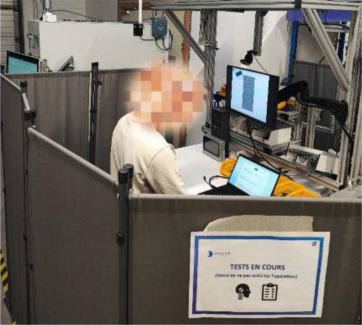
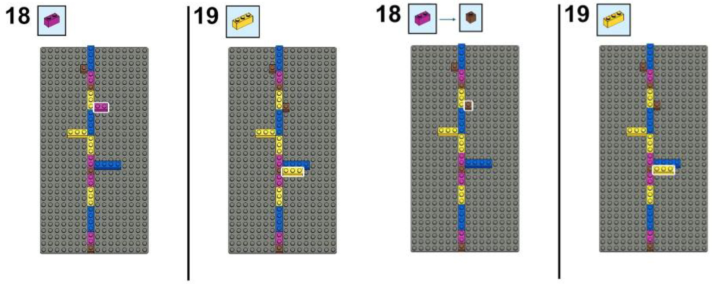
The study was conducted on an experimental R&D line in a dedicated area enclosed by partition panels to ensure privacy (Figure 1). Visual and auditory distractions were kept consistent across all participants. After standardized instructions and a short practice assembly task, participants completed the four experimental conditions in an order counterbalanced using a Latin square. The experimenter was positioned nearby and manually advanced the PowerPoint slides each composed of two assembly steps, based on the participant’s progress. The unexpected stimulus was presented toward the end of the task, upon the first inspection of the right-hand instruction after completing the preceding left-hand step (Figure 2), and disappeared once the corresponding brick was assembled. After completing the four tasks, participants performed a final control task (full attention trial). During this task, they were instructed to only inspect the screen in its entirety without performing any assembly. The same unexpected stimulus was presented suddenly, then disappeared. Participants were then asked whether they had noticed anything unusual during the task. This control condition was designed to confirm that the unexpected stimulus was indeed detectable when the participant’s attention was not engaged in a primary task (see White et al. 2018). It ensured that non-detections observed in the experimental conditions were not due to poor perceptual salience, but rather to attentional limitations. Such control tasks are commonly used in IB protocols (White et al., 2018).
Inattentional Blindness in Assembly Tasks: Implications of Cognitive and Perceptual 351
Figure 1: Experimental setup during a session.Figure 2: Example of an assembly step without [1] and with a critical event [2].
RESULTS
Statistical analyses were conducted using RStudio (version 2024.12.1+563) and JASP (version 0.19.1).
Two participants did not detect the unexpected stimulus during the full- attention trial. However, following recommendations by White et al. (2018), they were retained in the analyses as they had normal or corrected-to-normal vision and complied with the task instructions throughout the experiment.
Preliminary analyses confirmed that the manipulation of both perceptual and cognitive load was successful: self-reported measures were significantly higher in the high-load conditions compared to the low-load ones, thus validating the experimental design.
Overall detection across conditions was 40.5% (i.e., 51 detections out of 126 stimulus presentations) versus 91.7% in the control trials (22 detections out of 24 presentations). A one-sided binomial test was conducted to verify whether the proportion of “No” responses was significantly lower than chance (50%). Results indicated a significant difference (p = .020, 95% CI), supporting the presence of inattentional blindness.
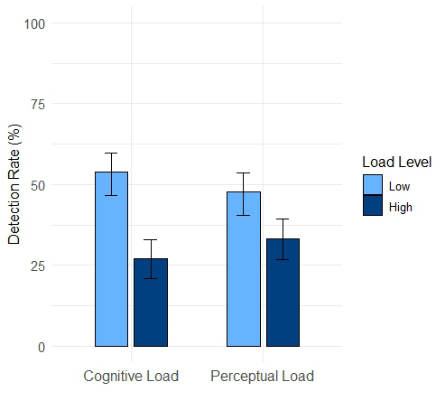
When cognitive load was high, regardless of perceptual load level, the detection rate was 26.98% (17/63), compared to 53.97% (34/63) when cognitive load was low (Figure 3). To assess statistical significance while accounting for repeated measures (within-subject design), a generalized linear mixed model (GLMM) was used with subjects ID as a random effect for controlling individual differences and the non-independence of repeated observations. The model revealed a significant main effect of cognitive load (β = −2.75, p <.001).
Figure 3: Distribution of unexpected stimulus detection rates according to load type (cognitive vs. perceptual) and load level (low vs. high).
When perceptual load was high, independent of cognitive load, the detection rate was 33.33% (21/63), compared to 47.6% (30/63) under low perceptual load (Figure 3). The GLMM also revealed a significant main effect of perceptual load (β = −1.86, p = .008).
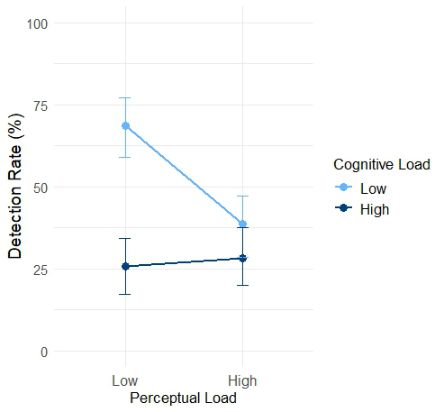
A first analysis of descriptive statistics provides insight into the different detection rates across the experimental conditions. Specifically, the (High CL/High PL), (High CL/Low PL), (Low CL/High PL), and (Low CL/Low PL) conditions resulted in detection rates of 28.13%, 25.81%, 38.71%, and 68.75%, respectively (Figure 4). The GLMM revealed a significant interaction effect between cognitive and perceptual load (p = .045).
A simple effects analysis examining the effect of one load while keeping the other one constant, revealed a conditional interaction between cognitive and perceptual load (Figure 4). On the one hand, the effect of low (vs. high) cognitive load is only significant when perceptual load is low (β = 2.75, p <.001). On the other hand, the effect of low (vs. high) perceptual load is only significant when cognitive load is low (β = 1.86, p = .008). Finally, to further investigate these results, targeted comparisons using contrasts (with Bonferroni correction) were conducted.
Inattentional Blindness in Assembly Tasks: Implications of Cognitive and Perceptual 353
Figure 4: Interaction between cognitive and perceptual load on the detection rate of the unexpected stimulus.
A first post hoc contrast was performed to determine whether the double low-load condition (Low CL/Low PL) yielded a significantly higher detection rate than the other experimental conditions. Results showed that this condition differed significantly from the three others, with a p-value <.01.
Pairwise comparisons were conducted on the estimated marginal means to test the post hoc hypothesis that conditions (High CL/High PL), (High CL/Low PL), and (Low CL/High PL) do not significantly differ in detection rate. No significant p-values were observed (p > .05), indicating that none of these conditions differ from one another.
DISCUSSION
This study suggests that inattentional blindness (IB) can occur during industrial manual assembly, especially when either cognitive or perceptual load is high. The overall detection rate of the unexpected stimulus (40.5%), versus 91.7% in the full-attention trial, indicates that non-detections reflect attentional limits rather than insufficient salience. In line with load theory (Lavie, 2005), high perceptual load significantly reduced detection (33.33% vs. 47.6%). A similar effect was observed for cognitive load, with a lower detection rate under high cognitive load (26.98% vs. 53.97%). While this inhibitory effect of CL contrasts with findings from studies involving executive control tasks, it aligns with our expectations given that CL here was manipulated through VWM demands. This is consistent with the idea that involving VWM can impair awareness similarly to high perceptual load (Fougnie & Marois, 2006; Todd et al., 2005; Konstantinou et al., 2014; Roper & Vecera, 2014). We also observed a significant interaction: only the low-low load condition yielded a higher detection rate (68.75%), whereas the three remaining conditions displayed similar lower rates. Thus, increasing
either type of load is sufficient to trigger IB, and their combination did not amplify the effect. Moreover, even in the most favorable (low-low) load, detection did not reach ceiling (68.75%), implying that routine assembly imposes enough attentional demand to miss visible unexpected events.
These findings highlight the vulnerability of attention in assembly contexts. This has direct implications for the design of context-aware human– machine interfaces in industry: those systems should adapt their salience and presentation mode dynamically based on perceptual load and VWM demands to ensure unexpected events awareness. Beyond general ergonomics, contextual assistance systems like in-situ projection should be tested not only as guidance tools but also as cognitive and perceptual regulation mechanism that stabilize attention when demand spikes. Future work should also consider populations with specific attentional profiles (e.g., ADHD, ASD) under the same protocol, to inform assistive tools adjusted for inclusive workplaces.
Although cognitive and perceptual load were manipulated orthogonally, their effects may not be strictly independent: high cognitive load may indirectly increase perceptual load, as suggested by subjective measures. Future studies should quantify and model this interdependence more precisely. In our protocol, cognitive load was operationalized through VWM maintenance, but assembly also recruits other components of WM such as executive control for picking, orienting, positioning and inserting parts. Investigating these components separately and jointly could clarify their unique and interactive contributions to IB. Finally, the study used a simulated environment with non-expert participants. Extending this protocol to experienced operators and to real settings would test the robustness of the observed effects.
CONCLUSION
IB can occur in manual assembly even under modest task demands. Both high perceptual load and high (visuospatial) cognitive load reduce awareness, and either alone is sufficient to do so. Designing HMIs that dynamically adapt salience and presentation mode in response to real-time estimates of operator workload is therefore essential to mitigate missed critical information in operational environments.
ACKNOWLEDGMENT
Funding details are withheld for anonymized review.
REFERENCES
Baddeley, A. (1992). Working memory. Science, 255, 556–559. doi: 10. 1126/ science.1736359. Baddeley, A. D. (2000). The episodic buffer: A new component of working memory?
Trends in Cognitive Science, 4, 417–423. doi: 10.1016/ S1364–6613(00)01538–2. Bläsing, D., & Bornewasser, M. (2021). Influence of increasing task complexity and use of informational assistance systems on mental workload. Brain Sciences, 11(1), 102. doi: 10.3390/brainsci11010102.
Inattentional Blindness in Assembly Tasks: Implications of Cognitive and Perceptual 355
Caparos, S., & Linnell, K. J. (2010). The spatial focus of attention is controlled at perceptual and cognitive levels. Journal of Experimental Psychology: Human Perception and Performance, 36(5), 1080. doi: 10.1037/a0020367. Carrera-Rivera, A., Reguera-Bakhache, D., Larrinaga, F., & Lasa, G. (2023,
September). Exploring the transformation of user interactions to Adaptive Human-Machine Interfaces. In Proceedings of the XXIII International Conference on Human Computer Interaction (pp. 1–7). doi: 10.1145/3612783.3612807. de Fockert, J. W., Rees, G., Frith, C. D., & Lavie, N. (2001). The Role of Working Memory in Visual Selective Attention. Science, 291(5509), 1803–1806. doi: 10.1126/science.1056496. de Fockert, J. W., Rees, G., Frith, C. D., & Lavie, N. (2004). Neural Correlates of
Attentional Capture in Visual Search. Journal of Cognitive Neuroscience, 16(5), 751–759. doi: 10.1162/089892904970762. Dixon, B. J., Daly, M. J., Chan, H. H. L., Vescan, A., Witterick, I. J., & Irish, J. C. (2014). Inattentional Blindness Increased with Augmented Reality Surgical Navigation. American Journal of Rhinology & Allergy, 28(5), 433–437. doi: 10.2500/ajra.2014.28.4067. Fougnie, D., & Marois, R. (2006). Distinct capacity limits for attention and working
memory: Evidence from attentive tracking and visual working memory paradigms. Psychological science, 17(6), 526–534. doi: 10.1111/j.1467–9280.2006.01739.x. Gong, C. (2009, August). Human-machine interface: Design principles of visual information in human-machine interface design. In 2009 International Conference on Intelligent Human-Machine Systems and Cybernetics (Vol. 2, pp. 262–265). IEEE. doi: 10.1109/IHMSC.2009.189. Jeffri, N. F., & Rambli, D. (2020). Guidelines for the Interface Design of AR Systems
for Manual Assembly. doi: 10.1145/3385378.3385389. Konstantinou, N., Beal, E., King, J., & Lavie, N. (2014). Working memory load and distraction: Dissociable effects of visual maintenance and cognitive control. Attention, Perception, & Psychophysics, 76, 1985–1997. doi: 10.3758/ s13414–014-0742-z. Konstantinou, N., & Lavie, N. (2013). Dissociable roles of different types of working
memory load in visual detection. Journal of Experimental Psychology: Human Perception and Performance, 39(4), 919–924. doi: 10.1037/a0033037. Lavie, N. (1995). Perceptual load as a necessary condition for selective attention.
Journal of Experimental Psychology: Human Perception and Performance, 21, 451–468. doi: 10.1037/0096–1523.21.3.451. Lavie, N. (2005). Distracted and confused? Selective attention under load. Trends in Cognitive Sciences, 9, 75–82. doi: 10.1016/j.tics. 2004.12.004. Lavie, N., & De Fockert, J. (2005). The role of working memory in attentional
capture. Psychonomic Bulletin & Review, 12(4), 669–674. doi: 10.3758/ BF03196756. Lavie, N., Hirst, A., de Fockert, J. W., & Viding, E. (2004). Load theory of selective attention and cognitive control. Journal of Experimental Psychology: General, 133, 339–354. doi: 10.1037/0096–3445.133.3. 339. Linnell, K. J., & Caparos, S. (2011). Perceptual and cognitive load interact to
control the spatial focus of attention. Journal of Experimental Psychology: Human Perception and Performance, 37(5), 1643–1648. doi: 10.1037/a0024669. Mack, A., & Rock, I. (1998). Inattentional blindness (p. 288). Cambridge, MA: MIT press.
Matias, J., Belletier, C., Izaute, M., Lutz, M., & Silvert, L. (2022). The role of perceptual and cognitive load on inattentional blindness : A systematic review and three meta-analyses. Quarterly Journal of Experimental Psychology (2006), 75(10), 1844–1875. doi:10.1177/17470218211064903. Murphy, G., & Greene, C. M. (2016). Perceptual Load Induces Inattentional
Blindness in Drivers. Applied Cognitive Psychology, 30(3), 479–483. doi: 10.1002/acp.3216. Reguera-Bakhache, D., Garitano, I., Cernuda, C., Uribeetxeberria, R., Zurutuza, U., & Lasa, G. (2021, July). An adaptive industrial human-machine interface to optimise operators working performance. In 2021 IEEE/ASME International Conference on Advanced Intelligent Mechatronics (AIM) (pp. 1213–1219). IEEE. doi: 10.1109/AIM46487.2021.9517434. Roper, Z. J. J., & Vecera, S. P. (2014). Visual short-term memory load strengthens
selective attention. Psychonomic Bulletin & Review, 21, 549–556. doi: 10.3758/ s13423–013-0503–3. Simon, H. A. (1955). A Behavioral Model of Rational Choice. The Quarterly Journal of Economics, 69(1), 99. doi: 10.2307/1884852. Simons, D. J., & Chabris, C. F. (1999). Gorillas in our midst: Sustained inattentional
blindness for dynamic events. Perception, 28, 10591074. doi: 10.1068/p2952. Stork, S., & Schubö, A. (2010). Human cognition in manual assembly : Theories and applications. Advanced Engineering Informatics, 24(3), 320–328. doi: 10.1016/ j.aei.2010.05.010. Todd, J. J., Fougnie, D., & Marois, R. (2005). Visual Short-Term Memory Load
A General Methodology for Adapting Industrial HMIs to Human Operators. IEEE Transactions on Automation Science and Engineering, 18(1), 164–175. doi: 10.1109/TASE.2019.2941541. White, A., & O’Hare, D. (2022). In plane sight : Inattentional blindness affects visual detection of external targets in simulated flight. Applied Ergonomics, 98, 103578. doi: 10.1016/j.apergo.2021.103578. White, R. C., Davies, M., & Aimola Davies, A. M. (2018). Inattentional blindness
on the full-attention trial : Are we throwing out the baby with the bathwater? Consciousness and Cognition, 59, 64–77. doi: 10.1016/j.concog.2017.10.002.
LISTED IN THE AHFE DIGITAL BOOKSTORE CATALOGUE
Explore the complete digital volume
Human Factors in Design, Engineering, and Computing
Read this individual research paper free through the original publisher, or explore the full digital proceedings book.
ISBN 978-1-964867-75-5
Explore this ISBN in the AHFE Bookstore ↗Listed in the July 2026 bookstore catalogue; search by ISBN to confirm current availability · Digital book purchase optional