Sarah Rudder (2025). Human-Systems Exploration (HSE) in Enterprise Architecture (EA): Implementing a Framework to Enhance Organizational Lifecycle (OLC) Management. In: Human Factors in Design, Engineering, and Computing. AHFE Open Access, vol. 199, pp. 1912–1921. https://doi.org/10.54941/ahfe1007002
Organizational lifecycle (OLC) management encompasses the creation, modification, and exchange of information throughout all phases of production. Although this effort has historically relied on project management (PM), the incorporation of technical personnel promises to increase the accuracy and reliability of the required tasks and deliverables. As organizations rapidly scale their digital footprint, an opportunity to enhance cross-disciplinary communication and collaboration is presented. Leveraging an enterprise architecture (EA) is a relatively new technique that provides a framework across domains including, but not limited to, operations, personnel, resources, and security. In respect to personnel, capturing all relevant information in an accessible repository assists PM with resource allocation based on factors such as the competencies, roles, and responsibilities of individual team members. This paper will evaluate implementation of the Unified Architecture Framework (UAF) for a small company as a real-world case study assessing the potential benefits. The UAF builds on the Department of Defense Architecture Framework (DoDAF) with the intent to include additional domains and viewpoints. In parallel with current trends, the UAF is amenable to model-based systems engineering (MBSE) which supports traceability and re-usability throughout the solution architecture lifecycle phases. Transferring document-based procedures into a virtual environment is not expected to demonstrate significant value. However, the traceability between entities enabled by MBSE will provide insights regarding the human aspect of the OLC so that operational decisions consider the entire organization and downstream effects. Leveraging the UAF to define the internal structure and processes of an organization while acknowledging personnel, the individual needs of employees, and their distinct capabilities demonstrates a progressive approach to human resource management (HRM) by integrating these facets into the holistic architecture.
Human-Systems Exploration (HSE) in Enterprise Architecture (EA) 1913
INTRODUCTION
The traditional approach to organizational lifecycle (OLC) management, which has historically relied heavily on project management (PM) methodologies, has become increasingly insufficient to address the complexities of modern enterprise operations. As the need to integrate human resources, technical systems, and project processes across a digital landscape becomes progressively prevalent for businesses, standardized frameworks assist with enterprise architecture (EA). In particular, the Unified Architecture Framework (UAF) represents stakeholder perspectives to be captured within a systems engineering (SE) model. Introducing an EA framework into a model-based systems engineering (MBSE) environment demonstrates an enhancement in the management of organizational capabilities.
By focusing on the implementation of the UAF within an air traffic management (ATM) enterprise context, this study explores how EA approaches can enhance organizational decision-making, resource allocation, and provide traceability by leveraging re-usable model elements.
LITERATURE REVIEW
The following section demonstrates a scholarly literature review based on key research topics including lifecycle management, model-based systems engineering, and systems engineering frameworks.
Organizational lifecycle management (OLC) is comprised of business processes (BP) that are closely linked to the more technical product lifecycle management (PLM) discipline. Mosca et al (2021) analyze five (5) prominent OLC methods with conclusions regarding the internal and external factors that affect evolution within a business. The pressure to transform into a digital enterprise that integrates the business and technical perspectives has contributed to exploration of reliable methods to accomplish this objective.
Human resource management (HRM) includes tasks such as strategic recruiting, employee training, growth compensation, efficiency, worker relations, health care, employee satisfaction, and provision of employee services (Anwar & Abdullah, 2021). Innovating BPs such as HRM has recently been recognized as a necessary change by project management (PM) and product development teams that enable productivity (Srinivasan, 2011).
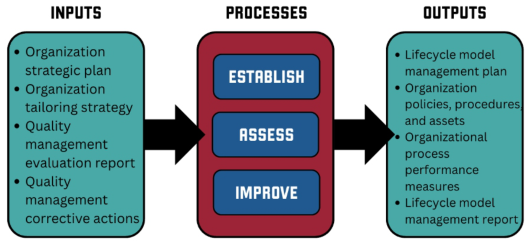
INCOSE, 2023, describes lifecycle project management systems as one (1) of the three (3) top-level system boundaries that encompass socio-technical systems composed of people, processes, and facilities within a particular environment. The purpose of this process is to define, maintain, and assure availability of policies and procedures used by the organization during its lifecycle (ISO/IEC/IEEE 15288:2023 Systems and Software Engineering — System Life Cycle Processes, 2023). Each phase in the lifecycle model contains formal processes which specify the inputs, processes, and outputs (IPO) necessary for the successful accomplishment of the stage (Adams et al., 2024). Figure 1 shows a rendering of the lifecycle project management IPOs as established by Walden et al. (2015).
1914 Rudder
Figure 1: Rendering of lifecycle project management IPOs (Walden et al., 2015).
Socio-technical system designs stress the interrelationship between humans and machines to enhance social and technical conditions of work by reliably integrating the two elements (Ropohl, 1999). Human-systems exploration (HSE) is an iterative design and development approach for innovative human- technology systems that attempts to optimize the understanding of the use-, design-, and value- space of socio-technical systems to find suitable design variants (Preutenborbeck et al., 2024).
Model-Based Systems Engineering (MBSE) MBSE is defined by INCOSE (2007), as the formalized application of SE processes in a digital environment throughout the project lifecycle. It has emerged as a relatively new paradigm that places models at the center of SE processes to reliably manage emergent behavior (Madni & Sievers, 2018). The exponential increase in system complexity raises new challenges for system design (Duprez, 2018) that necessitate new techniques and approaches within the discipline such as using a virtual environment to integrate within a project digital thread. The emergence and maturation of graphical modeling languages and information standards has accelerated the advancement and practical implementation of MBSE practices. Standardized languages are formal means of communication which give unambiguous meaning to model elements (Delligatti, 2014) and are the preferred choice when defining structural aspects of a particular domain (Walden et al., 2023). Notable graphical modeling languages with regards to this research are explored in this section.
Business Process Modeling Notation (BPMN) Capturing BPs in a standardized format is not a new endeavour as demonstrated by the business process modeling notation (BPMN), which enables the creation of end-to-end activities and is designed to cover a multitude of tasks constrained by these processes (Shapiro et al., 2012). BPMN is a rich language and allows the definition of business scenarios, ranging from internal process choreographies to inter-organizational process orchestrations, service interactions, and workflow exceptions (Recker, 2008). However, feedback gathered by Recker (2008) shows that the negative perceptions of BPMN end users is mainly due to the abundance of model elements/symbols and subsequent learning curve. Corradini et al. (2018)
Human-Systems Exploration (HSE) in Enterprise Architecture (EA) 1915
provide guidelines for a simpler, standardized BPMN implementation, but this feedback has not yet been incorporated into the OMG specification.
Lifecycle Modeling Language (LML) The lifecycle modeling language (LML) is an SE specification that supports the full product lifecycle and incorporates necessary functions such as requirements, risk, and project management (Vaneman, 2018). LML leverages data-driven engineering into a standard that satisfies the following SE needs:
Easy to understand and extend
Supports functional and object-oriented approaches
Useful for stakeholders across the system life cycle
Supports all project life cycle stages from concept to disposal.
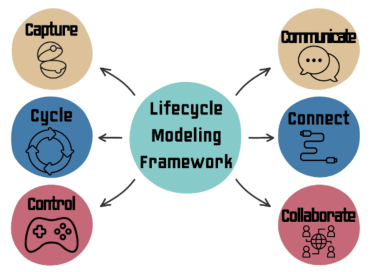
With the goal of overcoming complexities introduced by other industry standards, LML focuses on limited views that represent functional, physical, and traceability system aspects (Dam, 2022) with processes illustrated in Figure 2.
Figure 2: LML processes for each system aspect.
These fundamental concepts within each architecture are decomposed to provide further detail of each model element.
Unified Architecture Framework Modeling Language (UAFML) The Unified Architecture Framework Modeling Language (UAFML) is a formalized profile that enables practitioners to express architectural model elements and organize them into a set of viewpoints, aspects, and view specifications (Unified Architecture Framework Modeling Language (UAFML), 2022). This language is complemented with a standardized framework and process guidelines (Martin & O’Neil, 2021), elevating its viability for this research.
1916 Rudder
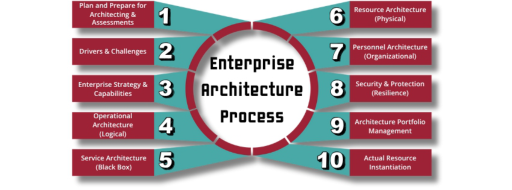
Figure 3: EA process (Martin & O’Neil, 2021).
RESEARCH APPROACH The Unified Architecture Framework (UAF) profile is composed of model elements pertaining to specific stakeholder viewpoints at the enterprise level. Figure 3 shows an abbreviated version of UAF viewpoints and aspects of each in a grid-like form.
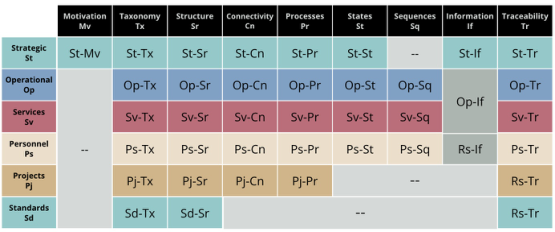
Figure 4: UAF domains and aspects.
Domains represented as rows integrate stakeholder views such as Strategic, Operational, and Resources within an EA meant to model an entire organization. Each column is an aspect of the domain such as Structure and Processes. UAF techniques also incorporate OLC within the Strategic view and HRM processes in the Personnel domain.
RESEARCH OBJECTIVE This work aims to answer the following research question: Does EA within an SE model provide adequate traceability throughout organization domains for OLC?
CASE STUDY An air traffic management (ATM) enterprise will be modeled using SE techniques while adhering to the UAF and process guidelines provided by Martin & O’Neil (2021). This complex system of systems (SoS) relies on technical systems that support human activities within a dynamic and variable environment for successful operations (Duca & Frisiello, 2023). The project will be focused on the outputs and viewpoints in Table 1 which maps
Human-Systems Exploration (HSE) in Enterprise Architecture (EA) 1917
outputs shown in Figure 1 to viewpoints that represent the intersection of Domains and Aspects illustrated in Figure 4.
Table 1: Sample human systems integration test parameters (Folds & McDermott, 2019).
Table available in the original PDF paper.
Lifecycle Modeling Outputs UAF Viewpoint Lifecycle model management plan Resources Structure Organization policies Standards Taxonomy Organization procedures Projects Processes Organization assets Personnel Structure Organizational process performance measures Resources Parameters Lifecycle model management report N/A
The lifecycle model management report is not considered in this research due to ambiguity and variability of inputs required for this deliverable.
ENTERPRISE ARCHITECTURE (EA) MODEL Implementing the UAF grid shown in Figure 3 to represent deliverables shown in Figure 1 was accomplished within a UAF project for an ATM enterprise. Top-down decomposition of a complex SoS requires representation of the behavior of multiple individuals and cyber-physical systems performing a wide variety of tasks, usually at different times and with different goals. In the future, as humans and machines learn and co- adapt in their mission context, systems engineers must develop approaches that support dynamic analysis and synthesis in both the design and operation of systems. The concept of a “digital (mission) twin” provides an integration framework for design and control of future complex cyber-physical-human SoS (Folds & McDermott, 2019).
The framework builds on mission function task (MFT) analysis, providing a basis for model-based systems engineering (MBSE) activities to identify and address needs for automation or other forms of advanced technology that improve overall system performance. However, human-driven adaptation and eventually machine adaptation of complex SoS poses organizational and methodological challenges. Folds & McDermott (2019) suggest the lifecycle model management plan include the following:
Organizational strategic plan and tailoring strategy
Quality management (QM) evaluation report
QM corrective actions.
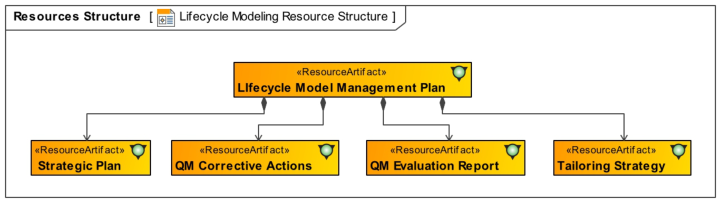
These components of the plan lend this deliverable to be captured within the UAF Resources Structure viewpoint showing the decomposition of a ≪ResourceArtifact≫demonstrated in Figure 5.
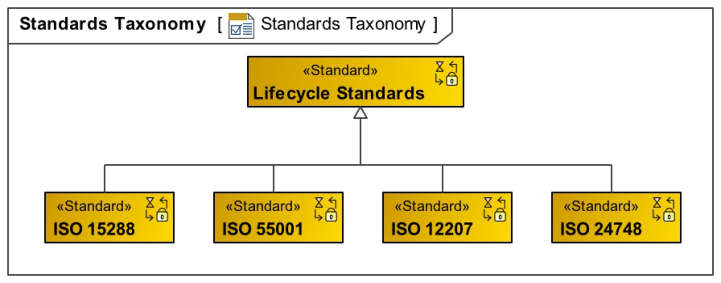
Figure 6 shows a UAF Standards Taxonomy viewpoint that satisfies the organization policy lifecycle modeling output.
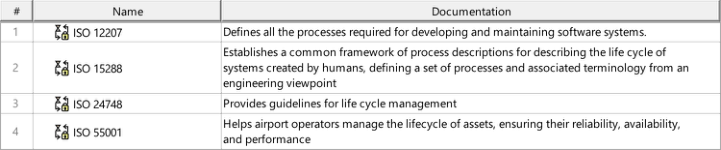
The identified International Organization of Standards (ISO) documents support various aspects of OLC for an enterprise as described in Figure 7 by a UAF Standards Taxonomy table.
1918 Rudder
Figure 5: UAF resources structure for the lifecycle model management plan.Figure 6: UAF standards taxonomy viewpoint.Figure 7: UAF standards taxonomy table.
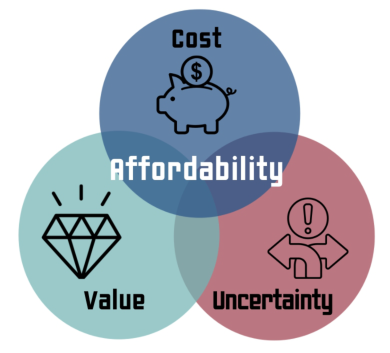
Lifecycle cost (LCC) will be used as the representative example of an organization procedure for the ATM enterprise. The International Council on Systems Engineering (INCOSE) handbook (INCOSE, 2023) describes LCC as necessary to calculate affordability based on metrics illustrated in Figure 8.
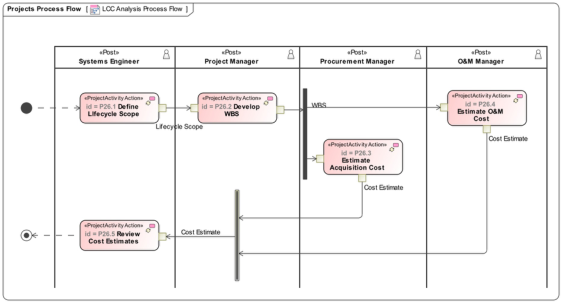
The UAF Projects Processes viewpoint in Figure 9 illustrates the LCC analysis behavior based on project activities and object flows representing additional ≪ResourceArtifact≫s between them.
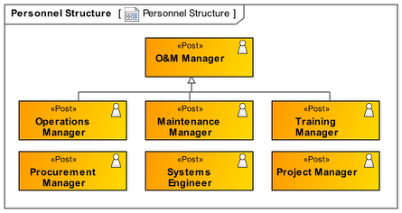
Organization assets are captured in the UAF Personnel Structure view as ≪Post≫s shown in Figure 10.
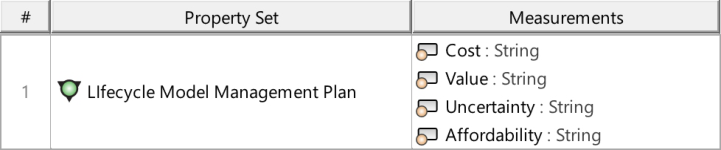
Each ≪Post≫is allocated to a swimlane header in Figure 9 which allocates activities the entity is responsible for executing. Organizational process performance measures can be captured in the UAF Resources Parameters viewpoint. Typical measurements are attributed to a ≪ResourceArtifact≫
Human-Systems Exploration (HSE) in Enterprise Architecture (EA) 1919
for evaluation. Figure 12 shows the measurements linked to the lifecycle model management plan based on the LCC analysis variables.
RESEARCH CONCLUSION This work has shown the integration and traceability of elements from the UAF Projects, Standards, Resources, and Personnel domains to support OLC. Key conclusions regarding the technical concepts above are as follows:
A model-based EA provides a human-aspect for project management activities.
Process flow diagrams that leverage re-usable activities across domains effectively demonstrate BPs and the entities responsible for executing specific tasks.
Project management capabilities and attributes of an EA created within the UAF successfully capture lifecycle management responsibilities.
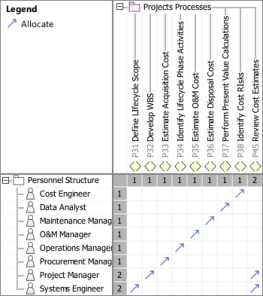
The research question can be subjectively evaluated with cross-cutting relationships shown by matrices built within the model. Figure 11 exemplifies the traceability constructed within a model-based EA across domains.
Figure 12: Allocation matrix between personnel structure and project processes.
FUTURE WORK
This research aims to use EA techniques to model a complete and comprehensive ATM organization. Future work will further investigate the UAF Operational, Services, and Security domains.
Human-Systems Exploration (HSE) in Enterprise Architecture (EA) 1921
REFERENCES
Adams, K. M., Ibrahim, I., & Krahn, S. (2024). Engineering Systems with Standards and Digital Models: Development of a 15288-SysML Grid. Systems, 12(8), Article 8. https://doi.org/10.3390/systems12080276. Anwar, G., & Abdullah, N. N. (2021). The impact of Human resource management
practice on Organizational performance. International Journal of Engineering, Business and Management, 5(1), 35–47. https://doi.org/10.22161/ijebm.5.1.4. Delligatti, L. (2014). SysML Distilled: A Brief Guide to the Systems Modeling Language. Pearson Education, Inc. Duprez, J. (2018). An MBSE modeling approach to efficiently address complex
systems and scalability. INCOSE International Symposium, 28(1), 940–954. https://doi.org/10.1002/j.2334–5837.2018.00526.x. Folds, D. J., & McDermott, T. A. (2019). The Digital (Mission) Twin: An Integrating Concept for Future Adaptive Cyber-Physical-Human Systems. 2019 IEEE International Conference on Systems, Man and Cybernetics (SMC), 748–754. https://doi.org/10.1109/SMC.2019.8914324. INCOSE. (2023). Systems Engineering Handbook (5th ed.). John Wiley & Sons Ltd. ISO/IEC/IEEE 15288:2023 Systems and software engineering—System life cycle
processes. (2023). Madni, A. M., & Sievers, M. (2018). Model-Based Systems Engineering: Motivation, Current Status, and Needed Advances. In A. M. Madni, B. Boehm, R. G. Ghanem, D. Erwin, & M. J. Wheaton (Eds.), Disciplinary Convergence in Systems Engineering Research (pp. 311–325). Springer International Publishing. https:// doi.org/10.1007/978–3-319–62217-0_22. Martin, J. N., & O’Neil, D. P. (2021). Enterprise Architecture Guide for the
Unified Architecture Framework (UAF). INCOSE International Symposium, 31(1), 242–263. https://doi.org/10.1002/j.2334–5837.2021.00836.x. Mosca, L., Gianecchini, M., & Campagnolo, D. (2021). Organizational life cycle models: A design perspective. Journal of Organization Design, 10(1), 3–18. https://doi.org/10.1186/s41469–021-00090–7. Preutenborbeck, M., Wolf-Monheim, F., Carey, E., Canu, P., Herzberger, N.,
Usai, M., & Flemisch, F. (2024). Stakeholder-driven Design and Exploration of Sociotechnical Systems using Virtual-Reality. Procedia CIRP, 128, 274–279. https://doi.org/10.1016/j.procir.2024.04.006. Recker, J. (2008). BPMN Modeling – Who, Where, How and Why. Ropohl, G. & Society for Philosophy and Technology. (1999). Philosophy of Socio- Technical Systems. Society for Philosophy and Technology Quarterly Electronic Journal, 4(3), 186–194. https://doi.org/10.5840/techne19994311. Shapiro, R., White, S. A., Bock, C., & Palmer, N. (2012). BPMN 2.0 Handbook
Second Edition. Srinivasan, V. (2011). An integration framework for product lifecycle management. Computer-Aided Design, 43(5), 464–478. https://doi.org/10.1016/ j.cad.2008.12.001. Unified Architecture Framework Modeling Language (UAFML) (Version 1.2).
(2022). OMG. Walden, D. D., Roedler, G. J., Forsberg, K. J., Hamelin, R. D., & Shortell, T. M.
(Eds.). (2015). INCOSE systems engineering handbook: A guide for system life cycle processes and activities (Fourth). John Wiley & Sons, Inc. Walden, D. D., Shortell, T. M., Roeddler, G. J., Delicado, B. A., Mornas, O., Yew-Sing, Y., & Endler, D. (Eds.). (2023). Incose Systems Engineering Handbook a Guide for System Life Cycle Processes and Activities (Fifth). John Wiley & Sons Ltd.
LISTED IN THE AHFE DIGITAL BOOKSTORE CATALOGUE
Explore the complete digital volume
Human Factors in Design, Engineering, and Computing
Read this individual research paper free through the original publisher, or explore the full digital proceedings book.
ISBN 978-1-964867-75-5
Explore this ISBN in the AHFE Bookstore ↗Listed in the July 2026 bookstore catalogue; search by ISBN to confirm current availability · Digital book purchase optional