Katriina Heljakka (2025). Pairing Child Rights Impact Assessment (CRIA) with Playful Interaction Design: From Teaching to a Tool in Design Education. In: Human Factors in Design, Engineering, and Computing. AHFE Open Access, vol. 199, pp. 156–166. https://doi.org/10.54941/ahfe1006828
Play has the potential to act as a civic method that benefits democracy by operationalizing the core principles of Child Rights Impact Assessment (CRIA) in accessible, inclusive, and future-oriented ways. A tool developed in Finland as the result of a teaching innovation in playful and gameful design exemplifies how humanities students can translate interaction design into a participatory tool for children, advancing child rights in decision-making. Mirrored against the principles of CRIA, the tool presented in this study on design education demonstrates systematic assessment through rule-based play formats, ensures participation by lowering barriers via narrative role-play, and fosters transparency by making collective outcomes visible to all participants. Importantly, the analysis of the teaching innovation presented through a design educator’s perspective situates this work within the framework of the child’s right to play, as recognized in Article 31 of the United Nations Convention on the Rights of the Child (UNCRC, 1989) and clarified in General Comment No. 17.Keywords: Playful democracy, Child Rights Impact Assessment (CRIA), CRIA Tool; Children’s Right to Play, Interaction design in Humanities, Participatory governanceIntroductionThe right of the child to play is a cornerstone of international human rights law. Article 31 of the United Nations Convention on the Rights of the Child (UNCRC, 1989) affirms that every child has the right to “rest and leisure, to engage in play and recreational activities appropriate to the age of the child.” This right has been further clarified in General Comment No. 17 (UNCRC Committee, 2013), which emphasizes that play is a fundamental aspect of children’s wellbeing, learning, and participation in society. As Lester and Russell have argued, play enables children to “make sense of the world and their place in it.” At the same time, Ginsburg underscores its role in strengthening not only individual growth but also relationships and collective engagement. Play must be taken into account when listening to the views of children, and children have the right to express their opinions and influence decisions made in Finland, where the study at hand was undertaken. Despite this recognition, play often remains marginalized in governance processes. Policy frameworks such as “lapsivaikutusten arviointi” (LAVA), Finland’s national model of Child Rights Impact Assessment (CRIA), aim to systematize the consideration of children’s rights in law and policy. CRIA, or LAVA in Finland, refers to the systematic process of analyzing the potential effects of policies, legislation, or administrative decisions on children. In this context, play offers an underexplored but promising pathway. Play can lower barriers to participation, create inclusive and multimodal spaces for expression, and render decision-making processes tangible through narrative and material outcomes. By embedding democratic principles within rule-based structures integrated in playful tools, play enables children to experience participation as a lived practice rather than an abstract right. Moreover, play’s imaginative and future-oriented dimensions provide tools for anticipating the impacts of policies, resonating with LAVA’s emphasis on foresight. A concrete example of this potential is the “Teddy Council”, a playful tool developed in Finland as part of teaching in playful and gameful design. Emerging from this course in interaction design taught to humanities students, this tool uses teddy bear narratives, tokens, and playful voting structures to invite children into collective decision-making. In doing so, it transforms the bureaucratic logic of CRIA into embodied, accessible, and transparent forms of play. From a pedagogical perspective, it also illustrates how design literacy can be cultivated in the humanities to produce innovations that are both playful and policy-relevant.This presentation proposal focuses on how playful interaction design was utilized as part of teaching playful and gameful design to a group of humanities students in Finland, and how a tool for Child Rights Impact Assessment was developed to mirror the principles of LAVA, to provide an accessible, scalable, and transparent tool to meet the needs of the local municipality.The analysis of the teaching innovation that resulted in the creation of the CRIA tool highlighted several contributions of pairing CRIA with playful interaction design, including novelty, relevance, play as a method for participation, the important role of materiality in playful interaction design, inclusivity achieved through multimodality and embodied interaction, and the importance of expertise involved in the teaching dimension.
Article 31 of the United Nations Convention on the Rights of the Child (UNCRC, 1989) affirms that every child has the right to “rest and leisure, to engage in play and recreational activities appropriate to the age of the child.” This right has been further clarified in General Comment No. 17 (UNCRC Committee, 2013), which emphasizes that play is not an optional luxury but a fundamental aspect of children’s wellbeing, learning, and participation in society. The recognition of play as a right of the child highlights its dual role: it is both a vital condition for individual development and a civic practice through which children learn fairness, negotiation, creativity, and resilience. As Lester and Russell (2010) have argued, play enables children to “make sense of the world and their place in it.” At the same time, Ginsburg (2007) emphasizes its role in strengthening not only individual growth but also relationships and collective engagement. Play must be taken into account
Pairing Child Rights Impact Assessment (CRIA) With Playful Interaction Design 157
when listening to children’s views, and children have the right to express their opinions and influence decisions made in Finland (Save the Children, 2021). Despite this recognition, play often remains marginalized in governance processes. Policy frameworks such as “lapsivaikutusten arviointi” (LAVA), Finland’s national model of Child Rights Impact Assessment (CRIA), aim to systematize the consideration of children’s rights in law and policy. CRIA, or “lapsivaikutusten arviointi” (LAVA) in Finland, refers to the systematic process of analyzing the potential effects of policies, legislation, or administrative decisions on children. Rooted in the UN Convention on the Rights of the Child (CRC), CRIA ensures that children’s rights and best interests are taken into account in governance and policy-making (Alila 2011a,b; ENOC, 2020). In Finland, LAVA outlines principles of systematic assessment, participation, transparency, equity, evidence-based reasoning, and a forward-looking orientation (Heinämäki & Kauppinen, 2010; Iivonen & Pollari, 2021). However, operationalizing these principles in practice—particularly ensuring that children’s voices are genuinely heard— remains a persistent challenge. Traditional methods of consultation often privilege verbal or written expression, sidelining younger children, non-native speakers, and individuals who are less comfortable in formal settings. Here, play offers an underexplored but promising pathway. Play can lower barriers to participation, create inclusive and multimodal spaces for expression, and render decision-making processes tangible through narrative and material outcomes. By embedding democratic principles within rule-based structures integrated in playful tools, play enables children to experience participation as a lived practice rather than an abstract right. Moreover, play’s imaginative and future-oriented dimensions provide tools for anticipating the impacts of policies, resonating with LAVA’s emphasis on foresight. A concrete example of this potential is the “Teddy Council”, a playful tool developed in Finland as part of teaching in playful and gameful design. Emerging from a course in interaction design taught to humanities students, this tool uses teddy bear narratives, tokens, and playful voting structures to invite children into collective decision-making. In doing so, it transforms the bureaucratic logic of CRIA into embodied, accessible, and transparent forms of play. From a pedagogical perspective, it also illustrates how design literacy can be cultivated in the humanities to produce innovations that are both playful and policy-relevant.
BACKGROUND
Recent research highlights the need for democratic involvement of children, which can be play-based. Play provides insights into children’s cultures and beings—design researcher Feder (2020, p. 97) states, “A humbleness toward children and the way they perceive the world is not just a suggestion but a necessity—it is the key to working with a child-centered design approach.” By consulting children’s views, more informed and influential decisions can be made regarding children’s issues. Nevertheless, while participation is a child’s right, it is “the opportunity to be themselves, to be seen, heard, and loved as they are, to experience a sense of belonging and to
158 Heljakka
influence things that are important to them” (Save the Children, 2021; Tuulensalo et al., 2010). While the principle of considering children’s rights is widely recognized, the effectiveness of CRIA largely depends on the tools and methodologies employed. These tools translate abstract rights into actionable frameworks, enabling policymakers to identify both direct and indirect consequences for children. Although widely acknowledged as necessary, CRIA, in Finland LAVA, face persistent challenges: children’s voices are often underrepresented, tools such as traditional surveys may appear overly bureaucratic, and officials lack creative means of ensuring inclusivity and accessibility. In this context, the playful tool represents an innovative response, as “consultation for decision-making can use methods of play or a guided game”(Save the Children, 2021). Developed as part of the teaching in the 2023 course “Playful and Gameful Design” at the university consortium based in Southwestern Finland, it emerged from a pedagogical design experiment in which humanities students explored interaction design through playful methods.
In Finland, LAVA has been increasingly integrated into legislative and administrative processes. The government has developed the most systematic tools. Iivonen and Pollari (2021) provide official government guidelines on how child impact assessments should be conducted both in legislative drafting and within the new wellbeing services counties. These publications emphasize that CRIA is not an isolated tool but part of a broader child rights mainstreaming strategy. At the municipal level, Heinämäki and Kauppinen (2010) developed practical instruments, such as checklists and guiding questions, to support local governments in assessing the impacts of their decisions on children’s well-being. Iivonen and Pollari (2021) produced practical guides for integrating LAVA into legislative drafting and regional service planning. These documents provide structured steps, including: 1) Screening: Determining whether a policy or law is likely to affect children, 2) Assessment: Gathering evidence on potential impacts, including data and stakeholder consultations, 3) Child Participation: Ensuring children’s views are incorporated into the process, and 4) Reporting and Transparency: Publishing the assessment as part of legislative documentation. The tools are presented as checklists and process charts, designed to make LAVA a routine part of the law-making process rather than an optional add-on. Taken together, these approaches illustrate both the diversity and adaptability of CRIA.
Earlier Frameworks and Instruments for CRIA Child impact assessment is a broad approach to gathering and analysing relevant information (Save the Children, 2021). In Finland, municipalities make decisions connected to children. Heinämäki and Kauppinen (2010) developed a toolkit for municipalities, including “impact cards” and guiding questions that help local decision-makers systematically evaluate the effects of services, budgetary choices, and policies on children. For example, one of the guiding questions is: How will this decision affect children’s everyday life, safety, and development? These tools are designed to be accessible
Pairing Child Rights Impact Assessment (CRIA) With Playful Interaction Design 159
to practitioners without expertise in child rights law. Internationally, several models have emerged to operationalize CRIA. The European Network of Ombudspersons for Children (ENOC) has published a common framework and template for CRIA across Europe, emphasizing transparency and child participation by a) Identification of affected child groups; b) Collection of both quantitative and qualitative evidence; c) Integration of child participation mechanisms; and d) Publication of findings in accessible formats. Across contexts, CRIA tools share common features— such as screening questions, evidence collection, and child participation requirements—but they differ in scope and complexity. Finnish tools are designed for municipal and national governance, with a focus on accessibility for practitioners. The effectiveness of CRIA depends on how well tools are designed and implemented. Tools that are too generic may risk being ignored, while overly complex frameworks can overwhelm policymakers. The most effective tools strike a balance: they are practical, systematic, and embedded into existing decision-making structures. Another recurring issue is the integration of child participation into CRIA tools. While many guidelines emphasize participation (Alila, 2011a,b; ENOC), practical mechanisms for involving children through child-friendly practices remain underdeveloped. However, Scandinavian values in interaction design offer a valid perspective on the considerations for designing effective CRIA tools. Analyses of Nordic HCI (Human–Computer Interaction) traditions highlight values like functionality, democratic participation, and affordability—principles highly relevant to designing policy tools like CRIA. Designing a CRIA tool requires a structured yet flexible process. Borrowing from design thinking (Brown, 2008; Howlett, 2019), the process should be iterative, participatory, and evidence-based. It must integrate three dimensions: 1) Legal compliance (CRC principles and national law), 2) Practical usability (ease of use for policymakers), and 3) Child participation (children as co-designers, not only as subjects). Out of these perspectives, this study focuses on the latter two—accessibility for those working with children, policymakers, and acknowledging the role of children’s participation through play.
METHOD
This study examines the development of a CRIA-based tool in Finland, which is part of an innovative teaching approach grounded in playful learning. Literature on playful design highlights that “the combination of theoretical consideration and play experiences will lead to stronger play design” (Skovbjerg, 2020, p. 41). Consequently, the author drew upon both theoretical and practical expertise in toys, play, and game design, interaction design, and service design to design, deliver, facilitate, monitor, and mentor student work, ultimately aiming to create the CRIA tool for LAVA in Finland. The project resulted from collaboration between the local municipality, the university consortium, and the teacher specialized in playful learning and design education. The goal was to integrate CRIA with playful interaction design, utilizing innovative teaching methods to facilitate playful learning of interaction design and ultimately create a tool for the local municipality.
160 Heljakka
Antecedents of the project were based on the content of the Playful and Gameful Design course (Heljakka, 2023), described on the university course catalogue as follows: “The course familiarizes participants with the theories and development directions of playification and gamification, examining the phenomenon from the perspectives of visual, material, and digital culture. The course draws on research literature from play and toy research, service design, and playful design. Through exercises, students learn about playful approaches and methods that can be applied in planning and producing inclusive cultural offerings.” The data consists of the design educator’s course plan, field notes from lectures, and two student-generated blog posts on the development process of the playful tool, mirroring the LAVA principles.
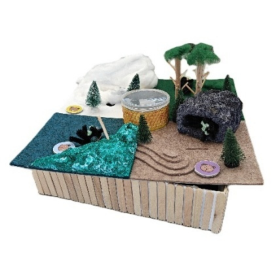
FINDINGS In association with the university course, the following design brief was formulated: “We need a tool that is simple, mandatory, and ensures children’s voices are captured.” The stages to design and create a playful and accessible, yet relevant tool followed the following design principles: Accessibility (child- friendly content accessed through multiple modalities), Scalability (usable in local councils and municipalities), and Transparency (outputs must be public). At a university consortium based in South-Western Finland, students in the humanities were invited to approach interaction design not through traditional software development, but through the lenses of playful and gameful design. For humanities students, the project reframed interaction design as: A cultural practice with the intention to produce variations of a physical and tangible tool with illustrated materials, multi-sensory narrative techniques, and open-endedness: interaction is not only about interfaces but about dialogue, storytelling, and shared meaning-making (Save the Children, 2021); An embodied experience: interaction can be material (tokens, space, movement), not only digital. A democratic medium: interaction becomes a channel for amplifying children’s voices in civic and policy contexts. The “Teddy Council” is a playful, multi-format tool designed to involve children in LAVA, encompassing three interactive formats: a) Board game, b) Movement-based spatial play system, and c) (A work-in-progress concept for a Digital game—all infused with narrative rules and designed to be inclusive, engaging, and adaptable. All versions are explicitly story-driven and adaptable, utilizing everyday materials, making participation accessible to children of various ages and language backgrounds, including pre-readers and non-Finnish speakers (Lindholm, Puhakka, & Saarva, 2024). In each case, the interaction design principle was foregrounded in considering how to make systems that are fun by responding to human (child) input in intuitive, embodied, and narrative-driven ways, following Jørgensen (2020), who reminds us that young children usually tell and show with their whole bodies what they do, experience, and think. Children are invited—as “members” of the Teddy Council—to influence community decisions through gameplay (see Figure 1).
Pairing Child Rights Impact Assessment (CRIA) With Playful Interaction Design 161
Figure 1: The board game version of the “Teddy Council” tool, photographed by the author.
For example, in spatial play, children move within a color-coded space representing different perspectives or emotional states, placing tokens (e.g., pinecones) in designated vote bins. The majority vote determines the group’s stance. In the board game, “honey tokens” with expressive faces act as votes; children choose which teddy colony (or viewpoint) aligns with their feelings (Lindholm & Saarva, 2024). The project challenged students to explore how design methods can be used in developing creative tools for child participation and civic engagement. Instead of producing abstract research, students prototyped ideas for playful, tangible systems that embody principles of interaction design: responsiveness, user feedback, multimodal engagement, and inclusion, explored through specific dimensions of the tool explained below: A. Narrative-Driven Co-Creation: The strength of the “Teddy Council” lies in its storytelling foundation—children engage through a shared narrative (“solve this problem together with teddy characters”) rather than being passive respondents to a pen-to-paper survey. For the design educator, this is a powerful example of how story can anchor participation and meaning, following playification methodology, or “playful design […] to afford the experiential and behavioral qualities for playing” (Deterding, 2016). B. Multimodal, Embodied Interaction: By offering three interaction modes—board game, tool for physical space, digital interface—the “Teddy Council” supports embodied engagement and multiple learning or expression styles. This inclusion principle is vital in design education: it encourages students to think beyond screens and text. C. Play as Democratic Invitation: The tool invites children into civic dialogue through playful structures—games that encode democratic processes. D. Adaptability and Low-Fidelity Prototyping: The spatial version of the playful tool can be built using basic materials (buckets, colored zones, pinecones)—a great teaching point for quick, low-cost prototyping. This encourages students to experiment with accessible design solutions that can be rapidly tested in real-world contexts.
162 Heljakka
E. Inclusivity Across Abilities and Languages: Because no reading is required, and tokens carry emotional expressions, the tool can engage pre-literate children and non-native speakers. This is a lesson in inclusive design—designing for diversity of abilities and backgrounds.
DISCUSSION
This section aligns with the “Teddy Council” in its adherence to established LAVA principles, demonstrating how a teaching innovation can expand the expressive, participatory, and inclusive dimensions of CRIA.
Systematic Assessment: LAVA requires a structured, repeatable process for identifying child impacts. The “Teddy Council” translates this principle into rule-based play formats: A board game, spatial play, and digital versions. By embedding civic decision-making in a game structure, the tool ensures that children’s perspectives—or “the information produced by children themselves, as well as children’s own perspective on the matter that the decision concerns” (Deterding, 2016 p. 6; Alila, 2011a,b) are collected through a consistent framework rather than ad hoc consultation. Play provides systematicity by default—rules, turns, and outcomes create a predictable structure for participation.
Participation: Meaningful child participation is central to LAVA, yet challenging to operationalize in practice. The playful tool addresses this by lowering barriers through narrative play: children become members of a “Teddy Council,” making decisions on behalf of teddy colonies. This playful framing allows even very young children or those with limited literacy to engage. Participation is embodied and affective, as children move, vote, and role-play their decisions in collective formats. Transparency: LAVA principles stress that findings must be transparent and accessible. In the “Teddy Council”, transparency is built into the material traces of play: tokens placed in bins, honey markers on boards, or majority positions in spatial games. Results are visible to all participants, fostering shared understanding of outcomes. Moreover, because the tool is narrative-driven, transparency extends to child-friendly communication, allowing children themselves to interpret the outcomes. Evidence-based Approach: Traditional LAVA relies heavily on statistical data, reports, or expert analysis. The “Teddy Council”extends this by generating qualitative, experiential evidence. The artefacts of play—the positions of tokens, the choices made, the group dynamics observed—become data points that reflect children’s views. While less quantitative, this form of evidence provides context-rich insights into children’s lived experiences. Equity and Inclusivity: Equity requires that diverse groups of children can participate in CRIA processes. The “Teddy Council” excels in this dimension because its design is multimodal (spatial, material, digital), allowing it to be adapted to different age groups, abilities, and linguistic backgrounds. Pre-literate children can use emotive tokens, non-native speakers can participate without translation, and children with varied learning styles can engage through movement, play, or storytelling. This aligns directly with LAVA’s commitment to inclusivity while going beyond traditional consultation methods. Forward-looking Orientation:
Pairing Child Rights Impact Assessment (CRIA) With Playful Interaction Design 163
LAVA emphasizes anticipating both immediate and long-term impacts. Through its storytelling framework, the “Teddy Council”introduces a future- oriented dimension: With the municipality, children are invited to imagine how decisions will affect their “Teddy city” or community. This playful futuring aligns with design methodologies, enabling children to express possible and preferable futures in accessible forms. These six dimensions are synthesized in Table 1.
Table 1: LAVA principles compared with the qualities of the playful tool.
Table available in the original PDF paper.
LAVA Principles How the Playful Tool Reflects/Extends it Systematic assessment Transforms decision-making into play formats (board game, spatial play, digital play). Turns abstract policy evaluation into repeatable, rule-based play.
Participation Created explicitly to enable children’s direct input. The teddy-narrative lowers barriers for children to express feelings, even for pre-literate participants.
Transparency Collective outcomes (votes, token placements) are visible to players and can be documented. Transparency is built into the game formats.
Evidence-based Generates qualitative evidence of children’s perspectives in embodied, narrative form.
Equity and inclusivity Game tokens with facial expressions, players’ spatial movement, and simple materials (pinecones, buckets) enable non-verbal, cross-cultural participation.
Forward-looking By asking children to imagine how decisions affect their “Teddy city,” the tool nurtures future-oriented reflection.
CONCLUSION
CRIA serves as a crucial mechanism to ensure that the rights and best interests of children are systematically considered in public policy and law-making. Both Finnish and international experiences demonstrate that while methodologies vary, the core principles remain constant: transparency, participation, and a rights-based approach, which evaluates the role of CRIA tools in ensuring child-sensitive governance. CRIA tools provide policymakers with practical methodologies for translating children’s rights into decision-making processes. From Finland’s municipal toolkits (Heinämäki & Kauppinen, 2010) and government guidelines (Iivonen & Pollari, 2021, 2022) to Canada’s legislative worksheets and ENOC’s European framework, these instruments exemplify the growing sophistication of child-sensitive governance, representing a commitment to mainstreaming child rights. The challenge for policymakers is to ensure that these tools are not symbolic, but instead systematically used, adequately resourced, and meaningfully informed by children themselves. In association with the university course “Playful and Gameful Design” (2023), the following design brief was formulated: “We need a tool that is simple, fun
164 Heljakka
to play, and ensures children’s voices are captured.” The stages to design and create a playful and accessible, yet relevant tool followed the design principles of accessibility, scalability, and transparency.
Contributions of Pairing CRIA With Playful Interaction Design The analysis of the teaching innovation that resulted in the creation of the CRIA tool highlighted several contributions of pairing CRIA with playful interaction design, including novelty, relevance, play as a method for participation, the important role of materiality in playful interaction design, inclusivity achieved through multimodality, and the importance of expertise involved in the teaching dimension. These contributions are elaborated in more detail below:
Novelty: Instead of restricting design teaching to “technical” disciplines, this project proved that humanities students can produce interaction design innovations when framed through playful and cultural methods.
Relevance: The outcome (“Teddy Council”) directly contributes to Child Rights Impact Assessment (CRIA), demonstrating societal value.
Pedagogy: By embedding playful and gameful design into the curriculum, students learned design by doing—making interaction concepts tangible through play.
Play as a method of participation: Where LAVA often struggles to operationalize “children’s voices,” “Teddy Council” transforms participation into accessible play, making it systematic and joyful.
Materiality as evidence: Rather than surveys or interviews, children’s play traces (tokens, placements, group votes) serve as tangible evidence of perspectives.
Inclusivity through multimodality: “Teddy Council” expands LAVA inclusivity by enabling pre-literate and multilingual children to engage.
Teaching dimension: As a teaching innovation, the tool demonstrates that design education itself can be a vehicle for producing CRIA tools, strengthening the human capacity behind LAVA implementation.
From a design teacher’s perspective, the “Teddy Council” represents a pedagogical innovation. Developed by humanities students in a course on playful and gameful design, it illustrates how interaction design can be taught through cultural and civic applications, rather than purely technical domains. Students learned to: 1) Translate abstract principles (LAVA) into concrete, embodied interactions; 2) Prototype with everyday materials (pinecones, bins, tokens) as low-cost design methods; 3) Explore narrative as an interface, treating storytelling as a central design medium; and 4) Embrace inclusivity and participation as design imperatives. By producing a working CRIA tool that is both playful and policy-relevant, students demonstrated that design literacy in the humanities can generate meaningful contributions to public governance: Humanities students can learn interaction design through playful and gameful methods, producing tools for playful democracy that bridge cultural imagination and societal decision-making. Mirroring “Teddy Council” against LAVA principles shows that playful and gameful
Pairing Child Rights Impact Assessment (CRIA) With Playful Interaction Design 165
design can operationalize CRIA in novel ways. It transforms systematic assessment into structured play, embeds participation in narrative role-play, makes transparency tangible through shared artefacts, and extends inclusivity through multimodal design. From a teaching perspective, it confirms that interaction design can be meaningfully taught in the humanities, producing innovations that expand the principles of LAVA. In this sense, “Teddy Council” is both a CRIA tool and a teaching proof-of-concept: a demonstration that playful, narrative-driven design methods can bridge the gap between child rights governance and participatory cultural practices. To sum up, Gudiksen and Skovbjerg (2020) suggest that, both in design and research, play designers should observe interactions and maintain detailed records to explore alternative futures and compare these with present-day practices. The playful tool, born out of innovative and experimental teaching that focuses on interaction design with playful and gameful approaches, is an attempt in this direction.
REFERENCES
Alila, K. (2011a) Lapsivaikutusten arviointi—kansallisia ja kansainvälisiä näkökulmia. [Child Rights Assessment—national and international perspectives]. Publications of the Office of the Ombudsman for Children 2011: 7. Alila, K. (2011b). Lapsivaikutusten arviointi kunnissa. [Child Impact Assessment in Municipalities]. Terveyden ja hyvinvoinnin laitos. https://urn.fi/URN:NBN:fi-f e201103031166 Brown, T. (2008). “Design Thinking.” Harvard Business Review, June: 84–92. Deterding, S. (2016). Make-believe in gameful and playful design. In Digital make-
believe (pp. 101–124). Cham: Springer International Publishing. European Network of Ombudspersons for Children Position Statement on “Child Rights Impact Assessment (CRIA)” Adopted by the ENOC 24th General Assembly, 18th November 2020. https://enoc.eu/wp-content/uploads/2020/11/ ENOC-2020-Position-Statement-on-CRIA-FV-1.pdf Feder, K. (2020). Designing for play with a child-centred design approach. In Framing Play Design: A hands-on guide for designers, learners and innovators (pp. 89–102). BIS-Verlag. Ginsburg, K. R., Committee on Communications, & Committee on Psychosocial
Aspects of Child and Family Health. (2007). The importance of play in promoting healthy child development and maintaining strong parent-child bonds. Pediatrics, Volume 119, No. 1, 182–191. Gudiksen, S. K., Skovbjerg, H. M. (2020). The future of play design. In Framing Play Design: A Hands-on Guide for Designers, Learners, and Innovators (pp. 183– 192). BIS-Verlag. Heinämäki, L., Kauppinen, T. (2010). Lapsivaikutusten arviointi kuntapäätöksissä –
Työväline kunnille lasten, nuorten ja perheiden hyvinvoinnin edistämiseen sekä palveluiden suunnitteluun, kehittämiseen ja arviointiin. Terveyden ja hyvinvoinnin laitos. Heljakka, K. (2023). Playful and Gameful Design course, University of Turku, spring
2023. Howlett, M. (2019). Procedural policy tools and the temporal dimensions of policy design. Resilience, robustness and the sequencing of policy mixes. International Review of Public Policy, Vol. 1, No. 1, 27–45.
166 Heljakka
Iivonen, E., Pollari, K. (2021). Lapsivaikutusten arvioinnin käsikirja lainvalmistelijoille. [A Handbook on Child Impact Assessment for Legislative Officers]. Valtioneuvoston kanslia. Jørgensen, H. H. (2020). Narrative Inquiry for Play Design Opportunities. In Framing play design: A hands-on guide for designers, learners & innovators (pp. 103–114). BIS Publishers. Lester, S., Russell, W. (2010). Children’s Right to Play: An Examination of the
Importance of Play in the Lives of Children Worldwide. Working Papers in Early Childhood Development, No. 57. Bernard van Leer Foundation. The Hague, The Netherlands. Lindholm, M., Puhakka, O., Saarva, A. (2024) Porin yliopistokeskuksessa suunniteltu Nalleneuvosto-työkalu kutsuu lapset mukaan Satakunnan kehittämiseen [The Teddy Council Tool designed at UCPori invites children to develop Satakunta], UCPori News, 26.3.2024, Lindholm, M., Saarva, A. (2024). Karhukaupungin Nalleneuvosto [The Teddy Council of the Bear City], Humanistina Porissa (blog), 16.2.2024. Save the Children (2021). Child Impact Assessment Together with Children.
https://www.pelastakaalapset.fi/wp-content/uploads/2023/08/pelastakaa-lapset- lapsivaikutusarviointi_en2.pdf Skovbjerg, H. M. (2020). Designing for play moods in a ludotorium. In Framing Play Design: A hands-on guide for designers, learners and innovators (pp. 37–49). BIS-Verlag. Tulensalo, H., Kalliomeri, R., Laimio, J. (2021). Kohti lapsen näköistä osallisuutta.
[Towards Child-Like Participation]. Save the Children Finland.
LISTED IN THE AHFE DIGITAL BOOKSTORE CATALOGUE
Explore the complete digital volume
Human Factors in Design, Engineering, and Computing
Read this individual research paper free through the original publisher, or explore the full digital proceedings book.
ISBN 978-1-964867-75-5
Explore this ISBN in the AHFE Bookstore ↗Listed in the July 2026 bookstore catalogue; search by ISBN to confirm current availability · Digital book purchase optional