Sonic Wu (2025). Leveraging Generative AI for Expanding Strategic Thinking: An Integrative Framework for Scenario Analysis, Strategy Formulation, and Collaboration. In: Human Interaction and Emerging Technologies (IHIET 2025). AHFE Open Access, vol. 197, pp. 550–557. https://doi.org/10.54941/ahfe1006748
Generative artificial intelligence presents a novel approach to expanding managerial strategic thinking by integrating scenario-based analysis with algorithmic exploration. The objective of this proposed presentation is to demonstrate how such an approach can help managers address emerging uncertainties, transcend siloed decision-making, and accelerate strategic insights in rapidly changing business environments. The significance lies in moving beyond traditional, historically focused analytical tools and toward a forward-looking perspective that combines human intuition with AI-driven insights. By leveraging generative capabilities, organizations can more comprehensively identify threats and opportunities, thus enhancing resilience and adaptability in volatile markets.The methods involve a multistage process that begins with identifying a focal strategic challenge, such as confronting new technologies, shifting consumer preferences, or unforeseen regulatory changes. Managers then collect relevant contextual information, including historical data, consumer trends, and market reports, which they feed into the AI system. Next, iterative prompts guide the AI to generate plausible future scenarios, each reflecting distinct combinations of factors such as economic shifts, competitor innovations, and policy alterations. Throughout this process, human expertise remains critical: managers filter AI outputs by applying domain knowledge, refining scenarios, and validating or discarding speculative elements. This dialogue between human judgment and AI generation ensures that the resulting scenarios balance creative exploration with practical relevance. The final stage involves deriving strategic options that are robust across multiple plausible futures. Teams examine these options by testing whether they can withstand differing assumptions about regulation, resource constraints, or consumer behaviors. By adopting a cyclical approach, the organization revisits scenarios regularly, updating them with new data and insights to ensure that strategic planning remains dynamic and responsive.Early results from pilot applications indicate that participants benefit from an expanded perspective, uncovering hidden interdependencies and second-order effects that traditional methods often overlook. In particular, managers report that when AI surfaces unconventional predictions, it prompts more nuanced discussions about risk mitigation and opportunity exploitation. This enriched strategic discourse can foster greater alignment among cross-functional teams, as it encourages them to reflect on the broader business ecosystem rather than focus solely on short-term, department-specific metrics. Over time, organizations that embed this AI-based scenario process show signs of enhanced agility: they can pivot more rapidly when external signals suggest a particular scenario is becoming more likely. While not a definitive forecast tool, generative AI serves as a stimulus for collective sense-making, helping decision-makers continuously probe their underlying assumptions and embrace a wider range of strategic possibilities. By adopting this method, firms can refine their readiness for disruptive forces, position themselves proactively against emerging challenges, and cultivate a culture of adaptive learning that is essential for long-term competitiveness.
The contemporary business landscape, defined by high uncertainty and complexity, renders traditional, linear strategic planning increasingly obsolete (Meyerowitz, Lew, & Svensson, 2018; Phadnis, Caplice, & Sheffi, 2016; Schoemaker, 1993). For decades, scenario planning has been a core methodology for addressing this challenge, helping organizations explore multiple plausible futures to challenge mental models and enhance strategic agility (Schoemaker, 1993; Bodin, Chermack, & Coons, 2016).
However, a significant paradox persists: despite proven cognitive benefits, such as mitigating overconfidence and fostering more intuitive, collaborative decision-making styles (Schoemaker, 1993; Bodin, Chermack, & Coons, 2016), traditional scenario planning is often underutilized. Its application is hindered by significant practical inhibitors, including being resource- intensive, slow, and methodologically ambiguous (Phadnis et al., 2016;
Leveraging Generative AI for Expanding Strategic Thinking 551
Lew, Meyerowitz, & Svensson, 2019; Cordova-Pozo & Rouwette, 2023). This study proposes that Generative AI, much like Business Intelligence (BI) systems that enhance decision quality (Wieder & Ossimitz, 2015; Khaddam, 2024), offers a novel pathway to resolve this paradox. Therefore, this research investigates the integration of a custom AI tool into a “Lean Scenario Analysis” framework. Through a quasi-experimental, multiple case study, we examine how AI augmentation affects process efficiency, the breadth of strategic thinking, and managerial decision styles, while also exploring the moderating role of organizational capabilities. The study will proceed by reviewing relevant literature, detailing the methodology, presenting the findings, and discussing their theoretical and practical implications.
LITERATURE REVIEW
In contemporary business, managers face escalating uncertainty that renders traditional strategic planning, often reliant on linear extrapolation, insufficient (Meyerowitz, Lew, & Svensson, 2018; Phadnis, Caplice, & Sheffi, 2016). Scenario planning emerged as a powerful methodology to address this, helping organizations explore a range of plausible futures rather than predicting a single outcome (Schoemaker, 1993; Malaska et al., 1984). Its effectiveness is rooted in its ability to influence managerial cognition by countering biases like overconfidence (Schoemaker, 1993) and inducing a significant shift in decision-making styles from purely rational or avoidant approaches toward more intuitive and collaborative (dependent) modes of thinking (Bodin, Chermack, & Coons, 2016). This established impact provides a baseline for our first hypothesis: H1: Participants engaged in a traditional scenario planning process will demonstrate a statistically significant post-intervention shift toward more intuitive and dependent decision-making styles and away from rational, avoidant, and spontaneous styles.
Despite these documented benefits, the practical application of scenario planning is limited by significant inhibitors. The process is notoriously resource-intensive, slow, and often perceived as too rigid for agile environments, leading to a disconnect between the exercise and actionable outcomes (Meyerowitz et al., 2018; Piirainen et al., 2010). This is compounded by a “methodological chaos” that makes consistent implementation difficult (Cordova-Pozo & Rouwette, 2023). This tension highlights a need for processes that can more efficiently convert data into strategic intelligence, a challenge central to the field of Business Intelligence (BI), which uses technology to transform raw data into actionable knowledge for better decision-making (Vizgaityt˙e & Skyrius, 2012; Wieder & Ossimitz, 2015). The capabilities of Generative AI offer a compelling solution to these inhibitors. An AI-augmented approach can expedite the process by automating background research and synthesizing diverse perspectives to overcome organizational myopia. This leads to our next hypotheses:
552 Wu
H2: Managerial teams utilizing a generative AI-augmented scenario planning process will perceive the process to be significantly more time- and resource-efficient compared to teams using a traditional process.
H3: Managerial teams utilizing a generative AI-augmented scenario planning process will generate a broader and more diverse range of strategic uncertainties and potential responses compared to teams using a traditional process.
However, the successful transition from technologically enabled insight to superior strategic action is not automatic. The literature demonstrates that the value derived from analytical tools is contingent upon a firm’s internal capabilities (Wieder & Ossimitz, 2015). Two such capabilities are particularly relevant: organizational ambidexterity, the dual capacity to exploit existing competencies and explore new opportunities (Khaddam, 2024), and innovation capability, the ability to successfully commercialize new ideas (Alawamleh et al., 2024). These capabilities determine a firm’s readiness to translate the insights from an AI-driven process into impactful strategic choices. This leads to our final hypotheses: H4: The positive effect of a generative AI-augmented scenario process on the quality of strategic decisions will be significantly stronger for organizations with high levels of organizational ambidexterity.
H5: The positive effect of a generative AI-augmented scenario process on the quality of strategic decisions will be significantly stronger for organizations with high innovation capabilities.
RESEARCH METHODOLOGY This study employed a quasi-experimental, multiple case study design to compare a traditional scenario planning workshop with a Generative AI- augmented alternative. The research was conducted with three established Taiwanese firms, each at a significant strategic inflection point. Participants in each company were comprised of 8–12 mid-to-senior level managers from diverse functional areas to ensure a plurality of perspectives.
The core intervention for all groups was a structured 4-hour “Lean Scenario Analysis” workshop, a framework designed for agile and action- oriented strategic foresight by pragmatically integrating lenses from multiple strategic theories (e.g., Porter’s Five Forces, Design Thinking, and Scrum). The primary experimental variable was the use of technology. The control group (n = 10) conducted the workshop using traditional manual tools (whiteboards, adhesive notes). The two treatment groups (n = 22) utilized a custom-built “Scenario Facilitator Gem” powered by Gemini technology, which assisted in structuring brainstorming, generating scenario narratives, and embedding analytical prompts.
To test the five research hypotheses, a mixed-methods data collection strategy was used. A pre-test/post-test administration of the General Decision-Making Style (GDMS) survey measured shifts in decision-making styles (H1). A post-workshop questionnaire assessed perceived process efficiency (H2) and the quality of strategic decisions (the dependent variable for H4 and H5). The breadth of strategic thinking (H3) was measured
Leveraging Generative AI for Expanding Strategic Thinking 553
via qualitative content analysis of workshop artifacts (e.g., lists of driving forces and strategic options). The moderating variables of Organizational Ambidexterity and Innovation Capability were measured using validated scales in the pre-workshop questionnaire, adapted from existing literature (Khaddam, 2024; Alawamleh et al., 2024).
Data analysis was directly aligned with each hypothesis. Paired samples t-tests were used for the pre/post GDMS data (H1), consistent with prior research (Bodin, Chermack, & Coons, 2016). Analysis of Variance (ANOVA) was used to compare perceived process efficiency and the quantity of unique strategic outputs across the control and treatment groups (H2 and H3). Finally, two separate moderated multiple regression analyses were conducted to test the interaction effects of organizational ambidexterity (H4) and innovation capability (H5) on the quality of strategic decisions.
RESULTS AND FINDINGS This section presents the quantitative and qualitative results of the study, organized sequentially according to the five research hypotheses. The data was gathered from 32 mid-to-senior level managers from diverse functional roles who participated in either a traditional or an AI-augmented scenario planning workshop.
Hypothesis 1, predicting a shift in decision-making styles, was broadly supported. Paired samples t-tests on the General Decision-Making Style (GDMS) survey scores revealed that participants in both the traditional and AI-augmented workshops demonstrated a statistically significant post- intervention shift toward more intuitive (p <.001) and dependent (p <.001) styles, and away from avoidant and spontaneous styles.
A key difference emerged, however: the AI-augmented process significantly tempered the decline in rational thinking (p = .043), whereas the traditional group showed a sharp decrease (p <.001). This suggests that while AI supports the creative and collaborative benefits of scenario thinking, its structured nature helps preserve a foundation of analytical rigor, leading to a more balanced cognitive outcome.
Table 1: Paired samples T-Test results for general decision-making style (GDMS) survey.
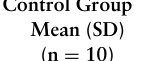
Strong support was found for Hypothesis 2. An Analysis of Variance (ANOVA) on post-workshop questionnaire data revealed that participants in the AI-augmented group perceived the process as significantly more time- efficient (p <.001) and better-structured (p <.001) than the traditional group. This enhanced efficiency also translated to significantly higher participant satisfaction with the quality of the strategic insights generated (p = .040).
Table 2: ANOVA results for perceived process efficiency and satisfaction.
Table available in the original PDF paper.
Questionnaire Item Control Group AI-Augmented
F(1, 30) p-Value
Equation reproduced from the original PDF.
1. The process was an efficient use of our time.
3.60 (0.97) 4.64 (0.58) 14.55 <.001
2. The process was well-structured and easy to follow.
3.80 (0.79) 4.27 (0.70) 4.58 .040
3. I am satisfied with the quality of the strategic insights generated.
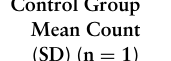
Hypothesis 3 was partially supported based on a content analysis of workshop artifacts. The AI-augmented groups generated, on average, a substantially greater number of unique external driving forces and final strategic options compared to the control group. This indicates that the AI successfully expanded the scope of both the initial inputs and actionable outputs of the strategic conversation. However, both conditions produced a similar number of core scenario narratives, a result likely constrained by the workshop’s 4-hour format.
Table 3: ANOVA results for quantity of unique strategic outputs.
Table available in the original PDF paper.
Output Category Control Group AI-Augmented
F(1, 1) p-Value
Equation reproduced from the original PDF.
7.00 (N/A) 12.50 (2.12) 9.78 .088
1. Unique External Driving Forces 14.00 (N/A) 25.50 (3.54) 16.53 .055 2. Number of Final Scenario Narratives 3.00 (N/A) 3.00 (0.00) 0.00 1.000 3. Unique Strategic Options / No-Regret Moves Moderated multiple regression was used to test the final hypotheses regarding the contingent effectiveness of the AI intervention. The results strongly supported Hypothesis 4, revealing a significant positive interaction between the AI intervention and organizational ambidexterity (p = .022). This confirms that the positive effect of the AI-augmented process on the quality of strategic decisions is significantly amplified in firms with a higher capacity for balancing both exploration and exploitation.
Conversely, Hypothesis 5 was not supported. While innovation capability was a significant predictor of decision quality on its own, its interaction with the AI intervention was not statistically significant (p = .178). This nuanced finding suggests that the AI’s process-oriented support aligns more directly with the process-management nature of ambidexterity than with the downstream execution activities often associated with innovation capability.
Leveraging Generative AI for Expanding Strategic Thinking 555
Table 4: Moderated multiple regression results for quality of strategic decisions.
Table available in the original PDF paper.
Model 1 Model 2 Predictor Variables B (SE) B (SE) (Constant) 3.85 (0.15)* 3.88 (0.16)*
Model Summary R2 .48 .41 Adjusted R2 .42 .35 F Statistic 6.89* 5.31 Note: B represents the unstandardized regression coefficient. SE is the Standard Error.
CONCLUSION
This study investigated how Generative AI can augment the strategic scenario planning process and influence managerial decision-making. Through a quasi-experimental, multiple case study comparing traditional and AI-augmented workshops, this final chapter summarizes the key findings, discusses their theoretical and practical implications, acknowledges limitations, and proposes avenues for future research.
The empirical results provide a nuanced understanding of Generative AI’s role in strategic foresight. The key findings are:
1. H1 (Supported): Scenario planning alters managerial decision-making styles. Consistent with prior research (Bodin, Chermack, & Coons, 2016), both workshop types prompted a shift towards intuitive and dependent styles. Critically, the AI-augmented process also preserved rational thinking, suggesting a more balanced cognitive outcome. 2. H2 (Supported): The AI-augmented process was perceived as significantly more time-efficient and well-structured, addressing a key inhibitor of traditional scenario planning (Meyerowitz, Lew, & Svensson, 2018). 3. H3 (Partially Supported): The AI intervention led to a broader range of initial inputs (driving forces) and final outputs (strategic options), expanding the boundaries of the strategic conversation, though it did not increase the number of final scenario narratives. 4. H4 (Supported): Organizational Ambidexterity was a significant positive moderator. The beneficial impact of the AI process on decision quality was stronger in firms with a higher capacity to balance exploration and exploitation, aligning with recent findings (Khaddam, 2024).
556 Wu
5. H5 (Not Supported): Innovation Capability, while a direct predictor of decision quality, did not significantly moderate the specific effect of the AI intervention.
THEORETICAL IMPLICATIONS AND CONTRIBUTION This study contributes to the literature at the intersection of strategic management, cognitive psychology, and information systems.
First, this research confirms and extends the cognitive theory of scenario planning. It validates the premise that scenario planning alters decision- making styles (Bodin, Chermack, & Coons, 2016) and extends it by showing that AI augmentation can create a more balanced cognitive outcome. This hybrid approach integrates the bias-reducing benefits of scenarios (Schoemaker, 1993) with the analytical rigor of Business Intelligence (Wieder & Ossimitz, 2015).
Second, this study provides empirical evidence for Generative AI as a solution to the documented inhibitors of traditional scenario planning. The literature identifies traditional methods as slow and resource-intensive (Meyerowitz et al., 2018; Phadnis, Caplice, & Sheffi, 2016). Our findings demonstrate that AI directly addresses these points by accelerating information synthesis and expanding ideation, making robust scenario analysis more accessible.
Third, the research offers a nuanced understanding of organizational capabilities as moderators. The divergent results for H4 (supported) and H5 (not supported) suggest that the nature of the technological intervention must be matched with the specific capability. The AI facilitator, as a process- oriented tool, aligns more directly with the process-oriented nature of ambidexterity (Khaddam, 2024), while the more downstream nature of innovation capability (Alawamleh et al., 2024) may have a less immediate interaction.
Finally, this study serves as a bridge between qualitative strategic foresight and quantitative business intelligence. It demonstrates how AI can be an integration layer, using the narrative techniques of scenario planning (Schoemaker, 1993) while embedding the analytical structure of BI systems (Vizgaityt˙e & Skyrius, 2012), productively coupling human-centric dialogue with computational analysis.
REFERENCES
Alawamleh, H., Sharari, F. E., Al Nawaiseh, K. and Shibly, M. (2024) ‘The impact of business intelligence on organizational performance: The moderating role of innovation capabilities in Jordanian banks’, Journal of System and Management Sciences, 14(12), pp. 199–214. Bodin, R., Chermack, T. J. and Coons, L. M. (2016) ‘The effects of scenario
planning on participant decision-making style: A quasi-experimental study of four companies’, Journal of Futures Studies, 20(4), pp. 21–40. Cordova-Pozo, K. and Rouwette, E. A. J. A. (2023) ‘Types of scenario planning and their effectiveness: a review of reviews’, Futures, 149, p. 103153.
Leveraging Generative AI for Expanding Strategic Thinking 557
Howard, A. and Choi, M. (2000) ‘How do you assess a manager’s decision-making abilities? The use of situational inventories’, International Journal of Selection and Assessment, 8(2), pp. 85–88. Kesti, M., Syväjärvi, A., Stenvall, J. and Rivera, M. (2011) ‘Human capital scenario
analysis as an organizational intelligence tool for performance management’, Problems and Perspectives in Management, 9(1), pp. 46–58. Khaddam, A. (2024) ‘Enhancing strategic decision-making: The role of business intelligence tools and organizational ambidexterity’, Problems and Perspectives in Management, 22(1), pp. 716–727. Lew, C., Meyerowitz, D. and Svensson, G. (2019) ‘Formal and informal scenario-
planning in strategic decision-making: An assessment of corporate reasoning’, Journal of Business & Industrial Marketing, 34(2), pp. 439–450. Malaska, P., Malmivirta, M., Meristö, T. and Hansén, S.-O. (1984) ‘Scenarios in Europe: Who uses them and why?’, Long Range Planning, 17(5), pp. 45–49. Meyerowitz, D., Lew, C. and Svensson, G. (2018) ‘Scenario-planning in strategic
decision-making: Requirements, benefits and inhibitors’, Foresight, 20(6), pp. 602–621. Phadnis, S., Caplice, C. and Sheffi, Y. (2016) ‘How scenario planning influences strategic decisions’, MIT Sloan Management Review, 57(4), pp. 24–27. Piirainen, K., Kortelainen, S., Elfvengren, K. and Tuominen, M. (2010) ‘A scenario
approach for assessing new business concepts’, Management Research Review, 33(6), pp. 635–655. Schoemaker, P. J. H. (1993) ‘Multiple scenario development: Its conceptual and behavioral foundation’, Strategic Management Journal, 14(3), pp. 193–213. Vizgaityt˙e, G. and Skyrius, R. (2012) ‘Business intelligence in the process of decision
making: changes and trends’, Ekonomika, 91(3), pp. 147-157. Wieder, B. and Ossimitz, M.-L. (2015) ‘The impact of business intelligence on the quality of decision making: A mediation model’, Procedia Computer Science, 64, pp. 1163–1171.
LISTED IN THE AHFE DIGITAL BOOKSTORE CATALOGUE
Explore the complete digital volume
Human Interaction and Emerging Technologies (IHIET 2025)
Read this individual research paper free through the original publisher, or explore the full digital proceedings book.
ISBN 978-1-964867-73-1
Explore this ISBN in the AHFE Bookstore ↗Listed in the July 2026 bookstore catalogue; search by ISBN to confirm current availability · Digital book purchase optional