Michael Oetken (2025). Embracing the Immersive Frontier: Exploring the Benefits, Challenges, and Potential of Virtual Reality Training for EPA Pollution Prevention in Manufacturing Facilities. In: Training, Education, and Learning Sciences. AHFE Open Access, vol. 193, pp. 115–122. https://doi.org/10.54941/ahfe1006652
Publisher statistics will load when you open Metrics.
AHFE OPEN ACCESS OPEN ACCESS CONFERENCE PROCEEDINGS PAPER
Embracing the Immersive Frontier: Exploring the Benefits, Challenges, and Potential of Virtual Reality Training for EPA Pollution Prevention in Manufacturing Facilities
Virtual reality (VR) technology has emerged as a promising platform for enhancing educational experiences through immersive, interactive simulations. This paper discusses the benefits, challenges, and learning advantages associated with designing and implementing a VR application and training simulation game focused on teaching users how to identify and solve pollution prevention issues—such as, air leaks, water leaks, chemical spills, and other sustainability concerns—within industrial manufacturing facilities. This project was funded by the 2024 United States EPA Pollution Prevention Grant Program: Environmental Justice in Communities. By simulating realistic industrial environments, VR allows learners to practice identifying and rectifying potential hazards without incurring the costs or risks associated with real-life training. One of the principal benefits of such a VR-based application is the ability to replicate diverse scenarios that may be difficult or expensive to create in physical training contexts. For example, learners can repeatedly practice detecting air leaks or responding to chemical spills in highly detailed, customizable simulations, thereby gaining confidence and proficiency in problem-solving strategies.By leveraging the power of gamification, the EPA pollution prevention video game captures the attention and interest of players, including those in environmental justice communities who have limited access to traditional educational resources. The interactive nature of the game allows players to actively participate in the learning process, making it more memorable and impactful. Using this technology, immersive activities are utilized at a low cost to communities and engage diverse populations of learners with unique training opportunities. Furthermore, the game-like structure of the application has shown to promote learner engagement and motivation. Gamification elements, such as scoring systems, interactive challenges, and immediate feedback, are found to enhance user interest and retention of learning materials. This dynamic, interactive approach has the potential to foster a more profound understanding of best practices in environmental management, eventually leading to safer, more efficient industrial operations. However, challenges remain in the development and implementation of these types of VR training applications. Upfront costs associated with hardware acquisition and software development, as well as the need for ongoing maintenance and updates, can be prohibitive for some organizations. Additionally, there is a learning curve for trainers, who must become proficient in VR technology to facilitate training sessions effectively. Although development costs and technical challenges may impede widespread adoption, the potential for enhanced learner engagement, improved knowledge retention, and robust data collection underscores the promise of VR as an innovative tool for environmental management training.The advantages provided by VR-based pollution prevention training and education are manifold. VR systems can collect detailed data on user performance, including response times, accuracy rates, and decision-making processes. This information offers valuable insights for researchers studying environmental management, learning science, and human-computer interaction. By analyzing user data, researchers can identify areas where learners commonly struggle, leading to more targeted and effective instructional strategies. Additionally, such insights can inform iterative improvements to VR scenarios, ensuring that the application remains current with evolving industry standards and regulations.
Over the last five years, virtual reality (VR) has increasingly been adopted by educators, scientists, and researchers as a tool for training and teaching learners who lack specific technical backgrounds. By immersing users in
virtual environments that replicate actual working conditions, VR has enabled more efficient, cost-effective, and safe training experiences (Radianti et al., 2020). In fields such as healthcare, engineering, and aviation, trainers can create realistic simulations of procedures, protocols, and machinery use without risking the physical safety of learners or exposing them to costly real-world mistakes. Consequently, VR-based training has become an essential complement to traditional educational methods, as it offers a level of immersion and interactivity that conventional classroom instruction or textbook-based learning cannot match (Checa & Bustillo, 2020).
One of the most significant benefits of VR for this kind of training is its adaptability to different learning styles. For example, kinesthetic learners can benefit from physically engaging with virtual objects to practice tasks, while visual learners can study the spatial relationships of equipment in a 3D space (Makransky & Petersen, 2021). These experiences not only facilitate knowledge transfer but also increase learners’ motivation by offering immediate feedback and performance metrics. This heightened engagement can translate into better retention of skills and information over time, making VR a valuable tool for ensuring that learners are well-prepared to handle real-world challenges.
Within this context, gamification elements and game-based learning have become powerful strategies to further enhance the efficacy of VR training (Checa & Bustillo, 2020). Gamification involves the integration of game-like features, such as points, badges, and leaderboards, into non-game contexts. When applied to VR training, these elements can motivate trainees to actively participate, set goals, and track their progress. Game-based learning takes this approach a step further by embedding educational content directly into game narratives or challenges. This method encourages learners to engage deeply with the subject matter, as they must apply their skills and knowledge to progress within the game world (Makransky & Petersen, 2021).
In application, scientists and researchers have leveraged VR technologies in a variety of settings, from laboratories that teach basic pipetting skills to large-scale simulations that replicate hazardous industrial environments. Such tailored solutions allow individuals with limited technical expertise to build confidence before operating real machinery (Radianti et al., 2020). By reducing the fear of making mistakes and establishing a safe, consequence- free environment, VR-based training fosters a readiness to learn that can be difficult to achieve in more traditional contexts. This is especially critical for complex or high-stakes operations, where experiential learning is essential but real-world mistakes would incur significant risk or cost.
Overall, the use of VR in the last five years to train non-technical individuals has advanced rapidly, driven by continuous innovations in immersive technology and pedagogical strategies. Moreover, VR provides researchers with rich data analytics, facilitating iterative improvements in training design. Through gamification and game-based learning, these virtual experiences not only enhance practical skill development but also elevate learners’ motivation and long-term retention (Checa & Bustillo, 2020).
POLLUTION PREVENTION EDUCATION AND TRAINING In the United States, the Environmental Protection Agency (EPA) actively promotes pollution prevention (P2) awareness and training programs to address environmental concerns. Through various initiatives, the EPA
Embracing the Immersive Frontier: Exploring the Benefits, Challenges, and Potential 117
encourages industries, communities, and government agencies to adopt sustainable practices, reduce waste, and minimize pollutants at the source (EPA, 2023). The agency collaborates with multiple stakeholders to provide educational resources, technical assistance, and funding opportunities that facilitate effective pollution prevention measures. One such initiative is the Pollution Prevention (P2) Grant Program, which awards grants to state, local, and tribal agencies, as well as non-profit organizations, to develop and implement P2 projects in diverse sectors. These projects often focus on reducing hazardous substances, conserving water, and improving energy efficiency, ultimately fostering environmental stewardship and economic growth (EPA, 2023).
A notable example of the EPA’s collaborative efforts is its longstanding partnership with Kansas State University (K-State). The University’s Pollution Prevention Institute has received federal grants from the agency to conduct specialized training workshops, develop educational materials, and offer on-site technical assistance to local businesses. The EPA’s Pollution Prevention Information Clearinghouse (PPIC) serves as a centralized hub for sharing best practices and updates on training efforts, ensuring accessibility to resources. By working hand in hand with the EPA, K-State enhances pollution prevention knowledge, fosters innovation, and drives community engagement in environmentally responsible practices (Kansas State University, 2023). These collaborations extend the reach of EPA- sponsored initiatives, ensuring that the principles of pollution prevention are effectively disseminated nationwide. Overall, the EPA’s commitment to federal grant programs and academic partnerships exemplifies a proactive approach to raising awareness and promoting sustainable solutions to pollution challenges.
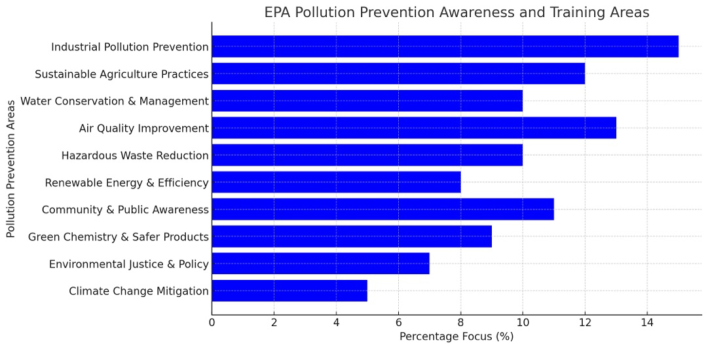
Figure 1: Focus areas of the U.S. Environmental Protection Agency’s pollution prevention awareness and training initiatives (U.S. Environmental Protection Agency, 2023).
118 Oetken
DEVELOPING A VIRTUAL REALITY EXPERIENCE FOR POLLUTION PREVENTION TRAINING AND AWARENESS In modern industrial settings, identifying pollution prevention and sustainability issues is vital for compliance with environmental regulations and resource optimization. A virtual reality (VR) application can serve as a powerful training tool, immersing users in a three-dimensional environment that replicates facility layouts and equipment (Checa & Bustillo, 2020). Kansas State University researchers and graduate students are currently designing, developing and testing a virtual reality video game that trains users about how to identify issues related to pollution prevention. This project was funded by the 2024 United States EPA Pollution Prevention Grant Program: Environmental Justice in Communities. By simulating realistic industrial environments, the VR game allows learners to practice identifying and rectifying potential hazards without incurring the costs or risks associated with real-life training.
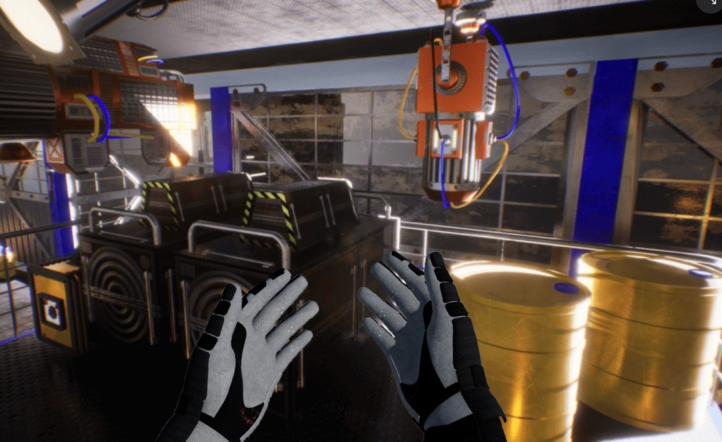
Figure 2: Screenshot of a student navigating the pollution prevention industrial facility learning environment in virtual reality (Kansas State University, 2024).
Through interactive simulations, trainees learn to detect risks such as air leaks, water leaks, chemical leaks, LED lighting concerns, and thermal leaks. For example, the VR environment features compressed air systems that emit hissing sounds, prompting users to locate and tag air leaks. Likewise, water piping systems show moisture or pooling to simulate leaks. Interactive cues, including color changes and controller vibrations, reinforce learning and facilitate leak identification. Additionally, the application highlights the contrast between traditional lighting and energy-efficient LED fixtures by displaying brightness differences and power consumption metrics. This approach underscores the importance of sustainable lighting and lowers
Embracing the Immersive Frontier: Exploring the Benefits, Challenges, and Potential 119
During VR training, users receive immediate feedback on their ability to recognize and address each issue. This feedback loop fosters a deeper appreciation of pollution prevention measures, enhancing operational efficiency and reducing environmental impact. VR-based training often integrates gamification elements—like points or badges—to motivate learners to identify problems accurately. Furthermore, data analytics derived from VR interactions can help trainers pinpoint common knowledge gaps, refining simulations for improved learner outcomes and sustainability awareness (Makransky & Petersen, 2021). This immersive experience equips industrial personnel to prioritize and address sustainability challenges in manufacturing facilities.
THE POWER OF GAMIFICATION AND GAME-THEORY LEARNING Gamification and game-theory learning have emerged as powerful strategies for enhancing education, particularly in teaching complex and vital tasks across diverse environments. These approaches leverage key principles of motivation, engagement, and cognitive learning to create immersive experiences that improve knowledge retention and skill acquisition (Hamari et al., 2016). When integrated with virtual reality (VR) technology, gamification further amplifies learning effectiveness by simulating real- world conditions, allowing learners to practice critical tasks in a risk-free environment (Wang et al., 2018).
Gamification involves incorporating game-like elements, such as points, rewards, leaderboards, and challenges, into non-game contexts to enhance motivation and engagement (Deterding et al., 2011). Game-theory learning, on the other hand, applies decision-making models and strategic interactions from game theory to encourage problem-solving and adaptive thinking (Shoham & Leyton-Brown, 2009). When applied to learning simulations like the pollution prevention VR application, these gamification approaches to education create dynamic, interactive experiences that encourage students to actively engage with learning material rather than passively consume information.
Research has demonstrated that gamified learning improves student motivation and knowledge retention (Sailer et al., 2017). By introducing competitive and cooperative elements, gamification taps into intrinsic motivation, leading to higher engagement levels and deeper understanding. The pollution prevention VR training application uses achievement badges to provide extrinsic motivation, while narratives and role-playing elements create an immersive educational experience that encourages curiosity and sustained interest. Game-theory learning complements gamification by encouraging learners to think strategically and make data-driven decisions.
120 Oetken
By simulating competitive and cooperative scenarios, game-theory learning teaches individuals how to assess risks, optimize resources, and anticipate the actions of others (Shoham & Leyton-Brown, 2009).
When gamification is combined with VR technology, the impact on learning is significantly enhanced. VR provides an immersive and interactive environment where learners can practice real-world scenarios in a controlled setting (Makransky & Petersen, 2021). This is particularly valuable in fields that require hands-on experience, such as medical training, industrial safety, military operations, and technical skill development. One of the most successful examples of VR-based gamification is its use in medical education. Studies have shown that VR-based simulations that incorporate gamified elements—such as real-time feedback, progression tracking, and scenario- based challenges—improve surgical precision and decision-making (Liu et al., 2018). Similarly, in aviation training, pilots undergo VR-based simulations where they must respond to emergency situations in real time, reinforcing their ability to think critically under pressure.
Additionally, VR accommodates different learning styles. Kinesthetic learners benefit from physically interacting with digital objects, while visual learners assimilate information through realistic graphics. Auditory learners rely on narrated guidance or ambient sounds reflecting real-world cues. This multisensory setting supports deeper cognitive processing, making complex tasks more manageable (Checa & Bustillo, 2020). Through realistic repetition, learners develop confidence. In a gamified VR scenario, individuals must assess risks, allocate resources, and cooperate with virtual teammates to achieve objectives. Such iterative, strategic engagements deepen understanding by encouraging experimentation, outcome analysis, and behavioral adjustments. Over time, these processes foster adaptability, resilience, and creative problem-solving—attributes increasingly in demand across professional domains.
One of the primary goals of this EPA grant project is to demonstrate that gamification within VR is effective in teaching high-stakes industrial tasks found in pollution prevention training programs. In the future, VR-based gamification can be used to train workers in more hazardous environments, such as oil refineries or nuclear power plants. By using a virtual setting, employees can practice complex procedures without the risk of real-world consequences, leading to increased safety and competency (Wang et al., 2018). Overall, gamification and game-theory learning—especially when integrated with VR—offer an innovative and effective way to teach complex and vital tasks. By fostering engagement, improving retention, and providing real-world practice in a virtual setting, these strategies ensure that learners develop the skills necessary for success in diverse environments.
CONCLUSION
The integration of virtual reality (VR) in training and education has demonstrated significant advancements in preparing learners to handle complex, real-world tasks efficiently and safely. As explored throughout
Embracing the Immersive Frontier: Exploring the Benefits, Challenges, and Potential 121
this document, VR-based training—particularly when combined with gamification and game-theory learning—has proven to be a powerful strategy for enhancing knowledge retention, skill acquisition, and learner engagement (Makransky & Petersen, 2021). This is particularly relevant in pollution prevention training, where immersive simulations provide hands-on learning experiences without the risks or costs associated with real-world mistakes (Checa & Bustillo, 2020). By leveraging interactive and gamified elements, VR not only increases the effectiveness of training but also fosters a culture of proactive environmental stewardship.
The application of VR in pollution prevention awareness and training is particularly significant in industrial settings, where compliance with environmental regulations and sustainability practices is crucial (EPA, 2023). Traditional training methods often rely on lectures, printed manuals, and on- the-job shadowing, which may not adequately prepare learners to recognize and mitigate pollution risks in dynamic work environments. By contrast, VR offers a highly interactive and experiential learning approach that allows trainees to practice pollution prevention techniques, such as identifying air leaks, chemical spills, and energy inefficiencies, in a safe yet realistic setting (Makransky & Petersen, 2021). The immediate feedback provided within VR simulations enhances comprehension and ensures that trainees can refine their problem-solving skills in real time.
Gamification further strengthens the impact of VR training by incorporating elements such as points, badges, leaderboards, and scenario- based challenges to enhance motivation and engagement (Sailer et al., 2017). The application of game-theory learning in VR training ensures that learners develop strategic decision-making skills by analyzing risks, allocating resources efficiently, and collaborating in simulated problem-solving exercises (Shoham & Leyton-Brown, 2009). The inclusion of competitive and cooperative elements fosters an environment where participants remain motivated to improve their performance, reinforcing both individual and team-based learning. This approach is particularly useful for industries requiring high levels of precision and safety, such as environmental health, manufacturing, and energy management (Wang et al., 2018).
Moreover, VR training provides measurable benefits through the collection and analysis of user interaction data. This data can inform instructors about common challenges faced by learners, allowing for iterative improvements to training modules (Checa & Bustillo, 2020). Additionally, the flexibility of VR technology enables training programs to be tailored to various learning styles, making it an inclusive tool for individuals with different educational backgrounds and expertise levels (Makransky & Petersen, 2021).
Looking forward, the continued adoption of VR-based gamification in pollution prevention training has the potential to revolutionize environmental education and workforce development. The ongoing partnership between the Environmental Protection Agency (EPA) and Kansas State University exemplifies the commitment to leveraging immersive technologies to drive sustainability awareness and industrial best practices. As VR technology continues to evolve, future enhancements—such as artificial intelligence-driven adaptive learning, haptic feedback integration,
122 Oetken
and multisensory simulations—will further improve training efficacy and ensure that learners are better equipped to address environmental challenges.
The combination of VR, gamification, and game-theory learning offers a transformative approach to pollution prevention training, empowering individuals to develop critical skills in environmental sustainability, risk assessment, and industrial safety. As industries strive for greater environmental responsibility, VR-based education will play an essential role in shaping the next generation of professionals committed to reducing pollution and promoting sustainable practices.
ACKNOWLEDGMENT
The author would like to acknowledge Cris Kauer Brazil and Bryce Griffin.
REFERENCES
Checa, D., & Bustillo, A. (2020). Advantages and limits of virtual reality in learning processes: Briviesca in the fifteenth century. Virtual Reality, 24(1), 151–161. Deterding, S., Dixon, D., Khaled, R., & Nacke, L. (2011). From game design elements
to gamefulness: Defining “gamification.” Proceedings of the 15th International Academic MindTrek Conference: Envisioning Future Media Environments, 9–15. Environmental Protection Agency (EPA). (2023). Pollution prevention (P2). https:// www.epa.gov/p2 Hamari, J., Koivisto, J., & Sarsa, H. (2016). Does gamification work?—A literature
review of empirical studies on gamification. Proceedings of the 47th Hawaii International Conference on System Sciences, 3025–3034. Kansas State University. (2023). Pollution prevention institute. https://www.kstate.edu/engineering/enggext/ppi Liu, R., Patel, V., & Hager, G. (2018). The role of simulation and gamification in
surgical training: A review. International Journal of Surgery, 54, 97–105. Makransky, G., & Petersen, G. B. (2021). Investigating the process of learning with virtual reality: A structural equation modeling approach. Computers & Education, 166, 104154. Radianti, J., Majchrzak, T. A., Fromm, J., & Wohlgenannt, I. (2020). A systematic
review of immersive virtual reality applications for higher education: Design elements, lessons learned, and research agenda. Computers & Education, 147, 103778. Sailer, M., Hense, J. U., Mayr, S. K., & Mandl, H. (2017). How gamification motivates: An experimental study of the effects of specific game design elements on psychological need satisfaction. Computers in Human Behavior, 69, 371–380. Shoham, Y., & Leyton-Brown, K. (2009). Multiagent systems: Algorithmic, game-
theoretic, and logical foundations. Cambridge University Press. Wang, F., Petrina, S., & Feng, F. (2018). Virtual reality for learning: A meta-analysis of student cognitive and affective outcomes. Computers & Education, 127, 252–265.
LISTED IN THE AHFE DIGITAL BOOKSTORE CATALOGUE
Explore the complete digital volume
Training, Education, and Learning Sciences
Read this individual research paper free through the original publisher, or explore the full digital proceedings book.
ISBN 978-1-964867-69-4
Explore this ISBN in the AHFE Bookstore ↗Listed in the July 2026 bookstore catalogue; search by ISBN to confirm current availability · Digital book purchase optional