Huajie Wang, Zhang Jin, Xingen Yao, Rong Chen, Xikai Tan (2025). Design method for the integration of Chinese and French culture: The Case of product packaging design. In: Design for Inclusion. AHFE Open Access, vol. 169, pp. 111–119. https://doi.org/10.54941/ahfe1006160
With the rapid development of economic globalization, the exchange and integration of international culture has become an important factor to promote the development of design industry. This paper takes the packaging design work camp project cooperated by Shanghai Vocational College of Arts and Crafts and the French Designers Union as an example, and uses the analytic hierarchy process (AHP) to analyze the differences and commonalities of Chinese and French packaging design in cultural background, aesthetics, functionality, environmental protection, market demand and teaching application. It reveals the unique style and development direction of China and France in the field of packaging design, and provides a new perspective and enlightenment for cross-cultural design exchange.
Packaging design plays a vital role in modern commerce. It is the external performance of products, taking into account the embodiment of brand image and consumer experience. A good packaging design shows the brand image through color, pattern, font and overall design style, conveys the core values and concepts of the product, and enhances the brand recognition. Packaging design is also through the combination of design elements to convey commercial value. In the global development of the market environment, packaging design needs to consider the different cultural backgrounds and usage preferences of target consumers. On the basis of respecting and understanding these cultural similarities and differences, packaging design needs to find a design language that can be widely accepted and understood. The development of China’s packaging design needs to inherit and protect the traditional culture, and actively introduce innovative design concepts and new technologies. The cultivation of design talents needs to pay attention to the adaptability of the market under different cultures. In view of the different characteristics of China and France in art and culture, this study is based on the exploration of packaging design of cultural exchange between the two countries.
With the increasing demand of domestic consumers for the quality of commodity packaging design, the integration of traditional cultural elements in the field of packaging design has gradually become a research hot point. Many scholars have explored how to integrate traditional Chinese cultural elements into modern packaging design from multiple dimensions, aiming to enhance the cultural depth and aesthetic characteristics of products. For example, this paper discusses the way to integrate narrative thinking into the packaging design of traditional Chinese festival food, and specifically puts forward three innovative design methods: visual narrative, cultural narrative and functional narrative, which introduces new vitality (Kang, 2024) to the packaging design of traditional festival food. The innovative application of traditional cultural elements in paper packaging design not only inherits and develops traditional culture, but also injects new impetus (Zheng, 2024) into the development of packaging design field. The research not only stays at the theoretical level, but also includes the specific case analysis of the application of traditional culture in the packaging design of specific products, such as the research on the historical evolution of tea packaging form in ancient China, which provides practical guidance and inspiration (Wu, 2023) for modern tea packaging design. Through the analysis of the packaging case of Wuliangye culture wine, the novel application strategy (Lu, 2023) of Chinese traditional color in liquor packaging design is revealed. Taking the national style milk tea brand as a sample, the effective application method (Zhu, 2023) of traditional cultural elements in the packaging design of new tea drinks is deeply discussed.
In addition to products originating from China, some scholars have also expanded their research horizons to the presentation of traditional culture in the localization process of global enterprise product packaging, and discussed such phenomena in foreign commodity packaging design. Taking L ‘Oreal’s limited edition Hennessy packaging as an example, the study deeply analyzes how internationally renowned brands work hand in hand with artists to skillfully integrate local cultural characteristics into high-end product packaging design strategies. Through a detailed analysis of L ‘Oreal’s localization marketing program for the Chinese market, the study points out that its packaging design concept not only draws on the deep cultural heritage of France, but also closely fits the aesthetic tendency and cultural expectation (Wang, 2017) of Chinese consumers.Cross-cultural communication and integration add diversity to the design material library, enhance the cultural heritage of the product, and help the product achieve commercial success. The case study of cultural and creative product design under the intersection of Chinese and French culture confirms the role (Wang, 2020) of cross-cultural collaboration in improving the cultural connotation and market competitiveness of cultural and creative products.
The importance of combining traditional cultural elements with modern packaging design practices is widely recognized in academia and industry. By inheriting and developing traditional culture in innovative ways, packaging
Design Method for the Integration of Chinese and French Culture 113
design can more effectively highlight the cultural connotation of products, enhance their aesthetic value, and attract the market.
THEORY AND RESEARCH METHODS Basic Theories and Principles of Packaging Design
As a comprehensive subject integrating art and science, packaging design spans many fields of knowledge such as aesthetics, marketing, material science and user experience. Its core function is to provide effective protection for products and ensure that they are not damaged during logistics, storage and retail. Packaging materials need to have sufficient strength and durability characteristics. The packaging material needs to be easy to open, close and use, easy to carry and store, and comprehensively consider to improve the convenient experience of users. The packaging should also clearly convey the basic information of the product, including the brand logo, commodity name, ingredient composition, use guide, production date and expiration date, etc., to ensure that all information is clearly identifiable.
The packaging design should consider the cultural nature. It is necessary to explore the local cultural context and aesthetic trend in the target market. Under different cultural backgrounds, the meanings and acceptance degrees of colors, graphics and symbols are different. Cultural misunderstandings and inappropriateness should be avoided in the design process. It is necessary to be cautious and respect regional traditional customs to ensure that the packaging design can resonate with consumers at the cultural level, so as to enhance brand acceptance and recognition.
Packaging design should show aesthetics, such as color, pattern, font and image and other visual elements. These elements should be in harmony with the brand’s identity image and market positioning, and effectively convey the brand value and unique personality. The consistency of the brand identity, the exclusive color and the overall style builds the brand identity system to achieve the desired aesthetic value at the visual level.
The packaging design should meet the practical function, follow the principle of ergonomics, and take into account the consumer’s operation habits and use experience. The packaging should be easy to open and close, eliminate sharp edges and complex sealing structures, and ensure safety in use. The packaging material and structure should ensure that the product is free from damage and pollution, and effectively extend the life of the product. Innovative packaging patterns and structures, such as smart packaging and interactive packaging, not only enhance the user experience, but also add additional value to the product.
Packaging design should incorporate environmental features and focus on recyclable, naturally degradable or easily reusable materials to reduce the burden on the ecological environment. Reduce the amount of packaging materials, prevent excessive packaging, and ensure that the packaging is both practical and beautiful. The environmentally friendly packaging scheme is the practice of the concept of sustainable development, but also can enhance the corporate social responsibility image.
Packaging design should be market-oriented, and it is necessary to study the needs, preferences and purchasing behaviors of target consumer groups. Different market segments correspond to different packaging strategies, so it is necessary to conduct target market research and analysis to find out the design scheme that can best touch the aesthetic and needs of target customer groups. In-depth analysis of competitors’ packaging strategies can help to build differentiated innovative designs and help products stand out.
Analytic Hierarchy Process (AHP) In the 1970s, American operations research expert Thomas L. Saaty proposed the Analytic Hierarchy Process (AHP) as a systematic means of strategy evaluation. This method decomposes complex decision-making issues into a number of orderly levels of sub-issues, and then simplifies and optimizes the decision-making process. In the implementation, the first step is to construct a hierarchical framework, which clearly distinguishes the decision- making objectives, evaluation criteria and candidate alternatives according to the hierarchy. In the second step, with the help of the construction of the paired comparison matrix, the decision maker performs a two-way comparison for the components in each level to define their importance compared with the elements in the previous level. Through the operation mechanism of the feature vector, the weight value of each element is calculated, and then the comprehensive priority sequence of the candidate schemes is derived. According to this series of priority indicators, decision makers can systematically rank the candidate alternatives and make the final decision. The advantage of the hierarchical analysis process is that it includes qualitative and quantitative evaluation dimensions, and the consistency check mechanism can be used to verify the rationality and robustness of the comparative judgment, which shows a wide range of application value in the field of multi-criteria decision analysis.
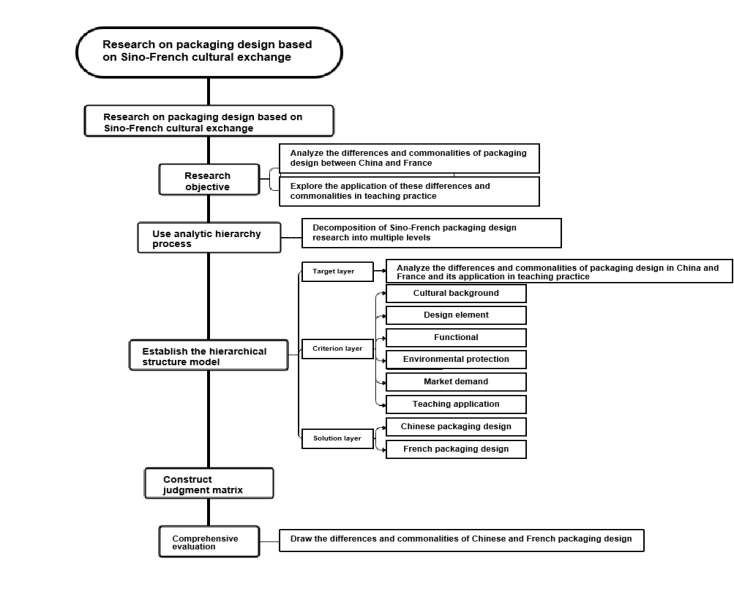
RESEARCH FRAMEWORK The purpose of this study is to explore the similarities and differences between packaging design in China and France and their application in the field of educational practice. By using the analytic hierarchy process, this study subdivided the comparative elements of packaging design between China and France into multiple levels. The hierarchical structure model consists of three core levels: the top level focuses on the identification of similarities and differences between Chinese and French packaging design and the integration of educational practice; In the middle layer, the dimensions of investigation were listed in detail, including culture, design elements, functionality, environmental protection, marketability, and the breadth of educational application. The base layer is specifically divided into two analysis units: the case of Chinese packaging design and the case of French packaging design. On this basis, a judgment matrix is established and a comprehensive evaluation is performed to accurately extract the commonalities and differences of Chinese and French packaging design.
Design Method for the Integration of Chinese and French Culture 115
In the implementation level of educational practice, the research results will be concretely displayed in the form of diversified teaching strategies. Through the example teaching method, students learn the differences of design concepts in cross-cultural environment with the help of real cases of packaging design between China and France. The in-depth analysis of design elements can promote students to analyze the specific elements of Chinese and French packaging design in detail, aiming to improve their design perception. By comparing and analyzing the similarities and differences in environmental protection between Chinese and French packaging design, students’ environmental awareness can be enhanced. Market-oriented teaching links enable students to grasp the analysis of market demand and further clarify the practical orientation of design (see Figure 1).
Figure 1: Research framework diagram.
The application of analytic hierarchy process skills, systematically explore the similarities and differences between Chinese and French packaging design, and effectively transform such research results into part of teaching activities, aiming to comprehensively improve students ‘professional design level and comprehensive quality.
RESEARCH PROCESS French Packaging Design
From the Middle Ages to the Renaissance, the needs of the French aristocracy and religious institutions promoted the prosperity of high-end packaging
art. As an important city of European art, France is deeply influenced by Baroque, Rococo and neoclassical art schools, which has influenced the concept of packaging design, from the basic function of object protection to artistic creation. Many French luxury brands with a long history (such as Chanel, Dior, Louis Vuitton) show the control of details and quality in packaging design. The contemporary French packaging design industry emphasizes innovation and tradition, designers integrate classical aesthetics into modern materials and technology, and create modern aesthetic and retro culture of product packaging. French society attaches great importance to environmental protection and sustainable development, leading many brands to adopt recyclable materials and environmentally friendly production processes in packaging design, and strive to reduce the environmental burden.
Packaging Design in China Chinese packaging design field is rooted in far-reaching history and traditional culture. In the Shang and Zhou dynasties, there were complex patterns on bronze wares and pottery, which were decorative. Natural materials, such as silk, bamboo and paper, were used in the packaging of goods. Traditional arts (including calligraphy, painting, paper-cutting and embroidery) appear in packaging design. Since the reform and opening up, with the vigorous rise of market economy, packaging design has experienced a transformation from manual art to industrial scale production, and has entered the process of modernization. The wave of globalization has not only introduced the integration of western design concepts, but also inspired the use of modern design concepts and traditional cultural elements in packaging design. Technological innovation, the application of augmented reality (AR and other technologies, so that the packaging design has a new display carrier, taking into account the intuitive display of product information and the interactive experience with consumers, improve the practical function and additional value of packaging, and expand the innovation of products.
Design Practice—Packaging Design Based on Traditional Chinese Culture In a two-week Sino-French packaging design exchange project held by Shanghai Vocational College of Arts and Crafts, teachers and students from both countries joined hands to dig deeply into the cultural heritage of China and France, find the point of resonance between Chinese and French culture, and stimulate students’ innovative thinking. The project aims to cultivate future designers with cross-border cultural design concept and global vision, to help them in the promotion of creativity, sustainable design concept, design expression, in the full range of creative, brand strategic leadership. The first phase focuses on the exploration of culture and design aesthetics. Through the opening event and special lectures, the two sides promote the cognitive exchange of cultural roots and design traditions of each other. The second stage was an inspiration gathering and concept incubation period, in which teachers and students collected inspiration materials and condensed design issues in team discussions. The third stage was design practice and
Design Method for the Integration of Chinese and French Culture 117
creation, where teachers and students integrated modern design concepts and visual identity, cleverly embedded Chinese and French cultural elements, and materialized creative ideas. The fourth stage was the demonstration and evaluation stage, in which each team publicly displayed its design products and received the review and constructive feedback from the Chinese and French tutors, so as to achieve the exchange of knowledge and creativity between Chinese and French teachers and students.
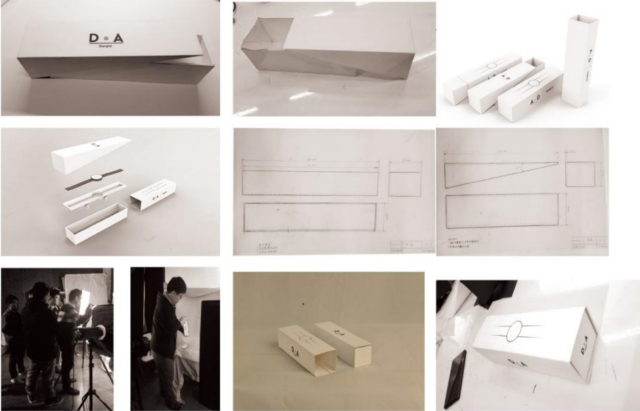
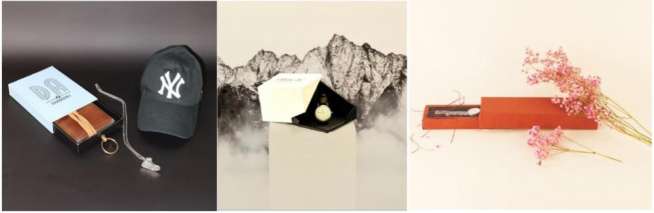
Starting from practical projects, the workshop taught the idea of transnational culture and cross-border design. The technical level promoted the exchange and mutual learning between China and France, and the cultural concept level catalyzed the resonance between the two sides. Based on the traditional theme and modern packaging needs, designers integrate Chinese traditional culture and French manual art, so that the design of product packaging as a medium of cultural transmission, not only show creative thinking, but also the depth of culture and the philosophy of harmonious coexistence between man and nature (see Figures 2 and 3).
Figure 2: The design process of Sino-French packaging design camp.Figure 3: Works of the Sino-French packaging design work camp.
Analysis of Chinese and French Packaging Design Practice Through the practice of this Chinese-French packaging design workshop, it is found that there are similarities and differences between Chinese and French packaging design in terms of cultural background, design elements, functionality, environmental protection, market demand and teaching application. Students of both countries convey their own culture through packaging design. The packaging design of Chinese students shows the concreteness and national characteristics of cultural elements. The design of French students is deeply influenced by the spirit of the Enlightenment era and modern and contemporary art, focusing more on artistic expression and trend sense. In the application of design elements, students from both countries attach importance to aesthetics and visual effects. Chinese students’ works have bright colors and vivid patterns. French students’ packaging design is elegant in color, simple in pattern, and pays attention to the use of artistic sense and modern design elements. At the functional level, Chinese and French students both attached importance to the protective characteristics and operation convenience of commodity packaging, but there were slight differences: Chinese students tended to emphasize the practical utility of packaging; While French students attached more importance to consumer experience and ease of use, which was reflected in the attention to the ease of use of cosmetic packaging. Regarding environmental performance, both sides recognized the importance of using environmentally friendly materials and implementing sustainable design concepts, and French students followed strict environmental norms and standards in this field. In contrast, Chinese students were in the process of increasing environmental awareness. In terms of market demand orientation, the packaging design strategies of the two countries are flexibly adjusted according to market demand. The design of Chinese students focuses more on meeting the needs of the mass market and practical functions, while the French design tends to build brand identity, focus on the high-end market, and pursue the integration of personalization and high quality. In terms of educational practice, the design education systems of both countries are committed to the cultivation of comprehensive design skills and practical experience, while Chinese education attaches more importance to the inheritance and application of traditional culture and encourages the integration of the essence of traditional culture into modern design concepts. French education focuses on the artistry of design products, stimulates the creative thinking of designers and promotes innovative design methods.
CONCLUSION
Based on the above research, it can be seen that there are similarities and differences in the field of packaging design between China and France in terms of cultural background, aesthetics, functionality, environmental protection, market demand and teaching application. Designers in both countries pay attention to the transmission of their own cultural values through packaging design, pay attention to the visual effect and aesthetic value of packaging, and give priority to environmentally friendly materials
Design Method for the Integration of Chinese and French Culture 119
and sustainable product packaging. Chinese designers pay attention to the cultural characteristics of packaging design, pay attention to the mass market and the preferences and habits of most people; While French designers pay attention to the artistry and fashion sense of packaging design, pay more attention to the high-end market, and show the brand image. Both countries pay attention to the cultivation of students’ comprehensive design ability and practical experience in design education, but the emphasis is different: China pays attention to the combination of traditional culture, crafts and modern design, France pays attention to emphasize the artistry and beauty of products, design theory and method in each step of the design process. These commonalities and differences reflect the unique styles and development directions of the two countries in the field of packaging design.
ACKNOWLEDGMENT
This paper is supported by Shanghai Project of “Artificial Intelligence Promotes the Reform of Scientific Research Paradigms and Empowers the Leap in Disciplines Plan” (No. B3-25-0101-002).
About the authors: Wang Huajie, male, doctor, associate professor, research direction: user visual perception, vehicle design and engineering realization; Tan XIkai (corresponding author), male, master, research direction: Integrated product design.
REFERENCES
Kang Tong, Pei Jiong. (2024). Research on visual design of Chinese Traditional festival food packaging from the perspective of narrative. China Packaging, Volume 44, No. 03, pp. 41–44. Liu Shuo. (2014). China Marketing and cross-cultural Analysis of L ‘Oreal in France.
Central China Normal University, Changsha. Lu Yiting, Luo Huailin, He Ting, et al. (2023). Application of Chinese traditional color in liquor packaging design. China Packaging, Volume 43, No. 12, pp. 43–47. Wang Hua-jie, Cang Ping, WANG Bin-Bei. (2020). Research on the design of cultural
and creative products based on the integration of Chinese and French culture. Packaging Engineering, Volume 41, No. 20, pp. 240–245. Wang Huajie, Cheng Jianxin. (2017). Teaching Exploration of Industrial Design Skills Course Based on Flipped Classroom. Design, Volume 36, No. 17, pp. 32–34. Wu Y Q, Chen P Y. (2023). The evolution of tea packaging form and packaging
design in ancient China. Art and Design, Volume 1, No. 11, pp. 24–29. Zheng N. (2024). Research on the application of Chinese Traditional Cultural Elements in Paper packaging design. China Packaging, Volume 44, No. 03. pp. 43–44. Zhu Siyu, Chen Qian. (2023). On the application of Chinese style in modern milk
tea packaging design. China Packaging, Volume 43, No. 08, pp. 47–49.
LISTED IN THE AHFE DIGITAL BOOKSTORE CATALOGUE
Explore the complete digital volume
Design for Inclusion
Read this individual research paper free through the original publisher, or explore the full digital proceedings book.
ISBN 978-1-964867-45-8
Explore this ISBN in the AHFE Bookstore ↗Listed in the July 2026 bookstore catalogue; search by ISBN to confirm current availability · Digital book purchase optional