Xiyuan Zhang, Jinyu Gu, Hongliang Chen, Shiying Ding, Chunlei Chai, Hao Fan (2025). Leveraging LLMs to emulate the design processes of different cognitive styles. In: Artificial Intelligence and Social Computing. AHFE Open Access, vol. 163, pp. 111–122. https://doi.org/10.54941/ahfe1006042
Cognitive styles, which shape designers’ thinking, problem-solving, and decision-making, influence strategies and preferences in design tasks. In team collaboration, diversity cognitive styles enhance problem-solving efficiency, foster creativity, and improve team performance.The ‘Co-evolution of problem–solution’ model serves as a key theoretical framework for understanding differences in designers’ cognitive styles. Based on this model, designers can be categorized into two cognitive styles: problem-driven and solution-driven. Problem-driven designers prioritize structuring the problem before developing solutions, while solution-driven designers generate solutions when design problems still ill-defined, and then work backward to define the problem. Designers with different expertise and disciplinary backgrounds exhibit distinct cognitive style tendencies. Different cognitive styles also adapt differently to design tasks, excelling in some more than others.As a rapidly advancing technology, large language models (LLMs) have shown considerable potential in the field of design. Their powerful generative capabilities position them as potential collaborators in design teams, emulating different cognitive styles. These emulations aim to bridge cognitive differences among team members, enable designers to leverage their individual strengths, and ultimately produce more feasible and high-quality design solutions.However, previous studies have been limited in leveraging LLMs to directly generate design outcomes based on different cognitive styles, neglecting the emulation of the design process itself. In fact, the evolutionary development between problem and solution spaces better reflects the core differences in cognitive styles. Moreover, communication and collaboration within design teams extend beyond simply exchanging solutions, but span multiple stages of the design process—from problem analysis, idea generation, to evaluation. To better integrate LLMs into design teams, it is necessary to consider the emulation of the design cognition process.To this end, our study, based on the cognitive style taxonomy proposed by Dorst and Cross (2001), explores how LLMs can be used to emulate the design processes of problem-driven and solution-driven designers. We develop a zero-shot chain-of-thought (CoT)-based prompting strategy that enables LLMs to emulate the step-by-step cognitive flow of both design styles. The prompt design is inspired by Jiang et al. (2014) and Chen et al. (2023), who analyzed cognitive differences in conceptual design process using the FBS ontology model. Furthermore, to evaluate the effectiveness of LLMs in emulating cognitive styles, this study establishes a three-dimentional evaluation metrics: static distribution (the proportion and preference of cognitive issues), dynamic transformation (behavioral transition patterns), and the creativity of the design outcomes. Using previous studies identified human design behaviours as a benchmark, we compare the cognitive styles emulated by LLMs under different design constraints against human performance to assess their alignment and differences.The results show that LLM-generated design processes align well with human cognitive styles, effectively emulate static cognitive characteristics. Moreover, enhancing novelty and integrity in solutions and demonstrating superior creativity compared to baseline methods. However, LLMs lack the fully complex nonlinear transitions between problem and solution spaces observed in human designers.This process-based emulation has the potential to enhance the application of LLMs in design teams, enabling them to not only serve as tools for generating solutions but also provide support for collaboration during key stages of the design process. Future research should enhance LLMs' reasoning flexibility through fine-tuning or the GoT approach and explore their impact on human-AI collaboration across diverse design tasks to refine their role in design teams.
Cognitive styles, designers’ thinking methods and behavioral patterns to process information, solve problems, and make decisions, reflect their strategies and preferences in design tasks (Christiaans and Dorst, 1992). In team collaboration, the diversity of cognitive styles among designers can enhance problem-solving efficiency, foster creativity, and improve overall team performance.
The ‘Co-evolution of problem–solution’ model (Dorst and Cross, 2001) serves as a key theoretical framework for understanding differences in designers’ cognitive styles. The design process is an iterative cycle of analysis,
synthesis, and evaluation, involving continuous interactions between the problem space and the solution space. Based on this model, designers can be categorized into two cognitive styles: problem-driven and solution- driven. Problem-driven designers prioritize structuring the problem before developing solutions, while solution-driven designers generate solutions when design problems still ill-defined, and then work backward to define the problem. Designers with different expertise and disciplinary backgrounds exhibit distinct cognitive style tendencies (Jiang, Gero and Yen, 2014). Different cognitive styles also adapt differently to design tasks, excelling in some more than others.
As a rapidly advancing technology, large language models (LLMs) have shown considerable potential in the field of design. Their powerful generative capabilities position them as potential collaborators in design teams, emulating different cognitive styles (Lapp, Jablokow and McComb, 2019; Agarwal, Jablokow and McComb, 2025). These emulations aim to bridge cognitive differences among team members, enable designers to leverage their individual strengths, and ultimately produce more feasible and high-quality design solutions.
However, previous studies have been limited in leveraging LLMs to directly generate design outcomes based on different cognitive styles, neglecting the emulation of the design process itself. In fact, the evolutionary development between problem and solution spaces better reflects the core differences in cognitive styles (Chen et al., 2023). Moreover, communication and collaboration within design teams extend beyond simply exchanging solutions, but span multiple stages of the design process—from problem analysis, idea generation, to evaluation. To better integrate LLMs into design teams, it is necessary to consider the emulation of the design cognition process.
To this end, our study, based on the cognitive style taxonomy proposed by Dorst and Cross (2001), explores how LLMs can be used to emulate the design processes of problem-driven and solution-driven designers. We develop a zero-shot chain-of-thought (CoT)-based prompting strategy that enables LLMs to emulate the step-by-step cognitive flow of both design styles. The prompt design is inspired by Jiang et al. (2014) and Chen et al. (2023), who analyzed cognitive differences in conceptual design process using the Function-Behavior-Structure (FBS) ontology model. Furthermore, we evaluate LLMs’ performance to emulate cognitive styles under different design constraints by measuring their alignment with established patterns of human designers, which could provide a solid foundation for improving the generalizability, reliability, and interpretability of our research findings.
DESIGN COGNTIVE PROCESS BASED ON FBS ONTOLOGY MODEL Design process is the co-evolution process between problem space and solution space. During this process, some designers focus more on analysing problem, while others pay more attention to generate solutions. This difference is reflected in two fundamental cognitive styles: problem-driven and solution-driven (Dorst and Cross, 2001).
Leveraging LLMs to Emulate the Design Processes of Different Cognitive Styles 113
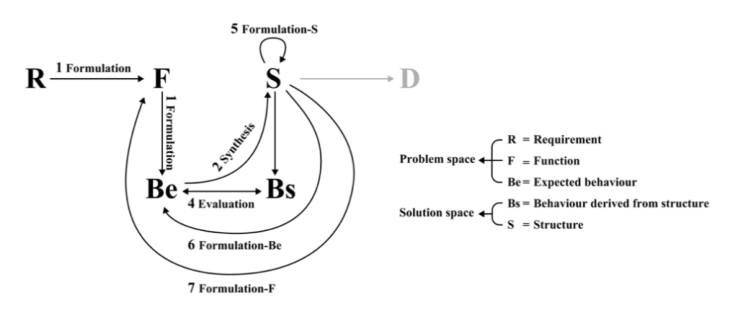
Figure 1: The FBS ontology model (adapted from Gero and Kannengiesser, 2004).
Protocol analysis of design sessions serves as the empirical basis for assessing problem- and solution-driven cognitive styles, with design issues classified according to the FBS ontology model (Gero and Kannengiesser, 2004). The FBS model (as shown in Figure 1) provides a general framework for analyzing the design cognitive process. Within this model, the problem space consists of specific design issues, including Requirement (R), Function (F), and Expected Behaviour (Be), while the solution space is composed of the remaining design issues, namely Structure (S) and Structural Behaviour (Bs). The transformation between these design issues defines the syntactic design process, further illustrating the dynamic interaction between the problem space and the solution space. This process comprises seven transformation types: Formulation, Synthesis, Analysis, Evaluation, Reformulation-S, Reformulation-Be, and Reformulation-F.
Based on the FBS model, Jiang et al. (2014) proposed the Problem–Solution Index (P-S Index), which quantifies the proportion of a designer’s focus on the problem space versus the solution space, effectively distinguishing between problem-driven and solution-driven cognitive styles. Building on this, Chen et al. (2023) conducted a design experiment with 54 industrial design students, employing the FBS framework to investigate how problem- driven and solution-driven designers dynamically transition between design issues throughout the conceptual design process.
These studies establish both theoretical and empirical foundations for distinguishing cognitive styles. By quantifying designers’ problem-solution focus and tracking their cognitive transitions, they provide key benchmarks for us to assess how well LLMs can emulate human cognitive styles.
METHOD
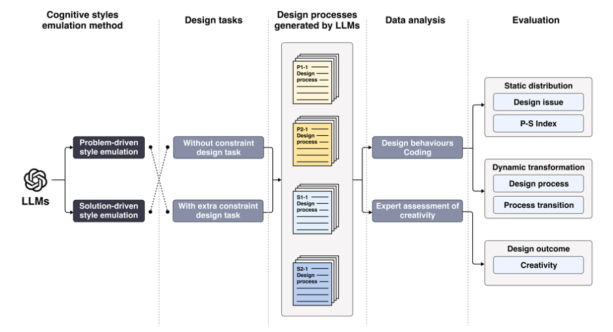
Figure 2 illustrates the experimental design and evaluation process for LLMs’ cognitive style emulation.
Figure 2: Methodology: experimental design and evaluation process.
Cognitive Styles Emulation Method: Zero-Shot-CoT Prompts We employed Zero-Shot Chain-of-Thought (Zero-Shot-CoT) prompting with GPT-4o to emulate design processes associated with problem- and solution-driven cognitive styles. There are two main reasons for choosing Zero-Shot-CoT: first, CoT has been proven to enhance LLMs’ ability to solve complex problems by generating intermediate reasoning steps; second, Zero- Shot-CoT requires only a simple prompt without additional training, making it more convenient and widely applicable (Wei et al., 2022).
For prompt design, we incorporated the CO-STAR framework, developed by the winner of the GPT-4 Prompt Engineering Competition (Teo, 2023). Tables 1 and 2 present the parameter settings and prompts for problem- driven and solution-driven cognitive styles, respectively. Each prompt consists of several key aspects: Context, which defines the assigned cognitive style and its characteristic design process, inspired by Dorst & Cross (2001) and Chen et al. (2023); Objective, which specifies the generation task; and Style and Tone, which represent the writing style and attitude of the response. When inputting prompts into GPT, each aspect was enclosed using XML- style delimiters (e.g., <tone>...</tone>), a formatting approach optimized for LLMs comprehension.
Table 1: List of prompt for problem-driven cognitive style emulation.
Table available in the original PDF paper.
Aspect Specific Prompts Objective Act as a <problem-driven> cognitive-style product designer and generate the design process step-by-step for solving <design-task> Context A <problem-driven> cognitive-style product designer follows these
key characteristics:
Continued
Leveraging LLMs to Emulate the Design Processes of Different Cognitive Styles 115
Table 1: Continued Aspect Specific Prompts
Table available in the original PDF paper.
1. Flexible transitions between the problem space and the solution space, with a strong emphasis on deep understanding and definition of the problem. This approach results in fewer but highly focused solutions, with evaluations driven by requirements and problems 2. Highly focused on problem-based design issues, including: Design requirements, product purpose and intent, and expected behaviours 3. A problem-space-dominant design process, particularly in the early stages, with sustained attention throughout, involving: Defining the problem space, reformulating expected behaviours, and reformulating product objectives 4. Relatively lower engagement in the solution space, especially in the early stages, but gradually increasing as the design progresses. This includes: Synthesizing product structures, analyzing the behavioural performance of design solutions, evaluating whether the performance meets expectations, and reformulating product structures Style Simulate the think-aloud style of a <problem-driven> product designer, expressing reasoning and analysis naturally in a clear and intuitive manner Example: “What are the common indicators for health monitoring?
Can specific functions be designed for high-risk diseases?” Tone Maintain a professional, logical, yet exploratory and creative tone
Table 2: List of prompt for solution-driven cognitive style emulation.
Table available in the original PDF paper.
Aspect Specific Prompts Objective Act as a <solution-driven> cognitive-style product designer and generate the design process step-by-step for solving <design-task> Context A <solution-driven> cognitive-style product designer follows these
key characteristics: 1. Flexible transitions between the problem space and the solution space, with a strong emphasis on driving practical design progress, particularly in solution generation and optimization. Designers generate solutions when design problems still ill-defined, and then work backward to define the problem 2. Highly focused on solution-based design issues, including: Product elements and their interrelationships (e.g., dimensions, components, materials, shapes, and technologies), and the impact of structural factors on the behavioural performance of the design 3. A solution-space-dominant design process, which is highly involved from the initial stage and expands rapidly as the design progresses. This includes: Synthesizing product structures, analyzing the behavioural performance of design solutions, evaluating whether the performance meets expectations, and reformulating product structures Continued
Table 2: Continued Aspect Specific Prompts
Table available in the original PDF paper.
4. A relatively lower emphasis on the problem space. This includes: Defining the problem space, reformulating expected behaviours, and reformulating product objectives Style Simulate the think-aloud style of a <solution-driven> product designer, expressing reasoning and analysis naturally in a clear and intuitive manner Example: “What are the common indicators for health monitoring?
Can specific functions be designed for high-risk diseases?” Tone Maintain a professional, logical, yet exploratory and creative tone
Design Tasks To enable a comparison with the findings observed by Chen et al. (2023) regarding human designers, we adopted a similar design task framework, divided into two types: without constraint and with extra constraint. The without constraint design task required generating product design concepts for use in a bathroom. The with extra constraint design task involved the same goal but added the following constraints: the product must ensure “safety,”; it must be “energy-efficient”, and each product must have at least two distinct functions.
Using our CoT-based method, we employed GPT-4o to emulate problem-driven and solution-driven cognitive styles to address these two tasks, resulting in four groups: P1 (Problem-driven without constraint), P2 (Problem-driven with extra constraint), S1 (Solution-driven without constraint), and S2 (Solution-driven with extra constraint). Each group contained ten independently generated design processes. Additionally, to establish a baseline for comparison, we directly input the design tasks into GPT-4o without simulating specific process of cognitive styles, generating design outcomes as baseline groups: B1 (Baseline without constraint) and B2 (Baseline with extra constraint). Each baseline group also consisted of ten independently generated design outcomes.
Evaluation Metrics To evaluate the effectiveness of LLMs in emulating cognitive styles, this study establishes a three-dimentional evaluation metrics: static distribution (the proportion and preference of cognitive issues), dynamic transformation (behavioral transition patterns), and the creativity of the design outcomes. Using previous studies identified human design behaviours as a benchmark, we compare the cognitive styles emulated by LLMs against human performance to assess their alignment and differences.
Static distribution. This metric consists of two aspects. First, the proportion of design issues highlights that problem-driven designers exhibit higher cognitive proportions in Function and Expected Behavior, whereas solution-driven designers show higher proportions in Structure Behavior and Structure. In both cognitive styles, the proportion of Requirement remains the lowest. Second, the P-S Index quantifies the ratio of design issues in
Leveraging LLMs to Emulate the Design Processes of Different Cognitive Styles 117
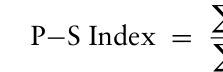
the problem space to those in the solution space, as defined in Formula 1. P-S Index value of ≤1 categorizes a session as solution-driven, while a value of > 1 categorizes it as problem-driven.
Equation reproduced from the original PDF.
P (design issues related to problem) P (design issues related to solution) =
P (R, F, Be) P (S, Bs) (1)
Dynamic transformation. This metric also includes two aspects. In terms of the design process, problem-driven designers exhibit higher proportions of Formulation and, under unconstrained conditions, Evaluation. While solution-driven designers demonstrate higher proportions of Analysis and Reformulation-S, with Reformulation-Be being higher under unconstrained conditions. The proportions of Synthesis and Reformulation-F are similar across both cognitive styles. Regarding process transition, problem-driven designers focus on problem exploration, frequently transitioning through P→P (deepening within the problem space), P→S (problem to solution), and S→P (solution to problem). Conversely, solution-driven designers prioritize solution generation, with significantly more transitions in S→S (iterating within the solution space).
Design outcomes. While previous studies have not reached a consensus on whether problem- and solution-driven cognitive styles lead to differences in design outcomes, emulating the design process based on these cognitive styles may enhance the creativity of LLMs-generated solutions compared to direct generation. Therefore, we compare solutions generated through CoT-guided cognitive style emulation with those generated directly by LLMs. The evaluation follows the framework proposed by Verhaegen et al. (2013), incorporating three key metrics: novelty, feasibility, and integrity.
Data Processing Method Coding scheme for design behaviours. We employed protocol analysis to examine whether the design processes generated by LLMs align with the characteristics of the two cognitive styles observed in designers. Following the FBS ontology, we applied a “one-segment-one-code” approach, where transcribed text was segmented and coded, with each segment assigned to only one of the five design issues in the FBS framework. Two PhD students specializing in industrial design and familiar with the FBS coding model independently segmented and coded the transcripts. The inter-coder reliability, calculated based on the results from both coders, was 79.5% (Lombard, Snyder-Duch and Bracken, 2005).
Expert assessment of creativity. We extracted novelty, feasibility, and integrity for our evaluation dimensions of creativity. They were rated on a 1–7 Likert scale by two independent experts (both were engaged in industrial design-related research for more than ten years). The Pearson’s r value of the two experts’ scoring results was 77.02%, which ensured credibility (Lombard, Snyder-Duch and Bracken, 2005).
RESULT
Static Distribution The proportion of design issues. Table 3 presents the results of an independent t-test analyzing the impact of LLM-emulated design cognitive classifications on the distribution of Design Issues under different design tasks (with and without extra constraints). The LLM-emulated cognitive styles closely aligned with human designers in their distribution of design issues. Problem-driven design processes dedicated a higher proportion of attention to F and Be, while solution-driven processes focused more on Bs and S, mirroring human design patterns. However, we still observed some inconsistencies. Under extra constraint design task, the emulated problem- driven design process did not show significantly higher attention to Be compared to the solution-driven process. Additionally, the LLM-emulated problem-driven designers spent a higher proportion of cognitive effort to R than human designers.
Table 3: Significance test of five issues, seven processes, and four process transitions between LLM-emulated problem-driven and solution-driven designers under non-constraint and constraint conditions.
Table available in the original PDF paper.
Without Constraint With Extra Constraint P1 S1 P2 S2 Mean Mean t p Mean Mean t p
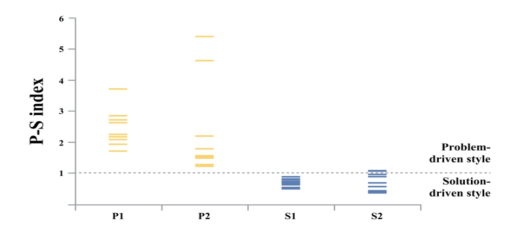
P-S Index. The P–S index values for each design session are shown in Fig. 3, with a reference line at 1.00 representing the boundary between problem- focused and solution-focused design styles. All LLM-emulated problem- driven design sessions aligned with the expected problem-focused style. For solution-driven sessions, all but two under the extra constraint condition aligned with the solution-focused style.
Leveraging LLMs to Emulate the Design Processes of Different Cognitive Styles 119
Figure 3: P–S index distribution across design sessions.
Dynamic Transformation Design process. Table 3 presents the results of an independent t-test. The LLM-emulated cognitive styles aligned with human designers in several key design processes, including Formulation, Synthesis, Reformulation-S, Reformulation-Be, and Reformulation-F. However, discrepancies were observed in Evaluation, Analysis, and Synthesis. In unconstrained tasks, LLM-emulated solution-driven designers exhibited significantly higher proportions of Analysis and Synthesis compared to problem-driven designers, whereas no significant difference was found under constrained conditions. For Evaluation, the solution-driven designers demonstrated significantly higher proportions than problem-driven designers under constrained conditions.
Process transition. LLMs’ emulation of problem-driven and solution- driven cognitive styles showed significantly higher P→P and S→S transitions, respectively, aligning with patterns observed in human designers (Table 3). However, the LLMs’ performance diverged from human designers when it came to transitions between the problem and solution spaces. Problem- driven designers tend to exhibit greater flexibility in iterating between P→S and S→P transitions compared to solution-driven designers. In contrast, the LLMs’ emulation of problem-driven cognitive styles failed to capture this flexibility, with notably fewer inter-space transitions. Under unconstrained conditions, the emulated problem-driven designers even demonstrated significantly lower P→S and S→P transitions than their solution-driven counterparts (p < 0.01).
Design Outcomes
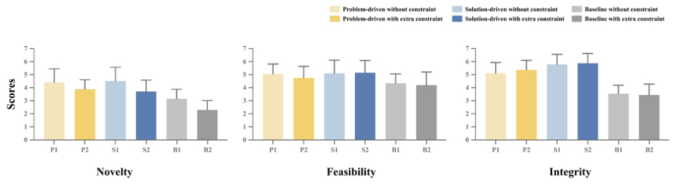
Figure 4 illustrates the results of various dimensions of creativity assessment.
Figure 4: Novelty, feasibility, and integrity scores.
Novelty. Both problem-driven and solution-driven designs achieved significantly higher novelty than the baseline group (p < 0.05). Unconstrained tasks resulted in higher novelty scores compared to constrained tasks.
Feasibility. The feasibility of P2 (problem-driven with extra constraint) designs did not significantly exceed the baseline, while all other groups showed significant improvements over the baseline (p < 0.05). Additionally, P2 designs were marginally but significantly less feasible than S2 (Solution- driven with extra constraint) designs. Among all groups, the baseline under constrained conditions had the lowest feasibility, struggling to meet the design brief requirements.
Integrity. Both problem-driven and solution-driven designs significantly outperformed the baseline group in integrity (p < 0.05). Across cognitive styles, solution-driven consistently achieved higher completeness than problem-driven designs. However, no significant differences were observed between constrained and unconstrained tasks.
CONCLUSION AND DISCUSSION As LLMs become increasingly integrated into design workflows, becoming potential collaborators for designers, their ability to emulate designers’ cognitive styles is crucial for enhancing their understanding of design and improving collaboration with different designers. However, previous research has primarily focused on emulating the design outcomes produced by designers with different cognitive styles, less attention has been given to generating the design cognition process, which plays a key role in problem- solving and creativity. This study evaluates LLMs’ ability to emulate the design processes of problem-driven and solution-driven cognitive styles using a zero-shot CoT prompting strategy.
The results indicate that the design processes generated by LLMs align well with the diverse cognitive styles of human designers, in terms of design issue distribution and process patterns. Moreover, process emulation based on cognitive styles enhances the novelty and integrity of the solutions generated by LLMs, demonstrating superior creativity compared to baseline methods. This suggests that LLMs can serve not only as tools for generating design solutions but also as cognitive support systems tailored to different design stages, thereby facilitating their deeper integration into design teams.
Although LLMs exhibit strong emulation capabilities in cognitive styles and share a similar cognitive focus with the human designers they are modelled after in terms of static characteristics—such as the ratio between the problem space and the solution space—there remains scope for further improvement in dynamic transitions, particularly in cross-space interactions (e.g., P→S or S→P). Specifically, LLMs tend to maintain a sustained focus on one space at a time, progressing linearly while exhibiting fewer bidirectional transitions between P and S. In contrast, human designers adopt nonlinear cognitive strategies, flexibly navigating between these spaces and iteratively refining problem definitions based on emerging solutions, demonstrating greater adaptability. As a result, the evolutionary complexity and adaptability of LLM-generated design processes remain significantly lower than those of human designers.
Leveraging LLMs to Emulate the Design Processes of Different Cognitive Styles 121
This finding highlights potential directions for optimizing LLMs in emulating nonlinear reasoning across the problem-solution space. While the Zero-Shot Prompt strategy ensures generalizability, future research should explore more deep reasoning strategies. Fine-tuning LLMs with real- world design data or incorporating the Graph of Thoughts (GoT) approach could enable dynamic retrospection, information aggregation, and parallel exploration, enhancing LLMs’ performance in emulating human complex cognitive processes.
Furthermore, this study evaluated LLMs’ ability to emulate human cognitive styles under different constraint conditions. Future research should extend the analysis to various design domains and task complexities, investigating how LLM-emulated cognitive styles influence human-AI collaboration patterns. Such explorations could help refine the role of LLMs in design teams, optimizing their integration into collaborative design workflows.
ACKNOWLEDGMENT
This work was supported by the “Pioneer” and “Leading Goose” R&D Program of Zhejiang (Grant numbers 2023C01219).
REFERENCES
Agarwal, V., Jablokow, K. and McComb, C. (2025) ‘Putting the Ghost in the Machine: Emulating Cognitive Style in Large Language Models’, Journal of Computing and Information Science in Engineering, 25(2), p. 021002. Chen, G. et al. (2023) ‘Comparing the design cognitive process between problem-
driven and solution-driven industrial design students’, International Journal of Technology and Design Education, 33(2), pp. 557–584. Christiaans, H. and Dorst, K. H. (1992) ‘Cognitive models in industrial design engineering: A protocol study’, Design theory and methodology, 42(1), pp. 131–140. Dorst, K. and Cross, N. (2001) ‘Creativity in the design process: Co-evolution of
problem–solution’, Design Studies, 22(5), pp. 425–437. Gero, J. S. and Kannengiesser, U. (2004) ‘The situated function–behaviour–structure framework’, Design Studies, 25(4), pp. 373–391. Jiang, H., Gero, J. S. and Yen, C.-C. (2014) ‘Exploring designing styles using a
problem–solution division’, in Design Computing and Cognition’12. Springer, pp. 79–94. Lapp, S., Jablokow, K. and McComb, C. (2019) ‘Collaborating with style: Using an agent-based model to simulate cognitive style diversity in problem solving teams’, in. International Design Engineering Technical Conferences and Computers and Information in Engineering Conference, American Society of Mechanical Engineers, p. V007T06A029. Lombard, M., Snyder-Duch, J. and Bracken, C. (2005) ‘Practical Resources for
Assessing and Reporting Intercoder Reliability in Content Analysis Research Projects’, Retrieved April, 19. Teo, S. (2023) How I won singapore’s GPT-4 prompt engineering competition.
Towards data science. Available at: https://towardsdatascience.com/how-i-won- singapores-gpt-4-prompt-engineering-competition-34c195a93d41.
Verhaegen, P.-A. et al. (2013) ‘Refinements to the variety metric for idea evaluation’, Design Studies, 34(2), pp. 243–263. Wei, J. et al. (2022) ‘Chain-of-thought prompting elicits reasoning in large
language models’, Advances in Neural Information Processing Systems, 35, pp. 24824–24837.
LISTED IN THE AHFE DIGITAL BOOKSTORE CATALOGUE
Explore the complete digital volume
Artificial Intelligence and Social Computing
Read this individual research paper free through the original publisher, or explore the full digital proceedings book.
ISBN 978-1-964867-39-7
Explore this ISBN in the AHFE Bookstore ↗Listed in the July 2026 bookstore catalogue; search by ISBN to confirm current availability · Digital book purchase optional