Ana Marques, Maria Inês Pires, Jo Dias (2025). Traditional vs. Personalised Teaching: An experimental study on AI's role in education. In: Human Interaction and Emerging Technologies (IHIET-AI 2025): Artificial Intelligence and Future Applications. AHFE Open Access, vol. 161, pp. 540–551. https://doi.org/10.54941/ahfe1005946
One of the major challenges in education is ensuring student success for most learners through quality teaching. However, creating an inclusive education system that addresses student heterogeneity is difficult when applying the same curricular standard.In most education systems, standardized teaching is the dominant pedagogical approach, characterized by minimal differentiation and a repetitive program applied over years (Perrenoud, 1978). This homogeneity, although practical, often neglects individual differences, limiting each student’s learning potential. "All students learn in different ways and more effectively when learning circumstances align with their preferred approach" (Hockett, 2018).Luckin and Holmes (2016) argue that individual human tutoring can be the most effective approach to teaching and learning. Unfortunately, it’s unsustainable: it’s not possible to provide one teacher per student.Therefore, how can teachers provide personalized teaching? Could AI be a tool for personalization? And could it also contribute to a positive shift in the role of the teacher, positioning them as a cornerstone of teaching?Chen, Xie et al. (2020) observe that studies on Artificial Intelligence in Education (AIEd) have increased significantly, especially regarding content personalization. Maghsudi et al. (2021) state that the goal of personalized teaching is to achieve effective knowledge acquisition aligned with student's strengths and overcome their weaknesses to reach the desired objective. Through the inclusion of AI in an educational platform, we can accurately acquire the student’s characteristics. This inclusion is achieved through observing the student’s history and past experiences, identifying patterns and similarities, and analyzing large volumes of data. The recommendation of appropriate content, a long-term curriculum, and the creation of accurate performance assessments can become a reality in education systems. This improves learning but also predicts areas where the student may struggle, providing personalized and real-time support.Thus, AIEd could fill current gaps in the education system, enabling teachers to create personalized learning for each student’s profile. As Luckin and Holmes (2016) suggest, AIEd could take over bureaucratic tasks currently assigned to teachers allowing them more time for creative and inherently human activities that are essential to elevating the quality of the learning process.This study aims to validate the effectiveness of these possibilities through a User Research method. To this end, and with a sample of elementary school students, a comparative performance study was conducted using traditional teaching methods and an AI-generated personalized teaching method.In the traditional teaching method, the same exercise was presented to all students, while in the AI-generated teaching method, a personalized exercise was presented according to each student's needs, characteristics, and learning level, with the same exercise being presented in completely different ways to each student.The results were analyzed qualitatively to assess the effectiveness of the AI-generated personalized teaching method.The study concluded that AIEd better aligns with students' educational needs, improving their development. Although the tests reveal promising developments for the future, technological and ethical barriers remain that must be addressed to ensure this approach is sustainable and inclusive across different educational contexts.References: Perrenoud, P. (1978). Das diferenças culturais às desigualdades escolares: a avaliação e a norma num ensino indiferenciado. In Allal, L., Cardinet, J., Perrenoud, P. (1986). A avaliação formativa num ensino diferenciado. Coimbra, Livraria Almedina, pp. 27-73.Hockett, J. A. (2018). Differentiation Strategies and Examples: Grades 6-12. Tennessee Department of Education. Alexandria, VA: ASCD.Luckin et al. (2016). Intelligence Unleashed: An argument for AI in Education. Pearson Education.Maghsudi, S., Lan, A., Xu, J.,e van Der Schaar, M. (2021). Personalized education in the artificial intelligence era: what to expect next. IEEE Signal Processing Magazine, 38(3), 37-50.Chen, X., Xie, H., Zou, D., e Hwang, G. J. (2020). Application and theory gaps during the rise of artificial intelligence in education. Computers and Education: Artificial Intelligence.
One of the major challenges in education is ensuring the academic success of the vast majority of students by imparting skills through quality teaching. However, creating an inclusive school that addresses the heterogeneity of students is a difficult task when the same curriculum standard is applied to all.
In most educational systems, the predominant pedagogical model is collective teaching. As Perrenoud (1978, as cited in Mandlate, 2021) noted decades ago, schools face challenges in addressing plurality, relying on a model marked by limited differentiation, repetitive programming across years, and minimal adaptation to diversity, which does not consider the various ways in which students learn. While this homogeneity is practical, it often overlooks individual differences, limiting each student’s learning potential. As Hockett (2018) states, “All students learn in different ways and more effectively when the learning conditions align with their preferred approach.”
Traditional vs. Personalized Teaching: An Experimental Study on AI’s Role in Education 541
Fostering the learning process of students with diverse academically performance is the mission of every teacher. However, Luckin and Holmes (2016) argue that while individual human tutoring is the most effective approach for teaching and learning, it is unsustainable for all students, as it is not possible to guarantee one teacher per student.
Therefore, how can teachers apply personalized teaching to each student’s profile? Could Artificial Intelligence (AI) be a tool for this personalization? And could it also contribute to a positive shift in the role of the teacher, positioning them as a pillar of teaching?
The reviewed articles and studies clearly demonstrate that technological progress, including innovations in computing, related technologies, and other breakthroughs, have significantly driven the development of AI. This progress is particularly notable in the education sector, where AI has been applied with a profound impact (Chen et al., 2020), especially in content personalization.
Maghsudi et al. (2021) emphasize that the primary goal of personalized education is to facilitate effective knowledge acquisition by leveraging a student’s strengths and addressing their weaknesses to achieve the desired outcomes. In recent years, the integration of AI and Machine Learning (ML), combined with advances in big data analytics, has introduced fresh perspectives that have significantly enhanced personalized education in diverse ways.
By integrating AI into an educational platform, as discussed by Chen et al. (2020), students benefit from a richer and more effective learning experience. This is because AI leverages machine learning to assess individual capabilities and needs. Based on these assessments, AI can develop and deliver personalized or customized content, enhancing knowledge retention and engagement, and ultimately improving the overall learning process. According to Luckin and Holmes (2016) this improves learning, but also allows for the prediction of areas where students face difficulties, providing personalized real-time.
Thus, Artificial Intelligence in Education (AIED) emerges as a possible solution to the current gaps in the education system, enabling teachers to create personalized education tailored to the individual profiles of students. As Luckin and Holmes (2016) suggest, AIED could take over some tasks currently assigned to teachers, such as grading assignments and maintaining records, giving them more time for creative and intrinsically human activities that are essential to improving the learning process. Chen et al. (2020) further highlights that by leveraging AI, teachers can achieve greater efficiency and effectiveness in performing various tasks, including administrative duties such as reviewing, grading, and providing feedback on student assignments. Moreover, collaboration with AI allows for significant improvements in instructional quality, as teachers can focus on delivering more tailored and impactful educational experiences. As technology evolves, new innovations are expected to shape the future of education, promoting a student-centered learning process tailored to individual needs. This will enable teachers to present content suited to each student’s profile, maximizing their abilities at the right place and time, while freeing them from bureaucratic and unnecessary tasks. To validate the authors’ perspective, a comparative study
was conducted in a classroom setting with the participation of elementary school students and teachers, aiming to assess students’ skill acquisition by comparing traditional teaching methods with personalized teaching methods adapted to students’ profiles through AI. Through a qualitative analysis of the results, the study seeks to answer the following research questions: Q1: Can the application of AI in education be a method for creating personalized teaching?
Q2: What are the advantages of AIED compared to traditional teaching? This work aims to contribute to the study of topics such as: (1) the identification of key characteristics of student profiles to be considered in the creation of personalized education; (2) the criteria for adapting content to student profiles using AI; and (3) the effectiveness of personalized teaching compared to traditional methods in promoting student learning and knowledge acquisition.
METHODOLOGY
Researchers have conducted various studies using co-design techniques with different populations to develop systems that better meet the needs of end users (Elizabeth & Stappers, 2008). In the educational field, for example, AI technologies have been designed in collaboration with students, allowing researchers to better understand their learning needs, experiences, and motivations (Paracha et al., 2019). Luckin and Holmes (2016) also suggest that teachers, along with students and parents, should play a key role in the creation of AIED tools and in defining how these tools will be used. The participation of all educational stakeholders in the process will contribute to increasing technological literacy, developing new design skills, and gaining a deeper understanding of the potential offered by AIED systems. In this context, a comparative study was conducted in the classroom with sixteen elementary school students. Eight students completed a class assignment using the traditional teaching method, while the other eight received a personalized version adapted to their profile. The activity was conducted in collaboration with the subject teacher, a special education teacher, and a school psychologist, who validated and monitored the research process.
Initially, it was crucial to define the information and data needed to ensure personalized teaching. According to Chen et al. (2020), knowledge about the student can be structured into three models of AIED: the teaching model (effective teaching approaches), the knowledge model (content to be learned), and the learner model (information about the student).
Based on these foundations, the study focused on adapting methods and information to meet the specific needs of each student. In this process, tools like ChatGPT (Chat Generative Pre-Trained Transformer) were used to personalize educational content. The choice was made because of its open access and ability to generate exercises tailored to the characteristics of the students, aligned with the study’s objectives.
Traditional vs. Personalized Teaching: An Experimental Study on AI’s Role in Education 543
Participants This study was approved and conducted in partnership with the Agrupamento de Escolas Eça de Queirós1 in Lisbon. Two groups of participants were considered: teachers and students. The participating teachers included the 2nd-cycle Sciences teacher, the Special Education teacher, and the school psychologist from the school. The participating students were from the 5th grade, aged 10 to 11. A total of sixteen students were selected and divided into two groups of eight participants each. One group completed the class assignment using the traditional method, while the other group worked on a personalized class assignment via AI. The selection of students for the personalized class assignment was made in collaboration with the teachers, based on criteria to identify distinct characteristics and test the diversity of profiles. The activities were implemented as part of a task conducted during the Sciences lesson.
Student Profile To create personalized content, it was necessary to characterize the profile of the selected students (Table 1). Following the teaching and learner models referenced by Chen et al. (2020), the profile information for each student was defined through feedback provided by the teachers from the respective Class Council - ensuring in-depth knowledge of the class and the student profiles. The profile was characterized according to (1) personal information such as demographic and psychographic data (age, gender, nationality, family context, needs, motivations, gaps, and other relevant information); (2) school information, including academic performance, behaviour, and support measures applied to the student’s curriculum; and (3) additional input from teachers, in particular the Special Education teacher and school psychologist regarding differentiated teaching measures.
Class Assignment Considering the knowledge model referenced by Chen (2020), the content to be learned was Biodiversity and Migration, part of the 5th grade Sciences curriculum. The choice of subject was based on the potential for adapting the content for a personalized approach using AI.
As mentioned, two distinct approaches were tested: one through the traditional method with a single exercise, without personalization, created by the subject teacher; and the other through personalization, tailored to each student’s profile. The class assignment that served as the foundation for this research included an introductory text for analysis, followed by three questions: two requiring direct responses and one open-ended question to evaluate knowledge.
1Eça de Queirós Schools Group
(Continued)
Ensure the student understands task objectives.
Provide clear reading of instructions.
Remove distractions and use direct questions.
Use one page per sheet and prepare texts in advance.
Offer visual aids (summaries, diagrams, mnemotechnics).
Allow extra time for reading and writing.
Boost self-esteem with positive reinforcement.
Avoid penalizing spelling errors or exposing mistakes.
Foster success-oriented situations.
Provide study methods and plans.
Highlight strengths and knowledge.
Pair with a more autonomous peer.
Review missed content and offer summaries.
Emphasize key information.
Verify understanding of instructions.
Involve the family.
Provide challenging and stimulating activities.
Encourage deeper exploration of topics.
Support autonomous work tailored to learning styles and
abilities.
Promote peer interaction through engaging activities.
Help manage frustration in the face of setbacks.
Assign routine tasks using strengths (e.g., creating diagrams
School support: Universal measures for learning and
inclusion.
Performance: Satisfactory.
Challenges: Difficulty with oral and written
interpretation, concentration, keeping up with class
content, and linguistic limitations.
Strengths: Logical classes.
School support: Universal measures for learning and
inclusion.
Performance: Very good.
Performance: Insufficient.
Challenges: Bored when finishing class assignments.
Strengths: Well-behaved, responsible, organized,
excellent learning ability, relates and mobilizes
knowledge effectively.
Challenges: Difficulty relating and applying
knowledge in different contexts.
Strengths: Well-behaved, hardworking.
School support: Universal measures for learning and
inclusion.
material organization; Extroverted, lacks
concentration, worried about results, afraid
of disappointing family; Excess of
extracurricular activities.
excellence, lack of support; Likes playing
games, watching movies, and playing;
Pretends not to understand when evaluated.
methods
insecure about making decisions alone,
works hard to achieve results.
Table 1. Continued
Table available in the original PDF paper.
Student (1) Personal Information (2) School Information (3) Additional Input From Teachers
E 10 years; Male; Portuguese; Lack of family support, needs assistance with task and
F 10 years; Male; Chinese; Immigrant, speaks only Portuguese at school, family demands
G 10 years; Male; Portuguese; Balanced; Good communication, self-organized study
H 10 years; Female; Portuguese; Family Context Balanced; Prefers being in a group,
Personalized Class Assignment To evaluate the creation of an exercise using AI, a range of specific and detailed inputs was provided, tested, and assessed with ChatGPT to ensure the output was a personalized exercise tailored to each student’s profile. The inputs included the topic of the exercise, the proposed objectives, the knowledge to be acquired by the student, and the information identified in the Student Profile.
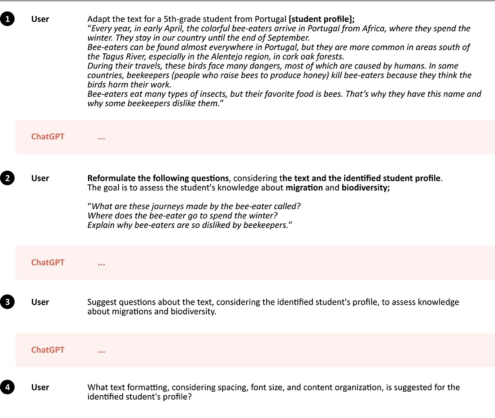
Figure 1, illustrates the process for generating personalized questions using ChatGPT.
Figure 1: Chat GPT conversation.
In Step 1, the student profiles were provided to ChatGPT, along with the traditional exercise text created by the teacher. Once the context was established, ChatGPT was instructed to adapt the text according to the student’s profile.
In Step 2, ChatGPT was asked to reformulate the exercise questions in alignment with the objectives to be assessed.
In Step 3, based on the student’s profile and the identified objectives, alternative questions for the exercise were suggested.
In Step 4, ChatGPT was requested to provide an example of content organization and structure, tailored to the student’s specific needs.
RESULTS AND ANALYSIS The results analysis was conducted in collaboration with the subject teacher for whom the class assignment was created. This collaboration provided a deeper understanding of the effectiveness of the reformulated personalized questions using AI and facilitated the evaluation of student performance in the class assignment. The analysis resulted in a qualitative assessment of the results based on the following criteria: Assignment Personalization, Student Performance, and AI vs. Traditional Class Assignment (1, 2, and 3 of Table 2).
Traditional vs. Personalized Teaching: An Experimental Study on AI’s Role in Education 547 AI personalization was more effective in encouraging student
responses and maintained traditional performance levels.
Benefiting the student.
student responses and maintaining traditional performance
levels. Provided no benefit.
AI personalization was equally effective in encouraging
responses but yielded lower results compared to traditional
assignments. Provided no benefit.
AI personalization was equally effective in encouraging
student responses and maintaining traditional performance
levels. Provided no benefit.
AI personalization was more effective in encouraging
responses and improving performance compared to
traditional assignments. Benefiting the student.
AI personalization was more effective in encouraging
responses and improving performance compared to
traditional assignments. Benefiting the student.
AI personalization was equally effective in encouraging
responses and improving performance compared to
traditional assignments. Benefiting the student.
AI personalization was more effective in encouraging
responses and improving performance compared to
traditional assignments. Benefiting the student.
The student found it easier to answer the direct
response questions but experienced difficulty with the
open-ended ones. Nevertheless, the student answered
all of the questions.
answering the questions, responding to only one. AI personalization was not more effective in encouraging
direct-response questions but experienced difficulty
with the open-ended ones. Although showing little
effort and disinterest, the student answered all of the
questions.
The student answered all the questions but made
errors in the responses. Only achieved success in one
question.
demonstrated effort and focus in completing the
exercise. The student answered all the questions.
demonstrated effort, knowledge, and depth in their
responses. The student answered all the questions.
The student answered all questions with objectivity
and creativity but addressed only one when two were
in the same prompt.
improved understanding and providing competent
responses, despite knowledge gaps and an incomplete
exercise.
concepts in a way that was suitable for a
student with a dyslexia and inattention
profile. Additionally, the questions in the
exercise were too complex and detailed for
this profile.
to be appropriate for the student’s profile. The student showed little effort and disinterest in
to be appropriate for the student’s profile. The student found it easier to answer the
considering the student’s vocabulary level.
As for the questions, they were appropriate
for the student’s profile.
to be appropriate for the student’s profile. The results achieved were successful. The student
to be appropriate for the student’s profile. The results exceeded expectations. The student
appropriate for the student’s profile, while
the text remained unchanged from the
original.
to be appropriate for the student’s profile. The student answered most questions, demonstrating
Table 2. Qualitative analysis of the results from the questions personalized for the student.
Table available in the original PDF paper.
Student (1) Assignment Personalization (2) Student Performance (3) AI vs Traditional Assignments
A The AI-generated text did not explain some
B The AI-generated text and questions proved
C The AI-generated text and questions proved
D The AI-generated text proved to be very easy
E The AI-generated text and questions proved
F The AI-generated text and questions proved
G The AI-generated questions proved to be
H The AI-generated text and questions proved
In the ‘Assignment Personalization’ (1) using AI, it was noticed that, in most cases, tailoring the questions to the student’s profile was beneficial. However, for students A and D, the content adaptation did not adequately address their needs, either due to the complexity of the questions or the vocabulary used in the texts.
Regarding ‘Student Performance’ (2), it was observed that students B, C, and D demonstrated little interest or effort in completing the activities, which can be attributed to the timing of the tests (end of the school year). In contrast, the remaining five students exhibited a high level of commitment to the class assignment.
When analysing ‘AI vs. Traditional Class Assignments’ (3), it was observed that students B, C, and D demonstrated similar effectiveness in their responses using the AI personalized assignment, as their results were similar when compared to the traditional teaching method during the entire year. Regarding student A, despite the content personalization not being adequate (according to the teacher’s analysis), there was greater effectiveness in responding to the AI-generated class assignment compared to the traditional teaching method. For the remaining students, the personalization of the exercise via AI benefited their performance.
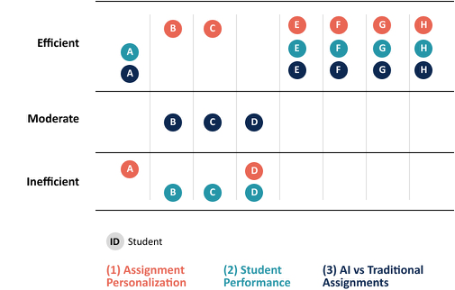
Figure 2 provides a summary of the results, highlighting that in most cases, tailoring the questions to the student’s profile proved beneficial, with positive outcomes observed in five instances (students A, E, F, G, and H). The adaptation of content proved less effective for students B, C, and D: for student D, due to poor content adaptation generated by AI, and for students B and C, due to a lack of interest and focus on the activity, which resulted in a lack of objectivity in their answers.
Figure 2: Data analysis: (1) Assignment personalization, (2) student performance, and (3) AI vs. traditional class assignments.
Q1: Can the Application of AI in Education be a Method for Creating Personalized Teaching?
Based on the subject teacher’s perception, experience, and knowledge, as well as the analysis of the results regarding the effectiveness of personalized
Traditional vs. Personalized Teaching: An Experimental Study on AI’s Role in Education 549
questions through AI, it was found that most of the questions had a positive impact on the students. It became evident that the use of AI for content personalization allows for a more tailored approach, better aligning with students’ educational needs and enhancing their learning. Students who received personalized questions showed increased motivation to complete the activity, as the content was more relevant and suited to their abilities and interests.
However, several challenges were identified with the technology used (ChatGPT), requiring multiple reformulations of the inputs entered into the platform to ensure an appropriate response to each student’s profile. According to the teacher’s evaluation, it is important to clearly define the class assignment’s objective and the parameters to be assessed in terms of knowledge.
It was also necessary to take into account the student’s characteristics, their social and cultural environment, weaknesses or acquired skills, and the level of knowledge to be conveyed in the personalized class assignment. Despite the various challenges, the tests proved to be successful, encouraging further developments.
Q2: What Are the Advantages of AIED Compared to Traditional Teaching?
In a qualitative analysis of the results, it can be concluded that the results obtained through content personalization were superior to those achieved by the traditional method.
When analysing the results of students who answered the class assignments using the traditional teaching method, it was found that their answers met the teacher’s expectations, aligning with their performance throughout the year. Although the traditional method is efficient for measuring general knowledge, it may not fully identify the individual needs of students, nor offer personalized support to improve their weaknesses or enhance their strengths.
By comparing the results of students who answered the traditional class assignment with the students who completed the personalized AI-generated class assignment, it was observed that the results were more favourable for the students who received personalized class assignments tailored to their profile.
This conclusion is based not only on the results, which exceeded expectations, but also on the positive impact observed on student performance, suggesting that adapting content to individual needs may be a more effective strategy than traditional teaching methods.
Additionally, it was observed that by using personalized exercises, each student is assigned a task tailored to their individual needs, in contrast to the traditional method, where the same class assignment is given to all students.
CONCLUSION
This study confirmed the achievability of integrating AI tools into pedagogical practices, validating their potential as a personalized teaching instrument to promote students’ academic success. However, large-scale
implementation requires attention to several factors, such as proper teacher training, curriculum adaptation, and the availability of technological resources.
To ensure the effectiveness of personalized teaching with AI, it is essential to thoroughly understand each student’s profile, the evaluation criteria, and the curricular content of each subject. A comprehensive study of these components and an exhaustive collection of data is crucial. Access to school databases, including academic records and teacher notes, is necessary to provide a more personalized content tailored to the students’ profiles.
Despite the promising possibilities of AIED, limitations were found in using ChatGPT, including the need to formulate multiple question hypotheses, the lack of adaptation to the Portuguese language, and gaps in the verification and validation of sources. These limitations restrict its immediate application in educational contexts.
It was also observed that the timing of the students’ participation in the class assignment is crucial. Since the activity was conducted at the end of the academic year, a lower level of commitment was noticed, particularly among those who answered incorrectly or did not respond at all to the questions. To validate the effectiveness of personalized teaching with AI, it would be valuable to conduct future tests at different points in the school calendar and with varied student profiles, considering levels of education, maturity, and knowledge.
The co-design approach, involving teachers, psychologists, and students, was essential to ensure that the complexities of real-world classrooms were considered in the creation of AIED tools, grounding the research in their actual needs rather than various assumptions. The participation of the students was essential to validate the effectiveness of personalized teaching through AI, while the role of the teachers was crucial, as they coordinated the use of AI tools, deciding when and how to integrate them into their educational practices.
Thus, this investigation highlights the importance of improving the work of all stakeholders in the school community. It aimed to validate the idea that AI can elevate students’ knowledge and skills to a new level by creating fully personalized content tailored to their needs. On the other hand, the effectiveness of AIED also revealed that teachers can benefit in their daily work by providing them with tools capable of automatize several tasks previously considered time-consuming and bureaucratic. This, in turn, allows teachers to focus entirely and exclusively on their essential role: being knowledge providers.
This research aims to contribute the necessary foundations for the development of new ideas and the evolution of future projects in personalized teaching, fostering a more inclusive, effective, and relevant pedagogy aligned with the needs of the 21st century.
ACKNOWLEDGMENT
The study was supported by UNIDCOM under a grant from the Fundação para a Ciência e Tecnologia (FCT) No. UIDB/00711/2020 attributed to
Traditional vs. Personalized Teaching: An Experimental Study on AI’s Role in Education 551
UNIDCOM – Unidade de Investigação em Design e Comunicação, Lisbon, Portugal.
REFERENCES
Chen, L., Chen, P., & Lin, Z. (2020). Artificial intelligence in education: A review.
IEEE Access, 8, 75264–75278. Elizabeth, B. N. S., & Stappers, P. J. (2008). Co-creation and the new landscapes of design. CoDesign, 4(1), 5–18. Hockett, J. (2018). Differentiation handbook: strategies and examples: Grades 6–12.
The Tennessee Department of Education. Luckin, R., & Holmes, W. (2016). Intelligence unleashed: An argument for AI in education. Maghsudi, S., Lan, A., Xu, J., e van Der Schaar, M. (2021). Personalized education
in the artificial intelligence era: What to expect next. IEEE Signal Processing Magazine, 38(3), 37–50. Mandlate, M. S. (2021). Processos Educativos em Moçambique: Análise das Políticas e Práticas de Avaliação Curricular e o Atendimento das Crianças com Necessidades Educativas Especiais (NEE). Um estudo de Casos no Ensino Básico Moçambicano (Doctoral dissertation, Universidade do Minho (Portugal)). Paracha, S., Hall, L., Clawson, K., Mitsche, N., & Jamil, F. (2019). Co-design with
children: using participatory design for design thinking and social and emotional learning. Open Education Studies, 1(1), 267–280.
LISTED IN THE AHFE DIGITAL BOOKSTORE CATALOGUE
Explore the complete digital volume
Human Interaction and Emerging Technologies (IHIET-AI 2025): Artificial Intelligence and Future Applications
Read this individual research paper free through the original publisher, or explore the full digital proceedings book.
ISBN 978-1-964867-37-3
Explore this ISBN in the AHFE Bookstore ↗Listed in the July 2026 bookstore catalogue; search by ISBN to confirm current availability · Digital book purchase optional