Fang Liu, Zihang Lu, Yang Liu (2025). Intelligent Tourist Guide System: Four Seasons Pavilion in Humble Administrator’s Garden. In: Intelligent Human Systems Integration (IHSI 2025): Integrating People and Intelligent Systems. AHFE Open Access, vol. 160, pp. 212–222. https://doi.org/10.54941/ahfe1005827
This paper proposes a "Four Seasons Pavilion Wisdom Tourism" platform, which combines fine scene modeling, digital human and artificial intelligent technologies. The system enhances visitors' experiences and understanding of Humble Administrator’s Garden, a classical Chinese garden in Suzhou, China, by providing an immersive and personalized tour. The system focuses on the iconic Four Seasons Pavilion, utilizing technologies like augmented reality (AR), virtual reality (VR), and AI-driven interactive digital guides. This work disrupts traditional tourism models and introduces a new era of personalized, enriching, and interactive cultural experiences. Unreal Engine 5 (UE5) powers 3D character animation and a dynamic user interface, offering real-time fantastic interactions. It provides a prototype and reference for building up an intelligent tourist guide system.
Cultural tourism has consistently faced challenges such as restricted access to information, excessive visitor congestion, subpar service quality, and a dearth of immersive, engaging experiences (Russell et al., 2010). Traditional tourism models often fail to fully explore and present the deep cultural and historical significance of sites. The Zhuozheng Garden, and its iconic Four Seasons Pavilion, presents a unique opportunity to blend cultural heritage with digital innovation.
The “Four Seasons Pavilion Wisdom Tourism” system addresses these pain points by introducing an AI-powered, digital tour guide that leverages the latest technologies to offer a more personalized and immersive visitor experience. Through the integration of digital humanoid images, AI, AR/VR technologies, and UE5-powered 3D modeling, this system transforms how visitors interact with cultural heritage sites.
With the advancement of technology, AI has become increasingly integrated into various industries, including tourism. The use of AI in digital guides has revolutionized the way people explore and experience cultural sites and landmarks (Cain et al., 2019). One of the significant advantages of AI digital guides is their interactivity. Unlike traditional audio guides
Intelligent Tourist Guide System: Four Seasons Pavilion 213
or human-led tours, AI digital guides can respond to inquiries and tailor information based on user preferences, enhancing engagement (Bronzin et al., 2021). This personalized experience allows visitors to explore at their own pace and learn about the history and culture of the site in a more immersive way. AI digital guides can be accessed through smartphones, tablets, or other mobile devices, making them convenient for tourists who prefer not to carry physical guides or maps (Giotis et al., 2022). Additionally, AI guides are available in multiple languages, making them accessible to a wider range of visitors from different countries and backgrounds.
AI digital guides also offer scalability, as they can serve an infinite number of users simultaneously without any degradation in quality or service. This makes them ideal for popular tourist destinations that attract large numbers of visitors annually. Moreover, AI guides provide accurate and up-to-date information to all users, regardless of the season or time of day.
Over time, AI collects visitor interaction data, aiding future project planning by providing insights into visitor behavior and preferences (Lv et al., 2022). Through AR/VR technology, AI guides offer immersive and visually stimulating experiences that enhance engagement. This technology allows visitors to visualize historical events or reconstructed environments, providing a deeper understanding of the site’s significance (Kavak et al., 2024). Additionally, AI systems learn from user feedback and constantly refine the experience, leading to continuous improvement.
Finally, AI guides highlight cultural significance by promoting traditional heritage through providing information about historical sites and cultural landmarks. They offer an opportunity for cultural dissemination by educating visitors about the importance of preserving our shared heritage for future generations.
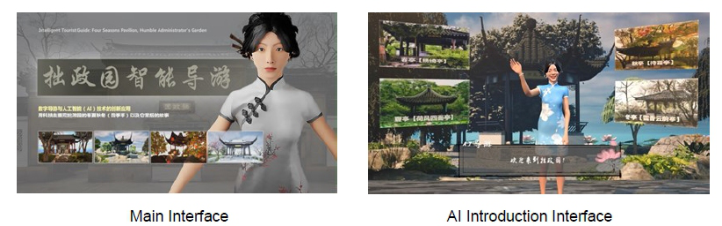
In conclusion, the development of AI digital guides has brought numerous advantages to the field of digital cultural tourism. Their interactivity, accessibility, scalability, consistency, cost-effectiveness, data collection capabilities, enhanced engagement through AR/VR technology, continuous improvement based on user feedback, and promotion of cultural heritage make them a valuable tool for enhancing visitor experiences at cultural sites and landmarks around the world. This paper presents a prototype and main components of an intelligent tourist guide system (as Figure 1), meanwhile discusses the future development.
Figure 1: The interface of the intelligent tourist guide for humble administrator’s garden.
THE SYSTEM COMPOSITION AI Digital Guide
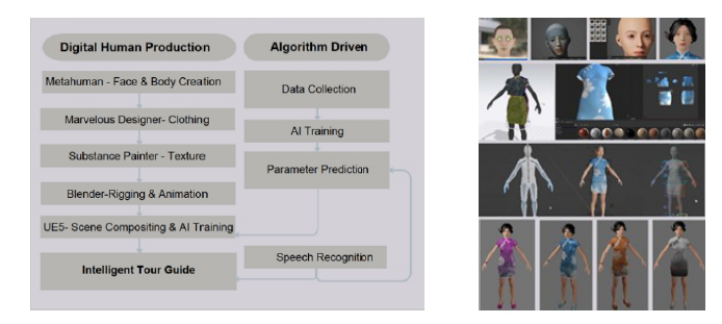
The AI digital guide system integrates various technological components to deliver a seamless and interactive visitor experience. The system involves several key components: Character Modeling and Animation (as shown in Figure 2)
Design and Creation: Character models are designed based on historical and cultural contexts, reflecting the architectural and aesthetic features of the Four Seasons Pavilion. These models are created using advanced 3D modeling software such as Maya, Metahuman.
Animation State Machines: To ensure smooth and lifelike interactions, animation state machines manage dynamic behaviors. This includes speech-to-text (STT) and text-to-speech (TTS) conversions, enabling characters to respond naturally to user queries.
Emotional Expression: Emotional recognition and response generation are integrated through Unity, allowing characters to exhibit emotions based on user interactions. This enhances engagement and provides a more relatable guide experience.
Unity Client and AI Integration
Platform Development: Unity serves as the primary development platform for the interactive components of the guide system. It supports the integration of AI functionalities, such as natural language processing (NLP) and emotional response.
AI Model Integration: The system uses a large AI model, supported by a database trained on specific content related to the Four Seasons Pavilion. This model is based on the GM4 large model and supported by Python for server-side operations.
Voice Support: Voice interaction capabilities are implemented using Azure voice services. This includes STT for converting spoken language into text and TTS for generating speech from text, ensuring natural and intuitive interactions.
Data Collection and Analysis
User Interaction Data: The AI guide system collects data on user interactions, including queries, preferences, and feedback. This data is analyzed to understand visitor behavior and improve guide responses.
Continuous Improvement: Feedback loops allow the system to evolve over time, incorporating user suggestions to refine and enhance the digital guide’s performance.
Intelligent Tourist Guide System: Four Seasons Pavilion 215
Figure 2: Process of character modeling and animation.
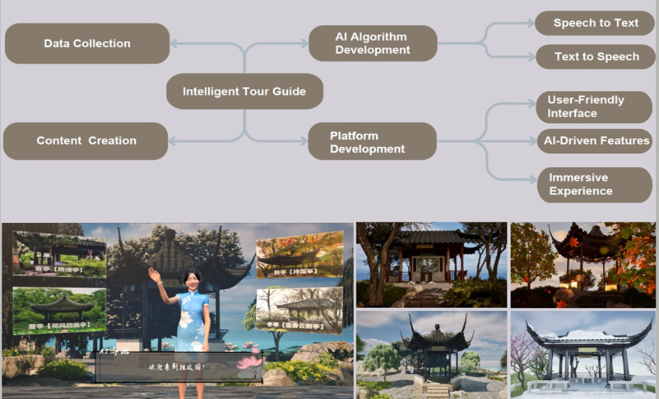
Modeling of the Four Seasons Pavilion (as shown in Figure 3) Architectural Modeling
Initial Analysis: The paper begins with a detailed analysis of the Four Seasons Pavilion’s architectural components. This includes studying the pavilion’s layout, materials, and design elements.
On-Site Data Collection: On-site shooting is conducted to gather high- resolution images of materials, textures, and environmental conditions. This includes capturing the details of wooden and stone materials, plants, and architectural features.
Scene Construction
Modeling and Texturing: Using Maya, the team creates detailed 3D models of the pavilion, including its structural components and decorative elements. Textures are applied based on the collected photographic data, ensuring high fidelity.
Environmental Setup: Unreal Engine 5 (UE5) is utilized for scene layout and construction. This includes setting up lighting, plant arrangements, and other environmental details to achieve realistic and immersive visuals.
Material Production: Materials such as wood and stone are textured using Adobe Photoshop and Substance 3D Sampler. These textures are then refined with UE5’s material blueprints to enhance realism and detail.
Seasonal Simulation
Dynamic Content: The system incorporates seasonal changes by simulating various environmental conditions throughout the year. This includes adjusting foliage, lighting, and weather effects to reflect the four seasons.
Interactive Features: Interactive elements are embedded into the scene, allowing users to engage with different aspects of the pavilion based on the time of year they visit.
Technical Implementation AI and Database
AI Model Training: A specialized AI model is trained using a database of historical and cultural information related to the Four Seasons Pavilion. This model supports the AI guide’s responses and interactions.
Database Management: The database stores detailed information about the pavilion, including architectural features, historical facts, and cultural significance. This information is used to generate accurate and informative responses.
Front-End Development
User Interface Design: The user interface (UI) is designed to be intuitive and user-friendly, facilitating easy navigation through the digital guide. UE5 is employed to create interactive UI elements that enhance user experience.
3D Character Animation: Animated characters are integrated into the UI, providing dynamic and engaging interactions with users. This includes character movements, gestures, and facial expressions that correspond to the ongoing dialogue.
System Integration
Unified Platform: All components, including character models, AI functionalities, and environmental simulations, are integrated into a unified platform. This ensures smooth operation and consistent user experience across different devices and interfaces.
Testing and Optimization: Rigorous testing is conducted to identify and resolve any issues in system performance. Optimization efforts focus on improving response times, interaction accuracy, and overall system stability.
Figure 3: Main structure of four seasons pavilion system.
Intelligent Tourist Guide System: Four Seasons Pavilion 217
RESULTS AND DISCUSSION
Project Outcomes High-Precision Modeling The paper achieved high-precision modeling of the Four Seasons Pavilion, capturing intricate architectural details and artistic features. The 3D models reflect the pavilion’s design with exceptional accuracy, including textures and material properties derived from on-site data. The system successfully simulates seasonal changes, allowing users to experience the pavilion’s charm across different times of the year. This dynamic feature enhances the realism of the virtual tour and provides users with a richer understanding of the pavilion’s seasonal beauty.
Interactive AI Guide System The AI-driven digital guide system offers interactive and engaging character interactions. The integration of emotional recognition and response technologies enables characters to respond appropriately to user emotions and queries, creating a more personalized and immersive experience. The system effectively uses voice and text-to-speech technologies to facilitate smooth communication between users and the digital guide. This functionality allows for natural and intuitive interactions, enhancing user engagement and satisfaction.
Visual and Experiential Consistency The use of UE5 for scene construction and environmental setup has resulted in a highly realistic and visually consistent representation of the Four Seasons Pavilion. The accurate placement of environmental elements, such as plants and lighting, contributes to an immersive and aesthetically pleasing experience. Initial user feedback indicates that the system meets its objectives of providing a detailed, engaging, and educational tour experience. Users appreciate the interactive elements and the ability to explore the pavilion in different seasons.
Discussion
Enhancement of Cultural Tourism The integration of AI and digital humanoid guides significantly enhances the interactivity of cultural tourism. Traditional static tours are transformed into dynamic, engaging experiences where users can interact with characters, receive tailored information, and explore content at their own pace. The AI guide system offers personalized recommendations and accessible content, making cultural tourism more inclusive. By providing detailed narratives and interactive features, the system caters to diverse user preferences and needs, including those of non-native speakers and individuals with disabilities.
Technological Integration and Innovation The successful implementation of AI, AR, and VR technologies in the paper demonstrates their potential to revolutionize cultural tourism. The
combination of these technologies enables immersive experiences and accurate cultural representations, setting a new standard for digital tourism solutions. The system’s ability to collect and analyze user data allows for ongoing improvements and refinements. This iterative process ensures that the guide system evolves based on user feedback and changing preferences, maintaining its relevance and effectiveness over time.
Challenges and Solutions One of the key challenges was ensuring the accuracy of the 3D models and the faithful representation of the pavilion’s architectural details. This was addressed through extensive on-site data collection and iterative modeling processes, including multiple adjustments and refinements. Achieving smooth and natural interactions between users and the digital guide was challenging. The integration of advanced animation state machines and emotional recognition technologies played a crucial role in overcoming this challenge, ensuring that interactions were responsive and engaging.
Implications for the Cultural Tourism Industry The implementation of AI digital guides offers operational benefits for cultural tourism enterprises. The scalability and consistency of AI guides can help manage large numbers of visitors and provide a uniform experience across different sites.
By enhancing the accessibility and appeal of cultural heritage sites, the paper contributes to the promotion and preservation of cultural heritage. The digital guide system helps raise public awareness and appreciation of cultural assets, supporting conservation efforts and cultural education.
Future Research Directions Future research could explore the application of similar digital guide systems to other cultural sites and historical landmarks. This would provide insights into the adaptability and scalability of the technology in different contexts. Further development of AI capabilities, such as advanced natural language processing and emotional recognition, could enhance the effectiveness and realism of digital guides. Research into these areas could lead to even more sophisticated and responsive tourism experiences.
CONCLUSION
Objectives and Achievement The paper successfully achieved its objective of creating a high-precision 3D model of the Four Seasons Pavilion. The detailed modeling and realistic simulation of seasonal changes have significantly enhanced the visual and experiential quality of the virtual tour, providing users with an authentic representation of the pavilion throughout different times of the year. The development and implementation of the AI-driven digital human guide system have successfully transformed the traditional tour experience into an interactive and engaging process. By integrating AI with emotional recognition, speech-to-text, and text-to-speech technologies, the system offers
Intelligent Tourist Guide System: Four Seasons Pavilion 219
a personalized and immersive experience that aligns with contemporary expectations for digital interaction.
Impact on Cultural Tourism The paper has demonstrated how advanced digital technologies can enhance the visitor experience in cultural tourism. The interactive and immersive features of the digital guide system provide users with a deeper understanding of the Four Seasons Pavilion’s cultural and historical significance, enriching their overall visit. By providing multilingual support and interactive features, the system improves accessibility for a diverse audience. The inclusion of AI- driven personalization and real-time information caters to a wide range of visitor needs, making cultural tourism more inclusive and engaging.
Technological and Operational Insights The paper highlights the effective integration of AI, AR, and VR technologies in cultural tourism. The successful application of these technologies not only enhances user engagement but also sets a precedent for future digital tourism solutions. The use of Unity for interactive elements and UE5 for realistic environmental modeling has proven to be a robust approach in creating a cohesive and immersive experience. The digital guide system’s scalability and consistency offer significant operational advantages for cultural tourism enterprises. AI-driven guides can manage large volumes of visitors efficiently, ensuring a uniform quality of experience and reducing reliance on human guides. Additionally, the ability to collect and analyse user data provides valuable insights for ongoing improvements and strategic planning.
Contributions to Cultural Heritage Preservation The paper contributes to the promotion and education of cultural heritage by making it more accessible and engaging through digital means. The detailed and interactive representation of the Four Seasons Pavilion helps raise awareness and appreciation for cultural heritage, supporting conservation efforts and cultural education. The success of this paper serves as a model for future cultural tourism initiatives. It demonstrates how digital technologies can be leveraged to create innovative and effective solutions for cultural preservation and visitor engagement.
Future Directions Future research and development could explore the application of similar digital guide systems to other cultural and historical sites. This would provide further insights into the adaptability and impact of the technology in various contexts and contribute to the broader field of digital cultural tourism. Continued advancements in AI technologies, including natural language processing and emotional recognition, will further enhance the capabilities of digital guides. Future papers should focus on integrating these advancements to create even more responsive and personalized experiences for users. The paper demonstrates the transformative potential of digital technologies in the field of cultural tourism. By combining high-precision modeling with
interactive AI guides, the paper has set a new standard for immersive and engaging cultural experiences. The insights and innovations from this paper will undoubtedly influence future developments and contribute to the ongoing evolution of digital tourism solutions.
FUTURE DEVELOPMENT The success of the “Four Seasons Pavilion Wisdom Tourism” system opens new avenues for further development in AI-driven cultural tourism systems. The following strategies focus on enhancing visitor engagement, optimizing management, and improving the scalability of the digital tour guide system.
Personalized Service Optimization Personalization will play a crucial role in the next stage of development, allowing the system to better cater to individual visitor needs. By collecting basic tourist information and travel preferences, personalized profiles can be created, enabling dynamic service customization:
Advanced data analysis techniques can analyze visitor preferences, behaviors, and patterns. This information will be used to tailor tours according to individual interests, such as highlighting specific historical anecdotes, architectural features, or cultural narratives. Using intelligent algorithms, the system can adjust itineraries in real-time based on factors like crowd density, weather conditions, and visitor preferences. For instance, tourists who prefer quieter settings can be guided to less crowded areas.
Intelligent Traffic Diversion and Tourism Optimization One of the pressing challenges in cultural tourism is managing large crowds during peak seasons, which often detracts from the visitor experience. The intelligent traffic management system will alleviate this issue by offering:
Crowd Avoidance Strategies: Based on real-time data of visitor movement, the system can suggest alternative paths or visiting times for popular attractions within the site, improving the flow of tourists.
Route Optimization: By integrating map data and GPS, the AI will suggest the most efficient routes for visitors to explore various sections of the site. This will reduce congestion and ensure a smoother, more enjoyable experience.
Enhanced Cultural Experience To further deepen the cultural connection between tourists and the site, the system will incorporate feedback loops and real-time content adjustment.
Feedback Collection and Cultural Participation: Collecting tourists’ feedback on cultural activities will help refine content delivery. Satisfaction surveys and interactive features can encourage participation, making cultural experiences more engaging.
Intelligent Tourist Guide System: Four Seasons Pavilion 221
Real-Time Adjustments: Based on the collected feedback, the system will update the content of cultural activities, adjusting the format and depth to meet tourists’ evolving interests.
Precision Marketing Strategy By integrating data from various modules, the system can conduct detailed analysis of tourist behavior, preferences, and interactions. This enables:
Customized Marketing: Tailored promotional activities can be created to attract specific demographics or target groups. For example, tourists interested in specific cultural events or festivals can receive personalized invitations.
Seasonal Promotions: Given the seasonal charm of the Four Seasons Pavilion, the system can leverage data to market specific seasonal experiences, such as promoting spring blossoms or winter snow-covered landscapes.
AR-Driven Cultural Innovation AR technology will continue to play an integral role in delivering interactive and real-time educational content to tourists:
Voice-Guided AR: Visitors can use AR devices or smartphones to access real-time, voice-guided tours that explain the cultural and historical significance of various structures and artifacts in the pavilion. AR overlays will provide an immersive learning experience by projecting additional visual information.
Cultural Storytelling: Through digital avatars, virtual tour guides can “play” historical figures, providing self-introductions and retelling historical events associated with the Four Seasons Pavilion. This will add a layer of entertainment and educational value, bringing history to life.
Cultural Tourism Product Innovation The integration of virtual guides with historical performances can create new cultural tourism products. Virtual guides could act as historical characters, narrating stories about the past. This could involve historical reenactments, using avatars to portray important figures, bringing historical events to life for tourists. AI and VR will allow visitors to experience ancient cultural practices such as traditional tea ceremonies, calligraphy, or ancient architectural techniques, providing a hands-on experience through virtual simulation.
ACKNOWLEDGMENT
The authors would like to acknowledge the support of Summer Undergraduate Research Fellowships from Xi’an Jiaotong Liverpool Univesity.
REFERENCES
Booher, Harold, ed. (2003). Handbook of human systems integration. New Jersey: Wiley. Booher, H. R., Minninger, J. (2003) “Human systems integration in army systems
acquisition”, in: Handbook of human systems integration, Booher, Harold (Ed.). pp. 663–698. Chapanis, A. (1996). Human factors in systems engineering. Wiley Series in Systems Engineering and Management. Andrew Sage, series editor. Hoboken, NJ: Wiley. Folds, Dennis. Gardner, Douglas and Deal, Steve. (2008). Building Up to the Human
Systems Integration Demonstration, INCOSE INSIGHT, Volume 11, No. 2. Friedenthal, S. Moore, A. Steiner, R. (2008) A Practical Guide to SysML: The Systems Modeling Language, Morgan Kaufmann; Elsevier Science. Folds, Dennis. Gardner, Douglas and Deal, Steve. (2008). Building Up to the Human
Systems Integration Demonstration, INCOSE INSIGHT, Volume 11, No. 2. Honour, Eric C. (2006) “A Practical Program of Research to Measure Systems Engineering Return on Investment (SE-ROI)”, proceedings of the Sixteenth Annual Symposium of the International Council on Systems Engineering, Orlando, FL. Meilich, Abe. (2008) INCOSE MBSE Initiative Status of HSI/MBSE Activity
The New York Times Website: https://www.nytimes.com/2008/06/25/us/25engin eer.html
LISTED IN THE AHFE DIGITAL BOOKSTORE CATALOGUE
Explore the complete digital volume
Intelligent Human Systems Integration (IHSI 2025): Integrating People and Intelligent Systems
Read this individual research paper free through the original publisher, or explore the full digital proceedings book.
ISBN 978-1-964867-36-6
Explore this ISBN in the AHFE Bookstore ↗Listed in the July 2026 bookstore catalogue; search by ISBN to confirm current availability · Digital book purchase optional