Yang Fangchao, Bao Qian, Ding Yifan (2024). Exploring the Digital Inheritance and Commercialization Strategies of Chinese Han Embroidery from the Perspective of Generative Art. In: Human Factors in Design, Engineering, and Computing. AHFE Open Access, vol. 159, pp. 1611–1620. https://doi.org/10.54941/ahfe1005729
This paper endeavors to delve into the inheritance pathways and commercialization strategies of traditional Chinese embroidery patterns against the backdrop of the digital-intelligence era, with a particular focus on Hubei Han Embroidery, a non-material cultural heritage that embodies profound cultural depths and unique artistic values. As technology advances rapidly, digital-intelligence technologies present unprecedented opportunities and challenges for the preservation and transmission of traditional cultures. By analyzing the artistic features, cultural connotations, and current state of inheritance of Han Embroidery patterns, this study integrates cutting-edge theories from the field of design studies to propose a series of strategies that foster the inheritance and development of Han Embroidery patterns in the new era.Firstly, the paper traces the historical origins of Han Embroidery, elucidating its artistic charm and craftsmanship as a significant representative of Jingchu culture, encompassing intricate stitchwork, rich color utilization, and profoundly symbolic pattern designs. Subsequently, it delves into the impacts of the digital-intelligence era on the traditional embroidery industry, highlighting the potential and application prospects of digital technologies such as 3D scanning, Virtual Reality (VR), Augmented Reality (AR), and Artificial Intelligence (AI) in preserving, replicating, innovating, and disseminating embroidery patterns.In terms of inheritance strategies, this paper underscores the significance of constructing digital platforms. By establishing a Han Embroidery pattern database and developing interactive experience applications, it aims to facilitate the widespread dissemination and popularization of Han Embroidery culture. Concurrently, it advocates a cross-disciplinary fusion approach, encouraging the integration of Han Embroidery with modern design, fashion industries, and cultural creativity sectors to create new products that align with contemporary aesthetics while embodying the essence of traditional culture. Furthermore, the paper discusses innovations in talent cultivation and educational models, advocating for the establishment of an integrated industry-academia-research inheritance system to nurture a new generation of inheritors who are proficient in both traditional craftsmanship and modern design skills.Regarding commercialization strategies, this paper analyzes shifts in market demands and consumer preferences, proposing precision positioning, brand-oriented operations, and online-offline integration strategies to enhance the market competitiveness and brand influence of Han Embroidery products. Through various channels such as hosting cultural festivals, participating in international exhibitions, and expanding e-commerce platforms, it seeks to broaden the market reach of Han Embroidery products, thereby achieving a win-win situation between economic benefits and cultural inheritance.In conclusion, from a design studies perspective, this paper provides an in-depth exploration of the inheritance and commercialization strategies of traditional Chinese embroidery patterns in the digital-intelligence era, taking Hubei Han Embroidery as a case study. It presents practical proposals and recommendations aimed at contributing wisdom and momentum to the innovative development and sustainable inheritance of traditional Chinese culture.
In the wave of globalization and digitalization, the protection and inheritance of traditional culture have become a topic of great concern. Hubei Han embroidery, as a treasure of Chinese conventional embroidery art, has become an essential part of Chinese traditional culture with its exquisite craftsmanship, rich cultural connotation, and unique artistic charm. However, in the context of the digital intelligence era, the inheritance and development of Han embroidery are facing unprecedented
opportunities and challenges. On the one hand, digital intelligence technology provides unprecedented possibilities for the preservation, dissemination, and innovation of Han embroidery; on the other hand, with the change of lifestyle and the renewal of aesthetic concepts, the traditional market of Han embroidery is gradually shrinking, there is a shortage of inherited talents, and the traditional skills are facing the risk of being lost. Therefore, this paper aims to deeply explore the inheritance path and commercialization strategy of Han embroidery in the era of digital intelligence, to contribute to the sustainable development of traditional culture.
THE HISTORICAL ORIGIN AND ARTISTIC CHARACTERISTICS OF HUBEI HAN EMBROIDERY Hubei Han embroidery originated in the ancient Jingchu area, and after thousands of years of inheritance and development, it has gradually formed a unique artistic style and craft level. Its historical origin can be traced back to the Spring, Autumn, and Warring States periods when the embroidery skills in the Jingchu area were already entirely developed. With time, Han embroidery has gradually integrated the essence of Chu culture and formed a unique artistic style. In terms of craftsmanship, Han embroidery adopts a variety of stitches, such as flat stitch, spread stitch, rolling stitch, lock stitch, etc. The clever use of these stitches makes Han embroidery works layered and colorful. At the same time, Han embroidery patterns are designed with profound meanings, often containing cultural connotations of good luck and praying for blessings, such as the dragon and phoenix presenting auspiciousness, rich and noble white head, and other patterns, which are very popular among people. These patterns not only reflect the ancient people’s desire and pursuit of a better life but also show the wisdom and creativity of Han embroidery artists.
THE IMPACT OF THE DIGITAL INTELLIGENCE ERA ON THE TRADITIONAL EMBROIDERY INDUSTRY The exploration of digital inheritance and commercialization strategies of Chinese Han embroidery from the perspective of generative art is a topic of interest in the field of cultural and creative studies. Yang (2024) discusses this topic in the context of generative art, highlighting the importance of preserving and promoting traditional Chinese embroidery techniques through digital means. This aligns with the broader national digital culture strategies in China, as discussed in the 2023 International Conference on Global Cultural and Creative (2024). AI-generated art has also been considered in the context of sustainability for intangible cultural heritage, such as the case of su embroidery (Yang et al., 2020). The use of digital tools in embroidery, as explored in the Embroiderer article (2024), further emphasizes the potential for combining traditional craftsmanship with modern technology. In the realm of education, courses and programs related to biochemistry, technology, innovation, and education offer opportunities for students to explore different perspectives and methodological strategies (West Virginia University, 2024; Harvard Graduate School of Education,
Exploring the Digital Inheritance and Commercialization Strategies 1613
2024). Additionally, the dynamics of power and the arts in modern nation- states are examined in courses related to accessory design (undergraduate) (2024). Overall, the digital sustainability of intangible cultural heritage, such as the example of the Leno weaving technique, showcases the potential for using digital technology to preserve and promote traditional craftsmanship (2023). By exploring digital inheritance and commercialization strategies through the lens of generative art, there is an opportunity to bridge the gap between tradition and innovation in the context of Chinese Han embroidery.
The rapid development of digital intelligence technology, like a mighty torrent, violently impacted the traditional embroidery industry, bringing unprecedented opportunities and challenges for its protection and inheritance. On the one hand, the introduction of these technologies opens up new paths and provides unlimited possibilities for the preservation and dissemination of traditional embroidery arts such as Han embroidery. For example, with the help of 3D scanning technology, we can accurately capture every nuance of the Han embroidery patterns, whether it is the sparseness of the stitches, the gradation of the colors, or the layout and symbolism of the patterns, all of them can be accurately digitally preserved, which will provide scholars and artists of the future generations with valuable resources for their research and study. This technology not only greatly extends the lifespan of Chinese embroidery works but also enables the culture of Chinese embroidery to be widely disseminated and recognized across the boundaries of time and space. The use of Virtual Reality (VR) and Augmented Reality (AR) technology adds an immersive experience to the dissemination of Chinese embroidery culture. The audience can wear VR equipment as if they were in the hall of Han embroidery art, enjoying those exquisite embroidery works up close and feeling their unique artistic charm. AR technology, on the other hand, can skillfully integrate the elements of Han embroidery into real- life scenarios, allowing the audience to interact with Han embroidery culture in their daily lives, thus enhancing their sense of identity and belonging to this intangible cultural heritage.
Figure 1: The application of digital intelligence technology in the inheritance of Chinese embroidery diagrams analysis diagram (the author draws by himself).
In addition, the addition of Artificial Intelligence (AI) technology has injected new vitality into the innovative design of traditional patterns.
Technology is not only able to intelligently analyze and reconstruct based on existing Chinese embroidery patterns but also generate brand-new embroidery patterns by combining them with modern aesthetic trends and consumer demands. This intelligent design not only improves the design efficiency but also makes the Chinese embroidery patterns more in line with the aesthetic and practical needs of modern consumers while maintaining the traditional cultural connotation.
However, on the other hand, the rapid development of digital intelligent technology has also brought unprecedented challenges to the traditional embroidery industry. With the change in lifestyle and the updating of aesthetic concepts, the demand of modern consumers for embroidery products is also changing. Traditional embroidery products often focus on the display of craftsmanship and cultural connotation, while modern consumers pay more attention to the practicality and personalized needs of the products.
Therefore, how to maintain the artistic connotation of traditional embroidery on the basis of modern aesthetics and practical needs for innovative design has become an important issue facing the traditional embroidery industry.
THE INHERITANCE PATH OF HAN EMBROIDERY Build Digital Platform: Digital Dissemination and Experience of Han Embroidery Culture
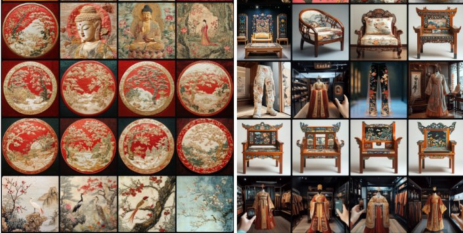
Building a digital platform is the cornerstone of the heritage and innovation of Chinese embroidery culture. It requires us not only to establish an exhaustive database of Han embroidery patterns but also to develop a series of interactive experience applications to show the charm of Han embroidery in an all-round and multi-level way. Through extensive collection, careful organization, and meticulous classification, we are able to systematically present Han embroidery patterns to the public and scholars. This not only provides scholars with valuable research resources but also provides designers with a rich source of inspiration. The construction of the database should focus on the diversity and representativeness of the patterns to ensure that the artistic style and cultural connotation of Han embroidery can be fully reflected.
Figure 2: Using AI to train the Han embroidery database and achieve style migration.
Exploring the Digital Inheritance and Commercialization Strategies 1615
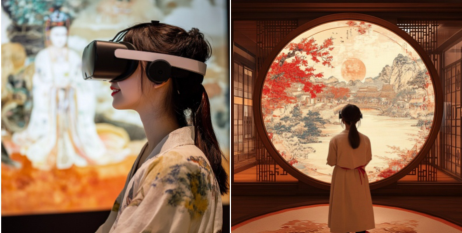
Meanwhile, with the help of Virtual Reality (VR) and Augmented Reality (AR) technology, we can create an immersive environment for experiencing Han embroidery culture. The audience can wear VR equipment as if they were in the temple of Han embroidery art and enjoy those exquisite embroidery works up close. AR technology can make the elements of Chinese embroidery ‘live’ in reality and interact with the audience, thus deepening their understanding and recognition of Chinese embroidery culture. These applications should focus on the smoothness and fun of the user experience to ensure that they can attract more people’s attention and participation.
Figure 3: Simulated Han embroidery VR+AR experience scene.
Cross-Field Integration: Diversified Application and Innovation of Chinese Embroidery Culture Cross-field integration, as a core strategy to broaden the application field of Chinese embroidery and enhance its market competitiveness, is not only a modern interpretation of traditional art, but also an embodiment of the convergence of the depth of design theory and the breadth of practice. According to the theories of design theorists such as John Heskett on ‘design and socio-cultural interaction’ and Richard Buchanan on ‘design as cultural expression’, we should take the viewpoint of ‘design as cultural expression’ as a basis for the development of Chinese embroidery and its market competitiveness. ‘We should actively combine Han embroidery with modern design, fashion industry, cultural creativity and other fields to jointly promote the innovative development of Han embroidery culture. The integration of Han embroidery elements with modern clothing design is not only a modern transformation of traditional art forms, but also a profound embodiment of the design principle of ‘Form Follows Function’ (Louis Sullivan). By combining Chinese embroidery patterns with modern clothing design, we have created clothing products that not only contain traditional cultural flavour but also a sense of fashion, which not only meets modern aesthetic demands but also gives traditional Chinese embroidery new vitality and market value. This integration not only provides a broader platform for Han embroidery, but also injects a new source of inspiration and cultural heritage for modern design, realising a harmonious symbiosis between tradition and modernity.
Therefore, the combination of Han embroidery and fashion industry is the practice of the concept of ‘Design-Driven Innovation’. The fashion industry is an important carrier for the inheritance and innovation of Han embroidery culture. By organising Han embroidery fashion shows and opening Han embroidery themed shops, we are able to skilfully integrate Han embroidery culture with modern fashion elements, attracting the attention of more young consumers and stimulating their interest in and love for traditional culture. This combination not only promotes the dissemination and popularisation of Han embroidery culture, but also enhances the popularity and market influence of Han embroidery brands, providing new ideas for the commercial operation of Han embroidery culture. In Wuhan and other places, offline brick-and-mortar shops such as Han embroidery boutique exhibition centres and Han embroidery masters’ studios have become important places for consumers to learn about Han embroidery culture and experience Han embroidery techniques. These brick-and-mortar shops have enhanced consumers’ knowledge and recognition of Chinese embroidery culture by organising experience activities of Chinese embroidery techniques and exhibitions of Chinese embroidery works. In order to enhance the offline experience, some of the brick-and-mortar shops have also introduced virtual reality (VR) technology, allowing consumers to experience the production process of Han embroidery in a virtual environment and feel the charm of traditional culture.
In addition, design as a way of life, we can through the integration of Han- embroidery elements into the design of home decoration and handicrafts, we are able to create home environments and exquisite artworks with a strong cultural flavour, which not only enriches people’s living space, but also enhances the quality of life and cultural connotation. This design practice not only expands the application field of Chinese embroidery, but also promotes the deep dissemination and wide recognition of Chinese embroidery culture. Integration with cultural and creative industries: Cultural and creative industries are the new direction of heritage and innovation of Han embroidery culture. We can use the elements of Han embroidery to develop a series of cultural creative products, such as stationery, ornaments, gifts and so on, to meet the personalised needs of consumers. At the same time, we can also integrate Han embroidery culture into tourism projects to create cultural tourism products with local characteristics and promote the development of local economy.
Talent Training and Educational Innovation: The Inheritance and Promotion of Han Embroidery Skills The author has completed an offline research, which adopts the research method of quantitative analysis and is aimed at the first to sixth grade students of the First Affiliated Primary School of Central China Normal University and the seventh grade students of the First Affiliated Middle School (Junior High School) of Central China Normal University. A total of 101 valid questionnaires were collected.
Exploring the Digital Inheritance and Commercialization Strategies 1617
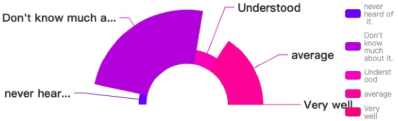
Figure 4: Research and analysis data of Han embroidery (collected by the author).
Figure 5 illustrates the participants’ awareness of Han embroidery. Notably, none of them reported extensive knowledge (0%), while only 12.87% had some familiarity, recognizing its basic features or having seen it in person. About 31.51% had a superficial understanding, limited to simple forms. A significant 48.51% had only minimal awareness of Han embroidery’s existence, and 6.93% had never heard of it before taking related classes.
These findings indicate a general lack of deep knowledge about Han embroidery among the participants, with most having little to no awareness. This points to a broader issue of low public recognition and inadequate talent cultivation in Han embroidery. The challenges in its inheritance include breaks in traditional methods, weak modern transmission paths, and insufficient training systems.
To ensure the sustainable development and cultural transmission of Han embroidery, it’s essential to innovate and reform current approaches, enhance its promotion, expand inheritance channels, and improve talent cultivation systems. Building a comprehensive inheritance model that integrates industry, academia, and research is crucial. Collaborations with educational institutions, research bodies, and businesses should focus on embedding Han embroidery into school curricula and establishing co- operative training bases. This approach will provide practical learning opportunities, fostering both creativity and market growth. Encouraging scholars and designers to explore Han embroidery’s cultural and artistic values will also support innovative practices, breathing new life into this traditional art form.
COMMERCIALISATION STRATEGY OF HAN EMBROIDERY Precise Positioning and In-Depth Brand Building
In strengthening the market competitiveness and brand influence of Chinese embroidery products, accurate positioning and in-depth brand building is the core strategy. This strategy not only requires a deep understanding of market dynamics and consumer preferences but also fine market segmentation and precise positioning of Chinese embroidery products. The Chinese embroidery brand ‘Sewing Pei’ is an example of the successful implementation of a precise positioning strategy. Founded by Ren Benrong, a representative inheritor of Chinese embroidery, the brand focuses on the design and production of various types of Chinese embroidery products, such as double-sided embroidered sarongs, cashmere shawls, and other daily necessities. Through
the precise positioning of Han-embroidered products, ‘Sewing Pei’ meets the demand of consumers for high-quality, culturally-connotated daily necessities and successfully establishes a unique brand image in the market. At the same time, Wuhan Hanxiu Art Research Institute also plays a vital role in the construction of Hanxiu branding. The institute is committed to the preparation of local standards for Han-embroidery, which provides directional guidance for the development of Han-embroidery and deepens the understanding of Han-embroidery culture by organizing Han-embroidery theoretical research and research on inherited people, providing a solid theoretical foundation for branding operation.
Online and Offline Omnichannel Integration Strategy To broaden the market reach and strengthen the brand influence of Chinese embroidery, adopting an integrated online and offline strategy is essential. Chinese embroidery products are sold on e-commerce platforms like Taobao and Jingdong, overcoming geographical limitations. Sales of these products on these platforms grow by over 20% annually, expanding consumer access. These platforms offer a wide range of Han embroidery products, from apparel to household items, meeting diverse consumer needs. To enhance user experience, AI recommendation systems suggest personalized Han embroidery items based on user behavior, boosting purchasing intent and satisfaction.
This online model not only expands sales channels but also improves user engagement. Product pages feature detailed descriptions, reviews, high- definition images, and even 3D try-on and AR features, providing a more intuitive shopping experience. Leveraging KOLs (Key Opinion Leaders) and UGC (User Generated Content) on social media and short video platforms further amplifies the Han embroidery brand’s reach.
Additionally, hybrid events like the ‘Han Embroidery Carnival’ attract consumers by combining online bookings with offline experiences. These events use big data to analyze consumer behavior, pushing relevant content to increase participation. This integrated approach not only drives sales but also creates a sustainable omnichannel ecosystem, fostering deeper brand engagement for Han embroidery.
Diversified Promotion and International Expansion Strategy In order to further enlarge the market effect of Han embroidery products, diversified promotion and international expansion strategy is an inevitable choice. Holding Han embroidery cultural festivals, such as the first Han embroidery carnival, through a series of display activities to let the public and tourists feel the charm of Han embroidery. Participating in international exhibitions such as the Milan World Expo, China Arts and Crafts Biennale, etc., pushes Han embroidery works to the international stage and enhances the global popularity and influence of Han embroidery. These activities not only show the unique charm of Han embroidery culture but also provide strong support for the international expansion of Han embroidery brand.
Exploring the Digital Inheritance and Commercialization Strategies 1619
Meanwhile, the cross-border cooperation between Han embroidery and the famous milk tea shop ‘Cha Yan Yue Shi’, the Garden Road Cha Yan Yue Shi ‘Feng Cai’ Han embroidery-themed concept shop as the first shop adopting the elements of the intangible cultural heritage of Han embroidery, on the basis of integrating China’s excellent traditional culture, and combining with Cha Yan Yue Shi’s ‘New Chinese Tea’, the Han embroidery theme shop is the first shop adopting the elements of the intangible cultural heritage of Han embroidery. Based on the integration of the excellent traditional Chinese culture, combined with the ‘New Chinese Tea Drink’ of Tea Yum Yum, the elements of Han embroidery are integrated into the interior decoration of the milk tea shop and the packaging of the products, which realizes the perfect combination of traditional culture and popular culture. What’s more, the Han embroidery works of Ren Wei, a provincial-level non-genetic hereditary bearer, were on the international stage, such as Milan International Fashion Week in spring/summer 2016, and co-operated with internationally renowned brands to launch co-branded products, etc., which further enhanced the international popularity and brand value of Han embroidery. These international co-operations not only show the deep heritage of Han embroidery culture but also provide strong support for the global development of the Han embroidery brand.
CONCLUSION
From the perspective of design, this paper discusses the inheritance and commercialization strategy of traditional patterns of Han embroidery in the era of digital intelligence, taking Hubei Han embroidery as an example. Through the construction of digital platforms, cross-field integration, talent training education innovation, and other inheritance paths, as well as the implementation of precise positioning, branding operations, online and offline integration, and other commercialization strategies, we have provided practical advice and suggestions for the inheritance and development of Han embroidery in the new era. In the future, we will continue to pay attention to the dynamics of the inheritance and development of Han embroidery culture and continue to explore and innovate the inheritance paths and commercialization strategies of Han embroidery culture, with a view to contributing more wisdom and motivation to the innovative development and sustainable inheritance of Chinese traditional culture. Meanwhile, we also hope that the research results of this paper can provide valuable reference and inspiration for the inheritance and development of other intangible cultural heritage.
REFERENCES
Fu, Y. (2023). Regional Circulation Symbiosis: Study on the Sustainable Development of Regional Traditional Handicraft. Gruttadauria, A., Borzoni, G., Barella, S., & Demir, A. G. (2024). Embroidered Property Materials: A Novel Strategy for Developing Patterned Materials. *Advanced Engineering Materials*, 2301807.
Lou, Y. (2023). Human Creativity in the AIGC Era. *She Ji: The Journal of Design, Economics, and Innovation*, 9(4), 541–552. Mirra, F. (2022). *Urban imaginaries: Contemporary art and urban transformations
in China since 2001* (Doctoral dissertation, Birmingham City University). Ren, Ruoan, Yang, Fangchao, & Sun, Jie. (2024). The development and logic of digital fashion from a design perspective. *Journal of Fashion*, (02), 127–136. doi: CNKI: SUN: JLXY.0.2024–02-006. Xu, S., Cheng, L., Liu, Y., & Ge, L. (2023). Individuality in Commonality: A
Comparative Study of Su Embroidery and Gu Embroidery Based on Online Retrieval of Museum Collections. *Asian Social Science*, 19(4), 12. Xue, B. (2019). A framework of culture-based innovation for the protection and development of intangible cultural heritages for design with a focus on Yanchuan patchwork. Yang, F. (2023). Research on the Construction of Green Exhibition Driven by
Sustainable Design. *Highlights in Art and Design*, 4(3), 135–138. Yang, F. (2023). Artistic Licensing in the Cultural Industry in the Digital Age- Dilemmas and Opportunities. *Advances in Education, Humanities and Social Science Research*, 8(1), 454–454. Yu, L. (2023). Digital Sustainability of Intangible Cultural Heritage: The Example of
the “Wu Leno” Weaving Technique in Suzhou, China. *Sustainability*, 15(12), 9803.
LISTED IN THE AHFE DIGITAL BOOKSTORE CATALOGUE
Explore the complete digital volume
Human Factors in Design, Engineering, and Computing
Read this individual research paper free through the original publisher, or explore the full digital proceedings book.
ISBN 978-1-964867-35-9
Explore this ISBN in the AHFE Bookstore ↗Listed in the July 2026 bookstore catalogue; search by ISBN to confirm current availability · Digital book purchase optional