Ingvar Tjostheim, Chris Wales, John A Waterworth (2024). Sexting, age and digital vulnerabilities. In: Human Interaction and Emerging Technologies (IHIET 2024). AHFE Open Access, vol. 157, pp. 535–543. https://doi.org/10.54941/ahfe1005513
Despite popular misconception it is not only young people that are sharing nude pictures and videos. There are a number of studies targeted towards the younger generation about their sexting, but few on older age-groups. In general, younger people take more risk than older people, and some seem to care less about possible negative consequences. For this study we commissioned a market research company to collect data from a national population, with a representative sample from 16 to 69 years old, in total 1071 citizens. We used binary logistic regression for the analysis of responses, a method that can be used to predict a categorical dependent variable – in our case whether a person has been sexting the last 12 months or not. In the study we included the following independent variables: gender, education, self-efficacy; the cognitive reflection test (CRT) to distinguish between a intuitive versus analytical decision style; Machiavellianism, to distinguish a personality trait characterized by manipulativeness and deceitfulness; willingness to share personal data, and finally whether the citizens had experience of ID-theft or credit-card misuse within the previous 12 months. Our results show that the ID-theft/credit-card variable was a significant predictor of sexting for the age-groups 16-29, 30-39 and 50-69 years old. For youngest group, the manipulativeness and deceitfulness trait is also a predictor, whereas for the oldest group, the intuitive decision style a high willingness to share personal data are also significant predictors
Sexting involves the sharing of nude images of others, or of oneself alone, or together with others (Reyns 2014). Barrense-Dias et al. (2017) distinguish between passive and active sexting, but there is no clear definition of the two, whilst Dodaj and Sesar (2020) identified four forms of sexting: relational, reactive, forced and violent. Dir et al.’s (2013) results showed that higher frequency of sexting was positively related to impulsive behaviour (sensation seeking and negative urgency). Machimbarrena et al. (2018) have shown many potential negative consequences. Although sexting can be a means of flirting or enhancing a sexual relationship it can highlight potential vulnerabilities to victimisation (Cooper, 2016). March and Wagstaff (2017) included the “dark triad” of Machiavellianism, narcissism, and psychopathy in their study of sexting.
While many studies of sexting are only about social and psychological vulnerabilities, our study includes two personality traits, and the willingness to share personal data and financial vulnerability such as ID-theft. Individuals that have experienced ID-theft, debit or credit-card misuse might share some similarities with those who engage in sexting. A question that intrigues us relates to whether a person who has recently been sexting is more likely to experience ID-theft or credit-card misuse or vice versa. We have used a survey to investigate this phenomenon. While some respondents will give socially desirable answers, others are not concerned by the information they reveal. Studies on the survey’s method (Krosnick, 1991; MacKenzie and Podsakoff, 2012) show that we cannot always assume honest and correct answers. For the questions about ID-theft and credit-card misuse, we asked the respondents to tell us about what happened to them. Most of the respondents did give us the additional information of the incidents. We therefore believe that the answers to this question is reasonably accurate. For the other questions, the personal trait and the sexting vs has not-been- sexting questions, we do not have additional information that can be used to evaluate level of honesty. In general, this type of survey is used for statistical purposes, such as those carried out by Eurostat (European Union, 2017). For this paper we formulated two research questions: to what extent can sexting be predicted by intuitiveness, the willingness to share personal data, experience of ID-theft or credit-card misuse, or demographical variables? Secondly, which of these variables are the best predictors, if any, of sexting?
A NATIONAL SURVEY ABOUT ONLINE BEHAVIOUR Professional market research companies recruit individuals that can participate in surveys. Sometimes market research companies use the term ‘panels’ to indicate that the company has a database with contact information. Our participants were members of a large national panel of Norwegian citizens. For each survey, panel-members with demographic characteristics similar to the actual population are invited to participate. Often, for Norway, the size of the sample is set to approximately 1000 to get a representative sample. It does not mean that the results are accurate or represent a good prediction every time, but over time with this sample size and method of recruiting respondents, reliable results can be assumed.
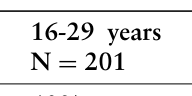
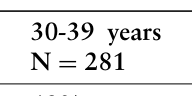
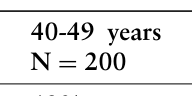
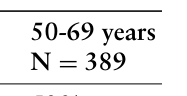
We commissioned the market research company Norstar AS to collect data from the Norwegian national population, with a representative sample aged from 16 to 69 years old, in total 1071 citizens. To characterise our participants, we present their demographic profile in Table 1 and Table 2 for the four age-groups that we use in our analysis. The demographic profile our participants are:
Sexting, Age and Digital Vulnerabilities 537
Table 1. Gender and the age profile of the participants.
Table available in the original PDF paper.
Equation reproduced from the original PDF.Equation reproduced from the original PDF.Equation reproduced from the original PDF.Equation reproduced from the original PDF.Table 2. Educational profile of the participants.
Table available in the original PDF paper.
Primary or secondary education
Bachelor degree (or equivalent)
Higher degree (Master or higher) 19–29 years, N = 201 Male 80% 16% 4% Female 70% 18% 12% 30–39 years, N = 281 Male 47% 25% 28% Female 27% 32% 42% 40–49 years, N = 200 Male 47% 26% 27% Female 30% 31% 39% 50–69 years, N = 389 Male 47% 27% 27% Female 39% 32% 29%
The survey was filled in by the respondent on either a PC, a tablet or a mobile phone. For this study our response variable is whether the citizen has shared nude pictures or videos of themselves or of others, or both them and others. This method is a self-reported measurement, therefore we cannot test whether or not the respondents are actually telling the truth. In general, for large scale survey by market research companies we assume that data is reliable. For some, and we speculate that it could be the case for individuals in the oldest age-groups, this type of behaviour is not socially acceptable and, in many cases, criminal behaviour.
THE MEASUREMENTS IN THE STUDY The respondents answered questions about whether they personally had experienced ID-theft or credit-card misuse within the last 12 months. Individual Machiavellianism was measured with the trimmed MACH-IV (Rauthmann, 2013; Christie & Geis, 1970) a 5-item Likert scale where participants respond to statements such as “Anyone who completely trusts anyone is asking for trouble”. For self-efficacy, we used 3 items from the Psychological Capital Questionnaire (Luthans, Youssef et al., 2007). For ID-theft and credit-card misuse, the questions were identical to the questions used in surveys by the national bureau of statistics in Norway and the Eurostat-survey on European attitudes toward cyber security.
The Cognitive Reflection Test (Frederick, 2005) has IQ-type questions with either a correct or an incorrect answer. It can be used to assess
participants thinking styles, described as intuitive versus analytical. In the survey, the respondents were asked to answer four numerical CRT-questions, three drawn from Frederick (2005) and a question about the number of pupils in a class (Toplak, 2014). Furthermore, we include a consent- test (Tjostheim and Waterworth, 2020), which is a behavioural measure concerning disclosure of personal data and demographics. In the consent test, we asked the participants to give us access to all their personal data that the market research company already had in their database, as such access is not otherwise allowed under the contract agreed between the panel members and the market research company. Although some respondents gave consent, we did not actually receive the data from the marker research company, but a yes-answer indicates a high willingness to share personal data.
Table 3. Descriptive statistics of the variables and measurements (N = 1071).
Table 3 shows descriptive statistics of all 8 variables. Kurtosis indicates the extent to which a distribution of scores is relatively flat or relatively peaked. Skewness indicates the extent to which scores have a tendency toward the upper or lower end of a distribution. There is a skewness problem if the result is greater than +/- 2.0, which is the case for the variable ‘sharing nudes’, where both skewness and kurtosis are peaked. In total, across all age-groups, 12% reported that they had sexted in one form or other. This means that it a small group, and in our analysis it is used as the dependent variable, and not together with other independent variables. The following table shows the percentages.
Table 4. Percentages that have shared nude pictures or videos - the four age-groups.
Table available in the original PDF paper.
16-29 years 30-39 years 40-49 years 50-69 years Male 24% 15% 16% 6% Female 23% 12% 14% 2% All 23% 14% 15% 4%
Table 4 shows that there are differences between three of the four age- groups. For the intervals 30–39 and 40–49, there is no difference. An argument for analysing age-groups separately and not all age-groups together, is differences in sharing-frequency between the groups.
Sexting, Age and Digital Vulnerabilities 539
The Analysis With Binary Logistics Binary logistic regression is a form of regression analysis. The dependent variable is a dichotomy variable coded as 0 or 1. The independent variables can be of any type, for instance continuous and categorical variables. The four age-group intervals are analysed as separate models.
We first report the four models’ statistical summaries that include the Hosmer-Lemeshow test (Archer et al., 2007) with the threshold criteria of > 0.05. The Hosmer-Lemeshow test is often used as a goodness of fit test.
Table 5. Model summaries, the final model for each of the four age-groups.
Table available in the original PDF paper.
Age-group 16–29 years - Model 1 summary –2 Log likelihood Cox and Snell R square Nagelkerke R square
Step 5 208.210 0.51 0.076 Hosmer and Lemeshow Test
Chi-square df Sig.
Step 5 2.990 4 0.560 Age-group 30–39 years - Model 2 summary
–2 Log likelihood Cox and Snell R square Nagelkerke R square Step 6 213.327 0.22 0.041
Hosmer and Lemeshow Test Chi-square df Sig.
Step 6 0.926 4 0.921 Age-group 40–49 years - Model 3 summary
–2 Log likelihood Cox and Snell R square Nagelkerke R square Step 7 158.856 0.033 0.059
Hosmer and Lemeshow Test Chi-square df Sig.
Step 7 0.618 1 0.432 Age-group 50–69 years - Model 4 summary
–2 Log likelihood Cox and Snell R square Nagelkerke R square Step 5 110.464 0.057 0.198
Hosmer and Lemeshow Test Chi-square df Sig.
Step 5 4.724 7 0.694
The Wald statistic (Hoshmer and Lemeshow, 1989) is used to identify the significant variables in each of the four models. This is the square of the t- statistic and gives equivalent results for a single parameter. It can be used to test the significance of particular predictors in a statistical model. We chose
backward Wald for selecting how independent variables are entered into the analysis. With backward Wald, all the predictor variables chosen are added into the model, and those variables that do not (significantly) predict anything on the dependent measure are removed, one by one, from the model.
In Table 6 we present step 1 in the binary logistic regression analyses that includes all independent variables.
Table 6. Descriptive statistics of the variables and measurements in step 1.
Table available in the original PDF paper.
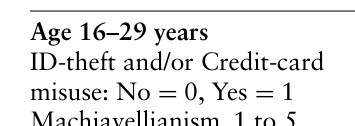
Variable code: Beta est. SE Wald df Sign. Exp (B) Gender: Female = 0, Male = 1 Age 16–29 −0.035 0.369 0.009 1 0.924 0.966 Age 30–39 0.059 0.384 0.492 1 0.483 0.857 Age 40–49 0.077 0.440 0.031 1 0.861 1.080 Age 50–69 1.066 0.679 2.468 1 0.116 2.904 Education: three levels (primary, bachelor, master) Age 16–29 −0.046 0.310 0.022 1 0.881 0.955 Age 30–39 −0.154 0.220 0.492 1 0.483 0.857 Age 40–49 −0.897 0.311 8.326 1 0.004 0.408 Age 50–69 0.219 0.351 0.390 1 0.532 1.245 Data-disclosure (consent): No = 0, Yes = 1 Age 16–29 0.124 0.359 0.120 1 0.729 1.132 Age 30–39 0.321 0.380 0.715 1 0.086 0.273 Age 40–49 0.653 0.443 2.174 1 0.140 1.921 Age 50–69 1.179 0.559 4.459 1 0.035 3.252 ID-theft and/or Credit-card misuse: No = 0, Yes = 1 Age 16–29 0.837 0.417 4.032 1 0.045 2.309 Age 30–39 −1.300 0.758 2.941 1 0.086 0.273 Age 40–49 0.094 0.530 0.032 1 0.859 1.099 Age 50–69 1.894 0.588 10.379 1 0.001 6.644 CRT: all wrong, one correct, two correct, three correct, all four correct Age 16–29 0.276 0.157 3.093 1 0.79 1.318 Age 30–39 −0.108 0.185 0.339 1 0.560 0.898 Age 40–49 0.128 0.221 0.338 1 0.561 1.137 Age 50–69 0.694 0.295 5.526 1 0.019 2.002 Self-efficacy, low, medium, high Age 16–29 −0.200 0.210 0.913 1 0.339 0.819 Age 30–39 0.263 0.223 1.391 1 0.238 1.300 Age 40–49 0.191 0.254 0.563 1 0.453 1.210 Age 50–69 −0.181 0.323 0.312 1 0.587 0.835 Machiavellianism, from low to high, 1 to 5 Age 16–29 0.276 0.157 3.093 1 0.079 1.318 Age 30–39 0.198 0.150 1.732 1 0.188 1.219 Age 40–49 −0.266 0.172 2.407 1 0.121 0.766 Age 50–69 −0.101 0.295 0.116 1 0.733 0.904
In reviewing the numbers in step 1, a high Wald-score is an indication of the final model, of what can be expected. In the final step, only the significant predictors (<0.1) remain.
Sexting, Age and Digital Vulnerabilities 541
Table 7. Descriptive statistics of the variables and measurements in step 1.
Table available in the original PDF paper.
Variable code: Beta est. SE Wald df Sign. Exp (B)
0.857 0.407 4.438 1 0.035 2.356
Equation reproduced from the original PDF.
–1.236 0.750 2.715 1 0.099 0.291
Machiavellianism, 1 to 5 0.327 0.151 4.681 1 0.031 1.387 Constant –2.224 0.445 24.959 1 <0.001 1.080 Age 30–39 ID-theft and/or Credit-card misuse: No = 0, Yes = 1
–0.650 0.263 6.108 1 0.013 0.522
Machiavellianism, 1 to 5 0.236 0.141 2.795 1 0.095 1.266 Constant –2.426 0.465 27.208 1 <0.001 0.088 Age 40–49 years Education: three levels (primary, bachelor, master)
1.968 0.574 11.757 1 <0.001 7.154
Constant –0.608 0.477 1.626 1 0.202 0.544 Age 50–69 years ID-theft and/or Credit-card misuse: No = 0, Yes = 1
1.233 0.550 5.027 1 0.025 3.433
Data-disclosure (consent): No = 0, Yes = 1 CRT: all wrong to all correct 0.798 0.286 7.803 1 0.005 2.221 Constant –5.646 0.818 47.632 1 <0.001 0.004
The final model, shown in Table 6, shows the significant predictors for each of the four age-groups. For the 16–29 age-group, there are two significant predictors, ID-theft & credit-card misuse and Machiavellianism, which is a personality trait characterized by manipulativeness and deceitfulness. These same two variables are predictors for the age-group 30–39, but only significant on a 0.1-level. For the age-group 40–49, education is a predictor, indicated by those have studied at a higher education institution and those who have not. A negative Beta reveals that it is those who have not studied at higher education are sexting more frequently. Finally, for the age-group 50–69 years, ID-theft & credit-card misuse together with data-disclosure (high willingness to share) and the CRT are significant predictors.
In binary logistic regression, there is one more result that should be reported. This is the classification table, showing correct and incorrect percentages for the groups ‘has shared nudes’ (coded as 1) and ‘has not shared nudes’ within the last 12 months (coded as 0). The higher the percentage, the better the variables function as predictors.
The youngest (70%) and the oldest (77%) age-groups have acceptable predictions. For the two other age-groups the percentages were lower, 57% and 64%.
In general, we assume that personal traits and decision style are of relevance for online behaviour; what people do, for instance, when no one’s watching. The results from the present study are in accordance with previous studies on impulse behaviour, sensation-seeking and potential vulnerabilities.
Table 8. Classification table - the binary logistics prediction of the two groups.
The fact that the respondents are drawn from a panel representing a national population aged 16–69, and not only up to 30 years old, is important, and this is a study that can be replicated. Our results show that sexting is not only a phenomenon among young people, but it is more common amongst the younger generation. Of greater importance, the correlation between financial vulnerability and the sharing of graphic nude images indicates that sexting might be even riskier than anticipated.
DISCUSSION
In the present study, with a large data set, self-reported online behavior together with personal traits and willingness to share personal data were assessed as predictors of the tendency towards sexting. Our study showed that ID-theft and credit-card misuse were more common among those that reported that they have been sexting compared to the non-sexting group. The ID-theft/credit-card variable was a significant predictor of sexting for the age-groups 16–29, 30–39 and 50–69 years old. For the youngest group, the manipulativeness and deceitfulness trait is also a predictor, whereas for the oldest group, the intuitive decision style and a high willingness to share personal data are also significant predictors.
Our results indicate that personal traits do matter, but these findings were less clear-cut than those for the ID-theft and credit card misuse. In planned future studies, we will examine how and to what extent several personality variables, such as and including intuitiveness, are associated with and can therefore predict hazardous online behaviours such as sexting.
ACKNOWLEDGMENT
This research was supported by Research Council Norway under the grant 310105 (NORCICS).
Sexting, Age and Digital Vulnerabilities 543
REFERENCES
Archer, K. J., Lemeshow, S., and Hosmer, D. W. (2007). Goodness of fit tests for logistic regression models when data are collected using a complex sampling design. Computational Statistics & Data Analysis, 51, 4450–4464. Barrense-Dias, Y., Berchtold, A., Suris, J. C., and Akre, C. (2017). Sexting and the
definition issue. Journal of Adolescent Health, 61(5), 544–554. Christie, R. and Geis, F. L. (1970). Studies in Machiavellianism. New York NY, Academic. Cooper, K., Quayle, E., Jonsson, L., and Svedin, C. G. (2016). Adolescents and self-
taken sexual images: A review of the literature. Computers in Human Behavior, 55, 706–716. doi: 10.1016/j.chb.2015.10.003. Dir, A. L., Cyders, M. A., and Coskunpinar, A. (2013). From the bar to the bed via mobile phone: A first test of the role of problematic alcohol use, sexting, and impulsivity related traits in sexual hookups. Computers in Human Behavior, 29, 1664–1670. Dodaj, A., and Sesar, K. (2020). Sexting categories. Mediterranean Journal of Clinical
Psychology, 8(2). European Union, (2017). 5661. Special Eurobarometer 464a “European attitudes towards cyber security.” September 2017. Frederick, S. (2005). Cognitive reflection and decision making. Journal of Economic
Perspectives, 19, 25–42. Hosmer, W. and Lemeshow, S. Applied logistic regression. (1989). New York: Wiley. Klettke, B., Hallford, D. J., Clancy, E., Mellor, D. J. and Toumbourou, J. W. (2019).
Sexting and Psychological Distress: The Role of Unwanted and Coerced Sexts. Cyberpsychology, Behavior, and Social Networking. Apr 2019. 237–242. Krosnick, J. A. (1991). Response Strategies for Coping with the Cognitive Demands of Attitude Measures in Surveys, Applied Cognitive Psychology, 5 3, 213–36. Luthans, F., Youssef, C. M., and Avolio, B. J. (2007). Psychological capital:
Developing the human competitive edge. Oxford: Oxford University Press. Machimbarrena, J. M., Calvete, E., Fernández-González, L., Álvarez-Bardón, A., Álvarez-Fernández, L., and González-Cabrera, J. (2018). Internet risks: An overview of victimization in cyberbullying, cyber dating abuse, sexting, online grooming and problematic internet use. International Journal of Environmental Research and Public Health, 15(11), 2471. MacKenzie, S. B. and P. M. Podsakoff (2012). Common Method Bias in Marketing:
Causes, Mechanisms, and Procedural Remedies. Journal of Retailing, 88: 542–555. March, E. and Wagstaff, D. L. (2017) Sending Nudes: Sex, Self-Rated Mate Value, and Trait Machiavellianism Predict Sending Unsolicited Explicit Images. Front. Psychol. 8: 2210. Rauthmann, J. F. (2013) Investigating the MACH–IV With Item Response Theory
and Proposing the Trimmed MACH* Journal of Personality Assessment, 95:4, 388–397. Reyns, B. W., Henson, B. and Fisher, B. S. (2014) Digital Deviance: Low Self- Control and Opportunity as Explanations of Sexting Among College Students. Sociological Spectrum: Mid-South Sociological Association. Vol. 34, (3): 273–292. Tjostheim I. and Waterworth J. A. (2020). Predicting Personal Susceptibility to
Phishing. In: Rocha Á., Ferrás C., Montenegro Marin C., Medina García V. (eds.) Information Technology and Systems. ICITS 2020. Advances in Intelligent Systems and Computing, vol 1137. Springer, Cham. https://doi.org/10.1007/978- 3-030-40690-5_54 Toplak, M.E. West, R.F., and Stanovich, K.E. (2014). Assessing miserly information processing: An expansion of the Cognitive Reflection Test. Thinking & Reasoning, 20:2, 147–168, DOI: 10.1080/13546783.2013.844729
LISTED IN THE AHFE DIGITAL BOOKSTORE CATALOGUE
Explore the complete digital volume
Human Interaction and Emerging Technologies (IHIET 2024)
Read this individual research paper free through the original publisher, or explore the full digital proceedings book.
ISBN 978-1-964867-33-5
Explore this ISBN in the AHFE Bookstore ↗Listed in the July 2026 bookstore catalogue; search by ISBN to confirm current availability · Digital book purchase optional