Rupesh Nath, Anirudha Joshi (2024). The Evolution and Evaluation of Pie Menu Interactions in Text Input. In: Human Factors and Systems Interaction. AHFE Open Access, vol. 154, pp. 163–178. https://doi.org/10.54941/ahfe1005364
Pie menus, also known as radial menus, have been studied in the realm of user interfaces. Various applications of pie menus have been explored, with research focusing on their usage in diverse contexts and their impact on user behaviour. As interactive devices such as touch screen mobiles, virtual reality, mixed reality, and touch-based physical products rapidly permeate into the users’ hands, they are driving the demand for studies in multi-model interactions. The pie menu is a promising UI pattern that offers various selection options within a constrained radius. Mostly, the interaction requires human action like click, swipe or steer gestures, and efforts like visual search, decision time. Despite the efforts by different research groups to derive an effective model on human performance, we observed that the derived models on Pie menu are studied independently, but all models are based on Fitts’ law and its extension in text input methods. We conducted a comprehensive literature review of publications from ACM, IEEE, HFES, and few others focusing on the evolutions of Pie menus and their derived models. Our qualitative study examined three aspects: application of pie menu in the context of text input, touch mobile interfaces, models applied or derived in these studies. Through a mixed-method analysis, we evaluated these aspects and narrowed our focus to 38 papers that specifically address text input methods and human performance. Our findings revealed that the performance of pie menus varied significantly across different use cases. Some studies reported that the northwest side of the menus was harder to access, while others suggested that pie menus were theoretically easy to learn but performed less effectively than square menus. However, in the context of text input, pie menus outperformed conventional keyboards. We propose that future research should aim to develop a standard methodology for testing pie menus that can be generalized across different contexts with minimal modifications. The results of this review will provide valuable insights for researchers and designers working on Pie menu interactions, helping them understand previous research, identify gaps, and determine future directions.
With the rapid advancement of technology, interactive devices ranging from traditional devices to mobiles, virtual reality devices to IOT applications had become a part of our daily life of humans (Smith and Johnson, 2021; Chen et al., 2020). This evolution challenges traditional menu system tailored
to desktops, necessitating design of intuitive solutions (Lee & Kim, 2020). Researchers now focus on adaptive menu structures, and pie menus are one of the promising solutions where selective options are to be revealed and for their compact, visually intuitive navigation patterns. Pie menus are circular in shape and is divided into sectors or menu item which display command options to choose. Pie menu sometimes are also referred as Radial menu, Circular menu, Polygon menu, or Marking menu. Marking menus sometimes have subtle difference which leaves a track path and the selection targets may not be arranged in equi-distance pattern like in pie menu.
Menu organization can be classified into three types: alpha/numeric, cate- gorical (functional), and random ordering (Dray, Ogden & Vestewig, 1981). Pie menus, which are circular menus that divide the screen into sectors, have been used for all these types of menu organization. One of the innovative applications of pie menu is in its usage in text input methods differently than traditional way of keyboard design, which falls under alpha/numeric cate- gory (Callahan et al., 1988; Joshi et al., 2011; Venolia, 1994). Several studies have evaluated the performance and usability of pie menus for text input in different languages, such as English, Hindi, Marathi, etc. (Callahan et al., 1988; Dalvi et al., 2015; Isokoski, 2004; Joshi et al., 2014; Srivastava & Bharath, 2016; Wani et al., 2017).
One of the advantages of pie menus for text input is that they can overcome the challenge of accommodating a large set of characters within the lim- ited space of the keyboard, which is particularly relevant for Indic languages that have complex scripts and multiple variations of characters (Ishida, n.d.). Designing for text input methods is a complex problem and requires huge knowledge on performance models, design, usability, and ergonomics. Pre- vious research on pie menu in text input has been isolated and fragmented, and the methods or models developed have not been systematically applied to link the various research advancements. Pie menu studies have relied on Fitts’ law (Barik & Kumar, 2012; MacKenzie, 2013) or empirical experiments and different models are proposed to evaluate the performance in different sce- narios. This motivated us to conduct a review study on the use of pie menu in the domain of text input methods. Based on these observations our review is done focused on these research questions:
What are the specific applications of pie menus within text input methods, and how do they influence user experience and efficiency?
How does steering law helps in the betterment of the prediction models for the pie menu performances?
What are the directional effects of steer in the pie menu?
The objective is to study about what are the applications of pie menu, its performance evaluations, methods or models used to measure the perfor- mance and provide summary or suggestions according to the limitations and suggested future works identified in this review in the context of text input methods.
The Evolution and Evaluation of Pie Menu Interactions in Text Input 165
METHOD
The methodology of the systematic review adhered to a predetermined review protocol, structured in alignment with the review objectives. This followed the identification of keywords, shortlisting digital libraries, and rigorous screening of literature in accordance with predefined inclusion criteria.
We tried to follow the guidelines provided in Preferred Reporting Items for Systematic Reviews and Meta-Analysis (PRISMA; Liberati et al., 2009). Search for the peer reviewed conference papers and journals on pie menu studies was performed between 10 Jan 2024 to 15 Jan, 2024 in ACM dig- ital library, Springer publisher, IEEExplore a scientific repository, Mendeley search engine, AHFE journals, and Science direct. The review focuses on spe- cific aspects of pie menu application in text input, and smartphones devices and which models are applied in their studies. Relevant keywords were for literature search ‘pie menu’, ‘radial menu’, ‘marking menu’, ‘Graphi- cal menu’, ‘Square menu’, ‘Radial layout’, ‘Circular menu’, ‘Swarachakra’, ‘chakra menu’, ‘Flower menu’, ‘Polygon menu’, ‘Menu hierarchies’, ‘Circu- lar keyboard’, ‘T-Cube’ along and in combinations. Few other keywords that were also searched but didn’t found papers or produced redundant papers, so they are not extensively used in this review. We presented complete set of information on keywords, filters used, list of papers on pie menu and text input in the Google sheet (http://tinyurl.com/PieSLReview).
We searched same databases for the test input methods studies, using 34 keywords related to text entry, virtual keyboard, and Indic keyboard, and we found around 23 Indian authors, 17 global authors, and 12 Indian organi- sations and institutes working on this problem. Screened around 900 papers by title and abstract, and found around 200 papers relevant to this context. Out of these, 160 papers focused on English text input methods, and 23 papers focused on Indic text input methods. We also found 17 papers on Fitts’ law applied to text input methods (these are not listed in the google sheet).
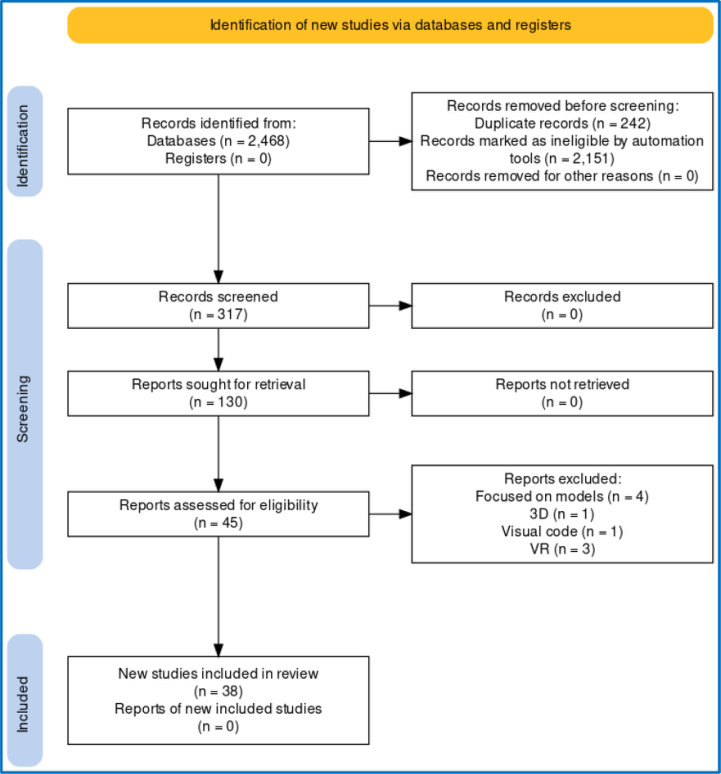
Figure 1 illustrate the paper count and scrutiny for this review after applying exclusion filters and categorising them into the following themes below.
1. Full circle or half circle Pie menu in Text Input methods in English or Devanagari and using any input method like stylus, mouse, finger, voice and on devices like mobile, desktop, table, smart watch. 2. Pie menu for command or function input using new technologies like AR, VR, Gaze, Air Gesture (but not text input). 3. Pie menu in large screens like Table top, Projections. 4. Pie menu Accessibility, Visual colours.
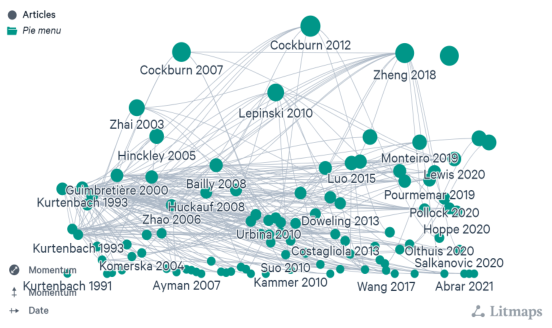
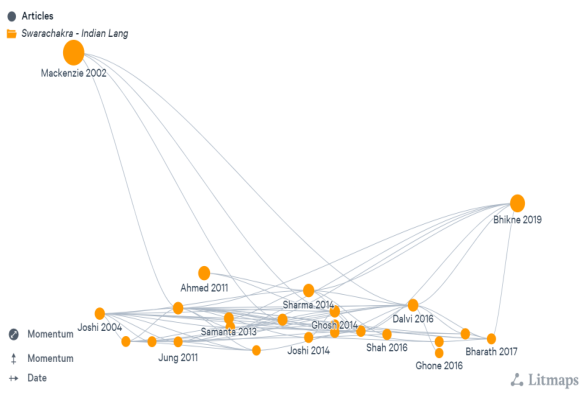
Additionally, we utilised a visualisation tool Litmaps to depict the momen- tum of these studies over the time in Figure 2a and 2b.
166 Uppinivalasa and Joshi
Figure 1: Flow chart of study selection process based on PRISMA 2020.Figure 2: a) Pie menu research momentum vs. date (Tool – Litmaps).
The Evolution and Evaluation of Pie Menu Interactions in Text Input 167
Figure 2: b) Pie menu in Indic text input research (momentum vs. date) (Tool – Litmaps).
Inclusion Criteria Theme 1 is taken further to study as per the focus of the review, which aims to understand ‘input performances’, ‘directional effect’, ‘width of pie’, ‘number of items’, ‘occlusion’, ‘handedness’, ‘form factor’, and ‘throughput’ within the first theme. The study on interactions patterns could be 2D or 3D and mod- els like Fitts’ or any new performance model. There no time restriction for collecting the papers, and the publication language is English, of the themes are excluded for this review. Papers which are falling in other themes are not studied.
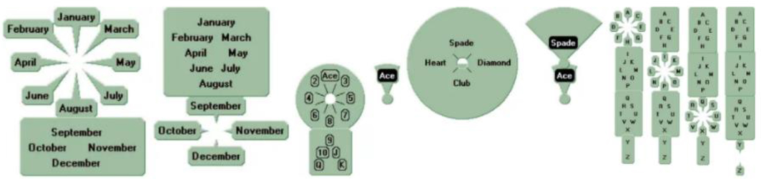
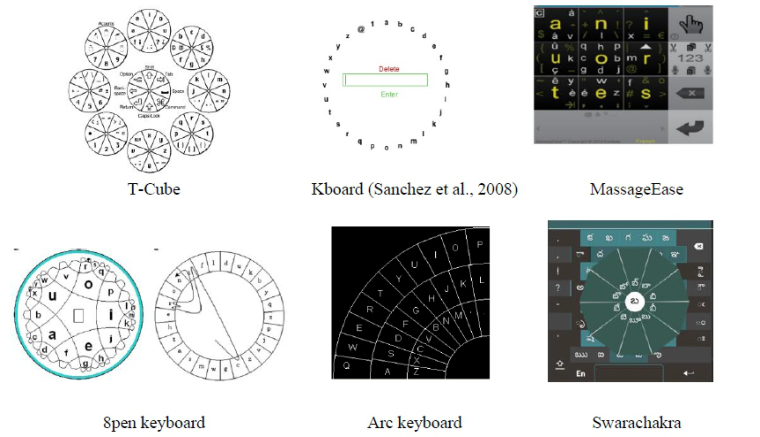
STUDY Circular menus, which were first introduced by Neil Wiseman in PIXIE (Wiseman, 1969), have attracted attention for their advantages over lin- ear menus (Callahan et al., 1988) and their implications for Fitts’ law and directional effects (Boritz et al., 1991). Notably, pie menus have demon- strated efficacy in touch interfaces and handheld devices (Callahan et al., 1988; Kurtenbach & Buxton, 1993), with users transitioning from novice to expert proficiency with minimal practice (Kurtenbach, 1991). The pri- mary objective of menu design is to optimize movement time, position time, search time, and reaction time. These are explained well in the KLM model (Card et al., 1980) including task selection. Various forms of pie menus, few are shown in Figure 4, have been developed and evaluated, often employing Fitts’ law as a robust model (MT = a + b × log2(A / W + 1)), rooted in Shannon information theory (Fitts, 1954; Shannon & Weaver, 1949). Addi- tional studies have explored methods to enhance performance optimization (Balakrishnan, 2004), typically involving target acquisition through selection (tap) and steering (swipe).
168 Uppinivalasa and Joshi
Figure 3: ActiveX pie menu variations (Hopkins, 1998).
Designing effective pie menus necessitates careful consideration of factors such as item quantity, arrangement intuitiveness, semantic grouping, and physical interaction. Suboptimal design or excessive use can undermine their efficacy. Designing pie menus for text input presents further challenges due to the complexity of decision points and the quest for consistency (Anirudha Joshi & Girish Dalvi, 2011; Samanta et al., 2013).
This review focuses specifically on the use of pie menus in text input meth- ods, seeking to synthesize literature findings, identify limitations, and propose potential avenues for future research. We organize our discussion into three thematic areas: the utilization of pie menus in text input, including associated performance models; considerations regarding steering mechanisms; and an examination of directional effects and occlusion factors.
Pie Menus in Text Input Text entry is often measured with speed and accuracy trade-off. Most of the text entry studies are in English language and studied to find the perfor- mance for entering numbers, characters or words or general phrases for text entry methods (Mackenzie & Soukoreff, n.d.). Longitudinal empirical stud- ies were also conducted using onscreen keyboards using desktops or laptops (Callahan et al., 1988) (Dalvi et al., 2015). Evaluated handwriting with recog- nition software, keypad tapping, pie pad, and moving pie menu.(McQueen et al., 1994) and found that keypad tapping was fastest (30.4 wpm), hand- written (18.5 wpm) whereas pie menu performed the least in both numeric and alphanumeric entry (MacKenzie et al., 1994).
Others studied the implications of menu layout on user performance and understand the differences in performance between menu items placed at dif- ferent angular positions (Tapia & Kurtenbach, 1995) but didn’t focus on text input. Few studies included measured performance using Fitts’ but for com- mand selections of menu items with changing mouse positions, and button positions (Lyons et al., 1996). The Chinese PinyinPie augmented the key- board design and after use of two hours the participants could reach a speed of 25 Chinese characters (Churchill et al., 2012).
The Evolution and Evaluation of Pie Menu Interactions in Text Input 169
Figure 4: Forms of various pie menu designs.
In the studies conducted by Ahlström et al., (2010), Cockburn et al., (2007), MacKenzie (2013, 2015), and McQueen et al., (1994), models were proposed for predicting the performance of pie menu and steering laws. How- ever, various approaches have been applied in modelling these menus. Some studies used small, medium and large sizes of pie menu, while others varied the numbers of items in the pie from 4 to 49 (Cockburn et al., 2012) (Samp & Decker, 2010). These studies were not conducted in natural context of their use; most of them are lab setups. The most popular forms of pie menus evalu- ated include SPASE, CRL, Square menu, circular marking menu, circular pie menu, Cirrin, Swarachakra, and FlowMenu. And reported 11–37% of user performance increase by using pie menus in text entry (Isokoski, 2004).
All the papers included in the review utilize models based on Fitts’ Law or Steering Law. Some of them do not specifically focus on pie menus, but they still were included in the review because the variations in traditional menu designs suggested by these studies, such as force fields (Ahlström, 2005a), resembled certain design features of radial menus. From the perspective of settings, it is important to emphasize that most studies involve around 12–18 participants with an average age of about 25–28 years old. Interestingly, it is common to engage computer experts in studies on pie menus or at least those individuals who use a computer and a mouse on a daily basis. Only the study by Anirudha Joshi & Girish Dalvi (2011), included novice users with a low level of education. Despite the vast computer experience of participants in most studies, they usually have limited experience with menu items and tools tested by scientists. For instance, the research by Isokoski includes 12 experi- enced computer users who have never used utilizes marking menus and soft keyboards. The majority of studies seek to predict or report the performance of various menu designs in terms of the speed of selection and radial tasks.
170 Uppinivalasa and Joshi
They also offer promising avenues for further research on the problem under investigation.
Unfortunately, studies included in the scope of the review do not use uni- form methods to assess the performance of using pie menus in text input methods based on Fitts’ Law and Steering Law. Therefore, it is not possi- ble to compare them with each other using a set of consistent indicators. Nonetheless, all of them offer quantitative evidence that could be used to make far-reaching conclusions on the problem under investigation. In par- ticular, the study by Cockburn et al., (2012), found that Fitts’ law could effectively explain the performance of different input devices in tapping and dragging tasks. For example, the mean selection time for radial menu selec- tions was 554 ms, but it could be performed faster using the stylus (476 ms). The research by Samp and Decker (2010) found that a hierarchical radial menu performed better than a linear menu in terms of the time of completing pointing (34%) and visual search (14–31%) tasks. Isokoski (2004), found that the introduction of a marking menu could induce an 11–37% improve- ment in the text entry rate of a soft keyboard. The research by Ahlstrom et al. (2010), demonstrated that the use of square menus in text input meth- ods could display a 15% improvement in performance as compared to linear menus if used by experts. The study by Joshi et al. (2011), offers extensive data on the performance of various menu types. Surprisingly, these schol- ars did not find empirical evidence for higher text entry rates of different keyboards. The research by Ahlstrom et al. (2006) revealed that the use of a jumping menu, which is a variation of a pie menu, resulted in a 5.6% increase in selection times; furthermore, this increase constituted 20.5% for touchpads. In general, it seems justified to state that the outputs produced in studies included in the scope of this review provide a compelling reason to assert that the use of pie menus in text input methods is associated with a substantial decrease in completion times.
Pie Menu in Indic Language Text Entry Most studies of pie menu in text input context have used English language, which has only 26 characters, and the conventional keyboards have accom- modated these characters according to their frequency of use. However, Indian languages have more than 50 characters on average, and designing a keyboard for these combinations of characters that form glyphs, syllables, conjuncts, and other alpha-syllabary words is very challenging. Traditional Indic keyboards require frequent switching between multiple layers to access these characters.
With the drastic emergence of mobile phones use in India it is important to study and design Indic keyboards for mobile needs. The Swarachakra keyboard designed for touch based mobile phones features a chakra or pie menu, which is a circular menu that allows users to input a combination of consonants and vowel modifiers using a tap and slide gesture. Sparsh, Gboard keyboards uses square menu and popup menu for the same pur- pose respectively. These menus are designed to ease interaction and reduce
The Evolution and Evaluation of Pie Menu Interactions in Text Input 171
cognitive load for users by providing a logical layout and dynamic pop- ups for character input (Anirrudha Joshi & Girish Dalvi, 2011; Joshi et al., 2004; Krishna Dhullipalla, 2012; SIGCHI (Group : U.S.) et al., 2009; Wani et al., 2017). A comparative analysis of Bengali text entry techniques showed that Swarachakra keyboard which uses pie menu for creating glyphs, a gesture-based keyboard, yielded a mediocre performance in terms of speed and accuracy (Sarcar et al., 2017). In a study evaluating Devanagari virtual keyboards for touch screen mobile phones, it was found that the logically structured keyboard, Swarachakra, performed better for first-time usabil- ity and in the longitudinal study (Anirrudha Joshi & Girish Dalvi, 2011). Additionally, a study on the performance of Marathi text input mechanisms found that keyboards with logical layouts performed marginally better than keyboards with partially frequency-based layouts and Swarachakra is a log- ical keyboard in this study and also found that prediction does not improve performance of text input (Dalvi et al., 2016).
The pie menu’s role in the Swarachakra keyboard is to provide an intu- itive and efficient method for users to input characters and vowel modifiers, enhancing the overall text input experience. Its circular design and tactile feedback contribute to improved target acquisition and touch accuracy, ulti- mately enhancing the usability of the keyboard for users, including those with visual impairments (Anu Bharath et al., 2017; Bhikne et al., 2019; Srivastava & Bharath, 2016). All the studies on Swarachakra are done very controlled and with a large set of participants, and in natural typing context, so it is important to find cost of the pie menu when compared to other non-pie menu keyboards. This can give some directions on whether this helps in the performance of Indic text input.
Steer Through Pie Menu The inclusion of steering models in Fitts’ law has provided valuable insights into the performance of radial or pie menus. Most of the studies on pie menu has given less attention to dragging or steering phenomenon during item selection. Zhai et al., in their research, noted that the time required for visu- ally guided steering, such as in pie menus, is comparable to or only slightly longer than tapping. This can be quantified using a combination of the steer- ing law and Fitts’ law of pointing (Zhai & Kristensson, 2003). We consider the cost of steering actions in pie menus to be significant, and advocate for its inclusion in the assessment alongside movement time, utilizing Fitts’ law for pie menu interactions (Ahlström, 2005b). To our knowledge from this review study, we found four studies explored the impact of input devices on radial dragging tasks along with tapping, highlighting the differences in performance based on the type of input device used.
The study by Cockburn et al. (Cockburn et al., 2007, 2012) demonstrated that radial target acquisition is best characterized as a steering activity rather than a Fitts’ Law pointing activity. The study adapted the equations for Fitts’ Law and the Steering Law to radial selections, providing a new perspective on the movement time for radial selections. The study found that radial drag- ging is better modelled as a steering activity than as Fitts’ Law pointing,
172 Uppinivalasa and Joshi
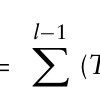
indicating that the steering model is more suitable for radial or pie menus. Ahlström et al., (2010) included the steering effect in their proposed model for the multi-level selection of SDP (Search, Decision, and Pointing) times. This model incorporates the concept of MLi, which represents the sum of individual-level times and steering cost, as defined by Accot & Zhai, (1997), with scj = a+b(A/W + 1).
Equation reproduced from the original PDF.
Furthermore, the evaluation of performance metrics encompasses hierar- chical pie menus, square menus, and linear menu configurations.
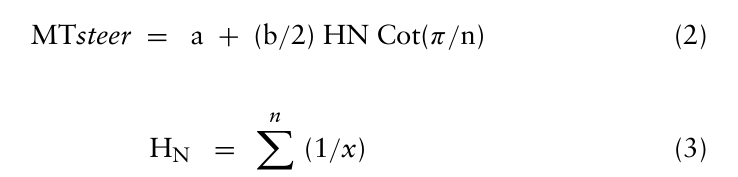
The study conducted by Cockburn et al. (2012), investigates the impact of input devices such as fingers, stylus, and mice on performances across tapping, dragging and radial dragging tasks, with the focus on implications for user experience design in computing devices. The equation 2 for MTsteer considers radial target acquisition performance as a linear function of the number of items, incorporating Zhai’s steering law (Accot & Zhai, 1997a), with HN representing the Nth harmonic number.
Equation reproduced from the original PDF.
However, there are limitations to the application of steering models in Fitts’ law. The study by Nieuwenhuizen and Martens (Nieuwenhuizen & Martens, 2016), highlighted the need for more advanced statistical modelling of experimental data beyond Fitts’ law. The study proposed generalizations of Fitts’ law to consider the distributions of observed times and to extend Fitts’ law to a more general relationship between task characteristics (A/W) and index of difficulty using power law function with an exponent s which is in between 0 and 1. The model is little complex than Fitts’ law, however it provides improved data fitting and enhanced differentiation between exper- imental conditions, which outweighs the drawback of introducing an extra parameter into the model. This suggests that while steering models provide valuable insights, there is a need for more advanced statistical modelling to fully capture the complexities of human performance in selection tasks.
Effect of Directions All the above studies have used one or more of these mouse cursor, pen and finger. Study using trackball for pie menu selection with six menu items has achieved 3% error rate which is a promising outcome and found that angles nearest to horizontal and vertical directions may have less errors in the pie menu performance (Martin & Isokoski, 2007). The findings on the steer- ing effect showed that the average angular error was 6.7 degrees for the first
The Evolution and Evaluation of Pie Menu Interactions in Text Input 173
block and 4.3 degrees for the tenth block. The data indicated that the distribu- tion of angular errors was highly skewed, with a long high-end tail, suggesting that larger menu items were needed to achieve acceptable error rates than what the means would suggest. Additionally, the study demonstrated that after training, the maximum deviations tended to decrease, indicating that using 60-degree menu items could be viable without significant errors.
The study by Hancock et al. found that the movement along the “top-left to bottom-right axis” was fastest for left-handed users, and the mirrored move- ment along the “top-right to bottom-left axis” was fastest for right-handed users (Brandl et al., 2009). This suggests that the speeds achieved were influ- enced by the handedness of the users and the occlusion factor. There are few studies found that there is an angle effect for small targets, and short dis- tances (Boritz et al., 1991). Finger movement in North-West direction were more error prone and slower in other directions when compared with pen (Cockburn et al., 2012), this effect may be due to finger tremor when mov- ing. Similar observation was found in Wavelet menus (Francone et al., 2010) which includes South-East marking direction was also found to be slowest and most inaccurate. In few papers it was mentioned the opposite side has same effect in the pie menus. The future directions are to check the perfor- mance in nature context of use, upper limits and how this directional effect will be if the sequence shown in opposite way or random way?
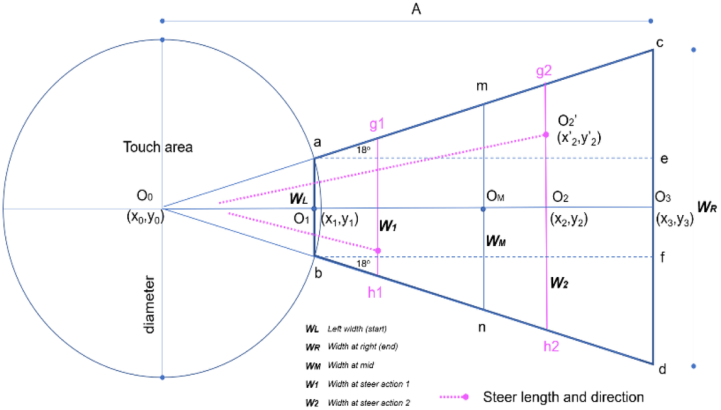
IMPLICATIONS AND FUTURE DIRECTIONS Fitts’ law, initially for one-dimensional pointing, was refined for two- dimensional tasks by Accot & Zhai, (2003). The steering law, also by Accot & Zhai (1997a), examines the linear relationship between movement time and difficulty. Both models demonstrate high accuracy, showing reduced navigation time in opposite directions. The theoretical relationship between narrowing and widening steering time was investigated further and found that there is a difference in movement time, so a modified steering law for narrowing tunnel and widening tunnel steer path is derived (Yamanaka & Miyashita, 2016). Figure 5 shows the anatomy of pie menu which is similar to widening tunnel path. The circle represented in the figure is touch point (mag- nified for our convenience), its diameter depends on the area of the starting target, however in the pie menu sometimes this is almost zero. Our argument is every touch point at the start will not be exactly at the center of the circle, there will be some delta. Similarly, when steered through the pie section, the path of steer will not follow exactly at the axial line of the section, there will be some angle deviation between axis and the steer or stroke, so while mod- elling the movement time and index of difficulty, we need to ask whether we need to consider time and accuracy trade-off by considering effective width We in IDe = log2 (D/We + 1), where We = √(2πeσ) = 4.133σ (Welford, (1968); MacKenzie, (1992)), will this be applicable to pie menu index of dif- ficulty? Should we consider W(min) (MacKenzie and Buxton (1992)) in case of smartphones where the widths will be in pixels?
How does the steering time and direction vary with the number and angle of pie menu items? How does the use of pie menu affect the text input per- formance and experience in natural contexts, and what are the upper limits
174 Uppinivalasa and Joshi
of these effects? What will be the effect of next or before key tap influence on the pie interaction?
Figure 5: Anatomy of pie section providing various widths at respective steer points.
Considering the above-mentioned gaps in research, which remain unex- plored, our ongoing study aims to investigate these factors in the context of pie menus integrated into text input, particularly focusing on smartphone keyboards utilizing Indic scripts. Typing tasks, such as those found in key- boards like Swarachakra (Joshi et al., 2014) when combined with pie menus, involve both pointing and steering actions.
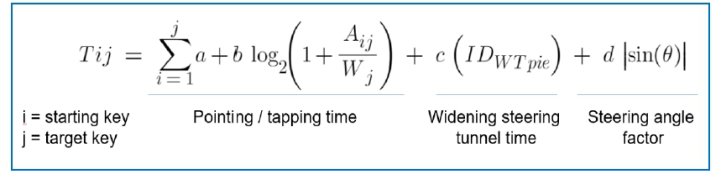
We argue that in text input methods incorporating pie menu interactions, it is essential to consider both pointing and steering actions collectively, as suggested by (Dennerlein et al., 2000; Kulikov, 2006). Drawing from the widening tunnel model (Yamanaka & Miyashita, 2016), pie menu by its shape, which aligns with widening tunnel and with the radial steering angle effect, we propose a model to assess the performance of pointing and steering times in text input context.
Figure 6: Eq. 4 - proposed model include tapping time, widening tunnel steering time, angle factor.
The Evolution and Evaluation of Pie Menu Interactions in Text Input 175
Performance of pointing or tapping is measured through Fitts’ model where A is distance from start to end target positions and W is width of the target, and IDWTpie is modified index of difficulty in widening tunnel model (Yamanaka & Miyashita, 2016) (Eq. 5) of a pie section with its absolute direction value Sin θ.
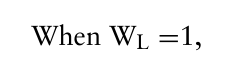
In the Figure 6, WL is width of the left side of the pie menu which is con- sidered as start position and WR is width of the target position, which is end width of the pie menu. If we consider the starting position is at the center of the pie menu, then then WL will be zero, then ID in widening-tunnel model will become infinite. However, in reality, since in the context of text input using mobile phones and tablets with bitmap display, it seems reasonable to consider the minimum value of WL to be 1px. If WL =0, then it would mean that finger or cursor is already out of the path at the start of the steering task, leading to an error. So, we derive from the original widening tunnel model - IDWT = (A/(WL −WR)) ln(WL/WR) (4)
Equation reproduced from the original PDF.
IDWTpie = A ln((WR)/(WR−1)) (5) For example, assuming A = 300 pixels and WR = 50 pixels, we have IDWTpie = 23.95, which falls within the difficulty range of tasks typically used in steering law experiments. Also, if A = 100 pixels and WR = 30 pixels are used, we have IDWTpie = 11.73, which appears to be a reasonable value.
If we need to be more accurate in finding WR and WL values then, for mouse cursor interaction, we can determine the weighted width WR or WL by using Cartesian coordinate data (X,Y coordinates) and apply the method used to find (a+dx) as in this study (MacKenzie, 2018) which will give new Ax, then Wx = Ax(tan(π/n)), where ‘n’ denotes number of pie items. In case of finger touch interaction, assuming a touch area ranging from 6.6mm to 10.6mm (Cockburn et al., 2012), and other research indicating an average touch area of 8mm for finger touch interactions (Dandekar et al., 2003; Joshi et al., 2022; Zhai & Kristensson, 2012), this will be the WL in the original equation. If the task has only two targets without pie steering or swiping interaction then, IDWTpie will not be used in the Eq. 4.
This study may poise to yield significant empirical insights. Expert users, possess inherent familiarity with steering directions, may experience minimal impact from factors such as reaction time, search time, cognitive processing, or decision-making time, whereas we assume novice users may be more sig- nificantly affected by these variables. The considerations become particularly pertinent in contexts involving extensive options, such as text input scenarios. Our future studies are set towards investigating these dynamics.
The future scope lies in refining the steering models and integrating them with advanced statistical modelling to provide a comprehensive understand- ing of human performance in radial or pie menus. The advancement of technology specially in motion detector sensor devices or technologies like eye gaze, head gaze and motion gaze had made it easy to interact with the different innovative interfaces (Endo et al., 2017; Francone et al., 2010;
176 Uppinivalasa and Joshi
Huckauf & Urbina, 2008; Hueber et al., 2020; Kin et al., 2011; Pollock & Teather, 2020; Urbina & Huckauf, 2010; Zeng, 2012). Pie menu is not an exception to be tried out in these new technological innovations. The pro- posed model can be validated for other contexts as well. Additionally, further research is needed to explore the application of steering models in real-world tasks and to develop more accurate and reliable predictive models for menu performance. This will contribute to the development of more effective and user-friendly menu designs in human-computer interaction.
In summary, while the inclusion of steering models in Fitts’ law has advanced our understanding of radial or pie menus, there is a need for more advanced statistical modelling and further research to fully realize the potential of steering models in menu performance analysis.
ACKNOWLEDGMENT
I would like to express my deepest gratitude to my guide, the review com- mittee, staff, and colleagues of my institute for their invaluable support, guidance, and contributions to this research endeavour. I extend my sincere appreciation to my colleague Praveen Cholleti.
REFERENCES
Ahlström, D. (2005). Modeling and Improving Selection in Cascading Pull-Down Menus Using Fitts’ Law, the Steering Law and Force Fields. Proc. CHI’05, 61–70. All 130 papers references screened for this paper are provided here - http://tinyurl.
com/PieSLReview. Anirudha Joshi, Girish Dalvi, Manjiri Joshi, Prasad Rashinkar, and Aniket Sarangdhar. 2011. Design and evaluation of Devanagari virtual keyboards for touch screen mobile phones. In Proceedings of the 13th International Conference on Human Computer Interaction with Mobile Devices and Services (Mobile- HCI’11). Association for Computing Machinery, New York, NY, USA, 323–332. https://doi.org/10.1145/2037373.2037422 Anirudha Joshi, Aaditya Ajikumar, Kuldeep Umaraiya, and Prashik Chavan.
2022. Fitts’ Throughput and “Absolute” Finger Precision by Handedness, Hand, Digit and Target Width. In Nordic Human-Computer Interaction Conference (NordiCHI’22). Association for Computing Machinery, New York, NY, USA, Article 57, 1–11. https://doi.org/10.1145/3546155.3546644 Balakrishnan, R (2004). “Beating” Fitts’ Law: Virtual enhancements for pointing facilitation. Int. Journal of Human Computer Studies 61, 6, 857–874. Balakrishnan, R. (2004). “Beating” Fitts’ Law: Virtual enhancements for pointing
facilitation. Int. Journal of Human Computer Studies 61, 6, 857–874. Card, S. K., Moran, T. P., and Newell, A., (1980). “The Keystroke-Level Model for User Performance Time with Interactive Systems,” Communications of the ACM, Vol. 23, No. 7, pp. 396–410. Chen, L., & Wang, C. (2020). Gamification in tertiary education: enhancing
motivation and engagement. Journal of Educational Technology, 52(4), 279–294. David Ahlstom, Rainer Alexandrowicz and Martin Hitz. (2006). Improving menu interaction: A comparison of standard, force enhanced and jumping menus. Ib CHI, Monreal, 1–10. David Ahlstrom. 2005. Modeling and improving selection in cascading pull-down
menus using Fitts’ law, the steering law and force fields. In Proceedings of the SIGCHI Conference on Human Factors in Computing Systems, ACM, New York, 61–70.
The Evolution and Evaluation of Pie Menu Interactions in Text Input 177
Findlater, L., McGrenere, J. (2004) A comparison of static, adaptive, and adaptable menus. In: CHI, pp. 89–96. Findlater, L., Moffatt, K., McGrenere, J. and Dawson, J. Ephemeral adaptation: The
use of gradual onset to improve menu selection performance. In Proc. CHI 2009, ACM Press, 1655–1664. Fitts, P. (1954) The Information Capacity of the Human Motor System in Controlling the Amplitude of Movement. J. Experimental Psych., 47. 381–391 Guimbretiere, F., and Winograd, T. (2000). FlowMenu: Combining command, text,
and data entry. In Proceeding of UIST 2000, ACM Press, 213–216. Haddaway, N. R., Page, M. J., Pritchard, C. C., & McGuinness, L. A. (2022).
PRISMA2020: An R package and Shiny app for producing PRISMA 2020- compliant flow diagrams, with interactivity for optimised digital transparency and Open Synthesis Campbell Systematic Reviews, 18, e1230. Hopkins. D (1998). BAYCHI October Meeting Report: Natural Selection: The Evolution of Pie Menus, October 13. Medium blog. https://donhopkins.medium.com/ baychi-october-meeting-report-93b8e40aa600 Hornof, A. J. and Kieras, D. E. (1997). Cognitive modeling reveals menu search is
both random and systematic. In Proc. CHI 1997, ACM Press, 107–114. Hyman, R. (1953). Stimulus information as a determinant of reaction time. Journal of Experimental Psychology, 45, 188–196 Johnson, D., & Smith, A. (2019). The role of social media in higher education:
Opportunities and best practices. Journal of Higher Education Management, 66(1), 45–60. Khyati Priya and Anirudha Joshi. 2023. Fitts’ Throughput Vs Empirical Throughput: A Comparative Study. In Human-Computer Interaction “INTERACT 2023: 19th IFIP TC13 International Conference, York, UK, August 28” September 1, 2023, Proceedings, Part I. Springer-Verlag, Berlin, Heidelberg, 436–455. https://doi.org/10.1007/978-3-031-42280-5_28 Kin, K., Hartmann, B., and Agrawala, M., Two-handed marking menus for mul-
titouch devices. In ACM Transaction on Computer-Human Interaction, 18 (3), 16. Kobayashi, M. and Igarashi, T. (2003). Considering the direction of cursor movement for efficient traversal of cascading menus. In Proc. UIST 2003, ACM Press, 91–94. Kurtenbach, G., Buxton, W., (1993). The limits of expert performance using
hierarchic marking menus. In Proc. of CHI 1993, ACM Press (1993), 482-487. Kurtenbach, G., Buxton, W., (1994). User learning and performance with marking menus. In Proc. of CHI 1994, ACM Press, 258–264. Kurtenbach, G., Fitzmaurice, G. W., Owen, R. N., Baudel, T. (1999). The hotbox:
Efficient access to a large number of menu-items. In Proceeding of CHI 1999, ACM Press, 231–237. Liberati, A., Altman, D., Tetzlaff, J., Mulrow, C., Gøtzsche, P., Ioannidis, J., et al. (2009). The PRISMA statement for reporting systematic reviews and meta-analyses of studies that evaluate healthcare interventions: Explanation and elaboration. PLoS Medicine, 6(7), e1000100. MacKenzie, I. S. (1992). Fitts’ law as a research and design tool in human-computer
interaction. Human-Computer Interaction, 7, 91–139. MacKenzie, I. S. and Zhang, S. X. (1999). The design and evaluation of a highperformance soft keyboard. In Proc. of CHI 1999, ACM Press, 25–31. MacKenzie, I. S., & Soukoreff, R. W. (2002). Text entry for mobile computing:
Models and methods, theory and practice. Human-Computer Interaction, 17, 147–198.
178 Uppinivalasa and Joshi
MacKenzie, I. S., & Soukoreff, R. W. (2003). Phrase sets for evaluating text entry techniques. Extended Abstracts of the ACM Conference on Human Factors in Computing Systems - CHI 2003, pp. 754–755. New York: ACM. Oakley, I., Brewster, S. and Gray, P. (2001). Solving multitarget haptic problems in
menu interaction. Ext. Abstracts CHI 2001, ACM Press, 357–358. Sears, A., Shneiderman, B. (1994). Split menus: effectively using selection frequency to organize menus. ACM ToCHI 1(1), 27–51. Shannon, C. E., & Weaver, W. (1949). The mathematical theory of communications.
Urbana, Il. Urbana, IL: University of Illinois Press. Shota Yamanaka and Homei Miyashita (2016). Modeling the Steering Time Difference between Narrowing and Widening Tunnels. In Proceedings of the 2016 CHI Conference on Human Factors in Computing Systems (CHI ‘16). Association for Computing Machinery, New York, NY, USA, 1846–1856. Soukoreff, R. W., & MacKenzie, I. S. (1995). Theoretical upper and lower bounds
on typing speed using a stylus and soft keyboard. Behaviour & Information Technology, 14, 370–379. Tapia, M. A., Kurtenbach, G. (1995). Some design refinements and principles on the appearance and behaviors of marking menu. In Proc. of UIST 1995, ACM Press, 189–195. Venolia, D., Neiberg, F. (1994). T-cube: A fast self-disclosing pen-based alphabet. In
Proc. of CHI 1994, ACM Press, 265–270. Welford, A. T. (1968). Fundamentals of skill. London. Methuen. Wiseman, N. E., Lemke, H. U. & Hiles, J. O. (1969). PIXIE: A New Approach to Graphical Man-Machine Communication, Proceedings of 1969 CAD Conference Southampton, IEEE Conference Publication 51, 463–471. Wu, M., Balakrishnan, R. (2003). Multi-finger and whole hand gestural interaction
techniques for multi-user tabletop displays. In Proceeding of UIST, ACM Press, 193–202. Zhao, S., Agrawala, M. and Hinckley, K. (2006). Zone and polygon menus: Using relative position to increase the breadth of multi-stroke marking menus. In Proc. CHI 2006, ACM Press, 1077–1086.
LISTED IN THE AHFE DIGITAL BOOKSTORE CATALOGUE
Explore the complete digital volume
Human Factors and Systems Interaction
Read this individual research paper free through the original publisher, or explore the full digital proceedings book.
ISBN 978-1-964867-30-4
Explore this ISBN in the AHFE Bookstore ↗Listed in the July 2026 bookstore catalogue; search by ISBN to confirm current availability · Digital book purchase optional