Rachael Hill, Zachary Spielman, Madelyn Polzin, Casey Kovesdi, Katya Le blanc (2024). Human Factors Design for Particle Accelerator Control Room Interfaces. In: Human Factors in Software and Systems Engineering. AHFE Open Access, vol. 140, pp. 36–45. https://doi.org/10.54941/ahfe1005035
Fermilab, the birthplace of many scientific discoveries in physics and particle accelerator sciences, is in the midst of a widescale modernization effort. The Accelerator Control Operations Research Network (ACORN project’s goal is to modernize the accelerator control system by replacing end-of-life power supplies and enhance future operations of the Fermilab accelerator complex with megawatt particle beams. Within ACORN, opportunities for process improvement concerning software development, human-system interface design, and task performance are also being considered. Human factors researchers from Idaho National Laboratory in collaboration with usability experts from Fermilab, are currently investigating human-centered design improvements for the accelerator control system. For example, substantial tribal knowledge and memory recall are required to effectively operate the accelerator system. This contributes to high cognitive workload and potential burnout of accelerator operators. Developing guidance for consistent visual and functional design enables a more intuitive interaction and relieves operators of cognitive burden. Additionally, developing more intuitive and integrated interfaces can also lead to improved accelerator efficacy by empowering operators with greater understanding and control of the systems. The challenge in developing such interfaces is in designing for a wide variety of user goals, system specifications, and level of experience in users. The challenges need to be met while e also considering the maintainability of the control system. The purpose of this paper is to detail the human factors process and design within the ACORN project, describe results gathered thus far, and discuss the larger implications for this work.
Fermi National Accelerator Laboratory (Fermilab) is America’s premier par- ticle physics and accelerator laboratory. Fermilab was established in 1967 and is a leading force of scientific discovery answering fundamental questions regarding what our world, and even our universe, are made of. Fermilab con- tributes to global collaboration initiatives with over 50 countries on physics experiments worldwide. Additionally, Fermilab is the birthplace of notable discoveries such as the top quark and bottom quark (Fermilab, 2014). Cur- rently, Fermilab houses multiple accelerators spanning 6800 acres. A few of
Human Factors Design for Particle Accelerator Control Room Interfaces 37
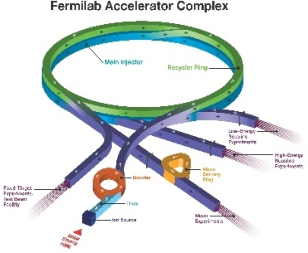
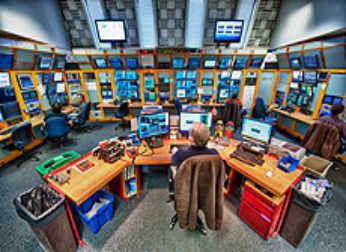
the accelerators located within Fermilab’s property are controlled in isolation (i.e., have their own control room), but most of the accelerators included in the complex are controlled from the main control room, which is a centralized control area located in the heart of the complex (see Figures 1&2).
Figure 1: Fermilab accelerator complex diagram.Figure 2: Photo of Fermilab main control room.
While some of these accelerators have been built recently, others were built decades ago and are displaying signs of aging. Additionally, regard- less of when accelerators at Fermilab are built, they must be integrated and/or connected to the main control system known as Accelerator Con- trol Network (ACNET) which was also developed decades ago. ACNET has been maintained and built upon since then but has yet to undergo a significant upgrade. To continue the legacy of physics research and innova- tion, Fermilab is conducting a widescale modernization effort. The project responsible for this modernization effort is known as the Accelerator Con- trol Operations Research Network (ACORN). The primary goal of ACORN is to modernize the accelerator control system by replacing end-of-life power supplies to enable and enhance future operations of the Fermilab accel- erator complex with megawatt particle beams. Part of the modernization scope includes improving the human-system interfaces and software develop- ment applications of the accelerator control system including ACNET. Early in the establishment of ACORN, human factors researchers and usability experts evaluated opportunities for both system improvement and human performance improvement.
Human factors (HF) is the science of understanding the interaction between humans and the environments they work in to achieve a specific goal. Human factors focuses on the cognitive and information processing aspects of human-system interaction (Human Factors & Ergonomics Soci- ety). User experience (UX) design is the process which leverages user-centered design to ensure products (e.g., accelerator control room interfaces) are sim- ple and enjoyable to interact with. Broadly speaking, the goal of HF and UX design is to optimize human safety, well-being, and overall human-system performance.
It is important to incorporate HFE and UX as early as possible in a modern- ization effort. Investing in human-centered design early leads to more positive outcomes (e.g., Nielsen & Landauer, 1993), such as a reduction in human error, increased productivity, enhanced safety, and improved ease of use (Joe, Thomas & Boring, 2015). One of the initial activities of the HF/UX team included an extensive review of end-user (i.e., operator) tasks and processes from which a formal task analysis, overarching design philosophy, and spe- cific design guidance (i.e., style guide) were created. The following sections describe these in greater detail.
It is important to note that the modernization effort of ACORN is ongoing. Consequently, this paper includes descriptions of the human factors processes and methods used to support the ACORN modernization scope as well as results gathered thus far. A discussion section detailing future tasks and goals of this work is also included.
HUMAN FACTORS PROCESS The challenge in designing for the Fermilab accelerator complex is develop- ing a standard for interface and interaction design that is powerful enough for highly experienced and specialized users, while maintaining an easy to learn, intuitively functional interaction for novice users. The approach taken here began with a top-down review of high-level system objectives and goals then used a bottom-up approach to capture user needs and functional requirements.
The approach began with a high-level investigation of Fermi’s laboratory mission and the concrete constraints on the operational capabilities of the accelerators. Understanding the laboratory mission is important to ensuring that any newly designed control-system interface is configured to best support the intended purpose of the overall system. The concrete constraints included both the safety codes that include personnel and environmental safety regula- tions, there to protect personnel and public, and the equipment specifications, there to protect the system and its components. Capturing these three ele- ments creates the foundation on which a design can begin by defining what the system must do (i.e. laboratory mission) and the bounds within which it must achieve that mission (i.e. regulatory constraints).
Then a review of the system users, system capabilities, and the necessary functions to perform the system objectives was carried out. This review served to identify the functional requirements of operating the system, how the users performed those functions (i.e. tasks) with their current control-system inter- face, and the user needs, their pain points, and what must be included in the
Human Factors Design for Particle Accelerator Control Room Interfaces 39
following control-scheme redesign to improve user’s ability to carry out the laboratory mission within the safety constraints of the system.
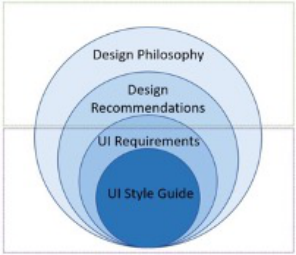
The outcomes of these reviews are captured in two documents “Design Phi- losophy for Accelerator Control Rooms” (Hill, Spielman & Le Blanc, 2022) and the “Human-System Interface Style Guide for ACORN Digital Control System” (Hill, Polzin, Spielman, Kovesdi & Le Blanc, 2023). As illustrated in Figure 3 the content of these documents are within each other. The design phi- losophy is a high-level guidance document that steers the development of all design decisions made for the new control system. In this instance, it also con- tained general design recommendations. The Style Guide contains the specific design characteristics of control system interfaces such as color scheme, font type, font size, navigation, and others. The style-guide is developed in con- cert with the design philosophy. The combination of both these documents enables the specific design of user interfaces (i.e. style guide) but allows flex- ibility with design decision guidance when trade-offs or new functionality is added to the system (i.e. design philosophy).
Figure 3: Process of design philosophy to user interface style guide.
Design Philosophy The design philosophy for this effort created the framework for the con- trol interface design that incorporates the findings from the top-down and bottom-up reviews performed during this effort. The greatest challenge in creating a cohesive design philosophy was accounting for the range of exper- tise found in the system users. The main control room operators though extremely skilled, are typically the least practiced operators. They rely on the tribal knowledge of experienced users to learn how to operate and nav- igate the system controls. The experienced users can build custom displays and control scripts on the fly to operate the system effectively and efficiently. The latter often specialize their expertise towards specific system components moving them out of the control room. In addition, there is another set of users that monitor system outputs not as operators, but as researchers looking for distinctly different sets of information. The variability in user knowledge and function means it is important to develop a cohesive design philosophy that takes all these users into account.
The application of a style guide is intentionally straight forward. It acts as a detailed instruction manual for constructing displays. This helps standard- ize the look and feel of the interaction and design display across all control interfaces. A design philosophy consolidates the state-of-the-art design prin- ciples, criteria, and standards necessary to develop displays that help the user and system most safely and productively achieve the overarching system goal. In essence, a design philosophy is a collection of principles that is created to achieve an advanced and informed operations concept. It acts as a struc- tured methodology to translate the functional requirements to designers and vendors during the design phase (Spielman, Kovesdi & LeBlanc, 2023).
As new information is discovered regarding functionality and control requirements, the style guide will be updated. The design philosophy helps ensure that updates to the style guide conform to the laboratory mission and concrete constraints as well as best-practices in human factors design. As new best practices, human factors research, or industry regulations emerge, the design philosophy may also be updated. The following is the process for determining the content of the design philosophy and style guide.
METHODS
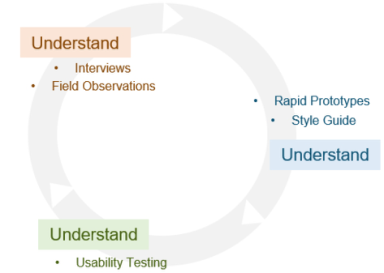
The human factors methods selected for this project were informed by well- known standards including ISO 9241-11:2018 and ISO-9241-210:2010 (for- mally ISO 13407:1999). Figure 4 represents the general approach followed in applying human factors to the accelerator control system modernization project. Broadly, the methods selected were characterized into one of three uses:
1) Understanding the context of use (including specifying the user(s) and use requirements), 2) Designing modernization solutions of the control system that meets the context of use and user needs, and 3) Evaluating the effectiveness and usability of the designed solutions against usability requirements.
Figure 4: Generalized human factors approach and methods applied.
Human Factors Design for Particle Accelerator Control Room Interfaces 41
The foundational tenet in this approach was to ensure early involvement in the project and to ensure stakeholder feedback was captured at a point where it could drive the control system’s functional and design requirements.
Understanding the Context of Use The modernization project first focused on the accelerator control room oper- ators for stakeholder feedback. The human factors team performed task analysis using a series of semi-structured interviews combined with obser- vational capabilities early on in the project to 1) acquire an understanding of the control system from the operators and 2) to elicit operator feedback regarding the tasks they perform and their existing pain points in performing these tasks. A total of 15 operators were interviewed using a series of virtual meetings. The virtual meeting format enabled operators to share their screen and demonstrate tasks using the elements of their existing control system.
Operators were grouped into two types: 1) operators who were considered new and required supervision to conduct their work and 2) more experienced operators who performed their tasks without supervision. There was approx- imately an even distribution of these two operator types in the task analysis. The interview questions included four main categories:
1) Data and information gathering 2) Controls and adjustment making 3) Crew dynamics and teamwork 4) Available/ needed support for operators.
The feedback from the operators were analysed qualitatively and syn- thesized into the development of a process chart that illustrated the key functions/ tasks performed by operators, as well as the identification of key pain points in performing these tasks. The results of this work served as technical bases for the design activities described next.
Design Solutions to Meet User Requirements The results from the task analysis served as inputs (i.e., along with the appli- cation of common human factors design standards) into developing human factors requirements and design specifications for the new accelerator control system HSIs. Two key products were produced in this activity including an HSI Style Guide document (Hill, Polzin, Spielman, Kovesdi & Blanc, 2023) and complementary HSI design concepts developed using rapid prototyping software (Figma). The HSI Style Guide’s purpose was to assist the HSI devel- opers in producing effective and consistent HSIs for the accelerator control room. The Style Guide was considered to be a ‘living document’ to which each subsequent human factors research could be used to update the Style Guide.
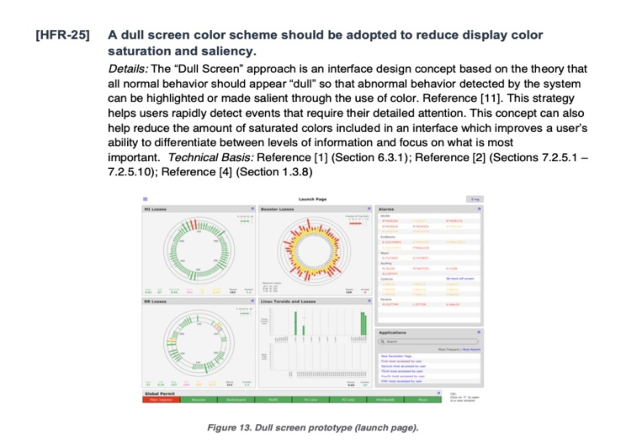
An example of the guidance is shown in Figure 5. requirement were pre- sented following best practices in INCOSE (2015), followed by additional supplementary information described in the Details; the purpose of this con- text was to provide additional clarity to the developer in effectively applying the requirement. Technical bases were provided next in which references to
key sources were hyperlinked. Finally, illustrative examples of the application of the requirement were provided for select requirements, as seen in Figure 5.
Figure 5: Example of HSI style guide with illustrative Figma example.
Evaluating the Effectiveness and Usability of Designed Solutions The final activity was evaluating the effectiveness and usability of the design of the HSIs represented through prototypes and documented in the HSI Style Guide through formative usability testing. Early in the project, evaluation focused onto verifying that the HSI specifications documented and repre- sented through prototypes met the user’s task requirements through collecting feedback in a semi-structured way. In later phases of the project, it is envi- sioned that the produced HSIs will be evaluated in a summative manner. That is, the HSIs will be verified and validated through formal human factors veri- fication and integrated testing using performance-based tests and establishing formal acceptance criteria.
RESULTS
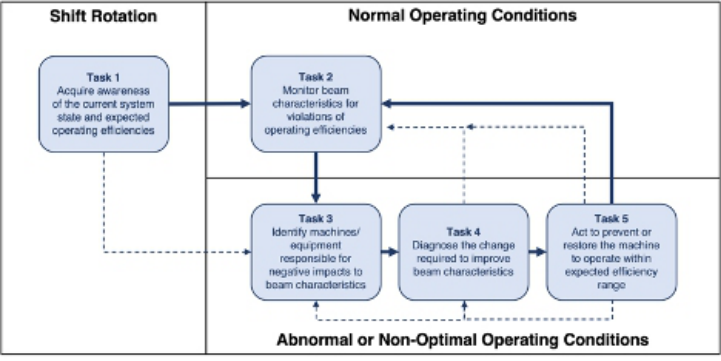
The results informed a base understanding of the operator workflow and better understanding of how operators use the control system. Main control room operators carry out five overarching tasks to perform their duties. The operator must 1) acquire awareness of the current system state and expected operating efficiencies; 2) monitor the various machines within the system for violations of operating efficiencies; 3) identify machines currently or at risk of violating expected operating efficiencies; 4) diagnose what is causing the potential or current violation of expected operating efficiency; and 5) act to prevent or restore the machine to operate within expected efficiency range
Human Factors Design for Particle Accelerator Control Room Interfaces 43
(see Figure 6). Each task is implemented depending on the current operating conditions and not all tasks are necessary to reach the desired outcome.
The research team found operators typically rely on five “comfort” dis- plays (i.e., overhead or group displays) that are always visible to the operator: the main injector losses plot, booster losses plot, recycler losses plot, beam budget liners plot, and the alarm screen. ACNET restricts a user to five screens open at a time on their personal computer, but the comfort displays are visible on large screens viewable to all in the main control room. The displays give the operator a look into machines currently down for mainte- nance, problematic machines, status of alarms, and a summary of what has occurred in the previous operator shift. This orientation process helps oper- ators know where to identify tasking during their shift. The comfort displays keep operators aware of any irregular changes as well as see the status of adjustments to the beam.
Figure 6: High-level tasks performed by shift operators.
Results showed the comfort displays as a starting point for operators from which they can then branch out into other applications as needed. There is no clear navigation or details that inform an operator where to continue their task; the user relies on prior knowledge of where to go for next steps. From this information, the Launch page [shown in Figure 5], was developed for testing. There will be further testing as the page is refined, but currently, the page reflects the current findings with the comfort displays needed by operators as well as proper linkage for an operator to continue and fulfil their tasks beyond the page.
Observations and interviews illustrated that the control system is full of hidden functionality. To perform certain actions, the user must know where to click and often navigate through menus unseen by the user. An example of this, is a word on the screen with no indication it is clickable, and it lacks defining what the user should expect upon clicking it. The frustration from users was presented in multiple interviews with both novice and expert users.
ACNET is predominately a text-based control system, meaning it lacks graphical cues to inform the user on how to interpret and work through the system. Speaking to users of ACNET and hearing their pain points has led to the production of a universal style guide for the control system.
DISCUSSION & CONCLUSION As the ACORN effort continues, so will the HF and UX research. It is crucial to gain more insight as the control system is modernized to support proactive development to a system that meets both system needs and user needs.
After initial research was gathered and assembled from the operator inter- views, it became clear that additional users of the control system needed to be included early in the development process as well. Although operators are the primary user of the control system, additional accelerator personnel such as machine experts, technicians, and engineers also rely on interac- tion with the control system. Additionally, these roles coordinate and rely on each other during operations, but especially while troubleshooting. Not only should the expanded group of users be considered in development, but the communication and workflows between different users should also be studied.
Originally the team evaluated and considered role-based interactions but has since switched to a more holistic approach which is meant to effectively support a variety of users, regardless of role. This notable pivot prioritized further user research earlier in the process. Non-operators use the control sys- tem in everyday work, and a fundamental knowledge concerning integration with all types of power users is needed. A focus for interviews will be eval- uating how different roles work in tandem to optimize system and human performance. The findings will inform and help the research team create a more cohesive and inclusive control system. This research is vital in ensur- ing system needs are addressed and increases the ability for different roles to fulfil accelerator operations.
As additional research is gathered across all accelerator personnel roles, templates will be designed for certain control system applications. Functional prototypes will also be developed whenever usability testing is required. One of the main goals of developing templates and functional prototypes is to identify opportunities to expand and/or consolidate current control sys- tem applications. Through open-ended feedback evaluations (i.e., template presentations) or through formalized usability testing (i.e., functional proto- types), the research team will be able to identify unnecessary redundancy as well as error-prone design and fix the templates through the iterative design process. The style guide will heavily influence development and will be updated as more research insights are gathered.
Lastly, a series of tours to different accelerator labs around the US and Europe will provide the research team the opportunity to collect bench- marking and comparative research. The visits to the labs will provide the opportunity to 1) observe control room operations, and 2) evaluate inter- face interaction and the overall user experience. An additional goal of these tours is to leverage lessons learned from all labs, but especially labs that have
Human Factors Design for Particle Accelerator Control Room Interfaces 45
conducted their own modernization efforts. It is also the intention of the research team to share our own lessons learned with the hope of fostering an exchange of knowledge that can mutually benefit all collaborating labs. Each of the mentioned goals are key to the continuation of the ACORN project and thus the evolution of particle physics research innovation.
ACKNOWLEDGMENT
The authors would like to express special gratitude to the following individ- uals for their collaboration and support of this effort: The Fermi National Accelerator Laboratory ACORN team, namely Beau Harrison, Michael Guzman, Rich Neswold, John Diamond, Adam Watts, Lila Anderson, and Erik Gottschalk.
Additionally, the authors would like to recognize and thank the many accelerator operators that participated in the human factors research interviews.
REFERENCES
Fermilab. (2014). Discovery of the Bottom Quark & Discovery of the Top Quark. URL: https://www.fnal.gov/pub/science/historical- results/#: ∼: text=The%20top%20quark%2C%20which%20is, fixed%2Dtarget%20experiments%20in%201977. Hill, R., Polzin, M., Spielman, Z., Kovesdi, C., & Blanc, D. K. L. (2023).
Human-System Interface Style Guide for ACORN Digital Control System. Cornell University, arXiv:2312.12579. doi.org/10.48550/arXiv.2312.12579. Hill, R., Spielman, Z., & Le Blanc, K. (2022). Design Philosophy for Accelerator Control Rooms (No. ACORN-doc-700; FERMILAB-TM-2787-AD). Fermi National Laboratory. Human Factors & Ergonomics Society (2024). URL: https://www.hfes.org/About-H
FES/What-is-Human-Factors-and-Ergonomics. INCOSE Systems Engineering Handbook – A Guide for System Life Cycle Processes and Activities; 4th Edition; INCOSE-TP-2003-002-04 (2015). ISO 9241-11: Ergonomics of human-system interaction – Part 11: Usability:
definitions and concepts (2018). ISO 9241-210: Ergonomics of human-system interaction – Part 210: Human-centred design for interactive systems (2010). ISO 13407: Human-centred design processes for interactive systems (1999). Joe, J. C., Thomas, K. D., & Boring, R. L. (2015). Establishing a value chain for
human factors in nuclear power plant control room modernization. Procedia Manufacturing, 3, 1312–1318. Nielsen, J., & Landauer, T. K. (1993, May). A mathematical model of the finding of usability problems. In Proceedings of the INTERACT’93 and CHI’93 conference on Human factors in computing systems (pp. 206–213). Spielman, Z. A., Kovesdi, C., & LeBlanc, K. (2023). Guiding Transformation: The
Role of a Design Philosophy. Nuclear Technology, 209(3), 305–312.
LISTED IN THE AHFE DIGITAL BOOKSTORE CATALOGUE
Explore the complete digital volume
Human Factors in Software and Systems Engineering
Read this individual research paper free through the original publisher, or explore the full digital proceedings book.
ISBN 978-1-964867-16-8
Explore this ISBN in the AHFE Bookstore ↗Listed in the July 2026 bookstore catalogue; search by ISBN to confirm current availability · Digital book purchase optional