Susan Xu, Jonisha Pollard, Weihuan Zhao (2024). 3D Numerical Simulation for Thermal Protection of Phase Change Material-Integrated Firefighters’ Turnout Gear. In: Human Dynamics, Product Evaluation and Quality. AHFE Open Access, vol. 131, pp. 133–141. https://doi.org/10.54941/ahfe1004871
Firefighters often work under dangerous and harmful conditions, which could cause unexpected accidents, injuries, and deaths. There were 19,200 injuries that occurred on the fireground in the United States in the year 2021, and more than 10% of these injuries were caused by burns and thermal stress [1]. The current NFPA 1971 (Standard on Protective Ensembles for Structural Fire Fighting and Proximity Fire Fighting) requests that firefighters’ turnout gear textiles meet the minimum requirement of a thermal protective performance (TPP) rating of 35, equating to 17.5 seconds until second-degree burns occur in a flashover situation [2]. Notably, exposure to a high-temperature environment could be much longer than a few seconds when firefighters conduct rescue tasks at a fire scene. Hence, research is needed to explore novel turnout gear technology that can significantly enhance thermal protection for firefighters. Phase change materials (PCMs) can absorb large amounts of latent heat while maintaining a constant melting temperature. We use this phenomenon to incorporate PCM into turnout gear to enhance the TPP. Numerical simulations were performed in this work which can guide future experimental design and testing to save time and effort. Currently, a three-dimensional (3D) turnout gear-equipped human thermal model is unavailable. Therefore, this work is the first 3D numerical study to explore (1) the thermal protection improvements of firefighters’ turnout gear by using PCM segments under flashover/explosive and hazardous conditions, and (2) the minimum amount of PCM required to enhance the thermal protection without significantly increasing the weight of firefighters’ turnout gear. Methods3D heat transfer simulations were performed through COMSOL Multiphysics (COMSOL, Inc., Burlington, MA 01803, USA). To maintain firefighters’ activities and movements in the fire scene, PCM was broken down into several segments to cover the main body but avoid joints. The blood circulation effect in the body was considered as a bioheat source in the model. The equivalent heat capacity method was used to simulate the phase-changing process. The heat flux applied at the outer surface of turnout gear (mimicking combined radiant and convective heat sources at the fire scene) was 83 kW/m2 for flashover/explosive conditions and 8.3 kW/m2 for typical hazardous conditions according to the current NFPA 1971 standard [2,3]. Various PCM segment thicknesses were studied to determine the minimum amount of PCM required to achieve sufficient thermal protection.ResultsThis study found that the 3.0-mm-thick PCM segments with a melting temperature of 60°C can extend the time for the skin surface to reach second-degree burn injury (60°C [3]) by 18 seconds and 52 seconds under flashover/explosive and hazardous conditions, respectively. Moreover, thinner PCM segments, i.e., 1.0-3.0 mm thickness, could also remarkably mitigate the temperature increase on the skin surface while reducing the added weight of turnout gear.ConclusionThe PCM segments could increase the time for the skin surface to reach second-degree burn injury by around 2.0 times compared to conventional firefighters’ turnout gear with no PCM. The 3D modeling results can be used to develop a next-generation firefighter turnout gear technology. DisclaimerThe findings and conclusions in this report are those of the authors and do not necessarily represent the official position of the National Institute for Occupational Safety and Health (NIOSH), Centers for Disease Control and Prevention (CDC). References[1] Campbell, R., Hall, S., United States firefighter injuries in 2021, NFPA Res. December 2022. [2] NFPA 1971, Standard on Protective Ensembles for Structural Fire Fighting and Proximity Fire Fighting, 2018.[3] Coletta, G.C., Arons, I.J., Ashley, L.E., Drennan, A.P., 1976. The Development of Criteria for Firefighters' Gloves Volume II: Glove Criteria and Test Methods, Contract No. CDC-99-74-59, February 1976.
Firefighters often work under dangerous and harmful conditions, which could cause unexpected accidents, injuries, and deaths. In the year 2021, 19,200 injuries occurred on the fireground in the United States, and more than 10% of these injuries were caused by burns and thermal stress (Campbell and Hall, 2022). The typical firefighter turnout gear has three primary lay- ers: outer shell, moisture barrier, and thermal barrier (The firefighter suit). To comply with NFPA 1971 which is the Standard on Protective Ensembles for Structural Fire Fighting and Proximity Fire Fighting, the current protec- tive garment thermal protective performance (TPP) rating must be no less than 35.0, equating to just 17.5 seconds until second-degree burns occur in a flashover situation. However, exposure to a high-temperature environment
could be much longer than a few seconds for firefighters to conduct rescue tasks. Hence, it is critical to enhance the thermal protection function of fire- fighter clothing to maintain protection for much longer exposures to extreme heat without causing thermal burn injuries.
Phase change material (PCM) can absorb large amounts of latent heat of fusion during melting (i.e., the phase changing process) while maintain- ing a constant temperature. This character of PCM can help to signifi- cantly enhance the thermal protection of firefighters’ turnout gear. Several researchers have investigated the thermal insulation performance enhance- ment of structural firefighter protective clothing when embedded with PCM (Fonseca et al., 2018; Fonseca et al., 2021; Hu et al., 2013; Phelps et al., 2019; Zhang et al., 2021). For example, Fonseca et al. and Zhang et al. per- formed 1D simulations for parametric studies on the effects of PCM mass, position, melting temperature, and latent heat on firefighter clothing thermal performance from low-heat intensity to flashover condition at heat flux 5 to 84 kW/m2. These previous studies showed that PCMs could absorb (store) the heat and help extend the presence of firefighters in fire scenes before a second-degree burn occurs.
However, these studies are based on one-dimensional (1D) models, not representative of full-body gear when worn by a person. The human body is a complex geometry, which could cause non-uniform temperature distri- bution throughout the whole body. Thus, the PCM at various locations on the human body could show different thermal transport phenomena. Hence, PCM-integrated turnout gear needs to be studied in a three-dimensional (3D) manner to determine the non-uniform thermal performance throughout the full body.
This work will be the first 3D numerical study on the heat transfer perfor- mances of PCM-integrated firefighter turnout gear on a 3D human thermal model. The goal of the study is to support development of a new firefighters’ turnout gear technology by using PCM segments to enhance thermal protec- tion for the entire firefighter body under flashover and hazardous conditions. Various PCM thicknesses were investigated through the 3D numerical model to determine the minimum amounts of PCM required to improve thermal protection performance for the full body.
METHODS
A 3D human thermal body model was built in COMSOL Multiphysics (COMSOL, Inc., Burlington, MA 01803, USA). The Bioheat Transfer module in COMSOL was used for the heat transfer simulations.
3D Turnout Gear-Equipped Human Thermal Model Free tetrahedral elements were used to establish the mesh structure for the 3D model, as displayed in Figure 1. The human model was equipped with the firefighters’ turnout gear. The model’s human body was built based on the anthropometric data of firefighters’ bodies and limbs collected by NIOSH, including the sizes of calf, thigh, waist, chest, arms, and shoulder. Firefighters’ turnout gear was built outside the human body. The average thickness of
3D Numerical Simulation for Thermal Protection of Phase Change Material-Integrated 135
clothing was 6 mm, measured based on commercial firefighters’ protective clothing which is Globe GX-7 Firefighter JACKET Coat Size 36/32 Turnout Gear. Bio-based PCM was used and embedded in the clothing material for thermal protection.
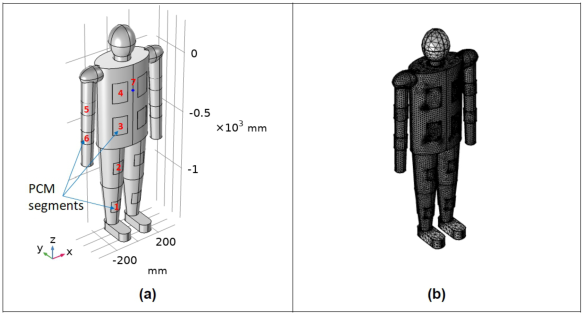
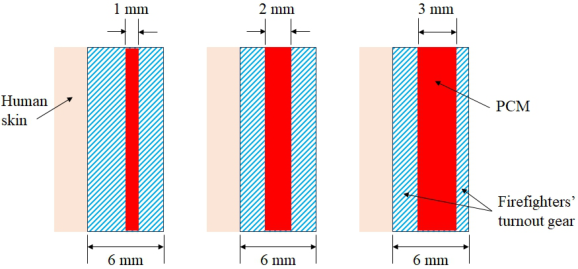
A whole piece of PCM was not used to cover the body, in that this would have blocked the firefighters’ movements. Instead, the PCM was broken into several segments to cover the important body parts based on the body thermal zones of ASTM F1291-16 but to avoid blocking joints. Figure 1(a) shows the PCM segments’ distribution throughout the entire turnout gear. The PCM segments covered both the front and back of the human body and limbs. The segments covering the calves and thighs were 3.6” × 4”, covering the upper and lower arms 4” in width, covering the waist part was 4.5” × 6”, and covering the chest part was 4.5” × 6.5”. Three thicknesses of PCM segments were studied: 1 mm, 2 mm, and 3 mm. The locations of the PCM in the clothing are shown in Figure 2.
Figure 1: (a) The 3D turnout gear-equipped human thermal model with PCM segments embedded in clothing (the front side of the human); (b) mesh structure (free tetrahedral elements) for the 3D model.Figure 2: Thickness distribution of PCM segments in firefighters’ turnout gear (showing 1-mm, 2-mm, and 3-mm thickness PCM segments).
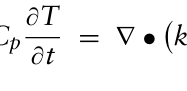
Heat Transfer Simulation Three-dimensional heat transfer simulations were conducted through COM- SOL Multiphysics. The bioheat transfer program was used for the fire- fighters’ turnout gear-equipped human body thermal simulations. The heat diffusion (energy) equation to simulate the conduction heat transfer through the firefighters’ turnout gear-equipped human body is expressed in Equation (1) (Su et al., 2020; Xu et al., 2022):
Equations and mathematical formulas are available in the original paper PDF.
+ Qbio (1)
Equation reproduced from the original PDF.
where ρ is the density, Cp is the specific heat, k is the thermal conductivity of materials, Qbio is the bioheat source term indicating heat transfer by blood circulation, which only occurs in the human body, T is the temperature, and t is the time.
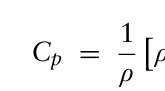
The equivalent heat capacity method was applied to simulate the phase changing process of PCM segments (Xu et al., 2022; Zhao et al., 2014). It integrated the latent heat of fusion into the overall heat capacity of PCM, as shown in Equation (2) (Xu et al., 2022; Zhao et al., 2014):
LF(T)
+ L∂N
Equation reproduced from the original PDF.
ρsCp,s +
ρlCp,l −ρsCp,s ρ
∂T (2) where Cp is the equivalent specific heat of PCM during the phase changing process (melting/solidification); ρ is the overall density of PCM; the sub- scripts s and l indicate the solid and liquid state of PCM, respectively; LF(T) is the liquid fraction of PCM during the phase changing process (LF(T) is zero (0) for solid state PCM, one (1) for liquid state PCM, between 0 and 1 for the mushy zone); L is the latent heat of fusion of PCM; and ∂N ∂T is the normal distribution (Gaussian function) used to account for the latent heat during phase change (Xu et al., 2022; Zhao et al., 2014).
The material properties of PCM, human skin, and firefighters’ turnout gear are listed in Table 1, which were input into the model for numerical simulations.
Table 1. Thermophysical properties of human skin, firefighters’ turnout gear, and PCM (ASTM F1930–18; Harris et al., 1982; Incropera and DeWitt, 2002; PureTemp LLC; Ventura and Martelli, 2009; Xu et al., 2022).
Table available in the original PDF paper.
Density (kg/m3)
Specific Heat (J/kg·K)
Thermal Conductivity (W/m·K)
Latent Heat of Fusion (kJ/kg) 1109 2684 0.36 ---
Human skin 500 1300 0.30 --- Firefighters’ turnout gear
PCM 814.5 2000 Solid: 0.25 Liquid: 0.15
3D Numerical Simulation for Thermal Protection of Phase Change Material-Integrated 137
Boundary conditions: The surface of firefighters’ turnout gear was exposed to radiant and convective heat sources, mimicking the fire scenes. The heat fluxes of 83 kW/m2 and 8.3 kW/m2 were applied at the outer surface of the turnout gear in the simulation model as the heat sources, represent- ing the flashover and hazardous conditions in the fire scene, respectively (Coletta et al., 1976).
Initial conditions: The initial temperature of firefighters’ turnout gear was assumed at 25
C (room temperature) (Xu et al., 2022). The initial human body temperature was maintained at 37
C (the normal human core temperature) (Xu et al., 2022).
Mesh for Modelling and Numerical Solution Reading Points The finite element method was adopted for the numerical simulations. Free tetrahedral elements were used to create the mesh structure for the model. The Quadratic Lagrange discretization method was applied to enhance the accuracy of the solutions. The numerical stability analysis indicated that the fine mesh size was sufficient for the human thermal model, lead- ing to 241,733 domain elements, 67,126 boundary elements, and 8,083 edge elements (Figure 1(b)). The time-dependent solver with backward dif- ferentiation formula (BDF) in COMSOL was utilized to obtain the tem- perature solutions with respect to time. Relative tolerance of 0.01 was used for convergence criteria to keep the accuracy of simulation with a reasonable computational time. Seven probes were built on the human model to sense the temperature changes under the high-heat exposures, as shown in Figure 1(a). The locations of the probes are numbered in this figure. Probes 1–6 are located on the human skin surface covered by the PCM segment integrated firefighters’ protective clothing. Probe 7 is located on the human skin surface not directly covered by PCM segments (Figure 1(a)).
HEAT TRANSFER ANALYSIS RESULTS
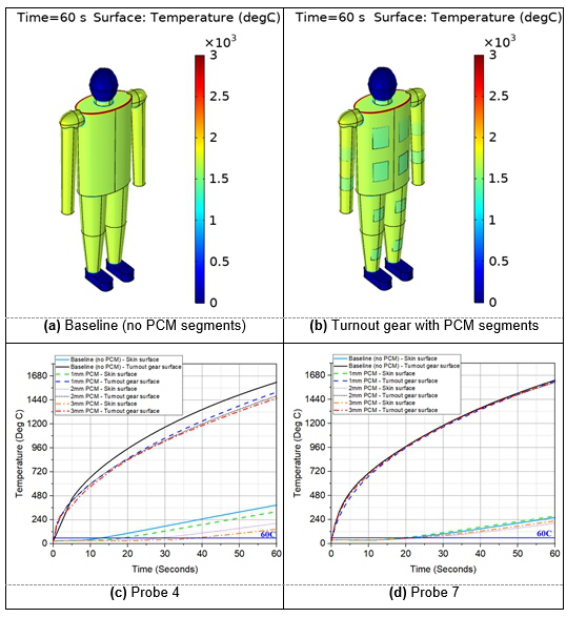
Figure 3 shows the temperature profiles on the firefighters’ turnout gear- equipped human body. Figures 3(a) and (b) display the temperatures of the turnout gear without (baseline) and with PCM segments embedded, respec- tively, under flashover condition (heat flux of 83 kW/m2). Figures 3(c) and (d) are the human skin surface temperatures at locations of Probe 4 and 7, respectively. These figures compare the results between baseline (turnout gear without PCM) and 3-mm PCM segments integrated firefighters’ turnout gear. The results compare the temperature differences at the two locations when there were PCM versus no PCM segments embedded in the firefighters’ turnout gear.
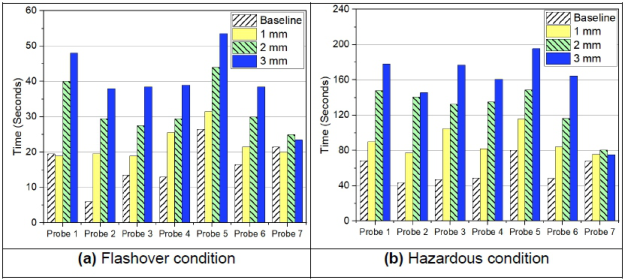
Figure 4 shows the times for human skin surfaces at various locations on human body to reach second-degree burn temperature (around 60
C) under flashover and hazardous conditions.
Figure 3: Temperature profiles when firefighters were exposed under flashover condi- tions. (a) Firefighters’ turnout gear-equipped full body (baseline, no PCM segments); (b) PCM segment integrated turnout gear-equipped full body; (c) human skin and turnout gear surface temperatures at the location of Probe 4; (d) human skin and turnout gear surface temperature at the location of Probe 7.Figure 4: Times for human skin surface to reach second-degree burn temperature (∼60
C) under (a) flashover condition and (b) hazardous condition. (Baseline indicates turnout gear without PCM segments; 1 mm, 2 mm, and 3 mm indicate the thicknesses of PCM segments in firefighters’ turnout gear).
3D Numerical Simulation for Thermal Protection of Phase Change Material-Integrated 139
DISCUSSION
This study was the first step to investigate the effect of PCM segments on the thermal performance of firefighters’ turnout gear based on the 3D model. The PCM segments could significantly mitigate the temperature increase in the human body under high heat flux (Figure 3(b)). The areas covered by the PCM had much lower temperatures than the baseline (no PCM) when com- paring Figure 3(b) with Figure 3(a). Using the PCM segments could extend the time for the protected skin surface (such as the location of Probe 4) to reach 60
C (second-degree burn injury) by up to two times (Figure 3(c)). The 2-mm and 3-mm thick PCMs could also help mitigate the temperature rise for the skin surface area not directly covered by PCM segments (such as the location of Probe 7) under the high-heat condition when compared with the baseline (turnout gear with no PCM segments), as shown in Figure 3(d). Due to the complex geometry of the human body, the temperatures and heat trans- fer rate at various locations of the human body and limbs (Probes 1-7) could be different, such as in Probes 4 and 7 in Figures 3(c) and (d).
Three PCM thicknesses were studied to explore their thermal protection performances for reducing the weight added to the turnout gear by PCM segments. It was observed that the 3-mm-thick PCM segments could extend the times for the protected skin areas to reach 60
C by one to three times when firefighters were exposed to the high-heat conditions. With reduced PCM thicknesses, it was found that the 2-mm-thick PCM segments could increase the protection times for skin surfaces to reach 60
C by one time under the flashover condition and by one to two times under the hazardous condition. Even using 1-mm-thick PCM segments in firefighters’ turnout gear could also extend the protection times by 20%-100% under the high-heat conditions.
Limitation of the study: In the simulation model, we employed an assump- tion of ideal insulation at the extremities—specifically the head, hands, and feet. This assumption might impact the simulation outcomes for other body regions like the chest, waist, arms, thighs, and calves. However, it is impor- tant to note that the primary aim of this study was to compare the thermal protection capabilities between traditional and PCM-integrated firefighters’ turnout gear. This assumption, while simplifying the model, does not detract from the validity of the overall trends observed in the results for the human body and limbs. The core findings of the enhanced protection offered by PCM gear remain unaffected by this assumption. Experimental studies will be conducted in the future to validate the numerical model and demonstrate the thermal protection performance improvement of firefighters’ turnout gear by using PCM.
Moving forward, our focus will shift toward optimizing the dimensions and strategic placement of PCM segments within the turnout gear. This endeavour aims to maximize the thermal protection coverage across the entire body while minimizing the quantity of PCM incorporated. This bal- ance is crucial to ensure the gear remains practical, functional, and efficient in protecting firefighters against the intense heat and dangers they face in the line of duty.
CONCLUSION
This computational research has shown that integrating PCM segments into firefighters’ turnout gear may substantially elevate its thermal protection capabilities. Our computational findings indicate that PCM layers, ranging from 1 to 3 mm in thickness, are effective in significantly enhancing the gear’s protective performance. Notably, turnout gear augmented with 3-mm-thick PCM segments demonstrated a potential to extend the duration of thermal protection by one to threefold during a rapid-fire event, such as flashover.
ACKNOWLEDGMENT
The authors would like to thank the CDC NIOSH Nanotechnology Research Center (NTRC) for its financial support of this research. The authors also thank Jay Tarley, Jeff Powell, and John Wu for their thoughtful review of this manuscript.
DISCLAIMER The findings and conclusions in this report are those of the authors and do not necessarily represent the official position of the National Institute for Occupational Safety and Health, Centers for Disease Control and Prevention.
REFERENCES
ASTM F1291 – 16 (2016). Standard Test Method for Measuring the Thermal Insulation of Clothing Using a Heated Manikin. ASTM F1930 – 18 (2018). Standard Test Method for Evaluation of Flame-Resistant
Clothing for Protection Against Fire Simulations Using an Instrumented Manikin. Campbell, R., Hall, S. (December 2022). United States firefighter injuries in 2021, NFPA Res. Coletta, G. C., Arons, I. J., Ashley, L. E., Drennan, A. P. (1976). The Development
of Criteria for Firefighters’ Gloves Volume II: Glove Criteria and Test Meth- ods. National Institute for Occupational Safety and Health (NIOSH) Publication, No. 77–134-B. Fonseca, A., Mayor, T. S., Campos, J. B. L. M. (2018). Guidelines for the specification of a PCM layer in firefighting protective clothing ensembles. Applied Thermal Engineering 133: 81–96. Fonseca, A., Neves, S. F., Campos, J. B. L. M. (2021). Thermal performance of a PCM
firefighting suit considering transient periods of fire exposure, post-fire exposure and resting phases. Applied Thermal Engineering 182:115769. Globe GX-7 Firefighter JACKET Coat Size 36/32 Turnout Gear: https: //www.ebay.com/itm/166423306258?chn=ps&mkevt=1&mkcid=28&srsltid=Af mBOopxhitCL0f7u0B9VaHQKzReVDVAJpfLvufRo5XV4enm0_nAFzxH33I Harris, J. P., Yates, B., Batchelor, J., Garrington, P. J. (1982). The thermal conductivity of Kevlar fibre-reinforced composites. Journal of Materials Science 17: 2925–2931. Hu, Y., Huang, D., Qi, Z., He, S., Yang, H., Zhang, H. (2013). Modeling ther-
mal insulation of firefighting protective clothing embedded with phase change material. Heat Mass Transfer 49: 567–573. Incropera, F. P., DeWitt, D. P. (2002). Fundamentals of Heat and Mass Transfer. 5th edition. John Wiley & Sons.
3D Numerical Simulation for Thermal Protection of Phase Change Material-Integrated 141
NFPA 1971 (2018). Standard on Protective Ensembles for Structural Fire Fighting and Proximity Fire Fighting. Phelps, H. L., Watt, S. D., Sidhu, H. S., Sidhu, L. A. (2019). Using phase change mate-
rials and air gaps in designing fire fighting suits: A mathematical investigation. Fire Technology 55: 363–381. PureTemp LLC: https://puretemp.com/ Su, Y., Li, R., Yang, J., Song, G., Li, J. (2020). Effect of compression on contact heat transfer in thermal protective clothing under different moisture contents. Clothing and Textiles Research Journal 38: 19–31. The firefighter suit: understanding the layers of protection. https://eu.tencatefabrics.
com/blog/layers-firefighter-suit Ventura, G., Martelli, V. (2009). Thermal conductivity of Kevlar 49 between 7 and 290 K. Cryogenics 49: 735–737. Xu, S. S., Pollard, J., Zhao, W. (2022). Modeling and analyzing for thermal protec-
tion of firefighters’ glove by phase change material. Journal of Environmental and Occupational Health 12(2): 118–127. Zhang, H., Liu, X., Song, G. & Yang, H. (2021). Effects of microencapsulated phase change materials on the thermal behavior of multilayer thermal protective clothing. The Journal of The Textile Institute 112(6): 1004–1013. Zhao, W., France, D. M., Yu, W., Kim, T., Singh, D. (2014). Phase change mate-
rial with graphite foam for applications in high-temperature latent heat storage systems of concentrated solar power plants. Renewable Energy 69: 134–146.
LISTED IN THE AHFE DIGITAL BOOKSTORE CATALOGUE
Explore the complete digital volume
Human Dynamics, Product Evaluation and Quality
Read this individual research paper free through the original publisher, or explore the full digital proceedings book.
ISBN 978-1-964867-07-6
Explore this ISBN in the AHFE Bookstore ↗Listed in the July 2026 bookstore catalogue; search by ISBN to confirm current availability · Digital book purchase optional