Christiano Bittencourt Machado (2024). Artificial Intelligence-Derived Clinical Reports For Multidisciplinary Health Education: A Preliminary Approach. In: Human Interaction and Emerging Technologies (IHIET-AI 2024): Artificial Intelligence and Future Applications. AHFE Open Access, vol. 120, pp. 207–216. https://doi.org/10.54941/ahfe1004570
Health education is a pivotal component in promoting overall well-being and preventing various diseases. With the rapid advancement of technology, particularly in the field of artificial intelligence (AI), health education is undergoing a transformation. This project aims at using artificial intelligence to generate clinical cases for multidisciplinary health students on a higher education institution. A large language model (LLM) known as OpenAI's ChatGPT (Generative Pretrained Transformer; OpenAI) is proposed to generate clinical case reports in several medical areas. For a more realistic insight about the reports, Fotor (an online platform for photo editing) was used to provide AI-generated images of each patient. By means of this AI tool, it is possible to generate clinical case reports containing the following information: patient’s main sociodemographic data, main complaint pathology (clinical diagnosis), history of previous illness etc. Further research aims at assessing quality and applicability of these data for health students.
In the landscape of health education, the methodological approach to clinical training is of utmost importance. Clinical case studies for multidisciplinary health students provide the foundation upon which diagnostic reasoning and inter-professional collaborative skills are developed (Nissen and Wynn, 2014). Traditional methods of case study creation and dissemination, how- ever, often lack the agility and customization needed to cater to a diverse set of learning needs.
The rise of artificial intelligence (AI) in various sectors, including health, has transformed the ways in which we approach problem-solving and knowl- edge dissemination (Murdoch, 2021). Notably, AI’s capacity to assimilate vast amounts of data and generate context-specific content holds significant potential for educational settings (Chiu et al., 2023). There is a compelling opportunity to derive clinical reports tailored to the needs of multidisci- plinary health students, ensuring a more adaptive and holistic approach to clinical education, by means of AI.
Hedge et al. (2023) utilized ChatGTP, a widely recognized machine learn- ing model based on natural language processing (NLP), capable of compre- hending, interpreting, and generating human language, to generate a short case report of a brain tumour labelled extraventricular neurocytoma (EVN), encompassing its epidemiology, clinical presentation, diagnosis, manage- ment, and prognosis. The authors concluded that “ChatGPT can be used with supervision to stitch together a well-written manuscript. However, authors should be cautious as it can easily mislead them with well-written text and distorted facts”.
Yet, while AI has been integrated into many aspects of medical practice and research, its potential in generating clinical case studies for pedagogi- cal purposes remains underexplored. This project is a preliminary approach to harness AI capabilities in creating clinical reports, aspiring to bridge this gap and elucidate the potential benefits and challenges of such integration in higher education institutions. Therefore, the aim of this paper was to use artificial intelligence to generate clinical cases for multidisciplinary health students on a higher education institution.
MATERIALS AND METHODS
For the generation of the clinical cases, OpenAI’s ChatGPT (Generative Pre- trained Transformer) was employed. This large language model (LLM) is renowned for its capability to generate human-like text based on prompts provided to it.
The following prompt was input into ChatGPT to produce four clinical case studies: [I am a university professor in the health field. I would like to generate 4 complete case studies of fictional patients (they are not real, so they do not violate the medical code of ethics) for students in the health field (Phys- iotherapy, Nursing, and Nutrition). These case studies should contain the following information: full name; age; gender; ethnicity; complete address; date of birth; occupation (profession), if applicable; educational level; main complaint; pathology (clinical diagnosis), if applicable; which health profes- sionals have already evaluated the patient (and, if they did, what were the findings); history of the current disease; history of past illnesses; social his- tory (whether they practice physical activity, smoke, have children, dietary habits, work environment etc.); whether they take medications and which ones (with the prescribed dosage, and whether it was prescribed by a doc- tor or not); blood pressure (in mmHg); heart rate (in bpm); respiratory rate (in breaths per minute); results of complementary tests; hemogram results, if available; general observations that the patient may have informed. Please, include as much detail as possible in each item. For each case study, num- ber in order of generation (1, 2, 3, etc.). Generate five questions about the case study, with answers, regarding the multidisciplinary approach for each patient].
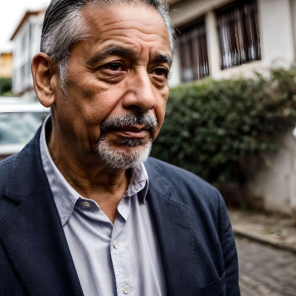
To render a more realistic representation of each fictional patient, the online platform Fotor was employed (https://www.fotor.com). Fotor was applied to generate AI-conceived pictures of each patient, thereby enhanc- ing the authenticity of the case studies. The variables - full name, age, gender,
Artificial Intelligence-Derived Clinical Reports for Multidisciplinary Health Education 209
ethnicity, complete address, date of birth, occupation, educational level, main complaint, pathology, and general observations - were used as prompts to generate the images.
Following the generation of the cases using ChatGPT and the associated images using Fotor, a comprehensive review was conducted to ensure the relevance, consistency, and accuracy of the data.
RESULTS
Case Report #1
SURNAME, Name: SILVA, Ana
Age: 60 years old
Gender: Female
Ethnicity: White
Full address: Rua das Flores, No. 123, Bairro Verde, Cidade Alegre, State X
Date of birth (dd/mm/yyyy): 15/03/1963
Occupation: Retired
Educational level: Completed high school
Main complaint: Chronic abdominal pain and diarrhea
Pathology: Irritable bowel syndrome (IBS)
Health professionals assessed: Gastroenterologist (diagnosis and treat- ment)
Current disease history: Recurrent abdominal pain and diarrhea for over a year.
Past medical history: Hypothyroidism
Social history: Non-smoker, does not engage in regular physical activity, high-fiber diet.
Medications: L-thyroxine for hypothyroidism.
Blood pressure: 120/80 mmHg
Heart rate: 70 bpm
Respiratory rate: 16 breaths per minute
Additional test results: Normal colonoscopy, normal blood tests.
Complete blood count results: Within normal limits.
General observations: Reports chronic stress due to family issues.
Questions about the multidisciplinary approach:
1. What are the recommended therapeutic approaches for the treatment of IBS?
Answer: Cognitive-behavioral therapy, diet, and, if necessary, medication.
2. How can Ana’s chronic stress affect the symptoms of IBS, and what type of psychological support is appropriate?
Answer: Chronic stress can exacerbate the symptoms of IBS. A psycholo- gist can help in stress management.
3. What are the main IBS symptoms that should be monitored in Ana?
210 Machado and Taiar
Answer: Abdominal pain, changes in bowel pattern, bloating, and flatulence.
4. What lifestyle measures can be recommended to improve Ana’s quality of life?
Answer: Encouraging regular physical activity and relaxation techniques, such as yoga, can be beneficial.
5. Apart from the gastroenterologist, which other health professionals can be consulted for Ana’s multidisciplinary treatment?
Answer: A nutritionist for dietary guidance and a psychologist for emo- tional support.
Figure 1: AI-generated image of Mrs. Ana SILVA (www.fotor.com).
Case Report #2
SURNAME, Name: SANTOS, João
Age: 45 years
Gender: Male
Ethnicity: Black
Full Address: Sports Avenue, No. 45, Athlete District, Athletic City, State Y
Date of Birth (dd/mm/yyyy): 07/10/1978
Occupation: Personal Trainer
Educational Level: Bachelor’s degree in Physical Education
Main complaint: Pain in the right shoulder and loss of strength
Pathology: Rotator cuff shoulder injury
Healthcare professionals assessed: Orthopedist (diagnosis and treatment)
Current Disease History: Pain and loss of strength in the shoulder after intense physical activities.
Past medical history: None
Social history: Engages in intense weightlifting, non-smoker, protein-rich diet.
Artificial Intelligence-Derived Clinical Reports for Multidisciplinary Health Education 211
Medications: Anti-inflammatories prescribed by the orthopedist.
Blood pressure: 130/75 mmHg
Heart rate: 80 bpm
Respiratory rate: 18 breaths per minute
Additional test results: MRI (magnetic resonance imaging) showed lesions in the rotator cuff.
Complete blood count results: Within normal limits.
General observations: João reports difficulty in performing his profes- sional and personal activities due to shoulder pain.
Questions about the multidisciplinary approach:
1. In addition to medical treatment, what self-care measures can João take to relieve his shoulder pain?
Answer: Rest, ice application, physiotherapy, and strength exercises.
2. How can strength training be adapted to prevent future injuries?
Answer: A physiotherapist can provide guidance on specific strength and injury prevention exercises.
3. What are the warning signs that João should be aware of that would indicate the need for immediate medical evaluation?
Answer: Worsening pain, loss of shoulder function, or signs of infection.
4. What is the role of physiotherapy in the treatment of João’s rotator cuff injury?
Answer: Physiotherapy plays a fundamental role in the rehabilitation and strengthening of the affected area.
5. What dietary modifications can help accelerate João’s recovery?
Answer: A diet rich in anti-inflammatory foods, such as fruits and vegetables, can be beneficial.
Figure 2: AI-generated image of Mr. João SANTOS (www.fotor.com).
212 Machado and Taiar
Case Report #3
SURNAME, Name: ALVES, Sofia
Age: 35 years old
Gender: Female
Ethnicity: White
Full Address: Rua das Palmeiras, n
789, Bairro Tranquilo, Cidade Serena, State Z
Date of Birth: 02/09/1988
Occupation: Yoga Teacher
Educational level: Bachelor’s degree in Physical Education
Main complaint: Chronic lower back pain
Pathology: Chronic lumbar pain
Health professionals assessed: Physical Therapist (diagnosis and treat- ment)
Current disease history: Recurrent lower back pain, worsens with physical activities.
Past medical history: None
Social history: Practices yoga regularly, non-smoker, balanced diet.
Medications: Painkillers prescribed by the physical therapist.
Blood pressure: 110/70 mmHg
Heart rate: 65 bpm
Respiratory rate: 14 breaths per minute
Additional test results: Normal lumbar spine X-ray.
Blood count results: Within normal limits.
General Observations: Sofia reports that the lower back pain affects her quality of life and her performance in yoga classes.
Questions about the multidisciplinary approach:
1. Apart from medication, what self-care measures can Sofia adopt to alleviate lower back pain?
Answer: Regular practice of lumbar strengthening exercises, proper pos- ture, and relaxation techniques can help.
2. How can Sofia’s yoga practice influence her lower back pain, and what adjustments can be made in her classes?
Answer: Yoga practice can be beneficial, but exercises should be adapted to avoid movements that exacerbate the pain.
3. What are the warning signs Sofia should be aware of, indicating the need for reassessment by the physical therapist?
Answer: Worsening of pain, numbness or weakness in the legs, loss of bladder or bowel control.
4. What other medical specialties can be consulted to assist in managing Sofia’s lower back pain if necessary?
Artificial Intelligence-Derived Clinical Reports for Multidisciplinary Health Education 213
Answer: An orthopedic doctor can be consulted for a more detailed assessment of the spine.
5. How can Sofia’s balanced diet influence the management of lower back pain?
Answer: A diet rich in anti-inflammatory nutrients, such as omega-3, can help reduce inflammation.
Figure 3: AI-generated image of Miss Sofia ALVES (www.fotor.com).
Case Report #4
Full Name: FERREIRA, Pedro
Age: 50 years old
Gender: Male
Ethnicity: Mixed race (Brown)
Full address: Rua das Oliveiras, n
456, Bairro Arborizado, Cidade Verde, State W
Date of birth: 20/03/1973
Occupation: Accountant
Educational level: Degree in Accounting
Main complaint: Shortness of breath and chronic cough
Health professionals evaluated: Pulmonologist (diagnosis and treatment)
Current disease history: Progressive shortness of breath and productive cough for years.
Past Medical History: Smoked for 20 years (quit 10 years ago)
Social history: Former smoker, sedentary, exposed to dust in the work- place.
Medications: Bronchodilators and inhaled corticosteroids prescribed by the pulmonologist.
Blood pressure: 130/85 mmHg
Heart rate: 75 bpm
214 Machado and Taiar
Respiratory rate: 20 breaths per minute
Additional test results: Spirometry showed an obstructive pattern, chest X-ray with hyperinflation.
Blood count results: Within normal limits.
General observations: Pedro reports difficulty in performing daily activi- ties due to shortness of breath.
Questions about the multidisciplinary approach:
1. Apart from medication, what self-care measures can Pedro adopt to improve his lung function?
Answer: Quit smoking permanently, keep vaccinations up to date, and participate in pulmonary rehabilitation programs.
2. How might exposure to dust in the workplace have contributed to Pedro’s development of COPD?
Answer: Exposure to particles in the workplace can cause chronic inflam- mation in the lungs, contributing to COPD.
3. What are the main symptoms of COPD exacerbation that Pedro should be aware of?
Answer: Increased shortness of breath, intense cough, and mucus production.
4. What are the side effects of inhaled medications and how should they be used?
Answer: Side effects may include throat irritation. Medications should be used as directed by a doctor.
5. How can Pedro’s diet be adjusted to improve his nutrition and lung health?
Answer: A diet rich in antioxidants, such as fruits and vegetables, can be beneficial for lung health.
Figure 4: AI-generated image of Mr. Pedro FERREIRA (www.fotor.com).
Artificial Intelligence-Derived Clinical Reports for Multidisciplinary Health Education 215
DISCUSSION AND CONCLUSION The rapid technological progress in the field of artificial intelligence has offered numerous opportunities for its application across diverse sectors, with health education being no exception. This study sought to determine the via- bility of AI-generated clinical reports for enhancing multidisciplinary health education in higher institutions.
The produced AI-derived clinical reports, encompassing different med- ical areas, from gastrointestinal issues to musculoskeletal and pulmonary problems, highlight the capacity of AI to assimilate vast data and gener- ate diverse and context-specific content. Such cases, which are tailored to the needs of multidisciplinary health students, are expected to facilitate a more comprehensive and adaptive approach to clinical education (Thistleth- waite et al., 2012). A remarkable aspect of these generated reports is the attention to detail, aligning with the complexity and thoroughness expected of real-world clinical case presentations. Furthermore, the utilization of AI to generate corresponding patient images demonstrates the feasibility of a holistic integration of AI in creating a realistic learning experience.
Despite these promising outputs, there are inherent challenges and con- siderations to address. As mentioned by Hedge et al. (2023), while AI, particularly ChatGPT, is efficient at generating well-articulated content, it’s crucial to ensure that the information is not only factually accurate but also relevant to the targeted educational goal. It becomes paramount that edu- cators and health professionals thoroughly review these AI-generated case studies for authenticity and relevance, prior to their integration into the curriculum.
Moreover, there is a need to consider ethical and data protection aspects, even in the context of fictional patient data. Although the generated cases in this study are fictional, and thus, do not pose any direct ethical concern, it is crucial to establish clear guidelines ensuring that these AI-generated cases cannot be misconstrued or misused as real clinical data (Mittelstadt et al., 2016; Subbian et al., 2021). Another consideration is the potential for AI to generate overly complex or rare cases. While these may offer unique learning opportunities, the focus should be on generating a balance of common and rare conditions to give stu- dents a well-rounded understanding of the vast spectrum of potential clinical scenarios.
This preliminary study underscores the substantial potential of artificial intelligence in improving multidisciplinary health education. The ability of AI to generate detailed, diverse, and context-specific clinical reports, com- plemented by corresponding patient images, demonstrates a transformative approach to clinical training in higher education institutions. Such integration is likely to foster diagnostic reasoning and inter-professional collaborative skills among health students, equipping them better for real-world challenges.
Furthermore, the approach proposed in this study not only caters to imme- diate educational needs but also opens possibilities for generating vast repos- itories of clinical cases. With hundreds of such AI-validated reports, faculties can create a dynamic, adaptable, and comprehensive curriculum, ensuring their students are well-prepared for the diverse challenges of healthcare.
216 Machado and Taiar
However, while the advantages are clear, it remains crucial to approach this integration with caution, ensuring content accuracy, relevance, and eth- ical soundness. As AI continues to evolve, its symbiotic relationship with health education promises transformative outcomes, benefitting educators, students, and ultimately, patient care.
ACKNOWLEDGMENT
The author would like to thank Profa. Sandra Mayworm, Profa. Paula Aballo and Profa. Joyce Muniz for supporting this project.
REFERENCES
Chiu, T. K. F., Xia, Q., Zhou, X., CHai, C. S., Cheng, M. (2023) “Systematic literature review on opportunities, challenges, and future research recommendations of arti- ficial intelligence in education”. Computers and Education: Artificial Intelligence, volume 4, 100118. Hegde, A., Srinivasan, S., Menon, G. (2023) “Extraventricular Neurocytoma of
the Posterior Fossa: A Case Report Written by ChatGPT”. CUREUS, volume 15, No. 3, e35850. Mittelstadt, B. D., Allo, P., Taddeo, M., Wachter, S., Floridi, L. (2016) “The ethics of algorithms: Mapping the debate”. Big Data & Society, volume 3, No. 2. Murdoch, B. (2021) “Privacy and artificial intelligence: challenges for protecting
health information in a new era”. BMC med Ethics, volume 22, No. 122. Nissen, T. and Wynn, R. (2014) “The clinical case report: a review of its merits and limitations”. MC Res Notes, volume 7, p. 264. Subbian, V., Solomonides, A., Clarkson, M., Rahimzadeh, V. N., Petersen, C.,
Schreiber, R., DeMuro, P. R., Dua, P., Goodman, K. W., Kaplan, B., Koppel, R., Lehmann, C. U., Pan, E., Senathirajah. Y (2021) “Ethics and informatics in the age of COVID-19: challenges and recommendations for public health organization and public policy”. J Am Med Inform ASSOC, volume 28, No. 1, pp. 184–189. Thistlethwaite, J. E., Davies, D., Ekeocha, S., Kidd, J. M., MacDougall, C., Matthews, P., Purkis, J., Clay, D. (2012) “The effectiveness of case-based learning in health professional education. A BEME systematic review: BEME Guide No. 23”. Med Teach, volume 34, No. 6, e421–44.
LISTED IN THE AHFE DIGITAL BOOKSTORE CATALOGUE
Explore the complete digital volume
Human Interaction and Emerging Technologies (IHIET-AI 2024): Artificial Intelligence and Future Applications
Read this individual research paper free through the original publisher, or explore the full digital proceedings book.
ISBN 978-1-958651-96-4
Explore this ISBN in the AHFE Bookstore ↗Listed in the July 2026 bookstore catalogue; search by ISBN to confirm current availability · Digital book purchase optional