Manuela Couto De Azevedo, Mateus Toledo Gomes, Cassiano Portela Da Fonseca, Letícia Lima Pires, Christiano Bittencourt Machado (2025). AI-Generated Clinical Case Studies In Physiotherapy: Enhancing Education Through Integrated Artificial Intelligence. In: Human Interaction and Emerging Technologies (IHIET-AI 2025): Artificial Intelligence and Future Applications. AHFE Open Access, vol. 161, pp. 428–437. https://doi.org/10.54941/ahfe1005935
Building on previous research, this study advances the use of AI-generated clinical case studies, specifically targeting various domains in physiotherapy. This work involved the creation of ten detailed clinical cases using a large language model (LLM) known as OpenAI's ChatGPT (Generative Pretrained Transformer; OpenAI). Each case was carefully designed to simulate real-world scenarios that physiotherapy students might encounter in their professional practice, covering diverse areas such as orthopedics, neurology, cardiopulmonary, and geriatrics. To ensure the generated cases adhered to high standards of educational quality, the prompts provided to ChatGPT were meticulously reformulated following established guidelines from the literature. Moreover, a classical physiotherapy textbook was employed as a reference for formatting and structuring the clinical reports. Preliminary feedback from physiotherapy educators and students suggests that the AI-generated content effectively mimics human-authored clinical cases, providing a valuable tool for enhancing clinical reasoning skills and bridging the gap between theoretical knowledge and practical application. Future research will focus on refining the AI prompts further and expanding the range of clinical scenarios to cover a broader spectrum of physiotherapy practice.
The advent of artificial intelligence (AI) has revolutionized numerous domains, including healthcare and education. Within the field of physiotherapy, the integration of AI technologies presents exciting opportunities for enhancing educational practices and clinical training. As physiotherapy students grapple with complex patient scenarios, the demand for innovative teaching tools that bridge theoretical knowledge with practical application has never been greater. Recent research highlights the effectiveness of simulation-based learning in fostering clinical reasoning and decision-making skills (Buttow and Hoque, 2020; Moss et al., 2022).
AI-Generated Clinical Case Studies in Physiotherapy 429
The potential of generative models like ChatGPT lies in their ability to produce detailed and contextually relevant narratives that mimic human- like writing. Furthermore, the current research highlights the importance of integrating diverse clinical scenarios in health training. By expanding the breadth of cases generated by the AI, educators can address a wider variety of conditions and patient presentations, catering to the multifaceted nature of clinical practice. This adaptability positions AI as a crucial component within educational frameworks that aim to prepare students for the demands of modern healthcare environments (Veras et al., 2023; Veras et al., 2024).
Machado and Taiar (2024) have already produced AI-derived clinical reports, encompassing different medical areas, from gastrointestinal issues to musculoskeletal and pulmonary problems, highlighting the capacity of AI to generate diverse and context-specific content. They have also utilized AI to generate corresponding patient images, providing a realistic learning experience. However, the prompt used for this purpose was relatively simple. Prompt engineering is a relatively new field of research, referring to “the practice of designing, refining, and implementing prompts or instructions that guide the output of large language models (LLMs) to help in various tasks”. There is an increasing need for designing better prompts for health sciences (Meskó, 2023).
According to Wang et al. (2021), prompt learning can be divided into five main steps. First, researchers must choose an appropriate pre-training model. Then, they must design prompts for subsequent tasks, which can be adapted to the specific requirements of each task, and this step is called the prompt engineering process. The third step involves designing responses based on the task at hand, allowing the model to produce the desired output. The fourth step is to expand the paradigm to further improve the results or adaptability methods. Finally, researchers must design training strategies that allow the model to learn efficiently and effectively.
Therefore, the present study aims at using artificial intelligence to produce an e-book of fictitious clinical cases in Physiotherapy, for use in the university academic environment. The aim here is to advance the methodology published by Machado and Taiar (2024), improving the prompt previously developed.
MATERIALS AND METHODS
Building on previous research (Machado and Taiar, 2024), this study advances the use of AI-generated clinical case studies specifically targeted at various areas of Physiotherapy. Ten detailed clinical cases were created using a large language model (LLM), known as ChatGPT (Generative Pretrained Transformer; OpenAI). Each case was carefully designed to simulate real-life scenarios that Physiotherapy students may face in their professional practice, covering diverse areas such as orthopaedics, neurology, cardiopulmonary and geriatrics.
To ensure that the generated cases meet high standards of educational quality, the prompts provided to ChatGPT were meticulously reformulated, following guidelines established in the literature (Meskó, 2023). In addition,
a classic Physiotherapy textbook was used as a reference for the formatting and structuring of clinical reports (O’Sullivan et al., 2019), to increase the accuracy and relevance of the generated content.
Here are excerpts from the prompt used: [You are a physical therapist specializing in higher education teaching, with extensive experience in human anatomy, biochemistry, cell biology, kinesiology and biomechanics, physiology, biophysics, and electrothermal and phototherapy. Your goal is to help your students develop clinical reasoning skills. To do this, you will create ten fictitious intermediate-level clinical cases following the structure provided in the book: Physical Rehabilitation – 7th Edition; Authors: Susan B. O’Sullivan, Thomas J. Schmitz, George D. Fulk.
Step 1: Create the cases, which should include: current history: description of the patient’s current problem; past medical history: (...)
Here is an example taken from the book: The patient is a 78-year-old woman who tripped and fell at home climbing the stairs outside the front door. (...)
Step 2: After each case, develop five questions focused on the patient’s health conditions and physical therapy needs.
Step 3: Provide complete answers to each question based on the collected information and recommended clinical practice.
Step 4: Classify each clinical case according to the relevant specialty, such as trauma/orthopedics, neurology, cardiology, etc.
Step 5: Repeat the structure of steps 1, 2, 3, and 4 to create the ten additional clinical cases].
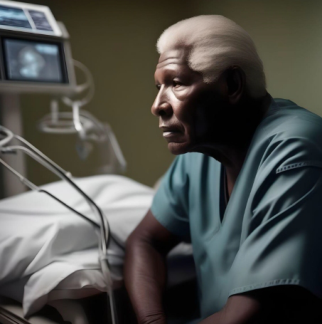
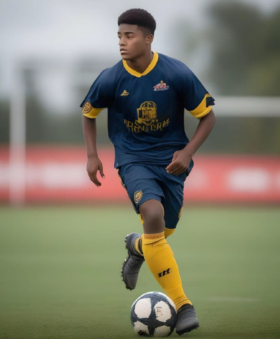
In addition to the text-based case studies, AI was also used to create realistic patient images associated with each clinical scenario using the Fotor platform (https://www.fotor.com/). The resulting cases include comprehensive information such as patient demographics, medical history, physical examination findings, diagnostic results, and proposed physiotherapy interventions. Finally, five open-ended questions with mirror answers were generated for each case.
Following the generation of the cases using ChatGPT and the associated images using Fotor, a comprehensive review was conducted to ensure the relevance, consistency, and accuracy of the data.
RESULTS
Two examples of AI-generated case reports are presented below: Case Report #1 (Neurology)
Current History: A 62-year-old patient was admitted after suffering an ischemic stroke in the left cerebral hemisphere. He was found unconscious in his home by a neighbour, who immediately called the emergency services. Upon arrival at the hospital, the patient underwent intravenous thrombolysis with alteplase. He was admitted to the ICU for 48 hours and, after stabilization, was transferred to the ward. The patient has right hemiparesis and expressive aphasia.
AI-Generated Clinical Case Studies in Physiotherapy 431
Past Medical History: The patient has a history of systemic arterial hypertension (SAH) and type 2 diabetes mellitus, controlled with medication. He suffered a myocardial infarction 5 years ago and has been taking anticoagulant medication since then. He reports frequent episodes of tension headache in the last few months but has not sought medical attention for investigation.
Medical Diagnoses:
Ischemic stroke in the left hemisphere.
Right hemiparesis.
Expressive aphasia.
Systemic arterial hypertension (SAH).
Type 2 diabetes mellitus.
History of myocardial infarction.
Medications:
Enalapril 20 mg/day.
Metformin 850 mg twice a day.
ASA 100 mg/day.
Clopidogrel 75 mg/day.
NPH insulin 10 IU in the morning and 5 IU at night.
Social Support/Environment: The patient is retired and lives alone in an apartment on the third floor of a building without an elevator. He is divorced and has two adult children who live in other cities. One of the children visits him on weekends and helps him with shopping and household chores. Before the stroke, he was independent in performing all activities of daily living and used to walk daily around the neighbourhood.
Physical Therapy Exams:
1. Mental Condition: Alert, oriented in time and space, but with communication difficulties due to aphasia. 2. Cardiopulmonary condition: Pulse 82 bpm, blood pressure (BP) 135/85 mmHg. Mild dyspnea on exertion. 3. Sensation: Decreased tactile sensation on the right side of the body. 4. Skin: Preserved integrity. 5. Range of motion (ROM): Right upper and lower limbs with reduced ROM in all joints, with greater involvement in the shoulder and hip. On the left side, ROM within normal limits. 6. Strength: Right upper limb 2/5; Right lower limb 2/5. Left side with preserved strength. 7. Posture: Postural deviation with trunk tilting to the right side when trying to stand. 8. Balance: Preserved sitting balance. Impaired standing balance, with need for support. 9. Functional Mobility: Dependent for transfers and walking. Uses a wheelchair for locomotion. 10. Activities of Daily Living (ADL): Requires assistance for all ADLs, including eating, personal hygiene, and dressing.
Questions and Answers:
1. What is the impact of right hemiparesis on the patient’s functional mobility? Answer: Right hemiparesis resulting from ischemic stroke significantly compromises the patient’s functional mobility, making him or her dependent for transfers and ambulation. Muscle weakness (strength 2/5) and reduced range of motion (ROM) in the right upper and lower limbs make it difficult to perform basic motor activities, such as walking, maintaining balance while standing, and performing coordinated movements, requiring the use of a wheelchair for locomotion. 2. How does expressive aphasia affect the patient’s communication and what can be done to facilitate interaction? Answer: Expressive aphasia impairs the patient’s ability to articulate words and form sentences, making verbal communication difficult. To facilitate interaction, it is important to use gestures, facial expressions, drawings and alternative communication devices, such as communication boards with pictures or key words. Rehabilitation with a speech therapist is also essential to promote the recovery of communication skills. 3. What are the main goals of physical therapy in the rehabilitation of this stroke patient? Answer: The main goals of physical therapy include: Recovering mobility and muscle strength on the affected side (right); Improving balance and posture, focusing on minimizing postural deviation and promoting stability while standing; Restore functional independence in daily activities, such as transfers and walking; Preventing secondary complications such as contractures and pressure ulcers; Educating the patient and family about home exercises and necessary adaptations for daily life. 4. How do systemic arterial hypertension (SAH) and type 2 diabetes mellitus influence post-stroke recovery? Answer: Hypertension and type 2 diabetes mellitus are significant risk factors for cerebrovascular events and may complicate post-stroke recovery. Poorly controlled hypertension may increase the risk of further stroke and compromise adequate cerebral perfusion, while diabetes may delay healing and predispose the patient to complications such as neuropathies. Careful monitoring of blood pressure and blood glucose levels is essential to improve recovery outcomes and prevent additional complications. 5. What interventions can be implemented to improve independence in activities of daily living (ADLs) for this patient? Answer: Interventions to improve independence in ADLs include: Functional training, focusing on specific tasks such as transfers, personal hygiene, and eating; Adapting the home environment, installing grab bars, using adapted utensils, and rearranging furniture to facilitate access; Therapeutic exercises, to strengthen affected limbs, increase range of motion, and improve motor coordination; Occupational therapy, to teach compensatory strategies and use of assistive devices that facilitate ADLs.
AI-Generated Clinical Case Studies in Physiotherapy 433
Figure 1: AI-generated image of the patient #1.
Case Report #2 (Sports Physical Therapy) Current History: A 22-year-old soccer player, a forward, sustained an injury during a match while attempting a goal kick. He felt a sharp pain in his right knee and immediately fell to the field, unable to continue playing. He was carried off the field with assistance and taken to the hospital for evaluation. After imaging tests, he was diagnosed with an anterior cruciate ligament (ACL) injury with possible associated meniscal injury. The player underwent ACL reconstruction surgery two weeks ago and is now beginning post-operative physical therapy.
Past Medical History: The athlete has no history of significant previous injuries, although he suffered a mild sprain of his right ankle two years ago, with no subsequent complications. He has been playing sports since childhood and is in excellent physical shape, with good muscular and cardiovascular fitness.
Medical Diagnoses: Anterior cruciate ligament (ACL) injury of the right knee; Possible meniscal injury (to be confirmed with MRI); Post-operative ACL reconstruction (2 weeks).
Medications: Non-steroidal anti-inflammatory drug (ibuprofen) 400 mg three times daily for one week; Analgesic (paracetamol) 500 mg as needed.
Social Support/Environment: The athlete lives with his parents and has the support of the football club, which provides full medical and physiotherapy support. He is eager to return to sport but understands the need for a complete and safe rehabilitation process.
Physical Therapy Exams:
1. Mental Status: Alert, motivated, but eager to return to play; Cooperative with treatment plan. 2. ROM: Right knee flexion limited to 70
(with pain); Full extension limited by pain and stiffness. 3. Muscle Strength: Moderate weakness in the quadriceps and hamstrings of the right lower limb, with a 3/5 on the muscle strength scale.
4. Edema: Moderate edema around the right knee, with tenderness in the region. 5. Gait: Ambulation with crutches, with partial weight-bearing allowed on the right lower limb. 6. Joint Stability: Mild instability during passive mobilization of the knee, with pain when performing specific ACL tests. 7. Functional Mobility: Able to perform daily activities with support but avoids movements that require full flexion or extension of the knee. 8. Proprioception: Decreased proprioception in the right lower limb, especially when performing fine control movements.
Questions and Answers:
1. What is the primary goal of physical therapy in the early postoperative phase of an ACL reconstruction? Answer: The primary goal of physical therapy in the early postoperative phase of an ACL reconstruction is to control pain and edema, protect the surgical graft, restore knee range of motion, especially full extension, and begin strengthening the quadriceps and hamstring muscles. Early rehabilitation also aims to maintain joint mobility and prevent loss of muscle strength. 2. Why is restoration of full range of motion (ROM) important after ACL reconstruction? Answer: Restoration of full range of motion is crucial after ACL reconstruction to allow normal knee function and prevent joint stiffness. Full extension is particularly important to avoid abnormal gait patterns and minimize stress on other knee structures, while flexion is essential for activities such as climbing stairs and squatting. Limited ROM can compromise rehabilitation and return to sport. 3. How can muscle weakness in the quadriceps and hamstrings affect an athlete’s recovery after an ACL injury? Answer: Weakness in the quadriceps and hamstring muscles can delay an athlete’s recovery from an ACL injury, as these muscles are essential for knee stability and control during functional activities. Weakness in the quadriceps can impair the ability to fully extend the knee, while weakness in the hamstrings can compromise the ability to control knee flexion. This increases the risk of joint instability and makes it difficult to safely return to sports. 4. How important is proprioception in the rehabilitation process after an ACL injury? Answer: Proprioception is essential in the rehabilitation process after an ACL injury, as it involves the ability to perceive the position and movement of the knee in space. Good proprioception is essential for joint stability and for the execution of coordinated movements, especially in sports activities that require rapid changes of direction. Decreased proprioception can increase the risk of re-injury and delay return to sports. 5. How can controlling the load during gait influence recovery after ACL surgery? Answer: Controlling weight bearing during gait is crucial to recovery after ACL surgery because it allows the knee to heal properly without putting additional stress on the surgical graft. Partial weight
AI-Generated Clinical Case Studies in Physiotherapy 435
bearing, usually with the aid of crutches, helps protect the joint while the athlete regains muscle strength and joint stability. A gradual return to full weight bearing, as directed by the physical therapist, is necessary to promote healing and prevent complications such as graft laxity or additional injury.
Figure 2: AI-generated image of the patient #2.
DISCUSSION AND CONCLUSION The results of this study highlight the potential of AI-generated case studies to bridge the gap between theoretical and practical learning in physiotherapy education. By employing OpenAI’s ChatGPT, a generative language model, the study created realistic and complex clinical scenarios, which allows students to engage in problem-solving and clinical reasoning that closely mimics real-life situations. Moss et al. (2022) have already mentioned that that simulation-based learning is vital for developing clinical reasoning and decision-making skills in healthcare education. The study extended previous work by Machado and Taiar (2024), who generated AI-derived cases for healthcare, and supports the idea that prompt engineering is essential for ensuring AI outputs align with specific educational goals (Meskó, 2023).
The broad range of clinical cases - covering orthopedics, neurology, cardiopulmonary, and geriatrics - demonstrates the model’s flexibility and potential in simulating patient variability, an essential element in physiotherapy training. This diversity in case scenarios facilitates exposure to a range of patient presentations and conditions, preparing students for the multifaceted challenges they may face in clinical practice (Veras et al., 2024). This variety may enrich student engagement and help bridge gaps in areas traditionally less accessible through real-patient simulations, such as specific neurology and geriatrics cases, further validating AI’s role in expanding access to realistic case-based learning.
Despite these advancements, the study found that achieving consistent and educationally valuable outputs depended heavily on the refinement of
prompts, a process recognized as “prompt engineering” (Wang et al., 2021). Properly crafted prompts were crucial to eliciting responses from ChatGPT that aligned with clinical standards and educational requirements, consistent with findings in prompt design research. Moreover, adhering to classical formatting guidelines (e.g., O’Sullivan et al., 2019) improved the readability and educational quality of the cases. This suggests that further refinement in prompt engineering is essential to maximize AI’s potential in generating relevant and accurate educational content, particularly in fields requiring high levels of precision, such as healthcare education.
Preliminary feedback indicates that both students and educators found the AI-generated cases to be comparable to human-authored cases in terms of educational quality, supporting the hypothesis that AI could serve as a supplementary teaching tool in physiotherapy education. Feedback also suggested that these cases encouraged students to think critically and develop clinical reasoning skills, corroborating the findings of Buttow and Hoque (2020), who argued that simulation and case-based learning are effective in enhancing critical thinking. Nevertheless, some students reported challenges in navigating cases with extensive medical histories, indicating the need for potential simplification in specific scenarios to match the learning level of undergraduate students.
Future research is intended to explore more specialized and diverse case scenarios. Additionally, it may assess the effectiveness of AI-generated cases in enhancing clinical competencies through longitudinal studies and controlled trials. Expanding the types of prompts and incorporating real-time feedback into prompt refinement could further enhance the relevance and adaptability of AI-generated content (Meskó, 2023). Such improvements would facilitate the creation of even more tailored and realistic cases, benefiting both educators and students in physiotherapy and allied health disciplines.
In summary, this study demonstrates the feasibility and value of integrating AI-generated clinical cases into physiotherapy education. The results suggest that ChatGPT, when guided by carefully designed prompts, can produce case studies that are comparable in quality and educational value to those created by human educators. This research contributes to the emerging body of literature on AI applications in healthcare education and underscores the importance of prompt engineering in optimizing AI-generated content for specific educational needs. By providing access to a wide array of clinical scenarios, this approach holds promise for improving clinical reasoning skills and preparing students for diverse professional challenges.
ACKNOWLEDGMENT
The authors would like to acknowledge Prof. Sandra Mayworm for supporting this project.
REFERENCES
Butow, P., Hoque, E. (2020) Using artificial intelligence to analyse and teach communication in healthcare, Breast Volume 50. pp. 49–55.
AI-Generated Clinical Case Studies in Physiotherapy 437
Machado, C. B., Taiar, R. (2024) Artificial Intelligence-Derived Clinical Reports for Multidisciplinary Health Education: A Preliminary Approach. Human Interaction and Emerging Technologies (IHIET-AI 2024) Volume 120. pp. 207–216. Meskó, B. (2023). Prompt Engineering as an Important Emerging Skill for Medical
Professionals, J Med Internet Res Volume 25. e50638. Moss, P., Barnett-Harris, A., Lee, D., Gupta, K., Pritchard, S., Sievers, N., Te, M., Blackstock, F. (2022) Simulation-based clinical assessment identifies threshold competence to practise physiotherapy in Australia: A crossover trial, Adv Simul (LOND) Volume 7, No. 1, p. 21. O’Sullivan, S. B., Schmitz, T. J., Fulk, G. D. (2019). Physical Rehabilitation.
Philadelphia: F. A. Davis Company. Veras, M., Dyer, J. O., Rooney, M., Silva, P. G. B., Rutherford, D., Kairy, D. (2023) Usability and Efficacy of Artificial Intelligence Chatbots (ChatGPT) for Health Sciences Students: Protocol for a Crossover Randomized Controlled Trial, JMIR Res Protoc Volume 12. e51873. Veras, M., Dyer, J. O., Kairy, D. (2024) Artificial Intelligence and Digital Divide in
Physiotherapy Education, Cureus Volume 16, No. 1. e52617. Wang, J., Shi, E., Yu, S. et al. (2021). Prompt Engineering for Healthcare: Methodologies and Applications. Journal of Latex Class Files, Volume 14, No. 8.
LISTED IN THE AHFE DIGITAL BOOKSTORE CATALOGUE
Explore the complete digital volume
Human Interaction and Emerging Technologies (IHIET-AI 2025): Artificial Intelligence and Future Applications
Read this individual research paper free through the original publisher, or explore the full digital proceedings book.
ISBN 978-1-964867-37-3
Explore this ISBN in the AHFE Bookstore ↗Listed in the July 2026 bookstore catalogue; search by ISBN to confirm current availability · Digital book purchase optional