Dimitrios Ziakkas, Abner Flores, Hans C Natakusuma (2024). Implementation of Artificial Intelligence (AI) in global Electronic Pilot Licenses. In: Intelligent Human Systems Integration (IHSI 2024): Integrating People and Intelligent Systems. AHFE Open Access, vol. 119, pp. 767–772. https://doi.org/10.54941/ahfe1004541
ICAO Annex 1 Chapter 5 specifies that Civil Aviation Authorities “shall use first quality paper or any other kind of appropriate material, including plastic cards, where all data stated in Section 5.1.1.2 of the Annex of reference shall be available.” With the advancement of technology in the digital world, the shift to electronic personnel licensing has been at the forefront of the aviation industry. As of March 2023, ICAO has launched an electronic verification toolset for pilots, EPL (Electronic Pilot Licensing), to allow States to give the option of issuing electronic licenses through a standardized template (Uniting Aviation, 2023). The countries currently known that are participating in electronic pilot licensing are China, Brazil, and Australia. There are several challenges regarding e-licensing, such as license eligibility and verification, the ability to function online and offline, and license standardization worldwide (ICAO TV, 2021). Current interim solutions are automated digital verification by scanning a QR code, a manual query search on an ICAO website, and a visual inspection by inspectors using EPL verification job aids (ICAO, n.d.). However, these solutions are temporary, as there continue to be barriers to streamlining the electronic verification process of pilot licenses, especially when international operations validity is considered.Hence, the presented research focuses on the challenge of tying the e-license to a mobile platform – an application that can be used for license verification and authentication that crew members can carry around portably. The proposed Ai application is in accordance with standards outlined by the International Organization for Standardization, ISO/IEC 18013-5:2021 (ISO, 2021). A high standardization, security, and privacy level are vital to successful implementation. The Purdue CREATE research team provides an AI solution following the EASA recommendation, a lean / 6 Sigma approach in manpower planning.
Technological advancements significantly cause the digitalization of modern society, leading to new socio-economic opportunities and solutions that may not have existed previously (Ronzhina et al., 2021). Today, technology exists due to the exponential development of integrated software and hardware processed by advanced computers the size of a wristwatch. Cloud storage,
Internet of Things (IoT), Big Data, Digital Twins, and Artificial Intelligence are examples of the rapidly incoming wave of technologies to be integrated into today’s digital space (Liu et al., 2021).
Digital innovation in the aviation industry is comparatively slower than other fields, despite the rampant leaps and bounds of the digital age, as there are several contributing factors that make the aviation distinct from other corporations (Silling, 2019). Aviation prioritizes and takes pride in commit- ting to the highest levels of safety and security, and digital transformations in aviation face hurdles in harmonizing cyber security, regulations, and compli- ance (IATA, 2023). Hence, it is admittedly demanding for ICAO’s vision for global adoption of an EPL system that is standardized worldwide.
Moreover, standardization in aviation ecosystem may be expedited through the implementation of ICAO pilot competencies. Competency is demonstrated and perceived by behaviors that effectively utilize the essen- tial knowledge, abilities, and attitudes to execute activities or tasks within predetermined circumstances (Ziakkas et al., 2023).
METHODOLOGY
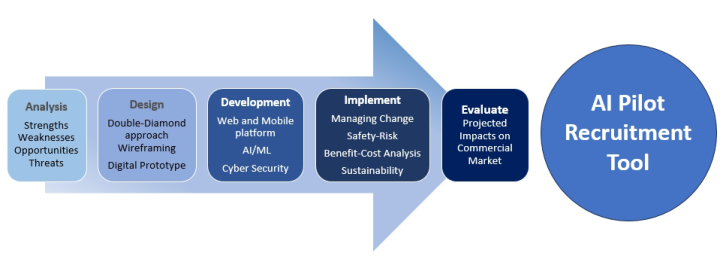
The Purdue research team follow the ICAO’s recommended ADDIE instruc- tional system design model (Analysis, Design, Development, Implementation, and Evaluation). The recommended model provides a structured framework for the design and development of the prototype and final product through a step-by-step process of identifying the needs of the market with multi-level factors (Branch, 2009).
The analysis section analyzes areas of strengths, weaknesses, opportuni- ties, and threats of an electronic pilot recruitment tool. This is followed by the design phase, which contains the wireframing of the digital prototype to demonstrate the potential of the recruitment tool prior to development. The development stage includes the physical web and mobile development of the tool and includes the artificial intelligence image processing software. Next, we will assess the implementation of the recruitment tool through several methods for the market: a safety-risk assessment, benefit-cost analysis, and sustainability assessment. The last step, evaluation, will evaluate the pro- jected impacts of the electronic pilot recruitment tool on the commercial market.
Figure 1: Adapted ADDIE approach (ICAO, 2023).
Implementation of Artificial Intelligence (AI) in Global Electronic Pilot Licenses 769
The implementation of a new system or tool necessitates a period of adjust- ment for recruiters or users to familiarize themselves with and adapt to new policies, procedures, and practices in accordance with the operator’s policies (4Ps), (Barshi et al., 2017).
FINDINGS The Purdue research team focused on how the AI recruitment tool positively impacts the aviation ecosystem training and operations. Hiring/ recruitment teams will be able to assess the individual from competency-based visual indicators rather than numerical or textual basis per applicant. These visual indicators will reduce cognitive workload/errors and support hiring teams in decision-making with a scored assessment of an individual’s submitted appli- cation based on the company’s requirements and preferences. Additionally, recruitment is heavily influenced by factors such as training and operational costs (amongst others). There is a significant advantage of a recruitment sys- tem integrating data and information from other departments in a visually presentable format for recruiters and recruitment managers to optimize their hiring targets.
For instance, the human resources/recruitment department is allocated a fixed budget to hire and train prospective employees while tasked to meet manpower demands to ensure efficient and sustainable operations within spe- cific time constraints. The manpower planning team, equipped with data and figures from training and flight operations, can plan manpower utilization and hiring needs based on forecasted manpower demands.
An expanding organization with an effective and efficient recruitment process will be advantageous in manpower planning, especially if there is a keen interest in aircraft fleet development and fleet transition. Inade- quate manpower planning for growing corporations can lead to an insuf- ficient surplus of manpower to perform the fleet transition and resist the capacity for change to accommodate different fleets (narrowbody-widebody- different aircraft manufacturers/variants, etc.). The crucial bottleneck in fleet transitions and expansion is training – pilots, flight attendants, engi- neers/technicians, dispatchers, etc. A recruitment process incorporating lean principles mitigates unforeseen manpower issues in this transition through proper planning. Training and preparation to receive new aircraft fleets take months, and any undue delays are an opportunity cost for the company. Furthermore, pilots will be restricted to flying specific aircraft types with minimal career progression, resulting in the possible threat of leaving the company.
Training employees will take time to familiarize themselves with a new system and is necessary for any organization in their management of change. This adjustment period will cost time and effort for the manpower planning department to evaluate its implementation feasibility and, if so, will need to trial the system. Hence, a small group of employees will need to test the sys- tem and provide valuable feedback based on the product’s potential. There may be increased workload during this period as there is a fraction of employ- ees using the traditional recruitment system and some employees testing the
upgraded version. Thus, it is advisable for the organization to transition to the AI recruitment tool during low hiring periods.
In addition, new policies, procedures, and practices may need to be culti- vated in the department with the introduction of a new system. Restrictions and access to information levels or features may need to be considered for varying employee levels/privileges. A noble point of consideration is adapting the AI recruitment system to the existing hiring infrastructure (which varies from company to company), while retaining and optimizing the data inputs from the old system. In essence, the primary intangible cost for the organi- zation is managing the change to the new system and convincing employees that it positively helps their work.
CONCLUSION
This research project addresses the prospect of implementing a potential pilot recruitment EPL system on digital platforms using visual and graphic design tools with UI/UX considerations for airlines, companies, and aviation organizations answering the following research questions:
1. Do ICAO’s requirements for pilot licensing affect manpower planning? 2. How do the differences between ICAO requirements and other civil avi- ation authorities (i.e., FAA, EASA, DGCA, CAAS, etc.) affect manpower planning process?
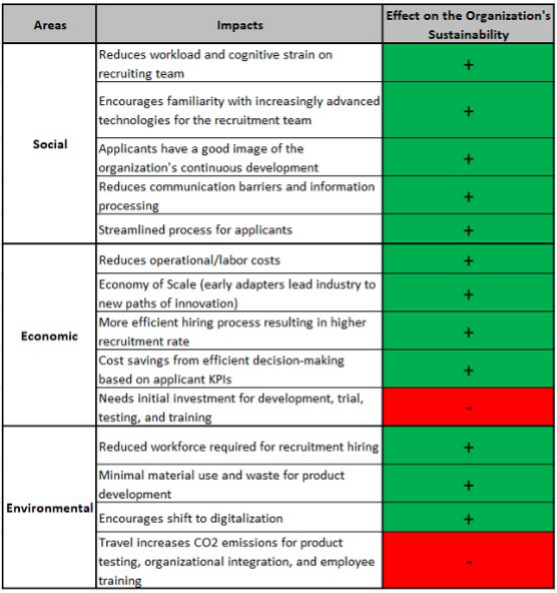
Figure 2: Presentation of ELP research in aviation ecosystem.
Implementation of Artificial Intelligence (AI) in Global Electronic Pilot Licenses 771
3. What are the current challenges and plausible solutions to implementing the EPL? (Analysis). 4. What are the features of the application(s) that users can access and interact with? (Design).
To conclude, the ELP framework overcome problems and limitations inherent in human-provided manpower planning (Ziakkas et al., 2023). ELP is a valuable tool in aviation training and operations, particularly for the man- power planning team using Artificial Intelligence, in several aspects including social, economic and environmental factors.
ACKNOWLEDGMENT
The authors thank faculty members of Purdue University for their invaluable feedback contributing to this work.
REFERENCES
Barshi, I., Degani, A., Mauro, R., & Loukopoulou, L. (2017). Guiding the practice: The 4PS. https://skybrary.aero/sites/default/files/bookshelf/3947.pdf Branch, R. M. (2009). Instructional Design: The ADDIE Approach. Springer
Science + Business Media, LLC. IATA. (2023). Competency Assessment and Evaluation for Pilots, Instructors and Evaluators. International Air Transport Association. (2023). Iata Policy Position on Aviation
Cybersecurity. Request for Action from Civil Aviation Stakeholders, Regula- tors and Authorities. https://www.iata.org/contentassets/f23f6fa53f6b4dff8178b f88102c9f09/acysec-industryposition-2023.pdf International Civil Aviation Organization. (2021). About ICAO. About ICAO. https: //www.icao.int/about-icao/Pages/default.aspx International Civil Aviation Organization. (2021). Personnel Licensing System
(PELS). https://store.icao.int/en/personnel-licensing-system-training International Civil Aviation Organization. (2023). CBTA Instructional System Design. https://www.icao.int/safety/OPS/OPS-Normal/Pages/CBTA-Instructiona l-system-design.aspx Liu, M., Fang, S., Dong, H., & Xu, C. (2021). Review of digital twin about concepts,
technologies, and Industrial Applications. Journal of Manufacturing Systems, 58, 346–361. https://doi.org/10.1016/j.jmsy.2020.06.017 Ronzhina, N., Kondyurina, I., Voronina, A., Igishev, K. & Loginova, N. (2021). Digitalization of Modern Education: Problems and Solutions. International Journal of Emerging Technologies in Learning (iJET), 16(4), 122–135. Kassel, Germany: International Journal of Emerging Technology in Learning. Retrieved September 10, 2023, from https://www.learntechlib.org/p/220004/. Silling, U. (2019). Aviation of the future: What needs to change to get aviation fit for
the twenty-first century. Aviation and Its Management - Global Challenges and Opportunities. https://doi.org/10.5772/intechopen.81660 Uniting Aviation. (2023, March 22). The launch of ICAO’s Electronic Personnel Licence Verification Tool Set. https://unitingaviation.com/news/safety/the-launch -of-icaos-electronic-personnel-licence-verification-tool-set/
Ziakkas, D., Pechlivanis, K., & Keller, J. (2023). The implementation of Artificial Intelligence (AI) in Aviation Collegiate education: A simple to complex approach. Proceedings of the 6th International Conference on Intelligent Human Systems Integration (IHSI 2023) Integrating People and Intelligent Systems, February 22–24, 2023, Venice, Italy. https://doi.org/10.54941/ahfe1002863 Ziakkas, D., Sarikaya, I., Natakusuma, H. C. (2023). EBT-CBTA in Aviation Train-
ing: The Turkish Airlines Case Study. In: Harris, D., Li, WC. (eds) Engineering Psychology and Cognitive Ergonomics. HCII 2023. Lecture Notes in Computer Science (), vol 14018. Springer, Cham. https://doi.org/10.1007/978-3-031-35389- 5_14 Ziakkas, D., Vink, L.-S., Pechlivanis, K., & Flores, A. (2023). Implementation Guide for Artificial Intelligence in Aviation: A Human-Centric Guide for Practitioners and Organizations.
LISTED IN THE AHFE DIGITAL BOOKSTORE CATALOGUE
Explore the complete digital volume
Intelligent Human Systems Integration (IHSI 2024): Integrating People and Intelligent Systems
Read this individual research paper free through the original publisher, or explore the full digital proceedings book.
ISBN 978-1-958651-95-7
Explore this ISBN in the AHFE Bookstore ↗Listed in the July 2026 bookstore catalogue; search by ISBN to confirm current availability · Digital book purchase optional