Through combing the research on self-similarity in Chinese and foreign philosophical thought and combining the perspective of cognitive psychology, this paper explores the connection between self-similarity and the effect of human attention restoration and stress reduction, and puts forward the hypothesis that fractal design in the VR environment has the ability to help people to restore their attention and reduce their stress, and verifies the hypothesis through experiments. The experimental results show the significant effect of healing of cohesive fractal design based on self-similarity theory, and the design strategy of self-similarity VR fractal is summarised.
Human beings are born with strong emotions and identification with natural organisms and ecosystems, and there are a large number of fractals in nature, and self-similarity is one of the key features of fractals. The fractal itself has the modelling characteristics of complexity, irregularity and richness of detail, but it still has a strong wholeness. Some studies have shown that fractal pat- terns in natural landscapes can increase people’s relaxation and concentration levels, and reduce psychological stress and fatigue. It engages the client’s (or patient’s) senses, which can be categorised as visual, auditory, tactile, spatial and integrated media. Among them, integrated media refers to the media that combines multiple senses to influence the client (or case). With the develop- ment of media technology, VR, AR and other media forms can overcome the original limitations, create artistic content in virtual space and provide visi- tors with a full-body experience through multi-sensory channels in the areas of “interaction” and “immersion”.
The virtual world created and experienced by virtual reality (VR) tech- nology can integrate multi-source information, realise interactive three- dimensional dynamic reality, and accommodate the experiencer’s behavioural activities. Under the trend of rapid growth of meta-universe-related indus- tries, virtual reality applications are bound to open up another opportunity
for prosperous development. Through multi-dimensional visual design, the immersive experience unique to digital technology not only achieves the enhancement of vision, but also expands the healing value of space. Studies have shown that virtual reality has a significant impact on patients’ feelings of relaxation, calm and positivity by measuring stress and pain levels in cancer centre patients.
Combining the research on self-similarity in Chinese and foreign philo- sophical thought, this paper explores the relationship between self-similarity and the effect of human attention recovery and stress reduction by combining the perspective of cognitive psychology. It is proposed that fractal design in a VR environment is hypothesized to help people recover attention and reduce stress, and achieve arousal with self-restraint to achieve equilibrium.
THEORETICAL STUDIES Self-Similarity in Chinese and Western Philosophy
Self-similarity is of great importance in Chinese philosophy, especially in Taoist philosophy and Buddhist thought. Laozi’s Taoism has the concept of “Tao - Qi - Xiang”, which means “Tao begets one, two begets two, two begets three, and three begets all things”, and that the world is formed from the orig- inal “Tao” through repetitive and recursive evolution. The world is formed from the original “Tao” through repeated and recursive evolution, and even- tually all things in the world are formed. The Tao is self-similar, i.e. it remains similar at different scales and levels. The Buddhist concept of impermanence is related to self-similarity: it is believed that everything is constantly chang- ing, and that this change exists at both micro and macro levels. Although things appear to be very different on the surface, they all follow similar pro- cesses and principles, i.e., impermanence. This idea of self-similarity helps to understand the change of the world and the impermanence of life. The con- cept of linking the health of the human body to the self-similarity of nature was also introduced in the ancient Chinese work of natural philosophy, the Yellow Emperor’s Classic of Internal Medicine. The book argues that all parts and organs of the human body reflect the structure and laws of nature, and that by maintaining the self-similarity of the body, health and balance can be achieved.
In Western philosophy, Heraclitus proposed the concept of “all flows”, which can be understood as a view of self-similarity, i.e., the world is con- stantly changing and evolving, but the patterns and principles remain similar. Nietzsche’s idea of ‘eternal regression’ can also be seen as a view of self- similarity, where time and events are somehow cyclical and repetitive. The philosophy of life explores the nature and meaning of life as a complex self- organising system that is self-maintaining, self-repairing and self-replicating. Living systems exhibit fractal structures and forms at various levels and scales. Many scientists believe that the fractal nature of living systems is an important characteristic of living systems. Self-similarity is an important con- cept that cuts across the fields of philosophy, science, art and culture, helping us to understand patterns, laws and evolutionary processes in nature and
VR Fractal Healing Design Based on Self-Similarity Theory 177
human culture. Different cultures and philosophical traditions can explore the nature and structure of the world from the perspective of self-similarity.
Healing Effect of Self-Similarity Humans are born with strong emotions and identification with natural organisms and ecosystems, which underpin the development of human cul- ture and society. From a biophilia perspective, the positive effects of viewing fractal shapes can be seen as part of the intrinsic human need to connect with nature. Biophilia recognises the need for an intrinsic connection and interdependence between humans and nature, and therefore viewing natu- ral elements such as fractal graphics helps to fulfil this need. Fractals can be traced back to nature and Mandelbrot highlights the self-similarity and universality of fractals, arguing that these characteristics make fractals an important phenomenon that is widespread in both the natural and man-made world. Therefore, we can live our lives discovering the existence of fractals at any time.
(1) When the object is perceived visually, the human brain perceives the object in a holistic way, and this holistic way is the result of a certain sub- jective transformation of the object after the object is received visually and recreated by the mind. Therefore, the wholeness of the object per- ceived by the human brain is greater than the object itself, and this is the result of the mind’s creation of visual perception. When the eye perceives the work of art, the human brain is aware of the holistic connection of the work, i.e. the interconnectedness of each individual structure. In addition to the lungs, capillaries and neurons, another branch of the human system is fractal: the movement of the retina in the visual system, for example. (2) If there is a certain self-repeating pattern in the shape of things, it evokes a feeling of ease in our brain, which reduces stress and makes us feel soothed and relaxed. Richard Taylor (physicist) - the idea that our own “pupil search patterns are also fractal”, “The visual system understands fractals in some intrinsic way, and if the fractal structure of the eye matches the fractal image being viewed, it is possible for the eye to understand fractals in some way. fractal image being viewed, there is a physiological resonance that acts as a pressure reducer”.
From a psychological perspective, fractal art satisfies an intrinsic human need, and therefore people have a special preference for fractal forms in art and nature. Spehar, B., and Taylor, R. P. (2013) suggest three possible reasons why people prefer fractal forms in art and nature: fractal forms are common in nature and people have an innate perceptual and cognitive preference for them; fractal forms have aesthetic value and appeal and can evoke emotional resonance; and fractal forms have a “mystical” quality.
While there is some research supporting the link between self-similarity and attention recovery and stress reduction effects, further research is needed to gain a deeper understanding of the specific mechanisms and effects of this link. Overall, self-similarity in environmental design may help to improve
attention, reduce stress and improve people’s mental health. This has poten- tial for practical applications in areas such as environmental design and psychotherapy.
VR Healing Design Virtual healing environment refers to the therapeutic content that is benefi- cial to individuals’ physical and mental health through virtual reality (VR) technology, augmented reality (AR) technology, etc., which is predominantly based on visual stimulation, accompanied by appropriate auditory, olfactory, and other sensory stimuli. The role of the healing environment in promoting positive emotions, reducing negative emotions, promoting attention recovery, alleviating stress, and enhancing cognitive performance has been confirmed by research.
In comparison to the real environment, the application of the virtual envi- ronment to physical and mental healing has three advantages. 1) The virtual environment can partially compensate due to its curative effect on the natu- ral environment, for instance, due to the deterioration of individual exercise capacity, confined space for activity, or public health emergencies, some indi- viduals may not be able to safely participate in outdoor activities that require contact with nature for the purpose of obtaining the necessary natural heal- ing benefits. Moreover, studies have confirmed that virtual natural landscapes can compensate for the healing benefits of the real natural environment to a certain extent. 2) Distinct individuals respond significantly to environmen- tal stimuli, and to maximize the benefits of individual emotional support, the virtual environment can create an interactive database that is indepen- dent for each individual based on their emotional feedback. 3) Studies have demonstrated that individuals with high environmental control can reduce their pressure, the virtual environment has a higher degree of interactivity and individuals between one-way passive information reception and two-way active information exchange. Additionally, interactive behavior can enhance an individual’s environmental control, and further stimulate the individual’s positive emotions.
EXPERIMENT Experiment Design
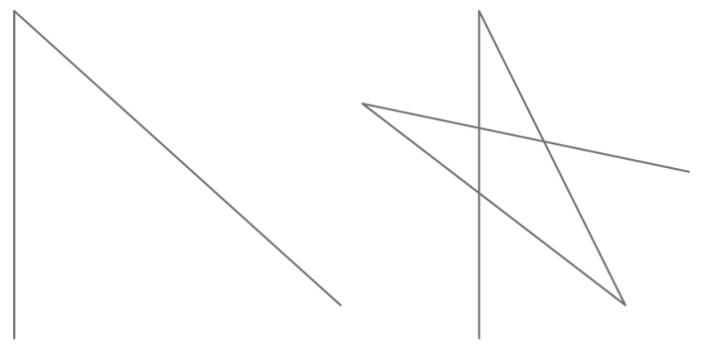
We use a fractal pattern with an initial value of F and an iterative formula of F=F++F as the experiential content to study the healing effect of fractal shapes with different enclosing relations, and to develop VR programmes in the Unity software platform. In the fractal algorithm of F=F++F, F denotes a step forward and a line in the current direction (the default is directly above); + denotes a certain angle of rotation in the counterclockwise direc- tion, which is a configurable parameter; and the initial value is set to F. When the number of iterations is 1, the graphic is replaced by a vertical one-line seg- ment F with F++F, i.e., When the number of iterations is 1, the graphic is replaced by a vertical line segment F with F++F, i.e., after taking a step for- ward in the upward direction, it rotates counterclockwise by two times the angle and takes another step forward along the current direction, i.e., as in the effect on the left side of Fig. 1. the graphic is replaced by a vertical line
VR Fractal Healing Design Based on Self-Similarity Theory 179
segment F with F++F, i.e., after taking a step forward in the upward direc- tion, it rotates counterclockwise by two times the angle and takes another step forward along the current direction, i.e., as in the effect on the left side of Fig. 1. When the number of iterations is 2, both F are replaced in F++F and the graph is generated as F++F++F++F, as shown on the right side of Fig. 1.
Figure 1: Graphical representation of the fractal algorithm for F=F++F.
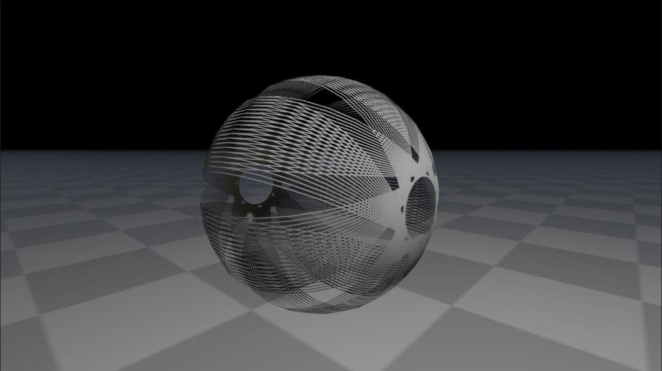
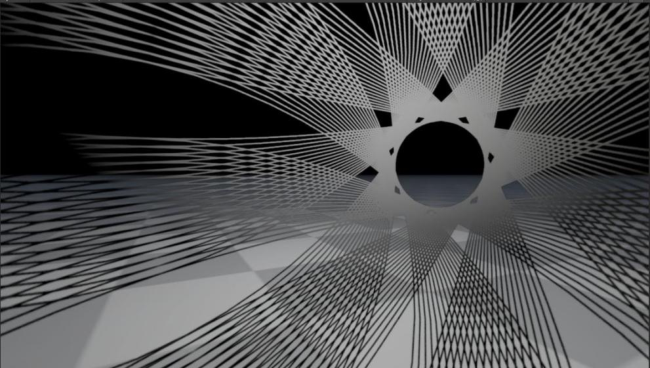
We chose a graph wWe chose a graph with 77 degrees and 7 iterations as the material for the experiment with different bracketing relations. Figure 2 shows the view of the full graph outside the graph after the subjects put on the VR glasses, and Figure 3 shows the view of the fractal graph inside the graph.
Figure 2: Outside the graphic, a view of the fractal in its entirety.Figure 3: A perspective enclosed within the fractal graphic.
Experimental Procedure and Data Collection The experiment was a between-groups experiment involving 14 students with an average age of 18 years; 14.29% of the subjects had experience of using VR glasses, and none of the subjects experienced any physiological discom- fort from wearing VR glasses. All subjects were randomly assigned to the experimental groups surrounded by fractal shapes and outside fractal shapes. All subjects were informed prior to the experiment that the experiment did not involve any privacy issues and that all data were for research purposes only.
Subjects began after hearing the purpose of the experiment, instructions for the experiment, and agreeing to participate. The entire experimental pro- cedure was divided into 6 steps: 1) Asking subjects to complete the baseline stress and anxiety measures: subjects completed the SAI scale and PSS scale for the first time; 2) Asking subjects to complete the anxiety induction pro- cedure: subjects were required to complete the anxiety induction questions within 3 minutes; 3) Asking subjects to complete the stress, anxiety, and atten- tion measures: subjects completed the SAI scale and PSS scale for the second time and performed the stress, anxiety, and attention measures: Subjects com- pleted the SAI scale and the PSS scale for the second time, and completed the Attention Response Test for the first time; 4) VR Fractal Experiment: Sub- jects were put on the VR goggles and asked to watch the assigned video freely in a safe environment. Attention Response Test (ART); 4) VR Fractal Exper- iment: Subjects were provided with VR glasses and asked to freely view the assigned VR fractal images in a safe environment; 5) Subjects were asked to complete the stress, anxiety, and attention measures: Subjects completed the SAI scale and the PSS scale for the third time, and completed the Attention Response Test (ART) for the second time; 6) Post-test interview: Subjects were asked to share their feelings about the experience of VR fractal design. design experience feelings.
VR Fractal Healing Design Based on Self-Similarity Theory 181
In this experiment, anxiety was measured by the State Anxiety Inventory (S-AI) of the State-Trait Anxiety Inventory (STAI); stress by the Perceived Stress Scale (PSS); and attention by the Sustained Attention Reaction Test (SART). Stress levels were measured using the Perceived Stress Scale (PSS) and attention levels were measured using the Sustained Attention Response Test (SART). The healing effect of the fractal design programme was com- prehensively assessed by comparing data from the same subjects in different phases of the experiment, combined with interviews.
RESULT
The study analysed all the scale data from 14 subjects for mean and ANOVA, and the SART for mean, and combined them with the results of the subject interviews to draw comprehensive conclusions.
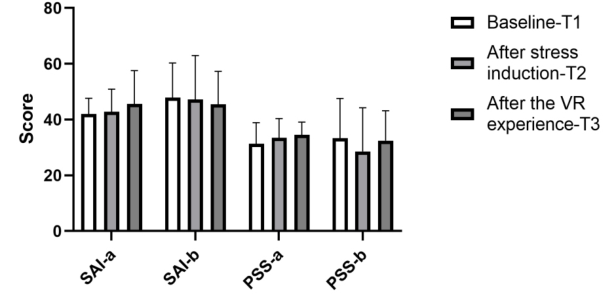
Scale Data and Analyses According to the SAI scale data and the PSS stress perception scale data completed by the subjects, as shown in Figure 5: a is the result of being sur- rounded by the fractal graph, b is the result of the data outside the fractal graph; T1 is the baseline level, T2 is the scale data after the stress induction, and T3 is the scale data after the VR experience. The results show that state anxiety levels are associated with more significant reductions when subjects are in the wrapped state, and no significant difference when they are on the periphery of the graph. In the wrapped scenario, subjects’ post-experimental stress levels were reduced from 34.6 to 33.4 after induction; in the periph- eral scenario, stress levels were reduced from 32.4 to 28.6, indicating that the peripheral scenario provided a more significant reduction in stress levels.
Figure 4: The average results of the SAI scale and PSS stress perception scale.
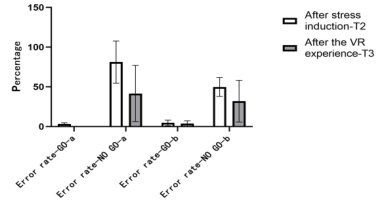
SART Data and Analysis Based on the results of the subjects’ attentional response test, the average of the error rate and reaction time of each experimental group under differ- ent enclosure ratios was calculated. As shown in Figure 5, a is the result of
enclosure by the fractal graph and b is the result of data outside the fractal graph. The left side of Figure 5 shows the comparison of error rates, where subjects in both experimental groups showed a significant decrease in error rates after the VR fractal experience compared to before the experience, with subjects experiencing the scheme of being surrounded by the graphic (group a in the figure) experiencing a more significant decrease in error rates after the experiment. The right side of Figure 5 shows the comparison of reaction speed, and there is no significant difference in reaction speed between the two experimental groups before and after the VR experience.
Figure 5: The data on error rates and reaction times in the SART.
DISCUSSION AND CONCLUSION The experimental data show that in the VR space, when the subjects are outside the graphic, the level of stress perception decreases significantly, while being surrounded by the graphic reduces the subjects’ anxiety level, reduces the error rate and improves the reaction speed in the attention maintenance task. In the interviews, the subjects indicated that when they were surrounded by the graphic, they could see the clear boundary and felt more secure; when they were in the periphery, however, the graphic created a stronger feeling of “cage”, which impeded the reduction of anxiety, and because of the weaker connection with the scene, the decrease in the level of stress perception would be too fast. Due to the weaker connection with the scene, the decrease in the level of stress perception will be too fast. In order to maintain a better state, we would like to reduce human anxiety while maintaining an appropriate level of stress to maintain better attentional performance. In summary, the scenario surrounded by a graph is more effective in reducing anxiety and improving attention.
In interviews after experiencing the VR fractal healing design, many sub- jects reported that they felt relaxed and immersed in the VR environment, that they were able to temporarily escape the real environment, that their attention was captured, and that they tended to actively interact and explore in the wide visual space, which had a positive impact on their willingness and ability to learn. Combining the experimental data and interview results, VR environments with fractal design, especially when the fractal surrounds the viewer, have the potential to reduce anxiety, increase attention and provide healing effects, verifying that fractal design based on self-similarity theory
VR Fractal Healing Design Based on Self-Similarity Theory 183
is feasible for healing in VR environments. In order to get a more detailed VR fractal design strategy, further research can be conducted along the path of fractal design in the wrapped viewpoint, such as the effect of changes in algorithms, number of iterations, and colours on people.
ACKNOWLEDGMENT
This research was supported by the High-Level Foreign Expert Project (G2022133031L, G2022133034L); Shanghai Education Science Research Fund(No,C2023299); Shenzhen Science and Technology Program (GJHZ20220913142401002).
REFERENCES
Beaudoin, M., Potvin, S., Phraxayavong K. & Dumais, A. (2023). Changes in Quality of Life in Treatment-resistant Schizophrenia Patients undergoing VR-assisted Therapy for Auditory Verbal Hallucinations: A Content Analysis. European Psychiatry, 66(1): S126–S127. Borowska, M., Szarmach, J. & Oczeretko, E. (2015). Fractal Texture Analysis of
the Healing Process after Bone Loss. Computerized Medical Imaging & Graphics, 46(2): 191–196. Hentsche, F., Besthorn, C. & Schmidt, M. H. (1997). The Fractal Dimension as an Imaging Parameter in CT Scans of Patients with Anorexia Nervosa before and after Therapy. Zeitschrift fur Kinderund Jugendpsychiatrie und Psychotherapie, 25(4): 201–206. Merhi O, Faugloire E, Flanagan M, et al. (2007). Motion Sickness, Console Video
Games, and Head-Mounted Displays. Human Factors, 49(5): 920. Novak, T. P., Hoffman, D. L. and Yung, Y. F. (2000). Measuring the Customer Experience in Online Environments: A Structural Modeling Approach. Marketing Science, 19, 22–42. Doi: 10.1287/mksc.19.1.22.15184. Spehar, B. & Taylor, R. P. (2013). Fractals in Art and Nature: Why do we like them?
Human Vision and Electronic Imaging XVIII, Vol.8651:0277–786X. Tsai, Z. R., Chang, Y. Z., Zhang, H. W. & Lin, C. T. (2017). Relax the Chaos-modelbased Human Behavior by Electrical Stimulation Therapy Design. Computers in Human Behavior, 67: 151–160. Zhang, X. P. (2023). Mapping and Correspondence between Natural Science and
Humanities - Fractal as a Case Study. Henan Social Science, 31(7): 58–70.
LISTED IN THE AHFE DIGITAL BOOKSTORE CATALOGUE
Explore the complete digital volume
Augmented, Virtual and Mixed Reality Simulation
Read this individual research paper free through the original publisher, or explore the full digital proceedings book.
ISBN 978-1-958651-94-0
Explore this ISBN in the AHFE Bookstore ↗Listed in the July 2026 bookstore catalogue; search by ISBN to confirm current availability · Digital book purchase optional