Kanato Takahashi, Masaomi Kimura, Imam Mukhlash, Mohammad Iqbal (2023). A Method for Adversarial Example Generation Using Wavelet Transformation. In: Human-Centered Design and User Experience. AHFE Open Access, vol. 114, pp. 322–330. https://doi.org/10.54941/ahfe1004250
With the advance of Deep Neural Networks (DNN), the accuracy of various tasks in machine learning has dramatically improved. Image classification is one of the most typical tasks. However, various papers have pointed out the vulnerability of DNN.It is known that small changes to an image can easily makes the DNN model misclassify it. The images with such small changes are called adversarial examples. This vulnerability of DNN is a major problem in practical image recognition. There have been researches on the methods to generate adversarial examples and researches on the methods to defense DNN models not to be fooled by adversarial example. In addition, the transferability of the adversarial example can be used to easily attack a model in a black-box attack situation. Many of the attack methods used techniques to add perturbations to images in the spatial domain. However, we focus on the spatial frequency domain and propose a new attack method.Since the low-frequency component is responsible for the overall tendency of color distributions in the images, it is easy to see the change if modified. On the other hand, the high-frequency component of an image holds less information than the low-frequency component. Even if it is changed, the change is less apparent in the appearance of the image. Therefore, it is difficult to perceive an attack on the high-frequency component at a glance, which makes it easy to attack. Thus, by adding perturbation to the high-frequency components of the images, we can expect to generate adversarial examples that appear similar to the original image with human eyes.R. Duan et al. used a discrete cosine transformation for images when focusing on the spatial frequency domain. This was a method by use of quantization, which drops the information that DNN models would have extracted. However, this method has the disadvantage that block-like noise appears in a resultant image because the target image is separated by 8 × 8 to apply the discrete cosine transformation. In order to avoid such disadvantage, we propose a method which applies the wavelet transformation to target images. Reduction of the information in the high-frequency component changes the image with the perturbation that is not noticeable, which results in a smaller change of the image than previous studies. For experiments, the peak signal to noise ratio (PSNR) was used to quantify how much the image was degraded from the original image. In our experiments, we compared the results of our method with different learning rates used to generate perturbations with the previous study and found that the maximum learning rate of our method was about 43, compared to about 32 in the previous study. Unlike previous studies, the attached success rate was also improved without using quantization: our method improved attack accuracy by about 9% compared to the previous work.
Deep neural networks (DNN) have demonstrated exceptional performance in numerous fields, including image generation, search engines, translation, autonomous driving, and face recognition. Image recognition is one of them. Currently, various high-performance models such as ResNet (He, 2016), Effi- cientNet (Tan, 2019), Vision Transformer (Dosovitskiy, 2020), etc. have appeared. However, the vulnerability of the DNN model has been pointed out in various papers. It was first reported by Szegedy et al. (Szegedy, 2013) that adding a small perturbation to the image causes the DNN model to mis- classify the image. Such images are called adversarial examples. The study of adversarial examples involves attack methods to fool the model and defensive methods to prevent the model from being fooled.
A Method for Adversarial Example Generation Using Wavelet Transformation 323
Many attack methods perturb images in the spatial domain, but there are also attack methods that focus on the spatial frequency domain (Guo, 2018) (Luo, 2022). Converting the image to the frequency domain reveals loca- tions where pixel values change significantly and locations where they change smoothly. It allows us to separate the elements of the image by frequency band, such as high, medium, and low frequencies, and to separate the pro- cessing by the characteristics of each frequency band. This helps to make any perturbations added to the image less noticeable. AdvDrop (Duan, 2021) is another method that focuses on the frequency domain. AdvDrop first applies a discrete cosine transform (DCT) to an image to transform it into the fre- quency domain. DCT is a method of converting signals on the time axis into signals in the frequency domain, and this technique is also used as an image analysis method. The image is processed by dividing it into blocks and trans- forming the contents of the blocks into a combination of cosine functions with various frequencies and amplitudes. AdvDrop generates an Adversarial Example by restoring the image through an inverse discrete cosine transform after quantization by DCT. This method is based on JPEG compression (Wal- lace, 1992). Therefore, this method produces an adversarial example that is closer to the original appearance of the image than existing studies. How- ever, since this method divides the image into 88 pixels to use DCT, there is a problem that the division on the block appears in the generated adver- sarial example. Additionally, AdvDrop simply reduces image quality through quantization, which ultimately lowers the accuracy of attacks in black-box scenarios. The objective of our research is to overcome the weaknesses of this approach. We propose a new method that uses discrete wavelet transforma- tion (DWT) for frequency analysis. Unlike DCT, DWT transforms a signal into the frequency domain while retaining time information. This means that an image is processed without being separated into blocks during frequency analysis, resulting in adversarial examples without blocky delimiters. DWT uses a function called “mother wavelet” as a basis for frequency analysis, and our method uses Daubechies wavelets, which are well-known mother wavelets. DWT performs finer frequency analysis by using multiple wavelets of different scales. Our method uses level-3 DWT, which enables a more comprehensive frequency analysis of images.
The contributions of this paper are as follows.
We propose a new adversarial attack method using DWT to generate adversarial examples that do not change much from the original image.
We show that by implementing our unique method of adding perturba- tions in the frequency domain, our method has a higher misclassification rate than existing adversary attack methods using frequency analysis techniques.
Related Work
There are various generation methods for adversarial examples (Carlini, 2017) (Dong, 2018) (Goodfellow, 2014) (Kurakin, 2016) (Xiao, 2018). Also, an adversarial example that causes a model to misclassify an image has the property of causing another model to misclassify it as well (Papernot, 2017).
This property is called transferability. By using transferability, the attack can succeed without knowing the internal information of the target model. Such attacks are called black box attacks (Chen, 2017), and various attack techniques are compared in such situations.
While many attack methods perturb images in the spatial domain, some methods perturb images in the spatial frequency domain (Duan, 2021) (Guo, 2018) (Luo, 2022). By processing images in the frequency domain, it is possible to see where in the image the pixel values have changed signifi- cantly, making the processing more imperceptible. To the extent that there is a wide variety of attack methods, there is also a wide variety of defense methods (Blau, 2022)(Dhillon, 2018) (Jang, 2019) (Liao, 2018) (Sriramanan, 2020). Therefore, attackers need to consider attack methods, assuming that defensive methods are also applied to the model.
When utilizing DCT, AdvDrop (Duan, 2018) splits the image into blocks and carries out individual quantization for each block. However, due to the independent process of each block, visible lines may appear at the edges where the blocks meet. Since AdvDrop is a method based on JPEG compression, it drops most of the high-frequency component elements. The DWT method enables frequency analysis retaining time information, eliminating the need to divide images into blocks for image processing. Moreover, by applying DWT on various levels, like levels 2 and 3, the image is subdivided into finer frequencies and processed accordingly. This property of DWT is utilized in our method to produce an adversarial example from an original image with minimal modifications.
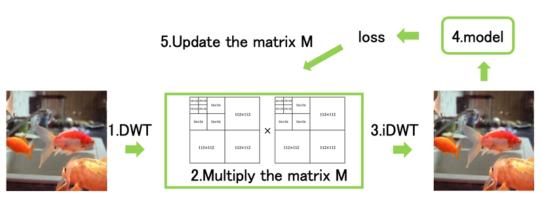
Proposed Method Our objective is to propose a method that is superior to AdvDrop in both misclassification rate and image quality. To prevent block delimiters from appearing in the image, our method uses DWT instead of DCT. DWT is an image analysis technique that processes an image without separating it into blocks so that no block separations appear in the image after it is restored. The outline of our method is shown in Figure 1.
Figure 1: The outline of our method.
Our method consists of the following five steps:
1. Application of DWT to an image In AdvDrop, step 1 divides the image into 8x8 blocks and applies DCT to the image to analyze the image frequency.
A Method for Adversarial Example Generation Using Wavelet Transformation 325
2. Multiplication of the image by the matrix M Our target is square images, whose size is N × N. Using a level-3 DWT on an image of that size would output three N
2 × N 2 matrices, three N 4 × N 4 matrices, and four N
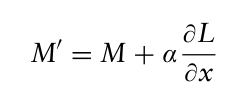
8 × N 8 images. Our method uses a matrix of the same size as the target images, which has the same number of elements as the number of the unified outputs of DWT. These matrices are updated at once by using the gradient of the loss function, as in the following equation.
Equation reproduced from the original PDF.
Where M is the matrix group, L is the loss function, α is the learning rate for updating M, M
′ is updated M and x is the input image. The matrix group M is initialized to 1 and multiplied by each corresponding element of the image. 3. Application of iDWT to the image iDWT is the reverse process of DWT. It restores the frequency-analyzed image to its original form. 4. The input of images to the model The restored image is input to the model. If the model misclassifies the image, the attack is successful and the attack ends. 5. Update of M components using the gradient of the loss function. Each element of M is updated based on the gradient of the loss function resulting from the input of the image to the model.
M is multiplied by the image transformed into the spatial frequency domain. M is of the same form as the image after DWT is applied, with all elements initially initialized at 1. It is updated by the gradient of the loss function and optimized so that the model misclassifies the image. To minimize changes in the image, M is multiplied only by the high-frequency component. This is because images generally do not retain much information in the high- frequency components and changing the high-frequency components does not change the image significantly. The image looks different when DWT is applied and the pixel values are increased or decreased. If the high-frequency component of the image is increased or decreased, the changes to the original image will be more noticeable when the increase is larger. To avoid signifi- cant changes, the M is only updated when its elements decrease. This method effectively suppresses changes in the image.
EXPERIMENT We conducted two experiments to assess how well our method can generate adversarial examples. Experiment 1 examined how the generated adversarial example differs from the original image. In Experiment 2, we conducted a black-box attack experiment where we input adversarial examples generated by each method into a different model than the one used in Experiment 1. We compared the attack accuracy of our method with that of AdvDrop.
Experiment 1: Generation of Adversarial Examples AdvDrop has a parameter ϵ to control the magnitude of the perturbation. Since Advdrop used ϵ = 100 in the experiment, the same setting was used in this experiment. In addition, the learning rate α in our method was set to 1.5e-2 in this experiment. α is the updated width of the M. The larger α is, the larger the perturbation applied to the image is likely to be.
In this experiment, we used VGG19, which is pre-trained on ImageNet. We used 2,500 images from ImageNet with a unified image size of 224 × 224. All 2,500 images were correctly classified by VGG19, which was used in this experiment. The results of this experiment are as follows.
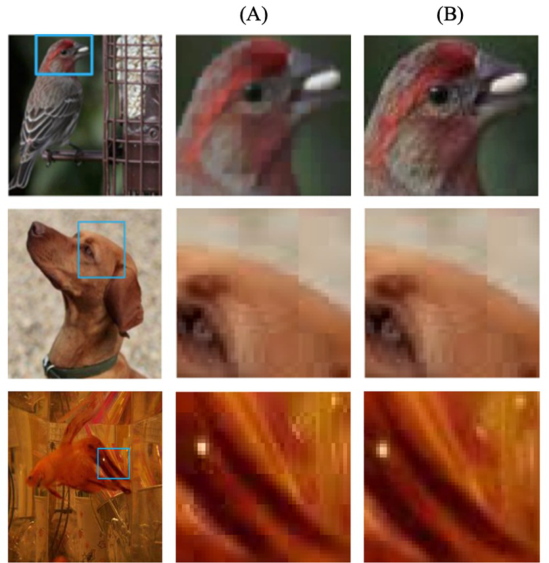
Figure 2: Generation of adversarial examples. The images in (A) are generated by AdvDrop. The images in (B) are generated by our method.
The images in (A) are the adversarial examples generated by AdvDrop and the images in (B) are generated by the proposed method. Comparing them, the images generated by AdvDrop have blocky separations, while the images generated by our method do not have such separations. In Image (A) at the top of Figure 2, we can see that there are unnatural bumps in the outline of the bird image and that many vertical and horizontal lines in the area of the bird are not present in Image (B). AdvDrop uses a DCT that requires image segmentation, while our method uses a DWT that does not require image segmentation. That is why the visual differences shown in Figure 2 occurred.
A Method for Adversarial Example Generation Using Wavelet Transformation 327
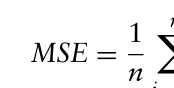
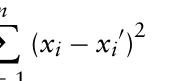
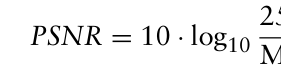
Experiment 2: Black-Box Attack In Experiment 2, we checked how well AdvDrop and our method make the model misclassify the images in a Black-Box Attack situation. We used VGG11, which was pre-trained on ImageNet. We set the learning rate of our method to 1.5e-2, 2.0e-2, 2.5e-2, 3.0e-2, and 3.5e-2 with a maximum number of steps of 100. The images used to generate adversarial examples were the same 2,500 images from ImageNet as in Experiment 1. The images used to generate the adversarial examples were the same 2,500 images from ImageNet as in Experiment 1, and we checked the misclassification rate of the model by inputting these images into VGG11 after the generation of the adversarial sample. We used the Peak Signal-to-Noise Ratio (PSNR) to numerically compare the degree of degradation of the generated adver- sarial example from the original images. The results of Experiment 2 were calculated as follows:
n X
Equation reproduced from the original PDF.Equation reproduced from the original PDF.
2552
Equation reproduced from the original PDF.
MSE is the mean squared error between the original image and the gener- ated adversarial example. The more degraded the images are, the smaller the PSNR value is. PSNR is frequently utilized as an objective evaluation mea- sure because it does not involve intricate computations. The average PSNR values of 2,500 images are as follows.
Our method had the highest misclassification rate with a learning rate of 3.5e-2. The misclassification rate of attacks between AdvDrop and our method differs by up to about 9%. Comparing the average PSNR values of our method and AdvDrop, the proposed method has higher values than AdvDrop at all learning rates. Therefore, the adversarial examples gener- ated by our method are less degraded than those by AdvDrop. Our method shows that the misclassification rate of attacks increases as the learning rate increases, but not the PSNR.
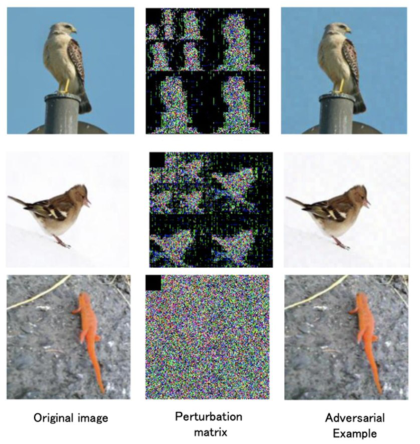
Visualizing M Next, by visualizing the amount of change from the initial value of each element of M optimized in Experiment 2 in the same form as Fig. 2, we con- firmed whether there is a difference in the perturbation applied depending on the magnitude of the frequency and whether the same pattern of perturba- tion appears in different images. Figure 3 shows a visualization of the amount of change from the initial value of each element of M. We call these matri- ces perturbation matrices. The figure shows the perturbation matrices for six images generated by the proposed method with a learning rate of 3.5e-2 in Experiment 2.
Figure 3: Visualizing M.
If the change from the initial value of M is 0, that part of the perturbation matrix is black. The displayed images have a size of 224x224, but only the top-left portion of 28x28 is relevant for the low-frequency component. Our method does not affect the low-frequency component, so the perturbation matrix in the upper left part is black. In some cases, perturbations are applied to the entire image, like in the bottom image of Fig. 3, while in others, only the target animal or object is perturbed.
DISCUSSION
Since our method uses DWT, blocky delimiters do not appear in the adversary samples generated by the proposed method, as shown in Fig. 3. The results of Experiment 2 show that the proposed method is more accurate than Adv- Drop for Black-Box attacks at all learning rates, and the amount of pixel value change is kept small. Therefore, our method has a higher misclassifica- tion rate than AdvDrop, which generates imperceptible adversarial examples.
A Method for Adversarial Example Generation Using Wavelet Transformation 329
The results of Experiment 2 show that the misclassification rate increases as the learning rate increases, but the PSNR value decreases. The proposed method can change the pixel values flexibly by multiplying the image by M. In addition, by limiting the frequency band of attack to high-frequency com- ponents, our method reduced the change in pixel values when perturbing the image. Fig. 3 also shows that our method produces clearer images than AdvDrop.
Figure 3 shows parts of the 2,500 perturbation matrices obtained in Exper- iment 2. We found that about half of the perturbation matrices have almost no black areas in the high-frequency component region and that perturba- tions are applied to the entire image as shown in the figure, regardless of the frequency. On the other hand, about half of the perturbation matrices were easily divided into perturbed and unperturbed areas, as shown in some of the perturbation matrices in Figs. 3. The lower the frequency component of such an image, the more perturbations are applied to the entire image. In per- turbation matrices where perturbations are visible, perturbations are applied along the shape of the object or animal to be classified. In such cases, it is dif- ficult to extract a pattern of perturbations that is common to many images. However, we found that such an image’s background is simple. The DNN model tends to focus on objects correctly in such an image. So, to make the model misclassify the image, it is better to perturb only the part where the object is visible in the image. The relationship between image backgrounds and adversarial examples is an issue that we should investigate in the future.
CONCLUSION
In this paper, we proposed a new method for adversarial example generation using DWT. By multiplying M and the image, our method is more flexible in changing pixel values, resulting in an attack with a high misclassification rate. In addition, we could make the perturbations smaller by perturbing only the high-frequency components and by updating each element of cap M only when the value becomes small. However, since the misclassification rate remains in the 20% range, it is necessary to further improve the mis- classification rate. Our approach utilizes DWT, with the only perturbation parameter being M. This straightforward method involves multiplying M. However, since basic attack methods can easily be thwarted by robust models equipped with defensive mechanisms, improving the perturbation addition method and achieving a higher misclassification rate is a future challenge.
REFERENCES
Blau, T., Ganz, R., Kawar, B., Bronstein, A., & Elad, M. (2022). Threat model-agnostic adversarial defense using diffusion models. arXiv preprint arXiv:2207.08089. Carlini, N., & Wagner, D. (2017, May). Towards evaluating the robustness of neural
networks. In 2017 IEEE symposium on security and privacy (sp) (pp. 39–57). IEEE. Chen, P. Y., Zhang, H., Sharma, Y., Yi, J., & Hsieh, C. J. (2017, November). Zoo: Zeroth order optimization based black-box attacks to deep neural networks with- out training substitute models. In Proceedings of the 10th ACM workshop on artificial intelligence and security (pp. 15–26).
Dhillon, G. S., Azizzadenesheli, K., Lipton, Z. C., Bernstein, J., Kossaifi, J., Khanna, A., & Anandkumar, A. (2018). Stochastic activation pruning for robust adversarial defense. arXiv preprint arXiv:1803.01442. Dong, Y., Liao, F., Pang, T., Su, H., Zhu, J., Hu, X., & Li, J. (2018). Boosting
adversarial attacks with momentum. In Proceedings of the IEEE conference on computer vision and pattern recognition (pp. 9185–9193). Dosovitskiy, A., Beyer, L., Kolesnikov, A., Weissenborn, D., Zhai, X., Unterthiner, T., Dehghani, M., Minderer, M., Heigold, G., Gelly, S. and Uszkoreit, J., 2020. An image is worth 16x16 words: Transformers for image recognition at scale. arXiv preprint arXiv:2010.11929. Duan, R., Chen, Y., Niu, D., Yang, Y., Qin, A. K., & He, Y. (2021). Advdrop: Adver-
sarial attack to dnns by dropping information. In Proceedings of the IEEE/CVF International Conference on Computer Vision (pp. 7506–7515). Goodfellow, I. J., Shlens, J., & Szegedy, C. (2014). Explaining and harnessing adversarial examples. arXiv preprint arXiv:1412.6572. Guo, C., Frank, J. S., & Weinberger, K. Q. (2018). Low-frequency adversarial
perturbation. arXiv preprint arXiv:1809.08758. He, K., Zhang, X., Ren, S., & Sun, J. (2016). Deep residual learning for image recognition. In Proceedings of the IEEE conference on computer vision and pattern recognition (pp. 770–778). Jang, Y., Zhao, T., Hong, S., & Lee, H. (2019). Adversarial defense via learning to
generate diverse attacks. In Proceedings of the IEEE/CVF International Conference on Computer Vision (pp. 2740–2749). Kurakin, A., Goodfellow, I., & Bengio, S. (2016). Adversarial machine learning at scale. arXiv preprint arXiv:1611.01236. Liao, F., Liang, M., Dong, Y., Pang, T., Hu, X., & Zhu, J. (2018). Defense
against adversarial attacks using high-level representation guided denoiser. In Proceedings of the IEEE conference on computer vision and pattern recognition (pp. 1778–1787). Luo, C., Lin, Q., Xie, W., Wu, B., Xie, J., & Shen, L. (2022). Frequency-driven imperceptible adversarial attack on semantic similarity. In Proceedings of the IEEE/CVF Conference on Computer Vision and Pattern Recognition (pp. 15315–15324). Papernot, N., McDaniel, P., Goodfellow, I., Jha, S., Celik, Z. B., & Swami, A. (2017,
April). Practical black-box attacks against machine learning. In Proceedings of the 2017 ACM on Asia conference on computer and communications security (pp. 506–519). Sriramanan, G., Addepalli, S., & Baburaj, A. (2020). Guided adversarial attack for evaluating and enhancing adversarial defenses. Advances in Neural Information Processing Systems, 33, 20297–20308. Szegedy, C., Zaremba, W., Sutskever, I., Bruna, J., Erhan, D., Goodfellow, I.,
& Fergus, R. (2013). Intriguing properties of neural networks. arXiv preprint arXiv:1312.6199. Tan, M., & Le, Q. (2019, May). Efficientnet: Rethinking model scaling for convolutional neural networks. In International conference on machine learning (pp. 6105–6114). PMLR. Wallace, G. K. (1992). The JPEG still picture compression standard. IEEE transac-
tions on consumer electronics, 38(1), xviii-xxxiv. Xiao, C., Li, B., Zhu, J.Y., He, W., Liu, M.and Song, D., 2018. Generating adversarial examples with adversarial networks. arXiv preprint arXiv:1801.02610.
LISTED IN THE AHFE DIGITAL BOOKSTORE CATALOGUE
Explore the complete digital volume
Human-Centered Design and User Experience
Read this individual research paper free through the original publisher, or explore the full digital proceedings book.
ISBN 978-1-958651-90-2
Explore this ISBN in the AHFE Bookstore ↗Listed in the July 2026 bookstore catalogue; search by ISBN to confirm current availability · Digital book purchase optional