Chang Guo, Anglu Li, Wanyue Luo (2023). Virtual Fitness Coach App Interaction Design by Using Kano-AHP-QFD Model. In: Usability and User Experience. AHFE Open Access, vol. 110, pp. 556–570. https://doi.org/10.54941/ahfe1003232
As people become increasingly health-conscious and their living standards improve, fitness has become an important part of daily life. However, due to limitations such as time, location, and cost, many people are unable to go to the gym for regular fitness training. Therefore, designing a virtual fitness coach mobile application that caters to the fitness community is of practical significance. The purpose of this study is to improve fitness effectiveness by determining and quantifying the demands and weights of fitness enthusiasts in the interaction of a virtual fitness coach mobile application, transforming them into design elements, and enhancing user experience and satisfaction through their appearance in the app. To this end, this study proposes a virtual fitness coach mobile application design method based on the Kano-AHP-QFD model. First, a questionnaire survey was used to obtain 20 requirements for virtual fitness coach mobile application design from the fitness community, and the Kano model was used to classify them according to attributes. Secondly, the Analytic Hierarchy Process (AHP) was used for weight analysis, revealing that user fitness instruction and user life guidance needs are the most critical design requirements for the mobile interaction design of virtual fitness coaches. Finally, Quality Function Deployment (QFD) was used to transform customer needs and expectations into product or service design characteristics, ensuring that these characteristics are met. This paper combines three classic quality management tools to design and study the mobile virtual fitness coach application, verifying the feasibility of this method in solving similar design problems. This method not only provides practical design for the fitness community but also provides reference for the design of other mobile applications.
With technological advancements and changes in the work environment, peo- ple around the world are leading increasingly sedentary lifestyles, which has led to a large portion of the population becoming sub-healthy due to a lack of physical activity (Diez et al., 2017). As material living standards and health awareness continue to rise, more and more people are interested in adopting healthier lifestyles. Healthy eating, safe and effective exercise, and physi- cal activity have received increasing attention. In recent years, the number of people working out at home has rapidly increased due to the impact of pandemics. However, incorrect exercise posture can lead to temporary or
Virtual Fitness Coach App Interaction Design by Using Kano-AHP-QFD Model 557
permanent disabilities (Hannan et al., 2021). According to data from the National Safety Council (NSC), around 468,000 people were injured while exercising in 2019. Without proper guidance, this statistic is bound to incre- ase. Therefore, it is necessary to establish a system for monitoring exercise performance to prevent short- and long-term injuries (Flores et al., 2021). However, due to factors such as time, location, and price, many people cannot go to the gym for regular workouts. Although some mobile fitness devices and smartwatches have already emerged in the technology field, their adoption rates are still low, particularly in developing countries with large populations. On the other hand, given the steady decline in the price of smart- phones, they are becoming ubiquitous (Adewumi et al., 2017). To address these issues, more and more people are beginning to pay attention to virtual fitness coach apps (Arora et al., 2021). Virtual fitness coaching is a type of fitness service based on artificial intelligence technology and mobile internet applications. Through specific applications on smart devices such as smart- phones and tablets, it provides personalized fitness guidance and training based on the user’s personal situation, as required by modern fitness trai- ning (Paoli and Bianco, 2015). Unlike traditional fitness methods, virtual fitness coaches can customize exclusive fitness plans for users based on their health status, fitness goals, preferences, and other factors, and provide guida- nce, supervision, and feedback throughout the entire process. Virtual fitness coaches typically have intelligent interactive interfaces that can adjust and optimize in real-time based on the user’s current situation to achieve the best fitness results. Studies have shown that virtual fitness coaching systems have a positive impact on fitness training due to their convenience, flexibility, and affordability (Zou et al., 2018). Therefore, how to develop a high-quality vir- tual fitness coaching app that meets user needs and provides a superior user experience on mobile devices has attracted increasing attention from scholars (Dennison et al., 2013).
In their paper, Middelweerd et al. examined and rated 64 health and fitness smartphone apps, and found that on average, five out of 23 possible behavi- our change techniques were applied to promote physical activity. There was no significant difference in the use of behaviour change techniques between paid and free apps or app stores. The most commonly used techniques in these apps were similar to those used in other types of physical activity pro- motion interventions (Middelweerd et al., 2014). Kranz et al. suggested that smartphone systems supporting physical activity using built-in sensors have shown promising results in attracting and motivating users to exercise regu- larly (Kranz et al., 2013). Meanwhile, Mokmin et al. demonstrated in their paper that their team’s virtual fitness coach app was helpful in encouraging student participation in physical activity, as students became more motiva- ted after following the virtual coach’s exercises (Mokmin and Jamiat, 2021). However, there is currently limited analysis on the importance of user needs and features in virtual fitness coach apps. This paper uses the Kano-AHP- QFD method to explore the importance of user needs and features in virtual fitness coach apps and design an interactive system that meets users’ needs.
CONSTRUCTING DESIGN PROCESS AND USER NEEDS ACQUISITION Constructing Design Process With Kano-AHP-QFD
This study combines the Kano-AHP-QFD methods to comprehensively con- sider multiple factors in the product development process, achieving a more efficient, scientific, and customer-oriented design (Neira-Rodado et al., 2020). Firstly, the Kano model can effectively identify and classify customer needs, allocate resources, and design products based on the different cha- racteristics and priorities of those needs (Madzik, 2018, Ullah and Tamaki, 2011). Secondly, after categorizing the Kano model, the AHP method can determine the user needs’ weight coefficients and rank them, identifying the priority relationship between customer needs and product features and maxi- mizing customer satisfaction with limited resources (Liu et al., 2020). The combination of these two methods can ensure that the design plan aligns more closely with actual customer needs, thus enhancing customer satisfaction. Lastly, the QFD method can convert customer needs weights into design ele- ment weights, ensuring maximum customer satisfaction, grasping the key steps and decision points of product design, and improving product design efficiency and quality (Fang et al., 2022).
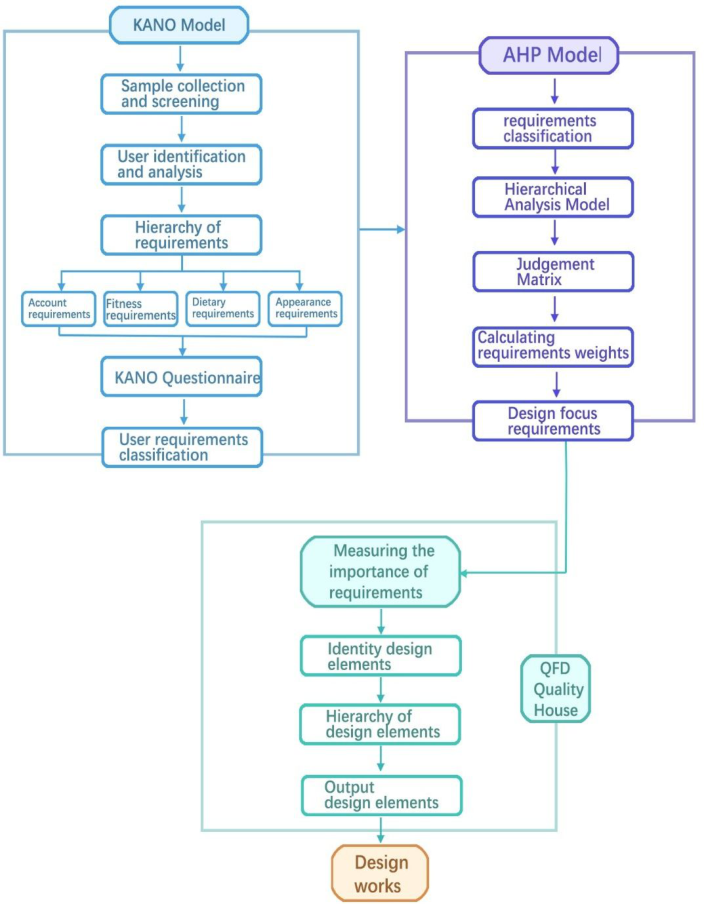
By integrating these three methods, designers can develop a more scienti- fic and efficient design plan, effectively manage the product design process, grasp the key steps and decision points of product design, and improve pro- duct design efficiency and quality (Pakizehkar et al., 2016). This combined approach can also avoid the design limitations of a single model, allow- ing qualitative and quantitative design research to merge into a complete product design process, making product design more systematic and con- trollable. Therefore, using the Kano-AHP-QFD method for combined design is an effective approach to improving the scientific nature and feasibility of designing virtual fitness coaching apps. The design process is illustrated in Figure 1.
User Requirements Acquisition In this stage, an analysis was conducted on existing fitness apps and relevant literature was consulted to further understand the target user requirements. Researchers randomly selected 100 fitness app users as survey participants through on-site investigations and obtained explicit and implicit user needs by conducting semi-structured in-depth interviews and on-site observations of the target fitness population. After screening and merging the initially obtained needs using the KJ affinity diagram method, six requirement cate- gories were identified: account, fitness, diet, health data, virtual community, and appearance. These six requirement categories were used as the standard layers (F1-F6) to summarize and collate the needs, resulting in 25 specific requirement indicators for virtual fitness coach app design (r1-r25), as shown in Table 1.
Virtual Fitness Coach App Interaction Design by Using Kano-AHP-QFD Model 559
Figure 1: Integration of the Kano-AHP-QFD application process.
THE APPLICATION OF KANO-AHP-QFD MODEL IN THE DESIGN OF VIRTUAL FITNESS COACH APP Classification of User Requirements Using Kano Model
The Kano model is a quality management tool proposed by Noriaki Kano, a Japanese quality engineer. This model is used to analyze and categorize user needs and expectations for products or services, obtaining a compreh- ensive understanding of user needs attributes. The study transformed the 25 virtual fitness coach app requirements obtained from the preliminary survey
Table 1. The user requirements of virtual fitness trainer app.
Table available in the original PDF paper.
User requirements
Type of requirements F1 Upload a portrait and set a nickname for the account. r1 Account requirements
F2 Customized exercise programs based on user needs. r6
Upload photos and share photos. r2 Add friends and chat online. r3 Check your friends’ ranking. r4 Personalize the interface theme and background music. r5 Fitness requirements r8 Checking exercise plan completion and scoring. r7 Record real-life fitness equipment and intelligently classes based on it.
r10
Exercise with a virtual coach by using video lessons. r9 Rate the completed exercises and calculate the calories burned.
r11
Virtual coaches that focus on strength training or fat loss.
F3 Plan and record three meals per day. r13
Video about how to use fitness equipment. r12 Dietary requirements
F4 Self-test basic physical fitness. r17
Search to find the calories of food. r14 Show food photos when searching for food intake. r15 Calculate dietary calorie intake and nutrition. r16 Health data requirements r18 Record height, weight, circumference and other basic body data.
r19
Have a history of exercise, diet, fitness tests, physical data records and generate data charts by time.
F5 Customized virtual image for users. r20
Virtual community requirements
r22
Join the open community of virtual spaces. r21 Chatting with others and posting photos in public communities.
F6 A virtual trainer with a fit and healthy image. r24
Community fitness ranking. r23 Appearance requirements Clean and clear interface. r25
into positive and negative factor Kano questionnaires and conducted a que- stionnaire survey on different gender and age fitness groups. According to the Kano evaluation criteria shown in Tables 2 and 3, user requirements are divided into five categories: Must-be (M), One-dimensional (O), Attractive (A), Indifferent (I), and Reverse (R), and one type of Questionable (Q).
Table 4 summarizes the Kano properties of the 25 user requirements obtained from the virtual fitness coach app survey questionnaire. Among
Virtual Fitness Coach App Interaction Design by Using Kano-AHP-QFD Model 561
Table 2. Kano evaluation criteria.
Table available in the original PDF paper.
Positive question Negative question
I like it that way
It must be that way
I am neutral
I dislike it that way
I can live with it that way
R I I I M
I like it that way Q A A A O It must be that way R I I I M I am neutral R I I I M I can live with it that way I dislike it that way R R R R Q
Table 3. User requirement type interpretation.
Table available in the original PDF paper.
Interpretation Requirement Properties
Must-be(M) These are basic requirements that are taken for granted by customers. Customers will not be satisfied if these requirements are not met, but meeting them does not necessarily lead to increased customer satisfaction. One- dimensional (O)
These are requirements that are directly proportional to customer satisfaction. Customers are more satisfied when these requirements are met to a higher level. Attractive (A) These are unexpected features that delight customers when present, but their absence does not necessarily lead to dissatisfaction. Indifferent (I) These are features that do not significantly affect customer satisfaction. Reverse (R) These are features that, if present, will decrease customer satisfaction. Questionable results (Q)
Refers to a question that the respondent did not understand or answered incorrectly.
them, 8 items are Indifferent (I), 6 items are Must-be (M), 3 items are One-dimensional (O), and 8 items are Attractive (A). Reverse (R) and Questi- onable (Q) did not appear. Indifferent needs do not directly affect improving user satisfaction, so they are not optimized. Must-be needs are essential points that virtual fitness coach apps must have. If they cannot be met, user sati- sfaction will be significantly reduced. One-dimensional needs will improve user satisfaction as the virtual fitness coach app design considers them more comprehensively. Therefore, these needs should be met as much as possi- ble to improve user satisfaction. Attractive needs can give users unexpected surprises, and once satisfied, they will significantly improve user satisfa- ction. Therefore, they should be given special consideration in the design of virtual fitness coach apps. Thus, through Kano model-based filtering of virtual fitness coach app design needs, emphasis should be placed on meeting Must-be (M), One-dimensional (O), and Attractive (A) needs.
A O M I R Q Requirement Type r1 2.914% 19.118% 55.882% 22.059% 0.000% 0.000% M r2 29.412% 5.882% 27.941% 35.294% 1.471% 0.000% I r3 48.529% 10.294% 7.353% 32.353% 1.471% 0.000% A r4 38.235% 10.294% 5.882% 44.118% 1.471% 0.000% I r5 17.647% 39.706% 30.882% 11.765% 0.000% 0.000% O r6 1.471% 41.176% 50.000% 7.353% 0.000% 0.000% M r7 8.824% 30.882% 45.588% 14.706% 0.000% 0.000% M r8 32.353% 17.467% 30.882% 19.118% 0.000% 0.000% A r9 14.706% 27.941% 42.647% 14.706% 0.000% 0.000% M r10 14.716% 32.353% 36.765% 16.176% 0.000% 0.000% M r11 13.235% 33.824% 38.235% 13.235% 0.000% 1.471% M r12 27.941% 35.294% 23.529% 11.765% 0.000% 1.471% O r13 36.765% 17.647% 8.824% 35.294% 0.000% 1.471% A r14 44.118% 26.471% 1.471% 26.471% 0.000% 1.471% A r15 36.765% 20.588% 8.824% 33.824% 0.000% 0.000% A r16 39.706% 27.941% 11.765% 19.118% 0.000% 1.471% A r17 19.118% 26.471% 4.412% 48.529% 0.000% 1.471% I r18 14.706% 32.353% 4.412% 47.059% 0.000% 1.471% I r19 22.059% 25.000% 2.941% 50.000% 0.000% 0.000% I r20 54.412% 7.353% 2.941% 35.294% 0.000% 0.000% A r21 14.706% 5.882% 1.471% 77.941% 0.000% 0.000% I r22 1.471% 5.882% 0.000% 89.706% 2.941% 0.000% I r23 8.824% 7.353% 1.471% 82.353% 0.000% 0.000% I r24 35.249% 25.0% 7.353% 30.882% 1.471% 0.000% A r25 11.765% 76.471% 7.353% 4.412% 0.000% 0.000% O
Calculate User Requirement Weights With AHP Model The Kano model can be used to classify user requirements for virtual fitness coaching and, in conjunction with AHP, calculate the weights of these requi- rements. AHP is a multi-criteria decision analysis method proposed by American mathematician Thomas L. Saaty in the early 1970s. This method is based on the idea of hierarchy, which breaks down complex decision pro- blems into several levels to simplify the analysis and decision-making process. AHP first decomposes the decision problem into a hierarchical structure, including a Goal layer, a Criterion layer, and a Sub-Criterion layer. Then, it uses expert questionnaires or fuzzy mathematics to quantitatively evaluate decision factors. The Kano model is used to classify user requirements, and their weights are ranked to determine the relative importance of each factor in the entire hierarchy. This helps decision-makers make rational choices among multiple options.
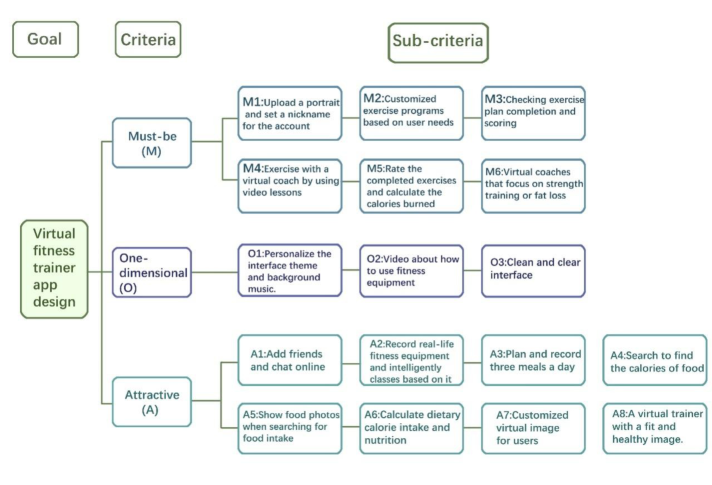
This study summarized the requirements in the Must-be (M), One- dimensional (O), and Attractive (A) categories and identified them as the 17 design requirements for virtual fitness coaching. An AHP-based hierarchy model was constructed, as shown in Figure 2. Based on the user requirements and design goals of virtual fitness coaching apps, the hierarchical model was divided into the following three levels: (1) Goal layer, which represents the
Virtual Fitness Coach App Interaction Design by Using Kano-AHP-QFD Model 563
overall design plan of virtual fitness coaching apps; (2) Criterion layer, which includes Must-be (M), One-dimensional (O), and Attractive (A); and (3) Sub- Criterion layer, which consists of 17 specific requirements for M, O, and A, as shown in Figure 2.
To establish the weights of user requirements in a quantitative analysis of qualitative issues and to build a judgment matrix, the 1–9 ratio scale method proposed by Saaty was chosen to assess the importance of each design ele- ment. The AHP questionnaire was then created and distributed to 10 virtual fitness coach app designers and researchers, including 5 senior interaction designers (with more than 5 years of experience), 3 associate professors, and 2 professors specializing in interaction design. The respondents were asked to compare and rate the importance of each hierarchical requirement using a 1–5 rating scale. The arithmetic mean of the scores was then used as the basis for weight calculation, and the judgment matrix for each hie- rarchical level was obtained. The geometric mean method was employed to calculate the weight coefficients for each hierarchical level, resulting in the weights of the user requirements for the virtual fitness coach app, as shown in Tables 5–8.
1) Constructing a judgment matrix: Judgment matrix construction method: [Equation or mathematical symbol available in the original paper PDF][Equation or mathematical symbol available in the original paper PDF]
Equations and mathematical formulas are available in the original paper PDF.
Here, Xij represents the importance evaluation of each criterion layer X1, X2, …, Xn compared to the target X. The reciprocal value is used when the comparison is reversed (i.e., 1/Xij). The geometric mean algorithm is then introduced to calculate the weight of each requirement for the criterion layer and the sub-criterion layer.
2) Calculate the product of the scales for each layer:
Virtual Fitness Coach App Interaction Design by Using Kano-AHP-QFD Model 565
3) Calculate the geometric mean of the product of each level’s scale:
5) Calculating the maximum eigenvalue: BWi n X
6) Consistency test of the results:
RI (6) To ensure the scientificity of the results, the consistency test of the calcula- ted results is required. The consistency test passes when CR ≤0.1; if CR>0.1, it fails.
To ensure the scientific validity of the results, a consistency check (with CR ≤0.1) was conducted on the judgment matrices of both the Criterion layer and Sub-Criterion layer. The CR value of the Criterion layer was 0.0088, which is less than 0.1 and meets the consistency check standard. The CR values of Sub-Criterion layer M, O, and A were 0.0720, 0.0710, and 0.0750, respectively, all less than 0.1 and meeting the consistency check standard.
The design of the virtual fitness coach app should give priority to M>O>A, as shown in Table 9. From Table 9, we can see the priority ranking of various types of requirements. When resources are limited, the design should focus on the requirements with higher priority.
Conversion of Design Requirements Into Design Elements Using QFD Model This paper introduces the QFD method to assist in the conversion of design parameters. QFD (Quality Function Deployment) is a systematic qua- lity management method developed by Dr. Yoji Akao, a Japanese quality management expert, in the 1970s. QFD systematically collects, organizes, and analyzes customer needs and expectations, translates them into design principles for products or services, and ensures that these principles are realized.
After reviewing the standards and relevant materials related to the design of mobile apps and obtaining user requirements through the Kano-AHP method, ten design elements were determined through multiple rounds of consultations, achieving theoretical saturation. These design elements are image upload, video and audio playback, video and audio download, chat function, timer function, food calorie database, user data input, data visu- alization, virtual character image, course classification, and calendar. The weights of the target user requirements obtained by using the AHP method were used to construct a QFD quality house for virtual fitness coaches, as shown in Table 10. In the QFD quality house, different symbols represent default weight values ⊙=1, ▲=1.2, and ■=1.5. The final score of a function is the sum of the products of all requirements and corresponding weight values under that function.
The importance of the design elements for the virtual fitness coach app, calculated and normalized, are ranked as shown in Table 10. Based on the pri- ority order of the design elements for the virtual fitness coach app, the main design elements are playing videos and audios, user data entry, course clas- sification, timing function, and chat function. These design elements should be given more attention and designed with higher priority.
DESIGN OF INTERFACE FOR VIRTUAL FITNESS COACH APPS The study focuses on converting user requirements into design elements through the Kano, AHP, and QFD models. The final functional scores obtai- ned through QFD analysis have a guiding significance for subsequent design work. For instance, “playing videos and audios,” “user data input,” “course classification,” “timing function,” and “chatting function”are ranked high in
Virtual Fitness Coach App Interaction Design by Using Kano-AHP-QFD Model 567
Table 10. Quality Function Deployment (QFD).
Table available in the original PDF paper.
the sorting, therefore, these functions should be appropriately strengthened or weakened in the interface design according to their scores and different visual effects should be designed. Based on the obtained design parameters, this study analyses and conceptualizes the design of an APP interface that can enhance the satisfaction of fitness enthusiasts.
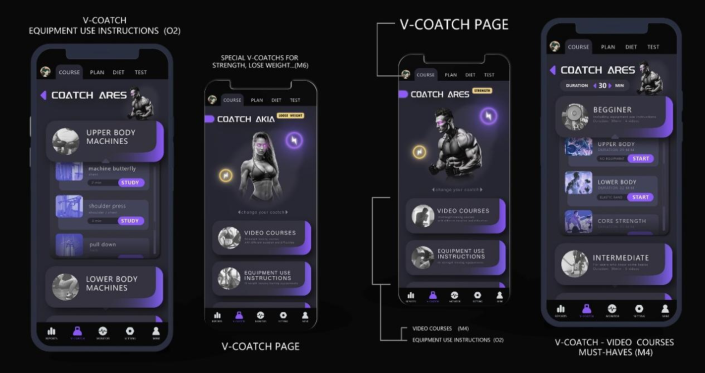
This app primarily serves people with a long-term fitness need, including virtual coach V-COATCH, FITNESS data reporting, and monitoring system. Since motivation for adult exercise is different, this app should customize the program to promote active fitness in terms of the user’s age, gender and health status (Molanorouzi et al., 2015). The V-COATCH section provides virtual coaching courses for various needs, such as strength training and weight loss, as well as exclusive personal plan customization function. In addition, it also includes dietary guidance and physical fitness testing functions. The video course section sets different difficulty levels for different needs, including zero basic, beginner, advanced, and professional levels (Gillen and Gibala, 2014). Users can filter the course content according to their set exercise time. Furthermore, the equipment usage guidance section provides guidance for common fitness equipment according to different training parts and can provide feedback on the standard of movements, as shown in Figure 3.
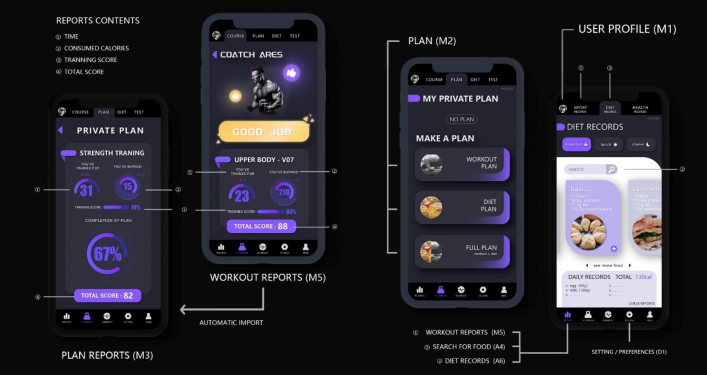
Figure 3: Virtual fitness coach APP training course interface.Figure 4: Virtual fitness coach APP diet plan interface.
After completing the exercise, the APP will provide feedback and ratings for the session, and automatically record the exercise data into the existing exercise plan. In the customized plan section, users can tailor exercise, die- tary, or comprehensive plans based on their specific needs (Malek et al., 2002). Users can also use the food log to record their daily meals and view reports. Additionally, users can personalize their settings by uploading a pro- file picture, modifying their nickname, selecting a theme for the interface, and choosing background music. In the MINE section, users can add friends and join communities as shown in Figure 4 (Hu et al., 2020).
Virtual Fitness Coach App Interaction Design by Using Kano-AHP-QFD Model 569
CONCLUSION
This paper presents a design and development process of a virtual fitness coach mobile application integrated with the KANO-AHP-QFD theory. The goal is to assist fitness enthusiasts in achieving healthy eating habits and safe and effective workouts in various settings. The study employs the Kano model to analyse user needs, ranks them using the AHP model, and quanti- fies them into design elements using the QFD house of quality. This process enables designers to develop a mobile fitness app that optimizes user fitness experience and improves design efficiency. This product development process addresses the limitations of single-method design by helping designers accu- rately identify user needs in ambiguous scenarios and make scientific and rational design decisions. Furthermore, this process provides new research perspectives for other user-oriented product development.
REFERENCES
ADEWUMI, A., OLATUNDE, G., MISRA, S., MASKELIUNAS, R. & DAMASE- VICIUS, R. 2018. Developing a Calorie Counter Fitness App for Smartphones. International Conference on Information Technology Science (MosITS), Dec 01–03 2017 Moscow, RUSSIA. CHAM: Springer International Publishing Ag, 23–33. ARORA, A., TANEJA, A., GUPTA, M. & MITTAL, P. 2021. Virtual Personal
Trainer: Fitness Video Recognition Using Convolution Neural Network and Bidi- rectional LSTM. International Journal of Knowledge and Systems Science, 12, 21. DENNISON, L., MORRISON, L., CONWAY, G. & YARDLEY, L. 2013. Opportunities and Challenges for Smartphone Applications in Supporting Health Behavior Change: Qualitative Study. Journal of Medical Internet Research, 15, 12. DIEZ, I. D., GARCIA-ZAPIRAIN, B., LOPEZ-CORONADO, M., RODRIGUES, J.
& VEGAS, C. D. 2017. A New mHealth App for Monitoring and Awareness of Healthy Eating: Development and User Evaluation by Spanish Users. Journal of Medical Systems, 41, 7. FANG, H., LI, J. & SONG, W. Y. 2022. A New Method for Quality Function Deployment Based on Rough Cloud Model Theory. Ieee Transactions on Engineering Management, 69, 2842–2856. FLORES, A., HALL, B., CARTER, L., LANUM, M., NARAHARI, R., GOO-
DMAN, G. & SOC, I. C. 2021. Verum Fitness: An AI Powered Mobile Fitness Safety and Improvement Application. IEEE 33rd International Conference on Tools with Artificial Intelligence (ICTAI), Nov 01–03 2021 Electr Network. LOS ALAMITOS: Ieee Computer Soc, 980–984. GILLEN, J. B. & GIBALA, M. J. 2014. Is high-intensity interval training a timeefficient exercise strategy to improve health and fitness? Applied Physiology Nutrition and Metabolism, 39, 409–412. HANNAN, A., SHAFIQ, M. Z., HUSSAIN, F. & PIRES, I. M. 2021. A Portable Smart
Fitness Suite for Real-Time Exercise Monitoring and Posture Correction. Sensors, 21, 19. HU, J., HE, W. & ASSOC INFORMAT, S. 2020. Examining the Impacts of Fitness App Functionalities. Conference of the Association-for-Information-Systems (AMCIS), Aug 10–14 2020 Electr Network. ATLANTA: Assoc Information Systems.
KRANZ, M., MOLLER, A., HAMMERLA, N., DIEWALD, S., PLOTZ, T., OLI- VIER, P. & ROALTER, L. 2013. The mobile fitness coach: Towards individu- alized skill assessment using personalized mobile devices. Pervasive and Mobile Computing, 9, 203–215. LIU, Y., ECKERT, C. M. & EARL, C. 2020. A review of fuzzy AHP methods for
decision-making with subjective judgements. Expert Systems with Applications, 161, 30. MADZIK, P. 2018. Increasing accuracy of the Kano model - a case study. Total Quality Management & Business Excellence, 29, 387–409. MALEK, M. H., NALBONE, D. P., BERGER, D. E. & COBURN, J. W. 2002. Impor-
tance of health science education for personal fitness trainers. Journal of Strength and Conditioning Research, 16, 19–24. MIDDELWEERD, A., MOLLEE, J. S., VAN DER WAL, C. N., BRUG, J. & TE VELDE, S. J. 2014. Apps to promote physical activity among adults: a review and content analysis. International Journal of Behavioral Nutrition and Physical Activity, 11, 9. MOKMIN, N. A. M. & JAMIAT, N. 2021. The effectiveness of a virtual fitness
trainer app in motivating and engaging students for fitness activity by applying motor learning theory. Education and Information Technologies, 26, 1847–1864. MOLANOROUZI, K., KHOO, S. & MORRIS, T. 2015. Motives for adult participation in physical activity: type of activity, age, and gender. Bmc Public Health, 15, 12. NEIRA-RODADO, D., ORTIZ-BARRIOS, M., DE LA HOZ-ESCORCIA, S., PAG-
GETTI, C., NOFFRINI, L. & FRATEA, N. 2020. Smart Product Design Process through the Implementation of a Fuzzy Kano-AHP-DEMATEL-QFD Approach. Applied Sciences-Basel, 10, 28. PAKIZEHKAR, H., SADRABADI, M. M., MEHRJARDI, R. Z. & ESHAGHIEH, A.
E. 2016. The application of integration of Kano’s model, AHP technique and QFD matrix in prioritizing the bank’s substructions. 3rd International Conference on New Challenges in Management and Organization: Organization and Leadership, May 02 2016 Dubai, U ARAB EMIRATES. AMSTERDAM: Elsevier Science Bv, 159–166. PAOLI, A. & BIANCO, A. 2015. What Is Fitness Training? Definitions and Implications: A Systematic Review Article. Iranian Journal of Public Health, 44, 602–614. ULLAH, A. & TAMAKI, J. 2011. Analysis of Kano-Model-Based Customer Needs
for Product Development. Systems Engineering, 14, 154–172. ZOU, J. Q., LI, B. Y., WANG, L. Y., LI, Y., LI, X. Y., LEI, R. J. & SUN, S. L. 2019. Intelligent Fitness Trainer System Based on Human Pose Estimation. 5th International Conference on Signal and Information Processing, Networking and Computers (ICSINC), Nov 29-Dec 01 2018 Yuzhou, PEOPLES R CHINA. SINGAPORE: Springer-Verlag Singapore Pte Ltd, 593–599.
LISTED IN THE AHFE DIGITAL BOOKSTORE CATALOGUE
Explore the complete digital volume
Usability and User Experience
Read this individual research paper free through the original publisher, or explore the full digital proceedings book.
ISBN 978-1-958651-86-5
Explore this ISBN in the AHFE Bookstore ↗Listed in the July 2026 bookstore catalogue; search by ISBN to confirm current availability · Digital book purchase optional