Yuqi Li, Hongyu Zhang, Jinhui Xu (2023). Design of Library Management System Based on MVVM Framework and ZXing Scanning Code Technology. In: Human Factors in Software and Systems Engineering. AHFE Open Access, vol. 94, pp. 111–119. https://doi.org/10.54941/ahfe1003776
The library is an important resource for university learning. Nowadays, the library has gradually become the place where students learn most in universities at home and abroad. Therefore, our team will design an interdisciplinary practice in the library of Huazhong University of Science and Technology. The survey found that the libraries of Huazhong University of Science and Technology and other universities achieve self-service management through self-service machines, public numbers, official websites, and other channels, but students generally think that the function is cumbersome and inconvenient to query, so we want to design a book self-service management system to bring the greatest convenience to users. This practice uses literature analysis, questionnaires, interviews, and experiments to deeply understand the pain points of library self-service machines, the design principles of relevant interfaces of libraries at home and abroad, and the needs of users to determine the information construction, interactive experience and technical needs of the system. This project is mainly an interdisciplinary practice of computer science and industrial design. In terms of technology, the system uses Android and MVVM architecture to display the front-end interface, realizes the Android network request through OkHttp and Retrofit, and uses ZXing open-source scanning technology to realize the function of borrowing and returning books on the palm; Go language and Echo Web framework is used for development, and Docker is used to deploying containers. In terms of design, the system combines ergonomics, design psychology, and so on, which not only realizes the basic functions of mobile phones, such as scanning code, borrowing, and returning books, map guide, and searching books but also adds special functions such as lost and found, recording reading time and so on, so as to enhance the user's personalized experience. After the usability test, the interviewees believe that the design can greatly improve the learning efficiency in the library.
The library is an institution that collects, organizes, and collects library materials for human reading and reference. As an important resource for uni- versity study, learning and making full use of the library’s academic resources is a basic skill that every university student must master(Ping Li and Jianming
Zheng, 2016). In today, many university students treat the library as a lear- ning treasure trove. It has been found that there are still many problems with the public inquiry system of Huazhong University of Science and Technology Library, such as confusing interface layout and cumbersome and scattered functions, which often reduce the efficiency of users. With the development of mobile Internet and the popularity of smart terminals, technology and intelligence, everything is connected gradually become part of people’s daily life, the world has entered the “digital intelligence” era. There are more and more self-help services of all kinds, and the trend of “all services must be self-help”(Yuexin Cheng, 2022). This gave us the idea to design a self-service library management system. In order to better design and implement this APP, three members of our team acted as product manager, designer and develo- per, aiming to come up with a feasible design solution and implement it to help bring greater convenience to students.
RELATIVE WORK Questionnaire Survey
We conducted a questionnaire survey among students of Huazhong University of Science and Technology. The questionnaire consisted of 8 que- stions in three aspects: basic information of users (gender, frequency and reason of going to the library, willingness to learn about library reading acti- vities), advantages and disadvantages of existing library systems (used library systems and their disadvantages), and establishment of self-management APP (necessity of establishing an autonomous management system, and features expected by users). There were 111 participants, most of them were women (61.26%). The results of the survey showed that most of the participants went to the library 1–2 times a week (52.25%), going to the library for self- study (86.23%) and reading (53.62%) were the reasons why most of the respondents went to the library, and participating in book activities (23.59%) was only a minority. The data shows that more than half of the respondents have used the self-service machines in the library, the library website and the public website respectively. In the survey on the advantages and disa- dvantages of the library system, 62.96% of the respondents thought that they could not always find the location of books, 48.15% thought that the system interface was unattractive and cumbersome, 46.91% thought that it was troublesome to always go to the first floor to borrow and return books by themselves, and 40.74% thought that the service system in the library was scattered.
In the survey on the willingness to establish a self-help management APP, 91.89% of the respondents think it is necessary to establish a library self-help management APP. Among the expected functions, 89.19% of the respondents want to have basic functions such as borrowing and returning books, search- ing for clerks, collecting clerks, map guide, etc. 68.47% of the respondents want to be able to check the location of free self-study and record the time of self-study, 56.76% of the respondents want to have the function of recom- mending book list, and 27.93% of the respondents also want to know the activities in the library.
Design of Library Management System 113
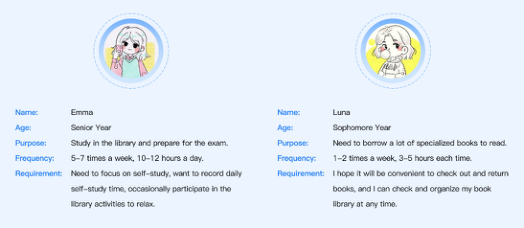
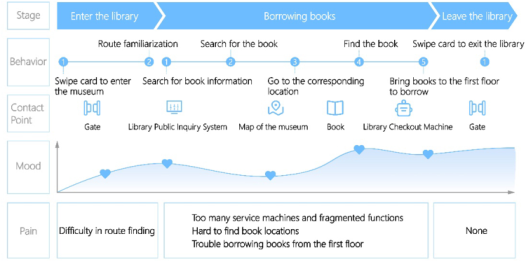
Figure 1: Personas.Figure 2: User journey map.
Persona To further explore the pain points and expectations of users, we conducted in-depth interviews with two young people of different ages. The interview objectives were clearly defined as “understand the five basic parameters of interviewees’ name, grade, purpose, frequency, and needs”, and a detai- led interview outline was created around the interview objectives, followed by the interviews, and finally, based on Alen Cooper’s “seven-step persona method”, the interviews were organized and analysed to produce personas (Figure 1).
User Journey Map A user journey map is a tool that visualizes the process that a user goes through to accomplish a goal. Creating a high-quality user journey map reve- als points of frustration and joy in a series of interactions; at the same time, user journey mapping creates opportunities to address customer pain points, build corporate consensus, and create opportunities for improving the user experience (Jing Zhang, 2018). To gain a deeper understanding of the user’s process from entering to exiting the library, we analysed the user’s behaviour, touch points and mood, and identified four pain points: difficulty in route finding, many machines with scattered functions, difficulty in finding book locations, and trouble in getting to the first floor to borrow books. At the same time, a more intuitive user journey map was drawn (Figure 2).
DESIGN PRACTICE ABOUT BOOK ROAD Product Positioning
In order to solve the problems such as students’ cumbersome book borrowing in the library, our Book Road is a book self-help management APP. it can let users easily solve the basic problems through cell phones such as handheld book borrowing and returning, map guide to check the location of books, and also meet users’ personalized needs through functions such as recording self-study time and lost and found, unlike traditional library machines which have single and scattered functions, weak visual and poor interactivity. Our product allows more students to solve all the problems in the library with just one mobile APP.
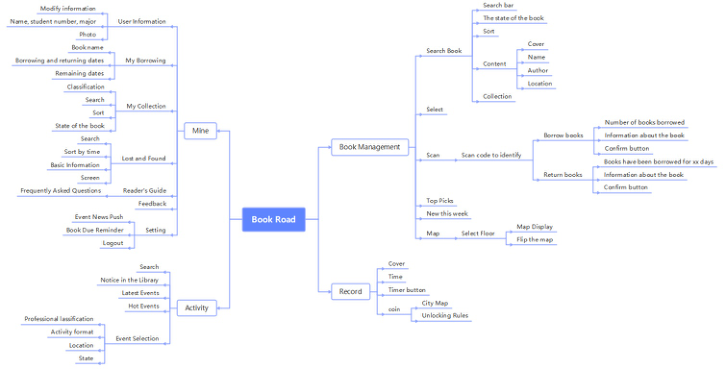
Information Architecture The main functions of APP are divided into book management, record, acti- vity and my. Among them, book management and record are the featured sections of Book Road, which highlights the convenience and fun of APP (Figure 3).
Design Specifications To help the brand maintain the extension and unity of the subsequent design, we developed design specifications (including fonts, colors, icons, etc.). In terms of font, we use the standard appleseed font of the IOS system; in terms of color, we use blue, which symbolizes wisdom and rigor, as the main color, and its contrasting orange as the secondary color; in terms of icon, we draw 14 icons of linear and faceted styles in a unified manner.
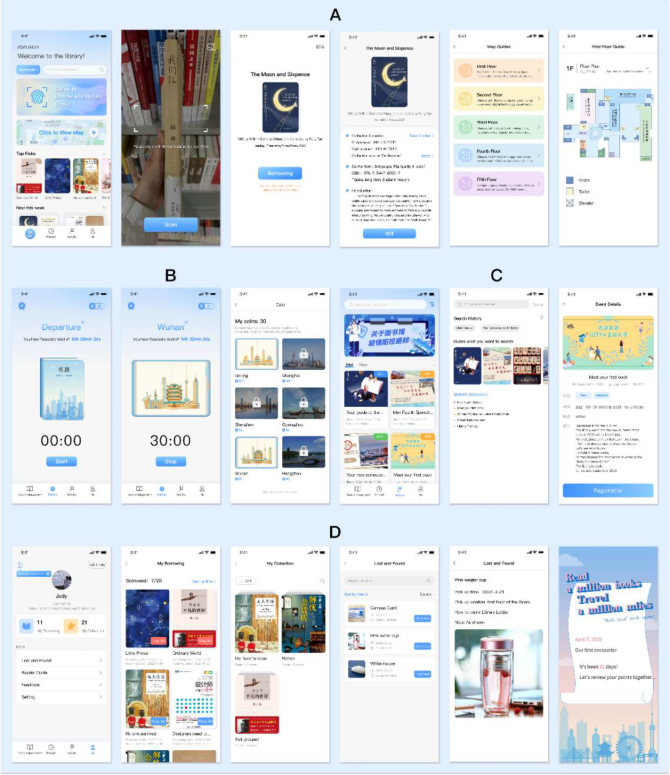
Interface Presentation According to the drawing of the emotional version, we determined the style of the APP as modern, simple and diffuse, and also drew the high-fidelity
Figure 3: Information architecture.
Design of Library Management System 115
Figure 4: Interface presentation.
interface of Book Road according to four main functions: book management (Figure 4A), record (Figure 4B), activity (Figure 4C) and my (Figure 4D), so as to prepare for the subsequent implementation of the APP on the ground.
FUNCTION DEVELOPMENT Key Algorithm
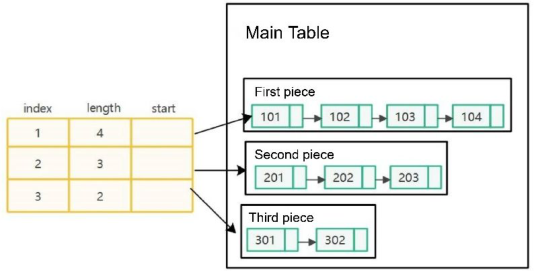
In the book and activity search function, we use the index lookup method, the basic idea of which is to first look up the index table, which can be used as a dichotomous lookup or a sequential lookup, and then perform a sequential lookup in a determined block. The schematic diagram of index lookup is shown in Figure 5.
Figure 5: Index lookup diagram.
Key Technology To realize the landing and development of this project, we use three key tech- nologies: (1) Use RecyclerView to display the activity and book interface, and bind the view to the data through ViewHolder and Adapter to reduce repetitive code and display a large amount of data easily. (2) Use zxing open source sweeping technology to realize the function of returning and borro- wing books on the palm. (3) Use Go language and Echo Web framework for development, deploy containers via Docker, and implement Android-side network requests via okhttp and Retrofit.
Backend Build Go is a fast growing open source programming language for building simple, fast and reliable software. In addition we chose Echo, a high-performance, minimalist web framework, as our primary web development framew- ork. Combined with these tools, we built a stable and efficient backend service. The overall architecture of the backend uses the classic MVC model, separating the business logic from the display interface.
Code Architecture In the code architecture, we chose the MVVM code architecture, MVVM is one of the best architectural choices for Android development (Meiping Zhu, Xi Ding and Lian Liu, 2020). Google also officially supports and encourages developers to use this architectural pattern. In MVVM, we ach- ieve two-way data binding through models, views and viewmodels, strictly adhering to the principle of separation of concerns, which is the ultimate principle of the architecture. Using MVVM architecture also has the follo- wing four advantages: (1) low coupling - the view (View) can be changed and modified independently of the Model, a ViewModel can be bound to a different “View”, when the View changes the Model can remain unch- anged, when the Model changes the View can also be unchanged when the Model changes. (2) Reusability - you can put some view logic inside a ViewModel, so that many views can reuse the logic of this view. (3) Inde- pendent development - developers can focus on business logic and data
Design of Library Management System 117
development (ViewModel), designers can focus on page design, using Expres- sion Blend can easily design the interface and generate xaml code. (4) Testable - The interface is generally difficult to test, and tests can be written for the ViewModel.
Test Report We selected multi-dimensional technical indexes such as test passing rate, running speed, functional usability, security, etc., and formed the follow- ing test result table (Table 1) after multiple rounds of testing using different test samples. Some of the functions reported errors during the test, and after debugging, we found that they were caused by the different types of controls used before and after, and the wrong methods used in some of them, which could pass normally after modification.
Table 1. Test report.
Table available in the original PDF paper.
Functional Utility Security
Experiment Model Number of tests
Installation pass rate
Average running speed
Good Virtual Machine Pixel 4 XL 15 93% 2s Most of the features are available, a few features will cause flashback
Good Virtual Machine Pixel 3 XL 15 100% 2.4s All functions are working properly Good Real Machine Pixel JER-AN10 15 86% 7.1s Some functions do not flash when used, but no response
Good Real Machine Pixel ELS-AN00 15 100% 6.9s All functions are working properly Good Real Machine Pixel YAL-AL00 15 100% 7.3s All functions are working properly
CONCLUSION
After completing the interface design and function development of Book Road, we sorted out the important and difficult points of this study, and there are five key points as follows: (1) Clear logic and reasonable function - the function distribution of Book Road APP is reasonable and clear in logic, and the knowledge of ergonomics is applied. According to the usage fre- quency of different functions in the library, the location of each function is reasonably arranged, the key functions are highlighted, and the visual dyna- mic line is carefully designed. (2) Personalized design and visual aesthetics - Book Road has the meaning of “reading ten thousand volumes of books and traveling ten thousand miles”, and the APP has added the function of recording self-study time in addition to the basic functions, integrating the concept of reading and traveling into it, and presenting it in the way of tra- ditional architecture and books. The APP is designed to create an exclusive space for users, promote time management and enhance learning efficiency. (3) Emotional design - Book Road APP takes users’ emotion and mood as the starting point of design, and adds the function of generating reading reports
to give users more care. (4) Data processing - The number of books in the library is large, which requires our system to have strong data processing capability. Therefore, we use SQLite database to handle the large amount of book data. (5) Technology implementation - One of the core of this system is to realize handheld book borrowing, which is more convenient for readers’ borrowing needs. Therefore, we use zxing scanning technology to simulate the library borrowing process, and readers can experience the convenience of borrowing books in 3 seconds.
We also encountered many difficulties in the pre-conception and imple- mentation on the ground: (1) The library is powerful and has many user needs, so how to arrange the logic between each module and how to balance the weight between each function is a major difficulty. After conducting a lot of research and interviews with teachers and students, we uncovered the potential needs of users. From the user’s perspective, the functional layout of the interface was arranged rationally to meet the emotional needs of different users and give them humanistic care. (2) How to bring users a better visual experience in a rational APP and reflect the design concept of Book Road? We extracted the elements of books and cities from the concept of “read ten thousand books, travel ten thousand miles”, combined them and presented them in the form of illustrations, and designed the reward mechanism to let users go on the journey of reading and tell the story of “book road”. (3) The registration and login part of the user needs to be implemented online, so the back-end needs to be developed using Go language and Echo Web fra- mework, and the container is deployed through Docker. The Android side, on the other hand, needs to implement network requests through okhttp and retrofit. This process is very difficult as it involves different programming languages and a lot of handover between front and back ends, requiring very solid knowledge of networking basics and constant connection testing. (4) We use MVVM code framework, so many code operations cannot be handled directly in activity and fragment, but need to bind data to each other through view, viewmodel and model, so the process is more complicated and requires us to have a very deep understanding of this framework.
This project aims to use one APP to integrate the functions of multiple library machines to help more students achieve the goal of using one APP to solve all their problems and study more conveniently in the library. We designed this APP and will continue to work on future improvements in the hope that this research will provide some inspiration and guidance for future library-related design research.
ACKNOWLEDGMENT
We would like to extend our most sincere gratitude to all those who have helped with this study.
REFERENCES
Haiping Zhu, Xi Ding, Lian Liu. Research on the application of technology based on MVVM framework in Web front-end[J]. Technology Information, 2020, 18(30): 8–10. DOI: 10.16661/j.cnki.1672–3791.2004–5455-1176.
Design of Library Management System 119
Jing Zhang. Analysis of borrowing behavior in library management systems[J].
Science of Heilongjiang, 2018, 9(17): 4-5+9. Ping Li, Jianming Zheng. Research and application of intelligent interactive system in smart library[J]. Library Science Research, 2016(11): 34–38. DOI: 10.15941/j.cnki.issn1001-0424.2016.11.006. Yuexin Cheng. Research on self-service model of university libraries in the age of digital intelligence[D]. University of Jiangsu, 2022. DOI: 10.27170/d.cnki.gjsuu.2022.001383.
LISTED IN THE AHFE DIGITAL BOOKSTORE CATALOGUE
Explore the complete digital volume
Human Factors in Software and Systems Engineering
Read this individual research paper free through the original publisher, or explore the full digital proceedings book.
ISBN 978-1-958651-70-4
Explore this ISBN in the AHFE Bookstore ↗Listed in the July 2026 bookstore catalogue; search by ISBN to confirm current availability · Digital book purchase optional