Michael Mylrea, Nikki Robinson (2023). AI Trust Framework and Maturity Model: Improving Metrics for Evaluating Security & Trust in Autonomous Human Machine Teams & Systems. In: Human Factors in Robots, Drones and Unmanned Systems. AHFE Open Access, vol. 93, pp. 171–182. https://doi.org/10.54941/ahfe1003760
The following article develops an AI Trust Framework and Maturity Model (AI-TFMM) to improve trust in AI technologies used by Autonomous Human Machine Teams & Systems (A-HMT-S). The framework establishes a methodology to improve quantification of trust in AI technologies. Key areas of exploration include security, privacy, explainability, transparency and other requirements for AI technologies to be ethical in their development and application. A maturity model framework approach to measuring trust is applied to improve gaps in quantifying trust and associated metrics of evaluation. Finding the right balance between performance, governance and ethics also raises several critical questions on AI technology and trust. Research examines methods needed to develop an AI-TFMM. Validation tests of the framework are run and analyzed against the popular AI technology (Chat GPT). OpenAI's GPT, which stands for "Generative Pre-training Transformer," is a deep learning language model that can generate human-like text by predicting the next word in a sequence based on a given prompt. ChatGPT is a version of GPT that is tailored for conversation and dialogue, and it has been trained on a dataset of human conversations to generate responses that are coherent and relevant to the context. The article concludes with results and conclusions from testing the AI Trust Framework and Maturity Model (AI-TFMM) applied to AI technology. Based on these findings, this paper highlights gaps that could be filled with future research to improve the accuracy, efficacy, application, and methodology of the AI-TFMM.
Improving metrics and the process for evaluating security and trust in AI may help optimize performance of Autonomous Human Machine Teams & Systems (A-HMT-S). Trust in AHMT-S involves the perception of depen- dability, competence, transparency, and effective communication between humans and machines (Mylrea 2023). This article highlights how the AI- Trust Framework and Maturity Model (AI-TMM) improves metrics for evaluating security, transparency, explainability in AI. For this study, the modular framework incorporates Google’s SAIF metrics and adds a matu- rity model methodology to measure security and trust in a large language model (LLM) chat bot. Validation of AI-TMM’s efficacy highlights that is provides a repeatable and explainable evaluation to facilitate the design and
management of Trustworthy AI. This research highlighted a number of secu- rity and trust gaps in existing AI solutions as well as mitigations that include designing and managing AI with more ethical guardrails. Providing a user fri- endly, accessible framework to address these gaps is critical to reducing the risks of exploiting and manipulating AI to harm civilization.
Securing AI through its lifecycle, from development to deployment, is required to improve trust between human-machine teams (Mylrea, 2022). This requires improved integrity of data lineage, monitoring detailed records of the origin, transformations, and movement of data throughout its lifecycle. Improved access control policies can also help ensure that only authorized individuals or systems can interact with the AI model and its associated data (Hansen and Venables 2023). As teams apply AI advances to improve autonomy and effectiveness of critical systems, from autonomous defence platforms to AI driven bioreactors, improved security and trust requires improved metrics to evaluate systems. Are these systems performing as expe- cted? Are they making secure and dependable decisions, and effectively fulfilling their assigned roles within the team? (Lee and See 2004). Secu- rity and trust metrics should be holistic and include people, process and technology considerations around dependability and transparency (Mylrea 2023). Effective visualization and communication of the proposed AI-TMM also requires acknowledging the diverse needs and perceptions of human operators in the loop (Mosqueira-Rey et al. 2023).
Trust is critical to improve performance between human-machine teams. It is fostered through factors such as consistent and reliable performance, transparent decision-making processes, clear and comprehensible channels of communication, shared decision-making, productive collaboration, and a shared sense of responsibility and accountability (Aldridge and Bethel, 2023). While hints of general intelligence have been highlighted in some GAI and LLM outputs, there is a misconception that AI has human level intelligence. Effective application of an AI-TMM requires understanding the strengths and weaknesses, capabilities and weaknesses in how human-machine teams collaborate, communicate and compete (Mylrea 2023a).
SECURE AI FRAMEWORK (SAIF) Cyber threats exploit human and machine vulnerabilities to reduce trust. To help mitigate this gap and improve trust between A-HMT-S, industry has developed various comprehensive frameworks to ensure the security of its AI systems (NIST Cybersecurity Framework). Google recently launched a Secure AI Framework (SAIF), focusing on proactive measures to identify and mitigate potential security risks associated with AI. It includes multiple layers of security, such as secure data handling, robust development and deployment processes, continuous monitoring, and collaboration with external security researchers. These are critical security measures that can help improve trust in AI (Google, 2023). Combining AI-TMM’s maturity model approach with SAIF may help improve responses to threats that are complex, non-linear and evolving by providing a repeatable, iterative process to assess and mitigate trust gaps.
AI Trust Framework and Maturity Model: Improving Metrics 173
Table 1. SAIF security and trust principles, goals & gaps.
Resilience Enhance robust security measures across the AI ecosystem to ensure a strong foundation.
AI development lifecycles include systems and data that lack basic encryption, authentication and secure by design principles Transparency Extend detection and response to bring AI into an organization’s threat model
Lack of threat modelling, identification and detection vulnerabilities and threats targeting critical data inputs and outputs of AI systems Reliability Employ automated defence mechanisms that can respond to existing and emerging threats.
Lack of secure by design systems that automate defence mechanisms and neutralize emerging threats. Explainability & Consistency
Establish standardized security controls at the platform level to maintain consistent security practices throughout the organization.
AI controls are not always harmonized and consistently applied through the lifecycle creating gaps in trust and security. Google has been extending these protections through various secure-by-default protections (e.g., Vertex AI, Security AI Workbench, Perspective API) Agility Modify controls to tailor mitigations and establish agile feedback loops for the deployment of AI technologies.
AI systems lack continuous monitoring, detection and protection from attacks such as poisoning training data and algorithms Responsible Use
Consider the risks associated with AI systems within the broader context of surrounding business processes.
AI systems often lack contextualization for responsible use. Improved examination of business use and application, including anomaly detection, operational behaviour monitoring and data lineage is needed.
SAIF facilitates harmonization of security controls by drawing from esta- blished security best practices, such as supply chain control, testing, and thorough review processes. SAIF takes into account emerging trends and risks associated specifically with AI systems and provides an effective approach to respond (Hansen and Venables 2023). The core elements of SAIF include the following security and trust principles, goals and gaps (see Table 1).
COMBINING AI TRUST FRAMEWORK & MATURITY MODEL (AI-TFMM) WITH THE SECURE AI FRAMEWORK (SAIF) To improve SAIF’s metrics of evaluation, applicability, and repeatability a maturity model methodology is applied by incorporating AI-TMM (see Table 2). Maturity models utilize weighting and measurement techniques to assess specific controls and enhance repeatability. This approach is par- ticularly beneficial when evaluating performance in situations where the
174 Mylrea and Robinson
Table 2. Applying a maturity model approach to the secure AI framework (SAIF).
Table available in the original PDF paper.
Metrics of Evaluation with SAIF Improved Metrics of Evaluation By Applying AI-TFMM Level of maturity is measured with both security and trust principles and includes various levels of maturity Level of maturity is measured concerning security principles. Creates susceptibility to binary yes or no answers
Outlines the desired state or goal for security principles, but could potentially be limiting in targeting improvements not included in the framework
Outlines the desired state or goal for security and trust principles in a way that provides a clear roadmap for improvement and evaluating those gains with weighted metrics
Takes measures to prevent unethical development and/or application of AI
Improves quantification of measures to prevent unethical development and/or unethical application of AI Improves fidelity of communication between internal and external stakeholders
Facilitates communication between internal and external stakeholders. However, without clear weights or maturity indicator levels this can create ambiguity and uncertainty
adoption of security controls or privacy measures cannot be simplified into a binary pass or fail outcome (Mylrea et al. 2017). Moreover, human and orga- nizational end users have different levels of resource constraints in realizing their security and trust goals. Instead of having a yes or no metric of eva- luation, the AI-TMM provides different levels of maturity to help plan and execute resource allocation. Thus, managers, developers and other stakehol- ders can apply AI-TMM to better manage, design and govern AI applications in their enterprise. Moreover, its modular construct enables end users to easily incorporate other frameworks to realize their own security, governance, risk and compliance goals.
The following table highlights how combining AI-TMM with Google’s Secure AI Framework (SAIF) help improve its metrics of evaluating security and trust in AI. Improves AI-TMM’s maturity model methodology of security assessment and produces outputs that are intuitive and easy to communicate to internal and external stakeholders. Combining the frameworks also helps create common taxonomy for AI stakeholders to harmonize security and trust controls.
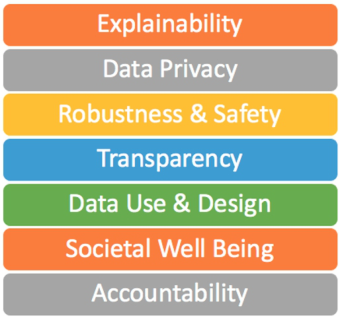
AI-TMM’s methodology is underpinned by a maturity model with four Maturity Indicator Levels (MIL), MIL0 through MIL3, which apply indepen- dently to each domain principle (Mylrea 2023). MILs are applied to specific controls for each of the AI Trust pillars that make up the framework (see Figure 1).
AI-TMM is modular and readily incorporates others frameworks and regulatory security and compliance controls. Applying its maturity model methodology to SAIF would add a maturity indicator level (MIL) as well
AI Trust Framework and Maturity Model: Improving Metrics 175
Figure 1: AI trust framework key pillars (Mylrea 2023b).
as a more holistic approach in examining control from a people, process and technology perspective. As we advance towards general artificial intelligence, ethical guardrails will become increasingly important. Trust in A-HMT-S will increasingly require both humans and machines to trust each other. Thus, it is important to add a holistic people, process, and technology approach as well as a maturity model methodology. A brief explanation of the four Maturity Indicator Levels (MIL):
Fully Implemented: Provides a Maturity Indicator Level Score or Weight of 3: Requires that the control is documented, managed and continuously validated through testing.
Largely Implemented: Provides a Maturity Indicator Level Score or Weight of 2. Requires that the control is documented and actively managed by a human in the loop, but is not continuously validated through testing.
Partially Implemented: Provides a Maturity Indicator Level Score or Wei- ght of 1. Requires that the control is documented, but not actively managed by a human in the loop, nor continuously validated through testing.
Nothing Implemented: Provides a Maturity Indicator Level Score or Weight of 0. Suggests no documentation, management or testing of a control.
The levels of maturity indicators (MILs) are applied independently to each principal domain, allowing AI-TMM users to operate at different MIL ratings for different domains. This means that an organization may be functioning at MIL2 in one domain, MIL3 in another domain, and MIL0 in a third domain. The MILs within each domain are cumulative, meaning that in order to attain a specific MIL in a domain, the organization must fulfil all the practices within that level and its preceding level(s). For instance, to achieve MIL2 in a domain, the organization must perform all the practices in MIL1 and MIL2. Likewise, to reach MIL3, the organization would need to complete all the practices in MIL1, MIL2, and MIL3 (Mylrea et al. 2017) (Mylrea 2023). Improving maturity level of critical controls can improve trust and security
176 Mylrea and Robinson
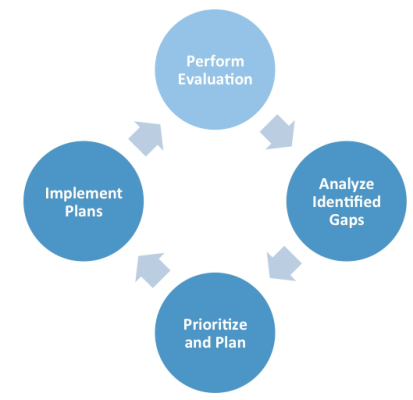
Figure 2: AI-TMM methodology (Mylrea 2023).
for A-HMT-S. However, due to diversity of resources, goals and even poten- tial business impacts if a gap is exploited, optimal MIL levels will vary across organizations.
USE CASE: APPLYING AI-TFMM TO ASSESSMENT THE MATURIY OF ACME COMPANY’S AI/ML MODEL RISK MANAGEMENT The following use case applies the AI-TMM methodology to an illustrative use case at ACME CO, a fictitious AI technology company that a released a popular, new LLM chat bot. Regulators, consumers and privacy advoca- tes have questioned the security and trust of ACME’s algorithms design and management. Large industry players have prohibited the use of ACME’s solu- tions because of the lack of access controls to prevent sensitive data loss as well as issues related to transparency of data lineage and explainability on how the algorithm is arriving at its conclusions. In response, ACME hired a third party to apply AI-TMM to assess and evaluate where there are critical trust gaps in the design and management of their chat bot. The Chief Infor- mation Security Officer inquired how easily the framework could include security controls from SAIF to complement their own security goals and their Google Cloud environment.
The AI-TMM methodology requires the following steps (See figure 2). Typically, a subset of controls from all 7 trust pillars (See figure 1) are evalu- ated, however that is beyond the scope of this use case. It is also important to note that this is not a static process. Security is not an end state, but a continuing process of improvements that help foster a culture of security. To realize that goal effectively, it is improve to include a multidisciplinary set of stakeholders (Mylrea 2017).
Step 1: Perform Evaluation: First, perform an evaluation based on the desired framework controls. While this use case tests four controls that are
AI Trust Framework and Maturity Model: Improving Metrics 177
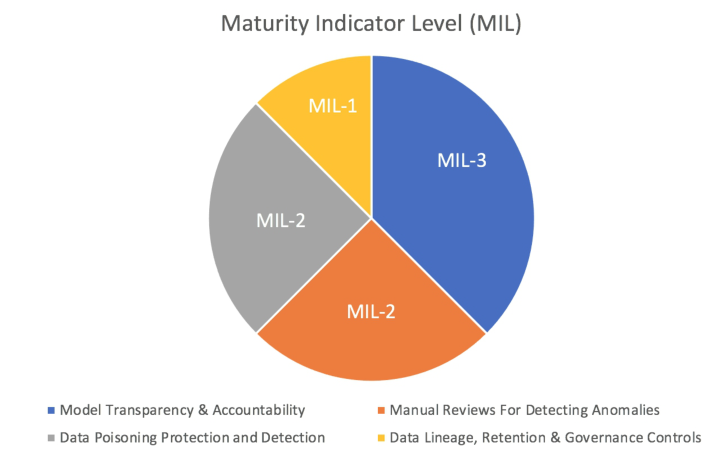
Figure 3: Maturity indicator level assessment of ACME’s AI data management controls.
part of SAIF’s AI/ML model risk management controls, future applicati- ons could include NIST AI Risk Management Framework and the ISO/IEC 42001 AI Management System Standard, which is the industry’s first cer- tification standard for AI. These standards draw heavily from the security principles outlined in the NIST Cybersecurity Framework and the ISO/IEC 27001 Security Management System (NIST 2021). The scope of the evaluation demonstrated is limited to SAIF’s AI/ML Model Risk Management controls. AI-TMM’s methodology is applied to the illustrative use case examining the controls of ACME’s chat bot.
Model Transparency & Accountability: ACME has documented, mana- ged and continuously validated through testing – Fully Implemented - Maturity Indicator Level = 3
Manual Reviews For Detecting Anomalies: ACME documented this con- trol which is actively managed by a human in the loop, but is not continuously validated through testing.
Equation reproduced from the original PDF.
Data Poisoning Protection and Detection: ACME documented this con- trol which is actively managed by a human in the loop, but is not continuously validated through testing.
Equation reproduced from the original PDF.
178 Mylrea and Robinson
Table 3. Applying applies AI-TMM metrics of evaluation to an illustrative use case that leverages Google’s SAIF controls for AI model risk management.
Table available in the original PDF paper.
Potential Mitigations To Improve Trust & Security
Secure Ai Framework (Saif) Control: Ai/Ml Model Risk Management
Maturity Indica- tor Level (MIL) Score Model Transparency & Accountability
3 Trust Mitigation: Perform continuous assessment and audits on AI algorithms, data inputs, decision- making processes, and outputs. These audits help verify the transparency and fairness of the AI models, identify potential biases or ethical concerns, and ensure compliance with relevant regulations and standards (Floridi et al. 2018). Security Mitigation: Improved access controls, such as employing authentication, authorization, and privilege management techniques, can help improve maturity of access policies, ensuring that only authorized individuals or systems can interact with the AI model and its associated data. This helps prevent unauthorized access, tampering, or misuse of the AI systems (Hansen and Venables 2023). Manual Reviews For Detecting Anomalies
2 Trust Mitigation: XAI techniques such as rule- based systems, decision trees, or attention mech- anisms can be applied to provide interpretable explanations, helping users, regulators, and stake- holders gain insights into the AI model’s behaviour and build trust in its capabilities (Rosenfeld 2021). (Rudin 2019). Security: Ensuring the data’s integrity, authenticity, and quality, organizations can minimize the risks of malicious data manipulations or adversarial attacks that aim to deceive the anomaly detection system. Proper data validation and sanitization techniques, such as outlier detection, data cleansing, and data integrity checks, help maintain the accuracy and reliability of the anomaly detection model, improving its security (Ahmed, Naeem, & Ghafoor, 2020) Data Poisoning Protection and Detection
2 Trust Mitigation: Algorithmic transparency and auditing enable organizations and users to have a better understanding of how AI models ope- rate, instilling trust and facilitating the detection of anomalous behaviours or malicious manipula- tions (Doshi-Velez & Kim, 2017). Security: Data quality monitoring and anomaly detection help mitigate the risks of using compromised or poisoned data in AI training, enhancing the security and reliability of the AI system (Garcia-Gasulla et al., 2020).
Continued
AI Trust Framework and Maturity Model: Improving Metrics 179
Table 3. Continued.
Table available in the original PDF paper.
Potential Mitigations To Improve Trust & Security
Secure Ai Framework (Saif) Control: Ai/Ml Model Risk Management
Maturity Indica- tor Level (MIL) Score Data Lineage, Retention & Governance Controls 1 Trust Mitigation: Improving data lineage docu- mentation by capturing and maintaining detailed records of the origin, transformations, and move- ment of data throughout its lifecycle. By provi- ding clear and transparent information about the data’s lineage, including its sources, processing steps, and potential modifications, organizations can enhance trust in the data’s accuracy, reliability, and compliance with governance policies (Lenzini et al., 2021). Security: Improving security of data lineage, retention, and governance controls via improved access controls and encryption mechanisms. Enforcing strong access controls, organizations can maintain the integrity and confidentiality of data lineage information. Additionally, encrypting sensitive data throughout its lifecycle, including during retention, storage, and transmission, provides an extra layer of protection against unauthorized access or data breaches (Khan, Khan, & Karim, 2019).
Data Lineage, Retention And Governance Controls: ACME documented this control, but it is not actively managed by a human in the loop and it is not continuously validated through testing.
– Partially Implemented - Maturity Indicator Level = 1 Step 2: Analyse Identified Gaps: Consider gaps in the context of organi- zational goals as well as potential impacts if those gaps or vulnerabilities are exploited. AI systems are applied to a diverse set of use cases, from anomaly detection in high assurance systems to improving efficiencies for menial tasks. For this reason, it is important to better understand security and trust frame- works in the context of resource availability, business impact, security, safety and risk.
Step 3: Prioritize and Plan: List gaps and potential consequences. Note organizational constraints. If a particular business impact or risk is unacce- ptable it is important to prioritize and plan effective allocation of resources to reduce associated risks. Once actions are identified to address gaps it is important to perform a cost-benefit analysis (CBA) on actions and priorities.
Step 4: Implement Plans: Based on AI-TFMM application to SAIF, the metrics of evaluation may facilitate more effective resource allocation to buy down risk in a measurable and repeatable way. Security and trust in AI are
180 Mylrea and Robinson
not static. It is important to track progress and revaluation periodically in response to changes.
Improving metrics for AI security and trust evaluation is crucial for asses- sing effectiveness, enabling benchmarking and best practices, promoting transparency, and fostering trust among stakeholders (Liu et al., 2021). AI- TMM improves robustness of evaluation metrics to empower organizations applying ethical guardrails to AI. Well-defined controls and a user friendly process of evaluation facilitates identification of trust gaps and mitigations. These metrics also provide a standardized framework for comparing diffe- rent AI systems and approaches, facilitating benchmarking and promoting best practices in the field. As shown in the use case, AI-TMM quickly high- lighted opportunities to improve ACME’s security and trust via improved transparency and accountability of it chat bot.
AI-TMM combined with other ethical AI frameworks, such as SAIF, can also empower stakeholders, including users and regulators to assess the level of security and trust in a given AI system. This fosters trust, promotes respon- sible AI deployment, and helps ensure that AI technologies are developed and used in a manner that aligns with ethical principles and societal expectati- ons. When applying these frameworks with a maturity model methodology, it is important to align with business objectives and the organization’s eth- ical AI strategy. Pursuing the highest MIL in all domains may not be the most advantageous approach. Instead, companies should carefully evaluate the costs and benefits associated with achieving a particular MIL. It is cru- cial to document and address any areas where gaps in ethical principles exist, employing appropriate mitigation strategies (Mylrea 2023).
CONCLUSION
This research examined how the AI Trust Maturity Model Framework (Myl- rea 2023) can be applied to improve trust in A-HMT-S. An illustrative use case highlighted a number of opportunities and challenges to improve metrics of evaluation for trust in AI systems. Establishing a framework to improve measurements of security and trust in AI is needed to secure, sustain and advance the performance of A-HMT-S. It is important that these frameworks are supported by methodologies that are modular and can include the security and compliance controls required by their industry. This research highligh- ted how AI-TMM could easily incorporate Google’s Secure AI Framework (Hansen and Venables 2023) to focus on specific security controls.
Future research should examine security and trust challenges with other emerging technologies, such as cyber and nuclear weapons. What other fra- meworks can be incorporated into the AI-TMM to improve ethical use and safeguards of emerging technology? What worked? What failed? What can we apply to harness AI to improve civilization? What can be learned from nuclear non-proliferation? Mutually assured destruction deterred abuse in part because the cost inevitably outweighed the opportunity. However, AI is introducing new opportunities for malicious actors, from social engineering with deep fakes to cyber weapon development and zero day exploit enume- ration with LLMs. Unlike nuclear weapons which have signatures in their
AI Trust Framework and Maturity Model: Improving Metrics 181
development and delivery that can often be attributed to certain refinement locations and technology developers, AI adversary can easily obfuscate their identity. How can the data fuelling AI and it’s ecosystem be better protected? Can AI protect itself via secure by design and ethical use guardrails?
Certainly, improved metrics of evaluation in security and trust can help in the design, management and governance of AI and other emerging techno- logies. Applying AI-TMM to an AI use case highlighted both opportunities and gaps of applying a maturity model methodology. This user friendly eva- luation of trust and security metrics can incorporate other related framework to help shape the development of future algorithms that are safe and bene- ficial to humanity. Applying the AI-TMM to real world use cases through the AI lifecycle can also help improve AI safety and encourage ethical regu- latory oversight of AI development. While the assessment was conducted on a fictitious corporation, recent real world incidents have revealed gaps in transparency, repeatability, and other ethical principles in a number of AI solutions (Syme 2023).
Gaps that undermine trust between human machines teams jeopardize the long term sustainability and gains that AI can bring to make the world a better place. AI-TMM improve the ability to measure, evaluate and miti- gate these gaps. This is timely as AI innovation is rapidly advancing. New opportunities for AI are on the horizon to give impetus to cyber, physical, biological convergence that will blur the lines between humans and machi- nes. When manipulating biological systems that are complex, stochastic and difficult to understand, secure and control (Mylrea et al. 2022), ethical guar- drails are imperative. With the appropriate safeguards, we could prolong and improve our lives and civilization. Getting it wrong by applying black box AI solutions to drive synthetic biology production could inadvertently unleash a biological weapon of mass destruction – this should not be an option (Mylrea 2023b).
ACKNOWLEDGMENT
Dr William Lawless for his ongoing encouragement and mentorship through the Association for the Advance of Artificial Intelligence and Stanford Uni- versity’s Spring Symposium. Dr Nikki Robinson, my PhD dissertation Chair, for sharing her expertise in securing emerging technologies.
REFERENCES
Ahmed, I., Naeem, M., & Ghafoor, A. (2020). A review of anomaly detection in supervised and unsupervised machine learning paradigms. Concurrency and Computation: Practice and Experience, 32(24), e5582. Aldridge, A. L., & Bethel, C. L. (2023, March). M-OAT Shared Meta- Model Fra-
mework for Effective Collaborative Human-Autonomy Teaming. In Companion of the 2023 ACM/IEEE International Conference on Human-Robot Interaction (pp. 663–666). Doshi-Velez, F., & Kim, B. (2017). Towards a rigorous science of interpretable machine learning. arXiv preprint arXiv:1702.08608.
182 Mylrea and Robinson
Floridi, L., et al. (2018). AI4People—An ethical framework for a good AI society: Opportunities, risks, principles, and recommendations. Minds and Machines, 28(4), 689–707. Garcia-Gasulla, D., Ahmadi, S., Cano, A., & De Capitani di Vimercati, S.
(2020). Poisoning attacks against machine learning: A survey. arXiv pre- print.arXiv:2006.08190. Hansen and Venables. (2023). Introducing Google’s Secure AI Framework. Accessed at https://blog.google/technology/safety-security/introducing-googles-secure- ai-framework/ J. D. Lee and K. A. See, 2004, “Trust in Automation: Designing for Appropriate
Reliance,” Human Factors, 46(1) (2004), 50–80. Lawless, W. F., Sofge, D. A., Lofaro, D., & Mittu, R. (2023). Interdisciplinary approaches to the structure and performance of interdependent autonomous human machine teams and systems. Frontiers in Physics, 11, 136. Lenzini, G., Etalle, S., Huygens, C., & Verheul, E. (2021). Data lineage: what it is
and how to use it. Data Intelligence, 3(1), 50–58. Mosqueira-Rey, E., Hernández-Pereira, E., Alonso-Ríos, D., Bobes-Bascarán, J., & Fernández-Leal, Á. (2023). Human-in-the-loop machine learning: A state of the art. Artificial Intelligence Review, 56(4), 3005–3054. Mylrea, M., & Robinson, N. (2023). AI Trust Framework and Maturity Model:
Improving Security, Ethics and Trust in AI. Cybersecurity and Innovative Techno- logy Journal, 1(1), 1–15. Mylrea, M. (2023, May). Breaking Bad: Biological Internet of Things. S4 Conference on ICS Security, Miami, FL. Accessed here https://www.youtube.com/watch?v=8t skxSq592A Mylrea, M., Fracchia, C., Grimes, H., Austad, W., Shannon, G., Reid, B., & Case,
N. (2022). BioSecure Digital Twin: Manufacturing Innovation and Cybersecurity Resilience. In Engineering Artificially Intelligent Systems (pp. 53–72). Springer, Cham. Mylrea, M., Nielsen, M., John, J., & Abbaszadeh, M. (2021). Digital Twin Industrial Immune System: AI-driven Cybersecurity for Critical Infrastructures. Systems Engineering and Artificial Intelligence, 197–212. Mylrea, M., Gourisetti, S. N. G., & Nicholls, A. (2017). An introduction to buil-
dings cybersecurity framework. In 2017 IEEE symposium series on computational intelligence (SSCI) (pp. 1–7). IEEE. National Institute of Standards and Technology. (2021). NIST AI Metrics Suite.
Retrieved from https://pages.nist.gov/ai-metrics/ Rosenfeld, A. (2021). Better metrics for evaluating explainable artificial intelligence.
In Proceedings of the 20th international conference on autonomous agents and multiagent systems (pp. 45–50). Rudin, C. (2019). Stop explaining black box machine learning models for high stakes decisions and use interpretable models instead. Nature machine intelligence, 1(5), 206–215. Syme, P. Apple is working on its own AI large language model and restricting
employees from using ChatGPT over privacy concerns. Business Insider. May 19, 2023.
LISTED IN THE AHFE DIGITAL BOOKSTORE CATALOGUE
Explore the complete digital volume
Human Factors in Robots, Drones and Unmanned Systems
Read this individual research paper free through the original publisher, or explore the full digital proceedings book.
ISBN 978-1-958651-69-8
Explore this ISBN in the AHFE Bookstore ↗Listed in the July 2026 bookstore catalogue; search by ISBN to confirm current availability · Digital book purchase optional