Xiaotong Li, Ao Jiang (2023). The impact of prevalent behavioural mimicry in adolescents on disease prevention and maintenance of healthy behavioural activation. In: Healthcare and Medical Devices. AHFE Open Access, vol. 79, pp. 84–94. https://doi.org/10.54941/ahfe1003476
With the popularity and spread of social media, more and more social software is helping to bring people closer to each other [1]. It is increasingly easy for adolescents to get other people's updates from social media, including celebrities, internet celebrities and peers [2]. Also adolescence is a time when the brain undergoes many structural and functional changes, so it is likely that the part of the social brain responsible for regulating imitation is still maturing throughout adolescence, which may lead to more pronounced imitative behaviour [3]. In addition, adolescents gain popularity, status and attractiveness through imitation of their idols or among their peers [4]. Therefore, making good use of the prevalent behaviours that social media has created in society has the potential to provide better behavioural interventions for the adolescent population [5], helping to shape better behavioural habits in adolescents, improving the current trend of younger disease and potentially reducing the likelihood of preventable health problems.The aim of this study was to analyse how popular behavioural mimicry among adolescents can be used to promote the activation of their health behaviours. We asked two questions: 1. the extent to which imitation behaviours activate adolescents' health behaviours; 2. measuring the impact of knowledge, skills and beliefs involved in the activation of behavioural imitation on adolescents' health maintenance and disease prevention.A questionnaire was used to enumerate the population groups that have the greatest influence on adolescents as the test sample in this study. 100 participants took part in the questionnaire, including 50 participants from mainland China and 50 participants from Hong Kong, whose mean age was 16 ± 3 years. After administering the questionnaire, 50 of these participants, who were randomly and equally divided into 10 groups of 5 participants each, were surveyed using the Activation Inventory (PAM) to measure the current level of knowledge, skills and beliefs involved in the activation of the adolescent population to maintain health and prevent disease, and then measured again using the PAM 30 and 60 days after the adolescents were exposed to the imitated subjects.The adolescent group itself was not highly aware of healthy behaviours and the effectiveness of positive health behaviour imitation in changing health behaviours and outcomes was somewhat proven when they were exposed to positive health behaviours of imitators for 30 days. However, 60 days after participants were exposed to imitations of healthy behaviours, although the imitations were still effective in maintaining healthy behaviours, the 60-day activation of healthy behaviours produced some decline compared to the first 30 days of outcomes. Therefore, in the future, more research should be conducted on the preferences and needs of adolescent groups to identify the social factors and groups that best trigger imitation among adolescents, and to promote positive health behaviours among adolescents by developing mobile applications that are more in line with adolescents' expectations to trigger trends, create widespread social discussion and be present in their daily conversations.References1.Moira Burke and Robert E. Kraut. 2014. Growing closer on facebook: changes in tie strength through social network site use. In Proceedings of the SIGCHI Conference on Human Factors in Computing Systems (CHI '14). Association for Computing Machinery, New York, NY, USA, 4187–4196. https://doi.org/10.1145/2556288.25570942.C. Longobardi, M. Settanni, M.A. Fabris, D. Marengo, Follow or be followed: Exploring the links between Instagram popularity, social media addiction, cyber victimization, and subjective happiness in Italian adolescents, Children and Youth Services Review, Volume 113, 2020, 104955,ISSN 0190-7409, https://doi.org/10.1016/j.childyouth.2020.104955.3.Cook, J., Bird, G. Social attitudes differentially modulate imitation in adolescents and adults. Exp Brain Res 211, 601–612 (2011). https://doi.org/10.1007/s00221-011-2584-4.4.Raviv, A., Bar-Tal, D., Raviv, A. et al. Adolescent idolization of pop singers: Causes, expressions, and reliance. J Youth Adolescence 25, 631–650 (1996). https://doi.org/10.1007/BF01537358.5.Korda H, Itani Z. Harnessing Social Media for Health Promotion and Behavior Change. Health Promotion Practice. 2013;14(1):15-23. https://doi.org/10.1177/1524839911405850.
Online social media is a low-cost communication tool that can spread information and influence social opinion in real time (Gupta,Tyagi & Sharma, 2013), while bringing people closer together (Burke & Kraut, 2014). Smartphones and social media apps are an important means for adolescents to access information and socialise: 89% of 13–17-year-olds in the US own a smart phone, and 70% of them check their social media accounts multiple times a day for a variety of information (Hamilton, Nesi & Choukas-Bradley, 2020). Adolescents can attract followers by posting updates, and usually a higher rate of followers means they are more popular (Longobardi et al. 2020). Through social media, young people can find out about the daily lives, behaviour habit and preferences of web celebrities, stars or peers. Adolesce- nce is a time of rapid social, psychological and physical change, Adolescents care about others’ evaluation, and will seek prestige and status as well as desire to attract more attention (Dahl et al. 2018). Besides, the part of the social brain responsible for regulating imitation may still be maturing throu- ghout adolescence (Cook & Bird, 2011), and adolescents are more likely to follow social trends and imitate the behaviour of peers or celebrities who are highly trafficked in order to gain popularity, status and attractiveness
The Impact of Prevalent Behavioural Mimicry in Adolescents 85
(Raviv et al. 1996). Behavioural imitations that are widely learned and for- med by groups in society are called epidemic behavioural imitations, which implies that such behavioural imitations have developed some influence in society and are not just one-to-one behavioural imitations. They may be spread through online media, or formed in young people’s offline interacti- ons with their friends. They are often initiated by people with some group influence, such as peers and celebrities who are more popular among their classmates. However, the behavioural imitation may lead to the formation of good social attitudes or to adolescents experimenting with certain risk-taking behaviours. This is partly due to the fact that adolescents believe at this stage that they are unique and will not be harmed by risks (Madarasová Gecková et al. 2005).
Since the vast majority of the world’s adolescents (around 75%) live in low- and middle-income countries, where achieving positive health and well-being is often the most challenging. Preventing the occurrence of underlying health problems is therefore particularly important. Preventing potential health pro- blems can improve the use of public health resources while increasing the well-being of citizens (Madarasová Gecková et al. 2005). Although many behavioural causes of health problems are difficult to avoid, most are pre- ventable. Based on the unique characteristics of adolescents, with the right use and guidance, it is possible to intervene in adolescent behaviour and steer them in a positive direction.
OBJECTIVE While the behavioural imitation of peers, elders and stars by adolescents is currently being explored, it is not clear how this imitation can help them to maintain health and prevent disease. Especially as adolescence is an impor- tant time for social cognition and brain development, it is worrying that poor behaviour can remain with adolescents for the rest of their lives, setting up the potential for future illnesses at an early age. Therefore, the aim of this study is to analyse how to use good social currents to promote the activation of healthy behaviours in adolescents. This includes: 1. the extent to which imita- tion behaviour activates healthy behaviours in adolescents; 2. measuring the impact of behavioural imitation on activating knowledge, skills and beliefs about health maintenance and disease prevention in adolescent groups.
METHOD
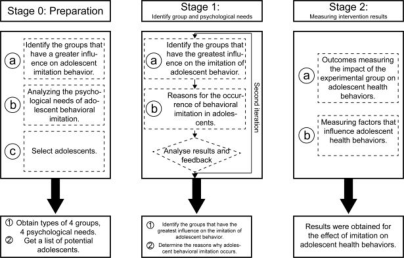
Research Design A preparatory procedure was developed for collecting information on the groups with the greatest influence on adolescent behavioural mimicry, factors influencing adolescent health behaviours and the psychological needs of ado- lescents prior to conducting a study measuring adolescent disease prevention and maintenance of healthy behaviours. Firstly, we analysed the potential groups that could have an impact on adolescent health behaviour and iden- tified 4 categories. Secondly, preliminary interviews were conducted with adolescents in this period, based on the characteristics of their adolescent
86 Li and Jiang
stage and the specificity of social media. This study provided 4 categories of needs for adolescent behavioural mimicry, and 3 categories of factors that influence adolescent health behaviour. As shown in Figure 1.
The first stage questionnaire was created in this study, and the second stage we used PAM questionnaire.
The first stage of the questionnaire consisted of two parts, identifying the groups that have the greatest influence on adolescent behavioural imitation and analysing the needs of adolescent behavioural imitation.
Between the first stage and the second stage, according to the groups determined in the first stage, establish a matching population sample; After determining the groups that have the greatest impact on adolescent behavior, the second stage of the questionnaire is conducted to measure whether such groups can have an impact on their health behavior due to ado- lescent imitation, and what aspects (knowledge, skills, beliefs) of adolescent health behavior have been affected (Lu et al., 2021(1); (2)).
Stage 1 and Stage 2 questionnaires were completed by the same partici- pants at intervals of one week (approximately), which allowed for interim analysis and the development of individual feedback. For practical reasons, the content of the Phase 1 questionnaire was subject to revision, but no further changes were made during the final data collection process.
Participant The survey was conducted in China (Mainland and Hong Kong) between 2 December and 15 January 2022 through an online questionnaire on the Questionnaire Star platform (https://www.wjx.cn/). Participants were recrui- ted through social media platforms such as WeChat, Weibo, Xiaohongshu and QQ. Participants should 1) be aged between 10–19 years old 2) have some social skills and interests. All participants agreed to answer the question based on their consent, honesty, and the instructions in the questionnaires. We distributed 500 questionnaires and eventually received 310 responses. The final sample consisted of 310 participants, 159 (51.3%) males and
Figure 1: Study design, own design according to Jiang et al. (2021) and Fritschy and Spinler (2019).
The Impact of Prevalent Behavioural Mimicry in Adolescents 87
Table 1. Socio-demographic data of participants who completed the initial survey (N1=310).
Table available in the original PDF paper.
Characteristics N1 Age Mean(SD) 15.9 Range 13-19 Sex,n(%) Male 159(51.3) Female 151(48.7) Educational level,n(%) Low 58(18.7) Middle 97(37.3) High 155(50)
151 (48.7%) females, whose average age was 16 ± 3 years. The final sam- ple of 120 participants took part in a further questionnaire. The overall demographic characteristics of our sample are shown in Table 1.
Materials
The short questionnaire designed by the author is composed of two items, which are used to evaluate the groups that have a greater impact on ado- lescents’ imitation behavior and to determine the reasons for adolescents’ behavior imitation. The options of the questionnaire may be iterative in the actual operation process, but the options of the questionnaire that should be used for the final survey will not be changed. The other scale, PAM, is a measurement consisting of 13 items, which is used to evaluate patients’ knowledge, skills and confidence in self-management. The scale is specified by Rasch analysis method and is an interval-level, single-dimensional scale similar to Guttman. The 13-item scale is a simplified version of the original 22-item scale, and its psychometric characteristics are similar to the original 22-item version. Participants were asked to indicate their level of agreement with the statements by selecting answers from four options (strongly disagree to strongly agree), with a theoretical range of 0 to 100 on the PAM, with higher activation scores associated with higher levels of activation (Nelufa et al. 2011; Jinnet et al. 2009; Hibbard et al. 2005).
Procedure Through a self-designed questionnaire, we investigated the groups (such as celebrities, peers, parents) that 310 participants felt had an impact on their health behaviors and the reasons for their behavior imitation. After the que- stionnaire survey, 120 participants were randomly and evenly divided into three groups with 40 people in each group. The participants were surveyed with the PAM to measure the level of knowledge, skills and beliefs involved in the activation of maintaining health and preventing disease in the cur- rent youth group, with the aim of judging whether the behavioral imitation caused by these groups has affected the activation of healthy behaviors of
88 Li and Jiang
adolescents. The three groups of adolescents were then asked to be expo- sed frequently (daily) to the three groups that the designer had identified as having a strong influence on their behaviour (all of whom exhibited posi- tive health behaviours), and then measured by the PAM after 1 month and 3 months, respectively, with the aim of investigating whether the behavioural mimicry due to these groups had an impact on their health behaviour after 1 month and 3 months (Jiang et al., 2020; Jiang et al., 2022).
Data Analysis All statistical data analysis was performed on SPSS v24.0 and MS Excel for Windows. Based on the results of the PAM data, determine the extent to which imitation behaviour activates health behaviours in adolescents and the impact of behavioural imitation on the knowledge, skills and beliefs invo- lved in the activation of adolescent groups towards maintaining health and preventing disease.
RESULTS
Identify the Groups That Have the Greatest Influence on Adolescents Imitation Behaviour The questionnaire began by asking which groups caused the adolescents to imitate their behaviour. Table 2 shows the percentages of the highest scores in the survey. “Web celebrities” received the most votes (33.9%), followed by stars (28.4%), parents (21.6%) and people of a similar age such as classmates and friends (16.1%). This shows that the groups that have the most influence on young people’s imitation behaviour are internet web celebrities, stars and parents.
Table 2. Social and behavioural imitation of participants who completed the initial survey (N1=310).
Table available in the original PDF paper.
N1,n(%) Enjoys using social media and socialising online Yes 202(65.2) No 108(34.8) Prefer to socialise offline Yes 209(67.4) No 101(32.6) Groups that have a major influence on behavioural imitation Stars 88(28.4) Web celebrities 105(33.9) Parents 67(21.6) Classmates, friends and others of similar age 50(16.1) The main reasons why behavioural imitation occurs Access to social status 77(24.8) Gain popularity and prestige 110(35.5) Recognition of others’ behaviour 81(26.1) Reflection on the inadequacy of one’s own behavior 42(13.6)
The Impact of Prevalent Behavioural Mimicry in Adolescents 89
Determine the Reasons of Adolescent Behavior Imitation In the second part of the questionnaire, the statistical results showed that there were three reasons most likely to cause imitative behaviour in ado- lescents, gaining popularity and prestige (110 votes, 35.5%), recognition of others’ behaviour (81 votes, 26.1%) and gaining social status (77 votes, 24.8%), as shown in Table 2. Therefore, imitation of adolescent behaviour is most likely to occur through gaining popularity and prestige, recognition of each other’s behaviour and gaining social status.
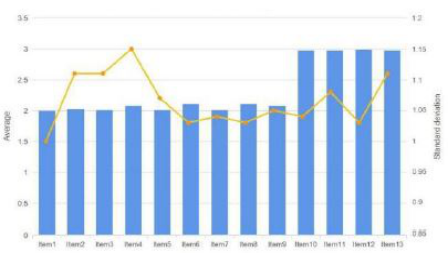
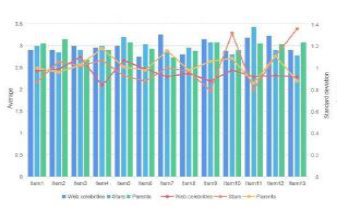
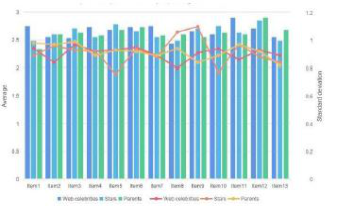
Evaluating Young People’s Health Behavioural Activation Based on the results of the first two parts of the study, we measured the extent to which imitation behaviour activates disease prevention and maintenance of healthy behaviours in adolescents using the PAM scale. The Figs. 2-4 shows that the extent to which adolescents had the beliefs, knowledge and skills to manage their condition, work with their providers, maintain their health and access appropriate and quality care was not high at baseline, with a score of 50.7, while the score for ‘I know how to prevent further problems with my health condition’ was the lowest score of 1.98. After we asked the three groups of participants to have frequent exposure to the three different popu- lations for 1 month, the statistical results showed a significant increase in the activation of the adolescents’ health behaviours, at which point their PAM score was 74.5. And over time, the scores at three months showed that the adolescents’ activation levels (65.7) were significantly lower than those at 1 month, but still higher than their activation levels at baseline. And Web cele- brities had the most significant impact on the activation of adolescent health behaviours. Meanwhile question 11, which previously had the lowest score, improved significantly after we applied the intervention for 1 and 3 months.
Therefore, the results show that adolescents are most likely to lead to beh- avioral imitation and improve the activation of healthy behaviors because of web celebrities, but whether it is web celebrities, stars or parents, their influence on adolescent imitation behavior will decrease with time.
Figure 2: Health behaviour activation measures for participants (N2 = 120) at baseline (T1) using the PAM.
90 Li and Jiang
Figure 3: Health behaviour activation measures for participants (N2 = 120) at 1 month (T2) using the PAM.Figure 4: Health behaviour activation measures for participants (N2 = 120) at 3 month (T3) using the PAM.
Discussion
In this experiment, we tested the effect of imitation behaviors resulting from the influence of different groups on disease prevention and maintenance of healthy behaviors in adolescents.
Through our observations, we found that most adolescents are socially inclined (66.29%), which coincides with Peggy C. Giordano’s (2003) survey that illustrates the increasing importance of relationships outside the family at the adolescent stage and their desire to gain popularity and prestige through imitative behavior (35.28%). With the popularity of electronic social media, adolescents are more likely to be influenced by people with greater influence, whether or not they can actually engage with them in real life, such as internet celebrities and stars, and this was confirmed in our experiments. Moreover, since web celebrities themselves are ordinary people who find their source of fame on social media (Khelkhal & OUAHMICHE, 2023; Jiang et al., 2022), they are closer to online users (adolescents), resulting in adolescents’ beha- vior being more susceptible to their influence. The lower influence of star groups on adolescents compared to web celebrities may be due to the fact that they tend to appear in television and movies, and they are more like a special group independent of the general public, who mostly have distinctive characteristics such as looks, ability and money, and therefore are more likely to create a sense of distance (Amit et al. 2015; Jiang et al., 2023). However, if our sample of adolescents is a group of stargazers (i.e., they all have their own idols), the statistical results may behave differently (Kineta, Kimmy &
The Impact of Prevalent Behavioural Mimicry in Adolescents 91
Caleb, 2011). Meanwhile, based on the occupational characteristics of the Internet celebrities and the popularity of social media, after being exposed to three groups of different nature, the Internet celebrity group showed the grea- test activation impact on adolescents’ disease prevention and maintenance of healthy behaviors after 1 month (74.8) and decreased the least after 3 mon- ths with a decline score of 8.4 over time, while the celebrity group and the parents’ group had an impact on adolescents’ healthy behaviors decreasing scores of 9.1 and 8.8, respectively.
In addition, we can see from Figure 1 that the data dispersion (0.002) and average score at baseline are very low (50.7), which is due to the low knowledge, skills and beliefs of most adolescents to prevent disease and main- tain healthy behavior at baseline. After 1 month, the dispersion of the three data sets became larger and the mean score was significantly higher (74.47). Meanwhile, the web celebrity group has the largest dispersion (0.072) and the highest score, which is due to the fact that most of the adolescents identify with their behaviors to become fond of them, and most of them have disti- nct personal characteristics, such as being fitness practice web celebrities and health knowledge popularization web celebrities, so they have a more com- prehensive and professional knowledge of a certain aspect. In our experiment, we selected groups of web celebrities who all had high health behavior per- formance, thus causing significant effects on adolescents’ knowledge, skills, or beliefs, although they were not evenly affected. On the other hand, the parent group, despite being a major group influencing adolescent behavior at the time of the initial investigation, had the least impact on increasing adolescent health behavior activation in our three experimental groups. We suggest that this may be related to the different levels of knowledge about health in the parental group, as parents tend to have a basic knowledge of disease prevention and maintenance of health behavior knowledge, skills and beliefs (Ingeborg & Jostein, 1994), and therefore do not show an impact on a particular aspect of health behavior specific to adolescents. Meanwhile, alth- ough the influence of parents on adolescents was not as pronounced as in the web celebrity group, the parent group had a more sustained influence on adolescents because of their long-term offline contact with them (Shawn et al. 2016), and thus showed a lower level of data decline than the star group. After 3 months, the dispersion of the data scores decreased in all three groups and their dispersion was not significantly different, which may be due to the fact that the influence of all three groups on adolescent health beha- viors decreased over time, while the greatest change in dispersion in the web celebrity group may be due to the fact that it is difficult for online celebrities with expertise in only one area to provide sustained appeal to adolescents (Alexandra, 2019).
LIMITATIONS This review has some limitations. First, we could not guarantee that par- ticipants were completely free of health behaviors due to imitation before we imposed the intervention, and having already performed activation of adolescent health behaviors due to imitation would lead to some bias in the
92 Li and Jiang
experimental results, which may have caused them to score higher or lower after the intervention was applied. In addition, because the experiment was conducted in a normal life setting, we cannot guarantee that the adolescents were not exposed to other groups that may have influenced their behavior during the course of the intervention we imposed.
CONCLUSION
The results of the study suggest that imitating behaviors can increase the activation of disease prevention and maintenance of healthy behaviors in adolescents. If this imitation behavior based on the characteristics of ado- lescence is correctly utilized, it can promote the formation of good health behaviors and reduce the occurrence of potential diseases. Also, due to the popularity of online social media, we can leverage their power to better pro- vide health behavior interventions and thus better health behavior activation for adolescents.
REFERENCES
Alexandra Ruiz-Gomez (2019), ‘Digital Fame and Fortune in the age of Social Media: A Classification of social media influencers, aDResearch ESIC International Journal of Communication Research, pp. 8–29. Amit Jain, Pushp Lata, Amita Raj Goyal, Swati Khandelwal, and Garima Jain
(2015), ‘Socio-cultural impact of film celebrities on teenagers: an empirical study‘, International Journal of Indian Culture and Business Management, vol. 11: 3, pp. 308–322. Burke, M., & Kraut, R. E (2014), ’Growing closer on Facebook: Changes in tie strength through social network site use’, CHI’14: Proceedings of the SIGCHI Conference on Human Factors in Computing Systems, 4187–4196, DOI: 10.1145/2556288.2557094. C. Longobardi, M. Settanni, M. A. Fabris, D. Marengo (2020), ‘Follow or be followed: Exploring the links between Instagram popularity, social media addiction, cyber victimization, and subjective happiness in Italian adolescents’, Children and Youth Services Review, vol. 113, 104955, DOI: 10.1016/j.childyouth.2020.104955. Cook, J., Bird, G. (2011), ‘Social attitudes differentially modulate imitation in
adolescents and adults’, Exp Brain Res 211, pp. 601–612. DOI: 10.1007/s00221- 011-2584-4. Dahl, R. E., Allen, N. B., Wilbrecht, L., & Suleiman, A. B (2018), ‘Importance of investing in adolescence from a developmental science perspective’, Nature, vol. 554, pp. 441–450. Giordano, P. C. (2003), ‘Relationships in Adolescence’, Annual Review of Sociology,
vol. 29, pp. 257–281. Gupta A, Tyagi M, Sharma D (2013), ‘Use of Social Media Marketing in Healthcare’, Journal of Health Management, vol. 15(2), pp. 293–302, DOI: 10.1177/0972063413489058. Hamilton, J. L., Nesi, J. and Choukas-Bradley, S (2020), ‘Teens and social media during the COVID-19 pandemic: Staying socially connected while physically distant’, PsyArXiv, 29 April, DOI: 10.31234/osf.io/5stx4.
The Impact of Prevalent Behavioural Mimicry in Adolescents 93
Hibbard, J. H., Mahoney, E. R., Stockard, J. and Tusler, M 2005, ‘Development and Testing of a Short Form of the Patient Activation Measure’, Health Services Research, vol. 40, pp. 1918–1930, DOI: 10.1111/j.1475–6773.2005.00438.x. Ingeborg Rossow, Jostein Rise (1994), ‘Concordance of parental and adole-
scent health behaviors’, Social Science & Medicine, vol. 38, pp. 1299–1305, DOI: 10.1016/0277-9536(94)90193-7. Jiang, A., Foing, B. H., Schlacht, I. L., Yao, X., Cheung, V. and Rhodes, P. A. (2022), Colour schemes to reduce stress response in the hygiene area of a space station: a Delphi study. Applied Ergonomics, 98, p. 103573. Jiang, A., Gong, Y., Yao, X., Foing, B., Allen, R., Westland, S., Hemingray, C. and
Zhu, Y. (2023), Short-term virtual reality simulation of the effects of space sta- tion colour and microgravity and lunar gravity on cognitive task performance and emotion. Building and Environment, 227, p. 109789. Jiang, A., Schlacht, I. L., Yao, X., Foing, B., Fang, Z., Westland, S., Hemingray, C. and Yao, W. (2022), Space Habitat Astronautics: Multicolour Lighting Psychology in a 7-Day Simulated Habitat. Space: Science & Technology. Jiang, A., Yao, X., Hemingray, C. and Westland, S. (2022). Young people’s colour pre-
ference and the arousal level of small apartments. Color Research & Application, 47(3), pp. 783–795. Jiang, A., Yao, X., Westland, S., Hemingray, C., Foing, B. and Lin, J. (2022), The Effect of Correlated Colour Temperature on Physiological, Emotional and Subje- ctive Satisfaction in the Hygiene Area of a Space Station. International Journal of Environmental Research and Public Health, 19(15), p. 9090. Jiang, A., Zhu, Y., Yao, X., Foing, B. H., Westland, S. and Hemingray, C. (2023), The
effect of three body positions on colour preference: An exploration of microgravity and lunar gravity simulations. Acta Astronautica, 204, pp. 1–10. Jiang, A. O. (2022). Effects of colour environment on spaceflight cognitive abilities during short-term simulations of three gravity states (Doctoral dissertation, University of Leeds). Jinnet Briggs Fowles, Paul Terry, Min Xi, Judith Hibbard, Christine Taddy Bloom,
Lisa Harvey (2009), ‘Measuring self-management of patients’ and employees’ health: Further validation of the Patient Activation Measure (PAM) based on its relation to employee characteristics’, Patient Education and Counseling, vol. 77, pp. 116–122, DOI: 10.1016/j.pec.2009.02.018. Khelkhal, S., & OUAHMICHE, G. (2023), ‘The Impact of Internet Celebrities on Algerian EFL Learners’, Lifestyle Habits, vol. 13, pp. 443–453, DOI: 10.24093/awej/vol. 13, no. 4.29. Kineta Hung, Kimmy W. Chan, Caleb H. Tse (2011), ‘Assessing Celebrity Endorse-
ment Effects in China’, Journal of Advertising Research, vol. 51 (4), pp. 608–623, DOI: 10.2501/JAR-51-4-608-623. Lu, S., Jiang, A., Schlacht, I., Foing, B., Westland, S., Hemingray, C., Yao, X. and Guo, Y. (2021), June. Effects and challenges of operational lighting illuminance in spa- cecraft on human visual acuity. In Advances in Human Aspects of Transportation: Proceedings of the AHFE 2021 Virtual Conference on Human Aspects of Tran- sportation, July 25-29, 2021, USA (pp. 582–588). Cham: Springer International Publishing. Lu, S., Jiang, A., Schlacht, I., Ono, A., Foing, B., Yao, X., Westland, S. and Guo,
Y. (2021), June. The effect on subjective alertness and fatigue of three colour temperatures in the spacecraft crew cabin. In Advances in Human Aspects of Transportation: Proceedings of the AHFE 2021 Virtual Conference on Human Aspects of Transportation, July 25-29, 2021, USA (pp. 632–639). Cham: Springer International Publishing.
94 Li and Jiang
Madarasová Gecková A, Stewart R, van Dijk J, P, Orosová O, Groothoff J, W, Post D (2005), ‘Influence of Socio-Economic Status, Parents and Peers on Smoking Behaviour of Adolescents’, Eur Addict Res 11, pp. 204–209. DOI: 10.1159/000086403. Nelufa Begum, Maria Donald, Ieva Z. Ozolins, Jo Dower (2011), ‘Hospital admissi-
ons, emergency department utilisation and patient activation for self-management among people with diabetes’, Diabetes Research and Clinical Practice, vol. 93, pp. 260–267, DOI: 10.1016/j.diabres.2011.05.031. Peggy C. Giordano (2003), Relationships in Adolescence, Annual Review of Sociology, vol. 29, no. 1, pp. 257–281. Raviv, A., Bar-Tal, D., Raviv, A.et al. (1996), ‘Adolescent idolization of pop singers:
Causes, expressions, and reliance’, J Youth Adolescence, vol. 25, pp. 631–650. Rideout V, Robb MB (2018), Social media, social life: teens reveal their experiences, San Francisco: Common Sense Media, viewed 23 December 2022. Shawn Bauldry, Michael J. Shanahan, Ross Macmillan, Richard A. Miech, Jason
D. Boardman, Danielle O. Dean, Veronica Cole (2016), ‘Parental and adolescent health behaviors and pathways to adulthood’, Social Science Research, vol. 58, pp. 227–242, DOI: 10.1016/j.ssresearch.2016.02.006.
LISTED IN THE AHFE DIGITAL BOOKSTORE CATALOGUE
Explore the complete digital volume
Healthcare and Medical Devices
Read this individual research paper free through the original publisher, or explore the full digital proceedings book.
ISBN 978-1-958651-55-1
Explore this ISBN in the AHFE Bookstore ↗Listed in the July 2026 bookstore catalogue; search by ISBN to confirm current availability · Digital book purchase optional