Le Xu, Liyuan Bao (2023). Design of an Intelligent Interactive Handgrip Training Device for the Elderly Based on Ergonomic Applications. In: Ergonomics In Design. AHFE Open Access, vol. 77, pp. 815–825. https://doi.org/10.54941/ahfe1003442
Currently, the world's population is aging significantly, and the need for society to promote and maintain healthy aging is expected to rise. Older adults need effective and targeted training products as their physical functions continue to decline with age, creating many complications. In this study, a total of 128 elderly subjects were invited to participate in the experiment using questionnaires, user journey maps, and in-depth interviews to obtain relevant data through in-depth analysis of the transformation and adaptation of the perceptual system, musculoskeletal system, thinking system and psychological characteristics of the elderly to understand their hand training modalities and exercise needs fully. The product uses ergonomic principles and integrated design theory to design an intelligent interactive hand grip training device for the elderly, whose core innovation is the multi-module training form and intelligent interactivity, covering four module functions such as finger pressure training, hand grip training, vibration massage relaxation, and visualization data and emotional interaction. This product's multi-functional overlay design cannot only effectively train the hand of the elderly but also adds humanized emotional interaction design, which significantly improves the user experience and provides design reference for the future development of intelligent interactive hand grip training devices for the elderly.
As we enter the twenty-first century, due to the improvement of medical technology, the disease rate is decreasing, the expected age is increasing, the birth rate is decreasing, and the aging tendency is increasing (Archana, B., & Sarala, J, 2015). By 2025, the world’s elderly population is estimated to reach more than 1.2 billion, of which about 75% will come from developed coun- tries, making aging a vital issue (World Health Organization, 2006). Earlier, the aging process was limited to developed countries, while nowadays, the population in developing countries is aging much faster compared to deve- loped countries. Notably, the fastest growth in the population aged six years and above is in developing countries, which will increase by 140% by 2030 (Bloom, D. E., Boersch-Supan, A., McGee, P., & Seike, A., 2011).
As China’s population enters an era of negative growth, the problem of China’s aging population will become more serious. According to the seventh national census in 2020, the number of people aged 60 and above in China will exceed 264.02 million, accounting for 18.7% of China’s total popu- lation. The total number of people aged 65 years and above has exceeded 190.64 million, accounting for 13.5% of our population (The Seventh Popu- lation Census Committee, 2020). Aging is an inevitable process in life. We need to find solutions to the unique Chinese population aging problem, which can be done by improving geriatric and gerontological education, supporting geriatric institutions and geriatric care, and changing the traditional concept of death by introducing hospice care (Du Peng, Guo Zhi-gang, 2000). A study with a mean age of 73.3 ± 7.41 years showed that the prevalence of physical disability among participants was 17.39%, and the most common problem was climbing stairs. The prevalence of cognitive impairment was 13.04%, and the most common cognitive impairment was memory impairment. The prevalence of depression in the elderly was 32.6%, and the prevalence of depression and cognitive impairment was higher among unmarried, illiterate, and unemployed respondents (Dong, B., & Ding, Q, 2009). Older adults, in general, have varying degrees of physical and psychological impairment.
Alzheimer’s disease has become the most critical risk factor for adolescents’ physical and mental health. It is a group of insidious and growing neurode- generative diseases commonly known as dementia in the elderly (Lu Zaiying & Zhong Nanshan, 2008). Clinically, it is characterized by a full spectrum of dementia symptoms, including progressive memory impairment, reduced consciousness, and personality and behavioral changes (Song Aijun, 2018). There are no disease-correcting therapies available, but treatment to improve symptoms is feasible, and cognitive decline is the earliest clinical symptom to appear in patients with Alzheimer’s disease. Early detection of the disease at an early stage and reasonable interventions can delay the onset of the dise- ase (Maileen Gloriane Ulep, 2018), and restore the plasticity of the central nervous system, thus improving the patient’s consciousness and standard of living, so there is a vast market demand for training products to improve cognition (Xue, Y., & Zhang, Y., 2020).
With the further development of science and technology, some scholars advocate the introduction of intelligent technology into the production of corporate health care, which can transform the process of corporate health production from a “human-to-human” relationship to a “human-to-object” relationship to some extent through the technological power of design (Cao Yang, Chen Jingrui, 2019). Under the concept of human-computer intera- ction design, some researchers have investigated the impact of educational games on the cognitive guidance and improvement of Alzheimer’s patients and expected to promote the recovery of cognitive abilities of middle-aged and elderly dementia patients, thus effectively delaying the development of Alzheimer’s disease, improving the patient’s ability to live and adapt to soci- ety, and thus improving the quality of life (Gao, Y, 2018). In addition, some researchers have studied the brains of older adults through color stimulation, using bright colors to relieve patients’ psychological stress, thus helping older adults with cognitive impairment (Gitlin L N, Corcoran M, Winter L, et al.,
Design of an Intelligent Interactive Handgrip Training Device 817
2001). In addition, older adults with cognitive impairment typically experi- ence high mood swings. Studies have shown that music therapy techniques can help improve the depression and agitation of Alzheimer’s patients and improve their quality of life due to the intersection of the areas of the brain that manage music and the areas that manage emotions. Therefore music therapy and art therapy can improve these negative emotions.
Furthermore, according to Chinese medicine, there are many acupuncture points in the hands, and the movement of the hands can continuously sti- mulate the brain, thus delaying the process of brain decline (Yi Yanlan1, Li Yan2, et al., 2020). There is an excellent connection between the aging of the human brain mechanism and the decline of human body functions. The movement of the limbs can significantly reduce the stiffness of nerve cells in the human brain, especially arm movement. The arm’s flexibility also plays a crucial role in reducing the decline of human brain functions. Finger muscles are squeezed and stimulated more, improving limb and brain functions. The- refore, products that stimulate the finger unit can be beneficial in reducing cognitive decline. Health balls are first-hand healthcare products in China and have excellent therapeutic effects on some human diseases, prevalent hypertension, coronary heart disease, and Alzheimer’s disease (Zhang Liyue, 2012). In addition, by establishing an age-appropriate user experience know- ledge model, engineers have designed a product that meets the needs of elderly hand rehabilitation training (Zhang Junjia, 2020). However, existing produ- cts do not consider innovative designs based on traditional Chinese medicine theory, resulting in the homogenization of research directions. In summary, this study uses ergonomics and integrated design theories based on research in traditional Chinese medicine to innovate and design an intelligent intera- ctive elderly grip training device. Based on careful consideration of human hand size and user experience, it provides multiple module training forms and intelligent interactive experience for the elderly, improves the effective- ness of elderly hand training, and provides a reference for developing future intelligent products for the elderly.
To sum up, this study uses ergonomics and integrated design theory to innovate the design of an intelligent interactive hand grip training device for the elderly, which provides a multi-module training form and intelligent inte- ractive experience for the elderly based on the total consideration of human hand size and user experience, to improve the effectiveness of hand trai- ning for the elderly and provides a reference for the future development of intelligent products for the elderly.
USER RESEARCH Literature Analysis
We searched books, papers, newspapers, and web data by searching China Knowledge Network, Web of Science, and Google Scholar to obtain lite- rature and analyze relevant data. To obtain information and knowledge about the effects of hand function training on healthy living and intellectual maintenance in the elderly population.
818 Xu and Bao
Basic Definition of Hand Function Movement Hand mobility refers to synovial joint mobility, muscle strength, muscle tone, hand coordination, grip, and sensitivity of both hands (Jia J, 2020).
Interrelationship Between Hand-brain Perception and Hand-Brain Movement The hand constantly receives signals from the external environment. The types of perception are divided into superficial sensations from the skin, proprioception from musculoskeletal parts, and complex sensations integra- ted with higher centers. The richness of hand perceptual information is an essential basis for the ability of the fingers to recognize objects and perform movements on their own. The primary sensory and motor cortex are clo- sely linked and inseparable. Although the somatosensory and unique sensory systems, such as visual and auditory, are different information transmission pathways, their sensory neural networks are interconnected. The hand perce- ption area, visual field area, auditory area, and finger movement area of the cerebral cortex all have sensory fiber connections and together guide fin- ger movements. With the participation of the visual field, people can see the hand movements and joints with their eyes, and the visual information for- med is processed, stored, and analyzed by the visual cortex, and then the brain transmits sensory information and generates movements, and regulates the way and position of movements. As a result, visual stimulation streng- thens the peripheral perceptual feedback function of the human hand, and the ability of “hand-brain perception” is gradually deepened. In addition, the auditory cortex of the human brain and the tactile and visual cortices of the primary perceptual cortex are also sensory integrated. Experimental results show direct nerve fiber actions between the auditory and somatosensory cor- tices, especially between the visual field and auditory cortices, unilaterally or bilaterally (Wang Yue, 2020).
Questionnaire In this study, 128 elderly subjects (aged 60–80 years old, including 56 males and 72 females) were invited to participate in the experiment to further understand the current status of the elderly population, exercise, and related products.
Through the questionnaire survey, Compare and analyze data using Spass, as shown in Tables 1 and 2. Of the respondents, 62% use smart devices, 52% have significantly low memory loss, and 48% believe their hand functi- ons have become sluggish. In contrast, the elderly want to play, massage, rehabilitation, exercise, and other multi-modality hand training and tend to the device have functional, intelligent, easy to operate, and other factors.
User Interviews Interviews with experts in geriatric health training and dementia preven- tion to gain a deeper understanding of the professional knowledge of hand function training and the prevention of mental decline in the elderly and to design multifunctional hand grip training devices for the elderly population
Design of an Intelligent Interactive Handgrip Training Device 819
Table 1. The results of the survey on the exercise situation of the elderly and the demand for products.
Table available in the original PDF paper.
Table 2. Considerations for the purchase of hand function training devices for the elderly.
Table available in the original PDF paper.
in a more professional manner. Through in-depth interviews with the elderly population, we understand the advantages and problems of the elderly in the process of daily hand function training, as well as the needs of the elderly for multifunctional hand grip training devices, to understand more deeply the hand function training situation of the elderly population, and to discuss the design and solutions of the training devices. Meanwhile, the designer drew a user portrait of the interviewed elderly, as shown in Table 3, to analyze the behavior and user psychology of elderly users.
Through the above literature analysis, questionnaire survey, and interview, three parts of the user research concluded the following three conclusions:
820 Xu and Bao
Table 3. User profiling.
Table available in the original PDF paper.
1. The elderly group’s memory decline is severe, and hand-brain training is lacking. 2. The elderly hand function training awareness is rising. 3. Intelligent hand-function devices have considerable market demand.
Therefore, the elderly need a hand function training product to improve the neurological problems of memory decline.
DESIGN PROCESS The literature mentioned above analysis and user research concludes that the elderly urgently need effective and targeted hand function training products as they age and their physical functions continue to decline, and their healthy lives are troubled. Through the analysis of similar products on the market, this paper summarizes the following three shortcomings: First, the functional design is single, only simple finger training; second, the shape lacks aesthetics, not quite in line with the current aesthetic trends of the elderly; third, in the use of the product operation, many parameters and ergonomic data do not match. This study uses ergonomic principles and integrated design theory to design an intelligent interactive hand grip training device for the elderly.
Design Positioning With the aggravation of population aging in the world environment, the mar- ket for health products for the elderly is rising rapidly. Society and families attach great importance to the healthy life of the elderly. However, with the current multi-functional hand grip training device for the elderly groups, the product function form is single, low integration, and it is challenging to meet the physiological and psychological needs of the elderly groups’ home envi- ronment. Therefore, this study takes the elderly group as the design object; the functional design is forward-looking, innovative, and interactive, scienti- fic and standardized hand grip training device, which can effectively improve the effect of hand and brain training for the elderly; from the ergonomic point of view, the hand data of the elderly group is fully considered to meet the size
Design of an Intelligent Interactive Handgrip Training Device 821
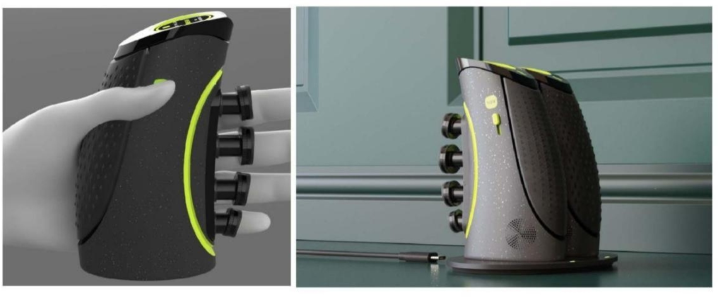
requirements of hand grip devices for the elderly group, and has a safe and comfortable user experience; the visual modeling adopts Modern minimalist style, elegant and full of affinity; the use of frosted plastic and soft silicone with the material, so that the device has a better sense of grip.
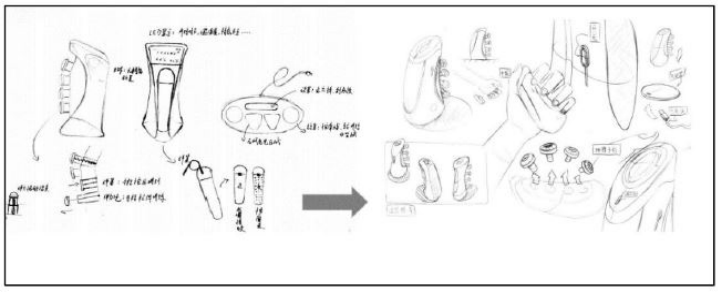
Through the study of hand function training and the knowledge of the mental decline of the elderly, we analyzed the needs of the elderly and desi- gned an intelligent interactive hand grip trainer to meet a variety of hand function training. The design was based on a large amount of information, repeated experimental tests, data analysis, and brainstorming, and various solutions were drawn up, as shown in Figure 1.
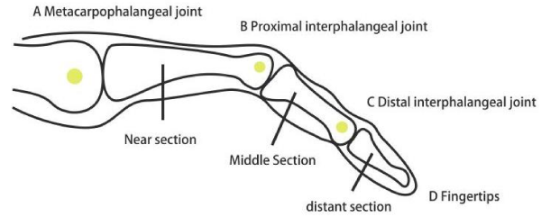
Human Body Data From the physiological reasons affecting the functional exercise of the fin- gers, the physiological sensory characteristics of the elderly mainly include the physiological sensory characteristics of the fingers. In hand rehabili- tation training design, the physiological data of hand size can be used to promote better use of the product, improve the safety and effectiveness of the training, and finally achieve the training effect. Due to the lack of average physiological values of hand size for the elderly, the current phy- siological values for adults are very different from those of the elderly. Some researchers have measured the length of human fingers, which can be used as essential reference data for the finger length of the elderly. One hundred older adults aged between 60 and 80 were selected as the main subjects, half male and half female. Half were southerners and northerners, so more detailed data on the finger lengths of the elderly were obtained (as shown in Tables 4 and 5). For example, the dimensions of the index and middle fingers between the metacarpophalangeal joints were 22.8 mm, 27.17 mm, and 31.52 mm, and the skeletal structure on which the finger lengths of the elderly were calculated (as shown in Figure 2) (Pang Ruying, Zhao Xin, 2017).
Figure 1: Design concept sketches.
822 Xu and Bao
Table 4. Chinese elderly finger measurement index data (unit: mm).
Table available in the original PDF paper.
Measurement Items Thumbs Up Index Finger Middle Finger Ring Finger Thumbs Up
P5/P50/P95 P5/P50/P95 P5/P50/P95 P5/P50/P95 P5/P50/P95 Length Near Section 29.95/35.60/41.26 41.32/7.03/2.75 46.04/3.95/61.86 43.30/0.24/57.19 33.95/41.47/49.02 Middle Section 13.71/18.06/22.41 24.86/30.08/35.30 24.86/30.08/35.30 16.85/21.90/26.95 Far Section 21.52/28.84/36.16 17.67/21.64/25.62 17.67/21.64/25.62 20.70/23.65/26.61 17.61/20.78/23.95 Width between Fingers
Table 5. Dimensional data between the metacarpophalangeal joints of the elderly in China (unit: mm).
Table available in the original PDF paper.
Measurement items P5 P50 P95 Index Finger and Ring Finger 22.8 27.17 31.52 Middle Finger and Ring Finger 17.80 22.55 27.3 Middle Finger and Little Thumb 16.29 21.26 26.74
Figure 2: Skeletal structure of the fingers of the Chinese elderly.
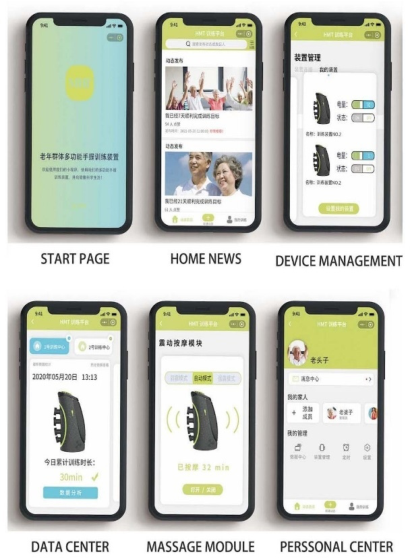
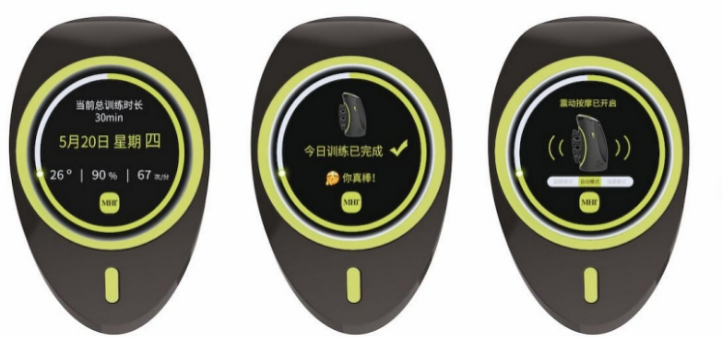
Intelligent Interaction In addition to the design of the above hardware, this study also designed the intelligent module of the WeChat applet with good interactivity, effectively increasing the user’s experience. The program interface has four panels: dyna- mic information release, device management, training detection record, and personal information center. In order to achieve real-time control of the exe- rcise status of the elderly, it is also equipped with intelligent wearable devices for daily training reminders and records, realizing real-time visualization of the training process and providing a solid guarantee for a healthy life for the elderly. As shown in Figure 3, Figure 4, and Figure 5.
VALUATION OF THE DESIGN This study proposes a conceptual model for designing a future intelligent interactive handgrip training device for the elderly, which optimizes the user experience. The analysis of human-machine dimensions provides reference data for the design of similar products in the future, but there are also areas for improvement in the whole design.
First, there needs to be sufficient prototype testing in the design of the intelligent interaction interface. The data from user testing can be used later
Design of an Intelligent Interactive Handgrip Training Device 823
to analyze and further optimize the design of the interaction interface. Second, more potential needs and multi-functional combinations can be explored, such as expanding the function of outward hand stretching training based on inward hand pressing training. Finally, in the process of using the training device, the interactivity between the human and the device and the interaction between the trainers can be further enhanced so that hand function training can become an exciting thing in the healthy life of the elderly.
824 Xu and Bao
Figure 5: Interaction interface design for wearable devices.
CONCLUSION
This study proposes a conceptual model of intelligent interactive handgrip training for the elderly, whose core innovation lies in the multi-module trai- ning form and intelligent interactivity, covering four module functions such as acupressure training, handgrip training, vibration massage relaxation, visua- lization data, and emotional interaction. The multi-functional design not only effectively trains the hand of the elderly but also adds humanized emotional interaction design, significantly improving the user experience and providing a design reference for the future development of intelligent interactive hand grip training devices for the elderly. At the same time, during the study, the researchers found that the elderly are more prone to negative emotions such as an inferiority complex, anxiety, and panic, and their ability to accept new things is poor. Therefore, in designing age-appropriate hand rehabilitation products, it is necessary to fully consider the psychological needs of the elderly to avoid negative emotions generated by the elderly when using the products for independent exercise.
ACKNOWLEDGMENT
The authors would like to acknowledge.
REFERENCES
Archana, B., & Sarala, J. (2015). Lived experiences of health problems of elderly residing in urban areas, Kathmandu: Pilot Study. International Journal of Medical Research & Health Sciences, 4(4), 789–795. Bloom, D. E., Boersch-Supan, A., McGee, P., & Seike, A. (2011). Population
aging: facts, challenges, and responses. Benefits and compensation International, 41(1), 22. Dong, B., & Ding, Q. (2009). Aging in China: a challenge or an opportunity? Journal of the American Medical Directors Association, 10(7), 456–458.
Design of an Intelligent Interactive Handgrip Training Device 825
Gao, Y. (2019). Cognitive guidance and improvement of Alzheimer’s disease patients based on human-computer interaction design. Cognitive Systems Research, 56, 192–202. Giri, M., Zhang, M., & Lü, Y. (2016). Genes associated with Alzheimer’s disease: an
overview and current status. Clinical interventions in aging, 665–681. Gitlin, L. N., Corcoran, M., Winter, L., Boyce, A., & Hauck, W. W. (2001). A randomized, controlled trial of a home environmental intervention: effect on effi- cacy and upset in caregivers and on daily function of persons with dementia. The Gerontologist, 41(1), 4–14. Jia J. (2020). Stroke upper limb rehabilitation: hand-brain perception and hand-brain
movement, Chinese Journal of Rehabilitation Medicine, 35(04): 385–389. Maileen Gloriane Ulep, MSN, FNP-BC, Simrit Kaur Saraon, MSN, FNP-BC, and Samantha McLea, MSN, FNP-C. Alzheimer Disease. The Journal for Nurse Practitioners, Volume 14, Issue 3, March 2018, Pages 129–135. Pang Ruying, Zhao Xin. (2017). Research on the ergonomics-based design of
computer keyboards for the elderly, Packaging Engineering, 38(04): 211–217. doi: 10.19554/j.cnki.1001–3563.2017.04.048. Phillips, D. R. (Ed.). (2002). Ageing in the Asia-Pacific region: Issues, policies and future trends (Vol. 2). Routledge. Schelterns, P., & Feldman, H. (2003). Treatment of Alzheimer’s disease; current
status and new perspectives. The Lancet Neurology, 2(9), 539–547. The Seventh Population Census Committee.2020 Bulletin of the Main Data of the Seventh National Population Census (No. 1) [R]. Beijing: The Seventh Census Committee. Wang Yue. (2020). Design of online shopping WeChat applets based on the
characteristics of middle-aged and elderly groups, Dalian Maritime University. doi: 10.26989/d.cnki.gdlhu.2020.002004. World Health Organization. (2006). The world health report 2006: working together for health. World Health Organization. Xue, Y., & Zhang, Y. (2020, August). Research on the design of intelligent cognitive
training products for the elderly. In Journal of Physics: Conference Series (Vol. 1601, No. 5, p. 052045). IOP Publishing. Yang, M. C., & Jingrui, C. (2019). Designing Possibility Studies for Interventional Comprehensive Treatment of Alzheimer’s Disease. Decoration, 5, 73–75. Yi Yanlan., Li Yan., Wu Jing., Wu Xiaofei., Cheng Jie., Li Yun., Jia Yuanbin., Li
Zhongzheng. (2020). Analysis of Tuina to improve cognitive dysfunction in early dementia, Chinese National Folk Medicine, Vol. 26, No. 23. Zhang Chenyan., (2012). Design of Hand Exercise Products for the Elderly, Beijing University of Technology, MA Thesis. Zhang Junjia., (2020). Research on the design of hand rehabilitation training
products based on user experienc, Zhongyuan Institute of Technology, MA Thesis.
LISTED IN THE AHFE DIGITAL BOOKSTORE CATALOGUE
Explore the complete digital volume
Ergonomics In Design
Read this individual research paper free through the original publisher, or explore the full digital proceedings book.
ISBN 978-1-958651-53-7
Explore this ISBN in the AHFE Bookstore ↗Listed in the July 2026 bookstore catalogue; search by ISBN to confirm current availability · Digital book purchase optional