Elisangela Vilar, Francisco Rebelo, Clara Alvelos, Gabriel Andrade, Paulo Noriega (2023). Metaverse on Education: A case study about users’ acceptance of technology. In: Ergonomics In Design. AHFE Open Access, vol. 77, pp. 686–698. https://doi.org/10.54941/ahfe1003429
This paper aims to present a study about people’s acceptance of using the Metaverse technology. The education context is the focus of intervention justified by the massification of distant learning powered by the new challenges faced by this sector during the lookdowns caused by the COVID-19 pandemic. Also, with technological development, a new paradigm regarding interactions may be able to change the educational dynamics. Thus, this pilot study aims to investigate the acceptance level of potential users of this technology to identify factors that can influence technology use and enrich the debate about new interactive worlds. For this, the Unified Theory Acceptance and Use of Technology (UTAUT) questionary was adapted and made available through an online platform. The total sample had 148 valid questionaries. Overall results show a low level of anxiety, with most people reporting that they didn’t feel scared about using metaverse for online education. They also report interest, mainly related to the capacity to help with some tasks and optimize the educational tools. Researching users’ acceptance before investing in effective development could promote a more reliable result, enhancing cost x benefit issues. Users’ acceptance is even more critical when social and cultural aspects are involved, such as changes in the educational paradigm. Researching how ready our society is to accept a new concept - such as having classes or doing educational expeditions within the metaverse through VR - and its impacts provide a glance at how the future can be designed sustainably, helping to shape the way technology takes part of our daily life.
Technology has developed rapidly, and many ideas that were once hypothe- tical have become a fact. The Metaverse is one of them. With the proposal of providing a new way of using and enjoying reality, metaverses intend to be new digital worlds. With advantages related to creative freedom, social interactions, and information access, metaverses allow users to be, act and interact with almost everything they want to in the digital world. A new rea- lity is provided in which the knowing physical laws can be broken, and new rules still need to be researched.
Metaverse on Education: A Case Study About Users’ Acceptance 687
However, together with all the new possibilities that this completely new interactive digital reality can bring, many issues related to ethics (and not only) also arise. What if we start to fail to distinguish what is real and what is not? What if we prioritize the false realities? What if we get emotionally carried away by something that is just technological?
To go further in investing in this new technological world is essen- tial to understand users’ perceptions of this new interaction environment. Thus, this paper aims to present a study about people’s acceptance of using metaverse technology. The education context, mainly at graduation and post- graduation levels, is the focus of intervention justified by the capability of this new paradigm to change an educational sector that has evolved little over the years, even with all the technological development that has taken place. Additionally, with the massification of distant learning powered by the new challenges faced by this sector during the lockdowns caused by the COVID- 19 pandemic, metaverses can represent an opportunity for remote education to be established as an alternative for presential classes.
In this context, this paper aims to present a study focused on verifying the acceptance level of metaverses as interaction environments for the educatio- nal sector. For this, the Unified Theory Acceptance and Use of Technology (UTAUT) questionary (Venkatesh et al., 2003) will be used.
THEORETICAL BACKGROUND Metaverses
Despite the metaverses only becoming popular after Mark Zuckerberg’s announcement for Facebook to change to Meta in 2021, the term metaverse was coined by Neal Stephenson in his 1992 book, Snow Crash (Stephenson, 1992). In this science-fiction book, the author already predicts the use of a virtual reality system with which people put themselves in their avatar’s shoes to interact with a digital online world. When the book was launched, this idea was just another fictional illusion created by a creative mind. However, with the technological evolution of the last few years, we are getting closer and clo- ser to making this new interactive digital world a reality. According to Davis and colleagues (2009), metaverses are virtual three-dimensional and immer- sive worlds that use the metaphor of the real world but without being limited by its physics laws. In the metaverse, users can have their digital representa- tion (avatar) and interact with each other and with software agents, intending to be a synthetic world with a realistic society in which concepts such as disa- bilities, gender and race would be weakened, benefiting the whole community (Duan et al., 2021). So, metaverses are much more than a model of the real world; they are new interaction environments that allow a wide range of acti- vities and have the potential for an engaging, collaborative setup, such as for education and work, as they can enable a rich collaboration among all.
Interactions in the metaverse are mediated by technological devices, such as Virtual Reality (VR) and Augmented Reality (AR). VR can be defined as a way of teleporting a person to a digital and interactive reality in which the person can feel like being in another place without leaving the physical space. It is supported by technological devices that can increase the distance
between the physical and digital worlds, increasing immersion. With this type of system, a person can wear, for example, a head-mounted display (HMD) and can fully visualize a whole new synthetic 3D world, also being able to hear and locate sounds. Using hand controllers and motion detection systems, a person can interact with this world in ways depending on imagination.
According to Vilar and colleagues (2022), VR was already being used in many fields for research purposes, often simulating alternative futures, allo- wing researchers to study major impacts on environments and potential risks, and predict potential users’ behaviors. But, with the development of afforda- ble VR HMDs such as the HTC Vive, the Oculus Quest series, and Google Cardboard, immersive VR is being pushed to another level, putting it in people’s homes towards becoming as popular as videogame consoles. Addi- tionally, sensory research efforts are being made to develop new interaction devices to achieve a complete multisensorial experience, mainly concentra- ted in the direction of smell digitalization and simulation (Azar et al., 2022; Cheok and Karunanayaka, 2018).
Critical aspects of the metaverse are multisensory interactions with vir- tual environments, digital elements and people’s avatars. So, technologies that support these interactions, like Virtual Reality (VR) and Augmented Reality (AR), are crucial. In this sense, it is expected that the metaverse will also develop and become increasingly popular with the acceleration of the development of VR/AR technologies, making them more affordable and their greater penetration into people’s daily lives. Nowadays, VR/AR systems allow us to interact with extinct dinosaurs, visit inaccessible places, and fly like a bird, among many other experiences, from fun and work to educational purposes, in which creativity is the limit. This new paradigm that is expected to arise with the metaverses can change many aspects of several fields, and education can be one of them that can benefit from the digital interactive experience.
Metaverse in Educational Context HSI Azar and Mystakidis (Azar et al., 2022) argue that the fourth wave of computing innovation relies on immersive technologies such as Virtual Rea- lity and Augmented Reality that will support the next ubiquitous paradigm, the metaverse, with the potential to change many areas such as online edu- cation, business, entertainment, and remote work. The educational sector has had little change, even with all the technological development in the last few years. According to Friesen (2017), core methods remain almost the same, always considering expository classes based mostly on textbooks and students acting more than listeners than active agents.
Azaret al. 2022 argue that there is a race among big companies to lead the process of metaverse definitions about ethics, privacy rights, and governance that will influence whether metaverse will be inclusive to students and school pupils. For the authors, these issues are very important for the educational sector as they can determine if the metaverse succeeds as a new interaction environment for e-learning.
Metaverse on Education: A Case Study About Users’ Acceptance 689
E-learning has evolved and becomes increasingly popular, mainly with the increase of the Massive Open Online Courses, which are short and free-of-charge online courses (generally during a few weeks) accessible for all and attended by hundreds or thousands of people (Anderson et al., 2020). Relying on digital media, in traditional e-learning, students interact with the content in real-time or watch pre-recorded videos/images. All interaction is made considering a 2D limited window - the computer, cellphone, or tablet screen - with the support of specific software such as Zoom, Microsoft Teams, Google Meets, Blackboard and Moodle. However, many limitations of tradi- tional e-learning were identified and are mostly related to fatigue, emotional isolation, low self-perception, and difficulty expressing feelings (for more details, see (Azar et al., 2022) review about this topic).
With the development of VR, four primary purposes for education were considered to benefit most from this new paradigm: i) in training and pra- cticing when the problem of failure has serious consequences, such as when learning to pilot an airplane, ii) when learning how to manage problematic situations, such as a demanding client or a patient with behavioral issues, iii) when experiencing impossible situations such as virtually travelling to the past to see historical places and events, iv) to virtually visit places that can be very difficult or expensive to go in a real situation, such as an underwater expedition (Bailenson, 2019).
With a new generation of social environments, mostly based on VR, such as the AltSpaceVR, Engage VR, Decetraland, Sansar and Meta, in which the users assume their avatar (that are embodied users’ digital representation) and can interact collectively, some of the identified issues of traditional e- learning can be decreased or even be solved. Having an avatar is a feature that allows users to construct their own online identity, providing them with a superior sense of self (Messinger et al., 2008). Also, in these new social environments – metaverses - avatars can share each other’s company, experi- encing the power of co-presence, the feeling of being together with others in a virtual space. It is significant for education, as sharing experiences during classes and social meetings can promote virtual communities of practice and inquiry (Mystakidis, 2021). In some sense, metaverses can change traditio- nal teaching practices, changing how students interact with the content. For example, instead of imagining how Neanderthals lived, students can assume Neanderthals as their avatars, experiencing this period of our history and interacting with this world to learn more about it. As all the content can be created, gamification strategies can also be included in the learning process to increase engagement and students’ motivation.
The Unified Theory Acceptance and Use of Technology (UTAUT) The UTAUT model is a technology acceptance model formulated by Ven- katesh and colleagues (2003). It aims to explain user intentions to use an information system and usage behavior right after. This theory has four fundamental constructs: 1) performance expectancy, 2) effort expectancy, 3) social influence, and 4) facilitating conditions. The first three are deter- minants of the intention to use and behavior, and the fourth is a direct
determinant of user behavior. Additionally, Anxiety, Self-efficacy and Atti- tude toward technology are constructs considered by the authors as indirect determinants. To moderate the impact of the constructs on the intention to use and behavior, gender, age, experience, and voluntariness of use are suggested.
METHODOLOGY
This study was developed to investigate users’ acceptance of the metaverse as an interactive environment for an educational context, mainly at gradu- ation and post-graduation levels. For this, the UTAUT questionnaire was adapted from its original version (Venkatesh et al., 2003), mainly conside- ring investigating users’ expectations and concerns and the necessary items for acceptance. With this, we expected to provide guidelines for designing and implementing solutions for university educational contexts based on metaverses.
The Acceptance of Metaverse for Education Online Questionnaire The UTAUT questionnaire was adapted and used to collect participants’ responses considering the study’s main objective. The questions were ela- borated considering ten constructs from UTAUT: Anxiety, Attitude towards Technology, Facilitating conditions, Perceived Adaptability, Perceived Plea- sure, Perceived Ease of Use, Perceived Sociability, Perceived Usefulness, Social Influence, and Social Presence. With this, we realized the technology use and users’ behavioral intention. A Likert-type with seven points scale (1-totally disagree to 7-totally agree) was used to collect participants’ responses. Based on the UTAUT questionnaire, 14 questions were translated into Portuguese and adapted to the tested technology and context. Even though the questions were adapted considering the already mentioned constructs, they were mixed when organized in the questionnaire. The questionnaire was made using Google Forms and distributed online through main social networks (i.e., WhatsApp and Facebook groups) for 30 days. The questionnaire was written in Portuguese. The online questionnaire was divided into four main parts. The first one comprises the presentation, in which participants are aware of the questionnaire’s main objective and scope. The average time to com- plete the questionnaire was also reported in this section (about 7 minutes). After this, a video showing the technology and context of use was presen- ted. The third part had 14 Likert-type questions adapted from the UTAUT questionnaire (questions can be seen in Table 1). And in the last part were demographic questions related to gender, age, nationality, and occupation.
Context Video Highlighting that studying acceptance is essential to predict the use of tech- nology before its development, it’s imperative to have insight into users’ perceptions and intentions regarding a product or service they have never used and that even exists yet. Thus, this anticipation of use can be given to the users through a textual narrative or images in which they can realize the
Metaverse on Education: A Case Study About Users’ Acceptance 691
Table 1. List of questions adapted from the UTAUT (Venkatesh et al., 2003) considering its constructs and used for the online questionnaire.
Table available in the original PDF paper.
1 Anxiety (AX) – Evoking emotional reactions when someone starts using technology. a. I think this technology is scary.
2 Attitude towards Technology (ATT) – Positive and negative attitudes about the application of technology. b. This technology would make my life more interesting. c. Using this technology would make me feel good.
3 Facilitating conditions (FC) – Involvement factors that enable the use of technology. d. I know enough about this technology to make good use of it.
4 Perceived Adaptability (PA) – The possibility perceived by the users about the technology being adapted to their needs. e. I think this technology will help me when I feel it is necessary, namely, to consolidate better the subjects taught and take better advantage of the classes.
5 Perceived Pleasure (PP) – Feeling of pleasure and joy associated with using technology. f. I would like to do things such as homework or lectures with this technology. g. I think this technology is fascinating.
6 Perceived Ease of Use (PEU) – The degree to which using this technology is believed to be effortless h. I think it is easy to use. i. I think I can use this technology without having to consult manuals.
7 Perceived Sociability (PS) – The possibility perceived by the user that the technology allows social behavior. j. I think that it will be nice to socialize within the metaverse.
8 Perceived Usefulness (PU) – The degree to which users believe the technology can be helpful to them. k. I think that this technology can help me in many tasks.
9 Social Influence (SI) – The perception of people who are important to the user and who think he/she should or should not use the technology. l. I think it would make a good impression if I used this technology m. I think my colleagues would like me to use this technology.
10 Social Presence (SP) – The experience of sensing a social entity when interacting with the system. n. When interacting with this technology, I feel like I’m interacting with real people.
main functions and positive and negative aspects of the proposed product/se- rvice. For this study, the adopted strategy was presenting a video about using metaverse for educational purposes.
With this in mind, a video was developed to make people aware of the studied technology and familiarize them with its use in educational contexts.
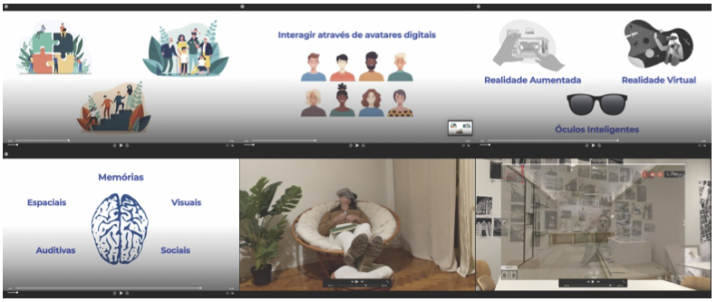
Figure 1: Examples of some screenshots from the video.
The video was made considering a narrative guide previous developed by the research team. The narrative starts by explaining what metaverse is in general and then focusing on its use in an educational context. It also descri- bes the different ways of using the metaverse. Figure 1 shows some screens presented to participants during the developed video. The entire video can be seen through the following link: https://www.youtube.com/watch?v=XYIJRzPASpg.
Participants For this study, 148 online questionnaires were answered and considered valid. Most of the participants were from Portugal (n = 119), followed by Brazil (n = 12), Spain (n = 1), the United Kingdom (n = 1), and Switzerland (n = 1). Twelve participants didn’t provide their nationality (this was not a mandatory question).
Most of the participants are female (69.9%). The participants in age groups were: 18 to 49 years old = 50.7%, and more than 50 years old = 49.3%.
RESULTS AND DISCUSSION
A descriptive statistic was considered to analyze the data from the 148 valid questionnaires. Table 2 shows the percentages of scores for each construct (N = 148). The results are averaged for the items of each construct. Percenta- ges are presented for average values minor or equal to 3, value 4, and greater or equal to 5; from the scale, 1 completely disagree, and 7 agree entirely. The scale for the construct Anxiety was inverted, meaning that small values represent high anxiety. In Table 2, the first column represents discordance, response 4 is the neutral response that does not agree or disagree with the sentence, and responses greater than 5 are considered concordance. Analy- zing Table 2 based on the study’s main objective, which is to explore the user acceptance of metaverse for university educational context, namely conside- ring the main variables that affect the acceptability, we can see that values are very equilibrated with a slight tendency to the right, that is, answers greater
Metaverse on Education: A Case Study About Users’ Acceptance 693
Table 2. Percentages of scores for each construct (n= 148), averaged for the items of each group, scale average, and standard deviation.
9. Social Influence (SI) 28.38 29.39 42.23 4.22 1.76 10. Social Presence (SP) 43.92 19.59 36.49 3.68 1.87 Average % 32.43 17.23 42.90 4.19 Std. Deviation 16.01 4.63 16.57
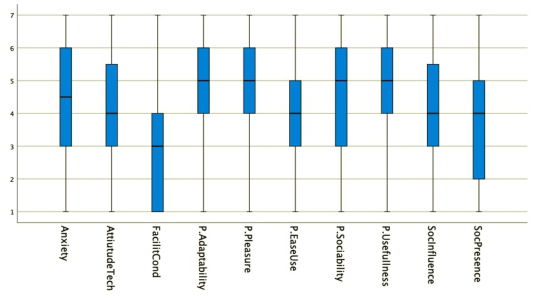
than 5 (42.9%). The more positive influences were on Perceived Adaptabi- lity, Perceived Usefulness, and Perceived Pleasure Anxiety, with percentages of agreement of 73.65%, 66.22%, and 60.81%, respectively. Next, 50.05% and 50% are Perceived Sociability and Anxiety (we highlight that anxiety has an inverted value, representing that half of the participants disagreed with the statement “I think this technology is scary”). However, even with some posi- tive remarks, we highlight that the scale average for all constructs stayed on or very near to neutral (see Figure 2). As a new technology, anxiety is one of the first concerns when studying acceptance. According to Dönmez-Turan and Kir (2019), anxiety can affect the adaptation and use of new technologies as it is related to a feeling of fear or concern about the future. In this study, participants reported low anxiety, as the main results show that most people were neutral or didn’t think that metaverse for education is scary (64.86%).
Considering the construct Attitude Towards Technology, the main results show a positive and neutral attitude to participants’ responses (65.54%). Participants generally thought this technology was exciting and that using it would make them feel good. Most of them (74.7%) also considered that metaverse used in a university educational context could be a good tool to help students consolidate the subjects, making them take more advantage of classes, consequently optimizing the binomial teaching/learning. Results from Perceived Pleasure (60.81%) show they would like to do education-related activities using this technology, also considering that it’s fascinating to use metaverse for a university educational context. However, from the results, even with companies’ effort in investing in the development of technologies that supports metaverse, making them more affordable to everyone, most
Figure 2: The box plot for the scale average considering each construct.
people think they still haven’t the facilitating conditions (e.g., VR Headsets) to use the metaverse (65.54%). They also consider that there is still a lack of knowledge about metaverse that prevents people from using it. According to the main results, people aren’t sure that using this technology is easy. In fact, they think they would need to rely on manuals to have the skills to operate the technology, as most of them disagree that they would be able to use it without a manual (59.6%). Although half of the participants agreeing that socializing within the metaverse would be nice (50.05%), there are still half neutral and disagree, leading us to infer that participants are skeptical about this topic. This result is in line with the one related to Social Presence. For this variable, most of them were neutral or disagreed that they would interact with avatars as if they were real people (63.51%).
Even with the participants’ concerns noticed by researchers when analy- zing previous answers, it is also true that participants perceive the usefulness of the technology, agreeing that it can help them with their tasks (66.22%).
Cronbach’s alpha was applied to measure the reliability or internal consi- stency of the questionnaire. For the used questionnaire, Cronbach’s alpha is 0.844. A value higher than 0.8 indicates excellent internal consistency. This sample’s high level of consistency shows that the questionnaire is reliable and accurately measures the variable of interest.
A factorial analysis was performed to identify the minimum number of factors representing the relationships between the various questionnaire items. The Keyser-Meyer-Olkin test had a value of 0.882, revealing that the analysis of the main components is meritorious. Table 3 shows the factor matrix after varimax rotation. Factor extraction determined two factors. The first factor is responsible for 53.54% of the variance and consists of Anxi- ety, Attitude towards technology, Perceived adaptability, Perceived Pleasure, Perceived sociability, and Perceived usefulness. These variables are related to usability issues and the user’s perception of how this new technology works and can be used. The nature of the variables in this factor will be called Perceived Functionality.
The second factor, responsible for 12.18% of the variance, comprises Facilitating Conditions, Perceived Ease of Use, Social Influence and Social
Metaverse on Education: A Case Study About Users’ Acceptance 695
Presence. These variables are more related to normative aspects of the use and social behaviors; thus, this factor is called Normative and Facilitating Conditions. These results indicate that prior attention should be given to the perceived functionality factor. For the use of metaverse for education, the constructs that this factor represents most influence user acceptance.
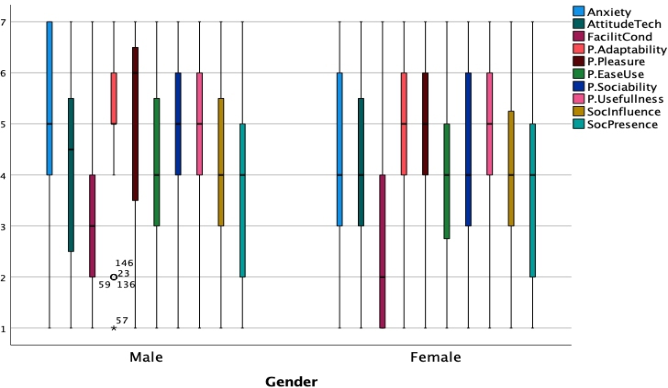
For the demographic variables, there were no differences in gender for any of the constructs. From the Mann-Whitney Test, only for the construct Anxiety, there is a marginal difference (U = 1855.5; z=−1.95; p = 0.051) – remembering that the scale was inverted for this variable, so high values mean less anxiety. Figure 3 shows the boxplot for each variable(construct) by gender. Data considering age groups (Table 4) were analyzed according to Kruskal-Wallis Test. Statistically significant differences were found among age groups for the scales of Anxiety (H(3)=11.21, p = 0.011), Attitude tow- ards Technology (H(3)=11.18; p = 0.011), Perceived Sociability (H(3)=9.64; p = 0.022), and Social Presence (H(3)=11.15, p = 0.011). Concerning Post
Figure 3: The box plot for the scale average considering each construct across gender.Table 4. Participants’ distribution according to age group.
Table available in the original PDF paper.
Age Group 1 (18-29) 2 (30-49) 3 (50-65) 4 (+65) Total Frequency 40 36 62 10 146 Percentage 27 24.3 41.9 6.8 100
Table 5. Results for Post-hoc tests (Bonferroni correction for multiple tests) for scale variables by age groups.
Table available in the original PDF paper.
Variable Median Average StdDev Anxiety: H = 2.74 p = 0.037 Effect Size Moderate (ε2=0.076) Grupo 4 2.5 3 2.21 Grupo 3 5 4.92 1.8 AttitudeTech H=-2.95, P = 0.019 Effect Size Moderate (ε2=0.076) Grupo 1 4 3.65 1.57 Grupo 4 5.5 4.48 2.21 P.Sociability H=-2.77, P = 0.034 Effect Size Moderate (ε2=0.066) Grupo 1 4 3.98 2.01 Grupo 4 6 5.8 1.40 SocPresence H=-2.91,P = 0.022 Effect Size Moderate (ε2=0.076) Grupo2 2.5 3 1.96 Grupo3 4 3.68 1.78
Hoc-tests, significant differences, using a pairwise comparison between age groups, are reported in Table 5. We report only significant differences in values adjusted by the Bonferroni correction for multiple tests.
CONCLUSION
The study’s main objective was to investigate the users’ acceptance of meta- verse in a university educational context. From the beginning, it was expected that people would present high anxiety levels but, at the same time, feel impelled to use this new technology. The UTAUT was used as the basis for the questionnaire development, translated to Portuguese and adapted considering the study’s objective and context of data collection.
Attained results allowed us to verify a low level of anxiety in using the metaverse for university educational context and that most inquired people didn’t report fear in using it. However, some points presented as more attra- ctive to the participants, namely the utility they perceived the technology could have in helping them with their tasks. They also reported that they perceived the potential in optimizing the learning/teaching process. Thus, participants generally had a positive attitude regarding considering using metaverse for a university educational context.
According to the results, most of the inquired people don’t have access to any type of VR headset or other equipment that allows them to experience
Metaverse on Education: A Case Study About Users’ Acceptance 697
the metaverse. It could be explained by the fact that, at least in Portugal, from which most of the inquiries are from, instead of being a mainstream technology, VR is still used only by a still limited number of people, mainly by communities, such as gamers and researchers. However, people reported they perceive the metaverse as useful, adaptable to their needs and pleasurable.
Results from this study allow us to realize the effort needed in develo- ping this technology to be used in the university educational context, mainly considering key aspects such as those related to social presence, perceived sociability, and ease of use. It is important to highlight the use of UTAUT as theoretical support, providing a reliable tool in acquiring users’ acceptance of new technologies. And its impact on helping researchers and professionals focus their interventions on aspects that can offer real value to the community. That is, researching users’ acceptance before investing in effective develo- pment could promote a more reliable result, enhancing cost x benefit issues. Users’ acceptance is even more important when social and cultural aspects are involved, such as changes in the educational paradigm. Researching how ready our society is to accept a new concept - such as having classes or doing educational expeditions within the metaverse through VR - and its impacts provide a glance at how the future can be designed sustainably, helping to shape the way technology takes part of our daily life.
ACKNOWLEDGMENT
National funds finance this work through FCT - Fundação para a Ciência e a Tecnologia, I.P., under the Strategic Project with the references UIDB/04008/2020 and UIDP/04008/2020 and ITI -LARSyS-FCT Plurian- nual funding’s 2020- 2023 (UIDB/50009/2020).
REFERENCES
Anderson, T., Rivera-Vargas, P., Anderson, T., & Rivera-Vargas, P. (2020). A Critical look at Educational Technology from a Distance Education Perspective. Digital Education Review, 37, 208–229. https://doi.org/10.1344/DER.2020.37.208-229 Azar, T., Barretta, R., & Mystakidis, S. (2022). Metaverse. Encyclopedia 2022, Vol. 2,
pp. 486–497, 2(1), 486–497. https://doi.org/10.3390/ENCYCLOPEDIA2010031 Bailenson, J. (2019). Experience on demand: what virtual reality is, how it works, and what it can do. W. W. Norton. Cheok, A. D., & Karunanayaka, K. (2018). Virtual Taste and Smell Technologies
for Multisensory Internet and Virtual Reality. https://doi.org/10.1007/978-3-319- 73864-2 Dönmez-Turan, A., & Kir, M. (2019). User anxiety as an external variable of technology acceptance model: A meta-analytic study. Procedia Computer Science, 158, 715–724. https://doi.org/10.1016/J. PROCS.2019.09.107 Davis, A., Murphy, J., Owens, D., Khazanchi, D., & Zigurs, I. (2009). Avatars, Peo-
ple, and Virtual Worlds: Foundations for Research in Metaverses. Journal of the Association for Information Systems, 10(2). https://digitalcommons.unomaha.edu /isqafacpub/25 Duan, H., Li, J., Fan, S., Lin, Z., Wu, X., & Cai, W. (2021). Metaverse for Social Good: A University Campus Prototype. MM 2021 - Proceedings of the
29th ACM International Conference on Multimedia, 153–161. https://doi.org/ 10.1145/3474085.3479238 Friesen, N. (2017). The Textbook and the Lecture: Education in the age of new media (1st ed.). Hopkins Press. https://www.press.jhu.edu/books/title/11397/textbook-a nd-lecture Messinger, P. R., Ge, X., Stroulia, E., Lyons, K., Smirnov, K., & Bone, M. (2008).
On the Relationship between My Avatar and Myself. Journal For Virtual Worlds Research, 1(2). https://doi.org/10.4101/JVWR. V1I2.352 Mystakidis, S. (2021). Motivation Enhancement Methods for Community Building in Extended Reality. Augmented and Mixed Reality for Communities, 265–282. https://doi.org/10.1201/9781003052838-17 Stephenson, N. (1992). Snow Crash. Penguin Books. https://www.wook.pt/livro/sn
ow-crash-neal-stephenson/10959637 Venkatesh, V., Morris, M. G., Davis, G. B., & Davis, F. D. (2003). User acceptance of information technology: Toward a unified view. MIS Quarterly: Management Information Systems, 27(3), 425–478. https://doi.org/10.2307/30036540 Vilar, E., Rebelo, F., Noriega, P., Filgueiras, E., & Duarte, E. (2022). Virtual Reality in Architecture and Design: Twenty years of experience. In E. Vilar, E. Filgueiras, & F. Rebelo (Eds.), Virtual and augmen- ted reality for architecture and design (1st ed., Vol. 1, p. 228). CRC Press. https://www.routledge.com/Virtual-and-Augmented-Reality-for-Architec ture-and-Design/Vilar-Filgueiras-Rebelo/p/book/9780367508104
LISTED IN THE AHFE DIGITAL BOOKSTORE CATALOGUE
Explore the complete digital volume
Ergonomics In Design
Read this individual research paper free through the original publisher, or explore the full digital proceedings book.
ISBN 978-1-958651-53-7
Explore this ISBN in the AHFE Bookstore ↗Listed in the July 2026 bookstore catalogue; search by ISBN to confirm current availability · Digital book purchase optional