Tomofumi Sakata, Keiichi Watanuki, Kozawa Motohiro (2023). Influence of History of Art Learning on Understanding of Beauty and Ugliness in Painting. In: Affective and Pleasurable Design. AHFE Open Access, vol. 71, pp. 19–27. https://doi.org/10.54941/ahfe1003240
1 Graduate School of Science and Engineering, Saitama University 255 Shimo-okubo, Sakura-ku, Saitama-shi, Saitama 338-8570, Japan ↗
2 Graduate School of Science and Engineering, Saitama University 255 Shimo-okubo Sakura-ku, Saitama-shi, Saitama 338-8570, Japan; Advanced Institute of Innovative Technology, Saitama University 255 Shimo-okubo Sakura-ku, Saitama-shi, Saitama 338–8570 Japan ↗
Japanese elementary school teachers can teach art classes to elementary school students without receiving any art education. For this reason, there are no common evaluation criteria for art classes, and teachers create their own evaluation criteria and assign grades. The teachers' own evaluation criteria often include their own interests, suggesting that the students may not be receiving a fair evaluation. It is possible that elementary school students dislike art classes due to unfair evaluation. A dislike of art from an early age can lead to a lack of imagination and creativity. In addition, we are becoming a mature society with a rapidly declining birthrate and an aging population, and it is expected that each individual, as the bearer of a sustainable society, will be nurtured to create new values that will lead to the growth of individuals and society with qualitative enrichment driven by the diversity of the individual. One of the changes in a mature society is the rapid evolution of artificial intelligence. It is claimed that artificial intelligence is starting to think and comprehend knowledge conceptually on its own, and it is predicted that this would significantly alter the nature of employment and the significance of knowledge acquired in schools. At the same time, this leads to a reaffirmation of the fact that no matter how much artificial intelligence evolves and becomes capable of thinking, it is the greatest strength of human beings to provide the purpose of thinking and to judge the goodness, correctness, and beauty of the purpose. School education is required to enable children to actively face various changes, solve problems in collaboration with others, discern various types of information, realize a conceptual understanding of knowledge, reconstruct information and connect it to new values, and reconstruct purposes in complex changing situations. It is also required to be able to reconstruct objectives in the face of complex changes in circumstances. Thus, art education is considered crucial, and it is important to understand what aspects of art are perceived as beautiful or ugly in the process of learning art. Therefore, the purpose of this study was to understand the differences in the sense of beauty and ugliness in paintings between students majoring in art and those who are the same age as the students and have no prior art study experience.We conducted an experiment using paintings from each period of Western art history as the paintings for judging the beauty and ugliness of a painting. By evaluating the beauty and ugliness of art paintings from each period, we selected a variety of paintings from simple to complicated for the purpose of judging the beauty and ugliness of the paintings. We also aimed to quantify the beauty/ugliness points that do not change depending on the age or the complexity of the painting.Fractal analysis was used for the analysis. A fractal is a similarity between the whole and a part of a figure. Fractals are often found in nature and in living organisms, and fractal structures can also be found in works of art. In particular, fractals are seen in the paintings of Abstract Expressionist painters, whether by accident or necessity. It has been reported that fractal dimension and art are closely related. In this study, we consider fractals in color tones as well as in structure.As a result, art majors were able to clearly point out the beauty and ugliness of complicated paintings. Students who did not study fine arts saw the whole complicated painting as beautiful, and were unable to point out clear beauty or ugliness points. For simple paintings with only one person, the art majors were able to point out the beauty and ugliness of the painting in more detail. Students who did not study art pointed out the beauty and ugliness of a simple painting in a large and general way. Fractal analysis showed that the beauty/ugliness points pointed out by the experts maintained a medium fractal dimension. The fractal dimension of the beauty/ugliness points pointed out by students who had not studied art maintained a high fractal dimension, indicating that they perceived beauty/ugliness in more complex areas.The above results indicate that as students learn more about art, they are able to understand the beauty and ugliness of a picture more intricately and perceive beauty and ugliness in areas with a medium fractal dimension.
Japanese elementary school teachers can teach their students the arts even without prior education in the field. Therefore, art class teachers do not fol- low a standard evaluation method. They create their own evaluation criteria and assign grades. These criteria rely on the individual teacher’s inherent hob- bies, suggesting that the children may not receive a proper and fair evaluation. This could foster in children a dislike towards art classes. A dislike of the arts
from an early age can lead to a lack of imagination and originality. Moreover, the global birth rate has been rapidly declining in addition to an aging popu- lation. Thus, each individual is expected to contribute to a sustainable society and create new values to develop a mature society with qualitative affluence. The drastic evolution of artificial intelligence (AI) is a prevalent change in a mature society. AI is beginning to analyze and understand knowledge by itself and is predicted to change the workforce scenario and the meaning of know- ledge acquired in schools substantially. However, regardless of the evolution of AI, human beings’ greatest strength is their ability to think and judge the goodness, correctness, and beauty of the various purposes of life. Receiving a school education requires children to actively face various changes and work as teams to solve problems. In addition, school education aims to inculcate in students the ability to find the purpose of life through complex situati- onal changes, such as identifying various types of information, realizing a conceptual understanding of knowledge, and reconstructing the information to connect it to a new value (Ministry of Education, 2018). For these reasons, art education is considered paramount, and teachers should understand how art education specialists analyze pictures and arrive at specific evaluations. Limited studies have been conducted on art education; therefore, sufficient information pertaining to the requirements, objectives, methods, and signifi- cance of art education cannot be found in the existing literature. Furthermore, only a few studies have focused on establishing scientific methods to better understand and evaluate the arts. As a result, criticism of art has declined to the extent that the direction of art education cannot be discussed with certainty (Kaneko, 2017).
Therefore, in this study, we use fractal analysis to evaluate whether the structural beauty of a painting changes with each period of Western art history. We aim to understand whether a difference in the idea of beauty exists depending on whether a person receives art education. Fra- ctals can be seen in several art works. In particular, abstract expressio- nist painters show accidental or inevitable fractals. Furthermore, fractals are prominent in Jackson Pollock’s works as a representative artist of abstract expressionism. In particular, fractals and art are closely related (Saito and Mori Toshio, 2013).
MATERIALS AND METHODS
Purpose of the Experiment People have their own idea of what is beautiful in a painting. Thus, art works are considered beautiful by all people. Although various attempts have been made to clarify why people find beauty in paintings, the reasons have not been clarified. Whether aesthetic sense is acquired through education or whether it is innate has not been clarified. Thus, we conducted an experiment where we gave scores for beauty and ugliness to those who had received art edu- cation and those who had not studied art education. After the scores were given, participants were asked to indicate why they thought the painting was beautiful.
Influence of History of Art Learning on Understanding of Beauty and Ugliness in Painting 21
Participant Information The experiment was conducted with 20 participants:10 with art education and 10 without art education. The art-educated students had received speci- alized art education at the university level. The art-educated students had an average age of 22.2 (±0.7) years and 3.2 (±2.3) years of art study experience. Students with no art education had a mean age of 24.4 (±1.6) years.
The reason for conducting the experiment was explained to the partici- pants, and prior consent was obtained. The Saitama University Ethics Review Committee approved the experiments.
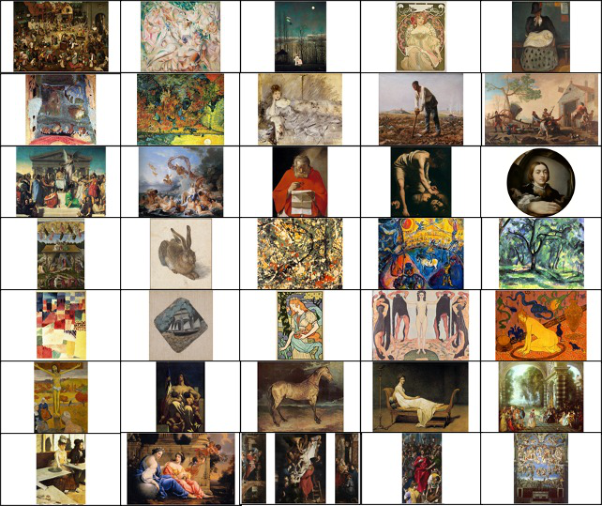
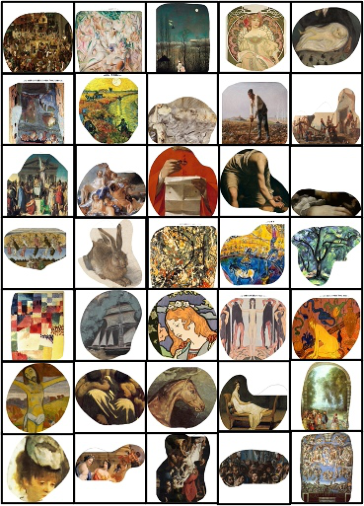
Experimental Apparatus and Paintings Used in the Experiment In this experiment, assuming that a universal fractal dimension exists regar- ding what is or is not beautiful in paintings of any period, we asked art education specialists to select 35 paintings from each period of Western art history from two perspectives: abstract and representational paintings. The paintings were from 18 periods: Northern Renaissance, Renaissance, Man- nerism, Baroque, Classicism, Rococo, Neoclassicism, Romanticism, Realism, Impressionism, Post Impressionism, Les Nabis, Symbolism, Art Nouveau, Naïve, Cubism, School-Of-Paris, and Abstract expressionism. The pain- tings of each artist were used (Only Jackson Pollock was used for Abstract expressionism). Figure 1 shows the 35 selected paintings. A 12.9 inch mul- tifunctional tablet was used in the experiment. The resolution of the tablets was 2048 × 2732 pixels. The participants were asked to draw pictures on
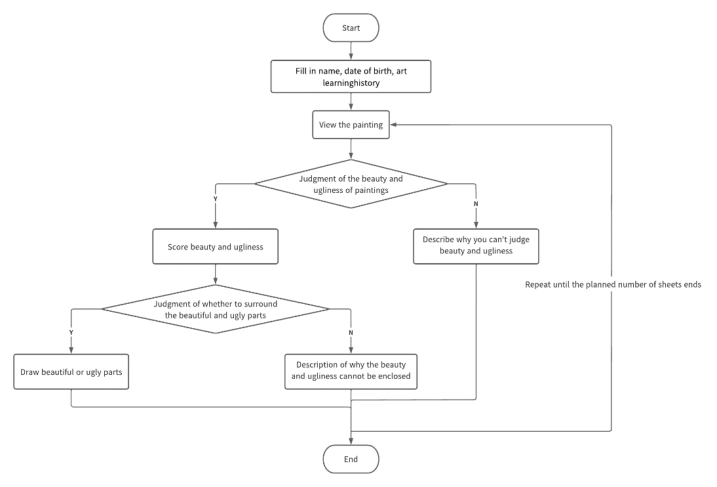
Figure 1: Thirty-five western art paintings used in the experiment.Figure 2: Flowchart of the developed app used in the experiments.
the screen using a stylus pen attached to the tablet. Moreover, the parti- cipants were asked to type by flicking the tablet or typing on an attached keyboard.
Apps Used in the Experiment An experimental application was created using the Swift UI. In the experi- ment, the participants were first asked to view and score a painting. Scores were given on a visual analog scale, with a maximum of 3 points for beau- tiful paintings and -3 points for less beautiful paintings. When they could not evaluate the painting (i.e., when the score was zero), they were asked to describe why they could not evaluate it. Subsequently, when the participants evaluated the painting, they were asked to circle its beauty or ugliness points using a stylus pen to indicate what they thought was beautiful. If they could not identify beautiful or ugly points, they were asked to report the reason. Figure 2 illustrates the app flow.
ANALYSIS METHOD Fractal analysis was used to analyze the results of this study.
Box Counting Method First, only the beautiful and ugliness areas surrounded by paintings were cut out and binarized. The fractal dimension was calculated for the binarized images and calculated using the box-counting method. The procedure for the box-counting method is as follows:
Influence of History of Art Learning on Understanding of Beauty and Ugliness in Painting 23
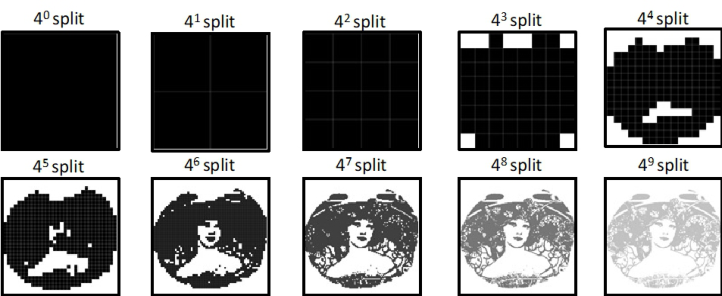
(a) Figure covered with a grid. (b) The number of grids where the components of the figure were present was counted. (c) The number of grids was counted in the same manner while changing the grid size. (d) The size of the lattice and the number of lattices counted on a logarith- mic graph were plotted to obtain a least-squares curve. (e) The multiplier represents the fractal dimension.
Figure 3 shows the division process.
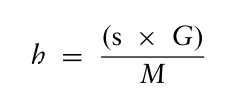
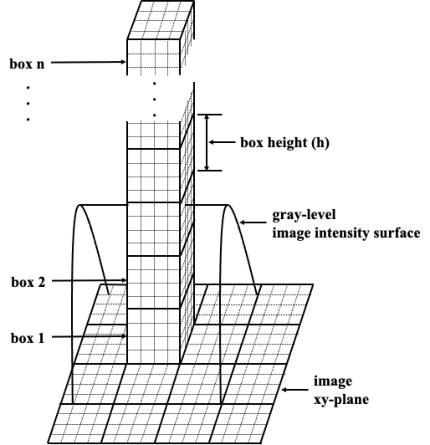
Differential Box Counting Method The differential box counting method is as follows: a square image of size M × M pixels is partitioned into non-overlapping grids of size s × s pixels, where s is an integer and varies from 2 to M/2. The related scale (r) of a grid of size s × s pixels with respect to the image size M is denoted by r = s/M. If s is not a divisor of M, the non-image pixels of the grids on the boundary are treated as zero. On each grid, there are a number of boxes of size s × s × h to cover the rough gray-level image intensity surface over that grid. These boxes are assigned with a number as shown in Figure 4, where, ⌊·⌋denotes the floor function and
Equation reproduced from the original PDF.
M (1)
i, j , is as follows:
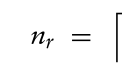
where G is the total number of gray levels in a grayscale image, that is, 256. The total number of boxes of size s × s × h required to represent the rough surface over the (i, j)th grid of size s × s pixels, nr
lgmax
m
lgmin
m − + 1 (2)
Equation reproduced from the original PDF.
where, ⌊·⌋denotes the ceiling function. In addition, gmax and gmin are the maximum and minimum gray levels present on the (i, j)th grid, respectively,
Figure 3: Segmentation process followed in the box counting method.Figure 4: Segmentation process followed in the differential box counting method.
gmax
and h
gmin
represents the box number containing gmax. Moreover, gmin is located in a box denoted by box number
h
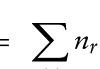
. The total number of boxes Nr at scale r required to cover the rough intensity surface of an image can be computed as follows:
Equation reproduced from the original PDF.
, where 2 M ≤r ≤1
2 (3)
i,j
Subsequently, the fractal dimension of an image or the slope of a line was computed by fitting all points (1/r, Nr) using Linear Least Squares.
RESULT
Figure 5 shows the results for a particular participant. Moreover, many parti- cipants surrounded objects in the beauty/ugliness area. In the case of portraits, various participants surrounded faces and hands.
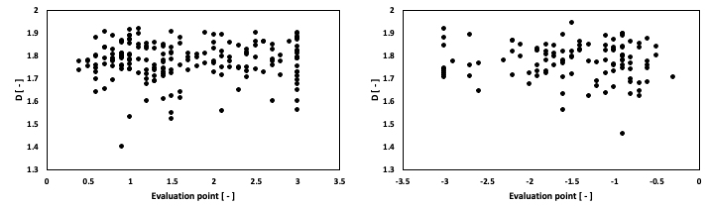
Next, the results of the box count method for fractal dimension and eva- luation values for art learners are presented. The mean value of the fractal dimension was 1.77 when positive evaluation values were obtained. No cor- relation was found between the evaluation values and fractal dimensions of the beauty and ugliness areas. The results are shown in Figure 6.
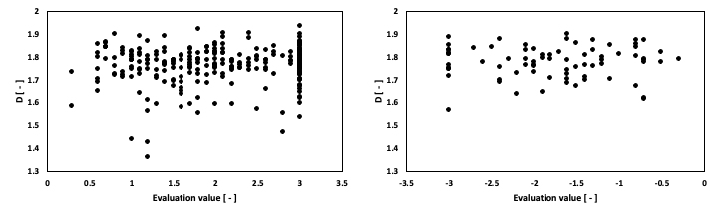
The results of the box count method, fractal dimension values, and the eva- luation values of the participants are described. The mean value of the fractal dimension was 1.76 when positive evaluation values were obtained. No cor- relation was found between the evaluation values and fractal dimensions of the beauty and ugliness areas. The results are shown in Figure 7.
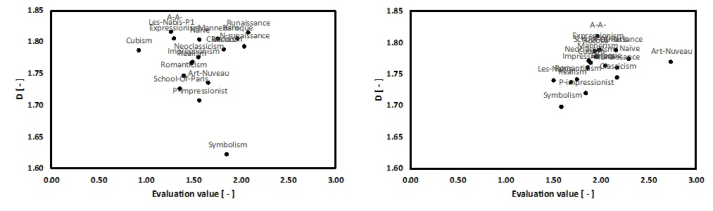
The evaluation values and box count method fractal dimensions show the average for each chronological period of Western art history for those who
Influence of History of Art Learning on Understanding of Beauty and Ugliness in Painting 25
Figure 5: Beautiful and ugly areas enclosed by one participant.Figure 6: Results for participants who have not studied art (left: positive ratings and fractal dimension; right: negative ratings and fractal dimension).Figure 7: Results for the participants who have studied art (left: positive ratings and fractal dimension; right: negative ratings and fractal dimension).Figure 8: Average results for each western art history (left: group of experimental colla- borators who have not studied art, right: group participants who are currently studying art).
have not studied art and those who are studying art. A positive correlation coefficient of 0.45 was found for those studying art. In contrast, no correla- tion was obtained for those who had not studied art. In addition, the number of cases in which the respondents who had not studied art could not surround beauty or ugliness was 11, compared to 58 for those who had not studied art. The results are shown in Figure 8.
Subsequently, the results of the differential box counting method fractal- dimension values for participants who had not studied art are presented. The mean value of the fractal dimension was 2.06 when positive evaluation values were obtained. No correlation between the evaluation values and the fractal dimensions of the beauty and ugliness areas was found. Moreover, the results of the differential box counting method fractal dimension values of the expe- rimental collaborators during the art study are described. The mean value of the fractal dimension was 2.20 when positive evaluation values were obtai- ned. No correlation between the evaluation values and the fractal dimensions of the beauty and ugliness areas was found.
DISCUSSION
In the beauty/ugliness area, various participants surrounded objects. In the case of the portraits, many participants surrounded the face and hands. This suggests that the judgment of beauty or ugliness in figurative paintings is based on the main object instead of the background.
The mean value of the fractal dimension was 1.76 for both groups of par- ticipants who were currently studying art and those who had not yet studied art. Therefore, the areas that are considered beautiful have a higher-order fractal dimension.
The average of the evaluation values and fractal dimension for each period of Western art history for the experimental group who had not studied art and the experimental group who were currently studying art did not show a correlation. In contrast, a positive correlation coefficient of 0.45 was obtai- ned for the experimental group of participants who were currently studying art. The reason might be that the participants who are currently studying art understand the characteristics of each age group and the areas to be evalua- ted through education, and those who are currently studying art have solid guidelines.
Influence of History of Art Learning on Understanding of Beauty and Ugliness in Painting 27
CONCLUSION
This study aimed to understand the differences in the beauty and ugliness of paintings between students majoring in art and those of the same age who have never studied art by calculating the fractal dimensions of areas in pain- tings considered beautiful or unbeautiful. In addition, to clarify whether the aesthetic sense is fostered by education, we conducted an experiment in which we assigned scores for beauty and ugliness to those who had received art edu- cation and those who had not studied art education. The results showed a positive correlation between the scores of those who had received art educa- tion and those who had not, suggesting that art education can form the basis for evaluating the arts.
REFERENCES
Kaneko, K. (2017) Problems And Solutions in Art Education Science Through Redefinition by Gift Exchange Theory, Art Education, Journal of the Society of Art Education, Volume 38, pp. 179–181. Ministry of Education, International elementary school course of study commentary drawing work edition, available from <https://kawasaki- edu.jp/9/2kenkyukai/index.cfm/9,496,c,html/496/kaisetu.pdf>, (accessed on 3 October, 2021). Saito M., Mori T. (2014) Evaluation of Fluctuation of Landscape, Textural Patterns
and Painting Arts Using Frequency Analysis, Department of Home and Life Scie- nces, Faculty of Home Economics, Gifu Women’s University, 80 Taromaru, Gifu, Japan.
LISTED IN THE AHFE DIGITAL BOOKSTORE CATALOGUE
Explore the complete digital volume
Affective and Pleasurable Design
Read this individual research paper free through the original publisher, or explore the full digital proceedings book.
ISBN 978-1-958651-47-6
Explore this ISBN in the AHFE Bookstore ↗Listed in the July 2026 bookstore catalogue; search by ISBN to confirm current availability · Digital book purchase optional