Linda Bower (2023). Bulgaria's Digital Transformation. In: Human Interaction and Emerging Technologies (IHIET-AI 2023): Artificial Intelligence and Future Applications. AHFE Open Access, vol. 70, pp. 279–286. https://doi.org/10.54941/ahfe1002953
For over three decades, Bulgaria has been advancing the level of technology in the country. The strategy has evolved from e-government into digital transformation. In the beginning, the country’s e-Government program was focused primarily on developing and upgrading infrastructure elements and main systems. However, the existing regulatory framework was able to accommodate e-Government, but it did not stimulate it. In addition, difficult to achieve high efficiency achieve high efficiency due to a lack of a systematic approach to e-Government development. Some agencies had progressed significantly in implementing electronic administrative services, but in general, e-services were limited.The government forged a strategic framework to implement e-government, and a new e-government agency was established to guide the process. Tis strategy has been successfully implemented: the government has gone paperless, citizens have mobile access to government services, and schools receive curriculum materials electronically. e-Government system, part of an end-to-end solution to provide e-Government services The main components of Bulgaria’s e-Government infrastructure include portals, networks, eIdentificatin/e/Authorization, and knowledge management. The legal framework includes legislation, freedom of information, data protection/privacy, e-commerce, e-communications, and e-procurement.Bulgaria has obtained significant benefits from this program. In particular, it has contributed to a tangible reduction of the administrative burden on citizens and business. Going paperless by itself has saved hundreds of tons of paper and humdreds of thousands of dollars annually. In addition, government processes have been optimized, and systems are more reliable and secure.The program continues with Digital Bulgaria 2025. This program has a vision beyond government operations and seeks to bring the benefits of digital technology to all sectors of the economy and society. The goal is to create an environment to foster the widespread use of information and telecommunications technologies (ICT), along with new technologies for businesses and citizens. Continued progress in e-government is an important part of the program, as well as modernizing education, improving the digital ICT skills of the workforce, and increasing the number of highly qualified ICT specialists. Significant benefits are expected from the implementation of this strategy.It encompasses achievements so far and the new European strategic and programming guidelines for achieving a smart, sustainable and inclusive digital growth. The goal is widespread implementation of intelligent solutions in all areas of the economy and society, and modernizing information and communications technologies (ICT
For the past few decades, Governments around the world have been develo- ping e-Government to offer information and provide on-line eservices to the citizenry, as well as to improve governance. e-Government has evolved into digital transformation, and ambitions have gone beyond government operati- ons; the government also wishes to foster digital transformation in all sectors of the economy and society.
This paper focuses on Bulgaria as a case study in the evolution from e-Government to Digital Transformation. It traces the government’s early efforts and the establishment of a new agency to be responsible for the pro- gram. It follows the effort through various plans and accomplishments, as well as the benefits of e-Government and Digital Transformation.
Section 2 provides some background on Bulgaria and its economic deve- lopment efforts since becoming an open-market economy.
Section 3 traces Bulgaria’s early e-Government efforts and the obstacles that needed to be overcome, the formulation of a strategic framework, and the establishment of a new agency to be responsible for the program.
Section 4 discusses the Digital Bulgaria 2025 plan and the vision to extend digital transformation throughout all sectors of the economy and society.
Section 5 outlines the Digital Bulgaria 2020–2030 program, which is navigating through to the end of this decade.
Section 6 looks at some of the outcomes of the program, particularly the government gong paperless, mobile access to government e-services, and digital technology in schools.
Section 7 presents looks at the impact of the program.
BACKGROUND
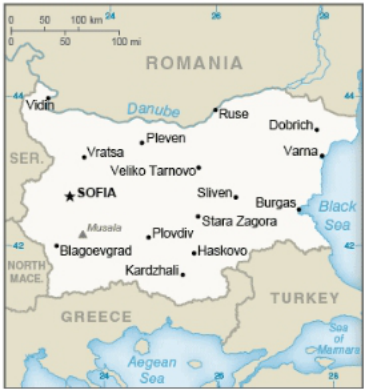
Bulgaria, is located in Southeast Europe, as seen in Figure 1, and has a population of about 7 million. Over the past three decades, Bulgaria has transformed its economy from central planning to an open-market based economy. The country has reached a high-middle-income level with a Gross Domestic Product (GDP) per capita of US$11,735 in 2021. Bulgaria joined NATO in 2004 and has been a member of the European Union (EU) since 2007. Making the most of its limited resources, Bulgaria has made major strides in its e-government initiative to provide information and services to the citi- zenry. In fact, Bulgaria has become one of the top 50 countries in terms of e-government One factor in Bulgaria’s rapid progress is that it aligned its e-government strategy with the Digital Agenda for Europe (Republic of Bulgaria, 2018).
As a result of is efforts, Bulgaria has become one of the top 50 coun- tries in e-government development, as measured by the United Nations e-Government Development Index.
BULGARIA’S E-GOVERNMENT STRATEGY Bulgaria began its e-Government development 20 years ago. At that time, the program was focused primarily on developing and upgrading infrastru- cture elements and main systems, in particular providing the central judicial
Bulgaria’s Digital Transformation 281
administration with ICT facilities, Internet pages, and e-service. It was found that there was a lack of sufficient coordination between the general policy on providing administrative services and the services by electronic means.
The existing regulatory framework was able to accommodate e- Government but did not stimulate it. In addition, legal problems hindered the use of e-documents and e-signatures. Interoperability was difficult, and it was fdifficult to achieve high efficiency due to a lack of a systematic approach to e-Government development.
Some agencies had progressed significantly in implementing electronic administrative services, such as the National Institute of Statistics and the National Revenue Agency„ but in general, e-services were limited.
In 2002, Bulgaria adopted a strategy for e-Government (n.d.). Subsequen- tly, a Concept for e-Government in Bulgaria 2010–2015 was adopted, which advanced the efforts (European Commission, 2016).
Strategic Framework A strategic framework is necessary for a successful e-government program. Bulgaria’s e-government model (Republic of Bulgaria, n.d.) contains ele- ments covering policies, organization, technologies, and governance. In its e-Government Development Strategy for 2014–2020, the vision for 2020 included the following strategic objectives:
Provide qualitative, efficient, and easily accessible e-services to citizens and business.
Transform institutions into digital administration by integrating informa- tion processes.
Promote access and participation The government assessed the resources necessary to achieve the objectives and examined funding mechanisms for the long term.
An EU report summarized Bulgaria’s progress in e-Government. At the end of 2015, the Ministry of Transport, Information, Technology and Communi- cation (MITTC) completed its e-Government system, part of an end-to-end solution to provide e-Government services. It also launched a process of implementing the e-Delivery system in all public services. During 2015, work accomplished included, among other activities:
The government launched a government cloud service platform for all of the country’s municipalities.
The first datasets were published on its open data portal.
The main components of Bulgaria’s e-Government infrastructure include portals, networks, eIdentification/eAuthorization, and knowledge manage- ment. The e-Government system provides a one-stop shop with a repository of public services provided by the central state administration. Citizens and businesses can obtain information online on a variety of public services, as well as forms to download. Some 1,300 services are available in various ministries, agencies, and municipalities for matters such as health, vehicles, work/retirement, education for citizens and startups, customs/VAT, public contracts, and product requirements for businesses.
282 Bower
The legal framework includes legislation, freedom of information, data protection/privacy, e-commerce, e-communications, and e-procurement.
New State e-Government Agency The State e-Government Agency (SEGA) was established in 2016, pursu- ant to the Electronic Governance Act (Republic of Bulgaria, 2020). It is the successor to the Electronic Governance Directorate under the Ministry of Transport, Information Technologies and Communications, and the Execu- tive Agency Electronic Communications Networks and Information Systems. Its activities concern control-related policies, rules, regulations, and good practices concerning electronic governance, strategic planning and initiati- ves, budget planning and control, and coordinating sector-related policies. Its responsibilities include:
Electronic governance
Electronic identification
Network and information security
Spatial information infrastructure
Public sector-related information in machine processable open source code In early 2017, SEGA officially launched its own Website, e-gov.bg, to take over the management of state registers and services. In the first year, the necessary technological and regulatory conditions were developed to pro- vide for access to data contained in what is now the Inter Registry Exchange Environment (RegiX), which SEGA maintains.
DIGITAL BULGRIA 2025 Digital Bulgaria 2025 (Republic of Bulgaria, 2025) goes beyond a digital transformation of the government, extending to all sectors of the economy and society. It encompasses accomplishments so far and the new European strategic and programming guidelines for achieving a smart, sustainable and inclusive digital growth. The goal is widespread implementation of intelligent solutions and modernizing information and communications technologies.
Some priority areas, among others, are:
Accelerate development of e-government.
Analyze stakeholders
Develop a dynamic and innovative digital economy and increase growth potential.
Digitize Bulgarian industrial sectors and develop a data-based economy.
Modernize schools and tertiary education in the area of ICT.
Support ICT research and innovation.
Improve ICT skills of the workforce.
Promote a secure cyber ecosystem.
Increase the number of highly qualified specialists in the field of ICT Modernization of school and higher education involves key activities such as promoting the development of a modern and reliable ICT infrastructure at
Bulgaria’s Digital Transformation 283
schools, improving assessment of students’ digital competences upon gradua- tion from high school, modernizing the educational curriculum and teaching methods, and upskilling teachers, educators, and training providers. Activi- ties also aim to further strengthen cooperation between education industry and the non-governmental sector.
Increasing the number of highly qualified specialists in ICT entails increa- sing the number of young people trained for ICT professions and promoting the development of qualified ICT specialists through a focus on lifeline learning and upskilling approaches.
Improving the digital and ICT skills of the workforce is using skilling and reskilling programs financed by the Bulgarian Government.
ADIGITAL TRANSFORMATION 2020–2030 In 2020, the government of Bulgaria issued a plan for the Digital Transfor- mation of Bulgaria for the period 2020–2030 (European Commission, 2021). This plan paves the way for the digital transformation of Bulgaria during the decade. It is based on the premise that digital transformation is an important process to create the conditions to foster growth and innovation, improve the outlook for the job market, and provide Bulgarians with a high living standard. It is based on a user-oriented approach with access to all digital services; ethical and socially responsible access, use, sharing, and manage- ment of data; technology as a key factor, and collaboration with multiple stakeholders. The plan includes six principal objectives:
Development of a secure digital infrastructure
Access to adequate technological knowledge and digital skills
Strengthening of research and innovation capacity
Unlocking data potential
Digititalization fostering a circular and low-carbon economy
Improving the efficiency of public administration and qualify of public services.
PROGRESS Bulgaria has made substantial progress in its digital transformation. The government has gone paperless, citizens have mobile access to government e-services, and digital technologies have enhanced education. A study by the European Commission (2020) discusses various aspects of Bulgaria’s situation.
Government Goes Paperless One accomplishment of digital transformation is that Bulgaria’s government has gone paperles; 2017 saw the elimination of paper format for 12 of the most commonly required certificates for citizens and businesses. They are now issued electronically, and in 2018, Bulgaria completed its transition to paperless (DAEU, 2018). More than 700 national, regional, and municipal government entities have moved to fully electronic document management. They now participate in the Electronic Data Interchange Messaging System (EDIMS) and no longer exchange paper documents.
284 Bower
This change dramatically improves the efficiency of administration, and it also saves paper. In addition to the cost of paper, it reduces the costs of printing and related supplies and services. The savings are estimated at about 100 tons of paper and 220,000 levs (about US$126,000) per year from paper costs alone. Eliminating the paper-based exchange of documents also reduces the time necessary to register a document and the response time to only a fraction of the previous requirements. In addition, central administrations expanded their digital services so that citizens and businesses can interact securely online with the government. It is expected that by 2023, Bulgarians should have a one-stop shop electronic access to over 850 electronic services (Republic of Bulgaria, 2019).
More recent efforts include planning, creating, and operating shared infor- mation resources, as well as the integration of departmental information systems. The Bulgarian National Interoperability Framework has also been updated to comply with EU and national standards. Compliance control ensures consistency with uniform standards and compatibility of new pro- jects and upgrades of existing projects. A single e-government architectural framework is being implemented for all government entities and all ICT development processes.
Mobile Access Since 2019, Bulgarians can access e-Government services via mobile phone (Republic of Bulgaria, 2019). SEGA services can be accessed through a per- sonal cloud-based, mobile-qualified electronic signature. It can be accessed from any location in the world that has Internet access.
The main systems re connected via RegiX, the data exchange ecosystem, which supports some 165 types of inquiries in 62 registers. Tens of millions of transactions monthly access certification and reference information.
The annual saving in terms of salary costs are estimated at almost 5 million levs (about US$3 million).
Cyber Education Since September 2018, all Bulgarian schools have access to the Secure Electro- nic Delivery System (eDelivery) (Republic of Bulgaria, 2018), maintained by SEGA. This enables schools to receive the entire school curriculum via secure e-mail. To prepare, school children received instruction in digital technology, and computer modeling I now taught at the third-grade level.
IMPACT OF DIGITAL TRANSFORMATION Bulgaria has obtained significant benefits from this program. In particular, it has contributed to a tangible reduction of the administrative burden on citizens and business. As a result of e-government implementation,
Integration of departmental information systems
Bulgarian national interoperability framework updated to comply with EU standards
Bulgaria’s Digital Transformation 285
A single e-government architectural framework implemented for all government entities implemented Government processes have been optimized, the government is better able to control ICT spending, and there is a higher level of security and systems availability.
Going paperless by itself has saved hundreds of tons of paper and hun- dreds of thousands of dollars annually, as well as the expenses of printing and related supplies and services. In addition, government processes have been optimized, and systems are more reliable and secure.
Beyond the national government, the municipalities have also been brou- ght into the system. Bulgaria is divided into 265 municipalities, which typically have multiple towns, villages, and settlements. Most municipal administrations are now part of the Unified Portal for access to e-Government services e-Government in Bulgaria is no longer seen as simply service delivery, but as a catalyst for change.
REFERENCES
Concept for e-Government in Bulgaria 2010-2015ts. DAEU-Annual+Report.2018. https://view.officeapps.live.com/op/view.aspx?src= https://e-gov.bg/upload/5909/26+01+2018+DAEU-Annual+Report-+1st+Year-E N.docx. They are now issued electronically, and in 2018, another dozen were eliminated. European Commission, Digital Economy and Society Index (DESI). 2020. Commission Staff Working Document, Brussels. https://edz.bib.uni- mannheim.de/edz/pdf/swd/2020/swd-2020-0111-3-en.pdf, 11.6.2020, SWD(2020) 111 final, Part 3/6, https://edz.bib.uni-mannheim.de/edz/pdf/sw d/2020/swd-2020-0111-3-en.pdf, viewed 15 October 2022. European Commission, Digital Public Administration factsheet 2021: Bul- garia, https://joinup.ec.europa.eu/sites/default/files/inline-files/DPA_Factsheets_ 2021_Bulgaria_vFINAL.pdf, viewed 15 October 2022. European Commission. 2016. eGovernment in Bulgaria. https://joinup.ec.europa.e u/sites/default/files/inline-files/eGovernment%20in%20Bulgaria%20-%20Febru ary%202016%20-%2013_0%20-%20v3_00.pdf, viewed 3 May 3 2018. Republic of Bulgaria 2018. State e-Government Agency Equal access to digital edu-
cation will prevent digital divide between Bulgarian citizens. https://www2.e-gov. bg/en/news/93, viewed 5 June, 2020. Republic of Bulgaria, Ministry of Transport and Communications, National Program “Digital Bulgaria 2025,. Republic of Bulgaria, State e-Government Agency 2018. “Cyber Culture Steps into
Bulgarian Schools.”Retrieved 29 June 2018 from https://www2.e-gov.bg/en/news /99, viewed 23 June 2020.United Nations E=Government Survey, New York, 2014, 2016, 2018 Republic of Bulgaria, State e-Government Agency 2018. News, “Administrations discontinue their exchange of paper documents,” Retrieved 27 June 2020 from https://www2.e-gov.bg/en/news/113, . Republic of Bulgaria, State e-Government Agency 2019. Retrieved 25 June 2020
from https://www2.e-gov.bg/en/1.
286 Bower
Republic of Bulgaria, State e-Government Agency. Undated. About the Agency,. http s://www2.e-gov.bg/en/about_us, 28 June 2020/. Republic of Bulgaria. Undated. e-Governance Development Strategy 2014–2020 in
the Republic of Bulgaria, https://www.mtitc.government.bg/sites/default/files/up loads/pdf/e_governance_strategy.pdf, viewed 29 June 2020.
LISTED IN THE AHFE DIGITAL BOOKSTORE CATALOGUE
Explore the complete digital volume
Human Interaction and Emerging Technologies (IHIET-AI 2023): Artificial Intelligence and Future Applications
Read this individual research paper free through the original publisher, or explore the full digital proceedings book.
ISBN 978-1-958651-46-9
Explore this ISBN in the AHFE Bookstore ↗Listed in the July 2026 bookstore catalogue; search by ISBN to confirm current availability · Digital book purchase optional