Dimitrios Ziakkas, Konstantinos Pechlivanis, Julius Keller (2023). The Implementation of Artificial Intelligence (AI) in Aviation Collegiate Education: A Simple to Complex Approach. In: Intelligent Human Systems Integration (IHSI 2023): Integrating People and Intelligent Systems. AHFE Open Access, vol. 69, pp. 435–442. https://doi.org/10.54941/ahfe1002863
Aviation and air travel have always been among the most innovative industries throughout history. Both the International Air Transportation Authority (IATA) Technology Roadmap (IATA, 2019) and the European Aviation Safety Agency (EASA) Artificial Intelligence (AI) roadmap propose an outline and assessment of ongoing technological prospects which change the aviation environment with the implementation of AI from the initial phases of the collegiate education. Using traditional flight simulators is an essential part of initial and recurrent training for pilots. These simulators help pilots achieve and maintain proficiency in normal and abnormal circumstances that may arise during flight operations (Myers et al., 2018). The upskilling performed through simulators are typically completed at a far cheaper cost than the training completed in the air. However, the capital cost of simulator units can range from USD 10-15 million, which results in an exorbitant cost recovery of approximately USD 1,500 per session (Bent & Chan, 2010). This makes it expensive for air carriers and undergraduate pilot training programs to comply with mandated flight and simulator training requirements. In addition, because the COVID-19 epidemic is so widespread, companies that provide flight training have been entrusted with developing novel ways to instruct their students, such as through remote pilot-to-student education. The Federal Aviation Administration (FAA) (2020) acknowledges the use of non-traditional technologies that can successfully fulfill the requirement for ongoing training in ever-changing regulatory standards. The following four steps follow a simple-to-complex implementation approach that is advocated for using AI in the instruction provided by college aviation programs: 1.) Activities relating to outreach and recruitment 2.) Introducing new students to the PFP (Professional Flight Program). 3.) Additional training in addition to fundamental and advanced jet instruction 4.) Research aimed at mastery of pilot competencies, increasing student self-efficacy, and decreasing the number of crew operations.Alterations to aviation training will affect the performance of humans and decision-making. The research used an AI methodology that accepted "any technology that appears to replicate the performance of a person." The AI approach followed this broad definition. The thematically selected research on AI decision-making in collegiate aviation trainees' perception and experience was structured based on an analysis of the available literature concerning the current uses of AI in aviation. The use of artificial intelligence in pilots' training and operations was investigated through a combination of interviews with Subject Matter Experts (including Human Factors analysts, AI analysts, training managers, examiners, instructors, qualified pilots, and pilots under training) and questionnaires (which were distributed to a group consisting of professional pilots and pilots under training).The findings were reviewed and evaluated concerning the appropriateness of the AI training syllabus and the notable differences between them in terms of the decision-making component.
Human factors engineering is the study and practice of incorporating people and their capacities (cognitive, physical, sensory, and team dynamics) into every stage of the design process, from initial ideation to the final disposal of a system. Human factors engineering optimizes system performance by balancing human capabilities with system interfaces (use, operation, main- tenance, support, and sustainment). Human factors engineering employs in-depth job assessments to develop system functions and arrange them to meet system requirements. Optimizing total system performance considering the unique traits of the people who will operate, maintain, and support the system while keeping life-cycle costs to a minimum is the focus of HSI (Folds et al., 2008). The design and dependability of aircraft, as well as the education and training of pilots, have greatly advanced during the past two decades. Nonetheless, high-profile accidents continue to occur, even when aircraft and associated equipment are operating well. Controlled Flight into Terrain (CFIT) and Loss of Control in Flight (LOC-I) are examples of probable cau- ses in which insufficient decision-making, poor leadership and cooperation, and bad communication are commonly cited as contributory factors.
When preparing the next generation of aviation professionals, it is essential to keep in mind that AI training offers a redundant system that could benefit both individual and team performance, as well as aviation safety and efficie- ncy, which are crucial considerations in the aviation business. Experts in HSI use the Systems Engineering (SE) approach to ensure people are considered at every stage of a system’s life cycle. Countless advancements in human-centred design were prompted by the inclusion of human systems considerations in system development initiatives, including aviation collegiate education pro- grams. By reducing human effort, simplifying maintenance, and increasing aviation industry safety, the system would be able to save hundreds of fata- lities and hundreds of permanent disabilities, saving billions of dollars and lives (Booher and Minninger, 2003).
Purdue proposed aviation program advocates the use of AI to a four-step simple to complex collegiate instructional design.
1. Tasks associated with outreach and personnel recruiting and pilot selection.
The Implementation of Artificial Intelligence (AI) in Aviation Collegiate Education 437
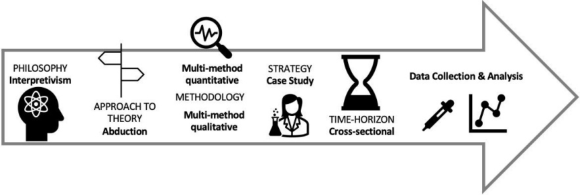
Figure 1: Research design as adapted from Saunders et al. (2019).
2. Acquainting newly enrolled students with the PFP (Professional Flight Program). 3. Supplemental training in addition to instruction in fundamental and advanced jet manoeuvres. 4. Research directed at the mastering of pilot competencies through AI implementation, the enhancement of student self-efficacy, and the redu- ction of delays in crew training.
DEVELOPING ARTIFICIAL INTELLIGENCE INTEGRATION TOOLS TO SUPPORT SYSTEMS DESIGN This research aimed to present, develop and implement Artificial Intelligence integration tools to support system’s design in Collegiate Aviation Training. The Purdue case study was based on an interpretivist philosophy to define and investigate the specific Artificial Intelligence thematic areas as chosen by discrete observational experiences related to the selected aviation univer- sity database (EBT), relevant literature review, and questionnaires. Figure 1 demonstrates the philosophical justification that led to the modification of the study methodology (Saunders et al., 2019).
Initially, the research team apprehended the aviation university student pilots’ perceptions through an online questionnaire (Yin, 2014) and condu- cted a thorough literature review driven by the following research questions framework:
What kind of understanding do pupils have about AI?
How does implementing the suggested AI influence the already established students’ learning objectives (SLO)?
The collected data underwent a controlled and practical analysis. The results correlated the variable indicators and acknowledged the significance of previous experiences concerning the research questions and the findings of the literature study for the AI integration tools to support systems’ design (Coolican, 2019).
The research team utilized an analytical strategy to portray the flight trai- ning areas relevant to the research question framework. This approach was carried out following a theme coding technique. The triangulation approach was used during the interpretive stage (Merriam, 2015). The responses to
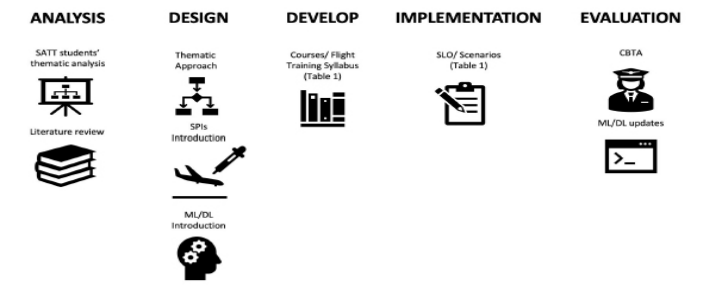
Figure 2: Research design as adapted from Saunders et al. (2019).
each inquiry were correlated with overarching themes and organized accor- dingly (Coolican, 2019). After that, a frequency analysis was carried out on the generated themes in order to evaluate the degree to which they were repeated throughout the group’s feedback and to develop a model of the pri- mary themes and the responses that were linked with them (Honour, 2006). Deviations during coding were thoroughly discussed and analyzed by the research team members until reaching a consensus and being included in the interpretation (Coolican, 2019).
It has become clear that treating the training system as separate from the users results in poor performance (Competencies Based Training Assessment, CBTA) and potential failure in the operational setting. Continued growth in technology ignoring human factors has not delivered desired results. Systems engineers and others are beginning to understand the human’s role in tech- nology systems. HSI experts contribute by ensuring that human capabilities and limitations are considered. The challenge is to balance successful har- dware and software solutions (AI) with human friendly implementations. It is essential to understand the inherent capacity of user populations and their typical operational environment to define the requirements of humans as a fundamental system component (Booher, 2003). A description of a population’s capacity incorporates more than the basic anthropometrics or the cognitive capability of the average member of the user population (Chapanis, 1996).
THE AI CONTRIBUTION ON THE COLLEGIATE TRAINING COURSE REVISION The suggested aviation design philosophy adheres to the ADDIE (Analyze- Design-Develop-Implement-Evaluate) methodology, which involves the imple- mentation of AI student learning objectives (Figure 2):
Perform an analysis on the Flight school student learning objectives using the data acquired pertaining to the Evidence-Based Training (EBT) ICAO analysis and AI elements.
The Implementation of Artificial Intelligence (AI) in Aviation Collegiate Education 439
Table 1. The nine pilot competencies as identified by SATT.
Table available in the original PDF paper.
TA competencies Pilot competencies PC 0 Application of Knowledge PC 1 Application of Procedures and Compliance with Regulations PC 2 Communication PC 3 Aeroplane Flight Path Management, automation PC 4 Aeroplane Flight Path Management, manual control PC 5 Leadership & Teamwork PC 6 Problem Solving & Decision Making PC 7 Situation Awareness and Management of Information PC 8 Workload Management
Design the learning areas of interest that are connected to operations using an evidence-based, AI-based, thematic approach. The Machine Learning/Deep Learning ML/DL software is now being introduced.
Create the courses and their learning objectives using the EBT ICAO data- base (the option for a national database) and develop several situations.
Place the learning objectives in scenario form and implement them.
Evaluate using the CBTA competencies as outlined in the ICAO guidelines. Make use of the ML/DL capabilities of the software (EASA, 2020).
Purdue University School of Aviation and Transportation Technology (SATT) professional flying program identified technical and nontechnical competencies based on IATA recommendations, the ICAO provisions for competency-based training and assessment, and the EASA suggestions for EBT. A total nine competencies were identified by SATT (Table 1).
The current vision of Purdue University on competency-based training (Keller et al., 2020) and the evaluation of ongoing technology opportunities (e.g., AI) in aviation training suggests a holistic aviation training approach to address these areas following the simple-to-complex method.
The training concept shift suggested under EBT should not be regarded as merely a replacement set of critical events to an older and obsolete one. Instead, the concept is a means for developing and accessing crew perfor- mance by making use of human factors aspects and clearly defined Artificial Intelligence student learning objectives. The aviation industry’s thematic inve- stigation into determining which student learning objectives are supported by evidence training and qualitative examination of collegiate competencies demonstrated that human elements and ergonomics are more important than technical features. This is in contrast to situations where technical consi- derations predominate. AI application in the aviation collegiate technical knowledge training program should prioritize polishing the most important cognitive areas (i.e., integrated objectives) while simultaneously supporting the schematic structure of nonrecurrent features and rule automation of recurrent components.
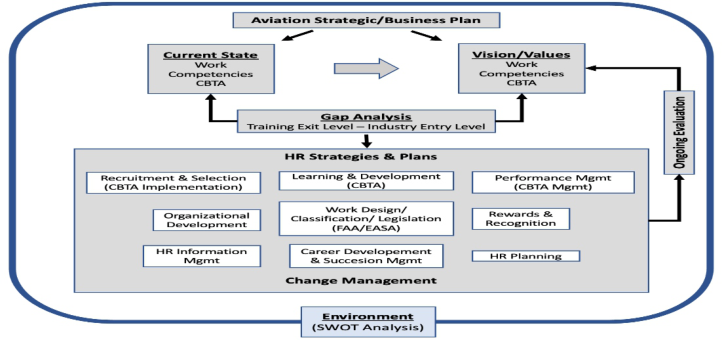
The Purdue’s SATT guidelines and the performance Gap analysis (Training exit level – Industry Entry level) determined the vision and values on the next decade students’ learning objectives based on the technology roadmap
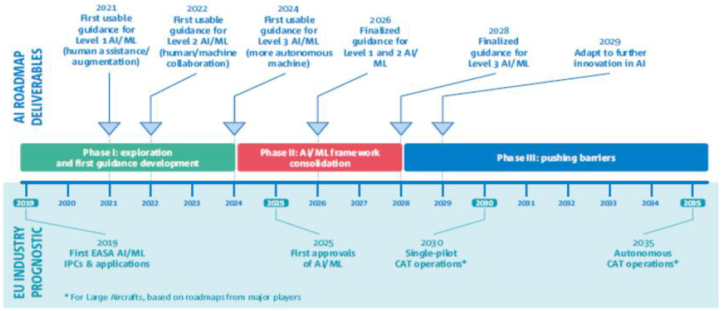
Figure 3: Aviation Performance Gap analysis and Change management (Ziakkas, 2022).Figure 4: Artificial Intelligence in Aviation Roadmap (EASA, 2020).
for Artificial Intelligence (AI) changes in aviation and global sustainability (Figure 3).
The content efficiency, teaching experience, and the aviation market needs are implemented through the competencies and the standardization of AI in aviation. Increased adoption of competencies from airlines and regulators and support for flight schools will be needed as the industry moves to CBTA. SATT revised the AT-38800 course (Large Aircraft Systems) to familiarize the students with Phase I and link them with phases II & III as presented in Figure 4.
The SATT’s six adopted and adapted competencies are:
Technical Excellence.
Communications.
Leadership.
Decision-Making.
Resilience; and
Teamwork.
The Implementation of Artificial Intelligence (AI) in Aviation Collegiate Education 441
Therefore, the updated AT38800 course fulfills the CBTA description linking International Civil Aviation Organization – Evidence Based Training- Safety Management System concepts offering a targeted, customized appro- ach as presented and recognized by the aviation industry and ICAO. The revised course set an example and the foundations on implementation of AI technologies in the aviation training.
Finally, the SATT’s AI aviation collegiate program aims to support ada- ptability to new technologies through Readiness to Learn, Orientation to Learning, Motivation to Learn, and adapting to new learning preferences and demands as:
Remote / virtual learning
Innovative learning tools
Flexible and personalized training Most of the requirements for human systems integration are derived from requirements for performance, efficiency, environmental, operational, main- tenance, and training (see Table 1). The obstacles that might hinder the potential AI use of HSI in the collegiate aviation training could be the lack of clear articulation of human engineering requirements in the syllabus, and the lack of a HSI framework to track requirements changes. The Purdue human systems integration team is developing a test plan that could be easily incor- porated into the systems engineering test plan for the implementation of AI in aviation training and evaluating the results.
CONCLUSION
Human Systems Integration (HSI) is becoming an essential component of complex systems to aid in system design development. This proposal has pro- vided a growing amount of HSI knowledge and new AI technologies that are being developed to capture essential HSI features. Developing a framework for Human Systems Integration with Systems Modelling Language (SysML) will improve team collaboration by providing a common language and pro- cess for communicating models and sharing information (Friedenthal, 2008). By modeling behaviors, constraints, states, and goals over the system’s full lifecycle, the Human Systems Integration component of collegiate aviation training will be able to recognize the human as a vital part of any system. Most of the requirements for human systems integration are derived from requirements for performance, efficiency, environmental, operational, main- tenance, and training (Table 1). The obstacles that might hinder the potential AI use of HSI in collegiate aviation training could be the lack of clear articu- lation of human engineering requirements in the syllabus and the need for an HSI framework to track requirements changes - standardization.
The Purdue human systems integration team is developing a test plan that could be easily incorporated into the systems engineering test plan to imple- ment AI in aviation training globally and evaluate the results. Moreover, the Purdue Virtual Reality research roadmap is focused on AI certification process (FAA, EASA), implementation of an AI training syllabus following
a change management approach and introduction of AI standardization principles in the global AI aviation ecosystem.
ACKNOWLEDGMENT
The authors thank faculty members of Purdue and Coventry Universities for their invaluable feedback contributing to this work.
REFERENCES
Booher, Harold, ed. (2003). Handbook of human systems integration. New Jersey: Wiley. Booher, H.R., Minninger, J. (2003) “Human systems integration in army systems
acquisition”, in: Handbook of human systems integration, Booher, Harold (Ed.). pp. 663–698 Chapanis, A. (1996). Human factors in systems engineering. Wiley Series in Systems Engineering and Management. Andrew Sage, series editor. Hoboken, NJ: Wiley. Coolican, H. (2019) Research Methods and Statistics in Psychology. Seventh edition.
New York: Psychology Press, Taylor & Francis Group. EASA. (2020). Artificial Intelligence Roadmap: A human-centric approach to A.I. in aviation. Folds, Dennis. Gardner, Douglas and Deal, Steve. (2008). Building Up to the Human
Systems Integration Demonstration, INCOSE INSIGHT Volume 11 No. 2. Friedenthal, S. Moore, A. Steiner, R. (2008) A Practical Guide to SysML: The Systems Modeling Language, Morgan Kaufmann; Elsevier Science. Honour, Eric C. (2006) “A Practical Program of Research to Measure Systems Engi-
neering Return on Investment (SE-ROI)”, proceedings of the Sixteenth Annual Symposium of the International Council on Systems Engineering, Orlando, FL. IATA. (2019). Aircraft Technology Roadmap to 2050. Meilich, Abe. (2008) INCOSE MBSE Initiative Status of HSI/MBSE Activity (Presentation). Merriam, S.B. and Tisdell, E.J. (2015) Qualitative Research : A Guide to Design and
Implementation. San Francisco: Jossey-Bass. Saunders, M., Lewis, P., & Thornhill, A. (2019). Research Methods for Business Students Eighth Edition. In Research Methods for Business Students. Pearson Education Limited. Taubman, Philip. (June 25, 2008) Top Engineers Shun Military; Concern Grow. The
New York Times Website: http://www.nytimes.com/2008/06/25/us/25engineer. html. Yin, R.K. 2014. Case Study Research: Design and Methods. (5th Edition) Los Angeles, CA: Sage Publications. Ziakkas, D., Plioutsias, A., Pechlivanis, K., 2022. Artificial Intelligence in aviation decision making process. The transition from extended Minimum Crew Operations to Single Pilot Operations (SiPO). Artificial Intelligence and Social Computing. AHFE (2022) International Conference. AHFE Open Access, vol 28. AHFE International, USA. http://doi.org/10.54941/ahfe1001452.
LISTED IN THE AHFE DIGITAL BOOKSTORE CATALOGUE
Explore the complete digital volume
Intelligent Human Systems Integration (IHSI 2023): Integrating People and Intelligent Systems
Read this individual research paper free through the original publisher, or explore the full digital proceedings book.
ISBN 978-1-958651-45-2
Explore this ISBN in the AHFE Bookstore ↗Listed in the July 2026 bookstore catalogue; search by ISBN to confirm current availability · Digital book purchase optional