Rusko Filchev, Tihomir Dovramadjiev, Rozalina Dimova, Plamen Parushev (2023). Protection and Transfer of Financial Digital Data Through Open Source Software. In: Intelligent Human Systems Integration (IHSI 2023): Integrating People and Intelligent Systems. AHFE Open Access, vol. 69, pp. 266–273. https://doi.org/10.54941/ahfe1002845
Technical University of Varna, Departments of Communication Engineering and Technologies, Industrial Design and Electrical Engineering Faculty, str. Studentska N1, 9010 Varna, Bulgaria ↗
Modern society is increasingly using ICT technologies to transfer information quickly. In addition to the purely technological advantages of IT tools, they enable the recipients of information data to be ultimately facilitated in their operational activities. On the other hand, data transfer, when it comes to transferring files with specific information, is a serious issue that concerns both available technological resources and security. This report aims to explore the current technological capabilities for the transfer of digital information containing banking, financial and other data, to be maximum protected from unauthorized or malicious users. Also into question are conventional methods of transmitting digital data via email or cloud. Open source software provides the possibility of reliable encryption and protection: Money Manager Ex, Tor Browser and OnionShare. In the present study, specific advantages of realizing the transfer of digital data from the point of transmission to the final recipient are presented.
Almost every person with access to computer equipment and the Internet has in one way or another communicated, transferred data or shared other information electronically (Torréns et al., 2008). The issue of data transfer is wide-ranging and requires in-depth research regarding the technical base, access to resources, open source systems, innovation, etc. The presence of the human factor is essential, where personal understanding, skills and man- ner of electronic communication is comparable to the users ability to work with computers, smartphones and tablets enabling direct communication in mobile and online networks (Salazar et al., 2015). The skills of consumers to handle the available equipment, in addition to personal qualities directly depends on education, where the upgrade of personal competence is increased many times. The subject of research of the human factor is main in the activi- ties of leading international organizations such as International Ergonomics Association (IEA, 2022), Federation of The European Ergonomics Societies
Protection and Transfer of Financial Digital Data Through Open Source Software 267
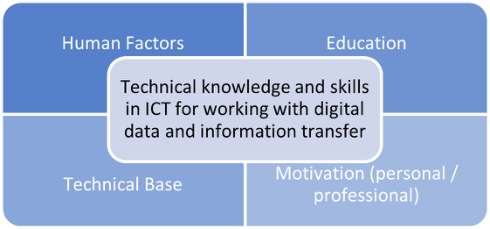
Figure 1: Providing good opportunities for working with ICT and digital data, and their transfer from point of departure to point of receipt.
(FEES, 2022); the specialized CEEPUS international educational network Ergonomics and Human Factors * (EHFRECN, 2022 and Szabó et al., 2021), Bulgarian Association of Ergonomics and Human Factors (BAEHF, 2022) and others.
Due to regional differences and access to the necessary technical base, avai- lable ICT and other important local features, it is difficult to determine the quality of digital data handling (Bakó, 2020).
In general, it can be determined that with access to modern computer and electronic devices, the presence of a good Internet connection can be a proper transfer of electronic data. Once this is ensured, it is imperative to take the right approach to the protection of digital data (which may contain perso- nal data, financial and other vital information). This leads to the summary that providing good opportunities for working with ICT and digital data, and their transfer from point of departure to point of receipt depends on the following main components: human factors, education, technical base and motivation (personal and professional), (Figure 1).
Human Factors Human factors are often associated with ergonomics, where the basic pri- nciples are based on the triune system man - machine - environment. In this system, each component affects the other two in one way or another, and it is measured differently depending on the situation. In the case of IT, it can be summarized as an individual’s attitude towards working with digital data, the approach and diligence of activity during digital data transfer, as well as the periods of preparation and confidentiality after performing certain electronic actions (Salvendy and Karwowski, 2021).
Education Education has a significant role in IT technologies, where the individual deve- lops habits to work and interact with various electronic systems, devices and software. Better education enhances the opportunities for the proper transfer of digital data through ICT. This in turn leads to increased personal cha- racteristics and skills to work with modern computer and communication technologies for good or malicious activities (Ratheeswari, 2018).
Technical Base The technical base is directly related to the region and the information and communication infrastructure. Personally, this consists of quality computer and/or mobile equipment, as well as available software (NCSC, 2021).
Motivation (Personal/Professional) Motivation is one of the leading components in working with digital data and their transfer. This means that the sender seeks communication with the recipient in order to deliver electronic information. Here the role of the participants in the communication is important. Whether on a personal or professional basis respectively. In both cases, the mental factor plays a big role, which is directly related to the specific motivation for digital data tran- sfer actions. This area of specific characteristics and behavior is being actively studied in cybersecurity (Patterson and Winston-Proctor, 2019).
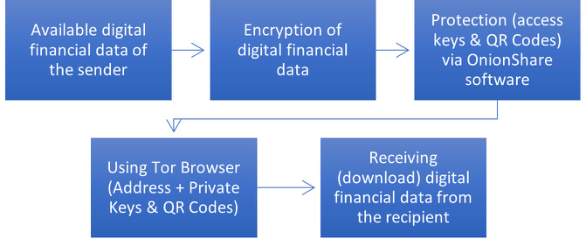
WORKING WITH FINANCIAL DATA AND ENSURING THE SECURITY OF ELECTRONIC INFORMATION TRANSFER Securing an electronic device or computer is a complex task that is constantly on the move. For example, a user’s computer or mobile smartphone is vulne- rable in many places, as hacker attacks, computer viruses and other malicious software, keyloggers and more. People use antivirus programs and other sof- tware on a large scale, but the problem with them is that, as a rule, they are updated after the appearance of a new virus, which provides a time advance of malware and so on. Recent years have been characterized by a mass influx of cloud storage space (Liu and Yu, 2018). On the one hand, this is a conve- nience, and some people trust the built-in security features of the owners of a cloud system. This has another aspect that sharing (even conveniently) in the cloud leads to the sharing of digital information with the owner of the cloud space - system. Everything is fine when working with normal files, but when it comes to personal and financial data, things are serious. This report covers issues specifically related to the transfer of digital information without having to share it directly with a third party, seeking opportunities to encrypt fina- ncial data, use a relatively clean communication path and provide additional protection through encryption. Figure 2 shows a methodology for ensuring the protection of financial digital data through available free software and transfer to the recipient.
The necessary conditions for successful creation of files with financial data, protection of files and their transfer include available free resou- rces (software): Money Manager Ex, OnionShare, Tor Browser. Table 1 shows the software with their possible availability, respectively for Windows, Linux Os Android.
Money Manager Ex Money Manager Ex is free and open source software (Money Manager Ex, 2022). Although it is not suitable for all OS, it has the advantage of direct encryption through the software itself. This significantly distinguishes it from
Protection and Transfer of Financial Digital Data Through Open Source Software 269
Figure 2: Methodology for ensuring the protection of financial digital data through available free software and transfer to the recipient.Table 1. Budgeting & security software.
Table available in the original PDF paper.
Windows MacOS Linux
Android
Software type Free / Open Source OS
OS ✓ ✓ X X
Free & Open Source
Money Manager Ex OnionShare Free & Open Source
✓ ✓ ✓ ✓
✓ ✓ ✓ ✓alpha release/ testing (June 2022) Tor Browser Free & Open Source
the other leading open source budget software such as GnuCash, Home Bank, Ability Cash and others. Money Manager Ex can be used in different languages.
OnionShare OnionShare is free software that initially works locally and is later used by other users through the Tor system. Through this software, users can protect their messages with random passwords. To access OnionShare information, web address recipients must copy and paste it into the address bar of the Tor browser. The official website of OnionShare claims that “Third parties do not have access to the internal processes of OnionShare, including developers”, which is technically impossible thanks to the Tor system (OnionShare, 2022). The software application is completely private. OnionShare allows you to anonymously and securely send files and directories to others.
Tor Browser Tor Browser is an internet free open source browser. It claims that through it users can anonymously access and surf the Internet. The development and promotion of this browser is based on the motivation to protect human rights to provide free and secure access to the network. Basically, the idea is that users can protect and maintain privacy from various providers, owners of public Wi-Fi hotspots and sites, etc. Tor Browser is perceived differen- tly by public authorities, who accept the thesis of privacy, but there is also some criticism to users with bad intentions, who also take advantage of this
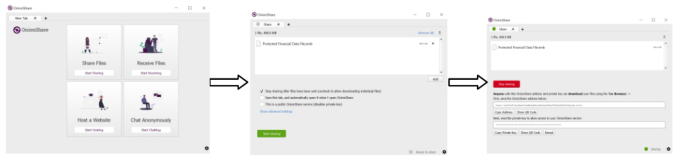
Figure 3: Generate a protected (encrypted) financial data file.Figure 4: Protected file/s sharing via OnionShare and generation of address, private key and QR codes.
resource. Tor Browser really exists in practice through a large network of computers located around the world. The browser works by encrypting user traffic three times (generates three layers). Encrypted traffic is sent to compu- ter 1, which removes the first layer of ciphers and sees the address of computer 2. Computer 2 removes the layer, sees the address of computer 3, not knowing where the traffic originally came from and where it goes. And only through computer 3 there is access to the Internet (Shamanskaya and Galkin, 2021). Tor Browser does not store history. Unlike VPN, Tor works anonymously and VPN works confidentially. Tor preserves the anonymity of the user while the VPN stores the data.
TECHNICAL REALIZATION OF ENCRYPTION AND SECURE TRANSFER OF PROTECTED FINANCIAL DATA FILE Following the methodology described in point 2, first it is necessary to save the economic data in the open source software Money Manager Ex by activating Encrypted MMB files (* .emb) and creating a password (Figure 3).
When the file is ready, switch to protected sharing via OnionShare. The software generates address, private key and QR codes. It is very impor- tant to determine (at personal discretion): enable/disable, Stop sharing after files have been sent (uncheck to allow downloading individual files), (Figure 4).
Protection and Transfer of Financial Digital Data Through Open Source Software 271
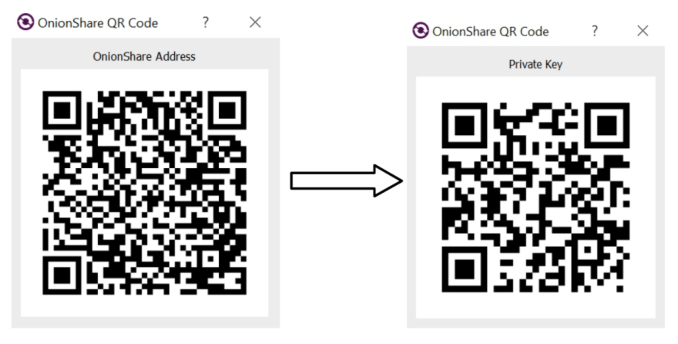
Figure 5: Generated QR OnionShare Code address and QR Private Key.Figure 6: Successfully unlock the protected file and download from the recipient.
Figure 5 shows the generated QR OnionShare Code address and QR Private Key, which can be used in parallel (optional) by the sender to the recipient of the file or received address and private key.
Already with ready generated address, private key and QR codes, the reci- pient of the file uses Tor Browser, and in order to download the file it is necessary to paste the generated address in the browser, and when Tor asks Private Key to activate it. This will disable the visibility of the sent file and allow it to be downloaded (Figure 6).
CONCLUSION
In the present study, an overview is made of the issues related to digital data transmission. The main dangers and important points related to the transfer of electronic information, which should be taken into account by users when working with important financial and other data, are identified. The main contributions of the study are:
Technological free access resources are defined, ensuring quality transmis- sion of information data;
A methodology for improving data security has been defined;
A way for direct encryption in an open source system is defined, through MoneyManager Ex;
Step by step in a visual form is presented the successful transfer of digital data from the point of departure to the final recipient through multilevel protection of information.
The methodology applied in the study gives real results, but it should be borne in mind by users that each stage of the information transfer requi- res clarification of the correct settings and activations. If the conditions are properly met, the secure transmission of digital information as of the date of writing the report (June 2022) is successful. The clarification is made in connection with the periodic technical updates of the OnionShare and Tor Browser software, which depend on the availability of the Internet and their interaction according to their versions.
This study summarizes the way in which electronic information is tran- smitted, where the data is provided with additional protection for personal or professional needs related to financial activities. The experience gained is essential for a large number of users, as well as for all StakeHolders working in the fields of IT, banking and financial security.
ACKNOWLEDGMENT
This work was supported by the Bulgarian Ministry of Education and Science under the National Research Programme “Low Carbon Energy for the Tran- sport and Household (EPLUS)”(approved by DCM No. 577/17.08.2018 and Grant Agreement DO1-214/28.11.2018).
REFERENCES
Bakó R. (2020). Sustainable use of ICTs: Regional opportunities and local action.
SSRN Electronic Journal
DOI: 10.2139/ssrn.3773353. BAEHF - Bulgarian Association of Ergonomics and Human Factors (BAEHF). https: //baehfofficial.wixsite.com/baehf (Visited June 2022). EHFRECN - Ergonomics and Human Factors Regional Educational CEEPUS
Network. CIII-HU-1506-01-2021, https://sites.google.com/view/ceepusergohf/h ome (Visited June 2022). FEES - Federation of The European Ergonomics Societies – FEES. https://www.ergo nomics-fees.eu/ (Visited June 2022). IEA - International Ergonomics Association – https://iea.cc/ (Visited June 2022). Liu A. and Yu T. (2018). Overview of Cloud Storage. International Journal of
Scientific & Tech-nology. Research, hal-02889947. Money Manager Ex (Open Source Software & cross-platform) Home Page.
https://moneymanagerex.org/ (Visited June 2022). NCSC - National Cyber Security Centre: Cyber Essentials (2021). Requirements for IT infrastructure. OnionShare (Open Source Software). How OnionShare Works. https://docs.onionshare.org/2.3.1/en/features.html (Visited June 2022). Patterson W. and Winston-Proctor C. (2019). Behavioral Cybersecurity: Applications
of Personality Psychology and Computer Science 1st Edition. CRC Press. ISBN- 10:1138617784, ISBN-13:978–1138617780. Ratheeswari K. (2018). Information Communication Technology in Education.
Journal of Applied and Advanced Research 3(S1):45, ISSN 2519-9412, DOI: 10.21839/jaar.2018.v3iS1.169.
Protection and Transfer of Financial Digital Data Through Open Source Software 273
Salazar E., Hernández J., Choy J. and Rodríguez V.(2015) A review of the ergonomic variables considered in the adoption and use of smart phones. Ergonomía Ocupacional. Investiga-ciones y Soluciones. Vol 8. Salvendy G. and Karwowski W. (2021). Handbook of Human Factors and Ergono-
mics, 5th Edition. ISBN: 978-1-119-63608-3, 1600 Pages. Shamanskaya A. and Galkin E. (2021). What is the Tor Browser and how does it protect your anonymity on the Internet? https://www.currenttime.tv/a/chto-takoe- tor/31169166.html (Visited June 2022). Szabó, G., Balogh, Z., Dovramadjiev, T., Draghici, A., Gajšek, B., Jurˇcevi´c, Luli´c,
T., Reiner, M., Mrugalska, B., Zunjic, A. (2021). Introducing the Ergonomics and Human Factors Regional Educational CEEPUS Network. ACTA TECH- NICA NAPOCENSIS, Series: Applied Mathematics, Mechanics, and Engineering, Vol. 64, Issue Special I, January, 2021, pp. 201-212, ISSN / eISSN: 1221-5872, Romania. Torréns R., Núñez L. And Urribarri R. (2008). ICT, Community Memory and Technological Ap-propriation. arXiv preprint arXiv:0806.1246.
LISTED IN THE AHFE DIGITAL BOOKSTORE CATALOGUE
Explore the complete digital volume
Intelligent Human Systems Integration (IHSI 2023): Integrating People and Intelligent Systems
Read this individual research paper free through the original publisher, or explore the full digital proceedings book.
ISBN 978-1-958651-45-2
Explore this ISBN in the AHFE Bookstore ↗Listed in the July 2026 bookstore catalogue; search by ISBN to confirm current availability · Digital book purchase optional