Juliana Bezerra Gomes De Pinho Pessoa, Nélson Costa, Miguel Carvalho (2023). Ergonomics and worker well-being: contributions to sustainability in the apparel manufacturing industry. In: Intelligent Human Systems Integration (IHSI 2023): Integrating People and Intelligent Systems. AHFE Open Access, vol. 69, pp. 197–203. https://doi.org/10.54941/ahfe1002837
The main research studies, involving the apparel manufacturing industry, are more focused on the study and development of new fabrics (technological and intelligent); new fibers and their combinations; updated anthropometric tables; functional textile finishing; among others; not being valued the productivity nor the welfare of the worker. The new demands for the clothing manufacturing industry, in the context of Industry 4.0, reinforce the need for new studies, involving the planning, organization, and control of production, focusing on the worker, analyzing his well-being and the quality of work. The main objective of this paper is to expand the discussion about the contributions of ergonomics and well-being to the sustainability of the worker, in the clothing manufacturing industry, via a bibliographic and descriptive review of the literature. The PRISMA method was used, with the research divided in four phases: identification, screening, eligibility, and inclusion. National and international papers were screened in Scopus, Web of Science, Google Scholar, and databases of Portuguese and Brazilian universities, published between 2015 and 2022. Among the 78 articles found, all were reviewed according to the scope of the research, in which 7 were included for detailed analysis. The keywords that were used for this research were: sustainability, apparel industry, industry 4.0, well-being, ergonomics, productivity, and mental health. From the conducted research, it was possible to identify two key ideas within industry 4.0: mental health and well-being of the worker.
The emergence of industry was a major milestone in the evolution of human history. With constant technological innovations, the industry has undergone profound changes. The fourth industrial revolution or Industry 4.0, has its term used for the first time in 2011, and comes from a strategic project of the German government focused on new technologies (Silveira, 2017).
Industry 4.0 aims at the connectivity of the entire industry from pro- duction to the sales system, making production systems more flexible and collaborative (Venturelli, 2017).
An increasing number of researches are observed in new technological solutions, namely in: smart products, cyber-physical systems, data acquisi- tion and processing methods, among others, aiming at a positive impact on productivity and product quality (Peruzzini & Grandi & Pellicciari, 2018).
As the apparel industry has evolved, new concepts have been introduced. In the 21st century, with the development and increase of the apparel industry, the consumer starts to demand more functionality, implying greater comfort of clothing and better wearability. On the other hand, workers seek better workplace conditions (Ilda, 2005).
Currently, in industry, ergonomics is valued as positive ergonomics, pla- cing greater emphasis on the worker, valuing his/her job satisfaction and self-determination (involving human motivation, personality development, and worker well-being). In periods of low labor supply, it seeks to keep the worker in a working condition that prevents not only the development of injuries or diseases, but also contributes to the personal growth, satisfaction and well-being of the workers (Peruzzini & Grandi & Pellicciari, 2018).
The contribution of ergonomics can be classified into: Design (acting in order to modify jobs); Correction (interfering directly in the jobs), Awareness (teaching the worker to enjoy the elements of the work) and Participation (involving the unions and employees to raise awareness to the implementa- tion of ergonomics either in the design or correction in the work environment) (Iida, 2005, p.13).
We can consider that in the case of the production system of a cloth- ing manufacturing industry, the contribution of ergonomics occurs during all stages, where decisions require greater knowledge and are given from experience.
The use of Job Quality Indices (JBIs), provide evidence of the use of the concept of positive ergonomics for regular assessment of job quality among the twenty-eight European Union member states and the five candidate coun- tries. The monitoring has been going on since 1991 and provides a picture of workers’ conditions in different domains (Eurofound, 2019).
Thus, the present study aims to contribute to the knowledge on the topic, providing an insight on the new requirements for the garment manufactu- ring industry in the framework of Industry 4.0, reinforcing the need for new studies, which also involve the planning, organization and control of produ- ction, with a focus on the worker. Analysing their well-being and the quality of work, for the development of a work methodology that improves produ- ctivity and the quality of the production process through the analysis of data collected from different sensors, identifying the most relevant work phases for the development of a new work methodology in garment industry operations.
METHOGOLOGY The present study is characterized as a bibliographic research with a qua- litative approach. It is not concerned with the numerical production of the subject, but with the deepening of knowledge (Gerhardt, Silveira, 2009).
Thus, to conduct this review three main questions were proposed: “What is the best tool to improve productivity?”; “What is the relationship between
Ergonomics and Worker Well-Being: Contributions to Sustainability 199
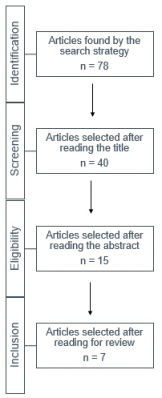
Figure 1: Flowchart of the papers found and selected based on the PRISMA method.
ergonomics and worker welfare in the improvement of productivity?”; and “What variables have greatest influence on sustainability in the garment industry?”
The research method used in this paper is known as PRISMA, a resea- rch method divided in four phases: Identification, Screening, Eligibility and Inclusion (Nascimento, Canteri, Kovaleski, 2019). National and internatio- nal papers were consulted in Scopus, Web of Science, Google Scholar, and databases of Portuguese and Brazilian universities, published between 2015 and 2022. Among the 78 articles found, all were reviewed according to the scope of the research, in which 7 were included in this review (Figure 1).
After choosing the subject of the paper and the guiding questions, a sea- rch was conducted in the databases with key words pertinent to the subject, which were categorized into blocks of four or five words related to the theme and the objective of the study (table 1).
Thus, the key words used for this research were: “sustainability”, “appa- rel industry”, “industry 4.0”, “well-being”, “ergonomics”, “productivity”, and “mental health”. Original papers that addressed Industry 4.0, targe- ting the mental health and well-being of the garment manufacturing worker, were selected as analysis criteria. Dissertations, book chapters, and literature review articles were excluded, as well as those that did not address the subject in the title, abstract, or text.
RESULTS AND DISCUSSIONS The papers that had the used key words in the title, abstract or key words were selected. Through the selection method in this study 78 papers were found, which were submitted to triage and elimination: duplicate papers (2), papers whose title, abstract and key words were not aligned with the resea- rched subject, and book chapters. At the end of this stage, a total of 7 papers
Table 1. Papers found with the defined key words.
Table available in the original PDF paper.
Database Key words Number of papers
0
Scopus industry 4.0, well-being, ergonomics, productivity 20 Web of Science industry 4.0, well-being, ergonomics, productivity 5 Scopus sustainability, apparel industry, industry 4.0, well-being, ergonomics
0
Web of Science sustainability, apparel industry, industry 4.0, well-being, ergonomics
16
Web of Science apparel industry, ergonomics, productivity 3 Scopus apparel industry, ergonomics, productivity 11 Scopus ergonomics, productivity, well-being and mental health
13
Web of Science ergonomics, productivity, well-being and mental health
10
Google Scholar sustainability, apparel industry, ergonomics, productivity
were selected for analysis. Table 2 shows the selected papers considering authors, title, year of publication, and main results.
According to the analysis performed on the 7 selected papers it was obse- rved two common points, which are: the improvement of the workstation elevates the productivity and the definition of the work method.
Regarding the improvement of the workstation, it is worth highlighting the monitoring of workstations using cyber-physical production systems, which are able to monitor the man-machine-software relationship, allowing impro- vement of well-being and productivity and contributing to ergonomics 4.0, with the monitoring of the workstation for better workstation design, aiming to improve productivity and the well-being of the worker (Pascual, et al, 2021). Another common point is the definition of the work method in all papers. It is observed that the focus is to improve the performance of the worker at the workstation, aiming to achieve the quality standards and productivity. of The definition of the method improves the execution time, minimizing the lack of productivity within a garment industry (Annamala; Kumar; Bagathsingh, 2022). Such findings further promote the need for studies in the garment industry, seeking the definition of a work method that equally improves the worker well-being, ergonomics and productivity.
CONCLUSION
In this paper most studies showed that improving the worker mental health and well-being, related to the quality of the workplace, has a direct influe- nce on improving productivity and retention of the worker in the company. Despite this perception in a small number of studies on the subject in the
Ergonomics and Worker Well-Being: Contributions to Sustainability 201
Table 2. List of papers included in the literature review.
Table available in the original PDF paper.
Authors Title/ Year of Publication Main Results Hoque, I; Hasle, P; Maalouf, MM.
The importance of improving worker’s well-being related to the quality of working conditions allied to ergonomics.
Buyer-Supplier Role in Improving Ergonomics in Garment Supplier Factories: Empirical Evidence from the Garment Industry of Bangladesh/2022
How to analyse the workers’ experience in integrated product-process design/2018
The application of methodology in two case studies in the automotive industry focused on the analysis of maintenance and assembly tasks. The results prove the applicability of a model in the industrial context and its validity to include human evaluation in the design process. Velasco L S F; Revilla, P.E.; et.al.
The creation of the right job considering human and productivity factors.
A human-centred workstation in industry 4.0 for balancing the industrial productivity and human well-being/2022
Analysis of lean manufacturing layout in a textile industry/2020
Positive relationship of time analysis and workstation adjustment from shapes and layouts can result in work improvement. Pascual, A. I.; Högberg, Dan; Lämkull, Dan; Luque, Estela Perez; Syberfeldt, Anna; Hanson, L.
Optimization of Productivity and Worker Well-Being by Using a Multi-Objective Optimization Framework/2021
The importance of digitizing real-world industry and workers with the goal in Industry 4.0 and Ergonomics 4.0 in improving the quality of work at the workplace. Hamja, A.; Maalouf, MM; Hasle, P.
Assessment of Productivity and Ergonomic Conditions at the Production Floor: An Investigation into the Bangladesh Readymade Garments Industry/2018
The improvement of the work with the lean method in a neutral or positive way on the worker, while the negative effects are related to attempts to force the worker to work in a fast way that is not the methodology of the lean method. Gomathi K.; Rajini G. Organizational ergonomics: Human engineering leading to employee well-being/2019
Increased job security and well-being leads to increased productivity, improved worker well-being and retention.
garment industry, it was observed a concern for the welfare of the worker in industry 4.0 and ergonomics 4.0.
The present study demonstrated a need for further knowledge in order to stabilize and standardize the workplaces of the clothing manufacturing industry, since most of the studies found were conducted in the automotive
industry. Thus, further studies need to be promoted, namely deepening the observation of workplaces, standardizing work methods, improving com- munication, seeking new monitoring technologies to capture critical aspects such as work intensity, working time, social and environmental aspects, skills, career perspectives, and earnings, to improve productivity and worker well-being for the sustainability of workers in the garment industry The development of a new work method will enable teams to improve productivity, providingproduction standards for garment assembling, using automatic monitoring of human motion, promoting the execution of the most appropriate work methods, improving the mental well-being of workers through self-reporting and individual visualizations for awareness, education and self-management, promoting comfort, safety and quality of work.
The use of sensors to monitor of these variables and the definition of the working method will make possible reliable diagnosis and production planning based on scientific and reliable evidences.
ACKNOWLEDGMENT
This work was supported by Project OPERATOR (NORTE01-0247-FEDER- 045910), co-financed by the ERDF-European Regional Development Fund through the North Portugal Regional Operational Program and Lisbon Regi- onal Operational Program and by the Portuguese Foundation for Science and Technology, under the MIT Portugal Program (2019 Open Call for Flagship projects) and FEDER funds through the Competitive Factors Operational Program (COMPETE) POCI-01-0145-FEDER-007136, by national funds through the FCT-Portuguese Foundation for Science and Technology under the project UID/CTM/000264.
REFERENCES
Annamalai, Sivakumar ; Kumar, H.Vinoth ; Bagathsingh, N. . (2020) Analysis of lean manufacturing layout in a textile industry. Elsevier Science Corrêa, V. e Boletti, R. (2015). Ergonomia. São Paulo: Grupo A. IIDA, Itiro. (2002). Ergonomia: Projeto e Produção. São Paulo: Edgard Blücher, Gerhardt, T. E., & Silveira, D. T. (Orgs.) (2009). Métodos de pesquisa. Porto Alegre:
Editora da UFRGS. Gomathi K.; Rajini G. (2019). Organizational ergonomics: Human engineering leading to employee well-being. International Journal of Innovative Technology and Exploring Engineering (IJITEE), Vol. 8. Hamja, A.; Maalouf, MM; Hasle, P. (2018). Assessment of Productivity and Ergo-
nomic Conditions at the Production Floor: An Investigation into th Bangladesh Readymade Garments Industry. IEA, pp 162–172. Hoque, I; Hasle, P; Maalouf, MM. (2022). Buyer-Supplier Role in Improving Ergonomics in Garment Supplier Factories: Empirical Evidence from the Garment Indu- stry of Bangladesh. Elsevier Science. Nascimento, R. F.; Canteri, M. H.; Kovaleski, J.L. (2019). Impact of Reward Systems
on Organizational Motivation: Systematic Review using the PRISMA Method Oliveira, A.F. Ergonomia: conceito, tipos e benefícios no trabalho. Website: https: //beecorp.com.br/ergonomia/
Ergonomics and Worker Well-Being: Contributions to Sustainability 203
Pascual, A. I.; Högberg, Dan; Lämkull, Dan; Luque, Estela Perez; Syberfeldt, Anna; Hanson, L. (2021). Optimization of Productivity and Worker Well-Being by Using a Multi-Objective Optimization Framework. IISE Transactions on Occupational Ergonomics and Human Factors, vol. 9. Peruzzini M.; Grandi F.; Pellicciar, M . (2018) How to analyse the workers’ experience in integrated product-process design. Elsevier Science. Velasco, L. S. F.; Revilla, P. E.R.; Rodríguez, L. V. R.;et.al. (2022). A human-centred
workstation in industry 4.0 for balancing the industrial productivity and human well-being. Elsevier Science. Viggiani, Maria (2011). Utilizando a ergonomia na modelagem da lingerie. In. VII Colóquio de Moda,. Anais... Baurú. Website: http://www.coloquiomoda.com.b r/anais/Coloquio%20de%20Moda%20-%202011/GT13/Comunicacao-Oral/C O_88564Utilizando_a_ergonomia_na_modelagem_da_lingerie_.pdf
LISTED IN THE AHFE DIGITAL BOOKSTORE CATALOGUE
Explore the complete digital volume
Intelligent Human Systems Integration (IHSI 2023): Integrating People and Intelligent Systems
Read this individual research paper free through the original publisher, or explore the full digital proceedings book.
ISBN 978-1-958651-45-2
Explore this ISBN in the AHFE Bookstore ↗Listed in the July 2026 bookstore catalogue; search by ISBN to confirm current availability · Digital book purchase optional